Search results
Search for "hydrazine" in Full Text gives 218 result(s) in Beilstein Journal of Organic Chemistry. Showing first 200.
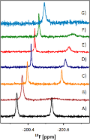
IBD-mediated oxidative cyclization of pyrimidinylhydrazones and concurrent Dimroth rearrangement: Synthesis of [1,2,4]triazolo[1,5-c]pyrimidine derivatives
Beilstein J. Org. Chem. 2013, 9, 2629–2634, doi:10.3762/bjoc.9.298

- -yl)hydrazines 3 were then obtained in 90–95% yield through the reaction of compounds 2 with two equivalents of 50% hydrazine in ethanol at 45 °C for 2 h (Scheme 1). We next examined the synthesis of the corresponding hydrazones of various aldehydes. After screening a set of conditions, optimal
- conditions could be determined. Thus, 1-(6-chloropyrimidin-4-yl)hydrazine (3a) was condensed with 20% excess benzaldehyde to give 85% yield of the chloropyrimidinylhydrazone 4a in absolute ethanol at room temperature in about 1 h. As shown in Table 1, the reaction proceeded readily for most of the employed
- synthesis of novel [1,2,4]triazolo[1,5-a]pyrimidine derivatives by iodobenzenediacetate (IBD)-mediated oxidative cyclization of suitable N-benzylidene-N′-pyrimidin-2-yl hydrazine precursors, followed by a Dimroth rearrangement [20]. We envisioned that our aldehyde chloropyrimidinylhydrazones 4 would undergo


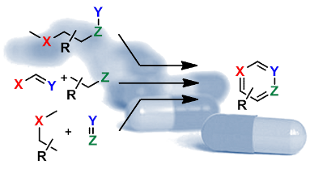
An overview of the synthetic routes to the best selling drugs containing 6-membered heterocycles
Beilstein J. Org. Chem. 2013, 9, 2265–2319, doi:10.3762/bjoc.9.265


An approach towards azafuranomycin analogs by gold-catalyzed cycloisomerization of allenes: synthesis of (αS,2R)-(2,5-dihydro-1H-pyrrol-2-yl)glycine
Beilstein J. Org. Chem. 2013, 9, 1936–1942, doi:10.3762/bjoc.9.229
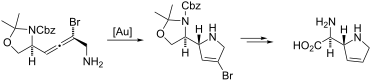
- ; then hydrazine monohydrate) [38][39][62]. Unfortunately, fluoride-mediated desilylation of allene 6c caused complete epimerization of the allenic chirality axis. Therefore, the silylallene was not used in further studies. The results of the gold-catalyzed cycloisomerization of the allenes 7 and 8 to


ML212: A small-molecule probe for investigating fluconazole resistance mechanisms in Candida albicans
Beilstein J. Org. Chem. 2013, 9, 1501–1507, doi:10.3762/bjoc.9.171
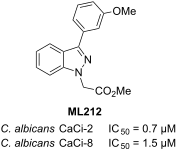
- hydrazine hydrate were then reacted under microwave conditions to assemble the indazole ring 10. The ester side chain of 11 was installed under the same conditions described above for the alkylation of 3-arylindazoles. In vitro activity and SAR All of the compounds prepared above were evaluated for their
- bromoacetate, K2CO3, acetone, 60 °C; (d) alkylmagnesium bromide, Et2O, 0 °C; (e) Dess–Martin periodinane, CH2Cl2; (f) hydrazine hydrate, 175 °C. Activity of substituted indazole cores.a Investigation of 3-substituted indazoles.a Substituent effects associated with the 3-phenyl ring.a Supporting Information



Metal-free aerobic oxidations mediated by N-hydroxyphthalimide. A concise review
Beilstein J. Org. Chem. 2013, 9, 1296–1310, doi:10.3762/bjoc.9.146
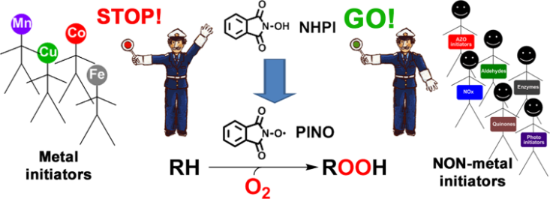
- azodicarboxylate reagent [73]. The proposed mechanism (Scheme 27) suggests a double function of the dialkyl azodicarboxylate, which acts both as an oxidant, promoting the oxidation of NHPI to PINO by ET process, and as acceptor of carbon radicals generated via HAT by PINO, leading to the formation of hydrazine
- derivatives. The scope of the reaction was investigated and its applicability was extended to different C–H bonds, including benzylic, propargylic, and aliphatic ones. Furthermore, the hydrazine compounds were readily converted to the corresponding carbamates and amines. Conclusion Metal-free oxidation
- from N-alkoxyphthalimides. Visible-light/g-C3N4 induced metal-free oxidation of allylic substrates. NHPI/o-phenanthroline-mediated organocatalytic system. NHPI/DMG-mediated organocatalytic system. NHPI catalyzed oxidative cleavage of C=C bonds. Synthesis of hydrazine derivatives. Acknowledgements We


Simple and rapid hydrogenation of p-nitrophenol with aqueous formic acid in catalytic flow reactors
Beilstein J. Org. Chem. 2013, 9, 1156–1163, doi:10.3762/bjoc.9.129
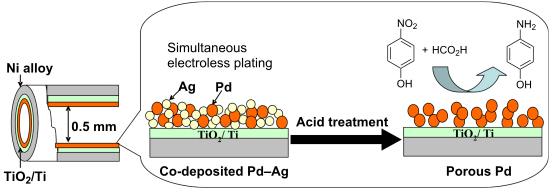
- demonstrates the robustness of the present catalytic reactors. Experimental Materials and reagents Reagent-grade formic acid (HCO2H, 98%), p-nitrophenol, palladium acetate [Pd(CH3COO)2], silver nitrate (AgNO3), disodium ethylenediamine tetraacetate (EDTA–Na2), ammonia (NH3, 28%), hydrazine monohydrate, nitric
- containing 9 mM Pd(CH3COO)2, 1 mM AgNO3, 0.15 M EDTA–Na2, 4 M NH3, and 10 mM hydrazine monohydrate through the reactor tube at 60 °C. After 3 h plating, 67.7 mg of Pd (87%) and 10.1 mg of Ag (13%) were deposited inside the tubular reactor. After plating, washing with water was conducted to remove the


Camera-enabled techniques for organic synthesis
Beilstein J. Org. Chem. 2013, 9, 1051–1072, doi:10.3762/bjoc.9.118

- of this device was for the preparation of a series of hydrazones. A continuous aqueous extraction to remove the excess hydrazine enabled the product to be collected in high purity (Figure 29). Other applications reported in this work include alkene epoxidation and dithiane preparation. Dispersion of


Amyloid-β probes: Review of structure–activity and brain-kinetics relationships
Beilstein J. Org. Chem. 2013, 9, 1012–1044, doi:10.3762/bjoc.9.116










Substituent effect on the energy barrier for σ-bond formation from π-single-bonded species, singlet 2,2-dialkoxycyclopentane-1,3-diyls
Beilstein J. Org. Chem. 2013, 9, 925–933, doi:10.3762/bjoc.9.106
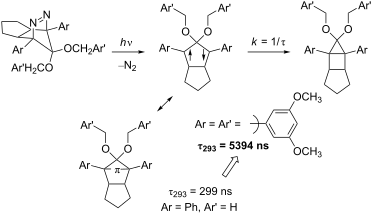
- method of Tiecco [32]. Pyrazole 3g was then synthesized by the reaction with hydrazine hydrate. AZg was obtained by the Diels–Alder [4 + 2]-cycloaddition with cyclopentadiene and hydrogenation using PtO2 as a catalyst. The endo-configured structure of azoalkanes AZc–g was determined by X-ray
- (Ar = 3,5-dimethoxyphenyl) is as follows: In a 50 mL round-bottom flask, benzonitrile (3.7 g, 22.7 mmol) was dissolved in 10 mL of absolute ethanol. Hydrazine (3.6 mL, 90 mmol) and sulfur (0.43 g, 13.5 mmol) were quickly added, and the solution was stirred at room temperature for 1 h and then heated


Some aspects of radical chemistry in the assembly of complex molecular architectures
Beilstein J. Org. Chem. 2013, 9, 557–576, doi:10.3762/bjoc.9.61

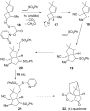
- hydroxylamine and hydrazine substituents in order to construct unusual heterocycles [33][34]. One typical illustration is presented in Scheme 14, where unmasking of the hydroxylamine in adduct 70 gives rise to cyclic nitrone 71, which can then be intercepted by a dipolarophile placed in the medium, as shown by













A new synthetic access to 2-N-(glycosyl)thiosemicarbazides from 3-N-(glycosyl)oxadiazolinethiones and the regioselectivity of the glycosylation of their oxadiazolinethione precursors
Beilstein J. Org. Chem. 2013, 9, 135–146, doi:10.3762/bjoc.9.16
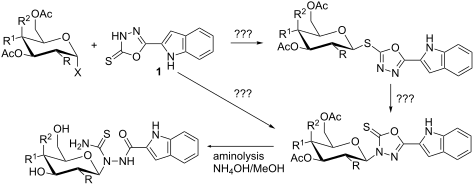
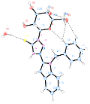
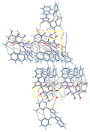
- , because formerly, only conversions of 1,3,4-oxadiazolethione (by reaction of hydrazine hydrate) to 4-amino-1,2,4-triazolinethiones were reported [38][39][40]. The products of the new reactions are verified by the X-ray single-crystal analysis of the galactosyl-1,2,4-triazoline-3-thione, and a


Removal of benzylidene acetal and benzyl ether in carbohydrate derivatives using triethylsilane and Pd/C
Beilstein J. Org. Chem. 2013, 9, 74–78, doi:10.3762/bjoc.9.9
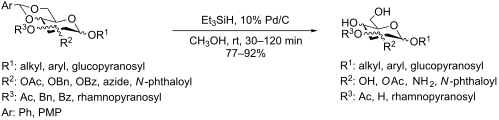
- reported for the removal of benzylidene acetals by using strong protic and Lewis acids [10][11][15] as well as some heterogeneous acidic catalysts [16][17]. Removal of benzylidene acetal under nonacidic conditions includes hydrogenolysis using hydrogen gas over Pd/C [18], or treatment with hydrazine [19


Acylsulfonamide safety-catch linker: promise and limitations for solid–phase oligosaccharide synthesis
Beilstein J. Org. Chem. 2012, 8, 2067–2071, doi:10.3762/bjoc.8.232
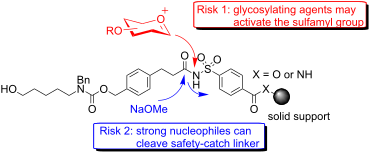
- NaOH, hydrazine acetate, pyridine and benzylamine failed to cleave the linker. Even the strongly basic and weakly nucleophilic t-BuOK was not sufficient to induce premature cleavage. Thus, it is the nucleophilic action of sodium methoxide that is strong enough to induce cleavage of the safety-catch




Convergent synthesis of the tetrasaccharide repeating unit of the cell wall lipopolysaccharide of Escherichia coli O40
Beilstein J. Org. Chem. 2012, 8, 2053–2059, doi:10.3762/bjoc.8.230

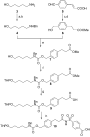
- 101.6 (C-1B), 101.5 (PhCH), 100.8 (C-1C), 100.2 (C-1A), 97.3 (C-1D) in the 13C NMR spectrum]. Compound 10 was subjected to a sequence of reactions involving (a) removal of N-phthalimido group by using hydrazine hydrate [25]; (b) N-acetylation by using acetic anhydride and pyridine; (c) removal of


Design and synthesis of a photoswitchable guanidine catalyst
Beilstein J. Org. Chem. 2012, 8, 1825–1830, doi:10.3762/bjoc.8.209
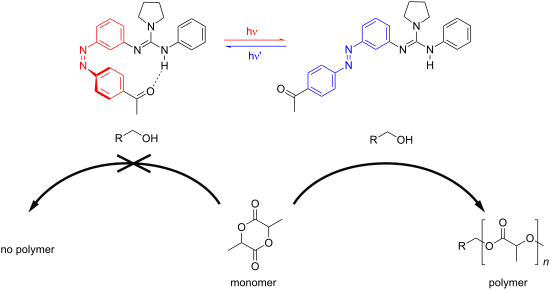
- employed conditions reduction of the azobenzene function of compound 9 was observed, yet the formed hydrazine analogue reoxidized in situ upon being stirred under atmospheric conditions (air). The free amine 10 finally reacts with the in situ prepared Vilsmeyer salt 5 to provide the desired target compound


Dimerization of a cell-penetrating peptide leads to enhanced cellular uptake and drug delivery
Beilstein J. Org. Chem. 2012, 8, 1788–1797, doi:10.3762/bjoc.8.204
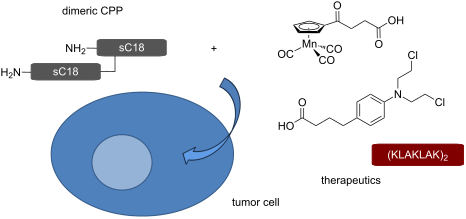
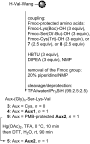
- with a 3% solution of hydrazine in DMF for 12 × 10 min. Subsequently, the peptide was elongated to its final length by automated SPPS. N-terminal coupling of Cym2 or 5(6)-carboxyfluorescein was carried out by using 2 equiv of the substance to be coupled and activation with 2 equiv of HATU/DIPEA in DMF


Organocatalytic cascade aza-Michael/hemiacetal reaction between disubstituted hydrazines and α,β-unsaturated aldehydes: Highly diastereo- and enantioselective synthesis of pyrazolidine derivatives
Beilstein J. Org. Chem. 2012, 8, 1710–1720, doi:10.3762/bjoc.8.195
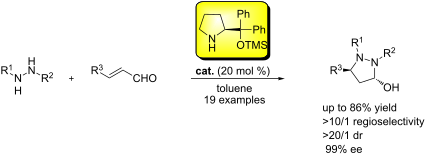
- good results (up to 86% yield, >10/1 regioselectivity, >20:1 dr, 99% ee) in the presence of (S)-diphenylprolinol trimethylsilyl ether catalyst. Keywords: aza-Michael; domino; hydrazine; organocatalysis; pyrazolidine; Introduction Pyrazolidines are privileged and valuable heterocyclic compounds, which
- investigated in the presence of several common secondary amines 1a–f as organocatalysts in chloroform. Pyrrolidine (1c) turned out to be an effective catalyst and di-tert-butyl hydrazine-1,2-dicarboxylate (2c) was a potent donor (see Table S1 in the Supporting Information File 1). When di-tert-butyl hydrazine
- -1,2-dicarboxylate (2c) was used as the donor and 20 mol % pyrrolidine (1c) as the catalyst, 5-hydroxypyrazolidine 4a could be obtained in 68% yield with over 20:1 dr after five days (Table 1, entry 1). Thus, the tandem aza-Michael/hemiacetal reaction between di-tert-butyl hydrazine-1,2-dicarboxylate


Antifreeze glycopeptide diastereomers
Beilstein J. Org. Chem. 2012, 8, 1657–1667, doi:10.3762/bjoc.8.190

- assembly of the glycopeptides the acetate protecting groups of the carbohydrates were cleaved with 5% hydrazine in DMF followed by the cleavage of the peptide from the resin with 2% aqueous TFA. Subsequently, the peptides were precipitated with cold diethyl ether and the solid residues were purified by
- mol) in the presence of DIPEA (0.13 mol) in DMF (10 mL). The acetate groups protecting the carbohydrate hydroxy groups in the glycopeptides were removed manually using 5% hydrazine in DMF (v/v, 5 mL) for 6–15 h. The peptides were cleaved from the resin by treatment with TFA in methylene chloride (2


Automated synthesis of sialylated oligosaccharides
Beilstein J. Org. Chem. 2012, 8, 1601–1609, doi:10.3762/bjoc.8.183
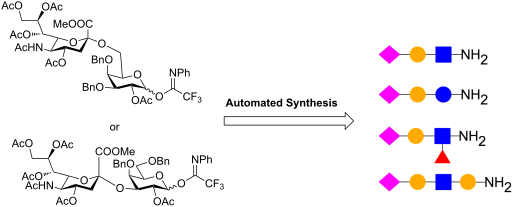
- (OAc)2 and catalytic amounts of BF3·Et2O [23] and gave disaccharides 12 and 13, respectively after acetylation (Scheme 1). Removal of the anomeric acetate mediated by hydrazine acetate provided the hemiacetals, which was followed by introduction of the anomeric N-phenyl trifluoroacetimidate to furnish
- Fmoc removal from the C4 hydroxy group and a second glycosylation was performed with building block 4 under the conditions optimized in the context of the synthesis of trisaccharide 20. Removal of the levulinoyl ester from C3 by treatment with hydrazine hydrate and acetic acid exposed the second


Regioselective synthesis of 7,8-dihydroimidazo[5,1-c][1,2,4]triazine-3,6(2H,4H)-dione derivatives: A new drug-like heterocyclic scaffold
Beilstein J. Org. Chem. 2012, 8, 1584–1593, doi:10.3762/bjoc.8.181
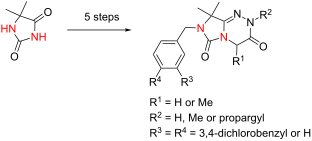
- compounds. Route B would proceed in four steps yielding product VIII starting from V, which may be obtained from the corresponding malonyl dichloride and hydrazine derivatives. In the present study we focussed on synthetic route A starting from the commercially available hydantoins I, which would allow very
- broad structural diversity by introducing a variety of substituents and functionalities at different stages of the synthesis. As a first step ethyl (2,5-dioxoimidazolidin-1-yl)acetate derivative II is formed from hydantoins I. The condensation reaction of II with hydrazine, followed by a regioselective
- main challenge in the synthesis of 23–25 was the construction of the 1,2,4-triazine ring. Direct reaction of 13–15 with hydrazine hydrate failed, and only the corresponding hydrazides were formed. Therefore, the C5 carbonyl group of 13–15 was regioselectively thionated with phosphorus pentasulfide in


Multistep organic synthesis of modular photosystems
Beilstein J. Org. Chem. 2012, 8, 897–904, doi:10.3762/bjoc.8.102
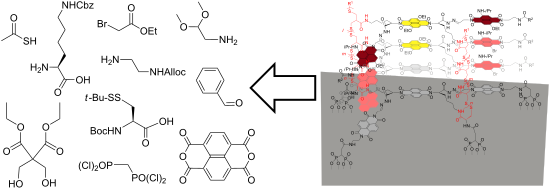
- NDI 18 of initiator 2, designed to initiate and template for SOSIP, was accessible from NDA 13 as well. The synthesis of NDI 19 by microwave-assisted imidation with Boc-protected lysine 20 has been reported before in the literature [15]. Reaction with Cbz-hydrazine gave the Cbz-protected NDI hydrazide


Building photoswitchable 3,4'-AMPB peptides: Probing chemical ligation methods with reducible azobenzene thioesters
Beilstein J. Org. Chem. 2012, 8, 890–896, doi:10.3762/bjoc.8.101
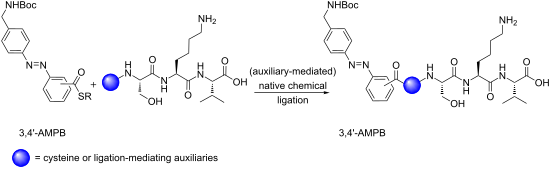
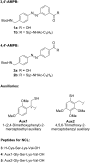
- -mercaptoethyl auxiliary peptide 4 [6]. During the reaction courses employing Cys-peptide 3 and the 4,5,6-trimethoxy-2-mercaptobenzyl auxiliary peptide 5, only reduction of the 4,4'-AMPB thioester 2b to the corresponding hydrazine compound Red-2b was observed, in 2–4% yield (Table 1). When using the Nα-2
- gave peptide 14/peptide Red14 in an 18:82 ratio (Table 1, entry 5). However, reoxidation of the hydrazine ligation peptides Red-10, Red-13 and Red-14 to the azobenzene ligation peptides 10, 13 and 14 was observed after purification by preparative RP-HPLC, and is obviously initiated by oxygen from the
- air. Finally, the pure ligated azobenzene peptides 10, 13 and 14 were isolated in yields of 62%, 44% and 43%, respectively. When 3,4'-AMPB thioester 1b and the Nα-2-mercaptoethyl auxiliary peptide 4 were used, the desired peptide 11 and its hydrazine analogue Red-11 were detected in a ratio of 97:3 by





Chemo-enzymatic modification of poly-N-acetyllactosamine (LacNAc) oligomers and N,N-diacetyllactosamine (LacDiNAc) based on galactose oxidase treatment
Beilstein J. Org. Chem. 2012, 8, 712–725, doi:10.3762/bjoc.8.80
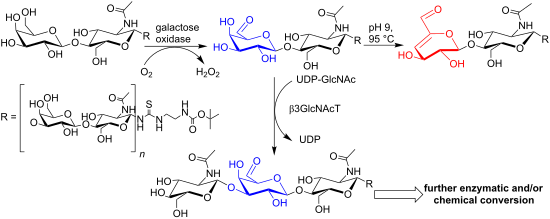
- -aldo product. Further modification of the aldehyde containing glycans, either by chemical conversion or enzymatic elongation, was established. Base-catalysed β-elimination, coupling of biotin–hydrazide with subsequent reduction to the corresponding hydrazine linkage, and coupling by reductive amination


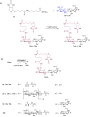


Chemistry of polyhalogenated nitrobutadienes, 10: Synthesis of highly functionalized heterocycles with a rigid 6-amino-3-azabicyclo[3.1.0]hexane moiety
Beilstein J. Org. Chem. 2012, 8, 621–628, doi:10.3762/bjoc.8.69

- nitropolychlorobutadienes 3 and 4 with the 3-azabicyclo[3.1.0]hexane building blocks 1 and 2. Upon treatment with N,N-dibenzyl-3-azabicyclo[3.1.0]hexan-6-amine (1) in methanol the (tetrachloroallylidene)hydrazine 5 [4][7] derived from 3 reacted in a formal nucleophilic substitution at the imidoyl chloride unit to give the
- derivative 6 in 80% isolated yield (Scheme 1). The interest in such compounds derives from the fact that a number of similar hydrazones, e.g., phenyl(phenylchloromethylidene)hydrazine, exhibit fungicidal, antibacterial, and fungistatic activity [17][18]. In view of the insecticidal properties of some


Synthesis of fluorinated maltose derivatives for monitoring protein interaction by 19F NMR
Beilstein J. Org. Chem. 2012, 8, 448–455, doi:10.3762/bjoc.8.51
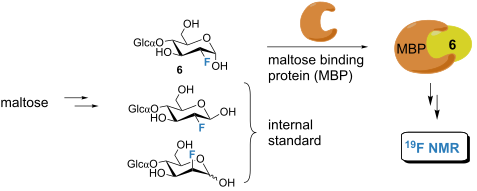
- anomeric acetyl group of compound 2 with hydrazine acetate [29] yielding derivative 7, followed by nucleophilic fluorination with DAST [30][31] generating the diasteriomeric mixture 8. The α-anomer was isolated by HPLC and subsequent Zemplén saponification of the remaining acetate protecting groups yielded