


Search results
Search for "naphthalene" in Full Text gives 215 result(s) in Beilstein Journal of Organic Chemistry. Showing first 200.
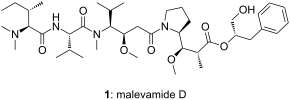
Total synthesis and cytotoxicity of the marine natural product malevamide D and a photoreactive analog
- Werner Telle,
- Gerhard Kelter,
- Heinz-Herbert Fiebig,
- Peter G. Jones and
- Thomas Lindel
Beilstein J. Org. Chem. 2014, 10, 316–322, doi:10.3762/bjoc.10.29
- equiv), pyridine·SO3 (5 equiv), 0 °C, 1 h, 91%. b) LDA (2.5 equiv), t-BuOAc (1.3 equiv), THF, −78 °C, 1 h; separation of diastereomers, (3R,4S)-6: 47%. c) 1,8-bis(dimethylamino)naphthalene (2.5 equiv), Me3OBF4 (2.6 equiv), 4 Å MS, 1,2-DCE, 0 °C, 2 h, rt, 16 h, 87%. d) H2, Pd/C (5%), MeOH, rt, 1 h. e) 8

Graphical Abstract
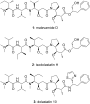
Figure 1: Structures of the strongly cytotoxic marine natural products malevamide D (1), isodolastatin H (2),...

Scheme 1: Total synthesis of malevamide D (1). a) DMSO (16 equiv), NEt3 (5 equiv), pyridine·SO3 (5 equiv), 0 ...

Scheme 2: Formation of oxazolylphosphate 18 on attempted DEPC-mediated coupling of dipeptide 15.
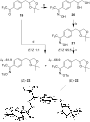
Scheme 3: Synthesis of tosyloximes (Z)-22 and (E)-22, X-ray structure of (E)-22. a) NH2OH·HCl (1.5 equiv), py...
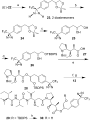
Scheme 4: Synthesis of photo malevamide D 30. a) NH3(l), t-BuOMe, −40 °C, 2 h, rt, 16 h, quant. b) I2 (1.2 eq...

Figure 2: DSC curve of diazirine 25, heating rate 5 °C/min.
Synthesis of five- and six-membered cyclic organic peroxides: Key transformations into peroxide ring-retaining products
- Alexander O. Terent'ev,
- Dmitry A. Borisov,
- Vera A. Vil’ and
- Valery M. Dembitsky
Beilstein J. Org. Chem. 2014, 10, 34–114, doi:10.3762/bjoc.10.6
- '-indene] (75a) and 5-hydroperoxy-3',4'-dihydro-2'H-spiro[[1,2]dioxolane-3,1'-naphthalene] (75b), were synthesized by the ozonolysis of 1-allyl-1-hydroperoxy-2,3-dihydro-1H-indene (72a) and 1-allyl-1-hydroperoxy-1,2,3,4-tetrahydronaphthalene (72b), respectively, in an Et2O/CF3CH2OH system (2:1). The

Graphical Abstract

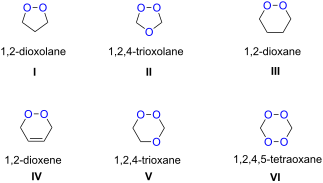
Figure 1: Five and six-membered cyclic peroxides.

Figure 2: Artemisinin and semi-synthetic derivatives.

Scheme 1: Synthesis of 3-hydroxy-1,2-dioxolanes 3a–c.

Scheme 2: Synthesis of dioxolane 6.

Scheme 3: Photooxygenation of oxazolidines 7a–d with formation of spiro-fused oxazolidine-containing dioxolan...

Scheme 4: Oxidation of cyclopropanes 10a–e and 11a–e with preparation of 1,2-dioxolanes 12a–e.

Scheme 5: VO(acac)2-catalyzed oxidation of silylated bicycloalkanols 13a–c.

Scheme 6: Mn(II)-catalyzed oxidation of cyclopropanols 15a–g.

Scheme 7: Oxidation of aminocyclopropanes 20a–c.

Scheme 8: Synthesis of aminodioxolanes 24.
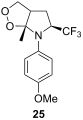
Figure 3: Trifluoromethyl-containing dioxolane 25.

Scheme 9: Synthesis of 1,2-dioxolanes 27a–e by the oxidation of cyclopropanes 26a–e.

Scheme 10: Photoinduced oxidation of methylenecyclopropanes 28.

Scheme 11: Irradiation-mediated oxidation.

Scheme 12: Application of diazene 34 for dioxolane synthesis.

Scheme 13: Mn(OAc)3-catalyzed cooxidation of arylacetylenes 37a–h and acetylacetone with atmospheric oxygen.
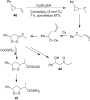
Scheme 14: Peroxidation of (2-vinylcyclopropyl)benzene (40).

Scheme 15: Peroxidation of 1,4-dienes 43a,b.

Scheme 16: Peroxidation of 1,5-dienes 46.

Scheme 17: Peroxidation of oxetanes 53a,b.

Scheme 18: Peroxidation of 1,6-diene 56.

Scheme 19: Synthesis of 3-alkoxy-1,2-dioxolanes 62a,b.

Scheme 20: Synthesis of spiro-bis(1,2-dioxolane) 66.

Scheme 21: Synthesis of dispiro-1,2-dioxolanes 68, 70, 71.

Scheme 22: Synthesis of spirohydroperoxydioxolanes 75a,b.

Scheme 23: Synthesis of spirohydroperoxydioxolane 77 and dihydroperoxydioxolane 79.

Scheme 24: Ozonolysis of azepino[4,5-b]indole 80.

Scheme 25: SnCl4-mediated fragmentation of ozonides 84a–l in the presence of allyltrimethylsilane.

Scheme 26: SnCl4-mediated fragmentation of bicyclic ozonide 84m in the presence of allyltrimethylsilane.

Scheme 27: MCl4-mediated fragmentation of alkoxyhydroperoxides 96 in the presence of allyltrimethylsilane.

Scheme 28: SnCl4-catalyzed reaction of monotriethylsilylperoxyacetal 108 with alkene 109.

Scheme 29: SnCl4-catalyzed reaction of triethylsilylperoxyacetals 111 with alkenes.

Scheme 30: Desilylation of tert-butyldimethylsilylperoxy ketones 131a,b followed by cyclization.

Scheme 31: Deprotection of peroxide 133 followed by cyclization.

Scheme 32: Asymmetric peroxidation of methyl vinyl ketones 137a–e.

Scheme 33: Et2NH-catalyzed intramolecular cyclization.

Scheme 34: Synthesis of oxodioxolanes 143a–j.

Scheme 35: Haloperoxidation accompanied by intramolecular ring closure.

Scheme 36: Oxidation of triterpenes 149a–d with Na2Cr2O7/N-hydroxysuccinimide.

Scheme 37: Curtius and Wolff rearrangements to form 1,2-dioxolane ring-retaining products.

Scheme 38: Oxidative desilylation of peroxide 124.

Scheme 39: Synthesis of dioxolane 158, a compound containing the aminoquinoline antimalarial pharmacophore.

Scheme 40: Diastereomers of plakinic acid A, 162a and 162b.

Scheme 41: Ozonolysis of alkenes.

Scheme 42: Cross-ozonolysis of alkenes 166 with carbonyl compounds.

Scheme 43: Ozonolysis of the bicyclic cyclohexenone 168.

Scheme 44: Cross-ozonolysis of enol ethers 172a,b with cyclohexanone.

Scheme 45: Griesbaum co-ozonolysis.

Scheme 46: Reactions of aryloxiranes 177a,b with oxygen.

Scheme 47: Intramolecular formation of 1,2,4-trioxolane 180.

Scheme 48: Formation of 1,2,4-trioxolane 180 by the reaction of 1,5-ketoacetal 181 with H2O2.

Scheme 49: 1,2,4-Trioxolane 186 with tetrazole fragment.

Scheme 50: 1,2,4-Trioxolane 188 with a pyridine fragment.

Scheme 51: 1,2,4-Trioxolane 189 with pyrimidine fragment.

Scheme 52: Synthesis of aminoquinoline-containing 1,2,4-trioxalane 191.

Scheme 53: Synthesis of arterolane.

Scheme 54: Oxidation of diarylheptadienes 197a–c with singlet oxygen.

Scheme 55: Synthesis of hexacyclinol peroxide 200.

Scheme 56: Oxidation of enone 201 and enenitrile 203 with singlet oxygen.

Scheme 57: Synthesis of 1,2-dioxanes 207 by oxidative coupling of carbonyl compounds 206 and alkenes 205.

Scheme 58: 1,2-Dioxanes 209 synthesis by co-oxidation of 1,5-dienes 208 and thiols.

Scheme 59: Synthesis of bicyclic 1,2-dioxanes 212 with aryl substituents.

Scheme 60: Isayama–Mukaiyama peroxysilylation of 1,5-dienes 213 followed by desilylation under acidic conditio...

Scheme 61: Synthesis of bicycle 218 with an 1,2-dioxane ring.

Scheme 62: Intramolecular cyclization with an oxirane-ring opening.

Scheme 63: Inramolecular cyclization with the oxetane-ring opening.

Scheme 64: Intramolecular cyclization with the attack on a keto group.

Scheme 65: Peroxidation of the carbonyl group in unsaturated ketones 228 followed by cyclization of hydroperox...

Scheme 66: CsOH and Et2NH-catalyzed cyclization.

Scheme 67: Preparation of peroxyplakoric acid methyl ethers A and D.

Scheme 68: Hg(OAc)2 in 1,2-dioxane synthesis.

Scheme 69: Reaction of 1,4-diketones 242 with hydrogen peroxide.

Scheme 70: Inramolecular cyclization with oxetane-ring opening.

Scheme 71: Inramolecular cyclization with MsO fragment substitution.

Scheme 72: Synthesis of 1,2-dioxane 255a, a structurally similar compound to natural peroxyplakoric acids.

Scheme 73: Synthesis of 1,2-dioxanes based on the intramolecular cyclization of hydroperoxides containing C=C ...
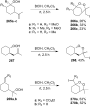
Scheme 74: Use of BCIH in the intramolecular cyclization.

Scheme 75: Palladium-catalyzed cyclization of δ-unsaturated hydroperoxides 271a–e.

Scheme 76: Intramolecular cyclization of unsaturated peroxyacetals 273a–d.

Scheme 77: Allyltrimethylsilane in the synthesis of 1,2-dioxanes 276a–d.

Scheme 78: Intramolecular cyclization using the electrophilic center of the peroxycarbenium ion 279.

Scheme 79: Synthesis of bicyclic 1,2-dioxanes.

Scheme 80: Preparation of 1,2-dioxane 286.

Scheme 81: Di(tert-butyl)peroxalate-initiated radical cyclization of unsaturated hydroperoxide 287.

Scheme 82: Oxidation of 1,4-betaines 291a–d.

Scheme 83: Synthesis of aminoquinoline-containing 1,2-dioxane 294.

Scheme 84: Synthesis of the sulfonyl-containing 1,2-dioxane.

Scheme 85: Synthesis of the amido-containing 1,2-dioxane 301.

Scheme 86: Reaction of singlet oxygen with the 1,3-diene system 302.

Scheme 87: Synthesis of (+)-premnalane А and 8-epi-premnalane A.

Scheme 88: Synthesis of the diazo group containing 1,2-dioxenes 309a–e.

Figure 4: Plakortolide Е.

Scheme 89: Synthesis of 6-epiplakortolide Е.

Scheme 90: Application of Bu3SnH for the preparation of tetrahydrofuran-containing bicyclic peroxides 318a,b.

Scheme 91: Application of Bu3SnH for the preparation of lactone-containing bicyclic peroxides 320a–f.

Scheme 92: Dihydroxylation of the double bond in the 1,2-dioxene ring 321 with OsO4.

Scheme 93: Epoxidation of 1,2-dioxenes 324.

Scheme 94: Cyclopropanation of the double bond in endoperoxides 327.

Scheme 95: Preparation of pyridazine-containing bicyclic endoperoxides 334a–c.

Scheme 96: Synthesis of 1,2,4-trioxanes 337 by the hydroperoxidation of unsaturated alcohols 335 with 1O2 and ...

Scheme 97: Synthesis of sulfur-containing 1,2,4-trioxanes 339.

Scheme 98: BF3·Et2O-catalyzed synthesis of the 1,2,4-trioxanes 342a–g.

Scheme 99: Photooxidation of enol ethers or vinyl sulfides 343.

Scheme 100: Synthesis of tricyclic peroxide 346.

Scheme 101: Reaction of endoperoxides 348a,b derived from cyclohexadienes 347a,b with 1,4-cyclohexanedione.

Scheme 102: [4 + 2]-Cycloaddition of singlet oxygen to 2Н-pyrans 350.

Scheme 103: Synthesis of 1,2,4-trioxanes 354 using peroxysilylation stage.

Scheme 104: Epoxide-ring opening in 355 with H2O2 followed by the condensation of hydroxy hydroperoxides 356 wi...

Scheme 105: Peroxidation of unsaturated ketones 358 with the H2O2/CF3COOH/H2SO4 system.

Scheme 106: Synthesis of 1,2,4-trioxanes 362 through Et2NH-catalyzed intramolecular cyclization.

Scheme 107: Reduction of the double bond in tricyclic peroxides 363.

Scheme 108: Horner–Wadsworth–Emmons reaction in the presence of peroxide group.

Scheme 109: Reduction of ester group by LiBH4 in the presence of 1,2,4-trioxane moiety.

Scheme 110: Reductive amination of keto-containing 1,2,4-trioxane 370.

Scheme 111: Reductive amination of keto-containing 1,2,4-trioxane and a Fe-containing moiety.

Scheme 112: Acid-catalyzed reactions of Н2О2 with ketones and aldehydes 374.
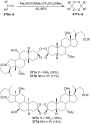
Scheme 113: Cyclocondensation of carbonyl compounds 376a–d using Me3SiOOSiMe3/CF3SO3SiMe3.

Scheme 114: Peroxidation of 4-methylcyclohexanone (378).

Scheme 115: Synthesis of symmetrical tetraoxanes 382a,b from aldehydes 381a,b.

Scheme 116: Synthesis of unsymmetrical tetraoxanes using of MeReO3.

Scheme 117: Synthesis of symmetrical tetraoxanes using of MeReO3.

Scheme 118: Synthesis of symmetrical tetraoxanes using of MeReO3.

Scheme 119: MeReO3 in the synthesis of symmetrical tetraoxanes with the use of aldehydes.

Scheme 120: Preparation of unsymmmetrical 1,2,4,5-tetraoxanes with high antimalarial activity.

Scheme 121: Re2O7-Catalyzed synthesis of tetraoxanes 398.

Scheme 122: H2SO4-Catalyzed synthesis of steroidal tetraoxanes 401.

Scheme 123: HBF4-Catalyzed condensation of bishydroperoxide 402 with 1,4-cyclohexanedione.

Scheme 124: BF3·Et2O-Catalyzed reaction of gem-bishydroperoxides 404 with enol ethers 405 and acetals 406.

Scheme 125: HBF4-Catalyzed cyclocondensation of bishydroperoxide 410 with ketones.

Scheme 126: Synthesis of symmetrical and unsymmetrical tetraoxanes 413 from benzaldehydes 412.
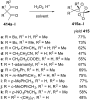
Scheme 127: Synthesis of bridged 1,2,4,5-tetraoxanes 415a–l from β-diketones 414a–l and H2O2.

Scheme 128: Dimerization of zwitterions 417.

Scheme 129: Ozonolysis of verbenone 419.

Scheme 130: Ozonolysis of O-methyl oxime 424.

Scheme 131: Peroxidation of 1,1,1-trifluorododecan-2-one 426 with oxone.

Scheme 132: Intramolecular cyclization of dialdehyde 428 with H2O2.

Scheme 133: Tetraoxanes 433–435 as by-products in peroxidation of ketals 430–432.

Scheme 134: Transformation of triperoxide 436 in diperoxide 437.

Scheme 135: Preparation and structural modifications of tetraoxanes.

Scheme 136: Structural modifications of steroidal tetraoxanes.

Scheme 137: Synthesis of 1,2,4,5-tetraoxane 454 containing the fluorescent moiety.

Scheme 138: Synthesis of tetraoxane 458 (RKA182).
Recent advances in transition metal-catalyzed Csp2-monofluoro-, difluoro-, perfluoromethylation and trifluoromethylthiolation
- Grégory Landelle,
- Armen Panossian,
- Sergiy Pazenok,
- Jean-Pierre Vors and
- Frédéric R. Leroux
Beilstein J. Org. Chem. 2013, 9, 2476–2536, doi:10.3762/bjoc.9.287
- excess) were heated under air in the absence of a cosolvent (Table 8). Benzene, naphthalene and several disubstituted benzenes were successfully transformed with 39–99% NMR yields and 27–76% isolated yields (relative to the starting perfluoroalkyl iodide). N-Methylpyrrole was also perfluoroalkylated in

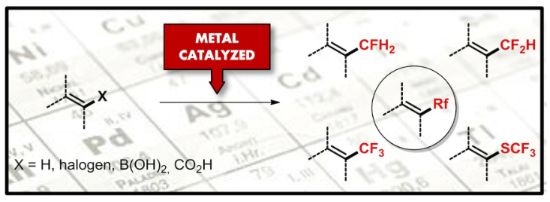
Graphical Abstract

Scheme 1: Pd-catalyzed monofluoromethylation of pinacol phenylboronate [44].

Scheme 2: Cu-catalyzed monofluoromethylation with 2-PySO2CHFCOR followed by desulfonylation [49].

Scheme 3: Cu-catalyzed difluoromethylation with α-silyldifluoroacetates [57].

Figure 1: Mechanism of the Cu-catalyzed C–CHF2 bond formation of α,β-unsaturated carboxylic acids through dec...

Scheme 4: Fe-catalyzed decarboxylative difluoromethylation of cinnamic acids [62].

Scheme 5: Preliminary experiments for investigation of the mechanism of the C–H trifluoromethylation of N-ary...

Figure 2: Plausible catalytic cycle proposed by Z.-J. Shi et al. for the trifluoromethylation of acetanilides ...

Figure 3: Plausible catalytic cycle proposed by M. S. Sanford et al. for the perfluoroalkylation of simple ar...

Figure 4: Postulated reaction pathway for the Ag/Cu-catalyzed trifluoromethylation of aryl iodides by Z. Q. W...

Figure 5: Postulated reaction mechanism for Cu-catalyzed trifluoromethylation reaction using MTFA as trifluor...

Scheme 6: Formal Heck-type trifluoromethylation of vinyl(het)arenes by M. Sodeoka et al. [83].

Figure 6: Proposed catalytic cycle for the copper-catalyzed trifluoromethylation of (het)arenes in presence o...

Figure 7: Proposed catalytic cycle for the copper-catalyzed trifluoromethylation of N,N-disubstituted (hetero...

Figure 8: Proposed catalytic cycle by Y. Zhang and J. Wang et al. for the copper-catalyzed trifluoromethylati...

Figure 9: Mechanistic rationale for the trifluoromethylation of arenes in presence of Langlois’s reagent and ...

Scheme 7: Trifluoromethylation of 4-acetylpyridine with Langlois’s reagent by P. S. Baran et al. (* Stirring ...

Scheme 8: Catalytic copper-facilitated perfluorobutylation of benzene with C4F9I and benzoyl peroxide [90].

Figure 10: F.-L. Qing et al.’s proposed mechanism for the copper-catalyzed trifluoromethylation of (hetero)are...

Figure 11: Mechanism of the Cu-catalyzed/Ru-photocatalyzed trifluoromethylation and perfluoroalkylation of ary...

Figure 12: Proposed mechanism for the Cu-catalyzed trifluoromethylation of aryl- and vinyl boronic acids with ...

Figure 13: Possible mechanism for the Cu-catalyzed decarboxylative trifluoromethylation of cinnamic acids [62].

Scheme 9: Ruthenium-catalyzed perfluoroalkylation of alkenes and (hetero)arenes with perfluoroalkylsulfonyl c...

Figure 14: N. Kamigata et al.’s proposed mechanism for the Ru-catalyzed perfluoroalkylation of alkenes and (he...

Figure 15: Proposed mechanism for the Ru-catalyzed photoredox trifluoromethylation of (hetero)arenes with trif...

Figure 16: Late-stage trifluoromethylation of pharmaceutically relevant molecules with trifluoromethanesulfony...

Figure 17: Proposed mechanism for the trifluoromethylation of alkenes with trifluoromethyl iodide under Ru-bas...

Scheme 10: Formal perfluoroakylation of terminal alkenes by Ru-catalyzed cross-metathesis with perfluoroalkyle...

Figure 18: One-pot Ir-catalyzed borylation/Cu-catalyzed trifluoromethylation of complex small molecules by Q. ...

Figure 19: Mechanistic proposal for the Ni-catalyzed perfluoroalkylation of arenes and heteroarenes with perfl...

Scheme 11: Electrochemical Ni-catalyzed perfluoroalkylation of 2-phenylpyridine (Y. H. Budnikova et al.) [71].

Scheme 12: Fe(II)-catalyzed trifluoromethylation of arenes and heteroarenes with trifluoromethyl iodide (T. Ya...

Figure 20: Mechanistic proposal by T. Yamakawa et al. for the Fe(II)-catalyzed trifluoromethylation of arenes ...

Scheme 13: Ytterbium-catalyzed perfluoroalkylation of dihydropyran with perfluoroalkyl iodide (Y. Ding et al.) ...

Figure 21: Mechanistic proposal by A. Togni et al. for the rhenium-catalyzed trifluoromethylation of arenes an...

Figure 22: Mechanism of the Cu-catalyzed oxidative trifluoromethylthiolation of arylboronic acids with TMSCF3 ...

Scheme 14: Removal of the 8-aminoquinoline auxiliary [136].

Figure 23: Mechanism of the Cu-catalyzed trifluoromethylthiolation of C–H bonds with a trifluoromethanesulfony...
Crystal design using multipolar electrostatic interactions: A concept study for organic electronics
- Peer Kirsch,
- Qiong Tong and
- Harald Untenecker
Beilstein J. Org. Chem. 2013, 9, 2367–2373, doi:10.3762/bjoc.9.272
- "walls". This difference between hole and electron transfer can be explained by the geometries of the HOMO and LUMO orbitals (Figure 6) and their different modes of overlap in the arrangements A–D. Whereas the HOMO is all over the aromatic part of 1, the LUMO is more contracted to the central naphthalene

Graphical Abstract

Figure 1: Schematic view of the different types of molecular arrangements in acene-based molecular semiconduc...

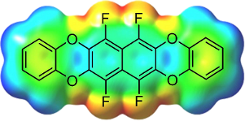
Figure 2: Target compound 1 and its calculated electrostatic potential surface. The colors denote a range of ...

Scheme 1: Syntheses of the substitution products 1 and 3: a) Catechol, K2CO3, THF; 60 °C, 4 h (12%). b) Catec...

Figure 3: The crystal structure of 1 is characterized by brick wall-like stacks (left), which are arranged in...

Figure 4: The electrostatic factors determining the packing of 1. The laterally interlinked sheets are stabil...

Figure 5: The four closest pairs A–D in the crystal structure of 1. The corresponding transfer integrals for ...

Figure 6: Geometries of HOMO (−5.64 eV, left) and LUMO (−1.29 eV, right) of 1 [15].
Gold-catalyzed reaction of oxabicyclic alkenes with electron-deficient terminal alkynes to produce acrylate derivatives
- Yin-wei Sun,
- Qin Xu and
- Min Shi
Beilstein J. Org. Chem. 2013, 9, 1969–1976, doi:10.3762/bjoc.9.233
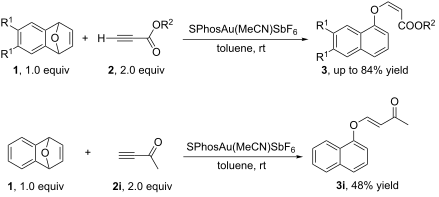
- ). Since naphthalene-1-ol (5) was obtained in this reaction, we used naphthalene-1-ol (5) as a substrate and carried out the reaction under the optimal conditions to clarify whether the reaction proceeded through naphthalene-1-ol. The formation of 3a could not be observed, suggesting that naphthalene-1-ol
- formed by a regioselective opening of the oxygen bridge in substrate 1a. Intermediate A releases a proton to afford intermediate B. Intermediate B attacks methyl propiolate, which is activated by the gold catalyst, to generate gold vinyl complex C. In intermediate C, the ester group and the naphthalene
- , intermediate B attacks non-coordinated alkyne ketone 2i in a cis-addition manner to generate gold vinyl complex D. In intermediate D, the carbonyl group and the naphthalene ring are on opposite sides, affording product 3i with (E)-configuration by protodeauration. Conclusion In summary, we have developed a

Graphical Abstract

Scheme 1: Gold-catalyzed reactions of oxabicyclic alkenes with electron-deficient terminal alkynes.

Figure 1: Gold complexes used in this reaction.

Scheme 2: The reaction with terminal alkyne 2i as a substrate.

Scheme 3: The reaction with naphthalen-1-ol (5) as a substrate.

Scheme 4: The proposed mechanism for Au(I)-catalyzed reaction.
Topochemical control of the photodimerization of aromatic compounds by γ-cyclodextrin thioethers in aqueous solution
- Hai Ming Wang and
- Gerhard Wenz
Beilstein J. Org. Chem. 2013, 9, 1858–1866, doi:10.3762/bjoc.9.217
- complexes with polycyclic aromatics, such as naphthalene, anthracene (ANT), and acenaphthylene (ACE) [25]. In the following we report on the photochemistry of ANT, ACE and coumarin (COU), templated by complexation in several hydrophilic γ-CD thioethers 1–7 (Figure 1 and Figure 2). Special attention will be

Graphical Abstract

Figure 1: Chemical structures of selected aromatic guests: anthracene, ANT; acenaphthylene, ACE; and coumarin...

Figure 2: Structures of γ-CD and γ-CD thioethers 1–7.

Scheme 1: Photodimerization of ACE.

Figure 3: 1H NMR spectrum of the photo product of ACE in the presence of γ-CD thioether 3 in CDCl3.
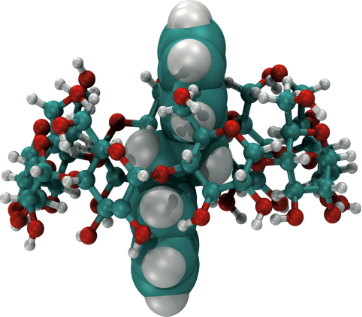
Figure 4: Schematic drawing of the ACE photodimers in γ-CD: a) the syn photodimer and b) the anti photodimer....
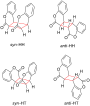
Figure 5: Structures of COU photodimers.

Figure 6: Partial 1H NMR of the photodimers formed after irradiation of COU at various concentrations of Na2SO...
Synthesis and biological activities of the respiratory chain inhibitor aurachin D and new ring versus chain analogues
- Xu-Wen Li,
- Jennifer Herrmann,
- Yi Zang,
- Philippe Grellier,
- Soizic Prado,
- Rolf Müller and
- Bastien Nay
Beilstein J. Org. Chem. 2013, 9, 1551–1558, doi:10.3762/bjoc.9.176
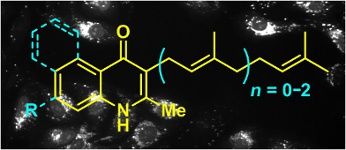
- naphthalene analogue, yet without totally explaining the observed cytotoxic activity of the compounds. Finally, a synthetic entry is given to the complete carboheterocyclic core of aurachin H through the N-oxidation/epoxidation of aurachin D and a shorter chain analogue, followed by subsequent biomimetic

Graphical Abstract
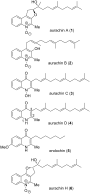
Figure 1: The 2-methyl-4(1H)-quinolone compounds: aurachins and endochin.
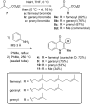
Scheme 1: Synthesis of aurachin D (4) and geranyl (9), prenyl (10) and methyl (11) analogues.
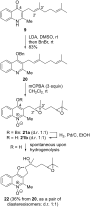
Scheme 2: Strategy toward the heterocyclic core of aurachin H.

Figure 2: (A) Loss of mitochondrial membrane potential in human U-2 OS osteosarcoma cells that were treated w...
Synthesis and spectroscopic properties of 4-amino-1,8-naphthalimide derivatives involving the carboxylic group: a new molecular probe for ZnO nanoparticles with unusual fluorescence features
- Laura Bekere,
- David Gachet,
- Vladimir Lokshin,
- Wladimir Marine and
- Vladimir Khodorkovsky
Beilstein J. Org. Chem. 2013, 9, 1311–1318, doi:10.3762/bjoc.9.147

- . Photophysical properties The spectroscopic properties of 1,8-naphthalimides are strongly dependent on the substituent at C-4 of the naphthalene ring. In general, the derivatives with a halogen atom or alkoxy groups are colorless and exhibit blue fluorecence [15][16], while the amino-substituted 1,8
- orbitals localized within the naphthalene and phenyl rings. These results are in a good agreement with the experiment (Figure 1). It is noteworthy that both HOMO and LUMO orbitals are delocalized and involve both the naphthalene moiety and the amino substituent (Figure 6a,b). In addition, the phenyl ring

Graphical Abstract

Scheme 1: Synthesis and structures of 1,8-naphthalimides.

Figure 1: Normalized absorption (solid curves) and fluorescence (dashed curves) spectra of 4: (1) in cyclohex...

Figure 2: Normalized fluorescence spectra of 4 in ethanol (5 × 10⁻⁵ M): (solid line) neutral solution; (dashe...

Figure 3: Normalized fluorescence spectra of 4 in ethanol at different concentrations: (solid line) 10−4 M; (...

Scheme 2: Possible ionization and complexation of 4 in ethanol.

Figure 4: Fluorescence decay profile of 4 from a 10−5 M solution in ethanol (excitation at 450 nm, detection ...

Figure 5: Normalized one- and two-photon spectra of dye 4 in toluene. Solid curves: one-photon absorption and...

Figure 6: (a) HOMO and (b) LUMO of 4.

Figure 7: Fluorescence spectra of 4 ethanol (5 × 10⁻⁵ M) (dashed curve) before and after the addition of ZnO ...
Amyloid-β probes: Review of structure–activity and brain-kinetics relationships
- Todd J. Eckroat,
- Abdelrahman S. Mayhoub and
- Sylvie Garneau-Tsodikova
Beilstein J. Org. Chem. 2013, 9, 1012–1044, doi:10.3762/bjoc.9.116
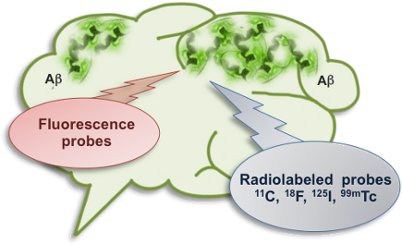
- (9) and diphenyl-1,3,4-oxadiazole (10); and thioflavin-T analogues such as benzothiazole (11), benzoxazole (12), benzofuran (13), imidazopyridine (14), and benzimidazole (15); as well as quinoline (16) and naphthalene (17) derivatives (Figure 1B). In this review, we provide an overview of these AD
- naphthalene analogues Quinolines Investigation of the quinoline scaffold for imaging in AD has yielded some interesting results, despite there only being a few examples in the literature. The [18F]-labeled 2-fluoroquinolin-8-ol [18F]CABS13 (149) has recently been reported (Figure 5) [98]. The straightforward
- , and, with favorable pharmacokinetics, it was able to highlight tau pathology in vivo in transgenic mice [100]. Naphthalenes Replacement of the cyclic nitrogen in the quinoline scaffold described in the previous section affords the naphthalene scaffold. This scaffold has shown promising results for Aβ

Graphical Abstract
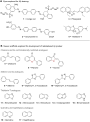
Figure 1: Structures of A. dyes originally used to stain Aβ and B. newer scaffolds explored for the developme...
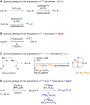
Scheme 1: General synthetic strategies (Gs) used to introduce A. 18F, B. 11C, C. 99mTc/Re, and D. 123I and 125...

Scheme 2: A. Structures of radiolabeled chalcone analogues discussed. B.–D. Synthetic schemes for the prepara...
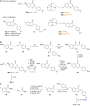
Scheme 3: A. Structures of the radiolabeled flavone and aurone analogues discussed. B. Synthetic scheme for t...

Scheme 4: A. Structures of the radiolabeled stilbene analogues discussed. B. Synthetic scheme for the prepara...

Scheme 5: A. Structures of the diphenyl-1,3,4- and diphenyl-1,2,4-oxadiazoles discussed. B.,C. Synthetic sche...

Figure 2: Structures of the radiolabeled benzothiazole analogues discussed.
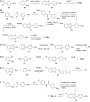
Scheme 6: A.–F. Synthetic schemes for the preparation of [11C]56b, [11C]56c, 57, 58a,b, 61, and [18F]65a–d.
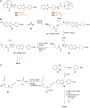
Scheme 7: A. Structures of the [Re]- and [99mTc]-labeled benzothiazole analogues discussed. B.,C. Synthetic s...

Figure 3: Structures of the radiolabeled benzoxazole analogues discussed.
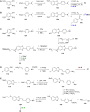
Scheme 8: A.–E. Synthetic schemes for the preparation of 94, [123I]95e, 96–98.

Figure 4: Structures of the radiolabeled benzofuran analogues discussed.
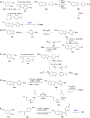
Scheme 9: A.–E. Synthetic schemes for the preparation of 121, [125I]122a, 123a,b, 125a,b, and 126.

Scheme 10: A. Structures of the radiolabeled imidazopyridine analogues discussed. B. Synthetic scheme for the ...

Scheme 11: Synthetic scheme for the preparation of the benzimidazole 146.

Figure 5: Structures of the quinolines discussed.

Scheme 12: Synthetic scheme for the preparation of the naphthalene analogues 152 and 160a,b.

Scheme 13: A. Structures of the radiolabeled analogues resulting from the combination of various scaffolds. B.,...
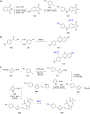
Scheme 14: A.–C. Synthetic schemes for the preparation of radiolabeled probes with unique scaffolds.

Scheme 15: A. Structures of the oxazine-derived fluorescence probes discussed. B. Synthetic scheme for the pre...

Figure 6: Structure of THK-265 (190).

Scheme 16: Synthetic scheme for the preparation of quinoxaline analogue 191.
Spectroscopic characterization of photoaccumulated radical anions: a litmus test to evaluate the efficiency of photoinduced electron transfer (PET) processes
- Maurizio Fagnoni,
- Stefano Protti,
- Davide Ravelli and
- Angelo Albini
Beilstein J. Org. Chem. 2013, 9, 800–808, doi:10.3762/bjoc.9.91
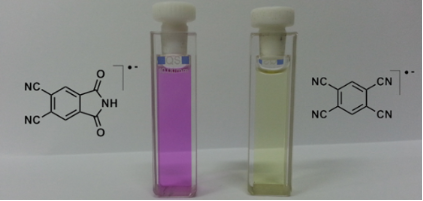
- solution) in the presence of tertiary amines allowed the accumulation of the corresponding radical anions, up to quantitative yield for polysubstituted benzenes and partially with naphthalene and anthracene derivatives. The condition for such an accumulation was that the donor radical cation underwent

Graphical Abstract

Scheme 1: Photoinduced electron transfer as an access to radical chemistry.
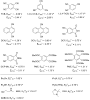
Figure 1: Reduction potential (versus SCE) of the ground and excited state of acceptors and oxidation potenti...

Figure 2: UV-monitoring of: (a) a 2 × 10⁻⁴ M solution of TCB in the presence of Bu4Sn (10−2 M) and (b) a 1.5 ...

Figure 3: Absorption spectra of a freeze–pump–thaw deoxygenated MeCN solution irradiated at 313 nm of (a) 1,2...

Scheme 2: Mechanistic scheme.

Figure 4: Thermodynamics of the redox processes discussed (solid arrows represent exergonic electron donation...
Spin state switching in iron coordination compounds
- Philipp Gütlich,
- Ana B. Gaspar and
- Yann Garcia
Beilstein J. Org. Chem. 2013, 9, 342–391, doi:10.3762/bjoc.9.39

Graphical Abstract

Figure 1: Change of electron distribution between HS and LS states of an octahedral iron(II) coordination com...

Figure 2: Types of spin transition curves in terms of the molar fraction of HS molecules, γHS(T), as a functi...
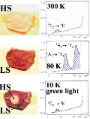
Figure 3: Single crystal UV–vis spectra of the spin crossover compound [Fe(ptz)6](BF4)2 (ptz = 1-propyltetraz...
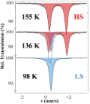
Figure 4: Thermal spin crossover in [Fe(ptz)6](BF4)2 (ptz = 1-propyltetrazole) recorded at three different te...

Figure 5: (a) Mössbauer spectra of the LS compound [Fe(phen)3]X2 recorded over the temperature range 300–5 K....

Figure 6: (left) Demonstration of light-induced spin state trapping (LIESST) in [Fe(ptz)6]BF4)2 with 57Fe Mös...

Figure 7: Schematic representation of the pressure influence (p2 > p1) on the LS and HS potential wells of an...

Figure 8: χMT versus T curves at different pressures for [Fe(phen)2(NCS)2], polymorph II. (Reproduced with pe...

Figure 9: Molecular structure (a) and γHS(T) curves at different pressures for [CrI2(depe)2] (b) (Reproduced ...

Figure 10: HS molar fraction γHS versusT at different pressures for [Fe(phy)2](BF4)2. The hysteresis loop broa...

Figure 11: Proposed structure of the polymeric [Fe(4R-1,2,4-triazole)3]2+ spin crossover cation (a) and plot o...

Figure 12: Temperature dependence of the HS fraction γHS(T), determined from Mössbauer spectra of [Fe(II)xZn1-x...
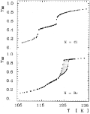
Figure 13: Influence of the noncoordinated anion on the spin transition curve γHS(T) near the transition tempe...

Figure 14: Spin transition curves γHS(T) for different solvates of the SCO complexes. [Fe(II)(2-pic)3]Cl2·Solv...
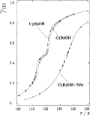
Figure 15: ST curves γHS(T) of the deuterated solvates of [Fe(II)(2-pic)3]Cl2·Solv with Solv = C2D5OH and C2H5...

Figure 16: Sketch of the two-step spin transition; [LS–LS] pair is diamagnetic, [LS–HS] is paramagnetic and th...

Figure 17: (left) Temperature dependence of χMT for {[Fe(L)(NCX)2]2bpym}(L = bpym or bt and X = S or Se). (rig...

Figure 18: Temperature dependence of χMT for [bpym, NCS−] (left) and [bpym, NCSe−] (right) at different pressu...

Figure 19: 57Fe Mössbauer spectra of [bpym, NCSe−] measured at 4.2 K at zero field (a) and at 5 T (b) (see tex...

Figure 20: Temperature dependence of χMT for [Fe2(L)3](ClO4)4·2H2O showing a complete two-step spin conversion...

Figure 21: (a) View of the dinuclear unit in the crystal structure of [Fe2(Hsaltrz)5(NCS)4]·4MeOH. (b) Tempera...

Figure 22: (left) AFM pattern recorded in tapping mode at room temperature on hexagonal single crystals of [Fe3...

Figure 23: (right) Stepwise SCO in an Fe4 [2 × 2] grid, which reveals a smooth magnetic profile under ambient ...

Figure 24: (left) View of the discrete nanoball made of Fe(II) SCO units as well as Cu(I) building blocks. (ri...

Figure 25:
(left) Linear dependency between T1/2 in the heating (Δ) and cooling (![[Graphic 1]](/bjoc/content/inline/1860-5397-9-39-i3.png?max-width=637&scale=1.18182) ) modes versus the anion volu...
) modes versus the anion volu...

Figure 26: (left) View of the linear chain structure of [Fe(1,2-bis(tetrazol-1-yl)propane)3]2+ along the a axi...

Figure 27: (left) View of the 2D layered structure of [Fe(btr)2(NCS)2]·H2O (at 293 K). The water molecules (in...

Figure 28: (left) Three interpenetrated square networks for [Fe(bpb)2(NCS)2]·MeOH. (right) χMT versus T plot s...

Figure 29: Part of the crystal structure of [Fe{N(entz)3}](BF4)2 (T = 293 K) [335,336]. (Reproduced with permission fro...

Figure 30: (left) Projection of the crystal structure of [Fe(btr)3](ClO4)2 along the c axis revealing a 3D str...

Figure 31: Size-dependent SCO properties in [Fe(pz)Pt(CN)4] (left), change of color upon spin state transition...

Figure 32: Schematic showing the epitaxial growth of polymer {Fe(pz)[Pt(CN)4]} and the spin transition propert...

Figure 33: Microcontact printing (μCP) of nanodots on Si-wafer of [Fe(ptz)6](BF4)2 after deposition of crystal...

Figure 34: (left) Projection of the two independent cations of [Fe(C6–trenH)]2+ with atom numbering scheme (15...
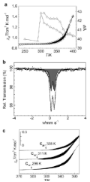
Figure 35: (a) χMT versus T for [Fe(C16-trenH)]Cl2·0.5H2O and variation of the distance d with temperature (T)...

Figure 36: Schematic illustration of the structure of compounds [Fe(Cn-tba)3]X2 adopting a columnar mesophase ...

Figure 37: Temperature dependence of the magnetic moment (M) at 1000 Oe and DSC profiles (inset; 5 °C/min) of ...

Figure 38: Porous structure of the SCO-PMOFs {Fe(pz)[M(II)(CN)4]} (left), representation of the host–guest int...

Figure 39: Porous structure of the guest-free SCO-PMOF’s {Fe(pz)[M(II)(CN)4]} (left), magnetic properties of t...

Figure 40: (left) The 3D porous structure of {Fe(pz)[Pt(CN)4]}·0.5(CS(NH2)2) (1) and {Fe(pz)[Pd(CN)4]}·1.5H2O·...
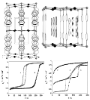
Figure 41: Top: The 3D porous structure of {Fe(dpe)[Pt(CN)4]}·phenazine in a direction close to [101] emphasiz...

Figure 42: View of the segregated stacking of [Ni(dmit)2]− and [Fe(sal2-trien)]+ in [Fe(qsal)2][Ni(dmit)2]3·CH3...

Figure 43: Thin films based on Fe(III) compounds coordinated to Terthienyl-substituted QsalH ligands [434] together...

Figure 44: Left: Temperature-dependent emission spectra for [Fe2(Hsaltrz)5(NCS)4]·4MeOH at λex = 350 nm over t...
The chemistry of bisallenes
- Henning Hopf and
- Georgios Markopoulos
Beilstein J. Org. Chem. 2012, 8, 1936–1998, doi:10.3762/bjoc.8.225

Graphical Abstract

Figure 1: Loschmidt’s structure proposal for benzene (1) (Scheme 181 from [3]) and the corresponding modern stru...

Figure 2: The first isolated bisallenes.

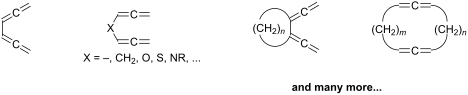
Figure 3: Carbon skeletons of selected bisallenes discussed in this review.

Scheme 1: The preparation of 1,2,4,5-hexatetraene (2).

Scheme 2: The preparation of a conjugated bisallene by the DMS-protocol.

Scheme 3: Preparation of the 3-deuterio- and 3,4-dideuterio derivatives of 24.

Scheme 4: A versatile method to prepare alkylated conjugated bisallenes and other allenes.

Scheme 5: A preparation of 3,4-dimethyl-1,2,4,5-hexatetraene (38).

Scheme 6: A (C6 + 0)-approach to 1,2,4,5-hexatetraene (2).

Scheme 7: The preparation of a fully alkylated bisallenes from a 2,4-hexadiyne-1,6-diol diacetate.

Scheme 8: The preparation of the first phenyl-substituted conjugated bisallenes 3 and 4.

Scheme 9: Selective hydrogenation of [5]cumulenes to conjugated bisallenes: another (C6 + 0)-route.

Scheme 10: Aryl-substituted conjugated bisallenes by a (C3 + C3)-approach.

Scheme 11: Hexaphenyl-1,2,4,5-hexatetraene (59) by a (C3 + C3)-approach.

Scheme 12: An allenation route to conjugated bisallenes.

Scheme 13: The preparation of 3,4-difunctionalized conjugated bisallenes.

Scheme 14: Problems during the preparation of sulfur-substituted conjugated bisallenes.

Scheme 15: The preparation of 3,4-dibromo bisallenes.

Scheme 16: Generation of allenolates by an oxy-Cope rearrangement.

Scheme 17: A linear trimerization of alkynes to conjugated bisallenes: a (C2 + C2 + C2)-protocol.

Scheme 18: Preparation of a TMS-substituted conjugated bisallene by a C3-dimerization route.

Scheme 19: A bis(trimethylsilyl)bisallene by a C3-coupling protocol.

Scheme 20: The rearrangement of highly substituted benzene derivatives into their conjugated bisallenic isomer...

Scheme 21: From fully substituted benzene derivatives to fully substituted bisallenes.

Scheme 22: From a bicyclopropenyl to a conjugated bisallene derivative.

Scheme 23: The conversion of a bismethylenecyclobutene into a conjugated bisallene.

Scheme 24: The preparation of monofunctionalized bisallenes.

Scheme 25: Preparation of bisallene diols and their cyclization to dihydrofurans.

Scheme 26: A 3,4-difunctionalized conjugated bisallene by a C3-coupling process.

Scheme 27: Preparation of a bisallenic diketone by a coupling reaction.

Scheme 28: Sulfur and selenium-substituted bisallenes by a [2.3]sigmatropic rearrangement.

Scheme 29: The biallenylation of azetidinones.

Scheme 30: The preparation of a fully ferrocenylated conjugated bisallene.

Scheme 31: The first isomerization of a 1,5-hexadiyne to a 1,2,4,5-hexatetraene.

Scheme 32: The preparation of alkynyl-substituted bisallenes by a C3-dimerization protocol.

Scheme 33: Preparation of another completely ferrocenylated bisallene.

Scheme 34: The cyclization of 1,5-hexadiyne (129) to 3,4-bismethylenecyclobutene (130) via 1,2,4,5-hexatetraen...
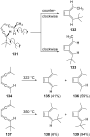
Scheme 35: Stereochemistry of the thermal cyclization of bisallenes to bismethylenecyclobutenes.

Scheme 36: Bisallene→bismethylenecyclobutene ring closures in the solid state.

Scheme 37: A bisallene cyclization/dimerization reaction.

Scheme 38: A selection of Diels–Alder additions of 1,2,4,5-hexatetraene with various double-bond dienophiles.

Scheme 39: The stereochemistry of the [2 + 4] cycloaddition to conjugated bisallenes.

Scheme 40: Preparation of azetidinone derivatives from conjugated bisallenes.

Scheme 41: Cycloaddition of heterodienophiles to a conjugated bisallene.

Scheme 42: Addition of triple-bond dienophiles to conjugated bisallenes.

Scheme 43: Sulfur dioxide addition to conjugated bisallenes.

Scheme 44: The addition of a germylene to a conjugated bisallene.

Scheme 45: Trapping of conjugated bisallenes with phosphinidenes.

Scheme 46: The cyclopropanantion of 1,2,4,5-hexatetraene (2).

Scheme 47: Photochemical reactions involving conjugated bisallenes.

Scheme 48: Base-catalyzed isomerizations of conjugated bisallenes.

Scheme 49: Ionic additions to a conjugated bisallene.

Scheme 50: Oxidation reactions of a conjugated bisallene.
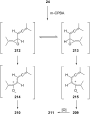
Scheme 51: The mechanism of oxidation of the bisallene 24.

Scheme 52: CuCl-catalyzed cyclization of 1,2,4,5-hexatetraene (2).

Scheme 53: The conversion of conjugated bisallenes into cyclopentenones.

Scheme 54: Oligomerization of a conjugated bisallene by nickel catalysts.
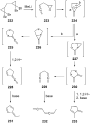
Scheme 55: Generation of 1,2,5,6-heptatetraene (229) as a reaction intermediate.

Scheme 56: The preparation of a stable derivative of 1,2,5,6-heptatetraene.

Scheme 57: A bisallene with a carbonyl group as a spacer element.

Scheme 58: The first preparation of 1,2,6,7-octatetraene (242).

Scheme 59: Preparation of 1,2,6,7-octatetraenes by (C4 + C4)-coupling of enynes.

Scheme 60: Preparation of 1,2,6,7-octatetraenes by (C4 + C4)-coupling of homoallenyl bromides.

Scheme 61: Preparation of 1,2,6,7-octatetraenes by alkylation of propargylic substrates.

Scheme 62: Preparation of two highly functionalized 1,2,6,7-octatetraenes.

Scheme 63: Preparation of several higher α,ω-bisallenes.

Scheme 64: Preparation of different alkyl derivatives of α,ω-bisallenes.

Scheme 65: The preparation of functionalized 1,2,7,8-nonatetraene derivatives.

Scheme 66: Preparation of functionalized α,ω-bisallenes.

Scheme 67: The preparation of an α,ω-bisallene by direct homologation of an α,ω-bisalkyne.

Scheme 68: The gas-phase pyrolysis of 4,4-dimethyl-1,2,5,6-heptatetraene (237).
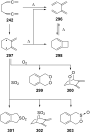
Scheme 69: Gas-phase pyrolysis of 1,2,6,7-octatetraene (242).

Scheme 70: The cyclopropanation of 1,2,6,7-octatetraene (242).

Scheme 71: Intramolecular cyclization of 1,2,6,7-octatetraene derivatives.

Scheme 72: The gas-phase pyrolysis of 1,2,7,8-nonatetraene (265) and 1,2,8,9-decatetraene (266).

Scheme 73: Rh-catalyzed cyclization of a functionalized 1,2,7,8-nonatetraene.

Scheme 74: A triple cyclization involving two different allenic substrates.

Scheme 75: Bicyclization of keto derivatives of 1,2,7,8-nonatetraene.

Scheme 76: The preparation of complex organic compounds from functionalized bisallenes.

Scheme 77: Cycloisomerization of an α,ω-bisallene containing a C9 tether.

Scheme 78: Organoborane polymers from α,ω-bisallenes.

Scheme 79: Preparation of trans- (337) and cis-1,2,4,6,7-octapentaene (341).

Scheme 80: The preparation of 4-methylene-1,2,5,6-heptatetraene (349).

Scheme 81: The preparation of acetylenic bisallenes.

Scheme 82: The preparation of derivatives of hydrocarbon 351.

Scheme 83: The construction of macrocyclic alleno-acetylenes.

Scheme 84: Preparation and reactions of 4,5-bismethylene-1,2,6,7-octatetraene (365).

Scheme 85: Preparation of 1,2-bis(propadienyl)benzene (370).

Scheme 86: The preparation of 1,4-bis(propadienyl)benzene (376).

Scheme 87: The preparation of aromatic and heteroaromatic bisallenes by metal-mediated coupling reactions.

Scheme 88: Double cyclization of an aromatic bisallene.

Scheme 89: Preparation of an allenic [15]paracyclophane by a ring-closing metathesis reaction of an aromatic α...

Scheme 90: Preparation of a macrocyclic ring system containing 1,4-bis(propadienyl)benzene units.

Scheme 91: Preparation of copolymers from 1,4-bis(propadienyl)benzene (376).

Scheme 92: A boration/copolymerization sequence of an aromatic bisallene and an aromatic bisacetylene.

Scheme 93: Formation of a layered aromatic bisallene.

Figure 4: The first members of the semicyclic bisallene series.

Scheme 94: Preparation of the first bis(vinylidene)cyclobutane derivative.
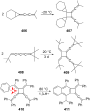
Scheme 95: Dimerization of strain-activated cumulenes to bis(vinylidene)cyclobutanes.

Scheme 96: Photodimerization of two fully substituted butatrienes in the solid state.

Scheme 97: Preparation of the two parent bis(vinylidene)cyclobutanes.

Scheme 98: The preparation of 1,3-bis(vinylidene)cyclopentane and its thermal isomerization.

Scheme 99: The preparation of the isomeric bis(vinylidene)cyclohexanes.

Scheme 100: Bi- and tricyclic conjugated bisallenes.
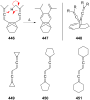
Scheme 101: A selection of polycyclic bisallenes.

Scheme 102: The first endocyclic bisallenes.

Figure 5: The stereochemistry of 1,2,6,7-cyclodecatetraene.

Scheme 103: The preparation of several endocyclic bisallenes.

Scheme 104: Synthesis of diastereomeric derivatives of 1,2,6,7-cyclodecatetraene.

Scheme 105: Preparation of a derivative of 1,2,8,9-cyclotetradecatetraene.

Scheme 106: The preparation of keto derivatives of cyclic bisallenes.

Scheme 107: The preparation of cyclic biscumulenic ring systems.

Scheme 108: Cyclic bisallenes in natural- and non-natural-product chemistry.

Scheme 109: The preparation of iron carbonyl complexes from cyclic bisallenes.

Figure 6: A selection of unknown exocyclic bisallenes that should have interesting chemical properties.

Scheme 110: The thermal isomerization of 1,2-diethynylcyclopropanes and -cyclobutanes.

Scheme 111: Intermediate generation of a cyclooctapentaene.

Scheme 112: Attempted preparation of a cyclodecahexaene.

Scheme 113: The thermal isomerization of 1,5,9-cyclododecatriyne (511) into [6]radialene (514).

Scheme 114: An isomerization involving a diketone derived from a conjugated bisallene.

Scheme 115: Typical reaction modes of heteroorganic bisallenes.

Scheme 116: Generation and thermal behavior of acyclic hetero-organic bisallenes.

Scheme 117: Generation of bis(propadienyl)thioether.

Scheme 118: The preparation of a bisallenic sulfone and its thermal isomerization.

Scheme 119: Bromination of the bisallenic sulfone 535.

Scheme 120: Metalation/hydrolysis of the bisallenic sulfone 535.

Scheme 121: Aromatic compounds from hetero bisallenes.

Scheme 122: Isomerization/cyclization of bispropargylic ethers.

Scheme 123: The preparation of novel aromatic systems by base-catalyzed isomerization of bispropargyl ethers.

Scheme 124: The isomerization of bisacetylenic thioethers to bicyclic thiophenes.

Scheme 125: Aromatization of macrocyclic bispropargylic sulfides.

Scheme 126: Preparation of ansa-compounds from macrocyclic bispropargyl thioethers.

Scheme 127: Alternate route for cyclization of a heterorganic bisallene.
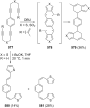
Scheme 128: Multiple isomerization/cyclization of “double” bispropargylic thioethers.

Scheme 129: Preparation of a bisallenyl disulfide and its subsequent bicyclization.

Scheme 130: Thermal cyclization of a bisallenyl thiosulfonate.

Scheme 131: Some reactions of heteroorganic bisallenes with two sulfur atoms.

Scheme 132: Further methods for the preparation of heteroorganic bisallenes.

Scheme 133: Cyclization reactions of heteroorganic bisallenes.

Scheme 134: Thermal cycloadditions of bisallenic tertiary amines.

Scheme 135: Cyclization of a bisallenic tertiary amine in the presence of a transition-metal catalyst.

Scheme 136: A Pauson–Khand reaction of a bisallenic ether.

Scheme 137: Formation of a 2:1adduct from two allenic substrates.

Scheme 138: A ring-forming silastannylation of a bisallenic tertiary amine.

Scheme 139: A three-component cyclization involving a heterorganic bisallene.

Scheme 140: Atom-economic construction of a complex organic framework from a heterorganic α,ω-bisallene.
Synthesis and structure of tricarbonyl(η6-arene)chromium complexes of phenyl and benzyl D-glycopyranosides
- Thomas Ziegler and
- Ulrich Heber
Beilstein J. Org. Chem. 2012, 8, 1059–1070, doi:10.3762/bjoc.8.118

- -exchange reaction between an arene and, most conveniently, either naphthalene–Cr(CO)3 complex or (MeCN)3Cr(CO)3 in which the chromium ligand is only weakly bound [14]; (b) simply heating the arene with hexacarbonylchromium in an inert solvent (Mahaffy–Pauson method) [15][16]. Method (a) has the
- aglycon in order to avoid complexation of hexacarbonylchromium with the basic nitrogen atom. However, all attempts to convert 1l into the corresponding tricarbonyl(η6-pyridine)chromium complex failed. Attempts to prepare a chromium complex of 1l by a ligand exchange reaction with naphthalene–Cr(CO)3 or

Graphical Abstract

Figure 1: Known types of η6-tricarbonylchromium complexes of sugar derivatives [9-13].

Scheme 1: Synthesis of glucoside 1l.

Scheme 2: Deprotection of 2c and enzymatic cleavage of 3.

Figure 2: ORTEP-plot of the asymmetric unit containing two molecules of compound 2a showing 30% probability e...

Figure 3: ORTEP-plot of the asymmetric unit showing two molecules of compound 2b and 30% probability ellipsoi...

Figure 4: ORTEP-plot of the asymmetrical unit showing two molecules of compound 2c and 30% probability ellips...

Figure 5: ORTEP-plot of the asymmetric unit showing two molecules of compound 2d and 30% probability ellipsoi...

Figure 6: ORTEP-plot of the asymmetrical unit showing two molecules of compound 2e and 30% probability ellips...

Figure 7: ORTEP-plot of the asymmetric unit showing three molecules of compound 2j and 30% probability ellips...

Figure 8: ORTEP-plot of the asymmetric unit showing three molecules of compound 2k and 30% probability ellips...

Figure 9: ORTEP-plot of the asymmetric unit showing two molecules of compound pR-2m and 30% probability ellip...

Figure 10: ORTEP-plot of the asymmetric unit showing three molecules of compound pS-2m and 30% probability ell...
Synthesis and in silico screening of a library of β-carboline-containing compounds
- Kay M. Brummond,
- John R. Goodell,
- Matthew G. LaPorte,
- Lirong Wang and
- Xiang-Qun Xie
Beilstein J. Org. Chem. 2012, 8, 1048–1058, doi:10.3762/bjoc.8.117
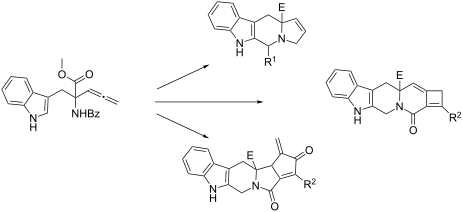
- these cases, it was assumed that competing coordination of the heteroatom to the silver ion was an issue; however, attempts were not made to alter the reaction conditions for these substrates. Furthermore, conversion of the naphthalene-containing analogues 1{14} and 1{15} to their corresponding

Graphical Abstract

Figure 1: Tetrahydro-β-carboline containing scaffolds 1–3.
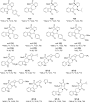
Figure 2: Library of tetrahydro-β-carboline containing compounds 1–7 and calculated properties (amolecular we...
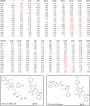
Figure 3: Results of high-throughput docking analysis. Top: A docking-score matrix arranged by compound IDs a...
The effect of the formyl group position upon asymmetric isomeric diarylethenes bearing a naphthalene moiety
- Renjie Wang,
- Shouzhi Pu,
- Gang Liu and
- Shiqiang Cui
Beilstein J. Org. Chem. 2012, 8, 1018–1026, doi:10.3762/bjoc.8.114
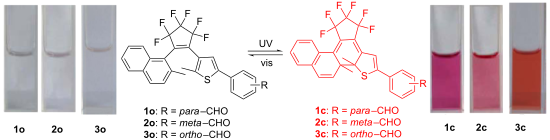
- fluorophores via a Schiff base structure. In a previous work, we developed a new class of diarylethenes with a naphthalene group and a thiophene group. The results revealed that these molecules have excellent photochromism with good fatigue resistance and thermal stability [37]. In this study, in order to
- further elucidate the substituent position effects on the photochromic features of naphthalene-containing diarylethenes, we synthesized three new isomeric diarylethenes with a formyl group at the para, meta, and ortho position on the terminal benzene ring (1–3). The photochromic scheme of 1–3 is shown in
- the fluorescence emission intensity of diarylethenes with a naphthalene moiety. Diarylethenes 1–3 exhibited an evident fluorescence switching capability upon changing from the open-ring to the closed-ring isomers by photoirradiation in both hexane and PMMA films. When irradiated by UV light, the

Graphical Abstract

Scheme 1: Photochromism of diarylethenes 1–3.

Scheme 2: Synthetic route for diarylethenes 1–3.

Figure 1: Absorption spectral changes of diarylethenes 1–3 by photoirradiation with UV–vis in hexane (2.0 × 10...

Figure 2: The color changes of diarylethene 1–3 by photoirradiation at room temperature: (A) in hexane; (B) i...

Figure 3: The photoconversion ratios of diarylethenes 1–3 in the photostationary state as analyzed by HPLC.

Figure 4: Fatigue resistance of diarylethenes 1–3 in hexane in air atmosphere at room temperature: (A) in hex...

Figure 5: Fluorescence emission spectra of diarylethenes 1–3 at room temperature: (A) in hexane solution (2.0...

Figure 6: Emission intensity changes of diarylethene 1 upon irradiation with UV light at room temperature: (A...

Figure 7: Cyclic voltammetry of diarylethenes 1–3 in acetonitrile with a scanning rate of 50 mV/s.
Fifty years of oxacalix[3]arenes: A review
- Kevin Cottet,
- Paula M. Marcos and
- Peter J. Cragg
Beilstein J. Org. Chem. 2012, 8, 201–226, doi:10.3762/bjoc.8.22
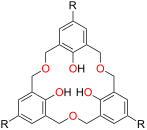
- found to be necessary to remove the ethanol stabilizer and to aid deprotection. Yields were up to 50%, and, interestingly, there was no template effect from any alkali metals. An analogous strategy was developed by Georghiou in 2001 to prepare asymmetric oxacalix[3]naphthalene derivatives [20], and this
- yield of the cone conformer never exceeded 22%. An experiment with the oxacalix[3]naphthalene analogue was performed in 2003 by Georghiou [30], which also gave the cone conformer in 25% yield. Cone-12a was used by Shinkai as the starting point from which to construct the chiral capped oxacalix[3]arene

Graphical Abstract

Figure 1: Calixarenes and expanded calixarenes: p-tert-Butylcalix[4]arene (1), p-tert-butyldihomooxacalix[4]a...

Figure 2: Conventional nomenclature for oxacalix[n]arenes.

Scheme 1: Synthesis of oxacalix[3]arenes: (i) Formaldehyde (37% aq), NaOH (aq), 1,4-dioxane; glacial acetic a...

Figure 3: p-tert-Butyloctahomotetraoxacalix[4]arene (4a) [16].

Figure 4: X-ray crystal structure of 3a showing phenolic hydrogen bonding (IUCr ID AS0508) [17].

Scheme 2: Stepwise synthesis of asymmetric oxacalix[3]arenes: (i) MOMCl, Adogen®464; (ii) 2,2-dimethoxypropan...
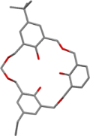
Figure 5: X-ray crystal structure of heptahomotetraoxacalix[3]arene 5 (CCDC ID 166088) [21].

Scheme 3: Oxacalix[3]arene synthesis by reductive coupling: (i) Me3SiOTf, Et3SiH, CH2Cl2; R1, R2 = I, Br, ben...

Scheme 4: Oxacalix[3]naphthalene: (i) HClO4 (aq), wet CHCl3 (R = tert-butyl, 6a, H, 6b) [20].

Figure 6: Conformers of 3a.

Scheme 5: Origin of the 25:75 cone:partial-cone statistical distribution of O-substituted oxacalix[3]arenes (p...

Scheme 6: Synthesis of alkyl ethers 7–10: (i) Alkyl halide, NaH, DMF [24].

Scheme 7: Synthesis of a pyridyl derivative 11a: (i) Picolyl chloride hydrochloride, NaH, DMF [26,27].

Figure 7: X-ray crystal structure of partial-cone 11a (CCDC ID 150580) [26].

Scheme 8: Lower-rim ethyl ester synthesis: (i) Ethyl bromoacetate, NaH, t-BuOK or alkali metal carbonate, THF...

Scheme 9: Forming chiral receptor 13: (i) Ethyl bromoacetate, NaH, THF; (ii) NaOH, H2O/1,4-dioxane; (iii) S-P...
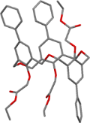
Figure 8: X-ray crystal structure of 16 (IUCr ID PA1110) [32].

Scheme 10: Lower rim N,N-diethylamide 17a: (i) N,N-Diethylchloroacetamide, NaH, t-BuOK or alkali metal carbona...

Scheme 11: Capping the lower rim: (i) N,N-Diethylchloroacetamide, NaH, THF; (ii) NaOH, H2O/1,4-dioxane; (iii) ...

Figure 9: X-ray crystal structure of 18 (CCDC ID 142599) [33].

Scheme 12: Extending the lower rim: (i) Glycine methyl ester, HOBt, dicyclohexycarbodiimide (DCC), CH2Cl2; (ii...

Scheme 13: Synthesis of N-hydroxypyrazinone derivative 23: (i) 1-[3-(Dimethylamino)propyl]-3-ethylcarbodiimide...

Scheme 14: Synthesis of 24: (i) 1-Adamantyl bromomethyl ketone, NaH, THF [39].

Scheme 15: Synthesis of 25 and 26: (i) (Diphenylphosphino)methyl tosylate, NaH, toluene; (ii) phenylsilane, to...

Figure 10: X-ray crystal structure of 27 in the partial-cone conformer (CCDC ID SUP 90399) [41].

Scheme 16: Synthesis of strapped oxacalix[3]arene derivatives 28 and 29: (i) N,N’-Bis(chloroacetyl)-1,2-ethyle...

Figure 11: A chiral oxacalix[3]arene [45].

Figure 12: X-ray crystal structure of asymmetric oxacalix[3]arene 30 incorporating t-Bu, iPr and Et groups (CC...

Scheme 17: Reactions of an oxacalix[3]arene incorporating an upper-rim Br atom with (i) Pd(OAc)2, PPh3, HCO2H,...

Scheme 18: Synthesis of acid 39: (i) NaOH, EtOH/H2O, HCl (aq) [47].

Figure 13: Two forms of dimeric oxacalix[3]arene 40 [47].

Scheme 19: Capping the upper rim: (i) t-BuLi, THF, −78 °C; (ii) NaBH4, THF/EtOH; (iii) 1,3,5-tris(bromomethyl)...

Figure 14: Oxacalix[3]arene capsules 46 and 47 formed through coordination chemistry [52,53].

Figure 15: X-ray crystal structure of the 3b-vanadyl complex (CCDC ID 240185) [57].

Scheme 20: Effect of Ti(IV)/SiO2 on 3a: (i) Ti(OiPr)4, toluene; (ii) triphenylsilanol, toluene; (iii) partiall...

Figure 16: X-ray crystal structures of oxacalix[3]arene complexes with rhenium: 3b∙Re(CO)3 (CCDC ID 620981, le...

Figure 17: X-ray crystal structure of the La2·3a2 complex (CSD ID TIXXUT) [60].

Figure 18: X-ray crystal structures of [3a∙UO2]− with a cavity-bound cation (CCDC ID 135575, left) and without...
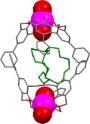
Figure 19: X-ray crystal structure of a supramolecule comprising two [3g·UO2]− complexes that encapsulate a di...

Figure 20: X-ray crystal structure of oxacalix[3]arene 49 capable of chiral selectivity (CSD ID HIGMUF) [65].
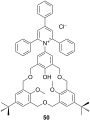
Figure 21: The structure of derivative 50 incorporating a Reichardt dye [66].

Figure 22: Phosphorylated oxacalix[3]arene complexes with transition metals: (Left to right) 26∙Au, 26∙Mo(CO)3...
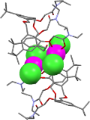
Figure 23: X-ray crystal structure of [17a·HgCl2]2 (CCDC ID 168653) [69].

Figure 24: X-ray crystal structures of 3f with C60 (CCDC ID 182801, left) [76] and a 1,4-bis(9-fluorenyl) C60 deri...

Figure 25: X-Ray crystal structure of 3i and 6a encapsulating C60 (CCDC ID 102473 and 166077) [23,79].
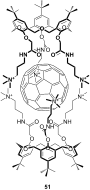
Figure 26: A C60 complexing cationic oxacalix[3]arene 51 [81].

Figure 27: An oxacalix[3]arene-C60 self-associating system 53 [87].

Scheme 21: Synthesis of fluorescent pyrene derivative 55: (i) Propargyl bromide, acetone; (ii) CuI, 1-azidomet...

Scheme 22: Synthesis of responsive rhodamine derivative 57: (i) DCC, CH2Cl2 [91].

Scheme 23: Synthesis of nitrobenzyl derivative 58: (i) 1-Bromo-4-nitrobenzyl acetate, K2CO3, refluxing acetone...

Figure 28: X-ray crystal structure of [Na2∙17a](PF6)2 (CCDC ID 116656) [97].
Valence isomerization of cyclohepta-1,3,5-triene and its heteroelement analogues
- Helen Jansen,
- J. Chris Slootweg and
- Koop Lammertsma
Beilstein J. Org. Chem. 2011, 7, 1713–1721, doi:10.3762/bjoc.7.201
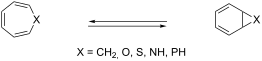
- with solutions highly enriched with either one or the other isomer [38][55]. The facile 3→4 valence isomerization [56][57][58], pioneered by the synthesis of 1,2-naphthalene oxide by Vogel and Klärner [1][59][60], is of considerable interest as arene oxides are intermediates in the oxidative metabolism

Graphical Abstract

Scheme 1: Valence isomerization of cyclohepta-1,3,5-triene (1) and its heteroelement analogues.

Scheme 2: Conformational ring inversions.

Scheme 3: Rearrangements of the parent cycloheptatriene 1 and norcaradiene 2.

Figure 1: NICS(0) values of fluorinated heteropines.

Scheme 4: Reactivity of oxepine (3) and benzene oxide (4).

Figure 2: Stabilized thiepines 15–18.

Scheme 5: Valence isomerization of 1H-azepines.
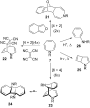
Scheme 6: Reactivity of 1H-azepine.

Figure 3: Benzannulated azepines 27 and 28.

Figure 4: Reported phosphepines 29–32.

Scheme 7: Phosphinidene generation from metal-complexed benzophosphepine 33.
Multistep flow synthesis of vinyl azides and their use in the copper-catalyzed Huisgen-type cycloaddition under inductive-heating conditions
- Lukas Kupracz,
- Jan Hartwig,
- Jens Wegner,
- Sascha Ceylan and
- Andreas Kirschning
Beilstein J. Org. Chem. 2011, 7, 1441–1448, doi:10.3762/bjoc.7.168
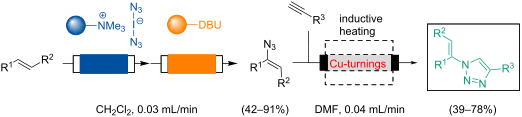
- means of an IR pyrometer. We chose 2-(1-azidovinyl)naphthalene (4b) and phenylacetylene (11a) as reaction partners for optimization. First, we had to find the best copper source (Table 3). We found that Cu-turnings gave complete conversion and a good isolated yield (Table 3, entry 2) for which the

Graphical Abstract

Scheme 1: Hassner's synthesis of vinyl azides and a stable, nonexplosive analogue 5 of iodine azide (1).

Scheme 2: Preparation of polymer-bound bisazido iodate(I) 5 and polymer-bound 1,8-diaza-[5.4.0]bicyclo-7-unde...

Scheme 3: Two-step protocol for the preparation of vinyl azides 4a–e and 4g–i under flow conditions.

Scheme 4: Regeneration of functionalized polymers 5 and 8.

Scheme 5: Preparation of triazoles 12a–l by using inductively heated copper turnings as a packed-bed material...
Meta-metallation of N,N-dimethylaniline: Contrasting direct sodium-mediated zincation with indirect sodiation-dialkylzinc co-complexation
- David R. Armstrong,
- Liam Balloch,
- Eva Hevia,
- Alan R. Kennedy,
- Robert E. Mulvey,
- Charles T. O'Hara and
- Stuart D. Robertson
Beilstein J. Org. Chem. 2011, 7, 1234–1248, doi:10.3762/bjoc.7.144

- usually inert towards orthodox organozinc reagents including benzene [15] and naphthalene [16]. These studies – that have been structurally supported by X-ray crystallography in tandem with NMR spectroscopy – have uncovered the chemical synergy that these mixed-metal alternatives can exhibit, which

Graphical Abstract

Scheme 1: Proposed stepwise mechanism for the zincation of benzene.
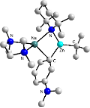
Figure 1: Molecular structure of 2 with selective atom labelling. Hydrogen atoms and minor disorder component...

Scheme 2: Synergic metallation of N,N-dimethylaniline (A) with sodium TMP-zincate 1 to produce 2, which was s...
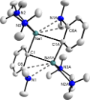
Figure 2: Molecular structure of 3 with selective atom labelling and thermal ellipsoids drawn at the 50% prob...

Scheme 3: Indirect zincation of N,N-dimethylaniline producing 4, 5 and 6, which was then quenched with I2 to ...

Figure 3: Molecular structure of 4 with selective atom labelling and thermal ellipsoids drawn at the 50% prob...

Figure 4: Solvent-separated ion-pair structure of 5 with selective atom labelling and thermal ellipsoids draw...

Figure 5: Molecular structure of 6 with selective atom labelling and thermal ellipsoids drawn at the 50% prob...

Figure 6: Aromatic region of 1H NMR spectra for deuterated benzene solutions of (a) the crude mixture obtaine...

Figure 7: Relative energy sequence of the four theoretical regioisomers of the experimentally observed produc...
One-pot four-component synthesis of pyrimidyl and pyrazolyl substituted azulenes by glyoxylation–decarbonylative alkynylation–cyclocondensation sequences
- Charlotte F. Gers,
- Julia Rosellen,
- Eugen Merkul and
- Thomas J. J. Müller
Beilstein J. Org. Chem. 2011, 7, 1173–1181, doi:10.3762/bjoc.7.136
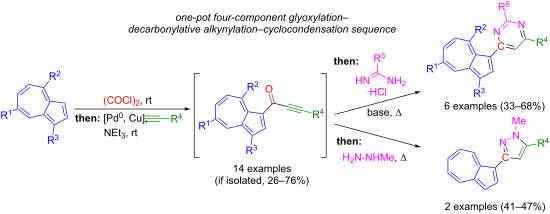
- planar, cyclic conjugation of 10 π-electrons. The dipole moment of 1a at μ = 1.08 D [20] is astoundingly large in comparison to that of naphthalene at μ = 0 D and can be rationalized by a significant contribution of cyclopentadienyl anion/tropylium cation resonance structures (Scheme 1) [19]. Since the

Graphical Abstract

Scheme 1: Selected resonance structures of azulene (1a) and structure of the sesquiterpene guaiazulene (1b).

Scheme 2: Synthesis of ynones by glyoxylation–decarbonylative Sonogashira coupling.

Scheme 3: Retrosynthetic analysis of N-heterocyclic substituted azulenes by a one-pot four-component approach....

Scheme 4: Three-component synthesis of azulenyl- and guaiazulenylynones 3 by glyoxylation–decarbonylative Son...

Scheme 5: Four-component synthesis of pyrimidylazulenes 5 by glyoxylation–decarbonylative Sonogashira couplin...

Scheme 6: Four-component synthesis of pyrazolylazulenes 7 by glyoxylation–decarbonylative Sonogashira couplin...
When gold can do what iodine cannot do: A critical comparison
- Sara Hummel and
- Stefan F. Kirsch
Beilstein J. Org. Chem. 2011, 7, 847–859, doi:10.3762/bjoc.7.97
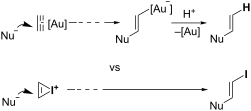
- , where NIS was used as the electrophilic agent [90]. Alkyne activation yields the iodonaphthalene as the sole product by an analogous 6-endo process. Both methods, regardless of whether the cyclization is triggered by Au+ or I+, require an alkyl substituent at the C2-position for naphthalene formation to

Graphical Abstract

Scheme 1: Mechanistic scenarios for alkyne activation.

Scheme 2: Synthesis of 3(2H)-furanones.

Scheme 3: Synthesis of furans.

Scheme 4: Formation of dihydrooxazoles.

Scheme 5: Variation on indole formation.

Scheme 6: Formation of naphthalenes.
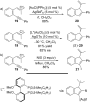
Scheme 7: Formation of indenes.

Scheme 8: Iodocyclization of 3-silyloxy-1,5-enynes.

Scheme 9: 5-Endo cyclizations with concomitant nucleophilic trapping.

Scheme 10: Reactivity of 3-BocO-1,5-enynes.
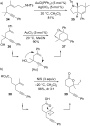
Scheme 11: Intramolecular nucleophilic trapping.

Scheme 12: Approach to azaanthraquinones.

Scheme 13: Carbocyclizations with enol derivatives.

Scheme 14: Gold-catalyzed cyclization modes for 1,5-enynes.

Scheme 15: Iodine-induced cyclization of 1,5-enynes.
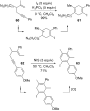
Scheme 16: Diverse reactivity of 1,6-enynes.
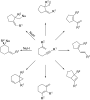
Scheme 17: Iodocyclization of 1,6-enynes.

Scheme 18: Cyclopropanation of alkenes with 1,6-enynes.

Scheme 19: Cyclopropanation of alkenes with 1,6-enynes.
Synthetic applications of gold-catalyzed ring expansions
- David Garayalde and
- Cristina Nevado
Beilstein J. Org. Chem. 2011, 7, 767–780, doi:10.3762/bjoc.7.87
- . After the first examples on the perchlorination of naphthalene with AuCl3 or AuCl by Schwemberger and Gordon in 1935 [10], almost forty years passed without a single report on the catalytic ability of gold salts, due to its presumed lack of reactivity. In 1972, Paul G. Gassman reported several studies

Graphical Abstract

Scheme 1: Transition metal promoted rearrangements of bicyclo[1.1.0]butanes.

Scheme 2: Gold-catalyzed rearrangements of strained rings.

Scheme 3: Gold-catalyzed ring expansions of cyclopropanols and cyclobutanols.

Scheme 4: Mechanism of the cycloisomerization of alkynyl cyclopropanols and cyclobutanols.

Scheme 5: Proposed mechanism for the Au-catalyzed isomerization of alkynyl cyclobutanols.

Scheme 6: Gold-catalyzed cycloisomerization of 1-allenylcyclopropanols.

Scheme 7: Gold-catalyzed cycloisomerization of cyclopropylmethanols.

Scheme 8: Gold-catalyzed cycloisomerization of aryl alkyl epoxides.

Scheme 9: Gold-catalyzed synthesis of furans.

Scheme 10: Transformations of alkynyl oxiranes.

Scheme 11: Transformations of alkynyl oxiranes into ketals.

Scheme 12: Gold-catalyzed cycloisomerization of cyclopropyl alkynes.

Scheme 13: Gold-catalyzed synthesis of substituted furans.

Scheme 14: Proposed mechanism for the isomerization of alkynyl cyclopropyl ketones.

Scheme 15: Cycloisomerization of cyclobutylazides.

Scheme 16: Cycloisomerization of alkynyl aziridines.

Scheme 17: Gold-catalyzed synthesis of disubstituted cyclohexadienes.

Scheme 18: Gold-catalyzed synthesis of indenes.

Scheme 19: Gold-catalyzed [n + m] annulation processes.

Scheme 20: Gold-catalyzed generation of 1,4-dipoles.

Scheme 21: Gold-catalyzed synthesis of repraesentin F.

Scheme 22: Gold-catalyzed ring expansion of cyclopropyl 1,6-enynes.

Scheme 23: Gold-catalyzed synthesis of ventricos-7(13)-ene.

Scheme 24: 1,2- vs 1,3-Carboxylate migration.

Scheme 25: Gold-catalyzed cycloisomerization of vinyl alkynyl cyclopropanes.

Scheme 26: Proposed mechanism for the cycloisomerization of vinyl alkynyl cyclopropanes.

Scheme 27: Gold-catalyzed 1,2-acyloxy rearrangement/cyclopropanation/cycloisomerization cascades.

Scheme 28: Formal total synthesis of frondosin A.

Scheme 29: Gold-catalyzed rearrangement/cycloisomerization of cyclopropyl propargyl acetates.
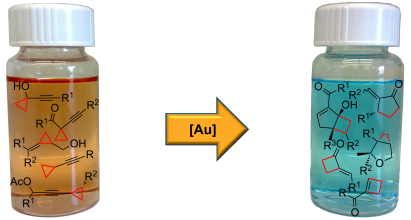
When cyclopropenes meet gold catalysts
- Frédéric Miege,
- Christophe Meyer and
- Janine Cossy
Beilstein J. Org. Chem. 2011, 7, 717–734, doi:10.3762/bjoc.7.82
- to the isomeric substituted naphthalene 21 as the sole product. Shi et al. had previously demonstrated that indene 20 and naphthalene 21 could be selectively formed using Cu(OTf)2 and BF3·OEt2 as catalysts, respectively, thereby highlighting the complementarities of the different electrophilic
- activators [31]. Since AgOTf and BF3·OEt2 led to the same naphthalene product 21, the authors suspected that traces of the Brønsted acid (HOTf) present in the silver salt may be the actual catalyst and may also modify the regioselectivity observed in the gold-catalyzed reaction. Thus, several basic additives
- with traces of water) should favour the formation of the more stable cyclopropyl cation 23. Afterwards, ring-opening and intramolecular Friedel–Crafts reactions should enable the formation of indene 20 or naphthalene 21. With the gold catalyst, the formation of indene 19 indicated that electrophilic

Graphical Abstract

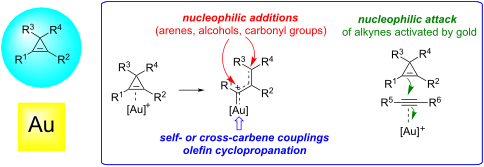
Scheme 1: General reactivity of cyclopropenes in the presence of gold catalysts.

Scheme 2: Cationic organogold species generated from cyclopropenone acetals.

Scheme 3: Rotation barriers around the C2–C3 bond (M06 DFT calculations).

Scheme 4: Au–C1 bond length in organogold species of type D.

Scheme 5: Gold-catalyzed addition of alcohols or water to cyclopropene 8.

Scheme 6: Gold-catalyzed addition of alcohols to cyclopropene 10.

Scheme 7: Mechanism of the gold-catalyzed addition of alcohols to cyclopropenes.

Scheme 8: Synthesis of tert-allylic ethers from cyclopropenes and allenes.

Scheme 9: Oxidation of the intermediate gold–carbene with diphenylsulfoxide.

Scheme 10: Gold, copper and Lewis acid-catalyzed reactions of cyclopropene 18.

Scheme 11: Mechanism of the Lewis acid-catalyzed reactions of cyclopropene 18.

Scheme 12: Gold-catalyzed rearrangement of vinylcyclopropenes 25.

Scheme 13: Gold-catalyzed rearrangement of cyclopropenes 27 to indenes 28.

Scheme 14: Gold-catalyzed rearrangement of cyclopropenes 29 to indenes 30.

Scheme 15: Gold-catalyzed rearrangement of cyclopropenyl ester 34a.

Scheme 16: Gold-catalyzed reactions of cyclopropenyl esters 34b–34d.

Scheme 17: Gold-catalyzed reactions of cyclopropenylsilane 34e.

Scheme 18: Gold-catalyzed rearrangement of cyclopropenylmethyl acetates.

Scheme 19: Mechanism of the gold-catalyzed rearrangement of cyclopropenes 39.

Scheme 20: Gold-catalyzed cyclopropanation of styrene with cyclopropene 8.

Scheme 21: Representative reactions of carbene precursors on gold metal.

Scheme 22: Intermolecular olefin cyclopropanation with gold carbenes generated from cyclopropenes.

Scheme 23: Gold-catalyzed formation of trienes from cyclopropenes and furans.

Scheme 24: Gold-catalyzed formation of trienes from cyclopropenes and furans.

Scheme 25: Gold-catalyzed formation of trienes from cyclopropenes and furans.

Scheme 26: Gold-catalyzed cycloisomerization of cyclopropene-ene 59.

Scheme 27: Gold-catalyzed cycloisomerization of substituted allyl cyclopropenyl carbinyl ethers 62a–62f.
Scheme 28: Gold-catalyzed cycloisomerization of cyclopropene-enes.

Scheme 29: Gold-catalyzed cycloisomerization of cyclopropene-ynes.

Scheme 30: Formation of products arising from a double cleavage process in the gold-catalyzed cycloisomerizati...

Scheme 31: Gold-catalyzed cycloisomerization of cyclopropene-ynes involving a double cleavage process.

Scheme 32: Gold-catalyzed reaction of cyclopropene-ynes, cyclopropene-enes and cyclopropene-allenes.
Gold-catalyzed naphthalene functionalization
- Pedro J. Pérez,
- M. Mar Díaz-Requejo and
- Iván Rivilla
Beilstein J. Org. Chem. 2011, 7, 653–657, doi:10.3762/bjoc.7.77
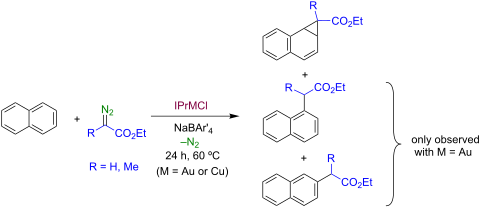
- bond. In addition, no byproducts derived from carbene coupling were observed. Keywords: carbene insertion; copper catalysts; diazoacetates; gold catalysts; naphthalene functionalization; selective insertion; Introduction At the end of the nineteenth century, Buchner discovered [1] the thermal and
- observed with other metal-based catalysts [4][5][6]. The above transformation with rhodium-based catalysts [7][8] has also been investigated with naphthalene as a substrate. In this case, Teyssié and co-workers showed that it could be converted, using t-butyl diazoacetate, into norcaradiene type
- derivatives, formed by the cyclopropanation of one of the double bonds of the naphthalene ring. Later, Müller and co-workers [9] showed the effect of a series of Rh2(L-L)4 in the same transformation but with ethyl diazoacetate as the carbene source. A mixture of the products (2a–d) arising from

Graphical Abstract

Scheme 1: (a) The Buchner reaction of benzene and ethyl diazoacetate and (b) the Rh-catalyzed version. (c) Bo...

Scheme 2: The Buchner reaction applied to naphthalene. (a) Teyssié's system. (b) Müller's system.

Scheme 3: The gold-catalyzed reaction of benzene and EDA.

Scheme 4: The functionalization of naphthalene with ethyl diazoacetate catalyzed by the complexes (a) 1a and ...

Scheme 5: The functionalization of naphthalene with ethyl 2-diazopropionate catalyzed by complexes 1a and 1b.
Synthesis of 5-(2-methoxy-1-naphthyl)- and 5-[2-(methoxymethyl)-1-naphthyl]-11H-benzo[b]fluorene as 2,2'-disubstituted 1,1'-binaphthyls via benzannulated enyne–allenes
- Yu-Hsuan Wang,
- Joshua F. Bailey,
- Jeffrey L. Petersen and
- Kung K. Wang
Beilstein J. Org. Chem. 2011, 7, 496–502, doi:10.3762/bjoc.7.58
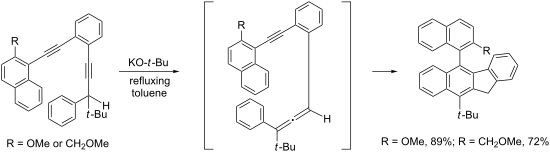
- spectrometer, the signals of the methylene hydrogens on the five-membered ring could be discerned as an AB system at δ 4.27 (J = 21 Hz) and 4.25 (J = 21 Hz). The rotational barrier of BINOL as a member of the 2,2'-disubstituted 1,1'-binaphthyls was determined to be 37.2 kcal/mol at 195 °C in naphthalene
- -butoxide (1.0 M) in 2-methyl-2-propanol, lithium diisopropylamide (LDA, 2.0 M) in heptane/THF/ethylbenzene, Pd(PPh3)2Cl2, Pd(PPh3)4, copper(I) iodide, triethylamine, 1.0 M BH3·THF solution in THF, 1-ethynylnaphthalene (18a), 2-methoxy-1-naphthaldehyde, 1-bromo-2-(methoxymethyl)naphthalene, (trimethylsilyl

Graphical Abstract

Scheme 1: Synthesis of 5-aryl-11H-benzo[b]fluorenes via benzannulated enyne–allenes.

Scheme 2: Synthesis of 1,1'-binaphthyl-substituted 11H-benzo[b]fluorene 3c.

Scheme 3: Synthesis of 5-(2-methoxyphenyl)- and 5-[2-(methoxymethyl)phenyl]-11H-benzo[b]fluorene 13a and 13b.

Scheme 4: Synthesis of 5-(1-naphthyl)- and 5-(2-methoxy-1-naphthyl)-11H-benzo[b]fluorene 20a and 20b.

Scheme 5: Synthesis of 5-[2-(methoxymethyl)-1-naphthyl]-11H-benzo[b]fluorene 20c.

Scheme 6: Demethylation of 22b to form 5-(2-hydroxy-1-naphthyl)-11H-benzo[b]fluorene 24.



