Search results
Search for "1,2,3-triazole" in Full Text gives 109 result(s) in Beilstein Journal of Organic Chemistry.
Cone p-aminocalix[4]arenes enriched with ‘clickable’ alkyne or azide functionalities
Beilstein J. Org. Chem. 2026, 22, 399–415, doi:10.3762/bjoc.22.28
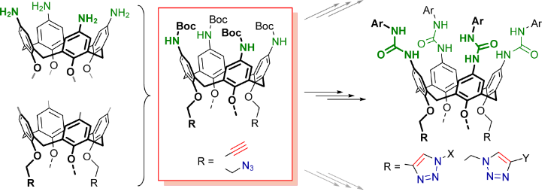
- conversion into diverse 1,4-disubstituted 1,2,3-triazole units under CuAAC (copper(I)-catalyzed azide–alkyne cycloaddition) ‘click’ conditions [70][71][72][73]. The first implementation of the CuAAC approach for calixarene modification was published shortly after its introduction into chemistry in general




Recent advances in the cleavage of non-activated amides
Beilstein J. Org. Chem. 2026, 22, 352–369, doi:10.3762/bjoc.22.23
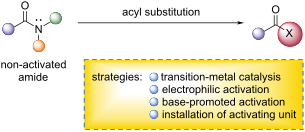
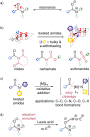
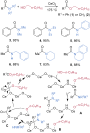
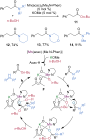
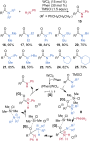
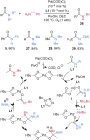
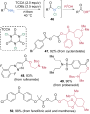
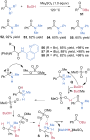
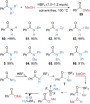
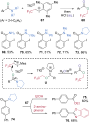
- corresponding amide products 26 were obtained using only 10−4 mol % Pd(COD)Cl2 in combination with 1-benzyl-1H-1,2,3-triazole (L1). Based on kinetic curves, TEM images, catalyst poisoning experiments, MS identification of intermediates, and EPR spectra of the crude mixture, the authors proposed two kinetically










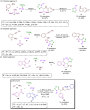
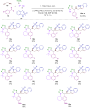
Synthesis of tricyclic fused pyrrolidine nitroxides from 2-alkynylpyrrolidine-1-oxyls
Beilstein J. Org. Chem. 2026, 22, 344–351, doi:10.3762/bjoc.22.22

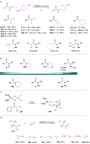
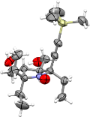
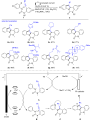
- framework is impossible is one of the ways to improve properties of ORCA. Feasibility of the synthesis of rigid 3b,4,5,6,6a,7-hexahydropyrrolo[2',3':3,4]pyrrolo[1,2-c][1,2,3]triazole and 3b,4,5,6,6a,7-hexahydropyrrolo[2',3':3,4]pyrrolo[1,2-b]pyrazole ring systems with incorporated nitroxide moiety from 2
- tricyclic nitroxyl radicals of the pyrrolidine series annulated with 5,6-dihydro-4H-pyrrolo[1,2-c][1,2,3]triazole or 5,6-dihydro-4H-pyrrolo[1,2-b]pyrazole systems have been synthesized and characterized. Despite these nitroxides showed relatively low stability to reduction, the general strategy suggested




Visible-light-driven NHC and organophotoredox dual catalysis for the synthesis of carbonyl compounds
Beilstein J. Org. Chem. 2025, 21, 2584–2603, doi:10.3762/bjoc.21.200
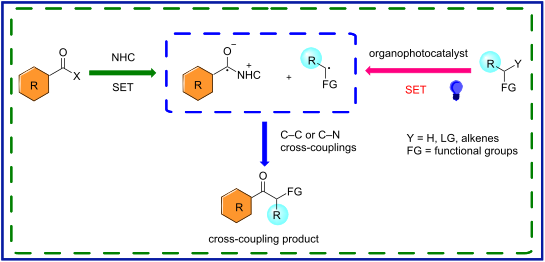
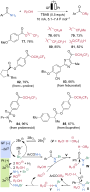
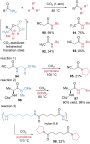
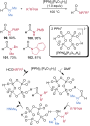
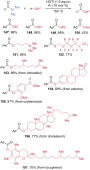
- asymmetric reactions and are functional transformations in synthetic organic chemistry. Especially, 1,2,3-triazole-based NHCs are generally more reactive and stronger σ-donors than imidazole or thiazole analogues. Triazolium NHC enhances their ability to stabilize reactive radical intermediates or acyl anion

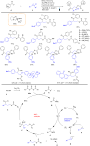
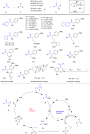
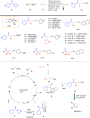
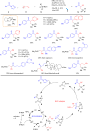



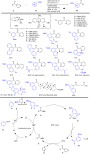

Pentacyclic aromatic heterocycles from Pd-catalyzed annulation of 1,5-diaryl-1,2,3-triazoles
Beilstein J. Org. Chem. 2025, 21, 2524–2534, doi:10.3762/bjoc.21.194
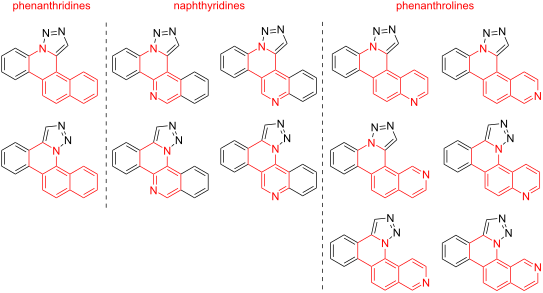
- compounds. The utility of click chemistry [11][12] for achieving chemoselective conjugation in a diversity of chemical environments has established the 1,2,3-triazole ring as a ubiquitous heterocycle in many research areas such as therapeutics [13][14][15][16], chemosensors [17][18][19], bioconjugation [20
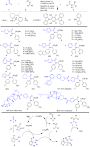
- expanded ring structures. Recent reports have established this as a valid approach to preparing 1,2,3-triazole-fused phenanthridine analogs [46][47]. The goal of this study was to determine whether a modular click/annulation synthetic approach could be successfully used to expand beyond the phenanthridine
- Information File 1). Reaction of each TMS-protected alkyne with ortho-bromoazidobenzene produced 1,5-diaryl-1,2,3-triazole products 7–12, each possessing an ortho-bromoaryl reactive site necessary for the annulation step. Regioselective formation of 1,5-diaryl-1,2,3-triazoles 7–12 was achieved using a


Synthesis of triazolo- and tetrazolo-fused 1,4-benzodiazepines via one-pot Ugi–azide and Cu-free click reactions
Beilstein J. Org. Chem. 2025, 21, 2202–2210, doi:10.3762/bjoc.21.167
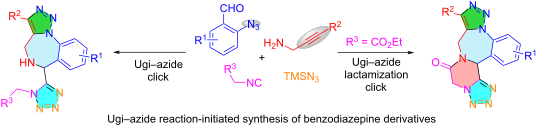
- methods for the synthesis of tetrazoles [25][26][27][28], the Ugi–azide reaction is a good approach for constructing 1,5-disubstituted-tetrazoles (1,5-DS-T) [29][30][31]. This scaffold can be subsequently linked to 1,2,3-triazole [32], 4H-chromen-4-one [33], pyrrolo[3,4-b]indolizine [34], and other


Electrochemical cyclization of alkynes to construct five-membered nitrogen-heterocyclic rings
Beilstein J. Org. Chem. 2025, 21, 2173–2201, doi:10.3762/bjoc.21.166
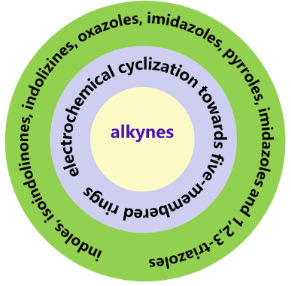
- of carbamates as well [271]. Notably, the above approach provided imidazopyridines in high yields under aqueous solution without any metal catalysts. Early in 2008, an electrochemical copper(I)-catalyzed azide–alkyne cycloaddition (CuAAC) to access 1,2,3-triazole was realized by Finn [272]. But the
- copper catalyst was still required in that procedure. In 2023, Bera presented an electrochemical oxidative [3 + 2] cycloaddition of secondary propargyl alcohol to access 1,2,3-triazole (Scheme 19) [273]. After probing the reaction systematically, the optimal conditions were presented as following: a
- to produce 51a. This report produced 1,2,3-triazole without any metal catalysts, but the reaction time was relatively long, and the yield remained to enhance. Conclusion and Outlook In conclusion, the construction of organic five-membered rings attracted popular attention due to their distinctive








Azide–alkyne cycloaddition (click) reaction in biomass-derived solvent CyreneTM under one-pot conditions
Beilstein J. Org. Chem. 2025, 21, 1544–1551, doi:10.3762/bjoc.21.117
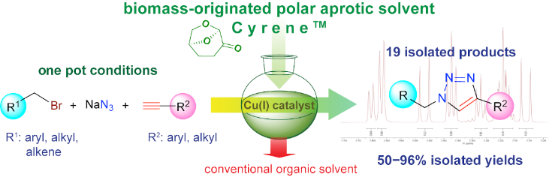
- transformation of 1.15 mmol benzyl azide (1a) and 1 mmol phenylacetylene (2a) in the presence of 0.01 mmol CuI and 0.1 mmol Et3N as a model reaction (Scheme 2) under typically used “click conditions” [7]. In common organic solvents, the yields of 1-benzyl-4-phenyl-1H-1,2,3-triazole (3a) were moderate (DCM, 1,4
- 1,2,3-triazole derivatives were generally obtained with good to excellent yields (50–96%). Both electron-withdrawing (fluoro (3b) or trifluoromethyl (3c)) and electron-donating (methoxy, phenoxy, and alkyl (3d–h)) groups were tolerated on the acetylene reaction partner species. In accordance with
- reactions. To demonstrate the one-pot synthesis of 1-benzyl-4-phenyl-1H-1,2,3-triazole (3a), 1.23 mmol benzyl bromide (4a), 1.57 mmol NaN3, 1.06 mmol phenylacetylene (2a), 0.011 mmol CuI, and 0.1 mmol Et3N were mixed in 2.5 mL of solvent and stirred at 85 °C. After 24 h, GC analysis verified a 90% yield of


Cu(OTf)2-catalyzed multicomponent reactions
Beilstein J. Org. Chem. 2025, 21, 122–145, doi:10.3762/bjoc.21.7

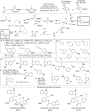
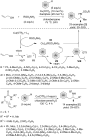
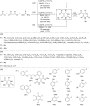
- , results in a spiro-cyclized intermediate XLI that affords the final product by deprotonation and loss of the copper species. Four-component reactions Two different four-component procedures catalyzed by Cu(OTf)2 are reported in the literature, both to access 1,2,3-triazole derivatives. The first one is a










Synthesis of the 1,5-disubstituted tetrazole-methanesulfonylindole hybrid system via high-order multicomponent reaction
Beilstein J. Org. Chem. 2024, 20, 3077–3084, doi:10.3762/bjoc.20.256
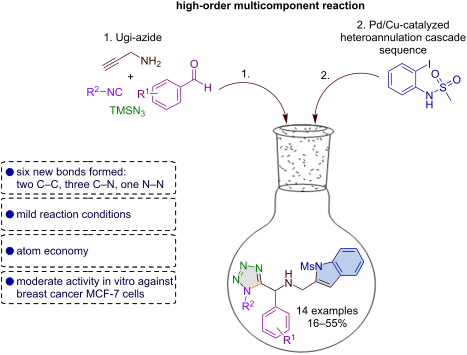
- relevant for the cytotoxic activity. The 1,5-disubstituted tetrazole-1,2,3-triazole hybrids synthesized by our group [26] had similar effects to the present compounds, suggesting that 1,5-disubstituted tetrazole and indole are pharmacophoric fragments with significant biological and pharmacological



Investigation of a bimetallic terbium(III)/copper(II) chemosensor for the detection of aqueous hydrogen sulfide
Beilstein J. Org. Chem. 2024, 20, 2818–2826, doi:10.3762/bjoc.20.237
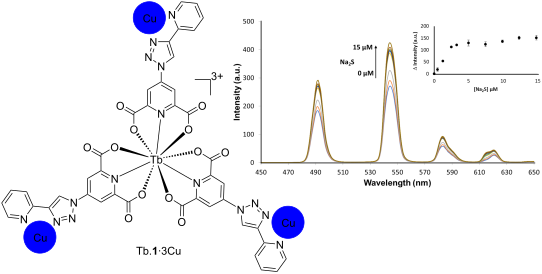
- /bjoc.20.237 Abstract The chemosensor properties of a bimetallic terbium(III)/copper(II) complex functionalized with a 4-(2-pyridyl)-1,2,3-triazole ligand for the detection of Cu2+ ions and, aqueous and gaseous hydrogen sulfide was investigated. The 4-(2-pyridyl)-1,2,3-triazole ligand functions both as
- 4-(2-pyridyl)-1,2,3-triazole). A europium(III)/copper(II) complex [Eu(triazole-DPA)3·3Cu]3+(Figure 1), functionalized with 4-(2-pyridyl)-1,2,3-triazole serving as both an antenna chromophore and a receptor for Cu2+ ions, previously demonstrated theoretical limits of detection (LoD) of 1.1 μM for
- interaction is the focus of our future research studies. Experimental Synthetic materials and methods The Cu2+ ions were sourced from Cu(NO3)2·5H2O (Cat. #1027900250, Sigma-Aldrich). The synthesis of 4-(2-pyridyl)-1,2,3-triazole dipicolinic acid (L) was conducted as previously described [16]. Proton nuclear


5th International Symposium on Synthesis and Catalysis (ISySyCat2023)
Beilstein J. Org. Chem. 2024, 20, 2704–2707, doi:10.3762/bjoc.20.227
- in MeOH at room temperature with a short reaction time. Some of them were further functionalized with a 1,2,3-triazole ring via copper-catalyzed azide–alkyne cycloaddition (CuAAC) and deprotected with trifluoroacetic acid. Several hybrids were evaluated against six cancer cell lines, displaying GI50

Heterocycle-guided synthesis of m-hetarylanilines via three-component benzannulation
Beilstein J. Org. Chem. 2024, 20, 2208–2216, doi:10.3762/bjoc.20.188
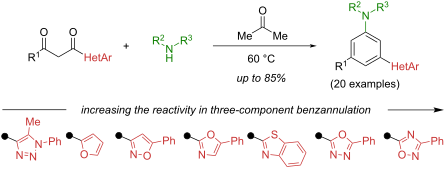
- 5). In fact, arylamine 3fa, produced from furan-substituted 1,3-diketone 1f and a 5-fold excess of benzylamine, could be prepared in 18% crude yield (after 7 days, see Supporting Information File 1, page S9). Finally, all attempts to perform the reaction with 1,2,3-triazole 1,3-diketone 1g (σm/σp


Factors influencing the performance of organocatalysts immobilised on solid supports: A review
Beilstein J. Org. Chem. 2024, 20, 2129–2142, doi:10.3762/bjoc.20.183
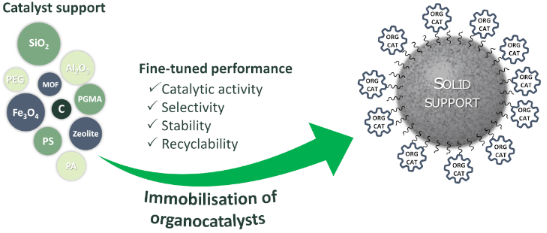
- selectivity, features a 1,2,3-triazole-4-yl unit as the substituent at the tertiary amine-containing quinuclidine motif, whereas C30 and C31 have an ethyl group attached to the ring in this position. Additionally, catalyst C31 has a longer-chain linker, but its squaramide NH groups are more acidic due to


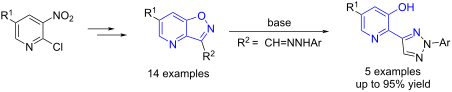
Synthesis of 1,2,3-triazoles containing an allomaltol moiety from substituted pyrano[2,3-d]isoxazolones via base-promoted Boulton–Katritzky rearrangement
Beilstein J. Org. Chem. 2024, 20, 1334–1340, doi:10.3762/bjoc.20.117
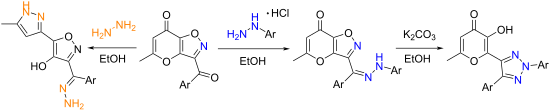
- to Boulton–Katritzky rearrangement are furazanes and furoxanes. In the case of furazanes the recyclization leads to 1,2,3-triazoles with an oxime moiety in the side chain [13][14]. At the same time 1,2,3-triazole N-oxides are formed from similar furoxanes [15]. Furthermore, special attention is paid
- be noted that based on NMR spectroscopy data the synthesized product 3b exists as a mixture of E/Z isomers. Having in hands hydrazone 3 we tried to perform the Boulton–Katritzky rearrangement into corresponding 1,2,3-triazole 4. In order to achieve the best yields of product 4b we varied the used
- , intramolecular recyclization accompanied by opening of the isoxazole ring and formation of the N–N bond leads to intermediate B. Finally, target 1,2,3-triazole 4 is produced via acidification of anion B. Next, we tried to expand the presented rearrangement to hydrazones derived from aliphatic hydrazines (MeNHNH2


The Ugi4CR as effective tool to access promising anticancer isatin-based α-acetamide carboxamide oxindole hybrids
Beilstein J. Org. Chem. 2024, 20, 1213–1220, doi:10.3762/bjoc.20.104
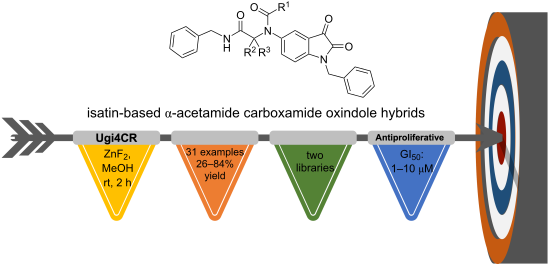
- and Figure 2). Like the oxindole scaffold, 1,2,3-triazole is also considered a privileged unit in drug discovery since compounds having this structure have a broad spectrum of biological activities, and have been widely used to create anticancer drug candidates [24][25]. The copper-catalyzed azide
- –alkyne cycloaddition (CuAAC) reaction, or commonly entitled “click” reaction, is a widely and straightforward tool to access the 1,2,3-triazole ring [26][27]. Due to the presence of an alkyne group on the Ugi-adduct 5bb (Scheme 2) we decided to use the CuAAC reaction to introduce a 1,2,3-triazole unit
- into the scaffold. Benzyl azide (6), obtained using a previously reported procedure [27], was used in the CuAAC reaction. The α-acetamide carboxamide 1,2,3-triazole oxindole hybrid 7 was easily obtained in 61% yield using Cu(OAc)2 as catalyst, ascorbic acid, DMF as solvent, and microwave reaction




Mild and efficient synthesis and base-promoted rearrangement of novel isoxazolo[4,5-b]pyridines
Beilstein J. Org. Chem. 2024, 20, 1069–1075, doi:10.3762/bjoc.20.94
- that they do not participate in the stabilization of the pyridine-3-olate anion. It should be noted that the 4-(2-pyridyl)[1,2,3]triazole fragment is part of some pharmaceutically oriented molecules such as tradipitant, an experimental neurokinin-1 receptor antagonist [31], MU1787, a highly selective


Three-component N-alkenylation of azoles with alkynes and iodine(III) electrophile: synthesis of multisubstituted N-vinylazoles
Beilstein J. Org. Chem. 2024, 20, 891–897, doi:10.3762/bjoc.20.79
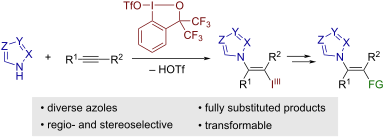
- between various azoles and internal alkynes is mediated by benziodoxole triflate as the electrophile in a trans-fashion, affording azole-bearing vinylbenziodoxoles in moderate to good yields. The tolerable azole nuclei include pyrazole, indazole, 1,2,3-triazole, benzotriazole, and tetrazole. The iodanyl
- reaction of azoles with alkynes and iodine(III) electrophile, benziodoxole triflate (BXT, 1; Scheme 1c). Displaying exclusive trans-selectivity, the reaction tolerates a broad range of azoles, including pyrazole, 1,2,3-triazole, tetrazole, indazole, and benzotriazole, with internal alkynes as coupling
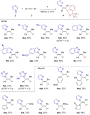
- yield in a ratio of 7:3. Indazole and its 4-bromo and 6-methoxycarbonyl analogues afforded the expected N1-alkenylated products 4ea–4ga in 43–68% yields. 1,2,3-Triazole and benzotriazole both smoothly participated in the reaction to give their respective products 4ha and 4ia in 60% and 81% yields



Catalytic multi-step domino and one-pot reactions
Beilstein J. Org. Chem. 2024, 20, 254–256, doi:10.3762/bjoc.20.25
- trisubstituted 3-iodoindoles, which are valuable substrates for the synthesis of, e.g., blue emitters in good yield [16]. The power of double click reactions toward functionalized bis(1,2,3-triazole) derivatives has been demonstrated in the Full Research Paper by Reissig and Yu. The authors successfully combined

Metal-catalyzed coupling/carbonylative cyclizations for accessing dibenzodiazepinones: an expedient route to clozapine and other drugs
Beilstein J. Org. Chem. 2024, 20, 193–204, doi:10.3762/bjoc.20.19
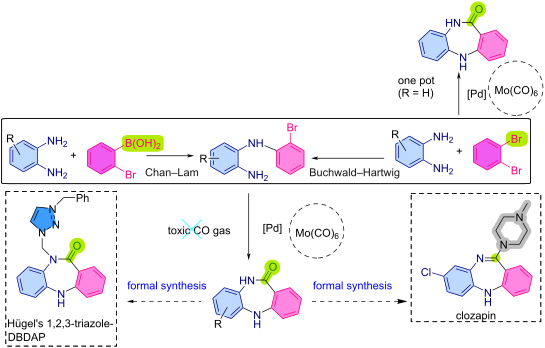
- good yield (this represented a formal synthesis to clozapine [26], if the procedure of Rao [27] is used, which entails heating 4e with 1-methylpiperidine and Ti(IV)Cl4, Scheme 4). Also compound 4a can be transformed to Hügel's 1,2,3-triazole-DBDAP using the methodology described in their report (Scheme


Cycloaddition reactions of heterocyclic azides with 2-cyanoacetamidines as a new route to C,N-diheteroarylcarbamidines
Beilstein J. Org. Chem. 2024, 20, 17–24, doi:10.3762/bjoc.20.3
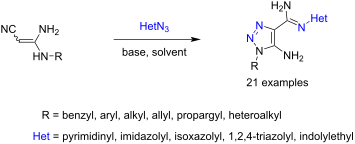
- 1,2,3-triazole ring, either an additional pyrimidinedione, 4-nitroimidazole, isoxazole, 1,3,4-triazole, 2-oxochromone or thiazole ring, has been developed. The process was facilitated by a strong base and includes the cycloaddition reaction of 3,3-diaminoacrylonitriles (2-cyanoacetamidines) to
- -triazole-4-carbimidamides with alkyl, allyl, propargyl, benzyl, cycloalkyl, and indolyl substituents at the N1 position . Keywords: Cornforth rearrangement; cycloaddition reactions; 3,3-diaminoacrylonitriles; heterocyclic azides; 1,2,3-triazole; Introduction Heteroaryl amidines are widely used in the
- synthesis of various nitrogen-containing heterocyclic compounds and have a variety of biological activities [1][2][3][4]. After the discovery of click chemistry [5][6] involving the CuAAC method of 1,2,3-triazole synthesis [7][8], there has been great interest of studing the chemical and biological



Aldiminium and 1,2,3-triazolium dithiocarboxylate zwitterions derived from cyclic (alkyl)(amino) and mesoionic carbenes
Beilstein J. Org. Chem. 2023, 19, 1947–1956, doi:10.3762/bjoc.19.145
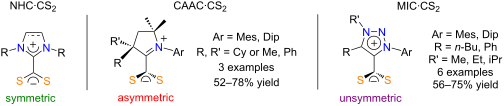
- ][19]. These mesoionic carbenes (MICs), together with their pyrazolin-4-ylidene [20] and 1,2-isoxazol-4-ylidene cousins [21], are the strongest donors among the various types of carbene ligands known thus far [22]. A distinct class of mesoionic or abnormal carbenes based on the 1,2,3-triazole ring
- -disubstituted-1,2,3-triazole derivatives is readily achieved via the copper(I)-catalyzed [3 + 2] cycloaddition of an azide and a terminal alkyne (CuAAC) [63][64][65]. A further alkylation of the N3 position with an alkyl halide is an equally straightforward procedure that ultimately affords a large assortment


N-Boc-α-diazo glutarimide as efficient reagent for assembling N-heterocycle-glutarimide diads via Rh(II)-catalyzed N–H insertion reaction
Beilstein J. Org. Chem. 2023, 19, 1841–1848, doi:10.3762/bjoc.19.136
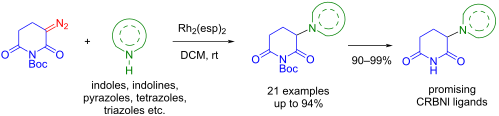
- pyrazole derivatives (including indazole), benzimidazole, 1,2,3-triazole, indole, carbazole, indoline, quinazoline, and isoquinoline. Nevertheless, many heterocyclic motifs still remain beyond the attention of researchers. For example, glutarimides that incorporate tetrazole and 1,2,4-triazole substituents




Selectivity control towards CO versus H2 for photo-driven CO2 reduction with a novel Co(II) catalyst
Beilstein J. Org. Chem. 2023, 19, 1766–1775, doi:10.3762/bjoc.19.129
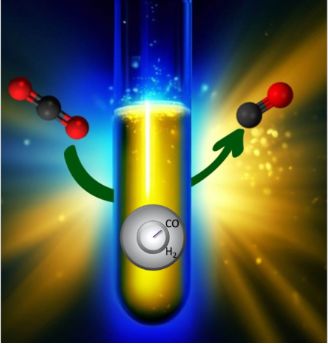
- complex obtainable via a straightforward synthesis, with improved solubility, concerning our previous Co(II) complexes [21]. Thus, the new Co(II) complex bears two 1-benzyl-4-(quinolin-2-yl)-1H-1,2,3-triazole (BzQuTr) units, that were obtained through a copper-catalyzed alkyne–azide cycloaddition (CuAAC
- maintaining high selectivity for carbon products. Results and Discussion Synthesis and characterization of the new Co(II)-based catalyst The novel cobalt(II) complex 1 was synthesized in dry methanol (MeOH) by mixing in a 2:1 ratio, the chelating diimine ligand, 1-benzyl-4-(quinolin-2-yl)-1H-1,2,3-triazole
- coordinating nitrogen of the 1,2,3-triazole units. The nitrogen atoms of the two quinoline moieties are therefore trans to each other. This conformation might be induced by the cobalt precursor Co(NCS)2(py)4, which has already the NCS monodentate ligands cis to each other, as it was not the case for other Co


Morpholine-mediated defluorinative cycloaddition of gem-difluoroalkenes and organic azides
Beilstein J. Org. Chem. 2023, 19, 1545–1554, doi:10.3762/bjoc.19.111
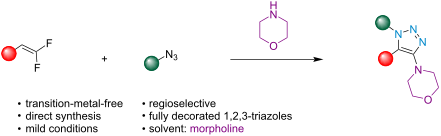
- ][12], inflammation [13], bacterial [14][15], and viral infections [16]. Hence, new ways to rapidly and efficiently access 1,2,3-triazole heterocyclic motifs are still in demand. However, methods for the direct synthesis of 1,4,5-trisubstituted-1,2,3-triazoles are limited [17]. This is highly desirable
- since the selective introduction of substituents at three different positions on the 1,2,3-triazole ring can augment the features of the molecule. Triazoles are also found in many biologically important molecules and functionalized materials [11][12][13][14][15][16]. 1,4,5-Trisubstituted-1,2,3-triazoles
- -difluoroalkenes that subsequently undergoes a cycloaddition reaction. Results and Discussion While investigating 1,3-dipolar cycloaddition reactions between organic azides and gem-difluoroalkenes to obtain the 4-fluoro-1,4-disubstituted 1,2,3-triazole regioisomers, we observed an interesting reactivity while