


Search results
Search for "calculations" in Full Text gives 926 result(s) in Beilstein Journal of Organic Chemistry. Showing first 200.
An undecacyclic carbon-centered hydrocarbon radical: synthesis and investigation
Beilstein J. Org. Chem. 2026, 22, 1196–1204, doi:10.3762/bjoc.22.95
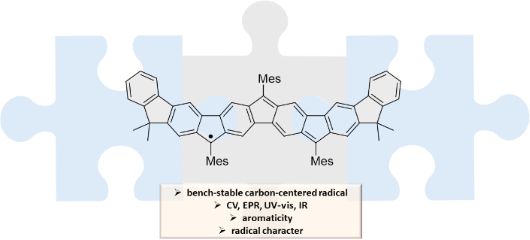
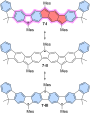
- stabilization of the radical species. Comprehensive characterization was performed using EPR spectroscopy, UV–vis spectroscopy, and cyclic voltammetry, further supported by quantum-chemical calculations. The computational studies enabled simulation of the UV–vis spectra and provided insights into spin-density
- distribution, aromaticity, and frontier orbital energies. The radical is best described by the resonance structure in which the unpaired electron is predominantly localized on the outer cyclopentadiene units, maximizing the number of preserved aromatic benzene sextets. Calculations indicate only a minor
- triradical contribution to the electronic ground state. Notably, the five-membered rings, particularly the central ring, exhibits pronounced antiaromatic character. Keywords: aromaticity; cyclopenta-fused polyaromatic hydrocarbons; DFT calculations; radicals; Introduction Polyaromatic hydrocarbons (PHs) [1






Synthesis and acaricidal activity against Varroa destructor of α- and γ-costic acid dimers
Beilstein J. Org. Chem. 2026, 22, 1088–1096, doi:10.3762/bjoc.22.87
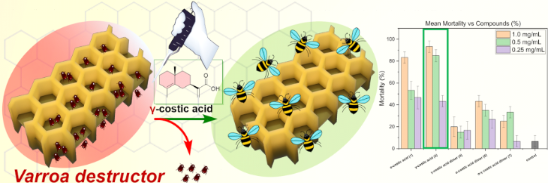
- . Computations Geometry optimizations and frequency calculations of compounds 1 and 3 were performed by density functional theory (DFT) computations at DFT/B3LYP/def2-TZVP/gas phase level of theory using the ORCA 6.0 package [35]. Statistical analysis Mean mortality data of V. destructor, in the presence of the


Synthesis and optical resolution of 4,5-diaminohomoadamantane: a promising scaffold for chiral ligands and bioactive compounds
Beilstein J. Org. Chem. 2026, 22, 1013–1022, doi:10.3762/bjoc.22.80
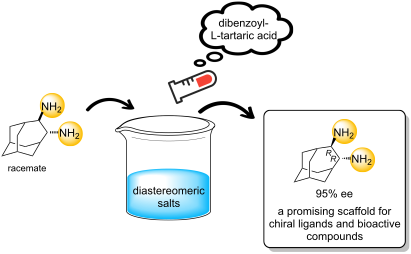
- trans-isomer was selectively obtained via ring-opening of an N-Tf-protected aziridine. The racemic trans-4,5-diaminohomoadamantane was resolved with dibenzoyl-ʟ-tartaric acid. The absolute (4R,5R)-configuration was proposed on the basis of TDDFT calculations of the specific optical rotation using the
- -dihydropyrazine (4R,5R)-17 derived from diamine (4R,5R)-8a', the enantiomeric excess was determined to be 95%. Multiple attempts to grow a crystal suitable for X-ray analysis were unsuccessful; therefore, the absolute configuration of (4R,5R)-8a' was proposed on the basis of quantum mechanical calculations. To
- methodology that considers optical rotation of conformations that differ from the stable ones by no more than 10 kJ/mol [103]. All calculations were performed with the Gaussian 09 software [104]. Optimization of the molecule’s geometry by DFT was performed using the CAM-B3LYP functional and the 6-311G++(2d,2p


Electrochemical reduction of unsaturated carbon–carbon bonds via 3d transition-metal catalysis
Beilstein J. Org. Chem. 2026, 22, 955–981, doi:10.3762/bjoc.22.75
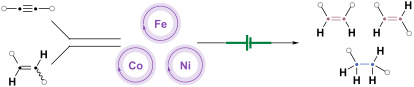
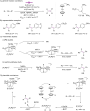
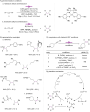
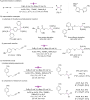
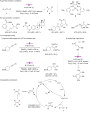
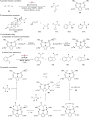
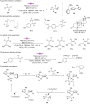
- indicated that protonation of low-valent cobalt species leads to the formation of a Co(III)–H intermediate [95], which then reacts with the alkyne to regenerate the monoligated Co(II) catalyst (Scheme 3D). DFT calculations further support that proton delivery from HFIP to the cobalt–alkyne adduct proceeds
- precede a kinetically relevant proton/electron delivery event (Scheme 4C). DFT calculations proved a hydride-free, multisite proton-coupled electron transfer (MS-PCET) manifold [66][67][98], in which Cp2Co mediates electron transfer to an acid- and alkyne-associated cobalt intermediate, followed by acid
- revealed the emergence of new absorption features upon alkyne addition, consistent with the formation of a vinyl–Co(III) intermediate. DFT calculations further demonstrated that variation of the salen ligand framework modulates the Co–C bond-dissociation energy (BDE) of the vinyl–cobalt intermediate








Recent advances in copper-catalyzed direct hydroamination of alkenes with (hetero)aromatic amines
Beilstein J. Org. Chem. 2026, 22, 925–947, doi:10.3762/bjoc.22.73
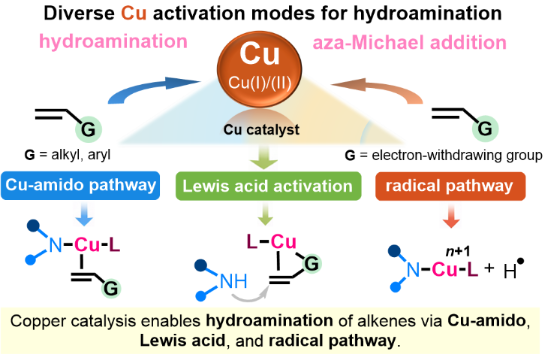
- , particularly for ester-substituted alkenes. Mechanistic insights obtained from the DFT calculations suggested that the reaction proceeded via a copper–amido catalytic cycle involving metal-assisted olefin activation and the aminocupration pathway. In the initial step, deprotonation of the amine by KOt-Bu






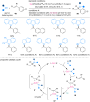

Cascade transformation of 2-(diazoacetyl)-2H-azirines to 2-aroyl-3-hydroxy-1H-pyrroles via condensation with aromatic aldehydes
Beilstein J. Org. Chem. 2026, 22, 897–904, doi:10.3762/bjoc.22.70
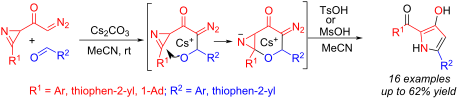
- ortho-protons of the 3-MeOC6H4 group and the 3-H, 6-H protons is explained by the rapid inversion of the aziridine nitrogen. According to calculations, the inversion barrier of the aziridine nitrogen in the phenyl analogue of compound 4b does not exceed 11.5 kcal/mol (see Figure S2 in the Supporting
- , to our knowledge, no derivative of trans-2-oxa-7-azabicyclo[4.1.0]heptane has been prepared [25][26]. According to our DFT calculations, trans-2-oxa-7-azabicyclo[4.1.0]heptane has a 42.6 kcal/mol higher Gibbs energy than the cis isomer, and the introduction of two sp2-hybridized carbons, as in
- formed (≈90%), while the minor one, based on the arguments presented above, is apparently the (1RR,3RR,6RR)-isomer. To shed light on the mechanism and stereoselectivity of the reaction, DFT calculations were performed at the B3LYP-D3/6-311+G(d,p)/LANL2DZ(Cs) level of theory with a SMD solvent model (for


Diastereodivergent electrophilic trapping of α-boryl lithium derivatives
Beilstein J. Org. Chem. 2026, 22, 882–887, doi:10.3762/bjoc.22.68
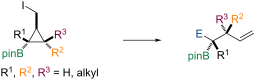
- calculations, this model assumes initial coordination of both the vinyl group and the Bpin moiety to the lithium counterion. Within this constrained geometry, when R2 = H, R3 = alkyl, the diastereocontrol is then governed by the relative steric interactions present in these two possible conformers B and C




The trans-influence in gold chemistry from a catalytic perspective
Beilstein J. Org. Chem. 2026, 22, 838–856, doi:10.3762/bjoc.22.66
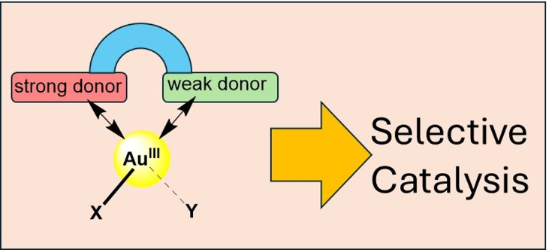
- unexpectedly fails, according to bond energy calculations due to the electron-accepting fluoroaryl-like character of the dicarboranyl ligand [27]. Ligand-dependent luminescence properties The pincer ligands described above are of course themselves subject to the influence of trans ligands. They also differ in
- calculations. Using the same radical-initiated approach it was also possible to realise gold hydride insertions of alkenes [65] and of isocyanides (Scheme 11) [66]. A different reactivity was observed for C^C-stabilised hydrides, with H trans to anionic C. The complexes (C^C)AuH(L) 19 (L = PMe3, Ptol3) and [(C
- optimised by DFT calculations [82]. They clearly fall into two categories: In the C^N and P^N compounds the allyl bonding is very asymmetrical, with a long and a short C–C bond and strong variations in Au–C bond distances, as expected for a σ,π-allyl, while in 27 and its methallyl analogue the bonding is


Synthesis and structural elucidation of a novel bis-spirooxindole from isatin and ethylenediamine
Beilstein J. Org. Chem. 2026, 22, 813–820, doi:10.3762/bjoc.22.63

- calculations. The final R1 was 0.0595 (I > 2σ(I)) and wR2 was 0.1864 (all data). CCDC 2388389 contains the supplementary crystallographic data for this paper. These data can be obtained free of charge at https://doi.org/10.5517/ccdc.csd.cc2l59tx from the CCDC, 12 Union Road, Cambridge CB2 1EZ, UK; Fax: +44


Halogenated azobenzene acrylates: from efficient solution photoswitching to stable solid-state photochromic materials
Beilstein J. Org. Chem. 2026, 22, 782–794, doi:10.3762/bjoc.22.60
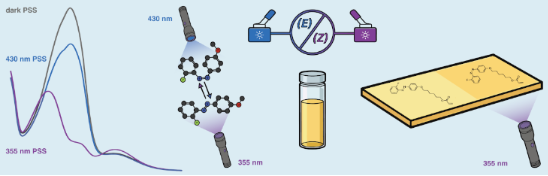
- calorimetry (DSC), thermogravimetric analysis (TGA), cyclic voltammetry (CV), UV–vis absorption spectroscopy, 1H and 13C NMR, and theoretical DFT calculations were employed. Furthermore, the target compounds are designed for incorporation as photoactive copolymers into the structure of functionalized
- corroborated by DFT results calculated for both isomers (Table 2). The highest HOMO–LUMO gap was measured/calculated for the dichloro derivative 1d, while the monosubstituted ones (1a, c and e) possess the narrowest ΔE values. As expected, the calculations further indicate the lower HOMO/LUMO energies/gaps for
- character of the investigated molecules. Anyway, both methods confirmed a minor effect of the halogen type, red-shifted λEmax values for monosubstituted E-isomers and the opposite trend for the Z-isomers. TD-DFT calculations revealed the most intense absorption bands of (E)- and (Z)-azobenzenes are


Rongalite addition to dienones: diastereoselectivity in cyclic sulfone synthesis; stereochemical rationalization and prospects as a general conjugate nucleophile
Beilstein J. Org. Chem. 2026, 22, 742–752, doi:10.3762/bjoc.22.56

- (indicated). There is nothing to suggest from the calculations that an inherent reactivity problem prevents the initial addition of Rongalite to the enone, especially given that the singly electrophilic 2,6-dimethylbenzalacetone is known to participate in reactions with conjugate nucleophiles [25]. It is
- -methyl groups cannot freely rotate past the nearby sulfone oxygen atoms. Calculations suggested a rotation barrier of 18 kcal/mol, consistent with it being insurmountable at room temperature, vs only 4 kcal/mol for the unsubstituted phenyl ring (see Supporting Information File 1). The combined results of
- Information File 1 for a graphical representation of this and TS images directly generated from the computational data). The analogous calculations for 1a and 1b showed a much smaller difference in activation barrier, 1.0 kcal/mol, which is consistent with the lower selectivity observed for that substrate




Synthesis of heterocycles based on azomethine ylides from α-amino acids (or amines) and carbonyl compounds
Beilstein J. Org. Chem. 2026, 22, 705–741, doi:10.3762/bjoc.22.55
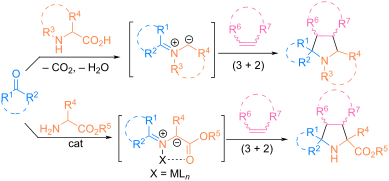
- efficient synthesis of a series of polysubstituted enantioenriched pyrrolidine derivatives 48 possessing a spiroindene molecular structure (Scheme 22) [59]. Based on the results of DFT calculations, it was suggested that the [6 + 3] cycloaddition product for benzofulvene 47 loses aromatic stability and
- reacts with the nucleophile RXH to form the corresponding 3-substituted cyclopropenes. The latter reacts with azomethine ylide 67 to form cycloadducts in moderate yields. Density functional theory (DFT) calculations revealed that the regio- and endo-stereoselective formation of products in the observed
- platform for the preparation of spiro systems with the simultaneous creation of multiple stereogenic centers. Theoretical calculations showed that in the transition state, the dipole and dipolarophile are simultaneously activated by bisphosphoric acid, forming a chiral catalytic cell in which the


Using generative AI to transform peptide hits into small molecule leads
Beilstein J. Org. Chem. 2026, 22, 672–679, doi:10.3762/bjoc.22.51
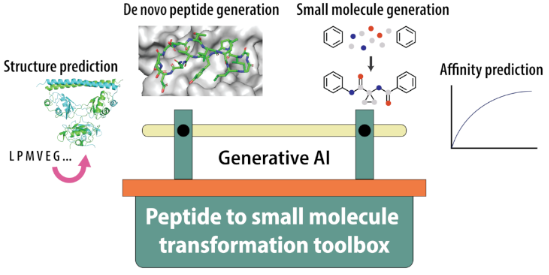
- molecule candidates, providing potential alternatives to traditional computationally expensive physics-based workflows such as docking, MD, and free-energy perturbation (FEP) calculations for affinity estimation. For example, Boltz-2 features a strong emphasis on affinity prediction in addition to its core


Photoorganocatalytic trifluoromethylation of (het)arenes in green conditions
Beilstein J. Org. Chem. 2026, 22, 662–671, doi:10.3762/bjoc.22.50
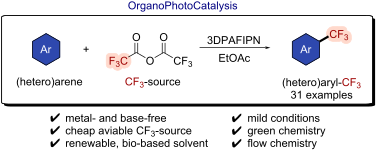
- reaction displays pronounced sensitivity to substituent patterns rather than electronic effects. Mechanistic investigations, including radical trapping, Stern–Volmer analysis, and DFT calculations, support a reductive quenching pathway involving photocatalyst-mediated reduction of TFAA. The protocol is
- TFAA is thermodynamically favorable (ΔE = 0.18 V), whereas the oxidation of TMB is disfavored (ΔE = −0.34 V). We next assessed the theoretical feasibility of the proposed mechanism by means of DFT and TDDFT calculations. The results revealed that the reduction of TFAA, followed by the generation of the
- that the addition of the electrophilic CF3 radical to the aromatic ring may differ in energetic profile between the two substrates (Scheme 5). However, DFT calculations showed that the thermodynamic parameters for both processes are comparable, indicating that other elementary steps may be responsible




Computational prediction of C–H hydricities and their use in predicting the regioselectivity of electron-rich C–H functionalisation reactions
Beilstein J. Org. Chem. 2026, 22, 603–610, doi:10.3762/bjoc.22.46
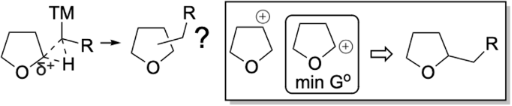
- that evaluates the accuracy of different levels of theory, ranging from semiempirical methods (xTB [16]), composite electronic structure methods (r2SCAN-3c [19]) to DFT methods (M06-2X[21], CAM-B3LYP [22][23]). All methods are evaluated either as single-point calculations or optimization and frequency
- calculations. Refer to section 1 in Supporting Information File 1 for more details. Hereafter, we check the geometries for imaginary frequencies and use the total thermal energy at 298.15 K. Following a similar approach from our previous paper for C–H pKa values [3], we compute the hydricity through the direct
- et al. [24][25], Ree et al. [10] and our previous work [3], we utilise the automated approach to compute CM5 atomic charges from semiempirical tight-binding (GFN1-xTB [32]) calculations. We modify the workflow to enhance the accuracy of the computed CM5 atomic charges. Instead of generating a single


![[Graphic 6]](/bjoc/content/inline/1860-5397-22-46-i8.svg?max-width=637&scale=1.18182)


Synthesis and uranyl(VI) extraction performance of a calix[4]pyrrole–tetrahydroxamic acid receptor
Beilstein J. Org. Chem. 2026, 22, 486–494, doi:10.3762/bjoc.22.36
- uncertainties reported have been separated into contributions from the gamma-spectrometric measurements, σ(A0) and σ(A1), and from the calculations performed to derive the extraction efficiencies’ uncertainty values, σ(% E) and σ(% Emean). Measurement uncertainties reflect counting statistics, detector
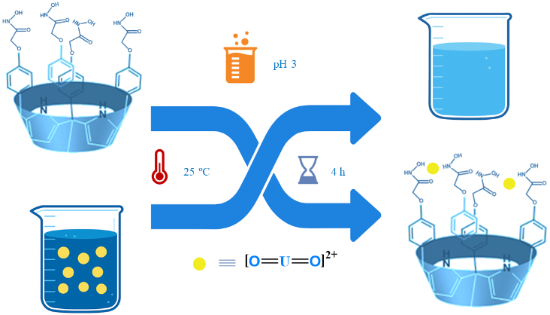
- relevant example is a calix[6]arene functionalized with three hydroxamic acid groups, where a theoretical study using density functional theory (DFT) calculations showed that the complex with the uranyl is most stabilized when only two of the three hydroxamic acid units participate in binding [78]. This


Synthesis and stereochemical analysis of dynamic planar chiral oxa[7]orthocyclophene
Beilstein J. Org. Chem. 2026, 22, 436–442, doi:10.3762/bjoc.22.30

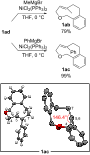
- . The CD spectrum of 1ab showed a weak positive Cotton effect around 270 nm and a strong Cotton effect around 230 nm, and that of 1ad showed a weak negative Cotton effect around 290 nm and a strong Cotton effect around 250 nm. Each TD-DFT calculations for (R)-1ab and (R)-1ad showed good agreement in
- : 254 nm): a1), a2) chromatograms monitored at 254 nm; b1), b2) CD spectrum of the first eluates in a flow cell; c1), c2) calculated CD spectra using TD-DFT calculations at the B3LYP level using the 6-311G(2d,2p) basis set for C, H, and O atoms and the SDD basis set with the corresponding effective core
- procedures, characterization data, copies of 1H and 13C NMR spectra, and optimized geometries of DFT calculations. Supporting Information File 26: Crystallographic information file of compound 1ac. Acknowledgements We thank K. Imamura (Evaluation center of material properties, IMCE Kyushu University) for







Synthesis and anti-cancer activity of naphthalimide–organylselanyl conjugates
Beilstein J. Org. Chem. 2026, 22, 416–435, doi:10.3762/bjoc.22.29
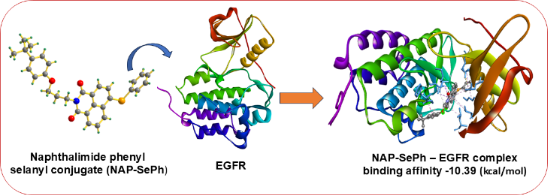
- analyses, and structure and electronic properties were further investigated using density functional theory (DFT) calculations. Cytotoxicity tests were used to assess the anticancer potential of both conjugates, and it was found that both compounds showed notable activity against the test MDA-MB-231 breast
- characteristics and electronic properties of compounds 7 and 8, geometry optimisations and frequency calculations were performed using density functional theory (DFT) with the B3LYP functional and the 6-31G(d,p) basis set, as shown in Figure 3 [56][57]. The input structure of compound 7 was obtained from a single
- . X-ray data Table 3 shows the X-ray data of compound 7. In addition, a packing diagram of compound 7 in the crystal can be found in Figure S20 in Supporting Information File 1. Computational details All computational calculations were carried out using the Gaussian 16 (g16) program [76]. Geometry


Electrosynthetic access to unsymmetrical oxaza[8]helicenes with high chiral stability and strong circularly polarized luminescence (CPL)
Beilstein J. Org. Chem. 2026, 22, 372–382, doi:10.3762/bjoc.22.25
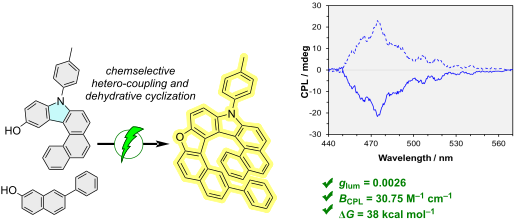
- products were detected under the optimized conditions (Scheme 2). Based on our previous reports [48][56], DFT calculations, and cyclic voltammetry (CV) analyses (Figure 1), anodic single-electron transfer (SET) is expected to occur first from 3, generating the electrophilic radical cation [3]·+ as 3 (Eox
- attributed to the increased deviation from planarity, particularly in the more extended helicenes, consistent with previous studies [60]. To gain further insight, we performed anisotropy of the induced current density (AICD) calculations for 5a and 5b at the B3LYP/6-311G(d,p) level in the gas phase [61]. The
- [8]helicenes 5a and 5b, we performed DFT calculations to locate the transition states with the highest Gibbs free energies. In both cases, the transition states correspond to conformations in which the terminal rings adopt a face-to-face arrangement along the helical axis (Figure 3). The calculated




Recent advances in the cleavage of non-activated amides
Beilstein J. Org. Chem. 2026, 22, 352–369, doi:10.3762/bjoc.22.23
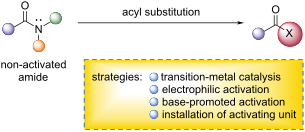
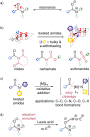
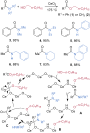
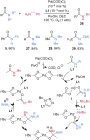
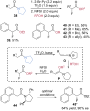
- restored after recalcination prior to reuse. Based on DFT calculations, the authors proposed that octanol is deprotonated and coordinated to Ce, while the amide substrate is simultaneously activated electrophilically through coordination to the Ce center (A). This dual activation enables the lattice oxygen
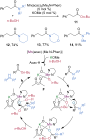
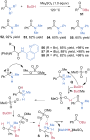
- transition-metal-catalyzed asymmetric C–H activation reactions as a directing group, thus necessitating an efficient method for the cleavage of 8-aminoquinoline-derived amides. The role of Me2SO4 in this transformation was elucidated through DFT calculations. Methylation of the carbonyl oxygen by Me2SO4
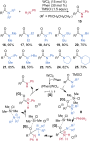
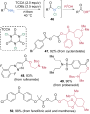
- bioactive compounds underwent smooth esterification with TFE to give the corresponding 2,2,2-trifluoroethyl esters 82–85 in high yields. To elucidate the reaction mechanism, cyclic voltammetry experiments, control reactions, and DFT calculations were conducted. At the anode, bromide ions are oxidized to





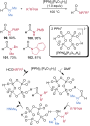


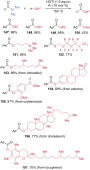

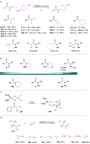


Ring contraction and ring expansion reactions in terpenoid biosynthesis and their application to total synthesis
Beilstein J. Org. Chem. 2026, 22, 289–343, doi:10.3762/bjoc.22.21
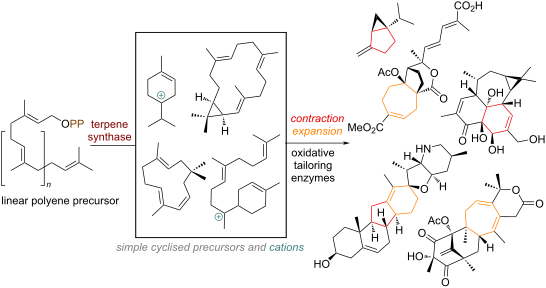
- found in pseudolaric acid B (14) biosynthesis [64][65]. In this case, the linear precursor 12 is first cyclised to give intermediate 14a akin to the α-terpinyl cation (see Scheme 3). From here, quantum chemical calculations indicate that the subsequent 1,2-alkyl shift and olefin cyclisation occur in a
- operational intermediates, as calculations showed instead a concerted rearrangement towards the tertiary cation 23c to be more likely. From here, ent-kaurene (24) is obtained directly after elimination. The formation of ent-atiserene (25) involves a more dramatic rearrangement to reach the tertiary






Spirobarbiturates with a pyrrolizidine moiety: synthesis, structure and biological evaluation
Beilstein J. Org. Chem. 2026, 22, 274–288, doi:10.3762/bjoc.22.20
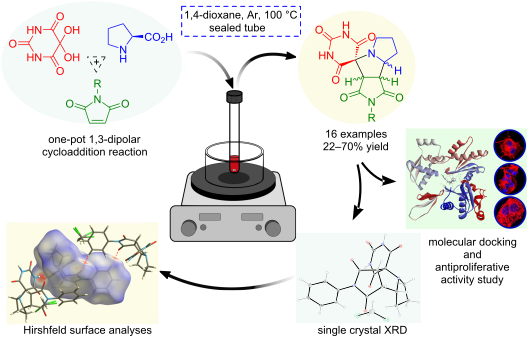
- formation of azomethine ylide from alloxan (1) and ʟ-proline (2) was previously studied using DFT calculations [43]. Based on the calculated data, it was assumed that the 1,3-dipole is formed as a result of a multistage sequence: initial generation of a zwitterionic imine intermediate from 1 and 2, followed
- barbiturate moieties of paired enantiomers (see Supporting Information File 1, Tables S2 and S3). The Hirshfeld surface (HS) analysis provides a robust tool for visualizing and characterizing intermolecular interactions in organic crystal lattices. The calculations of the HS were performed using
- allowed unambiguous determination of the absolute configuration of the spirobarbiturate adducts. Additionally, a detailed analysis of intermolecular interactions in the crystal structure was performed using Hirshfeld surface calculations, providing valuable insights into the packing arrangements of these




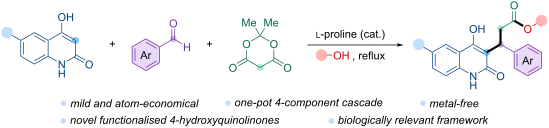
A mild and atom-efficient four-component cascade strategy for the construction of biologically relevant 4-hydroxyquinolin-2(1H)-one derivatives
Beilstein J. Org. Chem. 2026, 22, 244–256, doi:10.3762/bjoc.22.18
- represent thermodynamically favored, more stable products formed upon prolonged heating. To support the hypothesis that the carbonyl carbon atom in pyranoquinoline exhibits higher electrophilicity than in the open-chain ester, quantum chemical calculations were performed to evaluate their electrophilic
- properties (see Supporting Information File 1, pages S3 and S50–S51). The methyl ester was selected as the model open-chain compound. Calculations revealed that the initial atomic charge on the carbonyl carbon in the lactone was +0.234, whereas in the methyl ester it was slightly lower at +0.225. Further



Conformational analysis of difluoromethylornithine: factors influencing its gas-phase and bioactive conformations
Beilstein J. Org. Chem. 2026, 22, 237–243, doi:10.3762/bjoc.22.17
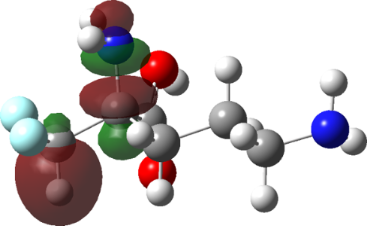
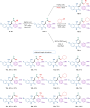
- conformational stability. High-level DLPNO-CCSD(T)/CBS calculations revealed that type-I conformers – those maximizing gauche interactions between C–F and C–N bonds – dominate the equilibrium population, confirming the presence of the fluorine gauche effect. natural bond orbital (NBO) analysis showed that this
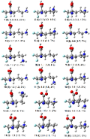
- this framework, DFMO is expected to display the gauche effect when type-I structures dominate, because the polar C–N bond forms two gauche interactions with the polar C–F bonds. High-level DLPNO-CCSD(T)/CBS calculations support this expectation: the four lowest-energy structures are type I and together
- with two additional structures – one with the COOH group (II) and another with the C2H4NH2 group (III) positioned between the two C–F bonds – were subsequently optimized at the B3LYP-GD3BJ/6-311++G(d,p) level [28][29][30][31] of density functional theory. Frequency calculations confirmed that all




Configuration–packing synergy enabling integrated crystalline-state RTP and amorphous-state TADF
Beilstein J. Org. Chem. 2026, 22, 224–236, doi:10.3762/bjoc.22.16
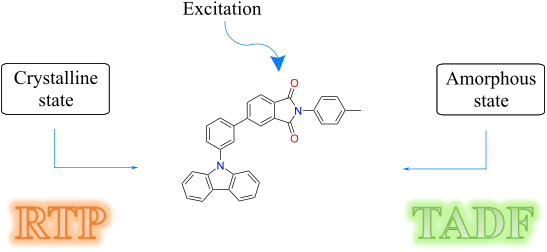
- Abstract A twisted D–π–A molecule, PI-Cz 1, was designed and synthesized using phthalimide as the acceptor, carbazole as the donor, and a phenylene bridge. Single-crystal X-ray diffraction revealed a markedly non-coplanar skeleton. Calculations based on the crystallographic geometry and frontier-orbital
- -containing acceptor and potential intermolecular interactions, providing conditions for enhanced SOC and RTP manifestation in crystalline or partially crystalline states. By combining single-crystal structural analysis, quantum calculations, and steady-state/time-resolved/temperature-dependent spectroscopy
- influencing the electronic properties and excited-state dynamics of 1. Building on the crystallographic data, quantum-chemical calculations were performed using the Gaussian 09 software at the B3LYP level of theory. The calculations revealed that the highest occupied molecular orbital (HOMO) is primarily





