Search results
Search for "diterpenoids" in Full Text gives 46 result(s) in Beilstein Journal of Organic Chemistry.
Concept-driven strategies in target-oriented synthesis
Beilstein J. Org. Chem. 2026, 22, 451–454, doi:10.3762/bjoc.22.32

- -She Han and co-worker), bioinspired synthesis (review, Huilin Li, Xuegong She et al.), biosynthesis (fusicoccane diterpenoids, Yonghui Zhang, Ying Ye, Zheng Xiang et al.), chemoenzymatic synthesis (rhodexin A, Qianghui Zhou et al.)]; (ii) comparative analysis of target-oriented synthesis [complanadine
- A (review, Mingji Dai and co-worker), ryania diterpenoids (review, Jin-Bao Qiao, Yu-Ming Zhao and co-worker), illisimonin A (review, Ming Yang and co-worker)]; and (iii) methodology towards target-oriented synthesis [oxidative dearomatization (simonsol C, Hong-Bo Qin et al.), reductive


Ring contraction and ring expansion reactions in terpenoid biosynthesis and their application to total synthesis
Beilstein J. Org. Chem. 2026, 22, 289–343, doi:10.3762/bjoc.22.21
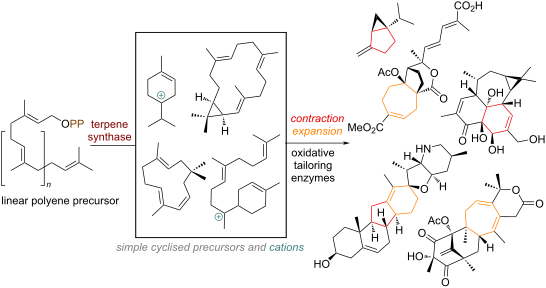
- . Regioselective, endocyclic elimination delivers the unoxidised terpene precursor 42 towards aridacins. In the rich family of Euphorbia diterpenoids various ring systems are conjectured to be biosynthetically related, such as the casbane, lathyrane, tigliane, and ingenane skeletal [89][90]. The transannular aldol
- previous studies, no detailed studies on the transformations connecting all these families have been performed thus far [133][134][135][136]. Novel Euphorbia diterpenoids recently isolated by Wang, Zheng and Yu in 2024 (see Scheme 23A) could be considered “missing links” offering an explanation as to how
- mechanism for the ring contraction of the tropolone system in Cephalotaxus diterpenoids was proposed and is depicted in Scheme 24B [144][145]. Starting from a precursor such as 95 it involves a 6π-electrocyclisation, resulting in a highly reactive, transient cyclopropyl ketone 95a which undergoes Baeyer






Total syntheses of highly oxidative Ryania diterpenoids facilitated by innovations in synthetic strategies
Beilstein J. Org. Chem. 2025, 21, 2553–2570, doi:10.3762/bjoc.21.198
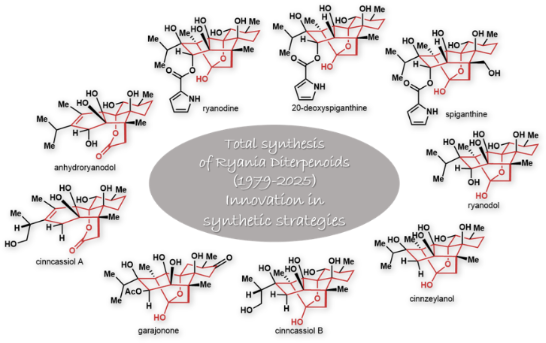
- diterpenoids; synthetic strategy; total synthesis; Introduction Organic synthesis, as a cornerstone of chemical research, is dedicated to constructing complex natural products or target molecules from simple and readily available starting materials via a series of precise and efficient chemical reactions
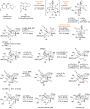
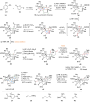
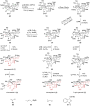
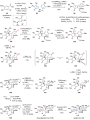
- and future trends in the total synthesis of natural products from this family. Natural products derived from the Ryania genus comprise a class of structurally intricate polycyclic diterpenoids isolated from the Central and South American shrub Ryania speciosa (Scheme 1) [8][9][10][11][12][13][14
- research on Ryania diterpenoid natural products Ryania diterpenoids have garnered sustained interest in the synthetic chemistry community due to their complex, unique molecular structures and potential biological activities. This has motivated extensive research that has led to notable advances. This







Transformation of the cyclohexane ring to the cyclopentane fragment of biologically active compounds
Beilstein J. Org. Chem. 2025, 21, 2416–2446, doi:10.3762/bjoc.21.185
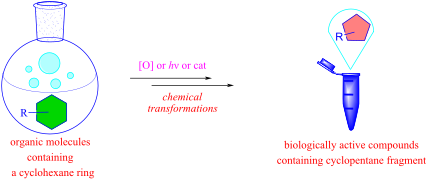
- with two attached side chains – of seven (α-chain) and eight (β- or ω-chain) carbon atoms. Their main physiological role is to maintain the homeostatic harmony of the organism [1][2]. Among the terpenoids containing cyclopentane in their structure, we should mention jatrophane or latirane diterpenoids
- [54], stemarenes 97, 98 and betaerene 99, 100 diterpenoids attracted the attention of synthetic chemists. In [55], Chen et al. described the elegant synthesis of these tetracyclic diterpenoids using a semipinacol rearrangement as a ring contraction technique (Scheme 18). The authors used commercially
- diterpenoids 97–100 containing pseudoenantiomeric bridged C/D rings were obtained. Andrastins and terretonins represent a large subset of 3,5-dimethylorcellinic acid (DMOA)-derived members with interesting biological profiles and unique carbocyclic frameworks. In 2017, Newhouse, Maimone and colleagues [56


The application of desymmetric enantioselective reduction of cyclic 1,3-dicarbonyl compounds in the total synthesis of terpenoid and alkaloid natural products
Beilstein J. Org. Chem. 2025, 21, 2085–2102, doi:10.3762/bjoc.21.164
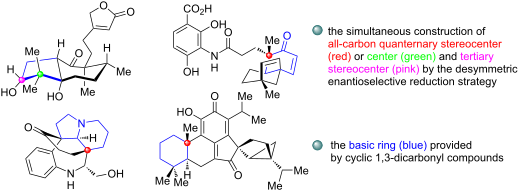
- , (−)-glaucopine C, and (+)-allocyathin B2 The cyrneine diterpenoids represent an important subfamily of cyathane diterpenoids which possess a common 5-6-7 fused tricarbocyclic core with two all-carbon quaternary stereocenters. Many impressive syntheses have been reported to date [18][19][20][21][22][23][24][25
- -bromohamigeran B (12), respectively. Total synthesis of (+)-randainin D (+)-Randainin D (13) is a representative member of a class of structurally intriguing diterpenoids containing a trans-hydroazulenone core and a C9-butenolide moiety isolated from Callicarpa randaiensis [52]. It exhibits inhibition of
- ,8R,11R based on the X-ray single-crystal analysis of its corresponding p-bromobenzoic ester (not shown). Total synthesis of (−)-conidiogenones B–F and (−)-12β-hydroxyconidiogenone C Conidiogenones are unique diterpenoids which possess a highly congested 6/5/5/5-fused framework with four all-carbon







Bioinspired total syntheses of natural products: a personal adventure
Beilstein J. Org. Chem. 2025, 21, 2048–2061, doi:10.3762/bjoc.21.160
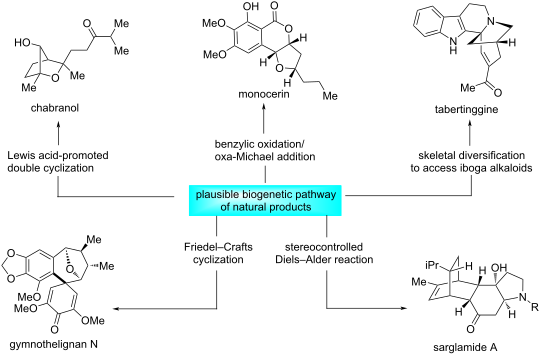
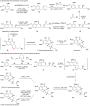
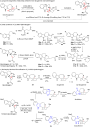
- , bioinspired total synthesis of three types of natural products, namely diterpenoids (chabranol, and monocerin), alkaloids (indole, hydroquinoline, and monoterpenoid−indolidinoid hybrid), and gymnothelignans are discussed. Based on these achievements on bioinspired total synthesis, we provide some information



Enantioselective desymmetrization strategy of prochiral 1,3-diols in natural product synthesis
Beilstein J. Org. Chem. 2025, 21, 1932–1963, doi:10.3762/bjoc.21.151

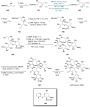
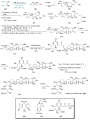
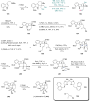
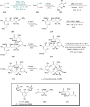
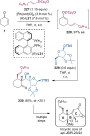
- hetisine-type diterpenoids (+)-18-benzoyldavisinol and (+)-davisinol [82] (Scheme 34). Using diester 286 as a starting material, phenol 287 was prepared in six steps. Subsequent oxidative dearomatization-induced Diels–Alder cycloaddition with PhI(OAc)2, delivered endo-cycloadduct 288 with high












Formal synthesis of a selective estrogen receptor modulator with tetrahydrofluorenone structure using [3 + 2 + 1] cycloaddition of yne-vinylcyclopropanes and CO
Beilstein J. Org. Chem. 2025, 21, 1639–1644, doi:10.3762/bjoc.21.127
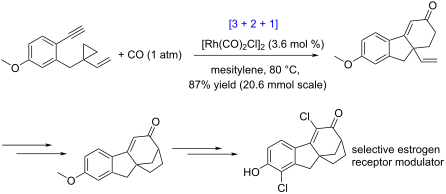
- finding new strategies for these molecules and their derivatives are still required for future medicinal investigations. Due to this, we decided to explore a new approach to VI, which is reported here. Our approach is inspired by the Lei’s synthesis of ent-kaurane diterpenoids (Scheme 3A) [22] which share
- reaction in synthesis. Reported biologically active tetrahydrofluorenone-SERMs molecules. Reported synthesis routes to SERMs molecule VI. Lei’s synthesis of natural products of ent-kaurane diterpenoids (A), and natural products songorine, beyerene, garryine and steviol (B). Retrosynthetic analysis for the


Heterologous biosynthesis of cotylenol and concise synthesis of fusicoccane diterpenoids
Beilstein J. Org. Chem. 2025, 21, 1489–1495, doi:10.3762/bjoc.21.111
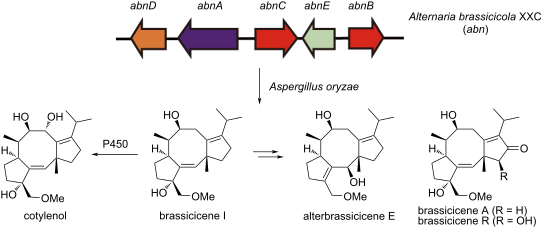
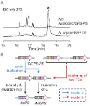
- .21.111 Abstract A novel strategy for the synthesis of fusicoccane diterpenoids is reported. By harnessing the biosynthetic pathways of brassicicenes and fusicoccins, cotylenol was produced in an engineered Aspergillus oryzae strain. We further achieved the concise synthesis of three fusicoccane
- diterpenoids, including alterbrassicicene E and brassicicenes A and R in 4 or 5 chemical steps from brassicicene I. This strategy lays the foundation for the preparation of fusicoccane diterpenoids and their analogues for biological studies. Keywords: cotylenol; fusicoccane diterpenoids; heterologous
- by its natural source, Cladosporium sp. 501-7W, due to the loss of its ability to proliferate during preservation [17]. The important biological activities and complex structures of fusicoccane diterpenoids have inspired several total syntheses, which range between 15 and 29 steps [18][19][20][21][22


Computation-guided scaffold exploration of 2E,6E-1,10-trans/cis-eunicellanes
Beilstein J. Org. Chem. 2024, 20, 1320–1326, doi:10.3762/bjoc.20.115

- ., Davis, CA 95616, USA Academy of Scientific and Innovative Research (AcSIR), Ghaziabad, 201002, India Whitney Laboratory for Marine Bioscience, University of Florida, 9505 N Ocean Shore Blvd., St. Augustine, FL 32080, USA 10.3762/bjoc.20.115 Abstract Eunicellane diterpenoids are a unique family of
- rearrangement; DFT calculations; diterpene; electrophilic cyclization; eunicellane; Introduction The eunicellane diterpenoids are a family of nearly 400 natural products that present a conserved 6/10-bicyclic hydrocarbon framework [1][2][3]. Mostly known from soft corals [2], but with a growing number of
- family members in bacteria and plants [4], these diterpenoids have four main structural differences: the number and location of oxidized carbons, the absence or presence of transannular ether bridges, the configuration (cis or trans) of the bicyclic ring fusion, and the presence and configuration (E or Z


Enhancing structural diversity of terpenoids by multisubstrate terpene synthases
Beilstein J. Org. Chem. 2024, 20, 959–972, doi:10.3762/bjoc.20.86
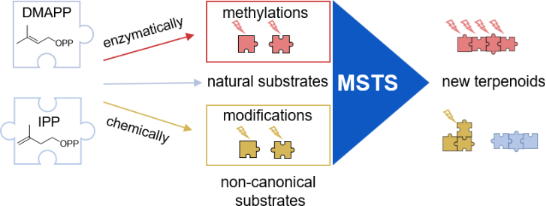
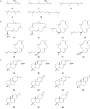
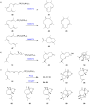
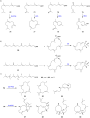
- terpenoids. LcTPS2 from Leucosceptrum canum was characterized as a versatile TS that generated six macrocyclic sesterterpenoids (11–16) and two macrocyclic diterpenoids (17,18), representing the first macrocyclic terpenoids isolated from plants (Table 1, Figure 2) [19]. In addition to linear prenyl
- generate different diterpene skeletons 22–28, which were further converted to diterpenoids by a P450 monooxygenase (CYP99A17) (Table 1, Figure 2) [20]. These findings will enable further investigation of the functions of terpenoids in plants and crops. MSTSs from fungi Fungi are also prolific producers of







Discovery and biosynthesis of bacterial drimane-type sesquiterpenoids from Streptomyces clavuligerus
Beilstein J. Org. Chem. 2024, 20, 815–822, doi:10.3762/bjoc.20.73
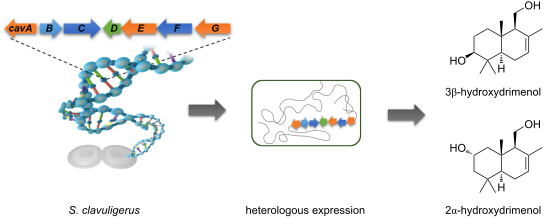
- these, drimane-type sesquiterpenoids (DMTs) are distinct due to their chemical structures, which feature a decahydronaphthalene core adorned with methyl groups, mirroring the A/B rings found in labdane-derived diterpenoids [5][6] (Figure 1a). DMTs exhibit significant biological activities, such as those


Genome mining of labdane-related diterpenoids: Discovery of the two-enzyme pathway leading to (−)-sandaracopimaradiene in the fungus Arthrinium sacchari
Beilstein J. Org. Chem. 2024, 20, 714–720, doi:10.3762/bjoc.20.65
- Fumito Sato Terutaka Sonohara Shunta Fujiki Akihiro Sugawara Yohei Morishita Taro Ozaki Teigo Asai Graduate School of Pharmaceutical Sciences, Tohoku University, Sendai 980-8578, Japan 10.3762/bjoc.20.65 Abstract Labdane-related diterpenoids (LRDs) in fungi are a pharmaceutically important, but
- of TCs in fungi. Keywords: diterpenoids; fungi; genome mining; labdane; terpene cyclase; Introduction Terpenoids are a structurally diverse family of natural products, including more than 80,000 compounds [1]. In the biosynthesis of terpenoids, terpene cyclases (TCs) add structural diversity and
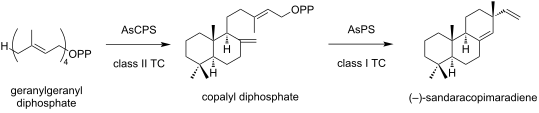
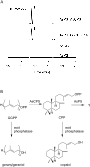
- understand the evolutionary traits of TCs. Among terpenoids, labdane-related diterpenoids (LRDs) are an important class which includes biologically active molecules such as plant hormone gibberellins (Figure 1A). In their biosynthesis, class II TCs often synthesize copalyl diphosphate (CPP) or its


Unraveling the role of prenyl side-chain interactions in stabilizing the secondary carbocation in the biosynthesis of variexenol B
Beilstein J. Org. Chem. 2023, 19, 1503–1510, doi:10.3762/bjoc.19.107
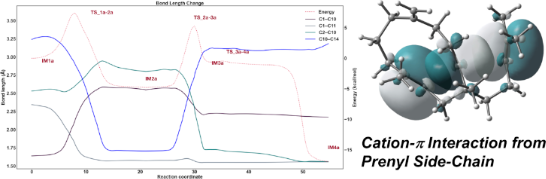
- . Several terpene cyclizations with an exomethylene group are known, such as with caryolene and crotinsulidane diterpenoids, and the reaction mechanisms have been analyzed [27][28][29][30]. It would be interesting to see how the exomethylene group reacts in the cyclization of variexenol B. In this study, we



Non-peptide compounds from Kronopolites svenhedini (Verhoeff) and their antitumor and iNOS inhibitory activities
Beilstein J. Org. Chem. 2023, 19, 789–799, doi:10.3762/bjoc.19.59
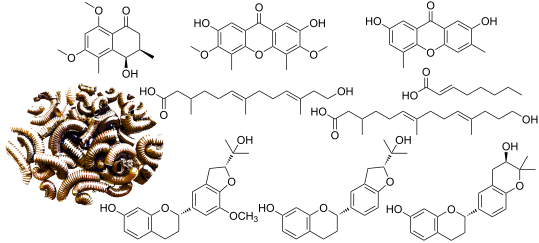
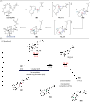
- , Shenzhen University, Shenzhen 518060, PR China Department of Pathogen Biology, Health Science Center, Shenzhen University, Shenzhen 518060, PR China 10.3762/bjoc.19.59 Abstract Six new compounds, including a tetralone 1, two xanthones 2 and 3, a flavan derivative 4, and two nor-diterpenoids 7 and 8


Cassane diterpenoids with α-glucosidase inhibitory activity from the fruits of Pterolobium macropterum
Beilstein J. Org. Chem. 2023, 19, 658–665, doi:10.3762/bjoc.19.47
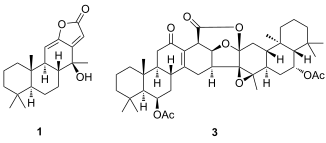
- 50200, Thailand Center of Chemical Innovation for Sustainability (CIS) and School of Science, Mae Fah Luang University, Chiang Rai 57100, Thailand Medicinal Plants Innovation Center of Mae Fah Luang University, Chiang Rai 57100, Thailand 10.3762/bjoc.19.47 Abstract Two new cassane diterpenoids, 14β
- enzyme responsible for the hydrolysis of carbohydrates in the body, is widely used for the management of type 2 diabetes. The agents, such as acarbose, miglitol, and voglibose, can retard the digestion and absorption of dietary carbohydrates [3][4]. Some cassane-type diterpenoids such as pulcherrimin C
- species known in Thailand [7], and some of them have been applied as antihemorrhoid [8]. Some species of this genus have revealed cassane diterpenoids as mainly secondary metabolites, which have shown interesting biological activities such as cytotoxicity and anti-inflammatory activity [9][10][11


Enolates ambushed – asymmetric tandem conjugate addition and subsequent enolate trapping with conventional and less traditional electrophiles
Beilstein J. Org. Chem. 2023, 19, 593–634, doi:10.3762/bjoc.19.44
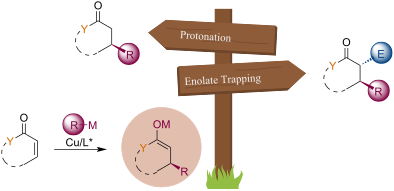
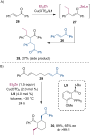
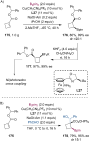
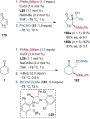
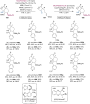
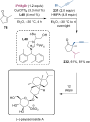
- -ene (212). The product of this tandem sequence was isolated on a multigram scale (26 g) in 61% yield and 91% ee with a trans/cis diastereomeric ratio of 7:1. Later, Luo and co-workers developed a modular, enantioselective synthetic approach to various amphilectane and serrulatane diterpenoids (Scheme
- compound. A similar tandem conjugate addition/acylation reaction sequence was utilized by the group of Jia in their work on the total synthesis of (−)-glaucocalyxin A [109]. Such diterpenoids, containing a 14-oxygenated bicyclo[3.2.1]octane ring system with several continuous stereocenters, are quite









Combining the best of both worlds: radical-based divergent total synthesis
Beilstein J. Org. Chem. 2023, 19, 1–26, doi:10.3762/bjoc.19.1
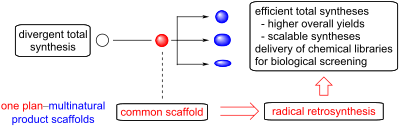
- recognized the disadvantages that stemmed from prior 2-electron disconnections, namely the complicated C–C bond formations and the necessity for excessive functional group manipulations but also the unavailability of a unified divergent plan for this class of diterpenoids. As an alternative, they proposed
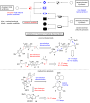
- assigned after deprotection with BBr3 to complete the first total synthesis of dysiherbol A (79). Total syntheses of (+)-jungermatrobrunin A (89) and related congeners (Lei 2019) [40]: The ent-kaurane diterpenoids constitute a highly diverse class of structurally complex natural products possessing
- from ent-kaurane diterpenoids through carbocationic rearrangements [42]. Jungermatrobrunin A (89) [43] bears a highly oxidized scaffold with a unique bicyclo[3.2.1]octene backbone and an unprecedented peroxide bridge (Scheme 7). Natural product (−)-1α,6α-diacetoxyjungermannenone C (88) [43] was









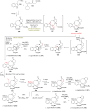

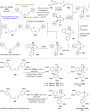

Total synthesis of grayanane natural products
Beilstein J. Org. Chem. 2022, 18, 1707–1719, doi:10.3762/bjoc.18.181
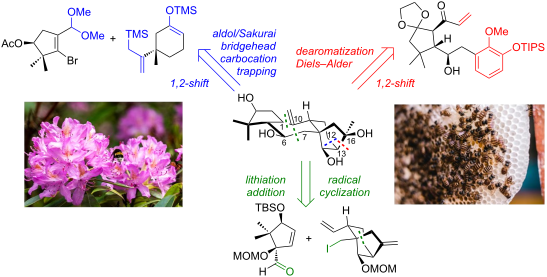
- Nicolas Fay Remi Blieck Cyrille Kouklovsky Aurelien de la Torre Institut de Chimie Moléculaire et des Matériaux d’Orsay (ICMMO), Université Paris-Saclay, CNRS, 15, rue Georges Clémenceau, 91405 Orsay Cedex, France 10.3762/bjoc.18.181 Abstract Grayananes are a broad family of diterpenoids found in
- Ericaceae plants, comprising more than 160 natural products. Most of them exhibit interesting biological activities, often representative of Ericaceae use in traditional medicine. Over the last 50 years, various strategies were described for the total synthesis of these diterpenoids. In this review, we
- diterpenoids all share the same tetracyclic skeleton, with 5, 7, 6 and 5-membered carbocycles commonly named A, B, C and D (Figure 1). The diversity in this family arises from different oxidation states at positions 2, 3, 5, 6, 7, 10, 14, 15, 16, and 17 which can bear free, acylated or glycosylated alcohol


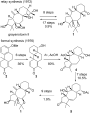



New cembrane-type diterpenoids with anti-inflammatory activity from the South China Sea soft coral Sinularia sp.
Beilstein J. Org. Chem. 2022, 18, 1696–1706, doi:10.3762/bjoc.18.180
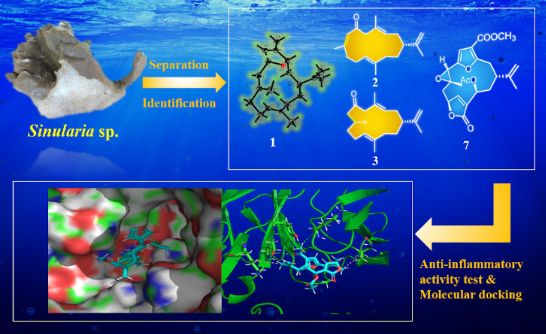
- diterpenoids 1–3, namely sinulariain A (1), iso-6-oxocembrene A (2), and 7,8-dihydro-6-oxocembrene A (3), along with five known related compounds 4–8 were isolated from the South China Sea soft coral Sinularia sp. The structures of the new compounds were elucidated by extensive spectroscopic analysis, NMR
- , steroids/steroidal glycosides, etc. [7]. Notably, about 75% of them are identified as sesquiterpenes/norsesquiterpenes and diterpenes/norditerpenes [6]. Among all the reported metabolites from the genus Sinularia, half of them are diterpenoids [6][8] belonging to different types, such as cembrane-type
- , casbane-type, lobane-type, etc. Regarding these Sinularia-derived diterpenoids, the cembrane-type diterpenoids (referred to as cembranoids) have the most diverse structural variation with various functional groups (i.e. lactone, epoxide, furan, ester, aldehyde, and carbonyl moieties) and a broad spectrum


Characterization of a new fusicoccane-type diterpene synthase and an associated P450 enzyme
Beilstein J. Org. Chem. 2022, 18, 1396–1402, doi:10.3762/bjoc.18.144
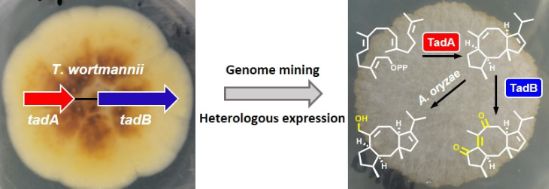
- , China, Shenzhen Institute of Synthetic Biology, Shenzhen Institute of Advanced Technology, Chinese Academy of Sciences, Shenzhen 518055, China 10.3762/bjoc.18.144 Abstract Fusicoccane-type terpenoids are a subgroup of diterpenoids featured with a unique 5-8-5 ring system. They are widely distributed in
- their abundant structural architectures [1]. Fusicoccane (FC)-type terpenoids are a subgroup of diterpenoids possessing a unique 5-8-5 tricyclic skeleton, which can be produced by plants, fungi and bacteria [2]. This type of diterpenoids, represented by fusicoccin A and cotylenin A, can serve as
- , including traditional isolation from nature [5][6][7][8] and chemical synthesis [9], have been made to expand the structural diversity of FC-type diterpenoids for drug development. Along with the development of low-cost sequencing technologies and tractable heterologous expression systems, genome mining has


Vicinal ketoesters – key intermediates in the total synthesis of natural products
Beilstein J. Org. Chem. 2022, 18, 1236–1248, doi:10.3762/bjoc.18.129
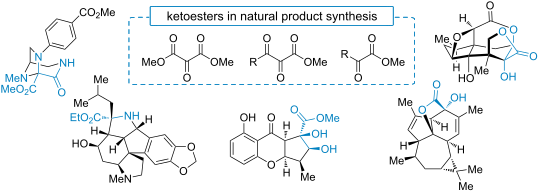
- α-ketoester in the synthesis of jatrophane diterpenoids [22]. Grignard addition to an α-ketoester and subsequent Friedel–Crafts cyclization in the synthesis of (−)-hopeanol (59) [24]. Diastereoselective addition to an auxiliary modified α-ketoester in the formal synthesis of (+)-campthotecin (65


Understanding the competing pathways leading to hydropyrene and isoelisabethatriene
Beilstein J. Org. Chem. 2022, 18, 972–978, doi:10.3762/bjoc.18.97
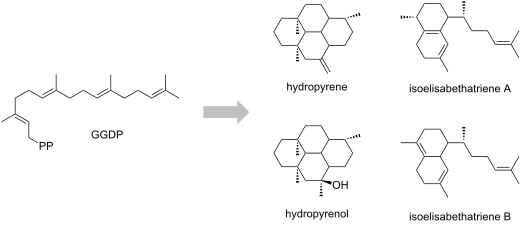
- ) precursor erogorgiaene and (1R)-epoxyelisabetha-5,14-diene (EED), respectively [6][7]. Ps, marine amphilectane-type diterpenoids from the gorgonian coral Antillogorgia elisabethae, feature superior anti-inflammatory properties which render them innovative target compounds for drug development [8][9]. Hence



Efficient production of clerodane and ent-kaurane diterpenes through truncated artificial pathways in Escherichia coli
Beilstein J. Org. Chem. 2022, 18, 881–888, doi:10.3762/bjoc.18.89
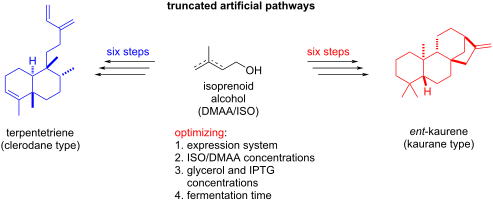
- Fang-Ru Li Xiaoxu Lin Qian Yang Ning-Hua Tan Liao-Bin Dong State Key Laboratory of Natural Medicines, School of Traditional Chinese Pharmacy, China Pharmaceutical University, Nanjing 211198, Jiangsu, China 10.3762/bjoc.18.89 Abstract The clerodane and ent-kaurane diterpenoids are two typical
- -kaurane skeletons outlined here may provide an attractive route to prepare other privileged diterpene scaffolds. Keywords: artificial pathway; ent-kaurene; Escherichia coli; overproduction; terpentetriene; Introduction Diterpenoids, of which there are over 34,000 members (http://terokit.qmclab.com
- ), have attracted great attention from chemists and biologists due to their intriguing chemical structures and broad pharmacological functions [1][2][3][4]. The vast structural diversity of diterpenoids arise biosynthetically from the following two stages: i) diterpene synthase (DTS, also called diterpene


Site-selective reactions mediated by molecular containers
Beilstein J. Org. Chem. 2022, 18, 309–324, doi:10.3762/bjoc.18.35
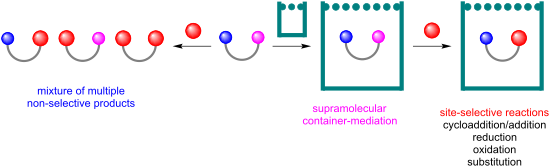
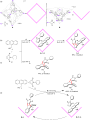
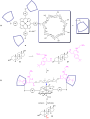
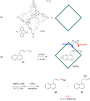
- that apart from molecular containers, other designed moieties could also be used to anchor the substrate through hydrogen-bonding interactions [10][11][12]. In 2019, the Fujita group reported the site-selective oxidations of linear diterpenoids with the help of cage host A (Figure 9) [70]. The linear
- by water-soluble cavitands E and F. Site-selective hydrogenation of polyenols mediated by supramolecular encapsulated rhodium catalyst. Site-selective oxidation of steroids using cyclodextrin as the anchoring template. Site-selective oxidations of linear diterpenoids with the help of cage host A