


Search results
Search for "mechanistic insights" in Full Text gives 47 result(s) in Beilstein Journal of Organic Chemistry.
Recent advances in copper-catalyzed direct hydroamination of alkenes with (hetero)aromatic amines
Beilstein J. Org. Chem. 2026, 22, 925–947, doi:10.3762/bjoc.22.73
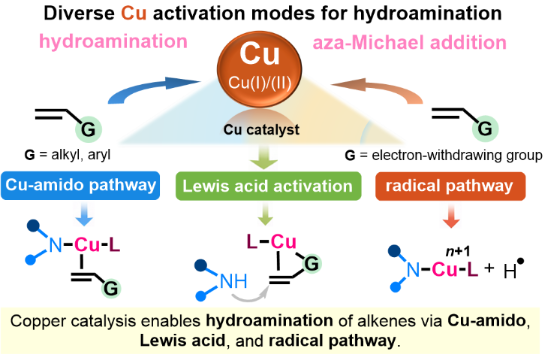
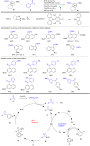
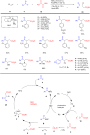
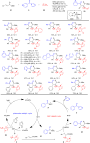
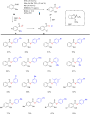
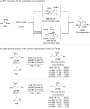
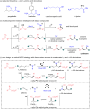
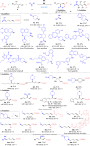
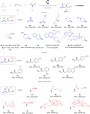
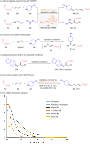
- nucleophilicity, facilitating conjugate addition to electron-deficient alkenes. The formation of such well-defined copper–amido complexes provides valuable mechanistic insights into copper-catalyzed hydroamination and conjugate addition reactions. Pioneering studies by Gunnoe et al. describe the synthesis and
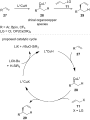
- , particularly for ester-substituted alkenes. Mechanistic insights obtained from the DFT calculations suggested that the reaction proceeded via a copper–amido catalytic cycle involving metal-assisted olefin activation and the aminocupration pathway. In the initial step, deprotonation of the amine by KOt-Bu
- catalyst. The strong dependence of the reactivity on the electron-withdrawing substituent of the vinylarene was consistent with the rate-determining nucleophilic addition step. Although the substrate scope in this early study is relatively limited, these results provide critical mechanistic insights into







The trans-influence in gold chemistry from a catalytic perspective
Beilstein J. Org. Chem. 2026, 22, 838–856, doi:10.3762/bjoc.22.66
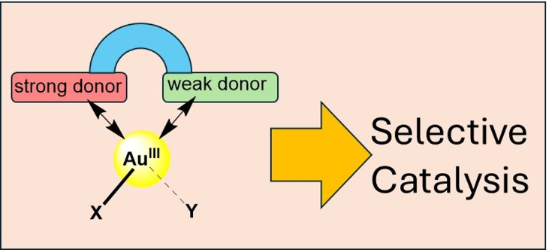
- recent mechanistic insights. Keywords: catalysis; gold; ligands; reaction mechanism; trans-influence; Introduction Gold catalysts have emerged as catalysts of choice in a multitude of organic transformations, not least due to their high functional group tolerance. Their applications have been widely


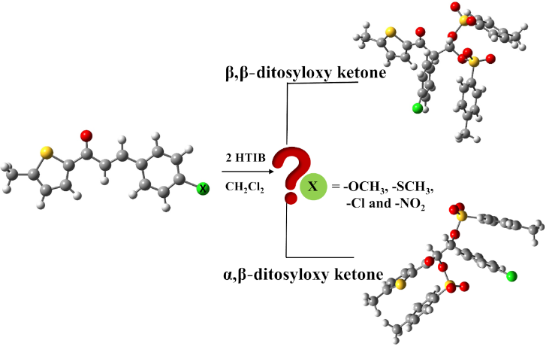
Mechanistic insights into hydroxy(tosyloxy)iodobenzene-mediated ditosyloxylation of chalcones: a DFT study
Beilstein J. Org. Chem. 2025, 21, 2703–2715, doi:10.3762/bjoc.21.208


Visible-light-driven NHC and organophotoredox dual catalysis for the synthesis of carbonyl compounds
Beilstein J. Org. Chem. 2025, 21, 2584–2603, doi:10.3762/bjoc.21.200
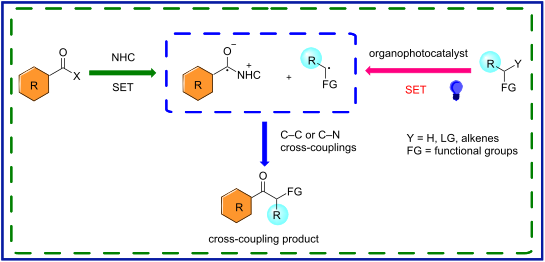
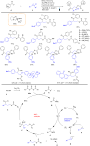
- organic chemistry, and particularly in the late-stage functionalization of bioactive compounds, drugs, and natural products. This review highlights recent advances in NHC–organophotoredox dual catalysis, focusing on methodology development, mechanistic insights, and reaction scope for synthesizing
- chemistry and active pharmaceutical ingredients [38][39][40]. Over the years, the groups of Hopkinson, Wang, Dong, Marzo, and co-workers published a comprehensive review detailing the synthetic approaches and mechanistic insights of visible light-promoted dual photocatalysis that combined N-heterocyclic




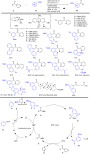

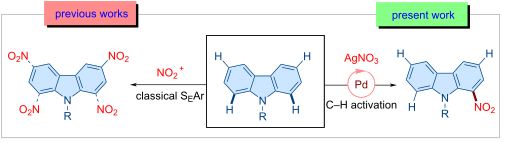
Palladium-catalyzed regioselective C1-selective nitration of carbazoles
Beilstein J. Org. Chem. 2025, 21, 2479–2488, doi:10.3762/bjoc.21.190
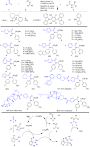
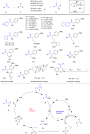
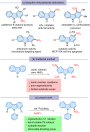
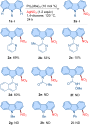
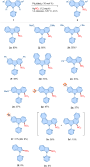
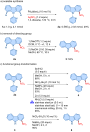
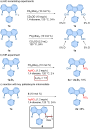
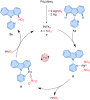
- , compound 2a was successfully reduced to the corresponding amine 4 in 85% yield. Similarly, the nitro group of compound 3 was also reduced under the NiCl2/NaBH4-promoted conditions, affording 9H-carbazol-1-amine (5) in 90% yield. Mechanistic studies Next, we sought to gain mechanistic insights into the


Conformational effects on iodide binding: a comparative study of flexible and rigid carbazole macrocyclic analogs
Beilstein J. Org. Chem. 2025, 21, 2369–2375, doi:10.3762/bjoc.21.181
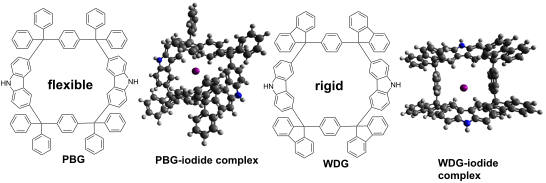
- conformational dynamics, prompting a paradigm shift from static binding models to mechanistic insights into induced fit [17] and conformational selection [18]. This cognitive shift marks the transition of molecular recognition research from a simple description of binding phenomena to a deep understanding at the



Recent advances in Norrish–Yang cyclization and dicarbonyl photoredox reactions for natural product synthesis
Beilstein J. Org. Chem. 2025, 21, 2315–2333, doi:10.3762/bjoc.21.177
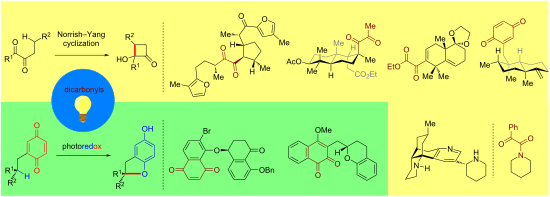
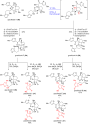
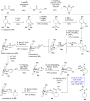
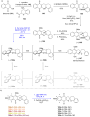
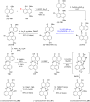
- proximal phenol, yielding the cyclization product H (Scheme 1b). Notably, the quinone is reduced, while the proximal C–H bond is subject to oxidation. Building on these mechanistic insights and the synthetic merits of dicarbonyls, Norrish–Yang cyclization and related photoredox reactions have been serving







Pathway economy in cyclization of 1,n-enynes
Beilstein J. Org. Chem. 2025, 21, 2260–2282, doi:10.3762/bjoc.21.173
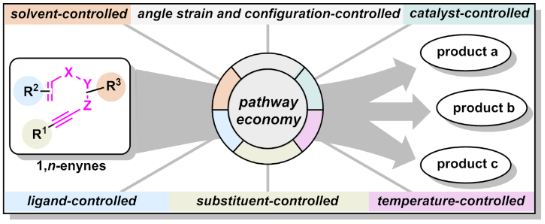
- rapid molecular diversification, offering transformative potential for green chemistry and pharmaceutical applications. By unifying mechanistic insights with practical synthetic design, this review provides valuable guidance for future innovations in precision organic synthesis. Keywords: economical


Measuring the stereogenic remoteness in non-central chirality: a stereocontrol connectivity index for asymmetric reactions
Beilstein J. Org. Chem. 2025, 21, 1995–2006, doi:10.3762/bjoc.21.155
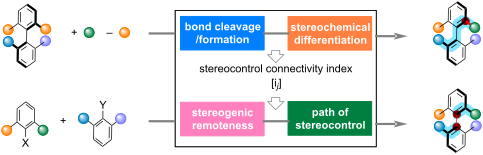
- , and the stereochemical-defining substituents. The indices can be generated based on analysis of the chemical structures of the starting materials and products, without mechanistic insights of the transformation. Representative examples of reactions that establish point chirality, axial chirality




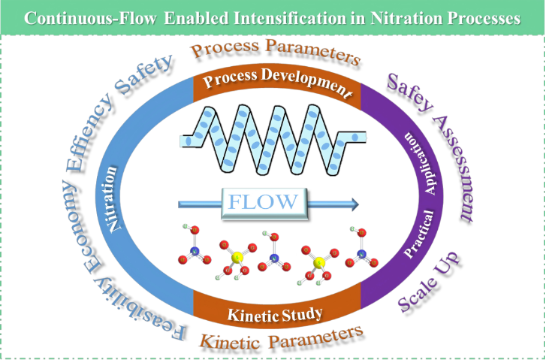
Continuous-flow-enabled intensification in nitration processes: a review of technological developments and practical applications over the past decade
Beilstein J. Org. Chem. 2025, 21, 1678–1699, doi:10.3762/bjoc.21.132



Azobenzene protonation as a tool for temperature sensing
Beilstein J. Org. Chem. 2025, 21, 1528–1534, doi:10.3762/bjoc.21.115
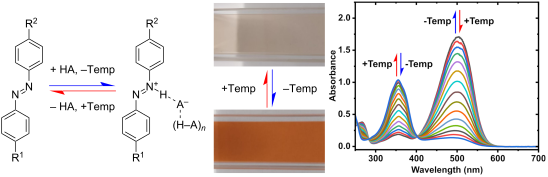
- and solvent polarity, we demonstrate that the degree of protonation, and thus solution color, is highly temperature-dependent, changing from pale yellow to deep red as temperature decreases. We also present mechanistic insights and compare our experimental findings with computational results. Results


Copper catalysis: a constantly evolving field
Beilstein J. Org. Chem. 2025, 21, 1477–1479, doi:10.3762/bjoc.21.109
- reactions, are separately debated. In addition, mechanistic insights into the reaction of heteropolycyclic systems, cycloadditions, and aza-Diels–Alder reactions are provided. This is important because multicomponent, one-pot reactions have gained interest as potentially more economic, efficient, and
- hydride catalysis, and enantiotopic group-selective allylations of 1,1-diborylalkanes as core strategies. At the same time, the authors provide detailed mechanistic insights into the stereocontrol and provide a perspective on currently unresolved challenges in the field. Concerning Full Research Papers
Recent advances in amidyl radical-mediated photocatalytic direct intermolecular hydrogen atom transfer
Beilstein J. Org. Chem. 2025, 21, 1306–1323, doi:10.3762/bjoc.21.100
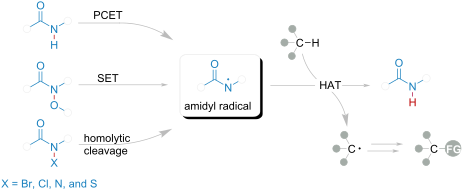
- of amidyl radicals as HAT reagents, with a particular emphasis on their role in the intermolecular HAT process. We highlight key developments, mechanistic insights, and emerging strategies that harness the unique reactivity of amidyl radicals in the selective functionalization of a variety of






Recent advances in controllable/divergent synthesis
Beilstein J. Org. Chem. 2025, 21, 890–914, doi:10.3762/bjoc.21.73
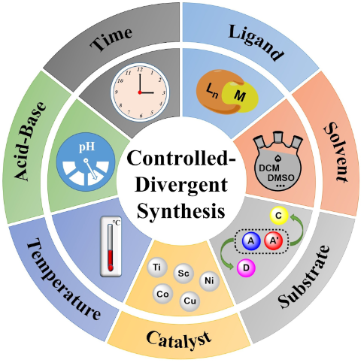
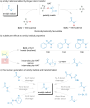
- review systematically examines, how these multidimensional control elements (including ligands, metal catalysts, solvents, time, temperature, acids/bases, and subtle modifications of substrates) synergize to achieve predictable product diversification. In addition, mechanistic insights are discussed
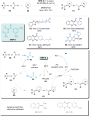
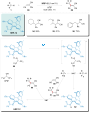
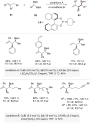
- represents a highly challenging direct C(sp3)–H asymmetric amination. Mechanistic insights: When using a bulky, electron-rich chiral bisphosphine ligand L6, the glycine ester substrate coordinates with the copper catalyst to form a key intermediate complex Int-26. The sterically hindered and electron-rich
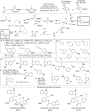
- thiols act as stoichiometric reductants. Mechanistic insights, elucidated through control experiments and DFT calculations, revealed that photoexcitation of diazo imide 41 triggers nitrogen extrusion (ΔG‡ = +10.0 kcal·mol−1), generating the triplet carbene intermediate Int-45. In DCM, this species







Recent advances in allylation of chiral secondary alkylcopper species
Beilstein J. Org. Chem. 2025, 21, 639–658, doi:10.3762/bjoc.21.51
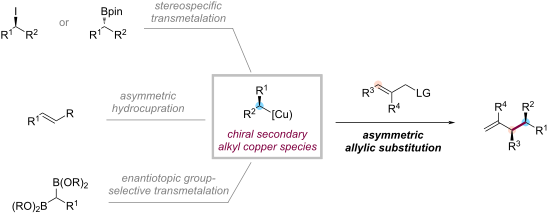
- transmetalation of organolithium and organoboron compounds, copper hydride catalysis, and enantiotopic-group-selective transformations of 1,1-diborylalkanes. Detailed mechanistic insights into stereochemical control and current challenges in this field are also discussed. Keywords: allylic substitution; chiral
- generating configurationally unstable organocopper species with secondary carbon–metal bonds, their unique properties, and related mechanistic insights. This review also aims to outline future research directions and prospects, contributing to the development of more efficient and selective copper-catalyzed





Cu(OTf)2-catalyzed multicomponent reactions
Beilstein J. Org. Chem. 2025, 21, 122–145, doi:10.3762/bjoc.21.7

- Venezian 21, 20133, Milano, Italy 10.3762/bjoc.21.7 Abstract This review reports the achievements in copper(II) triflate-catalyzed processes concerning the multicomponent reactions, applied to the synthesis of acyclic and cyclic compounds. In particular, for the heteropolycyclic systems mechanistic
- insights were outlined as well as cycloaddition and aza-Diels–Alder reactions were included. These strategies have gained attention due to their highly atom- and step-economy, one-step multi-bond forming, mild reaction conditions, low cost and easy handling. Keywords: cascade process; copper catalysis


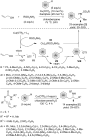


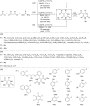


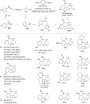


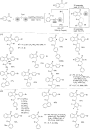
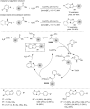


Regioselective alkylation of a versatile indazole: Electrophile scope and mechanistic insights from density functional theory calculations
Beilstein J. Org. Chem. 2024, 20, 1940–1954, doi:10.3762/bjoc.20.170
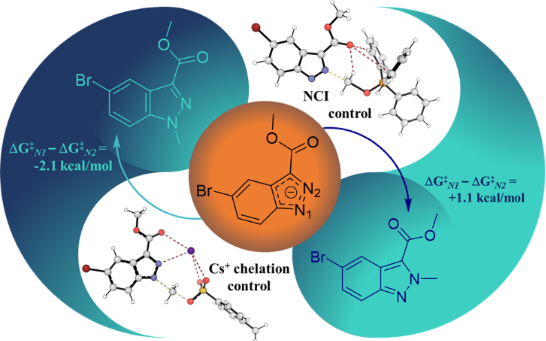


Electrochemical radical cation aza-Wacker cyclizations
Beilstein J. Org. Chem. 2024, 20, 1900–1905, doi:10.3762/bjoc.20.165
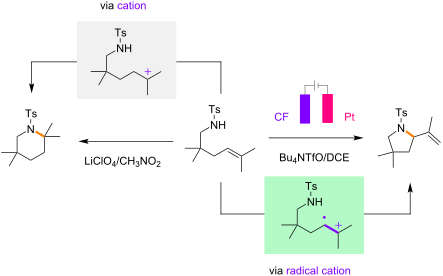
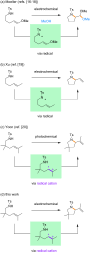
- tetrasubstituted alkene 14. Cyclic voltammetric studies have provided further mechanistic insights into electrochemical aza-Wacker cyclizations. As reported by Yoon, a trisubstituted alkene is oxidized at significantly lower potential than aryl sulfonamides, suggesting that the reactions were initiated by single




Tetrabutylammonium iodide-catalyzed oxidative α-azidation of β-ketocarbonyl compounds using sodium azide
Beilstein J. Org. Chem. 2024, 20, 1510–1517, doi:10.3762/bjoc.20.135
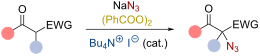
- to previous reports [31][41][42][43], the herein reported protocol most likely proceeds via in situ formation of a catalytically competent quaternary ammonium hypoiodite species which then facilities the coupling of the two inherently nucleophilic reaction partners. To get further mechanistic
- insights we also carried out our standard reaction (Table 1, entry 14) in the presence of well-established radical traps like TEMPO, di-tert-butylhydroxytoluene (BHT), or 1,1-diphenylethene (DPE). In neither case any influence on the yield was observed, thus ruling out a mechanism involving radical species


Mechanistic investigations of polyaza[7]helicene in photoredox and energy transfer catalysis
Beilstein J. Org. Chem. 2024, 20, 1236–1245, doi:10.3762/bjoc.20.106
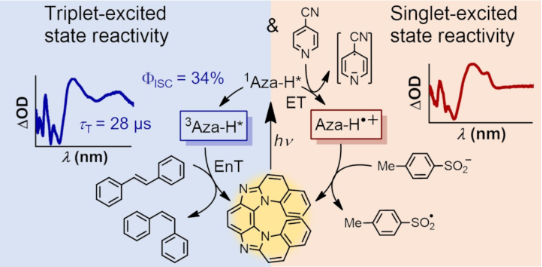
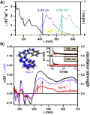
- potentials of Aza-H and the substrates and initial steady-state fluorescence quenching experiments (Scheme 1, left), but detailed mechanistic insights and direct evidence of the transient radical ions could not be obtained yet [45]. Figure 1A illustrates the absorption and emission spectra of Aza-H in MeCN
- species in a three-component sulfonylation/arylation reaction, whereas the unexplored triplet state is responsible for the decomposition of the photocatalyst. Photoinduced radical cation formation and thermal regeneration could be unambiguously observed, providing deep mechanistic insights into the




Palladium-catalyzed three-component radical-polar crossover carboamination of 1,3-dienes or allenes with diazo esters and amines
Beilstein J. Org. Chem. 2024, 20, 661–671, doi:10.3762/bjoc.20.59
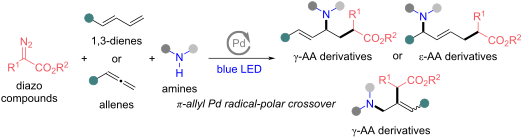
- modification of pharmaceutical scaffolds. Naturally, we were eager to acquire detailed mechanistic insights into this protocol. To validate the radical nature of this transformation, both model reactions of 1,3-diene 2a and allene 5a were terminated completely with 2.5 equiv 2,2,6,6-tetramethylpiperidinyloxyl



Electron-beam-promoted fullerene dimerization in nanotubes: insights from DFT computations
Beilstein J. Org. Chem. 2024, 20, 92–100, doi:10.3762/bjoc.20.10
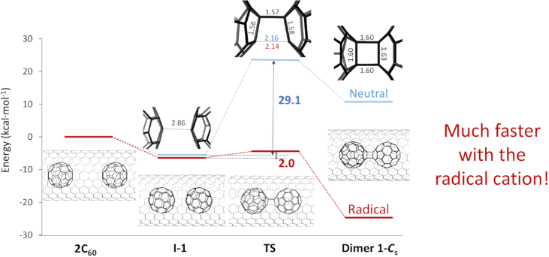
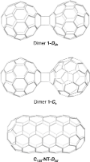
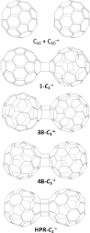
- . Mechanistic insights on the irreversible phase 2: first steps Once phase 1 was analyzed in detail, we studied the irreversible formation of C–C bonds in the interdimer region, known as phase 2 in the dimerization process. Due to the large number of possible pathways to be investigated, we made use of a




Recent advancements in iodide/phosphine-mediated photoredox radical reactions
Beilstein J. Org. Chem. 2023, 19, 1785–1803, doi:10.3762/bjoc.19.131
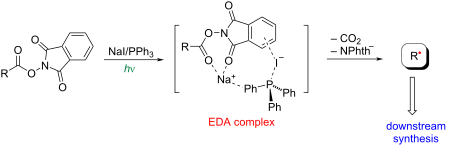
- -involved reactions is crucial for gaining a deeper understanding of their underlying mechanisms and expediting the process of designing new reactions. Overall, addressing these challenges and advancing the field through innovative approaches and mechanistic insights will contribute to the continued


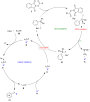


α-(Aminomethyl)acrylates as acceptors in radical–polar crossover 1,4-additions of dialkylzincs: insights into enolate formation and trapping
Beilstein J. Org. Chem. 2023, 19, 1443–1451, doi:10.3762/bjoc.19.103
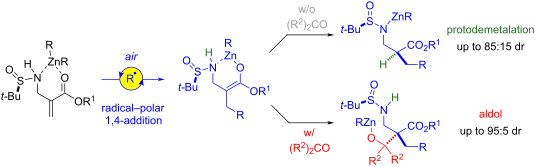
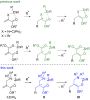
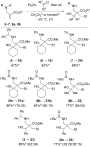
- . Mechanistic insights The last part of our work was devoted to gain mechanistic insight for the developed reaction protocols through several diagnostic experiments. Regarding the 1,4-addition process, the lower reactivity noted in the absence of air (Table 2, entry 5) represents already a strong indication for






The effect of dark states on the intersystem crossing and thermally activated delayed fluorescence of naphthalimide-phenothiazine dyads
Beilstein J. Org. Chem. 2023, 19, 1028–1046, doi:10.3762/bjoc.19.79
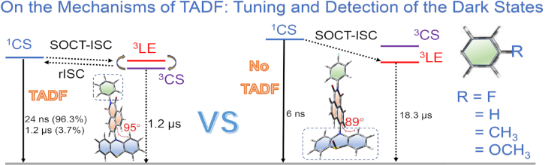
- TADF was observed. This is a solid experimental evidence that spin–vibronic coupling is essential for TADF, and the 3CS → 1CS rISC is slow, without the coupling with the intermediate 3LE state. The conventionally used transient luminescence spectral method is unable to supply such in-depth mechanistic
- insights into the TADF mechanism. For the dyads with the oxidized PTZ units, however, the CS state energy is increased by up to 0.8 eV, yet the 3LE state energy does not change. Thus the spin–vibronic coupling between the 3LE and 3CS is weak and no TADF was observed for this dyad only a long-lived 3LE





