


Search results
Search for "gas" in Full Text gives 964 result(s) in Beilstein Journal of Nanotechnology. Showing first 200.
A review of metal-organic frameworks and polymers in mixed matrix membranes for CO2 capture
Beilstein J. Nanotechnol. 2025, 16, 155–186, doi:10.3762/bjnano.16.14
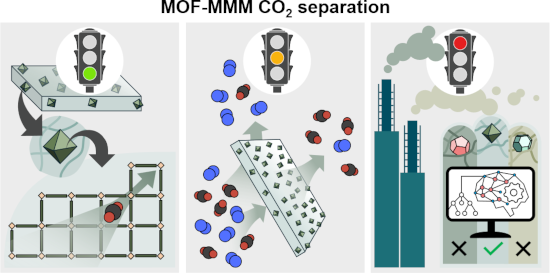
- the gas separation potential of MOF-based MMMs in CO2 capture applications are highlighted. Keywords: CO2 capture; gas separation; inorganic filler; metal-organic framework (MOF); mixed matrix membrane (MMM); Review 1 Introduction The continuous rise in global CO2 emissions has unfolded an era of
- much attention [3][4]. Considerable research has been dedicated to enhancing the efficiency of CO2 capture technologies for large-scale applications, particularly in natural gas purification and post-combustion processes [5]. Various technologies are currently under investigation for the capture of CO2
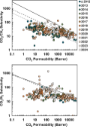
- permeable gas A [Barrer], α is the selectivity for gas A over gas B (PA/PB), and k and n are gas pair-specific constants, that is, k is the pre-factor [Barrer], and n is the slope of the trade-off relationship, which is typically negative. Extensive research efforts in the membrane separation field aim to


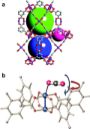


TiO2 immobilized on 2D mordenite: effect of hydrolysis conditions on structural, textural, and optical characteristics of the nanocomposites
Beilstein J. Nanotechnol. 2025, 16, 128–140, doi:10.3762/bjnano.16.12
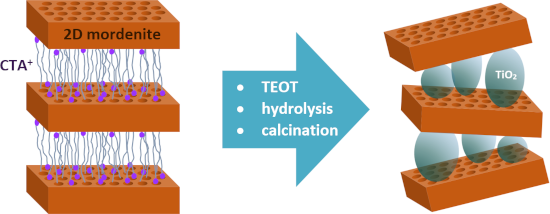
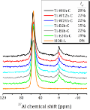
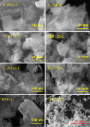
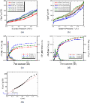
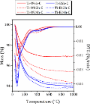
- . Nitrogen sorption and thermogravimetric studies Figure 5a,b shows the N2 adsorption/desorption isotherms of the studied nanocomposites. They demonstrate features characteristic of hierarchical porous structures possessing both micro- and mesoporosity. At low pressure, there is a sharp gas absorption



Modeling and simulation of carbon-nanocomposite-based gas sensors
Beilstein J. Nanotechnol. 2025, 16, 90–96, doi:10.3762/bjnano.16.9
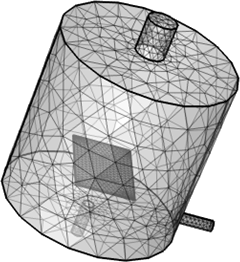
- Roopa Hegde Punya Prabha V Shipra Upadhyay Krishna S B Electronics and Communication Engineering, Ramaiah Institute of Technology, MSRIT Post, M S Ramaiah Nagar, MSR Nagar, Bengaluru, Karnataka 560054, India 10.3762/bjnano.16.9 Abstract This paper reports simulation of a carbon monoxide gas
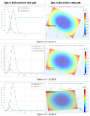
- development of these sensors, it becomes imperative to establish a mathematical model for economically predicting their behavior. The simulation using COMSOL Multiphysics is performed to obtain the surface coverage of the sensor by introducing carbon monoxide gas through a Gaussian pulse feed inlet at
- concentrations ranging from 1 to 7 ppm. The surface coverage over the range of 14% to 32.94% for the given range of concentrations is achieved giving the information of the amount of gas molecules adsorbed onto the surface of the sensing material at a given time. The surface coverage of the sensor is enhanced by



Characterization of ZnO nanoparticles synthesized using probiotic Lactiplantibacillus plantarum GP258
Beilstein J. Nanotechnol. 2025, 16, 78–89, doi:10.3762/bjnano.16.8
- ambient conditions with a bandgap and high exciton binding energy of 3.37 eV and −60 meV, respectively [10]. Because of this high exciton binding energy even at room temperature, the excitonic transitions have a broad range of applications such as in optics, gas detecting, piezoelectrics, and



Advanced atomic force microscopy techniques V
Beilstein J. Nanotechnol. 2025, 16, 54–56, doi:10.3762/bjnano.16.6
- al. present the application of AFM-based infrared nanospectroscopy to coated polymer surfaces [11]. The authors prepare thin films of SiOx on polypropylene surfaces by plasma-enhanced chemical vapor deposition (PE-CVD), which is commonly done to improve gas barrier properties of polypropylene. They
- characterization of defects in a single layer of graphene on iridium that were induced by rare-gas ion bombardment by using combined scanning tunnelling microscopy (STM) measurements and NC-AFM [12]. The authors reveal that presumed monoatomic vacancies, as deduced from STM measurements alone, have rather
Theoretical study of the electronic and optical properties of a composite formed by the zeolite NaA and a magnetite cluster
Beilstein J. Nanotechnol. 2025, 16, 44–53, doi:10.3762/bjnano.16.5
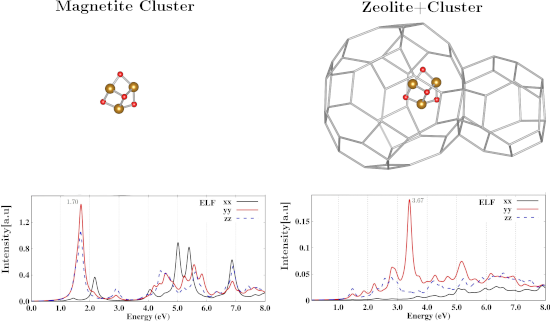
- characteristics of zeolites depend largely on the chemical composition of the framework, specifically the Si/Al ratio [1][2]. These characteristics make zeolites highly appealing for a wide range of applications, including the production of fine chemicals [3][4], gas separation [5][6][7], ion exchange [8][9][10




Precursor sticking coefficient determination from indented deposits fabricated by electron beam induced deposition
Beilstein J. Nanotechnol. 2025, 16, 35–43, doi:10.3762/bjnano.16.4
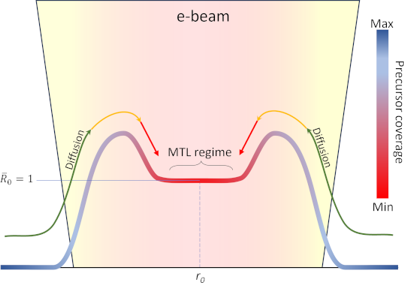
- pumping speed, and gas injection system (GIS) geometry using the GIS nozzle gas dynamics simulation approach described in [22]. The tilt of the GIS in relation to the substrate surface that defines the angle at which molecules hit the surface was 13° for Cr(C6H6)2 and 50° for Me3CpPtMe. Both GIS needles
- attributed to a larger precursor supply from the gas phase. Although the use of the Pt-precursor did not result in a volcano-shape deposit, an estimation of the sticking coefficient for it is nevertheless possible with precursor parameter values previously assessed. Unlike the Cr(C6H6)2 precursor, which has
- . Firstly, the sticking coefficient of the molecules stemming from directed and diffuse flow will be different due to the different kinetic energies, as precursor gas from the gas injection system and precursor gas from surrounding surfaces are at different equilibrium temperatures. In other work involving


Bioinspired nanofilament coatings for scale reduction on steel
Beilstein J. Nanotechnol. 2025, 16, 25–34, doi:10.3762/bjnano.16.3
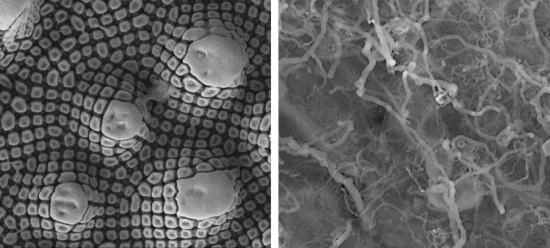
- maximum pressure of 200 bar. The liquid phase is pressurized via an inert gas (e.g., Ar or N2). (B) Top view of the static plate where three samples are mounted; around half of the surface area for each sample is exposed at constant sheer stress. (C) Steady state simulation of the velocity profile


Heterogeneous reactions in a HFCVD reactor: simulation using a 2D model
Beilstein J. Nanotechnol. 2024, 15, 1627–1638, doi:10.3762/bjnano.15.128
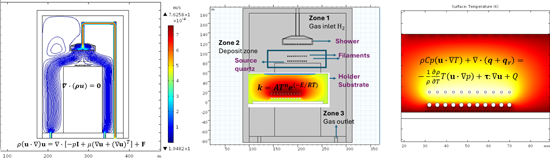
- process and the properties of the films, with the most important parameters being substrate temperature, gas pressure, species concentration, and flow velocity [1]. The structural, optical, and electrical properties of the SiOx, more generally known as silicon-rich oxide (SRO), films are determined by the
- ]. Also, modeling of CVD microreactors at atmospheric pressure using tetraethyl orthosilicate as a source to obtain SiO2 has been achieved through computational fluid dynamics (CFD) simulations [22]. The gas-phase and surface reactions were analyzed using direct Monte Carlo simulations of a hot wire
- the simulation are discussed regarding the profiles of temperature, gas velocity, and concentration of the species. Finally, the main conclusions of this research are expressed in section “Conclusion”. The study focuses on the convective transfer of the reactive gases to the solid source and the


Ion-induced surface reactions and deposition from Pt(CO)2Cl2 and Pt(CO)2Br2
Beilstein J. Nanotechnol. 2024, 15, 1427–1439, doi:10.3762/bjnano.15.115
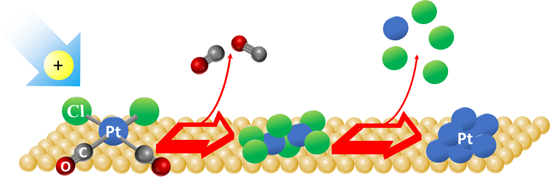
- largely avoided by using noble gas ions like He+ [32][35] or Ar+ [21], which are commonly used in helium ion microscopes and focused ion beam milling instruments. In FIBID, ion-induced interactions can initiate a complex mixture of different processes including ion-induced deposition, secondary electron
- ][53][54]. An ideal precursor candidate would have sufficient volatility and stability for the transport of intact gas phase precursor molecules during the process. The ligands should readily and cleanly be liberated from the precursor upon irradiation to provide a metallic deposit in the path of the
- steps are invariant to the ion identity for Pt(CO)Cl2 and Pt(CO)2Br2 with the role of the incident ion identity being restricted to a kinetic effect. The previous sections have described changes to the composition of PtX2(CO)2 films exposed to various inert gas ions and the rationale for these



Lithium niobate on insulator: an emerging nanophotonic crystal for optimized light control
Beilstein J. Nanotechnol. 2024, 15, 1415–1426, doi:10.3762/bjnano.15.114
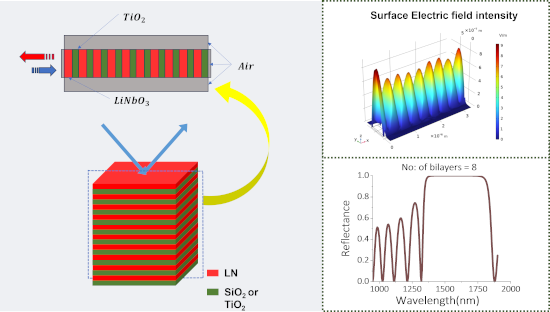
- in a laser emitting light with a precise, pure wavelength and high stability [48]. Yu et al. demonstrated a tunable InGaAs quantum well DBR laser which provides a larger tuning range, single-longitudinal-mode operation, and narrow spectral linewidth, finding it suitable for multiple gas-sensing


Various CVD-grown ZnO nanostructures for nanodevices and interdisciplinary applications
Beilstein J. Nanotechnol. 2024, 15, 1390–1399, doi:10.3762/bjnano.15.112
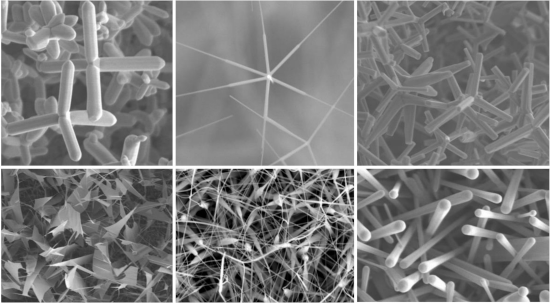
- DMSs, these nanostructures will be beneficial to the development of new ZnO-based materials for photocatalytic [25], biomedical [26], gas sensing [27][28], and flexible electronic/optoelectronic applications [29][30]. They are usually fabricated by chemical vapour deposition (CVD) or solid-vapour phase
- mixture of powdered ZnO and C that are placed in the centre of the tube furnace. They are heated to high temperatures to create Zn vapours, which will be transported by a carrier gas and deposited onto substrates arranged at the downstream/upstream end with a suitable temperature range to form
- centre of a horizontal quartz tube furnace, see [37] for more detail. The furnace tube was also connected with a gas line and a rotary vacuum pump oil. Before the growth, air was sucked out of the tube by backfilling it with argon (Ar) gas, and then pumped out until the base pressure went to ≈2 × 10⁻³

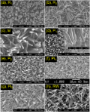


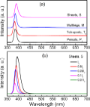
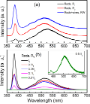
Mn-doped ZnO nanopowders prepared by sol–gel and microwave-assisted sol–gel methods and their photocatalytic properties
Beilstein J. Nanotechnol. 2024, 15, 1283–1296, doi:10.3762/bjnano.15.104
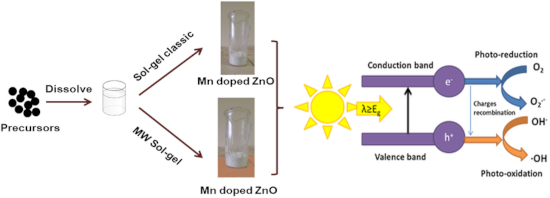
- . AM1.5 light provided by a solar simulator (Peccell-L01) equipped with a xenon short-arc lamp (150 W) was used for the photocatalytic tests. Ar (carrier gas, 10 cm3/min) together with oxygen (1 cm3/min) was bubbled into the oxalic acid solution. The gaseous products of interest, H2 and CO2, were
- investigated every 30 min by a gas chromatograph (Buck Scientific) equipped with molecular sieve 5 Å and Haysept columns. The photocatalytic experiments were triplicates, and the represented data are the mean values. Zeta potential measurements were conducted using a Beckman Coulter Delsa Nano C analyzer (Brea


New design of operational MEMS bridges for measurements of properties of FEBID-based nanostructures
Beilstein J. Nanotechnol. 2024, 15, 1273–1282, doi:10.3762/bjnano.15.103
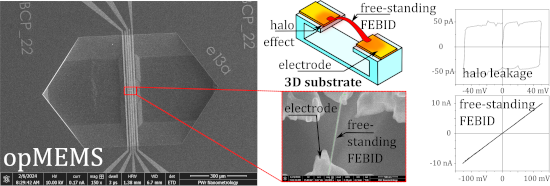
- only for the visual assessment of the shape and dimensions of a structure, but also for the observation of movement and deflection of an opMEMS. At the same time, the ion beam allows for local doping of the substrate and anisotropic milling. The NanoLab 600i also provides three gas injection systems


The role of a tantalum interlayer in enhancing the properties of Fe3O4 thin films
Beilstein J. Nanotechnol. 2024, 15, 1253–1259, doi:10.3762/bjnano.15.101
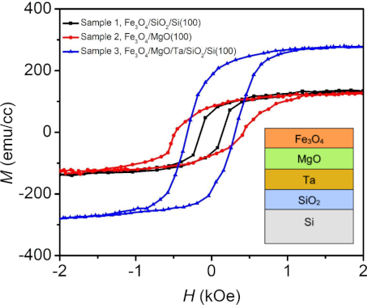
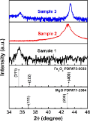
- process [14][15]. The impact of substrate temperature, annealing temperature, gas flow rate, and thickness on enhancing the characteristics of Fe3O4 thin films has been examined [15][16][17][18]. The substrates play a crucial role in directing the growth and enhancing the quality of the crystal, resulting
- ) substrates were prepared by immersing them in a methanol bath at a temperature of 60 °C and drying them in N2 gas flow. Subsequently, the purified substrates were moved into an ultrahigh vacuum (UHV) chamber and underwent a pre-heating process at 600 °C for 30 min in order to eliminate any remaining
- impurities. The SiO2/Si(100) substrates were immersed in acetone and 2-propanol for a duration of 2 min in an ultrasonic bath. Subsequently, they were immersed in a solution of methanol at a temperature of 60 °C and then dried in N2 gas flow. A 5 nm thick layer of tantalum was deposited on a SiO2/Si(100


Photocatalytic methane oxidation over a TiO2/SiNWs p–n junction catalyst at room temperature
Beilstein J. Nanotechnol. 2024, 15, 1132–1141, doi:10.3762/bjnano.15.92
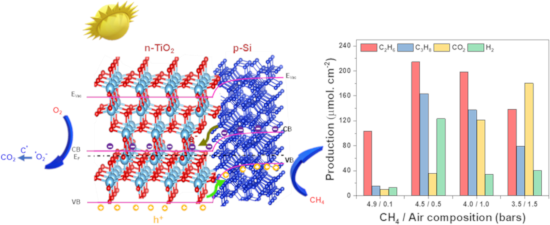
- massive guidance in synthesizing an efficient photocatalyst for CH4 conversion under mild conditions. Keywords: photocatalysis; photocatalytic CH4 oxidation; p–n heterojunction; TiO2/SiNWs; Introduction Methane (CH4), which can take the form of liquefied natural gas, is one of the crucial sources of
- result of the oxidative cross-coupling of methane and ethane (Figure 5a). The conversion reaction of CH4 can be described as follows: To evaluate the reaction ratio-dependent photocatalytic OCM efficiency, we varied the gas pressure ratios between CH4 and air. As shown in Figure 5b, more CO2 was
- experiments. Photocatalytic tests The as-synthesized catalyst was placed in a custom-made batch reactor with a small transparent quartz window, which was directly connected to a gas chromatograph (GC) with thermal conductivity and flame ionization detectors. A 300 W Xenon lamp was utilized as a light source


Direct electron beam writing of silver using a β-diketonate precursor: first insights
Beilstein J. Nanotechnol. 2024, 15, 1117–1124, doi:10.3762/bjnano.15.90
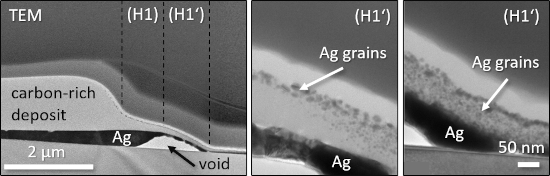
- without the need for a resist or development step. Here, we employ for the first time a silver β-diketonate precursor for focused electron beam-induced deposition (FEBID). The used compound (hfac)AgPMe3 operates at an evaporation temperature of 70–80 °C and is compatible with commercially available gas
- (Strem Chemicals, CAS 148630-66-4), with a stoichiometry of Ag/P/F/O/C = 1:1:6:2:8 was evaporated using a fully integrated custom-built gas injection system (GIS) consisting of chemically inert steel [28]. No injection needles were used. The components of the GIS that were in direct contact with the
- compatibility of the tested precursor with field-emission microscopes and commercial gas injection systems, further deposition experiments were performed using a dual-beam instrument Zeiss Crossbeam 340 KMAT equipped with a commercial integrated GIS from Kleindiek based on the MM3A-EM micromanipulator platform


Unveiling the potential of alginate-based nanomaterials in sensing technology and smart delivery applications
Beilstein J. Nanotechnol. 2024, 15, 1077–1104, doi:10.3762/bjnano.15.88
- , while TEM and SEM yield images of separated particles [61]. Surface area: The reactivity of nanoparticles and their ability to interact with ligands highly depend on their surface area. This property of the nanoparticles can be detected directly by adsorbing an inert gas under various pressures to form
- a monolayer of gas coverage. The surface area of nanomaterials can also be determined by X-ray photoelectron spectroscopy and secondary ion mass spectroscopy [64][65]. Zeta potential: The zeta potential of nanoparticles can be calculated from the electrophoretic mobility of particles in a particular


Interface properties of nanostructured carbon-coated biological implants: an overview
Beilstein J. Nanotechnol. 2024, 15, 1041–1053, doi:10.3762/bjnano.15.85
- reactions are those involving the decomposition of precursor in the gas phase forming products that condense on a target. In contrast, heterogeneous reactions are those involving the decomposition of the precursors on the solid surface of a catalyst that also acts as a support. As reported by Porro et al



Bolometric IR photoresponse based on a 3D micro-nano integrated CNT architecture
Beilstein J. Nanotechnol. 2024, 15, 1030–1040, doi:10.3762/bjnano.15.84
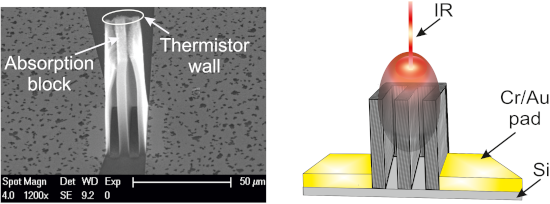
- optimizing device parameters such as resistance, optical absorption characteristics, and heat conductivity. The M-shape was used to have a homogeneous gas flow parallel to the CNT walls during CNT growth to achieve repeatably aligned walls. Prior to CNT growth, the Fe catalyst layer self-assembled into Fe
- nanoparticles at ≈750 °C. Finally, the samples were synthesized by water-assisted chemical vapor deposition (CVD) at 800 °C, similar to the CVD process presented in [13][14], to achieve a crystalline graphitic nature of the carbon nanotubes. Argon was used as the carrier gas and ethylene as the carbon source. A


Atomistic insights into the morphological dynamics of gold and platinum nanoparticles: MD simulations in vacuum and aqueous media
Beilstein J. Nanotechnol. 2024, 15, 995–1009, doi:10.3762/bjnano.15.81
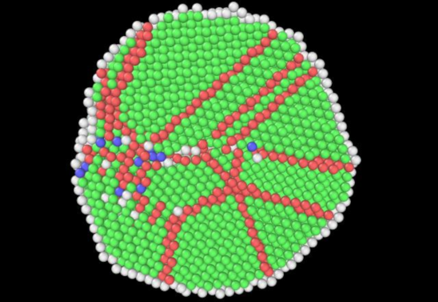
- category of engineered NPs is comprised of metal and metal oxide NPs, which rank among the highest in production volume. They have already found widespread applications in technological advancements such as photovoltaics, catalysis, gas sensors, fuel cells, and adsorbents [7][8]. This prevalence is


Facile synthesis of Fe-based metal–organic frameworks from Fe2O3 nanoparticles and their application for CO2/N2 separation
Beilstein J. Nanotechnol. 2024, 15, 897–908, doi:10.3762/bjnano.15.74
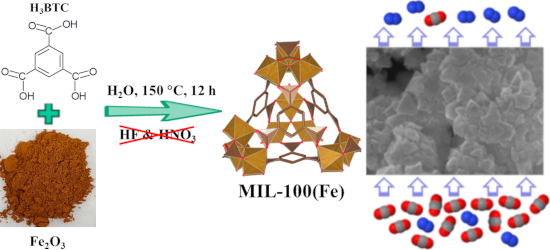
- manufacturing cost, environmental friendliness, and biodegradability. Because of the abovementioned advantages, MIL-100(Fe) has gained popularity as a candidate for gas separation of CO/CO2 [9][13], CO/N2 [14][15], CO2/CH4 [16], CH4/C2H6/C3H8 [17], and SF6/N2 [18]. In the early stage, MIL-100(Fe) was produced
- (XPS). Subsequently, the gas separation performance of the as-prepared MIL-100(Fe) samples was assessed by studies regarding CO2 and N2 adsorption isotherms at various temperatures with pressures up to 1 bar. Experimental Materials Iron(III) oxide (Fe2O3, 96%) and benzene-1,3,5-tricarboxylic acid
- . Estimation of CO2/N2 selectivity via ideal adsorbed solution theory (IAST) The IAST is widely recognized as a predictive means to evaluate the adsorption selectivity of an adsorbent towards a gas mixture without experimental data for the gas mixture. Herein, a binary mixture of CO2 and N2 containing 10 vol





Water-assisted purification during electron beam-induced deposition of platinum and gold
Beilstein J. Nanotechnol. 2024, 15, 884–896, doi:10.3762/bjnano.15.73
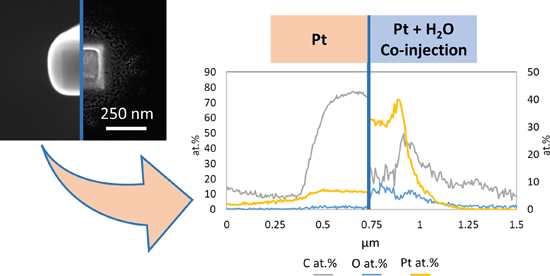
- focused electron beam. As a result, a solid deposit is formed, and organic and inorganic volatile fragments are removed by the vacuum pumps of the chamber. In the case of an organometallic precursor gas, in an ideal scenario, only metal is deposited, and all fragments arising from organic and inorganic
- MeCpPtMe3 respectively. Purification of FEBID materials with a reactant gas agent Purification of FEBID products by the use of a reactant gas has been performed either through a one-step procedure, with the co-injection of the FEBID precursor and the reactant gas (purification during deposition), or through
- a two-step procedure, with an initial deposition from the deposition precursor and a successive purification in the presence of a reactant gas (post-deposition purification). Several reactant gases have been tried, either in pure form, such as water [22][23][24][25], oxygen [18][26][27], hydrogen





A review on the structural characterization of nanomaterials for nano-QSAR models
Beilstein J. Nanotechnol. 2024, 15, 854–866, doi:10.3762/bjnano.15.71

- , graphene, and fullerenes. For example, the sum of degrees around the carbon atoms at the surface can be used for all pristine carbon nanoforms [67]. Theoretical calculations of the surface area are more common [68], but it can also be obtained experimentally from gas adsorption data, using the Brunauer


Investigation on drag reduction on rotating blade surfaces with microtextures
Beilstein J. Nanotechnol. 2024, 15, 833–853, doi:10.3762/bjnano.15.70
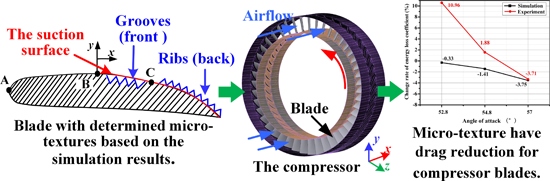
- of lotus leaves [4]. A thin gas film captured by the superhydrophobic structure creates a slip interface between gas and liquid, which effectively improves the drag reduction and antifouling performance of lotus leaves [5]. However, the structures on biological surfaces are rather complex and not
- (Ma) and energy loss coefficient (ξ). The angle of attack can be set by controlling the motor and, thus, turning the disc (Figure 8c). In Figure 8c, the inlet of the test platform is connected with the high-pressure gas source, which is a 100 m3 high-pressure gas tank with a maximum of 25 atm; the air





