


Search results
Search for "gas" in Full Text gives 964 result(s) in Beilstein Journal of Nanotechnology. Showing first 200.
Synthesis of silver–palladium Janus nanoparticles using co-sputtering of independent sources: experimental and theorical study
Beilstein J. Nanotechnol. 2024, 15, 808–816, doi:10.3762/bjnano.15.67
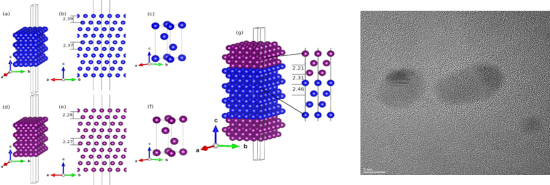
- functionalities in a single particle, making them extremely versatile and valuable in various scientific, technological, and industrial applications. In this work, bimetallic silver–palladium Janus nanoparticles were obtained for the first time using the inert gas condensation technique. In order to achieve this
- particle. A density functional theory structural aims to understand the atomic arrangement at the interface of the Janus particle. Keywords: bimetallic nanoparticles; inert gas condensation; Janus nanoparticles; silver–palladium nanoparticles; Introduction Janus-type nanoparticles are specific structures
- delivery, catalysis, and sensors. The methodologies, developed for the first time in 1999 [1], for the production of bimetallic nanoparticles in the gas phase can be roughly classified as either simultaneous or sequential. In the first category, the materials that will be used to make the nanoparticles are




Electron-induced ligand loss from iron tetracarbonyl methyl acrylate
Beilstein J. Nanotechnol. 2024, 15, 797–807, doi:10.3762/bjnano.15.66
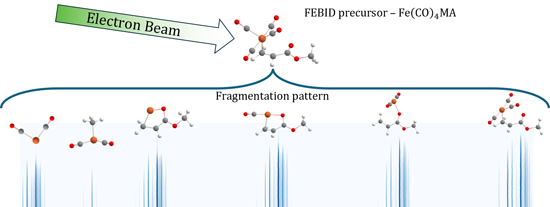
- reactions? This is basically impossible to predict a priori since several effects come into play, for example, change in bond dissociation energies, electron density at the metal, and dipole moment. Of the possible experimental approaches to address this question, a crossed-beam gas-phase experiment
- the gas phase has been probed with respect to its dissociative ionization [10] and dissociative electron attachment [11][12]; there is even information available on its electronic excitation, which is the first step towards neutral dissociation [11]. The gas-phase studies have been complemented by
- surface-based investigations, where the electron-induced ligand loss has been probed by XPS [13], ion desorption [14], IR spectroscopy [15], or cluster-beam studies [16][17][18]. The ligand loss has also been probed by ion impact, both in the gas phase [19] and on the surface [13], and, theoretically, by



Electrospun polysuccinimide scaffolds containing different salts as potential wound dressing material
Beilstein J. Nanotechnol. 2024, 15, 781–796, doi:10.3762/bjnano.15.65
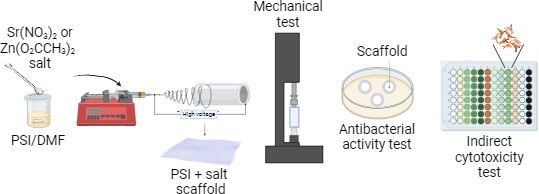
- fulfill multiple needs: shielding the wound against bacterial infection, facilitating proper gas exchange, providing an environment that promotes healing, and controlling biofluid production [8][9]. Furthermore, it should be nontoxic and hypoallergenic [10]. By using electrospinning, nanofibers can be
- [29][30][31][32]. Based on the special requirements to fulfill as a wound dressing material, such as biocompatibility, biodegradability, good gas permeability, and water retention capacity, polysuccinimide (PSI) was used for the preparation of electrostatic fibers. Polysuccinimide is a nontoxic [33



Effect of repeating hydrothermal growth processes and rapid thermal annealing on CuO thin film properties
Beilstein J. Nanotechnol. 2024, 15, 743–754, doi:10.3762/bjnano.15.62
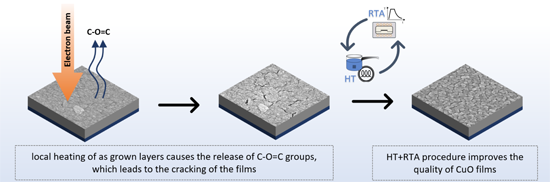
- -cleaning [1], anti-corrosion [2], and antibacterial [3] coatings. Like other CuO nanostructures, thin films also show potential for applications in photovoltaic cells [4][5], lithium-ion batteries [6], supercapacitors [7], gas sensors [8], and biosensors [9]. Furthermore, the literature reports their




Simultaneous electrochemical determination of uric acid and hypoxanthine at a TiO2/graphene quantum dot-modified electrode
Beilstein J. Nanotechnol. 2024, 15, 719–732, doi:10.3762/bjnano.15.60
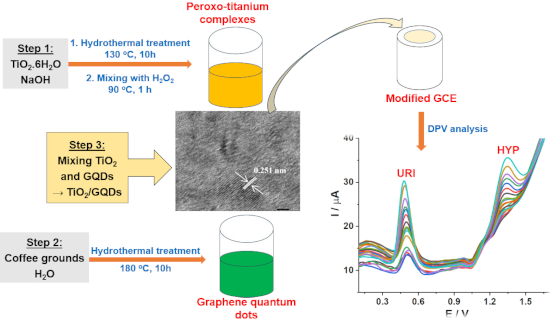
- liquid chromatography [8], liquid chromatography–tandem mass spectrometry [9], and gas chromatography/mass spectrometry [10]. These approaches require complex handling procedures. Electrochemical techniques have been considered as a robust alternative for URI and HYP sensing because of their simplicity


Elastic modulus of β-Ga2O3 nanowires measured by resonance and three-point bending techniques
Beilstein J. Nanotechnol. 2024, 15, 704–712, doi:10.3762/bjnano.15.58
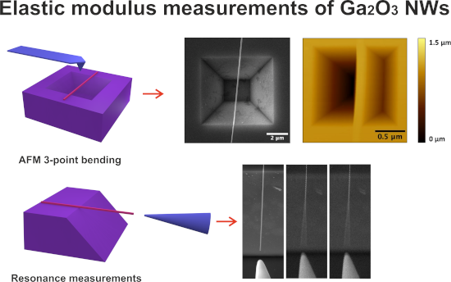
- chemical stability [4][5]. Ga2O3 is a promising candidate for visible-blind UV-light sensors [3], power devices and optoelectronics [6][7][8][9], gas sensors [10], and memory devices [8]. These applications can be scaled down to the nanoscale, including flexible nanodevices. Ga2O3 nanowires (NWs) could be
- a carrier gas mixture of Ar/H2 5%, maintaining this temperature and flow for 30 min to allow NW growth. Subsequently, the reactor was naturally cooled to room temperature. Ga2O3 NWs, up to 100 μm in length, grew on SiO2/Si substrates downstream in the low-temperature zone maintained around 850–900
- suggests that the NW maintains a consistent horizontal alignment without deviating from a straight path throughout the observed region. Furthermore, to confirm the secure attachment of the NW to the substrate, seven NWs were “welded” to the substrate in SEM by Pt deposition using a gas injection system


Laser synthesis of nanoparticles in organic solvents – products, reactions, and perspectives
Beilstein J. Nanotechnol. 2024, 15, 638–663, doi:10.3762/bjnano.15.54
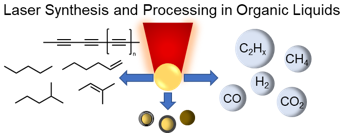
- reactions and radical species [43]. Besides the reactions involving metal salts during LRL, gas formation [44][45][46][47] and solvent decomposition [48][49][50][51] have also been reported, highlighting the importance of chemical reactions during the processes, although LSPC is often considered to be a
- example, polyynes or alkanes, or permanent gases forming persistent gas microbubbles. There have been various reviews regarding nanoparticle synthesis (mainly addressing findings reported for aqueous media) [7][54][55][56], fundamental physical processes during LSPC [57][58][59], and the potential use of
- nanoparticle synthesis in water is always accompanied by the production of gases [66][67]. Although gas formation has often been attributed to the vaporization of water, the formation of hydrogen and oxygen also occurs. Additionally, the formation of hydrogen peroxide was observed during LAL [50][51] and LRL





Exfoliation of titanium nitride using a non-thermal plasma process
Beilstein J. Nanotechnol. 2024, 15, 631–637, doi:10.3762/bjnano.15.53
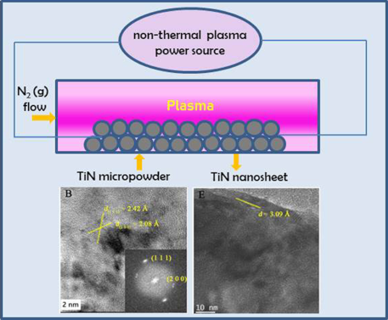
- , Brazil 10.3762/bjnano.15.53 Abstract In this study, we present a novel approach for the exfoliation of titanium nitride (TiN) powders utilizing a rapid, facile, and environmentally friendly non-thermal plasma method. This method involves the use of an electric arc and nitrogen as the ambient gas at room
- synthesized utilizing a non-thermal plasma apparatus, as previously developed by de Souza et al. [17]. In this process, similarly as reported in [4], TiN powder with a particle size of approximately 1.0 μm and a purity of 98% (Alfa Aesar) was exposed to a 60 kV electric arc in the presence of a nitrogen gas



AFM-IR investigation of thin PECVD SiOx films on a polypropylene substrate in the surface-sensitive mode
Beilstein J. Nanotechnol. 2024, 15, 603–611, doi:10.3762/bjnano.15.51
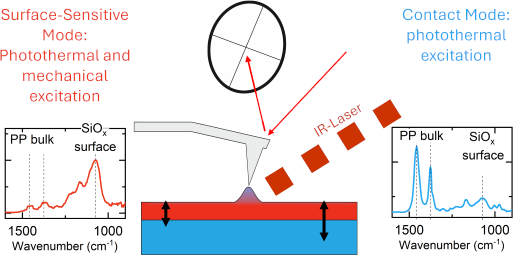
- films on polypropylene substrates. Polypropylene is widely used as packaging material [11] and in other industrial applications [12][13][14]; however, it is commonly known for its poor gas barrier properties [11][13]. Therefore, silicon oxide coatings are used to improve the gas barrier properties [13
- between 0.2 and 0.5 mbar. As the gas mixture, argon, oxygen, and HMDSO (98.5% purity, Sigma-Aldrich) were used in different ratios. First, the surface was pretreated for five seconds with an oxygen-rich plasma. For this step, the argon-to-oxygen ratio was set to 1:2. For the deposition of silicon oxide
- Si 2p peaks. The O 1s–Si 2p distance is 429.6 eV for the 50 nm film and 429.9 eV for the 5 nm film. This is in good agreement with values found in the literature for the PECVD deposition of SiOx films from HMDSO/O2/Ar gas mixtures [21]. A comparison of the relative intensities of the O 1s and Si 2p


Directed growth of quinacridone chains on the vicinal Ag(35 1 1) surface
Beilstein J. Nanotechnol. 2024, 15, 556–568, doi:10.3762/bjnano.15.48
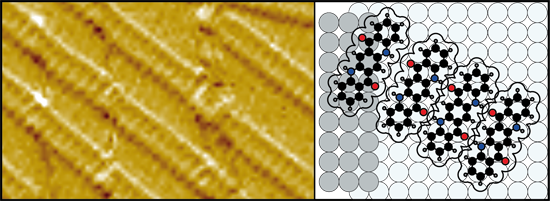
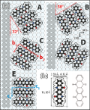
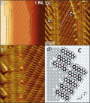
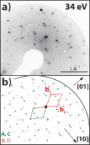
- , one-dimensional aggregates are also used for gas sensing and carbon-capturing materials [8][9]. A group of surfaces that is very appealing for the growth of 1D structures are vicinal surfaces [10] because the step edges break the rotational symmetry of the surface further and add a periodic 1D grating


Electron-induced deposition using Fe(CO)4MA and Fe(CO)5 – effect of MA ligand and process conditions
Beilstein J. Nanotechnol. 2024, 15, 500–516, doi:10.3762/bjnano.15.45
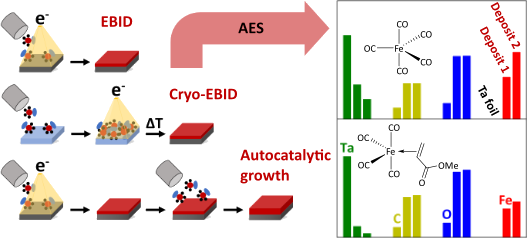
- of the desired material, typically a metal, are dosed via a gas inlet system onto a surface placed in a scanning electron microscope (SEM). There, the precursor is decomposed by the tightly focused electron beam to form a solid deposit. To provide the precursor with sufficient volatility, the metal
- FEBID, where the precursor is typically present at submonolayer coverage [29]. However, to the best of our knowledge, cryo-FEBID has not yet been applied to the fabrication of iron deposits. Numerous fundamental studies have investigated the electron-induced fragmentation of isolated Fe(CO)5 in the gas
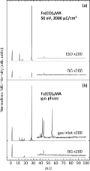
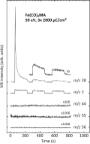
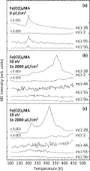
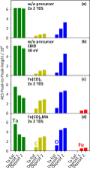
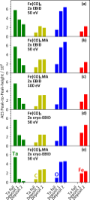
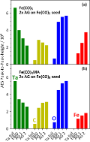
- )4MA. For reference, data for Fe(CO)5 are included in Figures S1–S3 of Supporting Information File 1. Figure 2a shows mass spectra acquired during ESD from a condensed multilayer of Fe(CO)4MA during irradiation with an energy of 50 eV. For comparison, the gas phase mass spectrum (MS) of Fe(CO)4MA



Sidewall angle tuning in focused electron beam-induced processing
Beilstein J. Nanotechnol. 2024, 15, 447–456, doi:10.3762/bjnano.15.40
- ; FEBIP; side wall angle; Introduction Focused electron beam-induced processing (FEBIP) is a technique in which a focused electron beam is directed onto a substrate with an adsorbed layer of precursor molecules. The precursor molecules are supplied from a gas injection system through a nozzle at close
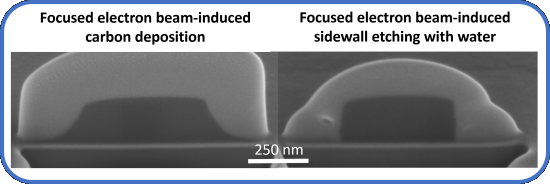
- the etching takes place is unknown. It was noticed that a small change in the pressure of water vapour led to a significant change in the etching rate, suggesting that the process is gas-limited (see Supporting Information File 1, section S3). The role of diffusion could therefore be significant. The
- Dual beam system equipped with two gas injection systems (GISs) for precursor delivery. The GIS nozzles were adjusted to be 150 μm above the sample and at a distance of 100 μm from the centre of the field of view. The precursors chosen were the same as in an earlier study to remove carbon interconnects




Unveiling the nature of atomic defects in graphene on a metal surface
Beilstein J. Nanotechnol. 2024, 15, 416–425, doi:10.3762/bjnano.15.37
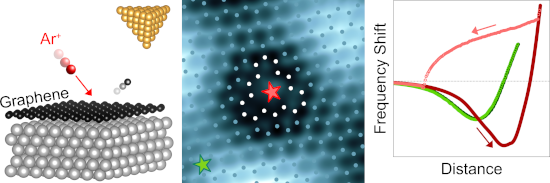
- by noble-gas ion irradiation [6][13][14][17][19][21][24], represents an opportunity for systematic defect studies. The work presented here was stimulated by the lack of experimental data on the actual geometry of atomic-scale defects in graphene. So far, scanning tunneling microscope (STM
- molecular precursor C2H4 (purity: 99.9%) at a partial pressure of 10−5 Pa for 120 s [25][26]. Atomic-scale defects were created by bombarding graphene-covered Ir(111) with low-energy (140 eV) Ar+ ions (purity of the Ar gas: 99.999%) [27][28][29][30] at room temperature for 5 s followed by annealing (900 K
- in graphene on Ir(111) induced by rare-gas ion bombardment. Defects that are assigned to alleged monatomic vacancy sites by STM measurements represent an intact graphene lattice in AFM topographies. Possibly, a defect in the Ir(111) surface is the origin of the STM-derived contrast. The smallest


Controllable physicochemical properties of WOx thin films grown under glancing angle
Beilstein J. Nanotechnol. 2024, 15, 350–359, doi:10.3762/bjnano.15.31
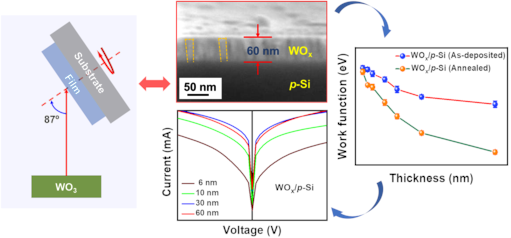
- ultrapure Ar gas (99.99%) using a mass flow controller at 30 sccm flow rate. The substrate holder was kept 12.5 cm away from the target at a glancing angle of 87° and 50 W rf power (Advanced Energy) was applied to the target, keeping the substrate holder grounded. Pre-sputtering was carried out for a




Comparative electron microscopy particle sizing of TiO2 pigments: sample preparation and measurement
Beilstein J. Nanotechnol. 2024, 15, 317–332, doi:10.3762/bjnano.15.29

- is performed with only a few hundred or a few thousands of particles, whereas 1 g of titanium dioxide used in gas absorption experiments typically contains about 1014 particles, thus expanding the parent population and increasing statistical significance. The method for comparing the SSA with the


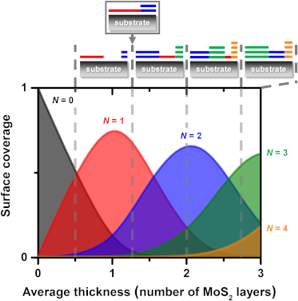
Determining by Raman spectroscopy the average thickness and N-layer-specific surface coverages of MoS2 thin films with domains much smaller than the laser spot size
Beilstein J. Nanotechnol. 2024, 15, 279–296, doi:10.3762/bjnano.15.26


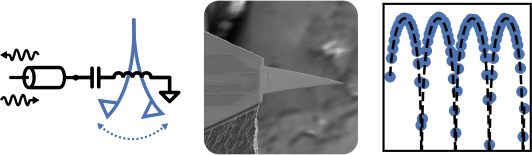
Design, fabrication, and characterization of kinetic-inductive force sensors for scanning probe applications
Beilstein J. Nanotechnol. 2024, 15, 242–255, doi:10.3762/bjnano.15.23
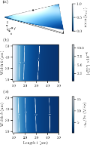
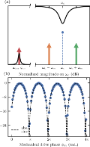
- ], or to realize laterally grown high-aspect ratio nanopillars [36]. We realize sharp, vertically grown conductive tips at the apex of the Si-N cantilever using FEBID with a Pt precursor gas. Figure 6 shows the resulting structure. We obtain the conical shape by stacking multiple depositions with



Graphene removal by water-assisted focused electron-beam-induced etching – unveiling the dose and dwell time impact on the etch profile and topographical changes in SiO2 substrates
Beilstein J. Nanotechnol. 2024, 15, 190–198, doi:10.3762/bjnano.15.18
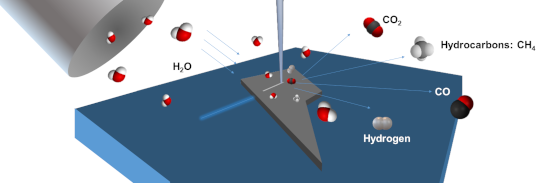
- electrons at a given process time. From the pressure P inside the SEM chamber one can calculate the number of impinging molecules by using the formula J = PNA/(2πMRT)1/2, given in the reference [31], where NA is the Avogadro number, M is the molar mass of impinging molecules, R is the universal gas constant
- using electron beams and gas precursors was not widely recognized at the time when earlier studies regarding morphological changes in silica upon the electron irradiation were performed [24]. Therefore, neither of the electron-beam-induced changes into the SiO2 surface during the water purification of
- less likely to oxidize quartz, where Si–O–Si bonds dominate on the surface. It is also consistent with other results, where oxygen gas was used for FEBIE of graphene and no etching of SiO2 substrate was detected by AFM. Although our studies already untangle some phenomena accompanying the graphene


Modification of graphene oxide and its effect on properties of natural rubber/graphene oxide nanocomposites
Beilstein J. Nanotechnol. 2024, 15, 168–179, doi:10.3762/bjnano.15.16
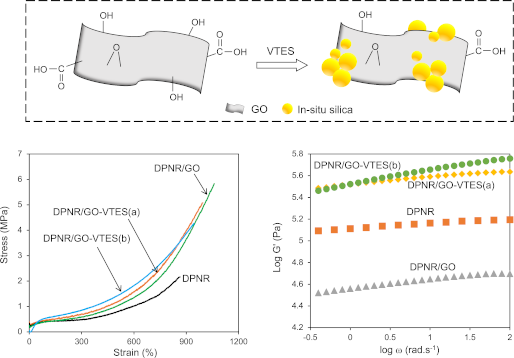
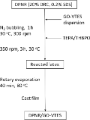
- , and the system was bubbled with N2 gas for 1 h to remove residual dissolved oxygen. Then, 0.51 g of TEPA and 0.34 g of TBHPO initiators were added to the reaction to initiate the radical reaction between GO-VTES and the rubber particles. The reaction was carried out for 3 h with constant stirring






TEM sample preparation of lithographically patterned permalloy nanostructures on silicon nitride membranes
Beilstein J. Nanotechnol. 2024, 15, 1–12, doi:10.3762/bjnano.15.1

- layer on the resist, creating fences on the edge of the structure and contaminating the silicon nitride membrane. A possible solution is replacing IBE with reactive ion etching (RIE). Using RIE, there would be less redeposition since the reaction between gas and etched metal will form a gaseous compound


Determination of the radii of coated and uncoated silicon AFM sharp tips using a height calibration standard grating and a nonlinear regression function
Beilstein J. Nanotechnol. 2023, 14, 1200–1207, doi:10.3762/bjnano.14.99

- to left across two pristine grating structures within a scan size of 10 µm × 10 µm. The calibration grating was cleaned with DI water and dried with nitrogen gas before the experiments. For each tip, we performed a step-to-step linewidth scan pass (without repeating at the same scanline) in contact


A combined gas-phase dissociative ionization, dissociative electron attachment and deposition study on the potential FEBID precursor [Au(CH3)2Cl]2
Beilstein J. Nanotechnol. 2023, 14, 1178–1199, doi:10.3762/bjnano.14.98
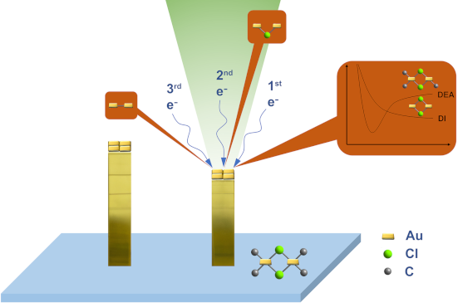
- composition and morphology of FEBID deposits fabricated in an ultrahigh-vacuum (UHV) chamber were explored on different surfaces and at varied beam currents. In the gas phase, dissociative ionization was found to lead to significant carbon loss from this precursor, and about 50% of the chlorine was on average
- the potential to widen the scope of applicable nanomaterials. In FEBID, a focused electron beam is directed onto the surface of a substrate in close proximity to a gas inlet, through which a precursor compound is supplied to deliver the material for the nanostructures to be built. For metallic
- -vacuum (UHV) surface science studies and mass spectrometry in high-vacuum (HV) gas-phase investigations [27][28]. In this context, surface science experiments allow for electron-dose-dependent studies of the elemental composition of the deposit, and desorbing ligands may be monitored by means of mass



Properties of tin oxide films grown by atomic layer deposition from tin tetraiodide and ozone
Beilstein J. Nanotechnol. 2023, 14, 1085–1092, doi:10.3762/bjnano.14.89
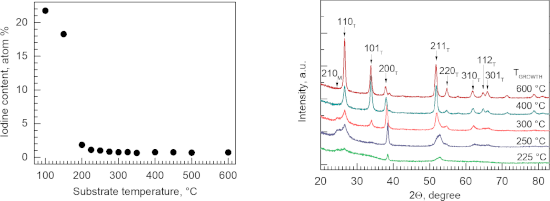
- have been studied from many perspectives. For example, one can mention anodes for Li-ion batteries [1], gas sensors [2], catalytic activities [3], and stable buffer [4] or base [5] layers in solar cells. More applications can be found, when SnO2 is considered as constituent of a nanostructure or a
- glass boat inside the reactor. Nitrogen, N2 (99.999%, AS Linde Gas), was applied as the carrier and purging gas. Ozone, produced from O2 (99.999%, AS Linde Gas), was used as oxidizer, with a concentration of 220–250 g/m3. The ALD process was carried out in the temperature range of 100–600 °C when
- film thickness profile along the gas flow direction. Analysis of oxygen and iodine contents in the films revealed that above a substrate temperature of 200 °C, the oxygen content remained stable. At temperatures below 200 °C, the oxygen content was significantly higher than that expected from a


Experimental investigation of usage of POE lubricants with Al2O3, graphene or CNT nanoparticles in a refrigeration compressor
Beilstein J. Nanotechnol. 2023, 14, 1041–1058, doi:10.3762/bjnano.14.86
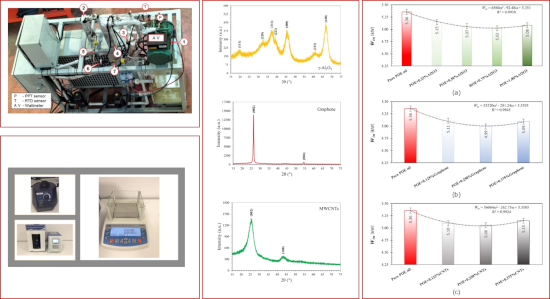
- in this study was selected in accordance with the R1234yf as the refrigerant. Superheating, which was applied to ensure that the refrigerant enters the compressor in gas phase, was approximately 6 °C. The superheating was controlled by an electronic expansion valve. The refrigerant was gradually
- were measured at 25 °C and shown in Figure 12. The measurement results were compatible with the National Institute of Standards and Technology (NIST) data [37] at 25 °C. Results of compressor electrical power measurements Compressors are devices used to compress any fluid that has a gas phase, and that





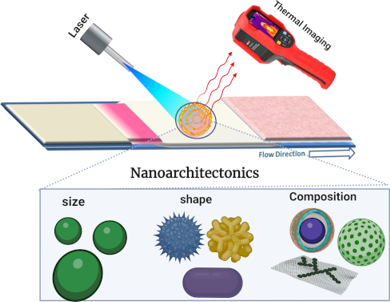
Nanoarchitectonics of photothermal materials to enhance the sensitivity of lateral flow assays
Beilstein J. Nanotechnol. 2023, 14, 988–1003, doi:10.3762/bjnano.14.82
- are likely to occur, namely (i) the relaxation of electrons from non-Fermi levels to the Fermi level (electron–electron scattering), (ii) the cooling of hot electron gas through electron–phonon scattering, and (iii) the emission of heat to the surrounding (phonon–phonon scattering) (Figure 4A,B). The





