Search results
Search for "acceptors" in Full Text gives 323 result(s) in Beilstein Journal of Organic Chemistry. Showing first 200.
One-pot four-component sequential synthesis of S-alkyl dithiocarbamates using lipase as a biocatalyst
Beilstein J. Org. Chem. 2026, 22, 1048–1056, doi:10.3762/bjoc.22.83
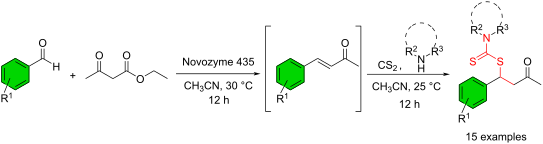
- (CS2), and amines. Initially, α,β-unsaturated carbonyl compounds, serving as Michael acceptors, were generated from aldehydes and ethyl acetoacetate through a decarboxylative Knoevenagel reaction under mild conditions, using lipase as a biocatalyst. These intermediates then sequentially undergo a
- reactions, including Michael [33] and Mannich [34] reactions. In 2009, Feng et al. demonstrated the use of this promiscuity in the Knoevenagel condensation/decarboxylation reaction to synthesize α,β-unsaturated compounds with ketone groups [35]. These compounds are valuable as Michael acceptors in the
- were treated with various Michael acceptors to yield products 6k–o (Scheme 4). Aldehydes bearing electron-withdrawing substituents, such as 4-chloro (6l, 85%) and 3-NO2 (6o, 76%) also afforded the desired products in good to excellent yields. These results indicate that the methodology is compatible


Recent advances in copper-catalyzed direct hydroamination of alkenes with (hetero)aromatic amines
Beilstein J. Org. Chem. 2026, 22, 925–947, doi:10.3762/bjoc.22.73
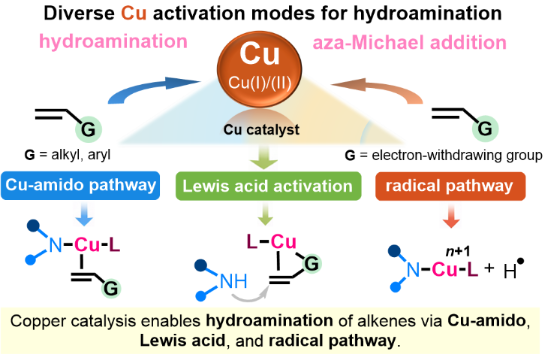
- generating and activating Michael acceptors within a single catalytic manifold. Building upon the simple Lewis acid-catalyzed aza-Michael additions described in Scheme 8, copper-catalysis has been successfully extended to cascade processes, where the initial conjugate addition is followed by intramolecular







Chiral cyclopropenimine-catalyzed enantioselective Michael reactions of phenol and benzofuran-derived α,β-unsaturated pyrazolamides with benzophenone-imine of glycine esters
Beilstein J. Org. Chem. 2026, 22, 888–896, doi:10.3762/bjoc.22.69
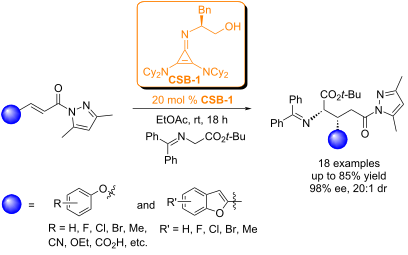
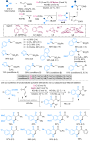
- that the chiral catalysts quinine and CSB-1 can give the corresponding product 3a in high yields but in its racemic form in the presence of 1 equiv LiBr. Based on our previous research [7][8], β-aryl-substituted α,β-unsaturated isoxazoles and pyrazolamide can be used as Michael acceptors to produce






Site-specific labelling of native peptides and proteins: chemical and enzymatic strategies
Beilstein J. Org. Chem. 2026, 22, 857–881, doi:10.3762/bjoc.22.67
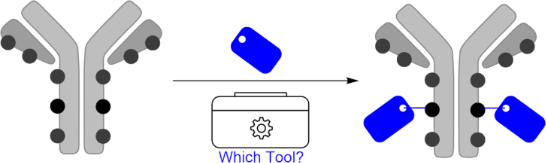
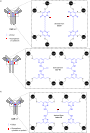
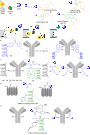
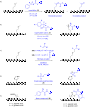
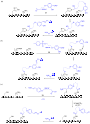
- a chemical label or crosslinking functionality (Scheme 3a). One of the earliest rebridging strategies employed bis-sulfone reagents 6 which, upon in situ activation, generate monosulfone Michael acceptors that selectively react with a reduced cysteine pair (Scheme 3b) [27]. This approach was later
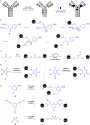
- serine residue into a cysteine analogue. Examples of small molecule reagents. Modifications of a–c) methionine by oxaziridine 22, hypervalent iodine 23, Michael acceptors (24a/b), d) histidine by thiophosphorodichoridate 25, e) aspartic and glutamic acid by diazo-containing compounds 26. Labelling of








The trans-influence in gold chemistry from a catalytic perspective
Beilstein J. Org. Chem. 2026, 22, 838–856, doi:10.3762/bjoc.22.66
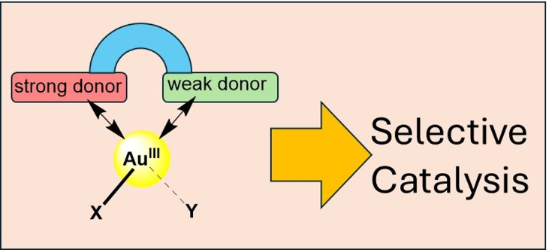
- structure and bonding in the transition state. As summarised in an early review by Appleton, Clark and Manzer [22], both σ-donation and π-effects of the ligands are important. Ligands with strong trans-influence are typically either strong π-acceptors such as CO and CN−, and strong σ-donors, like
- < C6F5− ≈ PH3 < C6H5− < CH3− < H− < SiH3−. Ligands in cis position exert a weaker influence, spanning about 6 ppm but with a trend in the opposite direction, with the weakest σ-donors, as well as the strongest π-acceptors, exhibiting the highest deshielding, resulting in the most positive 1H hydride


Unsymmetrical sulfoxides with sterically hindered catechol fragment: synthesis, structure, electrochemical properties, and antiradical activity
Beilstein J. Org. Chem. 2026, 22, 828–837, doi:10.3762/bjoc.22.65
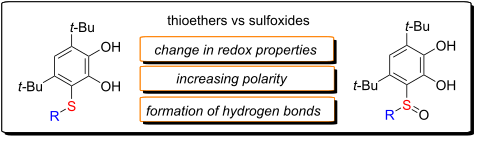
- -benzoquinones (−0.41 to −0.37) V [23]) and halogen-substituted 3,6-di-tert-butyl-4-chloro-o-benzoquinone (−0.44 V [50]), due to the electron-withdrawing effect of the sulfinyl group. This allows the electrogenerated o-benzoquinones to be considered as fairly strong electron acceptors. During electrolysis, the


Photoorganocatalytic trifluoromethylation of (het)arenes in green conditions
Beilstein J. Org. Chem. 2026, 22, 662–671, doi:10.3762/bjoc.22.50
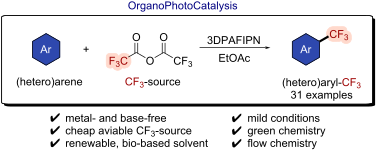
- acceptors (carbonyl groups). Trifluoromethylation of anisole afforded product 11 in 57% yield, with the ortho-isomer identified as the major product. Compared with anisole, thioanisole, a less electron-rich substrate, produced a mixture of ortho-, meta-, and para-isomers 12 in a combined yield of 33%, with




Computational prediction of C–H hydricities and their use in predicting the regioselectivity of electron-rich C–H functionalisation reactions
Beilstein J. Org. Chem. 2026, 22, 603–610, doi:10.3762/bjoc.22.46
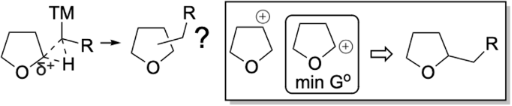
- . These properties encompass the site of metabolism [25][27], the strengths of hydrogen bond donors and acceptors [28][29][30], the regioselectivity of electrophilic aromatic substitution reactions [10], C–H pKa values [3], and electro- and nucleophilicity [31]. Building on the methodology from Finkelmann


![[Graphic 6]](/bjoc/content/inline/1860-5397-22-46-i8.svg?max-width=637&scale=1.18182)


Cone p-aminocalix[4]arenes enriched with ‘clickable’ alkyne or azide functionalities
Beilstein J. Org. Chem. 2026, 22, 399–415, doi:10.3762/bjoc.22.28
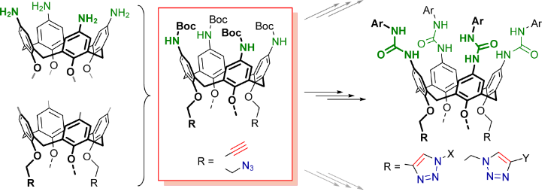
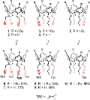
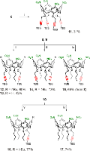
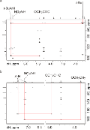
- ., chloroform) with the inclusion of one of the solvent molecules into the capsules. However, triazole heterocycles attached to the calixarene core can serve as weak hydrogen-bond acceptors [99] and thus may interfere with capsule formation, including the exclusive formation of heterodimeric capsules from the
- the other hand, this water content is apparently sufficient to disrupt weaker intermolecular contacts involving triazole heterocycles as hydrogen-bond acceptors. Since the structures of the above mentioned non-capsular aggregate(s) formed by calixarene 47 cannot be drawn based on the available data




Design, synthesis and biological evaluation of 2,5-diaryloxazolo[4,5-d]pyrimidin-7-ylamines as selective cytotoxic agents against HeLa cells
Beilstein J. Org. Chem. 2026, 22, 390–398, doi:10.3762/bjoc.22.27

- oxazolopyrimidine derivatives may demonstrate selective cytotoxicity against cancer cell lines like HeLa, HepG2, A549, and central nervous system (CNS) tumor models [1][2][3]. The introduction of heterocyclic molecules with different amino groups as hydrogen-bond donors (and sometimes acceptors via lone electron


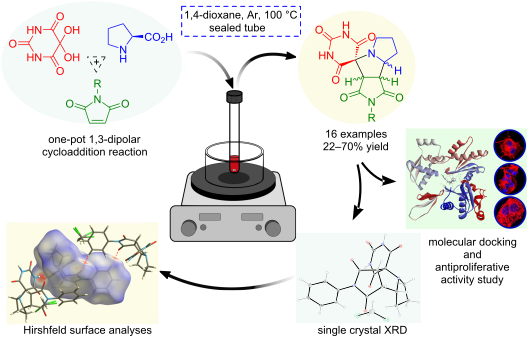
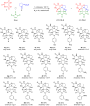
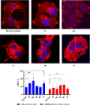
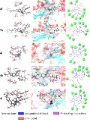
Spirobarbiturates with a pyrrolizidine moiety: synthesis, structure and biological evaluation
Beilstein J. Org. Chem. 2026, 22, 274–288, doi:10.3762/bjoc.22.20
- molecules [56]. By this rule, orally active drugs should not violate more than one of the following criteria: MW – molecular weight: < 500 Da; NHBD – number of hydrogen-bond donors, Log(P) – octanol/water partition coefficient: <5; NHBA – number of hydrogen-bond acceptors, NRotB – number of rotatable bonds




A mild and atom-efficient four-component cascade strategy for the construction of biologically relevant 4-hydroxyquinolin-2(1H)-one derivatives
Beilstein J. Org. Chem. 2026, 22, 244–256, doi:10.3762/bjoc.22.18
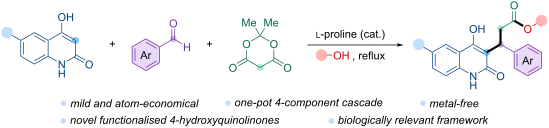
- approach involves the 1,4-Michael addition of the ambident anion derived from 6-halo-4-hydroxyquinolin-2-one to suitably activated unsaturated compounds. Considering the target structures (Figure 2), suitable Michael acceptors include α,β-unsaturated esters, aldehydes, methyl ketones, arylidene malonates
- obtained via the two-step procedure. The 6-halo-4-hydroxyquinolin-2-ones 2a–c were then subjected to Michael addition reactions with various acceptors following the retrosynthetic approaches (Scheme 2), and the results are discussed below (Scheme 4). No Michael adducts were obtained from reactions of 2a–c
- ). Based on the results obtained, it can be concluded that a sufficiently reactive Michael acceptor is likely necessary to achieve successful 1,4-addition with the relatively weak nucleophile that is 4-hydroxyquinolin-2-one. Among the acceptors tested, arylidene malonates showed the best performance


Configuration–packing synergy enabling integrated crystalline-state RTP and amorphous-state TADF
Beilstein J. Org. Chem. 2026, 22, 224–236, doi:10.3762/bjoc.22.16
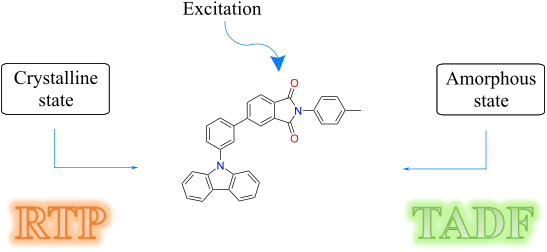
- molecular design approaches for TADF include twisted donor–acceptor structures (for example, carbazole or phenoxazine as donors and triazine, nitrile, or carbonyl groups as acceptors) as well as B/N multiresonance frameworks [30][31][32]. These strategies have been successful in achieving efficient triplet


Asymmetric Mannich reaction of aromatic imines with malonates in the presence of multifunctional catalysts
Beilstein J. Org. Chem. 2026, 22, 151–157, doi:10.3762/bjoc.22.8
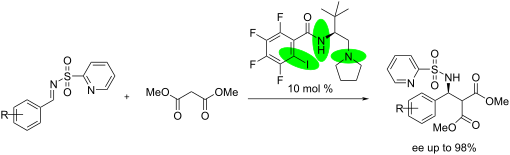
- malonate. It is known that N-atoms are the strongest XB acceptors in electroneutral compounds [26]. It has also been shown that imines protected with heteroarylsulfonyl groups provide higher enantioselectivity than those protected with the more commonly used phenylsulfonyl or tosyl groups in addition


Symmetrical D–π–A–π–D indanone dyes: a new design for nonlinear optics and cyanide detection
Beilstein J. Org. Chem. 2026, 22, 131–142, doi:10.3762/bjoc.22.6
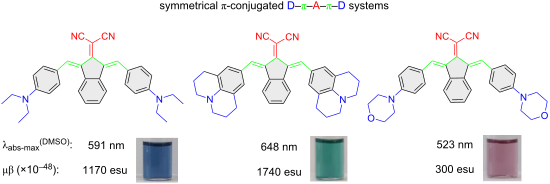
- , 13C NMR, and mass spectrometry methods. Dye structures were designed with alkylaminophenyl groups, known for their various electron-donating properties, as donors, and the dicyanovinyl group, with its strong electron-withdrawing properties, as acceptors, conjugated with an indan-2-one core (Figure 1


The high potential of methyl laurate as a recyclable competitor to conventional toxic solvents in [3 + 2] cycloaddition reactions
Beilstein J. Org. Chem. 2025, 21, 2389–2415, doi:10.3762/bjoc.21.184
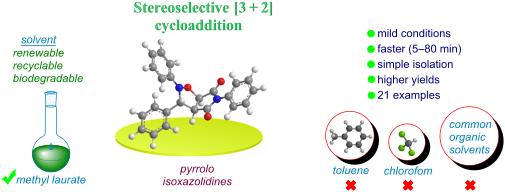
- optimized [3 + 2] cycloaddition conditions. The primary strategy for the selection of these compounds as catalysts is predicated on their capacity to function as H-bond acceptors and/or H-bond donors. As has been documented in previous research, imine-based templates or [2]rotaxane that possess an amide


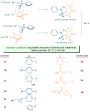


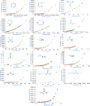


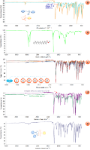
Conformational effects on iodide binding: a comparative study of flexible and rigid carbazole macrocyclic analogs
Beilstein J. Org. Chem. 2025, 21, 2369–2375, doi:10.3762/bjoc.21.181
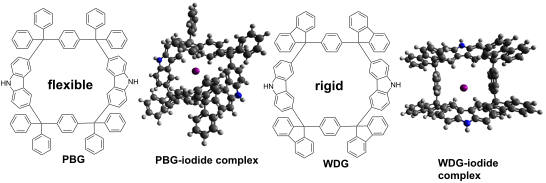
- iodine ions, which is consistent with the conclusions reached by our NMR titration. The binding constants of the complexes (K), KPBG = (1.387 ± 0.02363) × 105 M−1, KWDG= (6.089 ± 0.3320) × 103 M−1 were measured (Tables S1 and S2 in Supporting Information File 1), indicating that both acceptors had strong
- peaks appeared, indicating that photoelectron transfer occurred between iodine ions and the macrocycles [27][28], and fluorescence quenching was due to the photoinduced electron transfer (PET) effect between iodine ions and acceptors, resulting in non-radiative dissipation of excited state energy rather



Thiadiazino-indole, thiadiazino-carbazole and benzothiadiazino-carbazole dioxides: synthesis, physicochemical and early ADME characterization of representatives of new tri-, tetra- and pentacyclic ring systems and their intermediates
Beilstein J. Org. Chem. 2025, 21, 2220–2233, doi:10.3762/bjoc.21.169
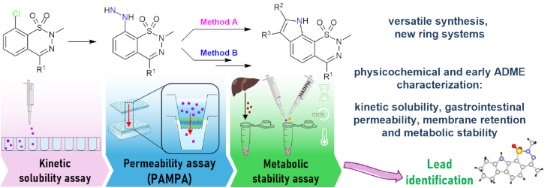
- File 1, Figures S1–S3). Based on their calculated physicochemical properties, all compounds satisfied Lipinski’s Rule of Five suggested by Wager et al. [34] (molecular weight < 500 Da, logP < 5, number of hydrogen-bond donors < 5, number of hydrogen-bond acceptors < 10) [35], and the topological polar


Photoswitches beyond azobenzene: a beginner’s guide
Beilstein J. Org. Chem. 2025, 21, 1808–1853, doi:10.3762/bjoc.21.143
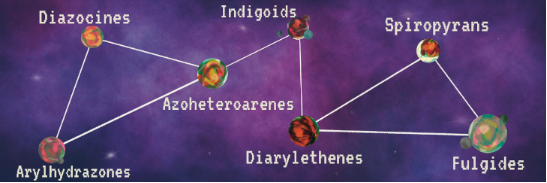
- picoseconds to several years. The presence of heteroatoms also introduces H-bond donors and acceptors and metal coordination sites [11]. Like azobenzenes, E–Z isomerisation of azoheteroarenes can be triggered by light irradiation, while Z–E isomerisation proceeds through irradiation with a different
- presence of H-bond acceptors [102][104][107]. The presence and the nature of the H-bond can be identified by 1H NMR spectroscopy since the N–H proton has a characteristic chemical shift depending on the H-bond acceptor [101]. Arylhydrazones based on pyridine have been intensively studied since the H-bond
- between hydrazone and pyridine can be broken by protonation with an acid and even by metal coordination, rendering these compounds photo- and acidochromic (Scheme 31) [102]. The equilibrium can also be modulated by introducing hydrogen-bond acceptors in R1 [107] or by introducing substituents to the






Approaches to stereoselective 1,1'-glycosylation
Beilstein J. Org. Chem. 2025, 21, 1700–1718, doi:10.3762/bjoc.21.133
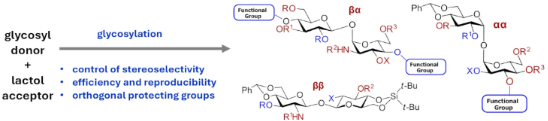
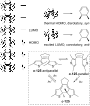
- advances in 1,1′-glycosylation and provides an overview of selected glycosylation strategies, including those aimed at forming α,β-, β,β-, and α,α-1,1′-glycosidic linkages. Particular emphasis is placed on the challenges of achieving stereoselectivity with lactol glycosyl acceptors, which commonly exist as
- exploiting the participation effect of the neighboring protecting group [43][44], employing anomeric lactols as acceptors is more complex as lactols with the desired configuration are frequently difficult to obtain (e.g., through anomerization). In addition to the nature of the leaving group and promoter
- formation of an α-glycoside on the donor side [54]. On the acceptor side, the β-configuration was favored due to steric hindrance from the C-2 phthalimido group in the triacetylated GalN-lactol acceptors 6 or 3,4-di-O-benzylated acceptors 8, resulting in kinetically controlled formation of β,α-1,1


Structural analysis of stereoselective galactose pyruvylation toward the synthesis of bacterial capsular polysaccharides
Beilstein J. Org. Chem. 2025, 21, 1671–1677, doi:10.3762/bjoc.21.131

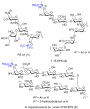
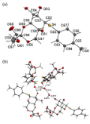
- position. Additionally, THF was used as a solvent to enhance the α-selectivity of the reaction [41][42][43]. Next, while both compounds 8 and 9 can act as acceptors, compound 9, a primary alcohol, exhibits greater nucleophilicity. Using the TolSCl/AgOTf promoter system at −70 °C, the β-linked disaccharide


Photocatalysis and photochemistry in organic synthesis
Beilstein J. Org. Chem. 2025, 21, 1645–1647, doi:10.3762/bjoc.21.128
- in the presence of electron donors and acceptors. Furthermore, [Ru(bpy)3]Cl2 can engage in Förster and Dexter energy transfer processes, enabling the transfer of excited-state energy to molecules that do not themselves absorb visible light. This versatility is arguably the reason for the tremendous

Tautomerism and switching in 7-hydroxy-8-(azophenyl)quinoline and similar compounds
Beilstein J. Org. Chem. 2025, 21, 1404–1421, doi:10.3762/bjoc.21.105
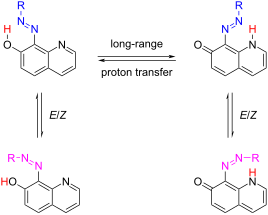
- CH3 group) and 3 leads to destabilization of K, while placing a substituent in positions 5 (weakly) and 6 stabilizes it. The effect on position 4 is mixed – electron donors stabilize the K form, while acceptors rise its energy. All substituents in position 8 stabilize K, but the effect of the
- acceptors is more pronounced. The effect of the amino group is stronger comparing to NMe2 due to the steric hindrance in the latter. Since in 1 the azo group, an acceptor, is placed on position 8, it is also expended to bring additional inherent stabilization of the 1K tautomer. The effect of the
- donors in the phenyl ring, while N–NH is a donor, favored by acceptors in Ph [3][7][89]. Following this model, a suitable substitution in the Ph ring of 1 can stabilize or destabilized KE and KK in respect to E and K. This opens an additional channel for fulfilling the requirements for a clean switching




High-pressure activation for the solvent- and catalyst-free syntheses of heterocycles, pharmaceuticals and esters
Beilstein J. Org. Chem. 2025, 21, 1374–1387, doi:10.3762/bjoc.21.102
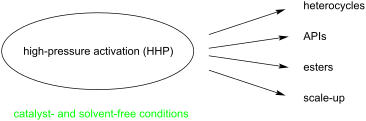
- the phenomena [17]. In addition, due to the availability of commercially accessible instruments, the applications of HHP in synthetic chemistry have expanded in the past decades. The studied reactions include hydrogenation [18], the addition of enamines to Michael acceptors [19], enantioselective


Oxetanes: formation, reactivity and total syntheses of natural products
Beilstein J. Org. Chem. 2025, 21, 1324–1373, doi:10.3762/bjoc.21.101
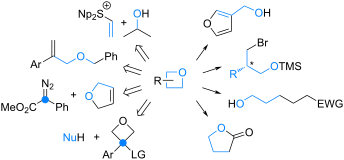
- base [5]. In fact, its hydrogen-bond-accepting ability is even stronger than that of the other 3-, 5- and 6-membered cyclic ethers, as well as the carbonyls of aldehydes, ketones, esters and carbonates [6][7][8]. The only better carbonyl-based hydrogen-bond acceptors are amides, carbamates and ureas [9