Search results
Search for "amides" in Full Text gives 486 result(s) in Beilstein Journal of Organic Chemistry. Showing first 200.
Amino acid-based surfactants: sustainable synthesis and antimicrobial mechanisms
Beilstein J. Org. Chem. 2026, 22, 1067–1085, doi:10.3762/bjoc.22.85
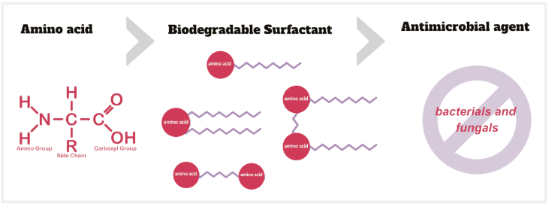
- and hydrophilic properties, as well as the type of bond present in the molecule, such as amides or esters [78]. LAE, a commercial cationic agent with low toxicity, has attracted increasing interest due to its improved antimicrobial activity [49][113]. Previous studies have shown that LAE binds to the


Semisynthesis, characterisation, and antibacterial evaluation of a novel lecanoric acid-derived amide library
Beilstein J. Org. Chem. 2026, 22, 1023–1032, doi:10.3762/bjoc.22.81
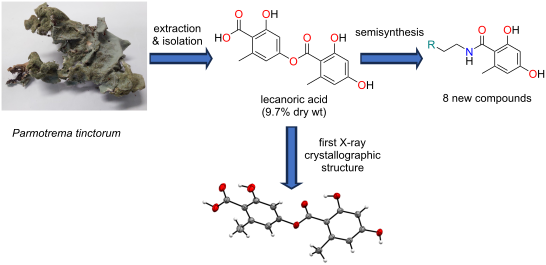
- natural product to be obtained; the ORTEP drawing of 1 is shown in Figure 2. The abundant depside scaffold 1 (970 mg) was subsequently utilised to generate a novel series of semisynthetic amides. This particular scaffold is known to undergo ester hydrolysis in basic environments (i.e., pH > 7), resulting
- in decomposition to orsellinic acid (4) [24]. Recognising the reactivity of the scaffold’s ester group, we sought to exploit this by reacting 1 with a series of commercially available primary amines to generate a series of chemically unique amides. Prior to the reaction of scaffold 1 with the eight
- all other semisynthetic studies employed these optimised conditions. Thus, seven other commercially available primary amine reagents (500 µL) were reacted with the depside scaffold 1 (20 mg, 0.06 mmol) at room temperature for 1 h to form the new amide series 6–13. All amides were purified using the


Z-Selective semihydrogenation of alkynes via Ni/Lewis acid synergistic catalyzed system using DMF as hydrogen source and solvent
Beilstein J. Org. Chem. 2026, 22, 1004–1012, doi:10.3762/bjoc.22.79
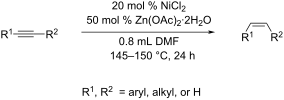
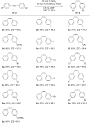
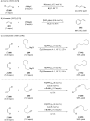
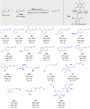
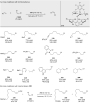
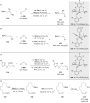
- tolerance. Ethers, halides (C–Cl, C–Br, C–F), and amides remained intact under the reaction conditions. Notably, substrates with strong electron-withdrawing substituents (e.g., –CF3 in 2f) or multiple halogen atoms (2i, 2o) were also well tolerated, affording the products in good yields and highlighting the



Electrochemical reduction of unsaturated carbon–carbon bonds via 3d transition-metal catalysis
Beilstein J. Org. Chem. 2026, 22, 955–981, doi:10.3762/bjoc.22.75
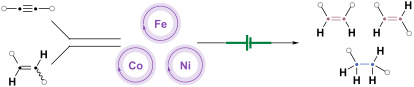
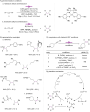
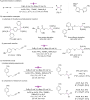
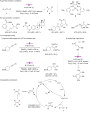
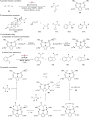
- , affording the corresponding alkenes with high selectivity (Scheme 13B). Notably, substrates bearing sulfonamides, sulfonates, N,N-disubstituted tosylamides, and secondary amides also underwent efficient and selective semireduction. Mechanistic investigations using deuterated acetic acid revealed that
- the asymmetric hydrogenation of C–C double bonds (Scheme 18A) [134]. The transformation accommodates a broad range of tertiary amides and maintains high yields and enantioselectivities across substrates bearing diverse electronic and steric profiles (Scheme 18B). These results clearly demonstrate that








Palladium-catalyzed benzocyclization reactions of quinoline-2-carboxamides via sequential C–H/N–H functionalization
Beilstein J. Org. Chem. 2026, 22, 905–914, doi:10.3762/bjoc.22.71
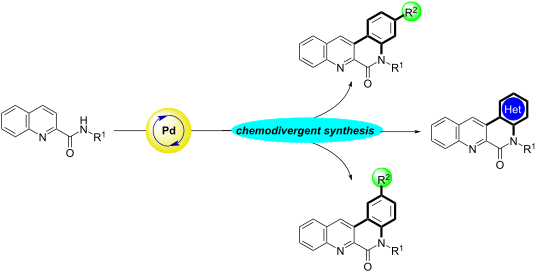
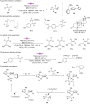
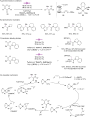
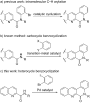
- with an increased catalyst loading of 20 mol %. The reaction affords lactams in up to 83% yield using amides containing various functional groups and substituted 1-bromo-2-iodobenzenes. Furthermore, 1,2-dibromo heteroarenes, such as benzothiophene and pyridine, undergo annulation to give the
- increased acidity of the N–H proton of the amides, caused by substituent groups, could potentially inhibit the annulation reaction. Similarly, amides bearing mesityl, 2-nitrophenyl, or 2-methoxyphenyl groups afforded the corresponding products in low yields due to steric hindrance (Table 2, entries 7–9
- ). The reaction with benzyl-substituted carboxamide also resulted in a low yield owing to the lower acidity of the amide proton compared with aromatic amides (Table 2, entry 10). Based on these results quinoline carboxamides 1 bearing aromatic substituents, which avoid steric effects and induce moderate




Site-specific labelling of native peptides and proteins: chemical and enzymatic strategies
Beilstein J. Org. Chem. 2026, 22, 857–881, doi:10.3762/bjoc.22.67
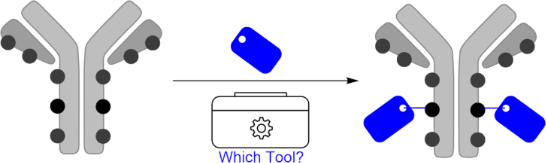
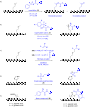
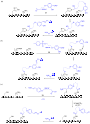
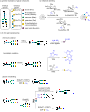
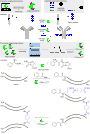
- and glutamine (or other small primary amides) is another frequently used enzyme for bioconjugation. The primary amide in glutamine is converted into an acyl intermediate that is subsequently attacked by amine nucleophiles such as lysine ε-amines and glycine α-amines. Although MTG can modify Gln295 on









Synthesis and uranyl(VI) extraction performance of a calix[4]pyrrole–tetrahydroxamic acid receptor
Beilstein J. Org. Chem. 2026, 22, 486–494, doi:10.3762/bjoc.22.36
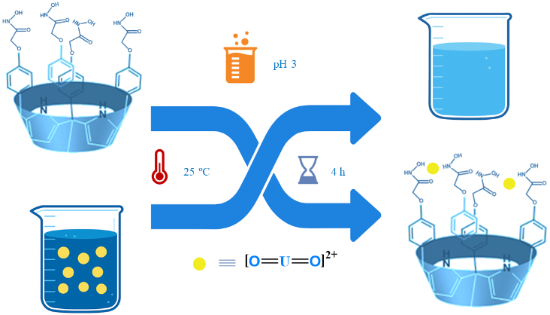
- aldehydes [45], alcohols [46], and amides [47] have also been reported. However, the literature states that there is no particular reagent or reaction condition that can serve as a general rule for the synthesis of hydroxamic acids [48]. In this study, the direct reaction of hydroxylamine with the PCP ester


Recent advances in the stereoselective synthesis of distal biaxially chiral molecules
Beilstein J. Org. Chem. 2026, 22, 461–479, doi:10.3762/bjoc.22.34
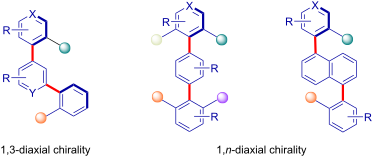
- biaxially chiral 1,4-distyryl-2,3-naphthalene diols. H-Bond-enabled enantioselective synthesis of remote biaxially chiral amides mediated by the counterion. Enantioselective synthesis of biaryl products with twofold chiral axes. Iridium-catalyzed C–H alkylation to obtain the distal biaxial atropisomers. Co


Recent advances in the cleavage of non-activated amides
Beilstein J. Org. Chem. 2026, 22, 352–369, doi:10.3762/bjoc.22.23
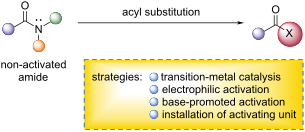
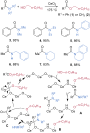
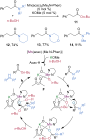
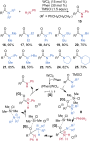
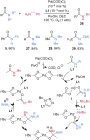
- , bioactive molecules, and advanced materials. However, its exceptional resonance stabilization renders the C–N bond highly inert, posing a persistent synthetic challenge for its transformation. While twisted amides with distorted C–N bonds have offered useful reactivity enhancements, the selective activation
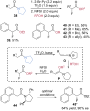
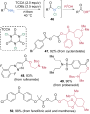
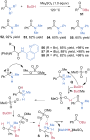
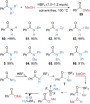
- of conventional, non-activated amides remains far more difficult. This review summarizes recent advances over the past decade in the activation and cleavage of non-activated amide C–N bonds for their conversion into diverse carboxylic acid derivatives. Key strategies covered include transition-metal
- a major objective in contemporary synthetic chemistry [12][13][14][15][16]. Despite their ubiquity, amides are notoriously unreactive toward classical acyl-substitution pathways. This inertness arises from a strong amidic resonance, which confers partial C=N double-bond character and a planar







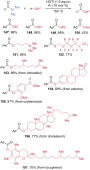

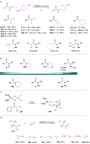


A mild and atom-efficient four-component cascade strategy for the construction of biologically relevant 4-hydroxyquinolin-2(1H)-one derivatives
Beilstein J. Org. Chem. 2026, 22, 244–256, doi:10.3762/bjoc.22.18
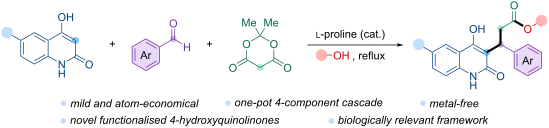
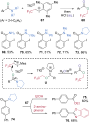
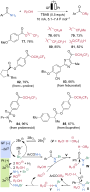
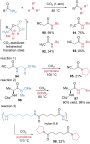
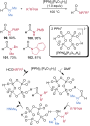
- , replacing alcohols with secondary amines (e.g., pyrrolidine) as the reaction medium did not lead to the desired amides. Experimental trials resulted in the formation of complex mixtures (as confirmed by 1H NMR), suggesting that the high reactivity of amines interferes with the selectivity of the cascade


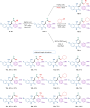
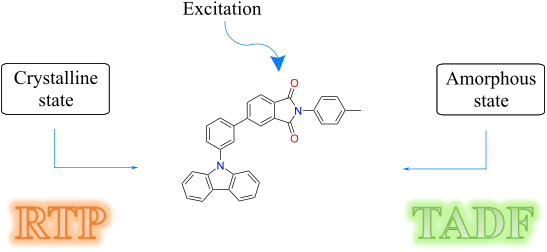
Configuration–packing synergy enabling integrated crystalline-state RTP and amorphous-state TADF
Beilstein J. Org. Chem. 2026, 22, 224–236, doi:10.3762/bjoc.22.16
- rigid hydrogen-bonded [26] or ionic networks [13], and utilizing crystallization [27] or confinement environments [28] to restrict molecular motion. These strategies have been implemented in various systems, such as aromatic diketones, diimides, urea/amides self-assembled solids, and carbonyl-containing


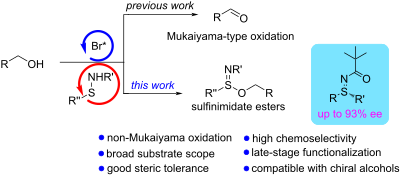
Circumventing Mukaiyama oxidation: selective S–O bond formation via sulfenamide–alcohol coupling
Beilstein J. Org. Chem. 2026, 22, 158–166, doi:10.3762/bjoc.22.9
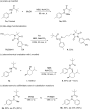
- . Yields are of isolated products. Substrate scope of sulfenamides derived from various amides. Reaction conditions: sulfenamide 1 (0.15 mmol), NBS (1.2 equiv), NaHCO3 (1.5 equiv), MeOH (1.5 mL), room temperature, 30 min. Yields are of isolated products. Substrate scope of reactions between sulfenamides 1a


Asymmetric Mannich reaction of aromatic imines with malonates in the presence of multifunctional catalysts
Beilstein J. Org. Chem. 2026, 22, 151–157, doi:10.3762/bjoc.22.8
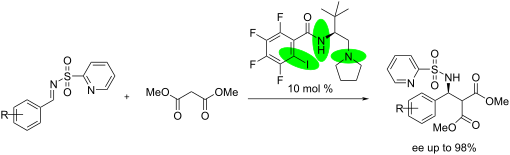
- reactions to imines [27]. The model reaction was performed in the presence of various types of catalysts (Figure 1). The syntheses of the catalysts are described in Supporting Information File 1. All catalysts used are amides containing tertiary amino groups, which are needed for the activation of the


Advances in Zr-mediated radical transformations and applications to total synthesis
Beilstein J. Org. Chem. 2026, 22, 71–87, doi:10.3762/bjoc.22.3
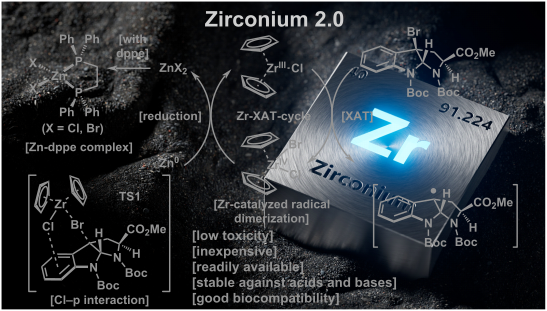
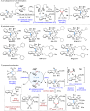
- hydrogen atom from 1,4-cyclohexadiene, affording the hydrogenated product 36. The reaction proved broadly applicable to a wide range of alkyl chlorides. For example, primary alkyl chlorides bearing functional groups such as amides (34b), esters (34c), ketones (34d), and phosphoesters (34e) underwent smooth








Synthesis and applications of alkenyl chlorides (vinyl chlorides): a review
Beilstein J. Org. Chem. 2026, 22, 1–63, doi:10.3762/bjoc.22.1
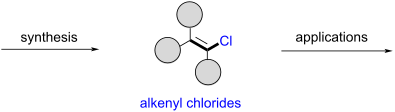
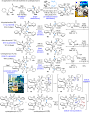
- acetylenic ethers [97][98], ynones [99], ynamides [98][99][100][101][102], acetylenic selenides [103], thioalkynes [98][104], acetylenic nitriles [105], propargyl amines [106], propargylic amides [107], propargylic thioethers [106], propynoic acids [105], and propynoates [105][108] (Figure 8). Over the past























Visible-light-driven NHC and organophotoredox dual catalysis for the synthesis of carbonyl compounds
Beilstein J. Org. Chem. 2025, 21, 2584–2603, doi:10.3762/bjoc.21.200
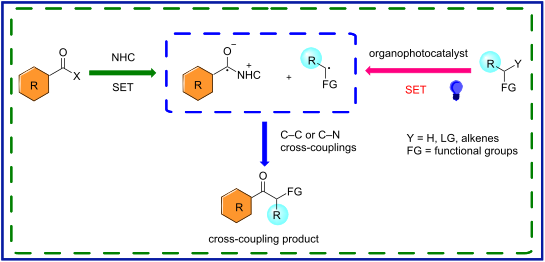
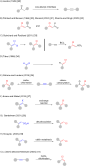
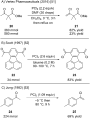
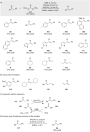
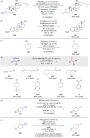
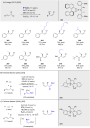
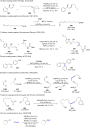
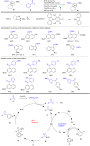
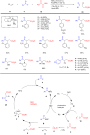
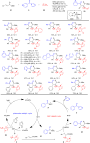
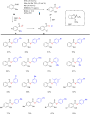
- carbenes (NHCs) with photocatalysts. The review encompasses transition-metal-based photocatalytic reactions for C–C and C–HA cross-coupling reactions involving various acyl fluorides, amides, aldehydes, carboxylic acids, and esters, highlighting their broad applications in organic synthesis and medicinal
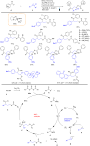
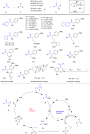
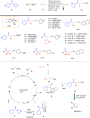
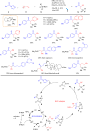
- , generating an N-centered radical species C. This species subsequently undergoes a rapid C–N cross-coupling with ketyl radical B. This cross-coupling method offers a transition-metal free route to highly substituted amides 3 from aldehydes 1 and imines 2, without the need for any external reductants or




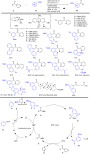

Recent advances in Norrish–Yang cyclization and dicarbonyl photoredox reactions for natural product synthesis
Beilstein J. Org. Chem. 2025, 21, 2315–2333, doi:10.3762/bjoc.21.177
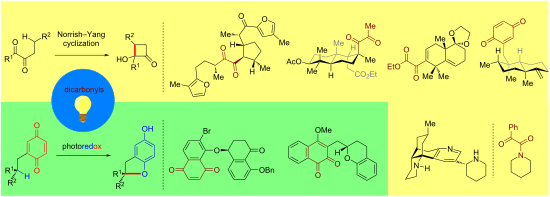
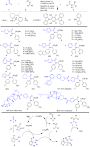
- natural product synthesis. This review summarizes the latest advancements in these reactions for constructing terpenoids, alkaloids, and antibiotics. Through Norrish–Yang cyclization, dicarbonyls (e.g., 1,2-diketones and α-keto amides) can efficiently construct sterically hindered ring structures, which
- , α-keto amides, 1,4-quinones, and 1,2-quinones in this context, have emerged as versatile substrates in Norrish–Yang cyclizations, finding widespread application in natural products synthesis. Compared to monoketones, dicarbonyls (e.g., 1,2-diketones) offer distinct advantages: (1) they generally
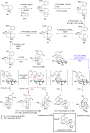
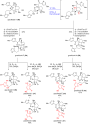
- stereoretentive coupling at C2 with aryl bromide 86, yielding 88 as a single diastereomer. Manipulation of the protecting group of 88 arrived at lycoplatyrine A (89). Notably, 87 and related α-hydroxy-β-lactams were obtained via Norrish–Yang cyclization of the corresponding neat α-keto amides in the solid state




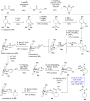


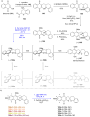

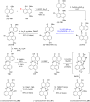
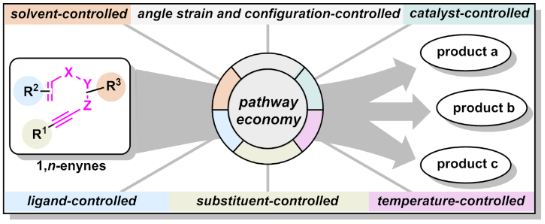
Pathway economy in cyclization of 1,n-enynes
Beilstein J. Org. Chem. 2025, 21, 2260–2282, doi:10.3762/bjoc.21.173
- was used as the ligand and amides as nucleophiles, the spirocyclic indole framework 91 was obtained via the capture of imine intermediate 88. When the PPh3 was used as ligand in the absence of nucleophiles, the substrate 87 with an unprotected indole nitrogen facilitated the formation of intermediate
- stereospecific tandem cyclization of indolyl homopropargyl amides for the construction of bridged aza[n.2.1] frameworks (Scheme 28) [40]. The copper catalyst, acting as a σ,π-dual activator, induced a 5-endo-dig cyclization to form a vinylcopper intermediate 135. Subsequently, a protodemetalation process first
- copper-catalyzed tandem process initiated by endo-cyclization of indolyl homopropargyl amides, enabling atom-economical synthesis of therapeutically significant bridged aza[n.2.1] skeletons. Angle strain and configuration-controlled cyclization of 1,n-enynes In cyclization reactions, angle strain and


C2 to C6 biobased carbonyl platforms for fine chemistry
Beilstein J. Org. Chem. 2025, 21, 2103–2172, doi:10.3762/bjoc.21.165
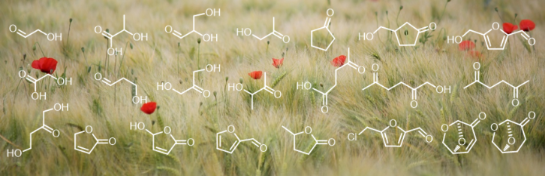
- , amides, lactones, acrylic acid, etc. (Scheme 72) and is therefore a key intermediate in the synthesis of pharmaceuticals, agrochemicals, and other specialty chemicals. Levulinate esters, used as a solvent or as biofuels, are obtained by esterification under acid catalysis, e.g., with a sulfuric acid


Discovery of cytotoxic indolo[1,2-c]quinazoline derivatives through scaffold-based design
Beilstein J. Org. Chem. 2025, 21, 2062–2071, doi:10.3762/bjoc.21.161
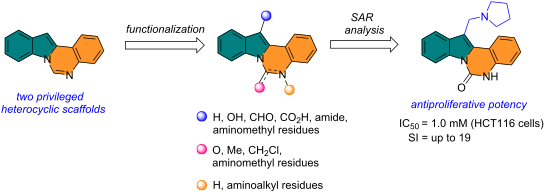
- trifluoroacetic acid affords intermediate compound 6, bearing a trifluoroacetyl group on the indole moiety. Treatment of 6 with the base yielded the acid 3 in high yield (Scheme 2). The carboxyl group of 3 was converted to the corresponding amides via coupling with mono-N-Boc-protected C2–C4 diamines using PyBOP


Switchable pathways of multicomponent heterocyclizations of 5-amino-1,2,4-triazoles with salicylaldehydes and pyruvic acid
Beilstein J. Org. Chem. 2025, 21, 2030–2035, doi:10.3762/bjoc.21.158
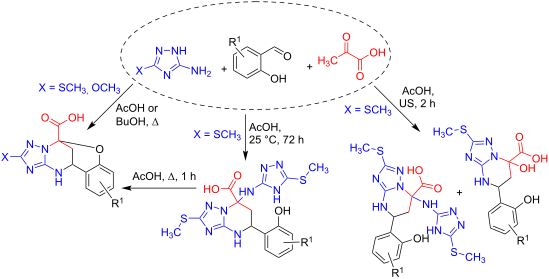
- also was described in several other publications [13][14][15]. On the other hand, three-component reactions of aminoazoles, salicylaldehyde, and esters (or amides) of acetoacetic acid with isolation of other types of heterocylic compounds were described in some papers [16][17]. Our early works were


Rhodium-catalysed connective synthesis of diverse reactive probes bearing S(VI) electrophilic warheads
Beilstein J. Org. Chem. 2025, 21, 1924–1931, doi:10.3762/bjoc.21.150
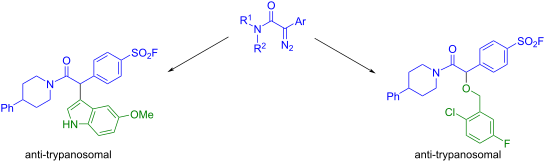
- that all of these active compounds are 4-phenylpiperidinyl amides derived from the same α-diazoamide 2, suggesting that this feature is important for activity. Conclusion We have developed a connective synthesis of reactive probes bearing S(VI) electrophilic warheads. Each probe was prepared by rhodium


Research progress on calixarene/pillararene-based controlled drug release systems
Beilstein J. Org. Chem. 2025, 21, 1757–1785, doi:10.3762/bjoc.21.139
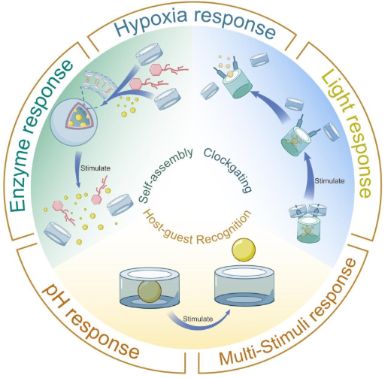
- solubility of drugs. The modified CAs encapsulate drug molecules within the host through host–guest interactions. The interactions between the drug and the calixarene enhance the solubility of the drug [60]. Further functionalization of these CAs' upper and lower rims with diverse moieties (e.g., amides






Preparation of a furfural-derived enantioenriched vinyloxazoline building block and exploring its reactivity
Beilstein J. Org. Chem. 2025, 21, 1737–1741, doi:10.3762/bjoc.21.136

- amino alcohols derived from furfural and ʟ- or ᴅ-valinol were subjected to Torii-type ester electrosynthesis to obtain the corresponding unsaturated esters. These served as key intermediates to prepare (S)- and (R)-enantioenriched unsaturated amides by N-Alloc deprotection which induced concomitant
- methoxymethyl group cleavage, O-to-N rearrangement, and isomerization of the double bond. An oxazoline ring formation in the resulting unsaturated amides provided the corresponding enantioenriched vinyloxazoline. The reactivity of the electron-deficient double bond in the vinyloxazoline was explored in several
- material S-3d but provided a mixture of cis- and trans-amides cis-S-5 and trans-S-5 (Scheme 3). The use of PdCl2(S-BINAP) complex as a precatalyst resulted in a longer reaction time and an exclusive formation of amide trans-S-5 with isomerized double bond (Scheme 4). The amide trans-R-5 was prepared


pH-Controlled isomerization kinetics of ortho-disubstituted benzamidines: E/Z isomerism and axial chirality
Beilstein J. Org. Chem. 2025, 21, 1568–1576, doi:10.3762/bjoc.21.120
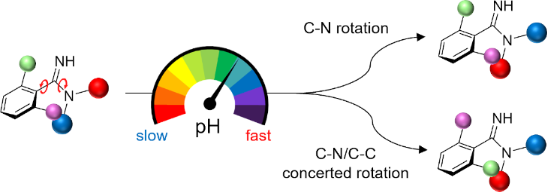
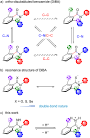
- rotational barrier as in the parent chalcogen amides, regardless of whether it is in the molecular form or protonated state, and the protonation of the nitrogen atom increases the activation energy by 33–43 kJ·mol−1. To investigate how protonation affects the double-bond nature of the amidine moiety, we