


Search results
Search for "aromatization" in Full Text gives 174 result(s) in Beilstein Journal of Organic Chemistry.
Recent advances in the stereoselective synthesis of distal biaxially chiral molecules
- Fanxing Zhou,
- Chen Zhang,
- Lingyu Sun,
- Yiyun Fang,
- Siming Zheng,
- Lina Hu,
- Mengyang Shen,
- Zhen Zhao,
- Wei Xu,
- Yunqiang Sun and
- Zi-Qiang Rong
Beilstein J. Org. Chem. 2026, 22, 461–479, doi:10.3762/bjoc.22.34
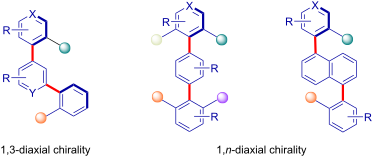
- ]. This method successfully employed a Ni(II)-catalyzed Diels-Alder reaction between 1,3-biaryl-isobenzofurans and α,β-unsaturated N-acyl pyrazoles, followed by a TfOH-promoted dehydration aromatization step. These atropisomeric compounds, which contain multiple stereogenic axes, show broad application
- induce axial chirality. In this approach, the initial formation of one or more stereogenic centers establishes a defined three-dimensional framework, which subsequently guides the generation of one or more chiral axes through cyclization, oxidative aromatization, or related transformations. This central
- to axial chirality via oxidative aromatization. Conclusion Distally biaxially chiral molecules play crucial roles in the fields of asymmetric catalysis, drug synthesis, and materials science due to their unique biaxial chirality and distal position. However, multiaxial sterical systems still commonly

Graphical Abstract

Figure 1: Natural products with various stereogenic axes.

Scheme 1: Iridium complex-catalyzed asymmetrical synthesis of axially chiral (a) teraryl compounds 3 [40] and (b)...

Scheme 2: Rhodium-catalyzed enantio- and diastereoselective cycloaddition of 1,2-bis(arylpropiolyl)benzenes w...

Scheme 3: Synthesis of remote double axially chiral phosphoric acids.

Scheme 4: Construction of chiral biaxial diphosphine ligand.

Scheme 5: Atroposelective synthesis of biaxially chiral 1,4-distyryl-2,3-naphthalene diols.

Scheme 6: H-Bond-enabled enantioselective synthesis of remote biaxially chiral amides mediated by the counter...

Scheme 7: Enantioselective synthesis of biaryl products with twofold chiral axes.

Scheme 8: Iridium-catalyzed C–H alkylation to obtain the distal biaxial atropisomers.

Scheme 9: Co/SPDO-catalyzed biaxial bridged terphenyl compounds.

Scheme 10: Atroposelective Co-catalyzed synthesis of pyridoindolones with two distinct C–N axes.

Scheme 11: NHC organocatalytic synthesis of fused 1,4-biaxial uracils with C–C and C–N chiral axes.

Scheme 12: Synthesis of the first biaxially chiral compound reported by Ito and co-workers [35].

Scheme 13: Synthesis of chiral homoaryl compounds by Suzuki–Miyaura coupling.

Scheme 14: Structurally complex APIs with multiple chiral axes.

Scheme 15: Synthesis of helicenes containing stereogenic axes.

Scheme 16: Chiral NHC–Pd complex-catalyzed Suzuki–Miyaura cross-coupling reaction for the synthesis of block-t...

Scheme 17: Highly enantioselective C–H arylation of heteroarenes.

Scheme 18: Synthesis of novel axially chiral N-arylcarbazole skeletons by the assembly of azidonaphthalenes an...

Scheme 19: Catalytic enantioselective synthesis of axially chiral polycyclic aromatic hydrocarbons.

Scheme 20: Catalytic synthesis of biaxial triphenylene block-transfer isomers.

Scheme 21: A Pd(II)-catalyzed trans-selective C–H alkenylation strategy through thioether-directed olefination....

Scheme 22: Synthesis of N-arylphthalimides from prochiral maleimides and NHC-activated dienolides.

Scheme 23: Ni-catalyzed synthesis of triaxially chiral polysubstituted naphthalene scaffolds.

Scheme 24: Enantioselective Ni-catalyzed Suzuki–Miyaura cross-coupling reaction.

Scheme 25: The stereoselective synthesis of axial chiral indole–quinoline systems.

Scheme 26: The synthesis of bisbenzofuran atropisomeric oligoarenes containing two distal C–C stereogenic axes....
Electrosynthetic access to unsymmetrical oxaza[8]helicenes with high chiral stability and strong circularly polarized luminescence (CPL)
- Tin Zar Aye,
- Rubal Sharma,
- Muthu Karuppasamy,
- Daiya Suzuki,
- Haruka Nakajima,
- Yoshitane Imai,
- Mitsuhiro Arisawa,
- Mohamed S. H. Salem and
- Shinobu Takizawa
Beilstein J. Org. Chem. 2026, 22, 372–382, doi:10.3762/bjoc.22.25
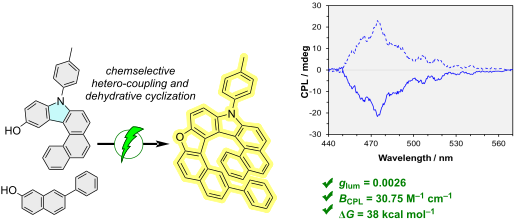
- characteristic transformations of the organosulfur functionality [32][33]. In 2024, Badani, Karnik, and co-workers accessed one member of this class, 7,12-dioxa[8]helicene I, through a sequence featuring photochemical E–Z isomerization, electrocyclization, and oxidative aromatization [34]. In parallel, Liu and

Graphical Abstract

Scheme 1: Recent examples of hetero[8]helicenes: (A) symmetric hetero[8]helicenes; (B) unsymmetrical hetero[8...

Scheme 2: Short-step synthesis of unsymmetrical oxaza[8]helicenes 5.
Figure 1: A plausible reaction mechanism: cyclic voltammetry (CV) analyses of hydroxycarbazole derivative 3 a...

Figure 2: Aromaticity of oxaza[8]helicenes: (A) NICS(0)zz and NICS(1)zz values of 5a and 5b calculated at MN1...

Figure 3: (P/M) Enantiomerization process of 5a (A), 5b (B), 6a (C), and 6b (D); relative Gibbs free energies...

Figure 4: Photophysical characters of oxaza[n]helicenes: (A) and (B) UV–vis absorption and PL spectra; (C) Fr...

Figure 5: Chiroptical properties of oxaza[n]helicenes: (A) CD spectra measured in chloroform (1 × 10⁻⁵ M); CP...
Screwing the helical chirality through terminal peri-functionalization
- Devesh Chandra,
- Sachin and
- Upendra Sharma
Beilstein J. Org. Chem. 2026, 22, 205–212, doi:10.3762/bjoc.22.14
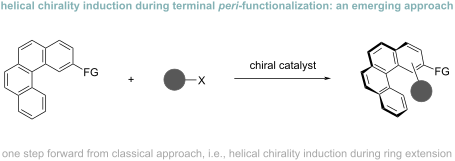
- catalysts [33]. A domino reaction was developed, beginning with a PPS L2-catalyzed Michael addition of phosphine oxides 7 to nitro-substituted oxa[5]helicenes 6, followed by a copper-promoted aromatization. This sequence efficiently produced phosphorus-containing oxa[5]helicene derivatives 8 in high yields

Graphical Abstract

Figure 1: Representation of the general practices for the induction of helical chirality in organic scaffolds...

Scheme 1: Asymmetric synthesis of carbohelicenes via peri-C–H functionalization.

Figure 2: Stereomodel for peri-terminal functionalization of carbohelicene. (Figure 2 was reproduced from [32] (© 2024 X....

Scheme 2: Scale-up synthesis and post-synthetic application of chiral helical product 3.

Scheme 3: Asymmetric peri-C–H functionalization of nitro-substituted oxa[5]helicenes.

Scheme 4: Scale-up synthesis and post-synthetic application of chiral helical product 8g.

Scheme 5: Post-synthetic transformation of product 8g to chiral phosphine ligand 12 and its application in Pd...

Figure 3: Stereomodel for the asymmetric peri-C–H functionalization of oxa[5]helicene. (Figure 3 was reproduced from [33]...
Recent advancements in the synthesis of Veratrum alkaloids
- Morwenna Mögel,
- David Berger and
- Philipp Heretsch
Beilstein J. Org. Chem. 2025, 21, 2657–2693, doi:10.3762/bjoc.21.206
- divergent semisynthesis of Liu/Qin toward cyclopamine, but until this point, left out the synthesis of veratramine [26]. The key steps rely on a Wagner–Meerwein-type rearrangement; the deviation occurs after this step aiming at the aromatization of the D-ring (Scheme 20). Starting from
- synthesis by the Trauner group [27]. In comparison to the Liu/Qin group [26], it provides a total synthetic entry in 13 steps in the longest linear sequence and 19 steps in total. The key disconnection cuts across the D-ring through a Diels–Alder reaction and aromatization (Scheme 22). The coupling occurs
- trifluoroethanol enabled the desired [4 + 2]-addition. Some aromatization as well as ketal deprotection was observed, so by optimization, AgSbF6 and diethyl fumarate enhanced this reactivity, while this modification also significantly improved the yield to 59% of this step. It was noted that the silver salt helped

Graphical Abstract

Scheme 1: Representatives of steroid alkaloid classes. Marked in blue is the steroidal cholestane framework, ...

Scheme 2: Subclasses of Veratrum alkaloids: jervanine, veratramine and cevanine-type [8].

Scheme 3: Flow chart presentation of the synthesis of (−)-englerin A developed by the Christmann group [10].
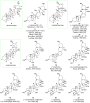
Scheme 4: Structures and year of synthesis of the three types of Veratrum alkaloids reported in the literatur...
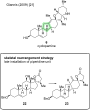
Scheme 5: Key step in the synthesis of cyclopamine (6) by the Giannis group [21].

Scheme 6: Overview of the semisynthesis of cyclopamine (6) reported by the Giannis group in 2009 [21].
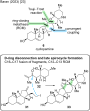
Scheme 7: Key steps in the synthesis of cyclopamine (6) by the Baran group [23].

Scheme 8: Overview of the total synthesis of cyclopamine (6) by the Baran group in 2023 [23].
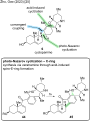
Scheme 9: Key steps in the synthesis of cyclopamine (6) by the Zhu/Gao group [25].
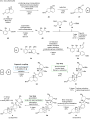
Scheme 10: Overview of the total synthesis of cyclopamine (6) by the group of Zhao/Gao in 2023 [25].
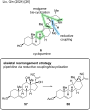
Scheme 11: Key steps in the synthesis of cyclopamine (6) by the Liu/Qin group [26].

Scheme 12: Overview of the semisynthesis of cyclopamine (6) by the Liu/Qin group in 2024 [26].
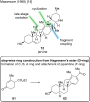
Scheme 13: Key steps in the synthesis of jervine (12) by the Masamune group [14].

Scheme 14: Overview of the total synthesis of jervine (12) by the Masamune group in 1968 [14].

Scheme 15: Color-coded schemes of the presented cyclopamine (6) syntheses by Giannis, Baran, Zhu/Gao, and Liu/...
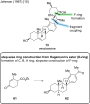
Scheme 16: Key steps in the total synthesis of veratramine (13) by the Johnson group [15].

Scheme 17: Overview of the total synthesis of veratramine (13) by the Johnson group in 1967 [15].
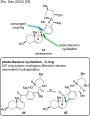
Scheme 18: Key steps in the synthesis of veratramine (13) by the Zhu/Gao group [25].

Scheme 19: Shortened overview of the total synthesis of veratramine (13) by the Zhu/Gao group in 2023 [25].
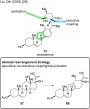
Scheme 20: Key steps in the synthesis of veratramine by the Liu/Qin group [26].

Scheme 21: Overview of the semisynthesis of veratramine (13) by the Liu/Qin group in 2024 [26].
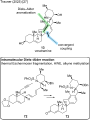
Scheme 22: Key steps in the synthesis of veratramine (13) by the Trauner group [27].

Scheme 23: Overview of the total synthesis of veratramine (13) by the Trauner group in 2025 [27].
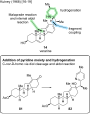
Scheme 24: Key steps in the synthesis of verarine (14) by the Kutney group [16-19].

Scheme 25: Overview of the total synthesis of verarine (14) by the Kutney group reported 1962–1968 [16-19].

Scheme 26: Color-coded schemes of the presented veratramine-type alkaloid synthesis of Zhu/Gao, Liu/Qin and Tr...
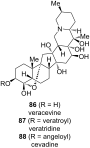
Scheme 27: Structures of veracevine (86), veratridine (87), and cevadine (88).

Scheme 28: Key step in the semisynthesis of verticine (15) by the Kutney group (1977) [20,46].

Scheme 29: Overview of the semisynthesis of verticine (15) by the Kutney group (1977) [20,46].

Scheme 30: Key step of the total synthesis of (±)-4-methylenegermine (17) by the Stork group (2017) [22].

Scheme 31: Overview of the total synthesis of (±)-4-methylenegermine (17) by the Stork group (2017) [22].

Scheme 32: Key step of the total synthesis of heilonine (16) by Cassaidy and Rawal (2021) [24].

Scheme 33: Overview of the total synthesis of heilonine (16) by Cassaidy and Rawal (2021) [24]. FGI: functional gr...
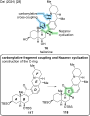
Scheme 34: Key steps of the synthesis of heilonine (16) by Dai and co-workers (2024) [28].

Scheme 35: Overview of the total synthesis of heilonine (16) by Dai and co-workers (2024) [28].
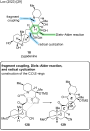
Scheme 36: Key steps of the total synthesis of zygadenine (18) reported by Luo and co-workers [29].
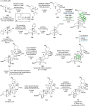
Scheme 37: Overview of the total synthesis of zygadenine (18) by Luo and co-workers (2023) [29].
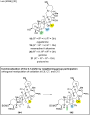
Scheme 38: Key step of the divergent total syntheses of highly oxidized cevanine-type alkaloids by Luo and co-...
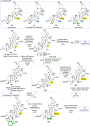
Scheme 39: Divergent syntheses of highly oxidized cevanine-type alkaloids by Luo and co-workers (2024) [30].
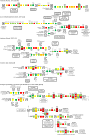
Scheme 40: Color-coded overview of the presented cevanine-type alkaloid syntheses [10,20,22,24,28-30,46]. LLS: longest linear sequen...
Recent advances in Norrish–Yang cyclization and dicarbonyl photoredox reactions for natural product synthesis
- Peng-Xi Luo,
- Jin-Xuan Yang,
- Shao-Min Fu and
- Bo Liu
Beilstein J. Org. Chem. 2025, 21, 2315–2333, doi:10.3762/bjoc.21.177
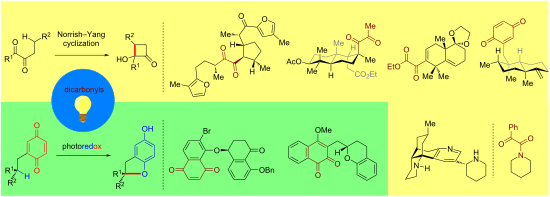
- delivered 68. A one-pot desilylation/oxidation of 67 produced an aldehyde, which was subject to selective nucleophilic addition in the presence of a ketone, allowing for access to the furan precursor 68 [37]. Oxidation–cyclization–aromatization of 68 with Dess–Martin periodinane (DMP) constructed the

Graphical Abstract

Scheme 1: a) The mechanism of Norrish type II reaction and Norrish–Yang cyclization; b) The mechanism of the ...

Scheme 2: Total synthesis of (+)-cyclobutastellettolide B.

Scheme 3: Norrish–Yang cyclization and 1,2-methyl migration.

Scheme 4: Synthetic study toward phainanoids.

Scheme 5: a) Mitsunobu reaction of the C9 ketal; b) Norrish–Yang cyclization of the saturated C5–C6; c) calcu...
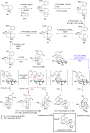
Scheme 6: Total synthesis of avarane-type meroterpenoids.

Scheme 7: Total synthesis of gracilisoid A.
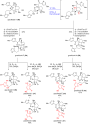
Scheme 8: Divergent total synthesis of gracilisoids B–I.

Scheme 9: Mechanism of the late-stage biomimetic photooxidation.
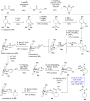
Scheme 10: Asymmetric total synthesis of lycoplatyrine A.

Scheme 11: Photoreaction of pyrrolidine-derived phenyl keto amide.

Scheme 12: Photoredox reactions of naphthoquinones.
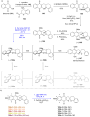
Scheme 13: Synthetic study toward γ-rubromycin.

Scheme 14: Substituent-dependent conformational preferences.
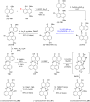
Scheme 15: Total synthesis of preussomerins EG1, EG2, and EG3.
Pathway economy in cyclization of 1,n-enynes
- Hezhen Han,
- Wenjie Mao,
- Bin Lin,
- Maosheng Cheng,
- Lu Yang and
- Yongxiang Liu
Beilstein J. Org. Chem. 2025, 21, 2260–2282, doi:10.3762/bjoc.21.173
- . When the gold(I) complex [JohnPhosAu(CH3CN)SbF6] was employed, a subsequent 5-exo-dig cyclization followed by aromatization steps occurred, ultimately affording the 2-sulfonylmethylpyrrole 118 (Scheme 24, path a). Conversely, utilization of the Ph3PAuCl/AgSbF6 catalytic system induced a different
- intermediate 150. Subsequent aromatization and ring expansion afforded benzene derivatives 151 (Scheme 31, path a). Conversely, E-configured substrates underwent gold-catalyzed alkyne activation, triggering terminal alkene 5-exo-dig cyclization to form carbocationic intermediate 152. Alcohols nucleophilically

Graphical Abstract

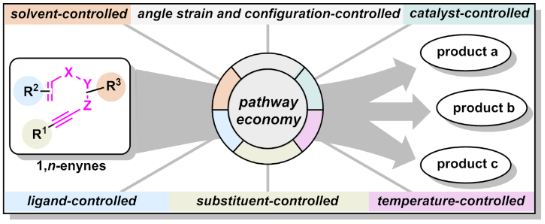
Scheme 1: Economical synthesis and pathway economy.

Scheme 2: Au(I)-catalyzed cascade cyclization paths of 1,5-enynes.

Scheme 3: Au(I)-catalyzed cyclization paths of 1,7-enynes.

Scheme 4: I2/TBHP-mediated radical cycloisomerization paths of 1,n-enyne.

Scheme 5: Au(I)-catalyzed cycloisomerization paths of 3-allyloxy-1,6-diynes.

Scheme 6: Pd(II)-catalyzed cycloisomerization paths of 2-alkynylbenzoate-cyclohexadienone.

Scheme 7: Stereoselective cyclization of 1,5-enynes.

Scheme 8: Substituent-controlled cycloisomerization of propargyl vinyl ethers.

Scheme 9: Au(I)-catalyzed pathway-controlled domino cyclization of 1,2-diphenylethynes.

Scheme 10: Au(I)-catalyzed tandem cyclo-isomerization of tryptamine-N-ethynylpropiolamide.

Scheme 11: Au(I)-catalyzed tunable cyclization of 1,6-cyclohexenylalkyne.

Scheme 12: Substituent-controlled 7-exo- and 8-endo-dig-selective cyclization of 2-propargylaminobiphenyl deri...

Scheme 13: BiCl3-catalyzed cycloisomerization of tryptamine-ynamide derivatives.

Scheme 14: Au(I)-mediated substituent-controlled cycloisomerization of 1,6-enynes.

Scheme 15: Ligand-controlled regioselective cyclization of 1,6-enynes.

Scheme 16: Ligand-dependent cycloisomerization of 1,7-enyne esters.

Scheme 17: Ligand-controlled cycloisomerization of 1,5-enynes.

Scheme 18: Ligand-controlled cyclization strategy of alkynylamide tethered alkylidenecyclopropanes.

Scheme 19: Ag(I)-mediated pathway-controlled cycloisomerization of tryptamine-ynamides.

Scheme 20: Gold-catalyzed cycloisomerization of indoles with alkynes.

Scheme 21: Catalyst-dependent cycloisomerization of dienol silyl ethers.

Scheme 22: Cycloisomerization of aromatic enynes governed by catalyst.

Scheme 23: Catalyst-dependent 1,2-migration in cyclization of 1-(indol-2-yl)-3-alkyn-1-ols.

Scheme 24: Gold-catalyzed cycloisomerization of N-propargyl-N-vinyl sulfonamides.

Scheme 25: Gold(I)-mediated enantioselective cycloisomerizations of ortho-(alkynyl)styrenes.

Scheme 26: Catalyst-controlled intramolecular cyclization of 1,7-enynes.

Scheme 27: Brønsted acid-catalyzed cycloisomerizations of tryptamine ynamides.

Scheme 28: Catalyst-controlled cyclization of indolyl homopropargyl amides.

Scheme 29: Angle strain-dominated 6-endo-trig cyclization of propargyl vinyl ethers.

Scheme 30: Angle strain-controlled cycloisomerization of alkyn-tethered indoles.

Scheme 31: Geometrical isomeration-dependent cycloisomerization of 1,3-dien-5-ynes.

Scheme 32: Temperature-controlled cyclization of 1,7-enynes.

Scheme 33: Cycloisomerizations of n-(o-ethynylaryl)acrylamides through temperature modulation.

Scheme 34: Temperature-controlled boracyclization of biphenyl-embedded 1,3,5-trien-7-ynes.
C2 to C6 biobased carbonyl platforms for fine chemistry
- Jingjing Jiang,
- Muhammad Noman Haider Tariq,
- Florence Popowycz,
- Yanlong Gu and
- Yves Queneau
Beilstein J. Org. Chem. 2025, 21, 2103–2172, doi:10.3762/bjoc.21.165
- bicyclic alkanes, used as fuel additives, by hydrodeoxygenation catalyzed by iridium/rhenium oxide supported on silica [182]. Conversion of furfural to amines: The synthesis of m-xylylenediamine from furfural and acrylonitrile through a Diels–Alder/aromatization sequence was developed by Wischet and Jérôme

Graphical Abstract

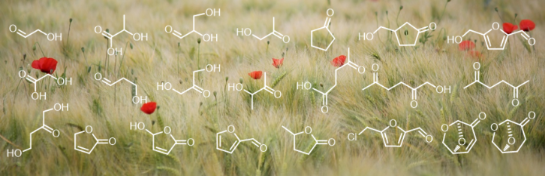
Figure 1: C2–C6 biobased carbonyl building blocks.

Scheme 1: Proposed (2 + 2) route to glycolaldehyde and glycolic acid from erythritol by Cu/AC catalyst (AC = ...

Scheme 2: Reductive amination of GCA.

Scheme 3: N-Formylation of secondary amines by reaction with GCA.

Scheme 4: Synthesis and conversion of hydroxy acetals to cyclic acetals.

Scheme 5: Synthesis of 3-(indol-3-yl)-2,3-dihydrofurans via three-component reaction of glycolaldehyde, indol...

Scheme 6: BiCl3-catalyzed synthesis of benzo[a]carbazoles from 2-arylindoles and α-bromoacetaldehyde ethylene...

Scheme 7: Cu/NCNSs-based conversion of glycerol to glycolic acid and other short biobased acids.

Scheme 8: E. coli-based biotransformation of C1 source molecules (CH4, CO2 and CO) towards C2 glycolic acid.

Scheme 9: N-Formylation of amines with C2 (a) or C3 (b) biomass-based feedstocks.

Scheme 10: Methods for the formation of propanoic acid (PA) from lactic acid (LA).

Scheme 11: Co-polymerization of biobased lactic acid and glycolic acid via a bicatalytic process.

Scheme 12: Oxidation of α-hydroxy acids by tetrachloroaurate(III) in acetic acid–sodium acetate buffer medium.

Figure 2: Selective catalytic pathways for the conversion of lactic acid (LA).

Scheme 13: Synthesis of 1,3-PDO via cross-aldol reaction between formaldehyde and acetaldehyde to 3-hydroxypro...

Scheme 14: Hydrothermal conversion of 1,3-dihydroxy-2-propane and 2,3-dihydroxypropanal to methylglyoxal.

Scheme 15: FLS-catalyzed formose reaction to synthesize GA and DHA.

Scheme 16: GCA and DHA oxidation products of glycerol and isomerization of GCA to DHA under flow conditions us...

Scheme 17: Acid-catalyzed reactions of DHA with alcohols.

Scheme 18: Synthesis of dihydroxyacetone phosphate from dihydroxyacetone.

Scheme 19: Bifunctional acid–base catalyst DHA conversion into lactic acid via pyruvaldehyde or fructose forma...

Scheme 20: Catalytic one-pot synthesis of GA and co-synthesis of formamides and formates from DHA.

Scheme 21: (a) Synthesis of furan derivatives and (b) synthesis of thiophene derivative by cascade [3 + 2] ann...

Scheme 22: Brønsted acidic ionic liquid catalyzed synthesis of benzo[a]carbazole from renewable acetol and 2-p...

Scheme 23: Asymmetric hydrogenation of α-hydroxy ketones to 1,2-diols.

Scheme 24: Synthesis of novel 6-(substituted benzylidene)-2-methylthiazolo [2,3-b]oxazol-5(6H)-one from 1-hydr...

Scheme 25: ʟ-Proline-catalyzed synthesis of anti-diols from hydroxyacetone and aldehydes.

Scheme 26: C–C-bond-formation reactions of a biomass-based feedstock aromatic aldehyde (C5) and hydroxyacetone...

Scheme 27: Ethanol upgrading to C4 bulk chemicals via the thiamine (VB1)-catalyzed acetoin condensation.

Scheme 28: One-pot sequential chemoenzymatic synthesis of 2-aminobutane-1,4-diol and 1,2,4-butanetriol via 1,4...

Scheme 29: Synthesis of 1,4-dihydroxybutan-2-one by microbial transformation.

Scheme 30: Conversion of polyols by [neocuproine)Pd(OAc)]2(OTf)2] to α-hydroxy ketones.

Scheme 31: Chemoselective oxidation of alcohols with chiral palladium-based catalyst 2.

Scheme 32: Electrochemical transformation of furfural to 5-hydroxy-2(5H)-furanone (HFO).

Scheme 33: Selective hydrodeoxygenation of HFO and oxidation to γ-butyrolactone (GBL).

Scheme 34: Photosensitized oxygenation of furan towards HFO via ozonide intermediates.

Scheme 35: Conversion of furfural to HFO and MAN by using mesoporous carbon nitride (SGCN) as photocatalyst.

Scheme 36: Synthesis of HFO from furan derivatives.

Scheme 37: Photooxidation of furfural to 5-hydroxy-2(5H)-furanone (HFO).

Scheme 38: Synthesis of Friedel–Crafts indole adduct from HFO.

Scheme 39: Conversion of HFO to α,γ-substituted chiral γ-lactones.

Scheme 40: Tautomeric transformation of HFO to formylacrylic acid.

Scheme 41: Hydrolysis of HFO to succinic acid in aqueous solution.

Scheme 42: Substitution and condensation reactions of 5-hydroxy-2(5H)-furanone (HFO).

Scheme 43: (a) Conversion of HFO towards valuable C4 chemicals and (b) anodic oxidation of 5-hydroxy-2(5H)-fur...

Figure 3: Conversion of HFO towards other natural and synthetic substances.

Scheme 44: Conversion of furfural to maleic anhydride (reaction a: VOx/Al2O3; reaction b: VPO).

Scheme 45: Conversion of furfural into succinic acid.

Scheme 46: Electro‑, photo‑, and biocatalysis for one-pot selective conversions of furfural into C4 chemicals.

Scheme 47: Production route of furfural from hemicellulose.

Scheme 48: Mechanism for xylose dehydration to furfural through a choline xyloside intermediate.

Scheme 49: Conversion of furfural to furfuryl alcohol and its derivatives.

Scheme 50: Conversion of furfural to furfuryl alcohol and 3-(2-furyl)acrolein.

Scheme 51: The aerobic oxidative condensation of biomass-derived furfural and linear alcohols.

Scheme 52: The single-step synthesis of 2-pentanone from furfural.

Scheme 53: Electrocatalytic coupling reaction of furfural and levulinic acid.

Scheme 54: Conversion of furfural to m-xylylenediamine.

Scheme 55: Conversion of furfural to tetrahydrofuran-derived amines.

Scheme 56: Formation of trans-4,5-diamino-cyclopent-2-enones from furfural.

Scheme 57: Production of pyrrole and proline from furfural.

Scheme 58: Synthesis of 1‑(trifluoromethyl)-8-oxabicyclo[3.2.1]oct-3-en-2-ones from furfural.

Scheme 59: Conversion of furfural to furfural-derived diacids.

Scheme 60: A telescope protocol derived from furfural and glycerol.

Scheme 61: A tandem cyclization of furfural and 5,5-dimethyl-1,3-cyclohexanedione.

Scheme 62: A Ugi four-component reaction to construct furfural-based polyamides.

Scheme 63: One-pot synthesis of γ-acyloxy-Cy7 from furfural.

Scheme 64: Dimerization–Piancatelli sequence toward humins precursors from furfural.

Scheme 65: Conversion of furfural to CPN.

Scheme 66: Synthesis of jet fuels range cycloalkanes from CPN and lignin-derived vanillin.

Scheme 67: Solar-energy-driven synthesis of high-density biofuels from CPN.

Scheme 68: Reductive amination of CPN to cyclopentylamine.

Scheme 69: Asymmetric hydrogenation of C=O bonds of exocyclic α,β-unsaturated cyclopentanones.

Scheme 70: Preparation of levulinic acid via the C5 route (route a) or C6 route (routes b1 and b2).

Scheme 71: Mechanism of the rehydration of HMF to levulinic acid and formic acid.

Scheme 72: Important levulinic acid-derived chemicals.

Scheme 73: Direct conversion of levulinic acid to pentanoic acid.

Scheme 74: Catalytic aerobic oxidation of levulinic acid to citramalic acid.

Scheme 75: Conversion of levulinic acid to 1,4-pentanediol (a) see ref. [236]; b) see ref. [237]; c) see ref. [238]; d) see r...

Scheme 76: Selective production of 2-butanol through hydrogenolysis of levulinic acid.

Scheme 77: General reaction pathways proposed for the formation of 5MPs from levulinic acid.

Scheme 78: Selective reductive amination of levulinic acid to N-substituted pyrroles.

Scheme 79: Reductive amination of levulinic acid to chiral pyrrolidinone.

Scheme 80: Reductive amination of levulinic acid to non-natural chiral γ-amino acid.

Scheme 81: Nitrogen-containing chemicals derived from levulinic acid.

Scheme 82: Preparation of GVL from levulinic acid by dehydration and hydrogenation.

Scheme 83: Ruthenium-catalyzed levulinic acid to chiral γ-valerolactone.

Scheme 84: Catalytic asymmetric hydrogenation of levulinic acid to chiral GVL.

Scheme 85: Three steps synthesis of ε-caprolactam from GVL.

Scheme 86: Multistep synthesis of nylon 6,6 from GVL.

Scheme 87: Preparation of MeGVL by α-alkylation of GVL.

Scheme 88: Ring-opening polymerization of five-membered lactones.

Scheme 89: Synthesis of GVL-based ionic liquids.

Scheme 90: Preparation of butene isomers from GVL under Lewis acid conditions.

Scheme 91: Construction of C5–C12 fuels from GVL over nano-HZSM-5 catalysts.

Scheme 92: Preparation of alkyl valerate from GVL via ring opening/reduction/esterification sequence.

Scheme 93: Construction of 4-acyloxypentanoic acids from GVL.

Scheme 94: Synthesis of 1,4-pentanediol (PDO) from GVL.

Scheme 95: Construction of novel cyclic hemiketal platforms via self-Claisen condensation of GVL.

Scheme 96: Copper-catalyzed lactamization of GVL.

Figure 4: Main scaffolds obtained from HMF.

Scheme 97: Biginelli reactions towards HMF-containing dihydropyrimidinones.

Scheme 98: Hantzsch dihydropyridine synthesis involving HMF.

Scheme 99: The Kabachnik–Fields reaction involving HMF.

Scheme 100: Construction of oxazolidinone from HMF.

Scheme 101: Construction of rhodamine-furan hybrids from HMF.

Scheme 102: A Groebke–Blackburn–Bienaymé reaction involving HMF.

Scheme 103: HMF-containing benzodiazepines by [4 + 2 + 1] cycloadditions.

Scheme 104: Synthesis of fluorinated analogues of α-aryl ketones.

Scheme 105: Synthesis of HMF derived disubstituted γ-butyrolactone.

Scheme 106: Functionalized aromatics from furfural and HMF.

Scheme 107: Diels–Alder adducts from HMF or furfural with N-methylmaleimide.

Scheme 108: Pathway of the one-pot conversion of HMF into phthalic anhydride.

Scheme 109: Photocatalyzed preparation of humins (L-H) from HMF mixed with spoiled HMF residues (LMW-H) and fur...

Scheme 110: Asymmetric dipolar cycloadditions on HMF.

Scheme 111: Dipolar cycloadditions of HMF based nitrones to 3,4- and 3,5-substituted isoxazolidines.

Scheme 112: Production of δ-lactone-fused cyclopenten-2-ones from HMF.

Scheme 113: Aza-Piancatelli access to aza-spirocycles from HMF-derived intermediates.

Scheme 114: Cross-condensation of furfural, acetone and HMF into C13, C14 and C15 products.

Scheme 115: Base-catalyzed aldol condensation/dehydration sequences from HMF.

Scheme 116: Condensation of HMF and active methylene nitrile.

Scheme 117: MBH reactions involving HMF.

Scheme 118: Synthesis of HMF-derived ionic liquids.

Scheme 119: Reductive amination/enzymatic acylation sequence towards HMF-based surfactants.

Scheme 120: The formation of 5-chloromethylfurfural (CMF).

Scheme 121: Conversion of CMF to HMF, levulinic acid, and alkyl levulinates.

Scheme 122: Conversion of CMF to CMFCC and FDCC.

Scheme 123: Conversion of CMF to BHMF.

Scheme 124: Conversion of CMF to DMF.

Scheme 125: CMF chlorine atom substitutions toward HMF ethers and esters.

Scheme 126: Introduction of carbon nucleophiles in CMF.

Scheme 127: NHC-catalyzed remote enantioselective Mannich-type reactions of CMF.

Scheme 128: Conversion of CMF to promising biomass-derived dyes.

Scheme 129: Radical transformation of CMF with styrenes.

Scheme 130: Synthesis of natural herbicide δ-aminolevulinic acid from CMF.

Scheme 131: Four step synthesis of the drug ranitidine from CMF.

Scheme 132: Pd/CO2 cooperative catalysis for the production of HHD and HXD.

Scheme 133: Different ruthenium (Ru) catalysts for the ring-opening of 5-HMF to HHD.

Scheme 134: Proposed pathways for preparing HXD from HMF.

Scheme 135: MCP formation and uses.

Scheme 136: Cu(I)-catalyzed highly selective oxidation of HHD to 2,5-dioxohexanal.

Scheme 137: Synthesis of N‑substituted 3‑hydroxypyridinium salts from 2,5-dioxohexanal.

Scheme 138: Ru catalyzed hydrogenations of HHD to 1,2,5-hexanetriol (a) see ref. [396]; b) see ref. [397]).

Scheme 139: Aviation fuel range quadricyclanes produced by HXD.

Scheme 140: Synthesis of HDGK from HXD and glycerol as a chain extender.

Scheme 141: Synthesis of serinol pyrrole from HXD and serinol.

Scheme 142: Synthesis of pyrroles from HXD and nitroarenes.

Scheme 143: Two-step production of PX from cellulose via HXD.

Scheme 144: Preparation of HCPN from HMF via hydrogenation and ring rearrangement.

Scheme 145: Suggested pathways from HMF to HCPN.

Scheme 146: α-Alkylation of HCPN with ethylene gas.

Scheme 147: Synthesis of 3-(hydroxymethyl)cyclopentylamine from HMF via reductive amination of HCPN.

Scheme 148: Production of LGO and Cyrene® from biomass.

Scheme 149: Synthesis of HBO from LGO and other applications.

Scheme 150: Construction of m-Cyrene® homopolymer.

Scheme 151: Conversion of Cyrene® to THFDM and 1,6-hexanediol.

Scheme 152: RAFT co-polymerization of LGO and butadienes.

Scheme 153: Polycondensation of HO-LGOL and diols with dimethyl adipate.

Scheme 154: Self-condensation of Cyrene® and Claisen–Schmidt reactions.

Scheme 155: Synthesis of 5-amino-2-(hydroxymethyl)tetrahydropyran from Cyrene®.
The application of desymmetric enantioselective reduction of cyclic 1,3-dicarbonyl compounds in the total synthesis of terpenoid and alkaloid natural products
- Dong-Xing Tan and
- Fu-She Han
Beilstein J. Org. Chem. 2025, 21, 2085–2102, doi:10.3762/bjoc.21.164
- rings, followed by dehydration to afford pentacyclic product 125. Finally, a five-step operation including the 1,2-addition of 125 with iPrLi, PCC oxidation of the resulting tertiary alcohol, oxidative aromatization and in situ neutralization/oxidation, acid-mediated 1,6-addition with H2O, and

Graphical Abstract

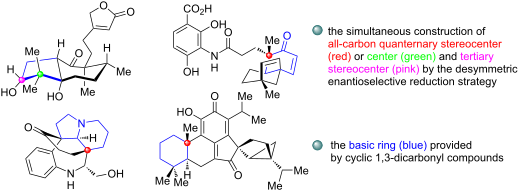
Figure 1: Several representative terpenoid and alkaloid natural products synthesized by applying desymmetric ...
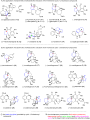
Figure 2: Selected terpenoid and alkaloid natural products synthesized by applying desymmetric enantioselecti...

Scheme 1: The total synthesis of (+)-aplysiasecosterol A (6) by Li [14].

Scheme 2: The total synthesis of (−)-cyrneine A by Han [31].

Scheme 3: The total syntheses of three cyrneine diterpenoids by Han [31,32].

Scheme 4: The total synthesis of (−)-hamigeran B and (−)-4-bromohamigeran B by Han [51].

Scheme 5: The total synthesis of (+)-randainin D by Baudoin [53].
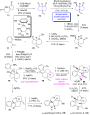
Scheme 6: The total synthesis of (−)-hunterine A and (−)-aspidospermidine by Stoltz [58].

Scheme 7: The total synthesis of (+)-toxicodenane A by Han [65,66].
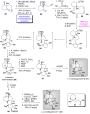
Scheme 8: The formal total synthesis of (−)-conidiogeone B and total synthesis of (−)-conidiogeone F by Lee a...

Scheme 9: The total syntheses of four conidiogenones natural products by Lee and Han [72].

Scheme 10: The total synthesis of (−)-platensilin by Lou and Xu [82].

Scheme 11: The total synthesis of (−)-platencin and (−)-platensimycin by Lou and Xu [82].

Scheme 12: The total synthesis of (+)-isochamaecydin and (+)-chamaecydin by Han [86].
Chiral phosphoric acid-catalyzed asymmetric synthesis of helically chiral, planarly chiral and inherently chiral molecules
- Wei Liu and
- Xiaoyu Yang
Beilstein J. Org. Chem. 2025, 21, 1864–1889, doi:10.3762/bjoc.21.145
- aromatization process, in 2023 our group reported the asymmetric synthesis of various azahelicenes 8 from polycyclic arylamines 5, dienamides 6 and aldehydes 7 (Scheme 2) [13]. This methodology demonstrates a broad substrate scope, enabling the efficient asymmetric synthesis of diverse aza[5]helicenes 8a–d and
- dehydrogenation. Almost simultaneously, the Li group independently reported the asymmetric synthesis of chiral quinohelicenes using a similar sequential asymmetric Povarov reaction and oxidative aromatization strategy [14]. In their study, they employed 3-vinylindoles 10 in the CPA-catalyzed asymmetric Povarov
- reaction with polycyclic arylamines 9 and various aromatic aldehydes 11, resulting in a range of quinoline-containing azahelicenes 12 with moderate yield and excellent enantioselectivity after DDQ-mediated oxidative aromatization (Scheme 3). Notably, they not only expanded the substrate scope to encompass

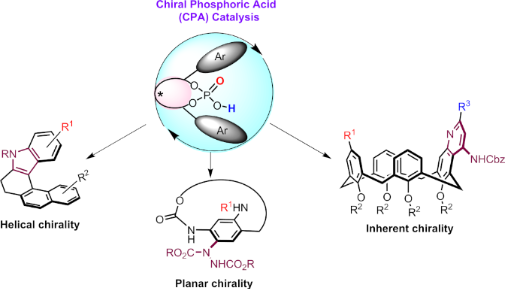
Graphical Abstract

Figure 1: General structure of CPAs and selected CPAs with various chiral scaffolds.
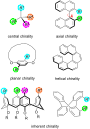
Figure 2: Representative elements of molecular chirality.
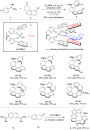
Scheme 1: CPA-catalyzed asymmetric synthesis of azahelicenes via Fischer indole synthesis.
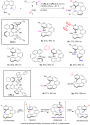
Scheme 2: CPA-catalyzed asymmetric synthesis of azahelicenes via sequential Povarov reaction and oxidative ar...

Scheme 3: CPA-catalyzed asymmetric synthesis of azahelicenes via sequential Povarov reaction involving 3-viny...
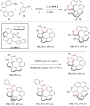
Scheme 4: CPA-catalyzed asymmetric synthesis of heterohelicenes via sequential Povarov reaction involving 2-v...

Scheme 5: Diverse enantioselective synthesis of hetero[7]helicenes via a CPA-catalyzed double annulation stra...
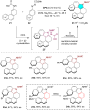
Scheme 6: CPA-catalyzed asymmetric synthesis of indolohelicenoids through enantioselective cycloaddition and ...

Scheme 7: Kinetic resolution of helical polycyclic phenols via CPA-catalyzed enantioselective aminative dearo...

Scheme 8: Kinetic resolution of azahelicenes via CPA-catalyzed transfer hydrogenation.

Scheme 9: Asymmetric synthesis of planarly chiral macrocycles via CPA-catalyzed electrophilic aromatic aminat...

Scheme 10: Enantioselective synthesis of planarly chiral macrocycles via CPA-catalyzed macrocyclization.
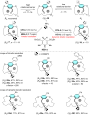
Scheme 11: (Dynamic) kinetic resolution of planarly chiral paracyclophanes via CPA-catalyzed asymmetric reduct...

Scheme 12: Kinetic resolution of macrocyclic paracyclophanes through CPA/Bi-catalyzed asymmetric allylation.

Scheme 13: Enantioselective synthesis of planarly chiral macrocycles via CPA-catalyzed coupling of carboxylic ...
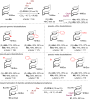
Scheme 14: Kinetic resolution of substituted amido[2.2]paracyclophanes via CPA-catalyzed asymmetric electrophi...
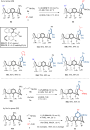
Scheme 15: Enantioselective synthesis of inherently chiral calix[4]arenes via sequential CPA-catalyzed Povarov...

Scheme 16: Asymmetric synthesis of inherently chiral calix[4]arenes via CPA-catalyzed aminative desymmetrizati...

Scheme 17: Asymmetric synthesis of chiral heterocalix[4]arenes via CPA-catalyzed intramolecular SNAr reaction.
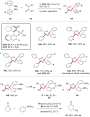
Scheme 18: Enantioselective synthesis of inherently chiral DDDs via CPA-catalyzed cyclocondensation.
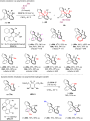
Scheme 19: Asymmetric synthesis of saddle-shaped inherently chiral 9,10-dihydrotribenzoazocines via CPA-cataly...
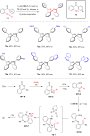
Scheme 20: Enantioselective synthesis of inherently chiral saddle-shaped dibenzo[b,f][1,5]diazocines via CPA-c...
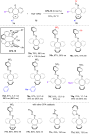
Scheme 21: Enantioselective synthesis of inherent chiral 7-membered tribenzocycloheptene oximes via CPA-cataly...
Fe-catalyzed efficient synthesis of 2,4- and 4-substituted quinolines via C(sp2)–C(sp2) bond scission of styrenes
- Prafull A. Jagtap,
- Manish M. Petkar,
- Vaishnavi R. Sawant and
- Bhalchandra M. Bhanage
Beilstein J. Org. Chem. 2025, 21, 1799–1807, doi:10.3762/bjoc.21.142
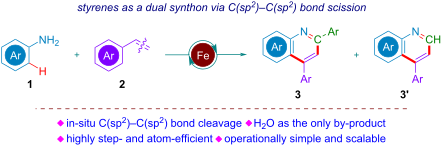
- formation of intermediates III and III′. Subsequent electrophilic cyclization/C–H annulation of the aromatic amine, followed by aromatization, afford intermediates V and V′. The oxidative dehydrogenation of intermediates V and V′ then results in the formation of products 3a and 3a′ and the regeneration of

Graphical Abstract

Figure 1: Representative examples of bioactive quinolines.

Scheme 1: C(sp2)–C(sp2) bond-cleavage strategies for quinoline synthesis.
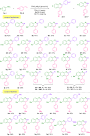
Scheme 2: Substrate scope of various arylamines and styrenes.

Scheme 3: Scale-up studies for the synthesis of antifungal agents.

Scheme 4: Mechanistic investigations.

Scheme 5: Plausible reaction mechanism.
Catalytic asymmetric reactions of isocyanides for constructing non-central chirality
- Jia-Yu Liao
Beilstein J. Org. Chem. 2025, 21, 1648–1660, doi:10.3762/bjoc.21.129

- lactones with carbon nucleophiles. The success lies in the tandem enantioselective ring-opening of lactones with α-acidic isocyanides, followed by a rapid cyclization driven by aromatization, overcoming the long-standing stereochemical leakage problem caused by the undesired lactol formation [45
- with both axial and central chirality, followed by 2) ring-strain and aromatization-driven elimination, which elucidating the observed unusual torsional strain-independent reactivity. In addition, products bearing a tert-butyl ester group were smoothly converted into structurally novel axially chiral

Graphical Abstract

Figure 1: a) Common types of chirality. b) Representative functional molecules bearing non-central chirality.

Scheme 1: Construction of planar chirality.

Scheme 2: Construction of axial chirality.
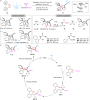
Scheme 3: Construction of inherent chirality.

Scheme 4: Construction of helical chirality.
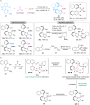
Scheme 5: CPA-catalyzed enantioselective Groebke–Blackburn–Bienaymé reaction.

Scheme 6: Construction of axially chiral 3-arylpyrroles via de novo pyrrole formation.

Scheme 7: Synthesis of atropoisomeric 3-arylpyrroles via central-to-axial chirality transfer.
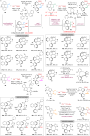
Scheme 8: Dynamic kinetic resolution of bridged biaryls with α-acidic isocyanides.
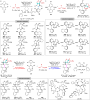
Scheme 9: Desymmetrization of prochiral compounds with α-acidic isocyanides.
Advances in nitrogen-containing helicenes: synthesis, chiroptical properties, and optoelectronic applications
- Meng Qiu,
- Jing Du,
- Nai-Te Yao,
- Xin-Yue Wang and
- Han-Yuan Gong
Beilstein J. Org. Chem. 2025, 21, 1422–1453, doi:10.3762/bjoc.21.106
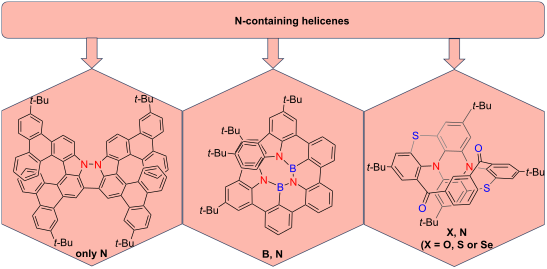
- , enantioselective synthetic approach toward azahelicenes via a chiral phosphoric acid-catalyzed multicomponent Povarov reaction or oxidative aromatization [32]. Among the synthesized compounds, compound 19 displayed dual absorption bands at 260 and 325 nm and emission peaks at 420 and 440 nm, which red-shifted to

High-pressure activation for the solvent- and catalyst-free syntheses of heterocycles, pharmaceuticals and esters
- Kelsey Plasse,
- Valerie Wright,
- Guoshu Xie,
- R. Bernadett Vlocskó,
- Alexander Lazarev and
- Béla Török
Beilstein J. Org. Chem. 2025, 21, 1374–1387, doi:10.3762/bjoc.21.102
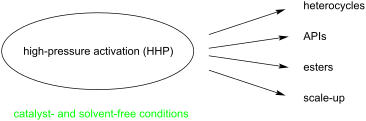
- the water that forms as a by-product during the cyclization–aromatization sequence. The gas chromatograms of the three crude products appeared essentially 100% pure, neither starting material nor other by-products were observed. In order to explain the outcome of the above reactions, the reaction

Graphical Abstract

Figure 1: Simplified schematic rendering of a high hydrostatic pressure reactor.

Scheme 1: High pressure-initiated synthesis of 1,3-dihydrobenzimidazoles 3a–d. The yields are GC yields and t...

Figure 2: Illustration of the cyclization reaction between chalcone (4) and 3-(trifluoromethyl)phenylhydrazin...

Scheme 2: High pressure-initiated catalyst- and solvent-free synthesis of pyrazoles 6a–c from chalcone (4) an...

Figure 3: Schematic representation of the cycling experiments: the major variables are the applied pressure, ...

Scheme 3: High pressure-initiated synthesis of the active pharmaceutical ingredients in Tylenol® and Aspirin®...

Scheme 4: High pressure-initiated esterification of alcohols 12a–g in a catalyst- and additional solvent-free...

Scheme 5: High pressure-initiated large scale syntheses of N-aryl- and N-alkylpyrroles at about 100 g scale.
Recent advances in amidyl radical-mediated photocatalytic direct intermolecular hydrogen atom transfer
- Hao-Sen Wang,
- Lin Li,
- Xin Chen,
- Jian-Li Wu,
- Kai Sun,
- Xiao-Lan Chen,
- Ling-Bo Qu and
- Bing Yu
Beilstein J. Org. Chem. 2025, 21, 1306–1323, doi:10.3762/bjoc.21.100
- radical anion 15 was reduced by the photocatalyst Ir(Fppy)3 from the reagent 11. The resulting anion 14 underwent aromatization to release a nitrile anion, subsequently yielding product 12. This strategy also successfully produced products 16 and 17 with yields of 85% and 56%, respectively, from

Graphical Abstract

Figure 1: (a) BDE of C–H. (b) Direct functionalization of C–H catalyzed by transition-metal. (c) Direct funct...
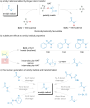
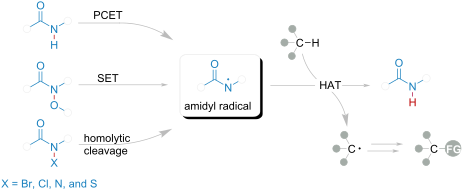
Figure 2: (a) Amidyl radical-enabled hydrogen atom transfer. (b) Substituent effects to amidyl radical proper...

Figure 3: Representative photocatalysts discussed in this review.

Scheme 1: Alkylation of C(sp3)–H catalyzed by amidyl radical under visible light.

Scheme 2: Direct heteroarylation of C(sp3)–H catalyzed by amidyl radical under visible light.

Scheme 3: Alkylation of C(sp3)–H catalyzed by amidyl radical and metal-free photocatalyst under visible light....

Scheme 4: Alkylation of C(sp3)–H, Si–H, and Ge–H catalyzed by amidyl radical under visible light.

Scheme 5: Direct heteroarylation of C(sp3)–H catalyzed by synergistic promotion of amidyl radical and photoca...

Scheme 6: Direct B–H functionalization of icosahedral carboranes catalyzed by amidyl radical under visible li...

Scheme 7: Nucleophilic amination of C(sp3)–H enabled by amidyl radical under visible light.
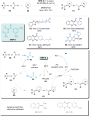
Scheme 8: Direct heteroarylation of C(sp3)–H and C(sp3)–H without the presence of strong bases, acids, or oxi...

Scheme 9: Xanthylation of C(sp3)–H addressed by amidyl radical under visible light.

Scheme 10: Xanthylation of C(sp3)–H in polyolefins addressed by amidyl radical under visible light.

Scheme 11: Site-selective C(sp3)–H bromination implemented by amidyl radical under visible light.

Scheme 12: Site-selective chlorination of C(sp3)–H in natural products implemented by amidyl radical under vis...
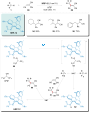
Scheme 13: Alkylation of C(sp3)–H catalyzed by amidyl radical photocatalyst under visible light.
Recent advances in oxidative radical difunctionalization of N-arylacrylamides enabled by carbon radical reagents
- Jiangfei Chen,
- Yi-Lin Qu,
- Ming Yuan,
- Xiang-Mei Wu,
- Heng-Pei Jiang,
- Ying Fu and
- Shengrong Guo
Beilstein J. Org. Chem. 2025, 21, 1207–1271, doi:10.3762/bjoc.21.98
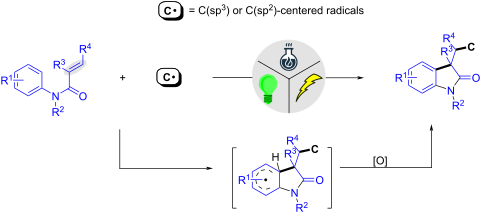
- intermediate 12. Subsequent intramolecular cyclization and oxidative aromatization lead to the final isoxazoline-featured oxindole 9. In 2017, Li’s group reported an oxidative divergent bicyclization of 1,n-enynes through α-C(sp3)–H functionalization of alkyl nitriles using a Sc(OTf)3 and Ag2O system (Scheme 7

Graphical Abstract

Scheme 1: DTBP-mediated oxidative alkylarylation of activated alkenes.

Scheme 2: Iron-catalyzed oxidative 1,2-alkylarylation.

Scheme 3: Possible mechanism for the iron-catalyzed oxidative 1,2-alkylation of activated alkenes.

Scheme 4: A metal-free strategy for synthesizing 3,3-disubstituted oxindoles.

Scheme 5: Iminoxyl radical-promoted cascade oxyalkylation/alkylarylation of alkenes.

Scheme 6: Proposed mechanism for the iminoxyl radical-promoted cascade oxyalkylation/alkylarylation of alkene...

Scheme 7: Bicyclization of 1,n-enynes with alkyl nitriles.

Scheme 8: Possible reaction mechanism for the bicyclization of 1,n-enynes with alkyl nitriles.

Scheme 9: Radical cyclization of N-arylacrylamides with isocyanides.

Scheme 10: Plausible mechanism for the radical cyclization of N-arylacrylamides with isocyanides.
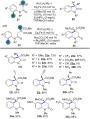
Scheme 11: Electrochemical dehydrogenative cyclization of 1,3-dicarbonyl compounds.

Scheme 12: Plausible mechanism for the dehydrogenative cyclization of 1,3-dicarbonyl compounds.

Scheme 13: Photocatalyzed cyclization of N-arylacrylamide and N,N-dimethylaniline.

Scheme 14: Proposed mechanism for the photocatalyzed cyclization of N-arylacrylamides and N,N-dimethylanilines....

Scheme 15: Electrochemical monofluoroalkylation cyclization of N-arylacrylamides with dimethyl 2-fluoromalonat...
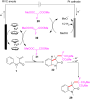
Scheme 16: Proposed mechanism for the electrochemical radical cyclization of N-arylacrylamides with dimethyl 2...

Scheme 17: Photoelectrocatalytic carbocyclization of unactivated alkenes using simple malonates.

Scheme 18: Plausible mechanism for the photoelectrocatalytic carbocyclization of unactivated alkenes with simp...

Scheme 19: Bromide-catalyzed electrochemical trifluoromethylation/cyclization of N-arylacrylamides.

Scheme 20: Proposed mechanism for the electrochemical trifluoromethylation/cyclization of N-arylacrylamides.

Scheme 21: Visible light-mediated trifluoromethylarylation of N-arylacrylamides.

Scheme 22: Plausible reaction mechanism for the visible light-mediated trifluoromethylarylation of N-arylacryl...

Scheme 23: Electrochemical difluoroethylation cyclization of N-arylacrylamides with sodium difluoroethylsulfin...

Scheme 24: Electrochemical difluoroethylation cyclization of N-methyacryloyl-N-alkylbenzamides with sodium dif...

Scheme 25: Photoredox-catalyzed radical aryldifluoromethylation of N-arylacrylamides with S-(difluoromethyl)su...

Scheme 26: Proposed mechanism for the photoredox-catalyzed radical aryldifluoromethylation of N-arylacrylamide...

Scheme 27: Visible-light-induced domino difluoroalkylation/cyclization of N-cyanamide alkenes.

Scheme 28: Proposed mechanism of photoredox-catalyzed radical domino difluoroalkylation/cyclization of N-cyana...

Scheme 29: Palladium-catalyzed oxidative difunctionalization of alkenes.

Scheme 30: Two possible mechanisms of palladium-catalyzed oxidative difunctionalization.

Scheme 31: Silver-catalyzed oxidative 1,2-alkyletherification of unactivated alkenes with α-bromoalkylcarbonyl...

Scheme 32: Photochemical radical cascade cyclization of dienes.

Scheme 33: Proposed mechanism for the photochemical radical cascade 6-endo cyclization of dienes with α-carbon...

Scheme 34: Photocatalyzed radical coupling/cyclization of N-arylacrylamides and.

Scheme 35: Photocatalyzed radical-type couplings/cyclization of N-arylacrylamides with sulfoxonium ylides.

Scheme 36: Possible mechanism of visible-light-induced radical-type couplings/cyclization of N-arylacrylamides...
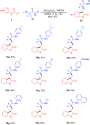
Scheme 37: Visible-light-promoted difluoroalkylated oxindoles systhesis via EDA complexes.

Scheme 38: Possible mechanism for the visible-light-promoted radical cyclization of N-arylacrylamides with bro...

Scheme 39: A dicumyl peroxide-initiated radical cascade reaction of N-arylacrylamide with DCM.

Scheme 40: Possible mechanism of radical cyclization of N-arylacrylamides with DCM.

Scheme 41: An AIBN-mediated radical cascade reaction of N-arylacrylamides with perfluoroalkyl iodides.

Scheme 42: Possible mechanism for the reaction with perfluoroalkyl iodides.

Scheme 43: Photoinduced palladium-catalyzed radical annulation of N-arylacrylamides with alkyl halides.

Scheme 44: Radical alkylation/cyclization of N-Alkyl-N-methacryloylbenzamides with alkyl halides.

Scheme 45: Possible mechanism for the alkylation/cyclization with unactivated alkyl chlorides.
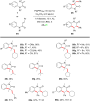
Scheme 46: Visible-light-driven palladium-catalyzed radical cascade cyclization of N-arylacrylamides with unac...

Scheme 47: NHC-catalyzed radical cascade cyclization of N-arylacrylamides with alkyl bromides.

Scheme 48: Possible mechanism of NHC-catalyzed radical cascade cyclization.

Scheme 49: Electrochemically mediated radical cyclization reaction of N-arylacrylamides with freon-type methan...

Scheme 50: Proposed mechanistic pathway of electrochemically induced radical cyclization reaction.

Scheme 51: Redox-neutral photoinduced radical cascade cylization of N-arylacrylamides with unactivated alkyl c...
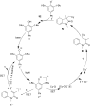
Scheme 52: Proposed mechanistic hypothesis of redox-neutral radical cascade cyclization.

Scheme 53: Thiol-mediated photochemical radical cascade cylization of N-arylacrylamides with aryl halides.

Scheme 54: Proposed possible mechanism of thiol-mediated photochemical radical cascade cyclization.

Scheme 55: Visible-light-induced radical cascade bromocyclization of N-arylacrylamides with NBS.

Scheme 56: Possible mechanism of visible-light-induced radical cascade cyclization.

Scheme 57: Decarboxylation/radical C–H functionalization by visible-light photoredox catalysis.

Scheme 58: Plausible mechanism of visible-light photoredox-catalyzed radical cascade cyclization.

Scheme 59: Visible-light-promoted tandem radical cyclization of N-arylacrylamides with N-(acyloxy)phthalimides....

Scheme 60: Plausible mechanism for the tandem radical cyclization reaction.

Scheme 61: Visible-light-induced aerobic radical cascade alkylation/cyclization of N-arylacrylamides with alde...

Scheme 62: Plausible mechanism for the aerobic radical alkylarylation of electron-deficient amides.

Scheme 63: Oxidative decarbonylative [3 + 2]/[5 + 2] annulation of N-arylacrylamide with vinyl acids.

Scheme 64: Plausible mechanism for the decarboxylative (3 + 2)/(5 + 2) annulation between N-arylacrylamides an...

Scheme 65: Rhenium-catalyzed alkylarylation of alkenes with PhI(O2CR)2.

Scheme 66: Plausible mechanism for the rhenium-catalyzed decarboxylative annulation of N-arylacrylamides with ...

Scheme 67: Visible-light-induced one-pot tandem reaction of N-arylacrylamides.

Scheme 68: Plausible mechanism for the visible-light-initiated tandem synthesis of difluoromethylated oxindole...

Scheme 69: Copper-catalyzed redox-neutral cyanoalkylarylation of activated alkenes with cyclobutanone oxime es...

Scheme 70: Plausible mechanism for the copper-catalyzed cyanoalkylarylation of activated alkenes.

Scheme 71: Photoinduced alkyl/aryl radical cascade for the synthesis of quaternary CF3-attached oxindoles.

Scheme 72: Plausible photoinduced electron-transfer (PET) mechanism.

Scheme 73: Photoinduced cerium-mediated decarboxylative alkylation cascade cyclization.

Scheme 74: Plausible reaction mechanism for the decarboxylative radical-cascade alkylation/cyclization.

Scheme 75: Metal-free oxidative tandem coupling of activated alkenes.

Scheme 76: Control experiments and possible mechanism for 1,2-carbonylarylation of alkenes with carbonyl C(sp2...

Scheme 77: Silver-catalyzed acyl-arylation of activated alkenes with α-oxocarboxylic acids.

Scheme 78: Proposed mechanism for the decarboxylative acylarylation of acrylamides.

Scheme 79: Visible-light-mediated tandem acylarylation of olefines with carboxylic acids.

Scheme 80: Proposed mechanism for the radical cascade cyclization with acyl radical via visible-light photored...

Scheme 81: Erythrosine B-catalyzed visible-light photoredox arylation-cyclization of N-arylacrylamides with ar...

Scheme 82: Electrochemical cobalt-catalyzed radical cyclization of N-arylacrylamides with arylhydrazines or po...

Scheme 83: Proposed mechanism of radical cascade cyclization via electrochemical cobalt catalysis.

Scheme 84: Copper-catalyzed oxidative tandem carbamoylation/cyclization of N-arylacrylamides with hydrazinecar...

Scheme 85: Proposed reaction mechanism for the radical cascade cyclization by copper catalysis.

Scheme 86: Visible-light-driven radical cascade cyclization reaction of N-arylacrylamides with α-keto acids.

Scheme 87: Proposed mechanism of visible-light-driven cascade cyclization reaction.

Scheme 88: Peroxide-induced radical carbonylation of N-(2-methylallyl)benzamides with methyl formate.

Scheme 89: Proposed cyclization mechanism of peroxide-induced radical carbonylation with N-(2-methylallyl)benz...

Scheme 90: Persulfate promoted carbamoylation of N-arylacrylamides and N-arylcinnamamides.

Scheme 91: Proposed mechanism for the persulfate promoted radical cascade cyclization reaction of N-arylacryla...
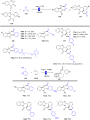
Scheme 92: Photocatalyzed carboacylation with N-arylpropiolamides/N-alkyl acrylamides.

Scheme 93: Plausible mechanism for the photoinduced carboacylation of N-arylpropiolamides/N-alkyl acrylamides.

Scheme 94: Electrochemical Fe-catalyzed radical cyclization with N-arylacrylamides.

Scheme 95: Plausible mechanism for the electrochemical Fe-catalysed radical cyclization of N-phenylacrylamide.

Scheme 96: Substrate scope of the selective functionalization of various α-ketoalkylsilyl peroxides with metha...

Scheme 97: Proposed reaction mechanism for the Fe-catalyzed reaction of alkylsilyl peroxides with methacrylami...

Scheme 98: EDA-complex mediated C(sp2)–C(sp3) cross-coupling of TTs and N-methyl-N-phenylmethacrylamides.

Scheme 99: Proposed mechanism for the synthesis of oxindoles via EDA complex.
A multicomponent reaction-initiated synthesis of imidazopyridine-fused isoquinolinones
- Ashutosh Nath,
- John Mark Awad and
- Wei Zhang
Beilstein J. Org. Chem. 2025, 21, 1161–1169, doi:10.3762/bjoc.21.92
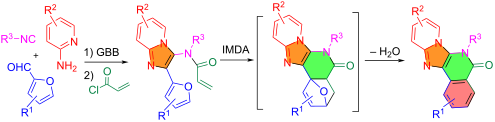
- (IMDA), and dehydrative re-aromatization reactions for the synthesis of imidazopyridine-fused isoquinolinones is developed. Gaussian computation analysis on the effect of the substitution groups for the IMDA reaction is performed to understand the reaction mechanism. Keywords: Groebke–Blackburn
- –Bienaymé (GBB); imidazopyridine; intramolecular Diels–Alder (IMDA); isoquinolinone; multicomponent reaction (MCR); re-aromatization; Introduction Multicomponent reactions (MCRs) have intrinsic green chemistry advantages of synthetic efficiency and operational simplicity. Performing post-condensational
- compounds [18]. Presented in this paper is a new synthetic route involving GBB, N-acylation and IMDA reactions for making intermediate III followed by dehydrative re-aromatization to give imidazopyridine-fused isoquinolinones C (Scheme 1C). Results and Discussion Following the reported procedures [10], the

Graphical Abstract

Figure 1: Bioactive compounds bearing imidazopyridine (red) and isoquinolinone-kind (blue) rings.

Scheme 1: GBB-initiated synthesis of imidazopyridine-fused isoquinolinones.

Scheme 2: GBB reaction and N-acylation for the preparation of imidazo[1,2-a]pyridines 6.
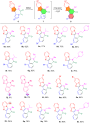
Scheme 3: Substrate scope for IMDA and dehydrative aromatization in making 8. Reaction conditions: 6 and AlCl3...
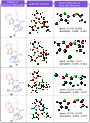
Figure 2: Transition state analysis of IMDA reactions for 6a, 6j, 6h and 6r.

Figure 3: Relative energy diagram for the synthesis of 8a from 6a.

Scheme 4: Using thiophene-2-carbaldehyde for the synthesis of 8t.

Scheme 5: Proposed mechanisms for IMDA reaction and dehydration re-aromatization.
Recent advances in synthetic approaches for bioactive cinnamic acid derivatives
- Betty A. Kustiana,
- Galuh Widiyarti and
- Teni Ernawati
Beilstein J. Org. Chem. 2025, 21, 1031–1086, doi:10.3762/bjoc.21.85

Graphical Abstract

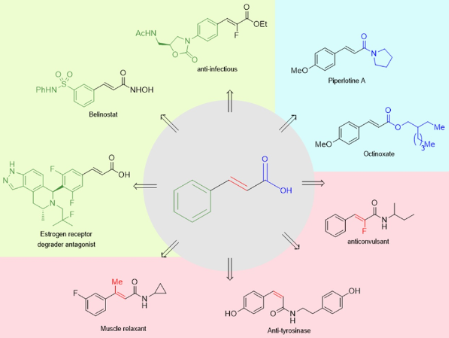
Figure 1: Biologically active cinnamic acid derivatives.
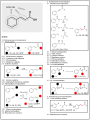
Scheme 1: General synthetic strategies for cinnamic acid derivatizations.

Scheme 2: Cinnamic acid coupling via isobutyl anhydride formation.
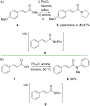
Scheme 3: Amidation reaction via O/N-pivaloyl activation.

Scheme 4: Cinnamic acid amidation using TCCA/PPh3 reagent.
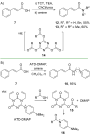
Scheme 5: Cinnamic acid amidation using triazine-based reagents.

Scheme 6: Cinnamic acid amidation using continuous flow mechanochemistry.

Scheme 7: Cinnamic acid amidation using COMU as coupling reagent.
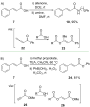
Scheme 8: Cinnamic acid amidation using allenone coupling reagent.

Scheme 9: Cinnamic acid amidation using 4-acetamidophenyl triflimide as reagent.

Scheme 10: Cinnamic acid amidation using methyltrimethoxysilane (MTM).

Scheme 11: Cinnamic acid amidation utilizing amine–borane reagent.

Scheme 12: Cinnamic acid amidation using TCCA/PPh3 reagent.

Scheme 13: Cinnamic acid amidation using PPh3/I2 reagent.

Scheme 14: Cinnamic acid amidation using PCl3 reagent.

Scheme 15: Cinnamic acid amidation utilizing pentafluoropyridine (PFP) as reagent.

Scheme 16: Cinnamic acid amidation using hypervalent iodine(III).

Scheme 17: Mechanochemical amidation using 1,1,2,2-tetrafluoroethyl-N,N-dimethylamine (TFEDMA) reagent.

Scheme 18: Methyl ester preparation using tris(2,4,6-trimethoxyphenyl)phosphine (TMPP).

Scheme 19: N-Trifluoromethyl amide preparation using isothiocyanate and AgF.

Scheme 20: POCl3-mediated amide coupling of carboxylic acid and DMF.
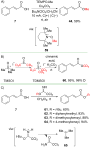
Scheme 21: O-Alkylation of cinnamic acid using alkylating agents.

Scheme 22: Glycoside preparation via Mitsunobu reaction.
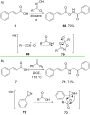
Scheme 23: O/N-Acylation via rearrangement reactions.
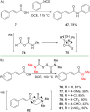
Scheme 24: Amidation reactions using sulfur-based alkylating agents.

Scheme 25: Amidation reaction catalyzed by Pd0 via C–N cleavage.

Scheme 26: Amidation reaction catalyzed by CuCl/PPh3.

Scheme 27: Cu(II) triflate-catalyzed N-difluoroethylimide synthesis.

Scheme 28: Cu/Selectfluor-catalyzed transamidation reaction.

Scheme 29: CuO–CaCO3-catalyzed amidation reaction.

Scheme 30: Ni-catalyzed reductive amidation.
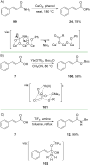
Scheme 31: Lewis acidic transition-metal-catalyzed O/N-acylations.

Scheme 32: Visible-light-promoted amidation of cinnamic acid.

Scheme 33: Sunlight/LED-promoted amidation of cinnamic acid.

Scheme 34: Organophotocatalyst-promoted N–O cleavage of Weinreb amides to synthesize primary amides.

Scheme 35: Cinnamamide synthesis through [Ir] photocatalyst-promoted C–N-bond cleavage of tertiary amines.

Scheme 36: Blue LED-promoted FeCl3-catalyzed reductive transamidation.

Scheme 37: FPyr/TCT-catalyzed amidation of cinnamic acid derivative 121.

Scheme 38: Cs2CO3/DMAP-mediated esterification.

Scheme 39: HBTM organocatalyzed atroposelective N-acylation.

Scheme 40: BH3-catalyzed N-acylation reactions.
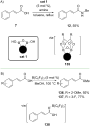
Scheme 41: Borane-catalyzed N-acylation reactions.

Scheme 42: Catalytic N-acylation reactions via H/F bonding activation.

Scheme 43: Brønsted base-catalyzed synthesis of cinnamic acid esters.

Scheme 44: DABCO/Fe3O4-catalyzed N-methyl amidation of cinnamic acid 122.
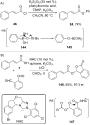
Scheme 45: Catalytic oxidation reactions of acylating agents.

Scheme 46: Preparation of cinnamamide-substituted benzocyclooctene using I(I)/I(III) catalysis.

Scheme 47: Pd-colloids-catalyzed oxidative esterification of cinnamyl alcohol.
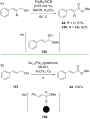
Scheme 48: Graphene-supported Pd/Au alloy-catalyzed oxidative esterification via hemiacetal intermediate.
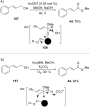
Scheme 49: Au-supported on A) carbon nanotubes (CNT) and B) on porous boron nitride (pBN) as catalyst for the ...

Scheme 50: Cr-based catalyzed oxidative esterification of cinnamyl alcohols with H2O2 as the oxidant.

Scheme 51: Co-based catalysts used for oxidative esterification of cinnamyl alcohol.
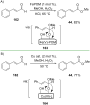
Scheme 52: Iron (A) and copper (B)-catalyzed oxidative esterification of cinnamaldehyde.

Scheme 53: NiHPMA-catalyzed oxidative esterification of cinnamaldehyde.
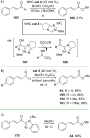
Scheme 54: Synthesis of cinammic acid esters through NHC-catalyzed oxidative esterification via intermolecular...
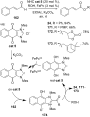
Scheme 55: Redox-active NHC-catalyzed esterification via intramolecular oxidation.

Scheme 56: Electrochemical conversion of cinnamaldehyde to methyl cinnamate.

Scheme 57: Bu4NI/TBHP-catalyzed synthesis of bisamides from cinnamalaldehyde N-tosylhydrazone.

Scheme 58: Zn/NC-950-catalyzed oxidative esterification of ketone 182.

Scheme 59: Ru-catalyzed oxidative carboxylation of terminal alkenes.
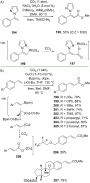
Scheme 60: Direct carboxylation of alkenes using CO2.
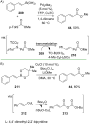
Scheme 61: Carboxylation of alkenylboronic acid/ester.
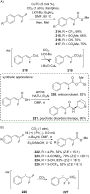
Scheme 62: Carboxylation of gem-difluoroalkenes with CO2.
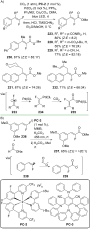
Scheme 63: Photoredox-catalyzed carboxylation of difluoroalkenes.

Scheme 64: Ru-catalyzed carboxylation of alkenyl halide.
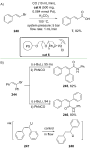
Scheme 65: Carboxylation of alkenyl halides under flow conditions.
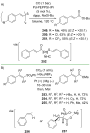
Scheme 66: Cinnamic acid ester syntheses through carboxylation of alkenyl sulfides/sulfones.

Scheme 67: Cinnamic acid derivatives synthesis through a Ag-catalyzed decarboxylative cross-coupling proceedin...
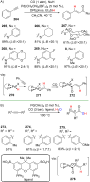
Scheme 68: Pd-catalyzed alkyne hydrocarbonylation.

Scheme 69: Fe-catalyzed alkyne hydrocarbonylation.
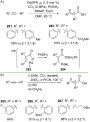
Scheme 70: Alkyne hydrocarboxylation using CO2.
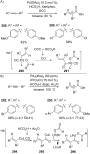
Scheme 71: Alkyne hydrocarboxylation using HCO2H as CO surrogate.

Scheme 72: Co/AlMe3-catalyzed alkyne hydrocarboxylation using DMF.
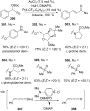
Scheme 73: Au-catalyzed oxidation of Au–allenylidenes.
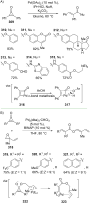
Scheme 74: Pd-catalyzed C–C-bond activation of cyclopropenones to synthesize unsaturated esters and amides.
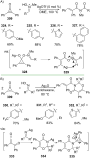
Scheme 75: Ag-catalyzed C–C-bond activation of diphenylcyclopropenone.
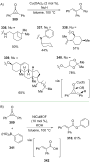
Scheme 76: Cu-catalyzed C–C bond activation of diphenylcyclopropenone.
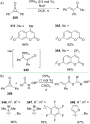
Scheme 77: PPh3-catalyzed C–C-bond activation of diphenylcyclopropenone.
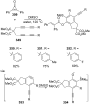
Scheme 78: Catalyst-free C–C-bond activation of diphenylcyclopropenone.
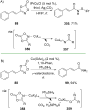
Scheme 79: Cu-catalyzed dioxolane cleavage.
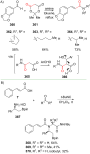
Scheme 80: Multicomponent coupling reactions.
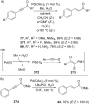
Scheme 81: Pd-catalyzed partial hydrogenation of electrophilic alkynes.

Scheme 82: Nickel and cobalt as earth-abundant transition metals used as catalysts for the partial hydrogenati...
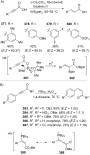
Scheme 83: Metal-free-catalyzed partial hydrogenation of conjugated alkynes.

Scheme 84: Horner–Wadsworth–Emmons reaction between triethyl 2-fluoro-2-phosphonoacetate and aldehydes with ei...
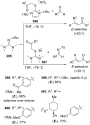
Scheme 85: Preparation of E/Z-cinnamates using thiouronium ylides.
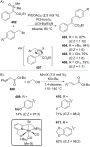
Scheme 86: Transition-metal-catalyzed ylide reactions.
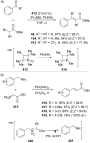
Scheme 87: Redox-driven ylide reactions.
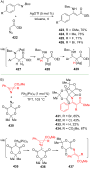
Scheme 88: Noble transition-metal-catalyzed olefination via carbenoid species.

Scheme 89: TrBF4-catalyzed olefination via carbene species.

Scheme 90: Grubbs catalyst (cat 7)/photocatalyst-mediated metathesis reactions.

Scheme 91: Elemental I2-catalyzed carbonyl-olefin metathesis.

Scheme 92: Cu-photocatalyzed E-to-Z isomerization of cinnamic acid derivatives.

Scheme 93: Ni-catalyzed E-to-Z isomerization.

Scheme 94: Dehydration of β-hydroxy esters via an E1cB mechanism to access (E)-cinnamic acid esters.

Scheme 95: Domino ring-opening reaction induced by a base.
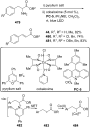
Scheme 96: Dehydroamination of α-aminoester derivatives.

Scheme 97: Accessing methyl cinnamate (44) via metal-free deamination or decarboxylation.

Scheme 98: The core–shell magnetic nanosupport-catalyzed condensation reaction.
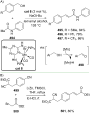
Scheme 99: Accessing cinnamic acid derivatives from acetic acid esters/amides through α-olefination.
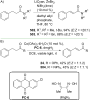
Scheme 100: Accessing cinnamic acid derivatives via acceptorless α,β-dehydrogenation.

Scheme 101: Cu-catalyzed formal [3 + 2] cycloaddition.
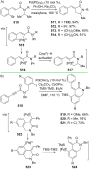
Scheme 102: Pd-catalyzed C–C bond formation via 1,4-Pd-shift.
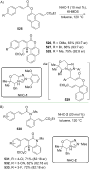
Scheme 103: NHC-catalyzed Rauhut–Currier reactions.
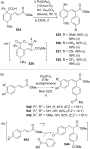
Scheme 104: Heck-type reaction for Cα arylation.

Scheme 105: Cu-catalyzed trifluoromethylation of cinnamamide.
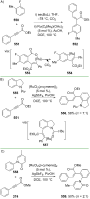
Scheme 106: Ru-catalyzed alkenylation of arenes using directing groups.
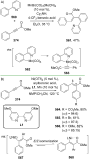
Scheme 107: Earth-abundant transition-metal-catalyzed hydroarylation of α,β-alkynyl ester 374.
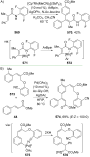
Scheme 108: Precious transition-metal-catalyzed β-arylation of cinnamic acid amide/ester.

Scheme 109: Pd-catalyzed β-amination of cinnamamide.

Scheme 110: S8-mediated β-amination of methyl cinnamate (44).

Scheme 111: Pd-catalyzed cross-coupling reaction of alkynyl esters with phenylsilanes.
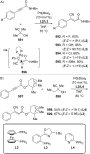
Scheme 112: Pd-catalyzed β-cyanation of alkynyl amide/ester.
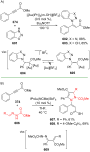
Scheme 113: Au-catalyzed β-amination of alkynyl ester 374.
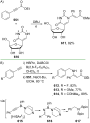
Scheme 114: Metal-free-catalyzed Cβ-functionalizations of alkynyl esters.
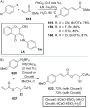
Scheme 115: Heck-type reactions.
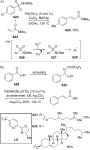
Scheme 116: Mizoroki–Heck coupling reactions using unconventional functionalized arenes.
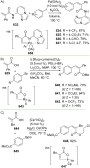
Scheme 117: Functional group-directed Mizoroki–Heck coupling reactions.
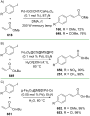
Scheme 118: Pd nanoparticles-catalyzed Mizoroki–Heck coupling reactions.
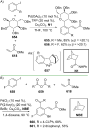
Scheme 119: Catellani-type reactions to access methyl cinnamate with multifunctionalized arene.
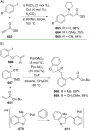
Scheme 120: Multicomponent coupling reactions.

Scheme 121: Single atom Pt-catalyzed Heck coupling reaction.
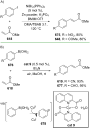
Scheme 122: Earth-abundant transition metal-catalyzed Heck coupling reactions.
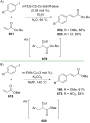
Scheme 123: Polymer-coated earth-abundant transition metals-catalyzed Heck coupling reactions.

Scheme 124: Earth-abundant transition-metal-based nanoparticles as catalysts for Heck coupling reactions.
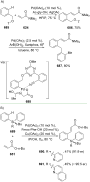
Scheme 125: CN- and Si-based directing groups to access o-selective cinnamic acid derivatives.
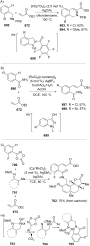
Scheme 126: Amide-based directing group to access o-selective cinnamic acid derivatives.
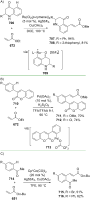
Scheme 127: Carbonyl-based directing group to access o-selective cinnamic acid derivatives.
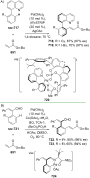
Scheme 128: Stereoselective preparation of atropisomers via o-selective C(sp2)–H functionalization.
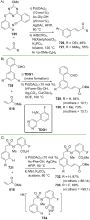
Scheme 129: meta-Selective C(sp2)–H functionalization using directing group-tethered arenes.

Scheme 130: para-Selective C(sp2)–H functionalization using directing group-tethered arenes.

Scheme 131: Non-directed C(sp2)–H functionalization via electrooxidative Fujiwara–Moritani reaction.
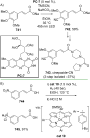
Scheme 132: Interconversion of functional groups attached to cinnamic acid.

Scheme 133: meta-Selective C(sp2)–H functionalization of cinnamate ester.

Scheme 134: C(sp2)–F arylation using Grignard reagents.

Scheme 135: Truce–Smiles rearrangement of N-aryl metacrylamides.

Scheme 136: Phosphine-catalyzed cyclization of γ-vinyl allenoate with enamino esters.
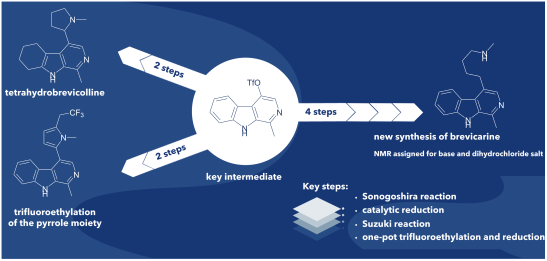
Studies on the syntheses of β-carboline alkaloids brevicarine and brevicolline
- Benedek Batizi,
- Patrik Pollák,
- András Dancsó,
- Péter Keglevich,
- Gyula Simig,
- Balázs Volk and
- Mátyás Milen
Beilstein J. Org. Chem. 2025, 21, 955–963, doi:10.3762/bjoc.21.79
- : the formation of compound 31 was always observed, and brevicolline ((±)-1) was not formed. Interestingly, our attempts made for the transformation of compound 31 by dehydrogenative aromatization to brevicolline ((±)-1) by using several reagents (DDQ, Pd/C, MnO2, CuCl2, I2, elemental sulfur, KMnO4

Graphical Abstract

Figure 1: The structure of brevicolline ((S)-1) and brevicarine (2).

Scheme 1: Synthesis of racemic brevicolline ((±)-1) starting from 1-methyl-9H-β-carbolin-4-yl trifluoromethan...

Scheme 2: Synthesis of brevicarine (2) from brevicolline ((S)-1).

Scheme 3: First total synthesis of brevicarine (2).

Scheme 4: Multistep synthesis of brevicarine (2) starting from nitrovinylindole 19.

Scheme 5: New synthesis variants for the preparation of brevicarine alkaloid (2) and its synthetic derivative ...

Scheme 6: Preparation of carbamate 28 and subsequent reduction with LiAlH4.

Scheme 7: Experiments for the synthesis of racemic brevicolline ((±)-1), and formation of unexpected products....
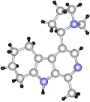
Figure 2: X-ray structure of compound 31.
Copper-catalyzed domino cyclization of anilines and cyclobutanone oxime: a scalable and versatile route to spirotetrahydroquinoline derivatives
- Qingqing Jiang,
- Xinyi Lei,
- Pan Gao and
- Yu Yuan
Beilstein J. Org. Chem. 2025, 21, 749–754, doi:10.3762/bjoc.21.58
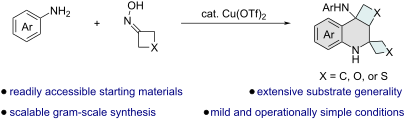
- to generate an enamine intermediate. Subsequently, an intermolecular cyclization occurs between the enamine and imine intermediates, ultimately yielding the final target product through an aromatization process (Scheme 4). Conclusion In summary, we have developed an efficient and practical copper
- intermediates, followed by intermolecular cyclization and aromatization. The scalability of this method was demonstrated through a gram-scale reaction, highlighting its potential for practical applications in medicinal chemistry and drug discovery. Synthetic strategies for the construction of

Graphical Abstract

Scheme 1: Synthetic strategies for the construction of spirotetrahydroquinoline (STHQ) scaffolds.
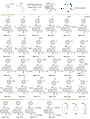
Scheme 2: Substrate scope. General reaction conditions: aniline 1 (0.2 mmol), 2 (0.4 mmol), and Cu(TFA)2 (0.0...

Scheme 3: Scale-up reaction.a

Scheme 4: Proposed mechanism.
Formaldehyde surrogates in multicomponent reactions
- Cecilia I. Attorresi,
- Javier A. Ramírez and
- Bernhard Westermann
Beilstein J. Org. Chem. 2025, 21, 564–595, doi:10.3762/bjoc.21.45
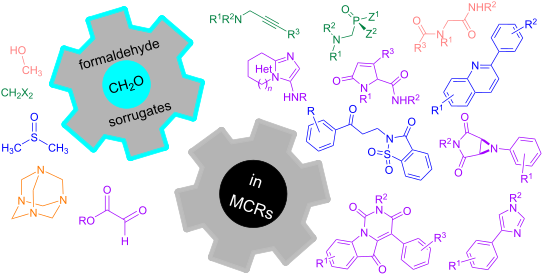
- substituted styrene under copper(I) catalysis to give the target compounds via a Povarov reaction. A further aromatization process yields product I (Scheme 8, path I). In a closely related approach, the same group reported on the synthesis of quinolines from anilines and alkynes [37]. In this case, the alkyne
- compound and MMS, undergoes an aza-Diels–Alder cyclization with the alkyne, and after oxidation and aromatization steps generates quinoline II. Unfortunately, under these gentle and greener conditions, aliphatic alkynes remain unreacted, compared to the metal-catalyzed version developed by Xu et al. [37
- reacts with the enolate of the ketone, which is stabilized by coordination with Fe(III), resulting in the formation of the C–C bond. A further oxidative aromatization process affords compound I. Compared to the protocol developed by Zhang et al. [24], the reaction is less regioselective, as Troger’s base

Graphical Abstract

Scheme 1: Features of the ideal reaction (redrawn from P. A. Wender et al. [1]).

Scheme 2: Some of the most popular MCRs with formaldehyde as the carbonyl component.

Scheme 3: Ugi reaction under a catalyzed electro-oxidation process using TEMPO (2,2,6,6-tetramethyl-1-piperid...

Scheme 4: Examples of different products obtained by MCRs in which DMSO serves as -SCH3 source.

Scheme 5: Mechanism of the decomposition of DMSO under acidic or thermal conditions. a) In situ generation of...

Scheme 6: Povarov multicomponent reaction to quinolines.

Scheme 7: Example of the Povarov reaction with formaldehyde with a julolidine derivative as main product.

Scheme 8: Povarov multicomponent reaction to quinoline derivatives I and II using DMSO as formaldehyde surrog...

Scheme 9: Example of a Povarov three-component reaction with change of catalyst, yielding regioisomer III. In...

Scheme 10: The Povarov three-component reactions carried out under acidic catalysis to afford quinoline regios...

Scheme 11: Different MCR routes involving DMSO to synthesize complex heterocycles such as diarylpyridines and ...

Scheme 12: Pyrazole synthesis by a three-component reaction using DMSO as a source of a C-1 unit.

Scheme 13: Three-component reactions for the synthesis of aliphatic heterocycles 13 and 14 using DMSO as a for...

Scheme 14: Proposed mechanism for the 3CR between homoallylic amines, disulfides, and DMSO.

Scheme 15: Mannich-type reaction using DMSO as formaldehyde surrogate.

Scheme 16: Mechanism for the 3CR-Mannich-type reaction between aryl ketone 18, saccharine (19), and DMSO. The ...

Scheme 17: Mannich-type reaction using DMSO as formaldehyde surrogate and under oxidative activation.

Scheme 18: Three-component reaction between an indazole, a carboxylic acid, and DMSO.

Scheme 19: Amine–aldehyde–alkyne (AAA) coupling reaction and plausible mechanism.

Scheme 20: AHA coupling for the synthesis of propargylamines using dihalomethanes as C1 building blocks.

Scheme 21: AHA coupling using CH2Cl2 as both solvent and methylene source.

Scheme 22: Examples of propargylamines synthesized under catalytic AHA protocols.

Scheme 23: Proposed mechanism for the synthesis of propargylamines using dichloromethane as a C1 source.

Scheme 24: Mechanism proposed for the generation of the aminal intermediate E by Buckley et al. [68].

Scheme 25: Pudovic and Kabachnik–Fields reactions for the synthesis of α-aminophosphonates.

Scheme 26: a) Abramov side reaction that generates α-hydroxy phosphonate as a byproduct during the Kabachnik-F...

Scheme 27: Catalyst-free three component reaction to afford α-amino phosphorus product 35 using 1,1-dihaloalka...

Scheme 28: a) Proposed mechanism for the three-component reaction of dichloromethane, amine and phosphorus com...

Scheme 29: Ugi-ammonia strategy using HMTA as a formaldehyde surrogate.

Scheme 30: Glyoxylate and its derivatives as C1 building blocks.

Scheme 31: The Groebke–Blackburn–Bienaymé multicomponent reaction (GBB) and its mechanism.

Scheme 32: a) Byproducts in the GBB multicomponent reaction (GBB) when formaldehyde is used as the carbonyl co...

Scheme 33: Possible regioisomers in the GBB multicomponent reaction when formaldehyde is used as the carbonyl ...

Scheme 34: The multicomponent GBB reaction yields 2-unsubstituted 3-aminoimidazo heterocycles 42a using MP-gly...

Scheme 35: GBB multicomponent reaction to 2-unsubstituted 3-amino imidazo heterocycles 42a using glyoxylic aci...

Scheme 36: GBB reaction using glyoxylic acid immobilized on silica as formaldehyde surrogate.

Scheme 37: Bioactive products synthesized by the GBB reaction using glyoxylic acid.

Scheme 38: van Leusen three-component reaction to imidazoles.

Scheme 39: Side reaction during the synthesis of imidazoles with formaldehyde as the carbonyl compound.

Scheme 40: Optimization of the van Leusen three component reaction to 1,4-disubstituted imidazoles 43 using gl...

Scheme 41: Application of the Sisko strategy [96] for the synthesis of CB1 receptor antagonist compounds [97].

Scheme 42: Side reaction, when NH4OH is used as amine component.

Scheme 43: Ugi-type adducts with the ester moiety and the acidic CH to be used for post-cyclization sequences.

Scheme 44: Ugi/cycloisomerization process to pyrrolones 51, butenolides 52, and pyrroline 53.

Scheme 45: Radical cyclization reactions from Ugi adducts promoted by TEMPO.

Scheme 46: Hydrolysis and decarboxylation reactions to products with incorporation of a C1 unit of ethyl glyox...

Scheme 47: One-step synthetic route to pyrrolones 60 using phenylglyoxal.

Scheme 48: Ugi-pseudo-Knoevenagel-pseudo-Dieckmann cascade sequence for the synthesis of fused heterocycles.

Scheme 49: Ugi-pseudo-Knoevenagel reaction from ethyl glyoxylate.
New tandem Ugi/intramolecular Diels–Alder reaction based on vinylfuran and 1,3-butadienylfuran derivatives
- Yuriy I. Horak,
- Roman Z. Lytvyn,
- Andrii R. Vakhula,
- Yuriy V. Homza,
- Nazariy T. Pokhodylo and
- Mykola D. Obushak
Beilstein J. Org. Chem. 2025, 21, 444–450, doi:10.3762/bjoc.21.31
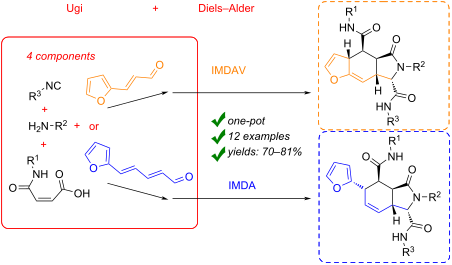
- a coordinated mechanism. Noteworthy, the primary kinetic product of the cycloaddition reaction 5 is not transformed into the thermodynamic product 6 via a H-shift at the last stage. The expected aromatization with the formation of a furan ring, as happens in similar reactions, does not occur (Scheme

Graphical Abstract

Figure 1: State of the art of Ugi/Diels–Alder reaction based on furan.
Scheme 1: Preparation of 4,4a,5,6,7,7a-hexahydro-3aH-furo[2,3-f]isoindoles via Ugi/IMDAV tandem reaction.

Scheme 2: Kinetic product 5 does not transform into thermodynamic product 6.

Scheme 3: Synthesis of compounds 6a.

Scheme 4: Synthesis of compound 7.

Scheme 5: Synthesis of compounds 9.
Recent advances in organocatalytic atroposelective reactions
- Henrich Szabados and
- Radovan Šebesta
Beilstein J. Org. Chem. 2025, 21, 55–121, doi:10.3762/bjoc.21.6
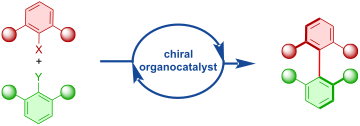
- -axial chirality conversion via catalyst-controlled oxidative aromatization [23]. In this way, the axially chiral starting material 12 comprising an additional stereogenic center was converted into oligonaphthylenes 13 with two, three or even four stereogenic axes. Based on the organocatalyst used, the
- was carried out to provide the final biaryl products 17. In a related strategy, Hayashi´s team realized an organocatalytic Michael/aldol cascade leading to chiral dihydronaphthalene derivatives 20a–e [25]. Through a series of one-pot reactions, aromatization was achieved with concomitant central-to
- -axial chirality conversion and formation of axially chiral products 21a–e (Scheme 7). This critical aromatization was later studied in more detail, and the team was able to achieve enantiodivergent aromatization, which led to different atropoisomers based on the oxidation reagent used [26]. The use of

Graphical Abstract

Scheme 1: Formation of axially chiral styrenes 3 via iminium activation.

Scheme 2: Synthesis of axially chiral 2-arylquinolines 6.

Scheme 3: Atroposelective intramolecular (4 + 2) annulation leading to aryl-substituted indolines.

Scheme 4: Atroposelective formation of biaryl via twofold aldol condensation.

Scheme 5: Strategy towards diastereodivergent formation of axially chiral oligonaphthylenes.

Scheme 6: Atroposelective formation of chiral biaryls based on a Michael/Henry domino reaction.

Scheme 7: Organocatalytic Michael/aldol cascade followed by oxidative aromatization.

Scheme 8: Atroposelective formation of C(sp2)–C(sp3) axially chiral compounds.

Scheme 9: NHC-catalyzed synthesis of axially chiral styrenes 26.

Scheme 10: NHC-catalyzed synthesis of biaxial chiral pyranones.

Scheme 11: Formation of bridged biaryls with eight-membered lactones.

Scheme 12: The NHC-catalyzed (3 + 2) annulation of urazoles 37 and ynals 36.

Scheme 13: NHC-catalyzed synthesis of axially chiral 4‑aryl α‑carbolines 41.

Scheme 14: NHC-catalyzed construction of N–N-axially chiral pyrroles and indoles.

Scheme 15: NHC-catalyzed oxidative Michael–aldol cascade.

Scheme 16: NHC-catalyzed (4 + 2) annulation for the synthesis of benzothiophene-fused biaryls.
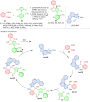
Scheme 17: NHC-catalyzed desymmetrization of N-aryl maleimides.

Scheme 18: NHC-catalyzed deracemization of biaryl hydroxy aldehydes 55a–k into axially chiral benzonitriles 56a...

Scheme 19: NHC-catalyzed desymmetrization of 2-aryloxyisophthalaldehydes.

Scheme 20: NHC-catalyzed DKR of 2-arylbenzaldehydes 62.

Scheme 21: Atroposelective biaryl amination.

Scheme 22: CPA-catalyzed atroposelective amination of 2-anilinonaphthalenes.

Scheme 23: Atroposelective DKR of naphthylindoles.

Scheme 24: CPA-catalyzed kinetic resolution of binaphthylamines.

Scheme 25: Atroposelective amination of aromatic amines with diazodicarboxylates.

Scheme 26: Atroposelective Friedländer heteroannulation.

Scheme 27: CPA-catalyzed formation of axially chiral 4-arylquinolines.

Scheme 28: CPA-catalyzed Friedländer reaction of arylketones with cyclohexanones.

Scheme 29: CPA-catalyzed atroposelective Povarov reaction.

Scheme 30: Atroposelective CPA-catalyzed Povarov reaction.

Scheme 31: Paal–Knorr formation of axially chiral N-pyrrolylindoles and N-pyrrolylpyrroles.

Scheme 32: Atroposelective Paal–Knorr reaction leading to N-pyrrolylpyrroles.

Scheme 33: Atroposelective Pictet–Spengler reaction of N-arylindoles with aldehydes.

Scheme 34: Atroposelective Pictet–Spengler reaction leading to tetrahydroisoquinolin-8-ylanilines.

Scheme 35: Atroposelective formation of arylindoles.

Scheme 36: CPA-catalyzed arylation of naphthoquinones with indolizines.

Scheme 37: Atroposelective reaction of o-naphthoquinones.

Scheme 38: CPA-catalyzed formation of axially chiral arylquinones.

Scheme 39: CPA-catalyzed axially chiral N-arylquinones.

Scheme 40: Atroposelective additions of bisindoles to isatin-based 3-indolylmethanols.

Scheme 41: CPA-catalyzed synthesis of axially chiral arylindolylindolinones.

Scheme 42: CPA-catalyzed reaction between bisindoles and ninhydrin-derived 3-indoylmethanols.

Scheme 43: Atroposelective reaction of bisindoles and isatin-derived imines.

Scheme 44: CPA-catalyzed formation of axially chiral bisindoles.

Scheme 45: Atroposelective reaction of 2-naphthols with alkynylhydroxyisoindolinones.

Scheme 46: CPA-catalyzed reaction of indolylnaphthols with propargylic alcohols.

Scheme 47: Atroposelective formation of indolylpyrroloindoles.

Scheme 48: Atroposelective reaction of indolylnaphthalenes with alkynylnaphthols.

Scheme 49: CPA-catalyzed addition of naphthols to alkynyl-2-naphthols and 2-naphthylamines.

Scheme 50: CPA-catalyzed formation of axially chiral aryl-alkene-indoles.

Scheme 51: CPA-catalyzed formation of axially chiral styrenes.

Scheme 52: Atroposelective formation of alkenylindoles.

Scheme 53: Atroposelective formation of axially chiral arylquinolines.

Scheme 54: Atroposelective (3 + 2) cycloaddition of alkynylindoles with azonaphthalenes.

Scheme 55: CPA-catalyzed formation of axially chiral 3-(1H-benzo[d]imidazol-2-yl)quinolines.

Scheme 56: Atroposelective cyclization of 3-(arylethynyl)-1H-indoles.

Scheme 57: Atroposelective three-component heteroannulation.

Scheme 58: CPA-catalyzed formation of arylbenzimidazols.

Scheme 59: CPA-catalyzed reaction of N-naphthylglycine esters with nitrosobenzenes.
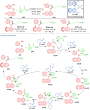
Scheme 60: CPA-catalyzed formation of axially chiral N-arylbenzimidazoles.

Scheme 61: CPA-catalyzed formation of axially chiral arylbenzoindoles.

Scheme 62: CPA-catalyzed formation of pyrrolylnaphthalenes.
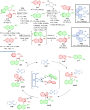
Scheme 63: CPA-catalyzed addition of naphthols and indoles to nitronaphthalenes.

Scheme 64: Atroposelective reaction of heterobiaryl aldehydes and aminobenzamides.

Scheme 65: Atroposelective cyclization forming N-arylquinolones.

Scheme 66: Atroposelective formation of 9H-carbazol-9-ylnaphthalenes and 1H-indol-1-ylnaphthalene.

Scheme 67: CPA-catalyzed formation of pyrazolylnaphthalenes.

Scheme 68: Atroposelective addition of diazodicarboxamides to azaborinephenols.

Scheme 69: Catalytic formation of axially chiral arylpyrroles.

Scheme 70: Atroposelective coupling of 1-azonaphthalenes with 2-naphthols.

Scheme 71: CPA-catalyzed formation of axially chiral oxindole-based styrenes.

Scheme 72: Atroposelective electrophilic bromination of aminonaphthoquinones.

Scheme 73: Atroposelective bromination of dienes.

Scheme 74: CPA-catalyzed formation of axially chiral 5-arylpyrimidines.

Scheme 75: Atroposelective hydrolysis of biaryloxazepines.

Scheme 76: Atroposelective opening of dinaphthosiloles.

Scheme 77: Atroposelective reduction of naphthylenals.

Scheme 78: Atroposelective allylic substitution with 2-naphthols.

Scheme 79: Atroposelective allylic alkylation with phosphinamides.

Scheme 80: Atroposelective allylic substitution with aminopyrroles.

Scheme 81: Atroposelective allylic substitution with aromatic sulfinamides.

Scheme 82: Atroposelective sulfonylation of naphthylynones.

Scheme 83: Squaramide-catalyzed reaction of alkynyl-2-naphthols with 5H-oxazolones.

Scheme 84: Formation of axially chiral styrenes via sulfonylative opening of cyclopropanols.

Scheme 85: Atroposelective organo-photocatalyzed sulfonylation of alkynyl-2-naphthols.

Scheme 86: Thiourea-catalyzed atroposelective cyclization of alkynylnaphthols.

Scheme 87: Squaramide-catalyzed formation of axially chiral naphthylisothiazoles.

Scheme 88: Atroposelective iodo-cyclization catalyzed by squaramide C69.

Scheme 89: Squaramide-catalyzed formation of axially chiral oligoarenes.

Scheme 90: Atroposelective ring-opening of cyclic N-sulfonylamides.

Scheme 91: Thiourea-catalyzed kinetic resolution of naphthylpyrroles.

Scheme 92: Atroposelective ring-opening of arylindole lactams.

Scheme 93: Atroposelective reaction of 1-naphthyl-2-tetralones and diarylphosphine oxides.

Scheme 94: Atroposelective reaction of iminoquinones with indoles.

Scheme 95: Kinetic resolution of binaphthylalcohols.

Scheme 96: DKR of hydroxynaphthylamides.

Scheme 97: Atroposelective N-alkylation with phase-transfer catalyst C75.
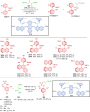
Scheme 98: Atroposelective allylic substitution via kinetic resolution of biarylsulfonamides.

Scheme 99: Atroposelective bromo-functionalization of alkynylarenes.
Scheme 100: Sulfenylation-induced atroposelective cyclization.

Scheme 101: Atroposelective O-sulfonylation of isochromenone-indoles.

Scheme 102: NHC-catalyzed atroposelective N-acylation of anilines.

Scheme 103: Peptide-catalyzed atroposelective ring-opening of lactones.

Scheme 104: Peptide-catalyzed coupling of 2-naphthols with quinones.

Scheme 105: Atroposelective nucleophilic aromatic substitution of fluoroarenes.
Synthesis of tricarbonylated propargylamine and conversion to 2,5-disubstituted oxazole-4-carboxylates
- Kento Iwai,
- Akari Hikasa,
- Kotaro Yoshioka,
- Shinki Tani,
- Kazuto Umezu and
- Nagatoshi Nishiwaki
Beilstein J. Org. Chem. 2024, 20, 2827–2833, doi:10.3762/bjoc.20.238

- decarboxylation accompanied by aromatization of the oxazole ring occurred during this process. Thus, protonation occurs, leading to oxazole 5 when the reaction mixture is warmed in the presence of large amounts of proton sources such as acetic acid or deuterium oxide. Although Nagao et al. proposed another

Graphical Abstract

Scheme 1: Synthesis of polyfunctionalized methane derivatives through successive nucleophilic additions to th...

Scheme 2: Cyclization of 4a quenched by D2O.

Scheme 3: Plausible mechanisms for the ring closure of 4.

Scheme 4: Hydration of the ethynyl group of 4a.
Copper-catalyzed yne-allylic substitutions: concept and recent developments
- Shuang Yang and
- Xinqiang Fang
Beilstein J. Org. Chem. 2024, 20, 2739–2775, doi:10.3762/bjoc.20.232
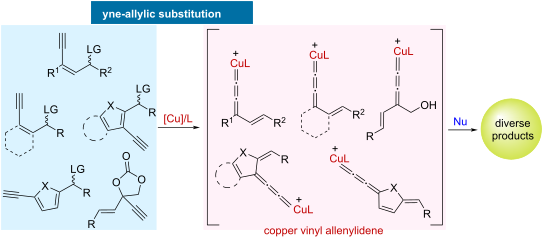
- of ortho-aryl steric hindrance. Recently, Xu et al. [81] presents a copper-catalyzed asymmetric [4 + 1] annulation strategy, utilizing remote stereocontrol substitution/annulation/aromatization to forge arylpyrroles with various C–C (Scheme 49, 48a–h), C–N (Scheme 50, 49a–h) or 1,2-di- (Scheme 51
- stereoselective aromatization serves as a pivotal step in the transfer of central chirality to axial chirality (Scheme 52). To harness the full potential of CO2 as a renewable and abundant carbon source, He et al. [82] proposed an innovative strategy that married asymmetric yne-allylic substitution with CO2

Graphical Abstract

Scheme 1: Copper-catalyzed allylic and yne-allylic substitution.

Scheme 2: Challenges in achieving highly selective yne-allylic substitution.

Scheme 3: Yne-allylic substitutions using indoles and pyroles.

Scheme 4: Yne-allylic substitutions using amines.

Scheme 5: Yne-allylic substitution using 1,3-dicarbonyls.

Scheme 6: Postulated mechanism via copper acetylide-bonded allylic cation.

Scheme 7: Amine-participated asymmetric yne-allylic substitution.

Scheme 8: Asymmetric decarboxylative yne-allylic substitution.

Scheme 9: Asymmetric yne-allylic alkoxylation and alkylation.

Scheme 10: Proposed mechanism for Cu(I) system.

Scheme 11: Asymmetric yne-allylic dialkylamination.

Scheme 12: Proposed mechanism of yne-allylic dialkylamination.

Scheme 13: Asymmetric yne-allylic sulfonylation.

Scheme 14: Proposed mechanism of yne-allylic sulfonylation.

Scheme 15: Aymmetric yne-allylic substitutions using indoles and indolizines.

Scheme 16: Double yne-allylic substitutions using pyrrole.

Scheme 17: Proposed mechanism of yne-allylic substitution using electron-rich arenes.

Scheme 18: Aymmetric yne-allylic monofluoroalkylations.

Scheme 19: Proposed mechanism.
Scheme 20: Aymmetric yne-allylic substitution of yne-allylic esters with anthrones.

Scheme 21: Aymmetric yne-allylic substitution of yne-allylic esters with coumarins.
Scheme 22: Aymmetric yne-allylic substitution of with coumarins by Lin.

Scheme 23: Proposed mechanism.

Scheme 24: Amination by alkynylcopper driven dearomatization and rearomatization.

Scheme 25: Arylation by alkynylcopper driven dearomatization and rearomatization.

Scheme 26: Remote substitution/cyclization/1,5-H shift process.

Scheme 27: Proposed mechanism.

Scheme 28: Arylation or amination by alkynylcopper driven dearomatization and rearomatization.

Scheme 29: Remote nucleophilic substitution of 5-ethynylthiophene esters.

Scheme 30: Proposed mechanism.

Scheme 31: [4 + 1] annulation of yne-allylic esters and cyclic 1,3-dicarbonyls.
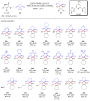
Scheme 32: Asymmetric [4 + 1] annulation of yne-allylic esters.

Scheme 33: Proposed mechanism.

Scheme 34: Asymmetric [3 + 2] annulation of yne-allylic esters.

Scheme 35: Postulated annulation step.

Scheme 36: [4 + 1] Annulations of vinyl ethynylethylene carbonates and 1,3-dicarbonyls.

Scheme 37: Proposed mechanism.

Scheme 38: Formal [4 + 1] annulations with amines.

Scheme 39: Formal [4 + 2] annulations with hydrazines.

Scheme 40: Proposed mechanism.
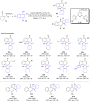
Scheme 41: Dearomative annulation of 1-naphthols and yne-allylic esters.

Scheme 42: Dearomative annulation of phenols or 2-naphthols and yne-allylic esters.

Scheme 43: Postulated annulation mechanism.
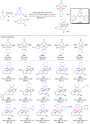
Scheme 44: Dearomative annulation of phenols or 2-naphthols.

Scheme 45: Dearomative annulation of indoles.

Scheme 46: Postulated annulation step.

Scheme 47: Asymmetric [4 + 1] cyclization of yne-allylic esters with pyrazolones.

Scheme 48: Proposed mechanism.

Scheme 49: Construction of C–C axially chiral arylpyrroles.

Scheme 50: Construction of C–N axially chiral arylpyrroles.
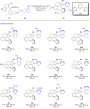
Scheme 51: Construction of chiral arylpyrroles with 1,2-di-axial chirality.

Scheme 52: Proposed mechanism.

Scheme 53: CO2 shuttling in yne-allylic substitution.

Scheme 54: CO2 fixing in yne-allylic substitution.

Scheme 55: Proposed mechanism.
Heterocycle-guided synthesis of m-hetarylanilines via three-component benzannulation
- Andrey R. Galeev,
- Maksim V. Dmitriev,
- Alexander S. Novikov and
- Andrey N. Maslivets
Beilstein J. Org. Chem. 2024, 20, 2208–2216, doi:10.3762/bjoc.20.188
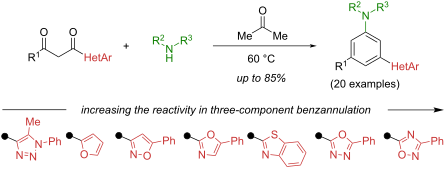
- interrupted Kröhnke reaction (Scheme 1B) [51][52]. The main step of this process is an intermolecular cyclization of the formed 1,5-diketone followed by aromatization. Previously we have shown that 1,3-diketones bearing an electron-withdrawing group (EWG) adjacent to one of the carbonyls readily react with in

Graphical Abstract

Figure 1: The meta-hetarylaniline motif in bioactive molecules.

Scheme 1: Strategies to access meta-substituted anilines.

Figure 2: The model series of synthesized 1,3-diketones and corresponding calculated Hammett constants of het...

Scheme 2: Synthesis of meta-substituted anilines from 1,2,4-oxadiazol-5-yl substituted 1,3-diketone 1a. Condi...

Scheme 3: Synthesis of meta-substituted anilines from 1,3,4-oxadiazol-substituted 1,3-diketone 1b. Conditions...

Scheme 4: Synthesis of meta-substituted anilines from benzothiazol-2-yl and oxazol-2-yl-substituted 1,3-diket...

Scheme 5: Synthesis of meta-substituted aniline from isoxazol-3-yl-substituted 1,3-diketone 1e. Conditions B: ...

Figure 3: Scope of functionalized amines in three-component condensation. Conditions A: 1a,b,h,i (0.2–0.5 mmo...

Scheme 6: Proposed mechanism for the formation of meta-substituted anilines 3 via three-component benzannulat...



