


Search results
Search for "enantioselectivity" in Full Text gives 384 result(s) in Beilstein Journal of Organic Chemistry. Showing first 200.
One-pot four-component sequential synthesis of S-alkyl dithiocarbamates using lipase as a biocatalyst
Beilstein J. Org. Chem. 2026, 22, 1048–1056, doi:10.3762/bjoc.22.83
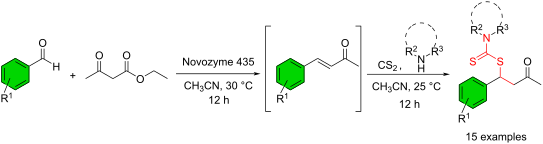
- with electronically diverse aldehydes. Notably, the reaction with salicylaldehyde resulted in no product formation (6p, 0%). It should be noted that, in principle, the formation of a stereogenic center in the product raises the possibility of enantioselectivity in the presence of a biocatalyst. However


Synthesis and optical resolution of 4,5-diaminohomoadamantane: a promising scaffold for chiral ligands and bioactive compounds
Beilstein J. Org. Chem. 2026, 22, 1013–1022, doi:10.3762/bjoc.22.80
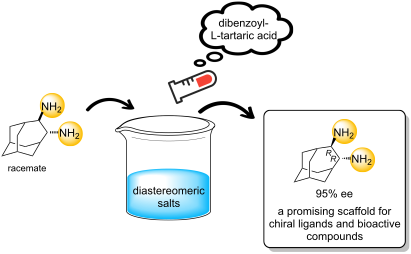
- -diaminohomoadamantane were obtained. Catalytic systems based on them have been studied in the asymmetric Michael and Henry reactions. Low enantioselectivity (up to 60% ee) was observed, but an enantiodivergent effect was noted in the Henry reaction. Examples of bioactive homoadamantanes. Examples of cage vicinal


Recent advances in copper-catalyzed direct hydroamination of alkenes with (hetero)aromatic amines
Beilstein J. Org. Chem. 2026, 22, 925–947, doi:10.3762/bjoc.22.73
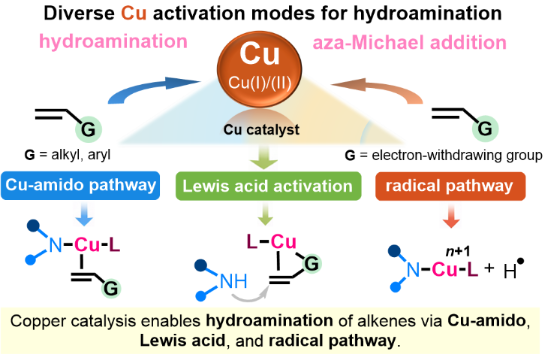
- regioselectivity (Markovnikov vs anti-Markovnikov addition), while stereochemical control (diastereo- and enantioselectivity) presents further challenges (Scheme 1) [7]. These challenges become more pronounced when using (hetero)aromatic amines as the N–H partners. Compared to aliphatic amines, aromatic amines and
- -methylaniline proceeded with moderate to good enantioselectivity, achieving 87% ee. Mechanistically, the reaction follows a classical aza-Michael addition pathway, where the nitrogen lone pair of the aromatic amine attacks the β-carbon of the highly activated C=C bond, which is strongly polarized by the three
- cyclization, affording heterocyclic products 24. Under optimized conditions, various substrates participated efficiently in the cascade process, providing the desired products in good yield with high enantioselectivity (up to 95% ee) and excellent diastereoselectivity. Samanta et al. described a Cu(I







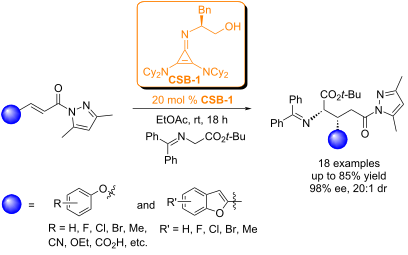
Chiral cyclopropenimine-catalyzed enantioselective Michael reactions of phenol and benzofuran-derived α,β-unsaturated pyrazolamides with benzophenone-imine of glycine esters
Beilstein J. Org. Chem. 2026, 22, 888–896, doi:10.3762/bjoc.22.69
- enhance the formation of transition state B. The highly diastereomic ratio of 6a in syn-form may be generated from transition state B. The formation of intermediate C is the rate-limiting step. When intermediate C is formed, the protonation happened rapidly to afford 6a in high enantioselectivity. The






Synthesis of heterocycles based on azomethine ylides from α-amino acids (or amines) and carbonyl compounds
Beilstein J. Org. Chem. 2026, 22, 705–741, doi:10.3762/bjoc.22.55
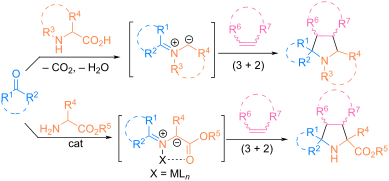
- chiral metal complexes of Ag(I), Cu(I/II), Zn(II), Ni(II) with ligands of the Segphos, Fesulfos, or Biphamphos type [12][13][14][15]. Such catalytic systems control the enantioselectivity of cycloaddition and allow the preparation of enantioenriched pyrrolidines containing several stereocenters in high
- yields and with high diastereoselectivity and enantioselectivity (up to 97% ee). However, α-(alkylimino)esters were less reactive, requiring longer reaction times and yielding products with slightly lower enantioselectivity (up to 81% ee). In addition to dimethyl maleate, other dipolarophiles, such as
- dimethyl fumarate, acrylates, and N-methylmaleimide, were also studied in the cycloaddition reaction (Scheme 3). Lower enantioselectivity was observed in these cases, and the most important result was a significant improvement in enantioselectivity upon switching from methyl acrylate to bulk tert-butyl


Kinetic resolution of racemic planar-chiral vinylcymantrenes by molybdenum-catalyzed asymmetric metathesis dimerization
Beilstein J. Org. Chem. 2026, 22, 568–574, doi:10.3762/bjoc.22.42
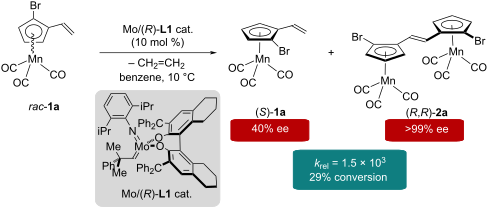
- chiral-2a/meso-2a = 96:4 molar ratio, and the selectivity factor (krel) was calculated to be 754 based on a second-order equation. In all the three substrates examined, the dimerized products, chiral-2, were obtained in >98% ee thanks to the outstanding enantioselectivity. Keywords: cymantrene; kinetic
- conditions (Table 1, entry 2). The Mo/(R)-L3 precatalyst [23] showed the highest catalytic activity among examined. Although the enantioselectivity was excellent (krel = 107), the diastereoselectivity was poor (Table 1, entry 3). At 10 °C using Mo/(R)-L1, enantioselectivity was greatly improved in the AMD/KR
- dimerization (AMD). The AMD/KR reactions of rac-1 proceeded with near-perfect diastereoselectivity, of which enantioselectivity was also excellent with the krel values of up to 1.5 × 10³. Because of the outstanding enantioselectivity, dimerized products chiral-2 were obtained in very high enantiomeric purity


Recent advances in the stereoselective synthesis of distal biaxially chiral molecules
Beilstein J. Org. Chem. 2026, 22, 461–479, doi:10.3762/bjoc.22.34
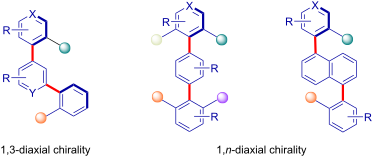
- often difficult to control [37], particularly for remote biaxial systems (1,3-biaxial and beyond), where diastereoselectivity and enantioselectivity are challenging to regulate. Various multiaxial chiral natural products with high biological activity exist in nature [28], and in artificial synthesis
- -containing five-membered rings with iridium complexes and examined the influence of different alcohol protecting groups on the monoalkyne substrates. The reaction proceeded in generally high yields (>70%) with satisfactory enantioselectivity. Building on this work, Shibata and Tsuchikama developed a one-pot
- [41]. This strategy delivered excellent enantioselectivity, diastereoselectivity, and overall efficiency, underscoring its unique advantages in the synthesis of multiaxially chiral scaffolds. In parallel, Tanaka and co-workers advanced a [2 + 2 + 2] cycloaddition strategy to realize an asymmetric


Screwing the helical chirality through terminal peri-functionalization
Beilstein J. Org. Chem. 2026, 22, 205–212, doi:10.3762/bjoc.22.14
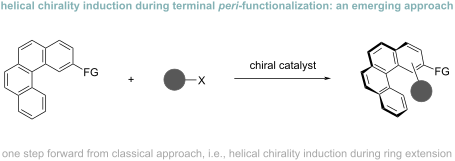
- systems. These methods aim to achieve precise enantioselectivity, enabling the synthesis of helical molecules with specific handedness. In modern day science, helical chirality is gaining more and more importance in various fields such as drug design, optoelectronics, spintronics, diagnosis tool
- enantioselectivity. Notably, [6]helicene 3k was also readily produced, via kinetic resolution (Scheme 1). Computational studies suggested that hydrogen bonding and π interactions between the reactants and catalyst L1 controlled the stereochemical output of the products 3. The catalyst proximate both reactants to
- nucleophilic substitution reactions (Scheme 5). A stereochemical model was proposed for the phospha-Michael addition, indicating that enantioselectivity was primarily influenced by steric effects arising from hydrogen bonding and ion pairing between the peptide mimetic phosphonium salt (PPS)-activated


Asymmetric Mannich reaction of aromatic imines with malonates in the presence of multifunctional catalysts
Beilstein J. Org. Chem. 2026, 22, 151–157, doi:10.3762/bjoc.22.8
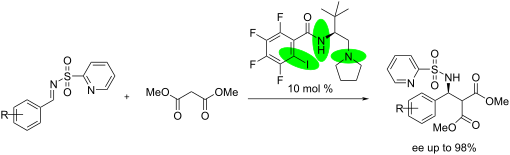
- malonate. It is known that N-atoms are the strongest XB acceptors in electroneutral compounds [26]. It has also been shown that imines protected with heteroarylsulfonyl groups provide higher enantioselectivity than those protected with the more commonly used phenylsulfonyl or tosyl groups in addition
- slightly decreases while the meta-position of Cl atom in 1c increases the enantioselectivity of reaction (compare 3b and 3c). An electron-donating substituent decreases the rate substantially but the stereoselectivity of the reaction remains still high (compound 3g). Diethyl malonate proved to be less
- . Although the activation mechanism was not proved unambiguously, it is assumed that steric effects of the chiral fragment together with a network of noncovalent interactions, including halogen and hydrogen bonds, are responsible for the high enantioselectivity of the reaction. Further developments of the


Total synthesis of natural products based on hydrogenation of aromatic rings
Beilstein J. Org. Chem. 2026, 22, 88–122, doi:10.3762/bjoc.22.4
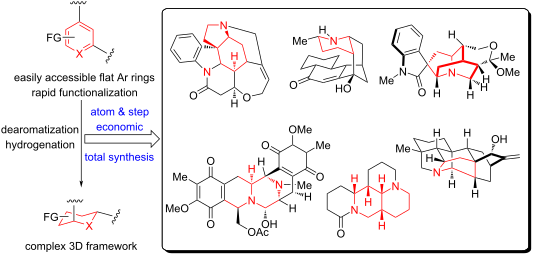
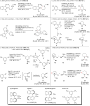
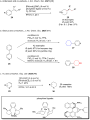
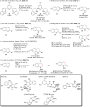
- range, the reaction was scaled up to the gram scale with high yield and high enantioselectivity. Recently, Du and co-workers reported a transition-metal-free asymmetric transfer hydrogenation reaction (Scheme 6) [58]. Under a hydrogen atmosphere, using chiral phosphoric acid and achiral borane as
- hydrogenation reaction (Scheme 7) [60]. Using an acid-assisted dynamic kinetic resolution method, they obtained a series of chiral indolines 56 containing exocyclic stereocenters in high yields and excellent enantioselectivity. Mechanistic studies of the reaction revealed that the dynamic kinetic resolution
- different PNN-ligands, multi-nitrogen heteroaromatic compounds, including substituted pyrazolo[1,5-a]pyrimidines, pyrrolo[1,2-a]pyrazines, and imidazo[1,2-a]pyrazines can be hydrogenated efficiently, providing the corresponding reduced products with high enantioselectivity, reactivity, and broad substrate











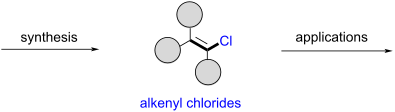
Synthesis and applications of alkenyl chlorides (vinyl chlorides): a review
Beilstein J. Org. Chem. 2026, 22, 1–63, doi:10.3762/bjoc.22.1
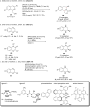
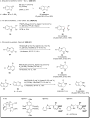
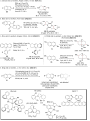
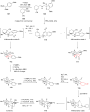
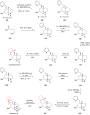
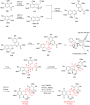
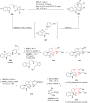
- , generated via borocupration of terminal alkynes, underwent allylic substitutions to furnish Bpin-substituted alkenyl chlorides in high enantioselectivity (Scheme 65B) [204]. Key to the transformation was the use of a sulfonate-substituted N-heterocyclic carbene ligand, introduced as its imidazolium salt























Visible-light-driven NHC and organophotoredox dual catalysis for the synthesis of carbonyl compounds
Beilstein J. Org. Chem. 2025, 21, 2584–2603, doi:10.3762/bjoc.21.200
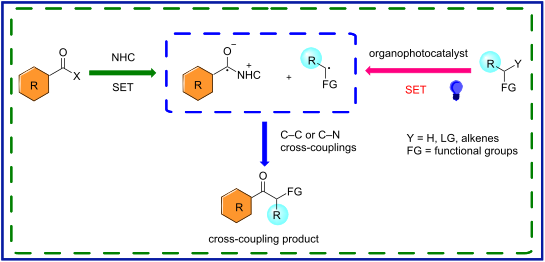
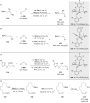
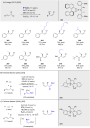
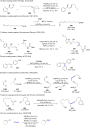
- ], Enders [21], Rafinski [22], Scheidt [23], Connon [24], Chi [25], Milo [26][27], Gravel [28][29] and others [30]. These NHC-catalyzed developments have drastically improved the achievable diastereo- and enantioselectivity, including common named reactions such as benzoin reactions, Stetter reactions
- process, such as being environmentally friendly, offering operational simplicity, lower cost, and easy availability, reducing waste and toxicity, as well as providing excellent chemo-, regio-, and enantioselectivity through fine-tuned hydrogen bonding or covalent activation modes. Furthermore, the
- desired polycyclic compounds 35 in a moderate level of enantioselectivity (Scheme 14) [64]. Conclusion In conclusion, over the past two decades, organocatalyzed visible-light-promoted radical chemistry, particularly dual photocatalysis combining N-heterocyclic carbenes (NHCs) with organic photocatalysts



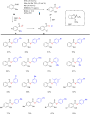


Catalytic enantioselective synthesis of selenium-containing atropisomers via C–Se bond formations
Beilstein J. Org. Chem. 2025, 21, 2447–2455, doi:10.3762/bjoc.21.186
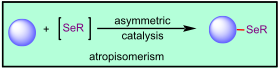
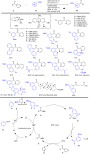
- excellent conversion rates (up to 95% yield) and high enantioselectivity (up to 96% ee). Notably, isoquinoline derivatives containing polycyclic naphthalene moieties or ortho-substituted phenyl groups also demonstrated good reactivity and compatibility. DFT calculations indicated that the C–Se bond
- ]. When a para-fluorine substituent is present on the naphthalene ring of the substrate, the reaction proceeds with a yield of up to 90% and an enantioselectivity reaching 92% ee. The methodology demonstrates a broad substrate scope, accommodating various polycyclic naphthalene isoquinolines as well as
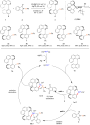
- catalytic performance. The developed catalytic system demonstrated high activity, excellent yields (mostly exceeding 85%), mild reaction conditions, broad functional group tolerance, as well as high regioselectivity, (E)-selectivity, and enantioselectivity (up to 99% ee). According to the kinetic study, the


An Fe(II)-catalyzed synthesis of spiro[indoline-3,2'-pyrrolidine] derivatives
Beilstein J. Org. Chem. 2025, 21, 2383–2388, doi:10.3762/bjoc.21.183
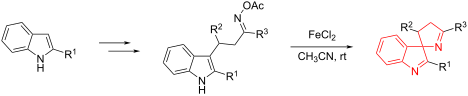
- cyclization. Subsequently Zhong et al. reported a catalytic asymmetric variant, affording spirooxindoles in high yields with excellent enantioselectivity [8]. An alternative approach employing vinyl azides involves a Rh(II)-catalyzed olefination of diazo compounds, followed by annulation with vinyl azides to
- under heating furnished chiral spiroindolylpyrroles in excellent yields and enantioselectivity (Scheme 1, path d) [11]. Moreover, a copper-catalyzed reaction of oxindole-derived alkenes with acetophenone O-acetyl oxime has also been employed to construct the spiroindolylpyrrole scaffold (Scheme 1, path




Rotaxanes with integrated photoswitches: design principles, functional behavior, and emerging applications
Beilstein J. Org. Chem. 2025, 21, 2345–2366, doi:10.3762/bjoc.21.179
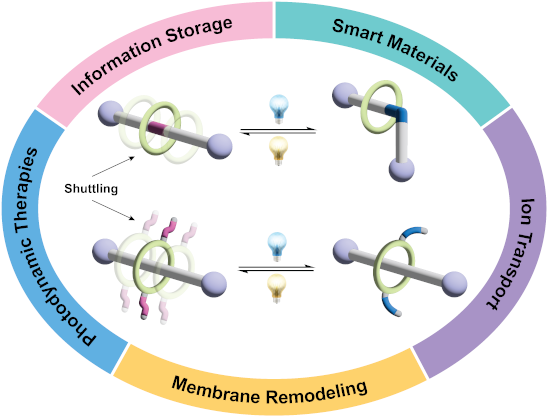
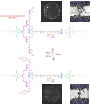
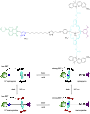
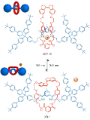
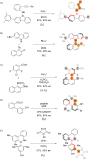
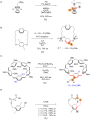
- . The photoisomerization of the hydrazone modulates the position of the tetraamide macrocycle around the pyrrolidine, breaking its symmetry and switching its handedness. This dynamic control was used to adjust the enantioselectivity of an enamine-mediated conjugate addition. In 2024, the same group





Enantioselective radical chemistry: a bright future ahead
Beilstein J. Org. Chem. 2025, 21, 2283–2296, doi:10.3762/bjoc.21.174
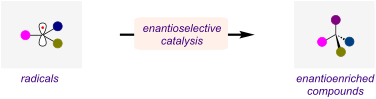
- . The past three decades have seen enormous advances in the development of enantioselective radical reactions, particularly using organocatalysts. Some of the notable chiral organocatalysts imparting enantioselectivity include chiral secondary amines, chiral Brønsted acids, and chiral H-bonding
- ], ion pairs [15], N-heterocyclic carbene (NHC) catalysts [16][17][18], or thiols [19][20][21] are not covered here but can also be effective for achieving high levels of enantioselectivity in radical reactions. Lewis acid-catalyzed radical reactions In the context of enantioselective radical reactions
- tolerated a range of substituents on the olefin, giving the products with high enantioselectivity. Reactions of chiral β-methyl-substituted aldehydes 11 and 12 with indene (13) yielded tricyclic products with good diastereoselectivity and particularly high optical purity (99% ee). Organo-SOMO catalysis was


Pathway economy in cyclization of 1,n-enynes
Beilstein J. Org. Chem. 2025, 21, 2260–2282, doi:10.3762/bjoc.21.173
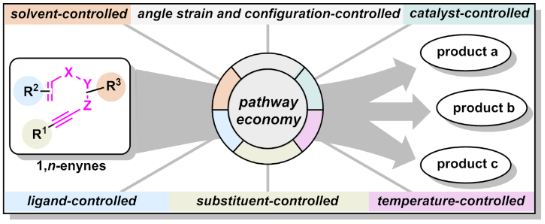
- ligands could enhance catalytic activity and efficiency while enabling fine control over chemo-, regio-, stereo-, and enantioselectivity of reactions. Ligands enhance both the thermal/chemical stability and solubility profiles of catalysts in specific reaction media. Thus, ligands function as a regulatory


C2 to C6 biobased carbonyl platforms for fine chemistry
Beilstein J. Org. Chem. 2025, 21, 2103–2172, doi:10.3762/bjoc.21.165


The application of desymmetric enantioselective reduction of cyclic 1,3-dicarbonyl compounds in the total synthesis of terpenoid and alkaloid natural products
Beilstein J. Org. Chem. 2025, 21, 2085–2102, doi:10.3762/bjoc.21.164
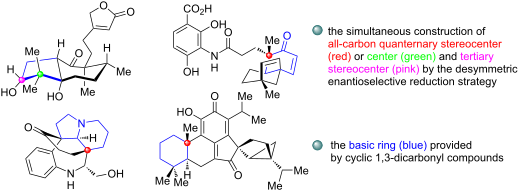
- donor, securing the desired secondary alcohol product in excellent enantioselectivity (99% ee). Protection of the alcohol group with TBDPSCl gave silyl ether 64 in high yield (79% for 2 steps). Subsequently, successive four manipulations including dehydrogenation, Morita–Baylis–Hillman reaction
- hydroxyketone 104 in excellent diastereoselectivity and enantioselectivity [9][11]. Ozonolysis of the double bond in 104 followed by Purdie methylation with Ag2O/MeI, base-mediated vinyl triflation, and Pd-catalyzed Suzuki–Miyaura cross coupling with pinacol boronate 105 delivered diene 106. Next, The Et2AlCl
- efficiency was significantly improved. Despite remarkable progress has been made, there is still a long way to go before the strategy achieves maturity for applications in natural products. Specifically, challenges remain in improving the enantioselectivity and diastereoselectivity of the desymmetric




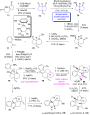

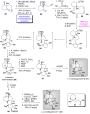


Measuring the stereogenic remoteness in non-central chirality: a stereocontrol connectivity index for asymmetric reactions
Beilstein J. Org. Chem. 2025, 21, 1995–2006, doi:10.3762/bjoc.21.155
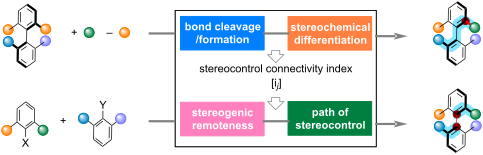
- chirality from the chiral catalyst to the product. In other words, the chiral catalyst needs to recognize, through electronic and steric effects, at least the structural features reflected by the stereocontrol connectivity index to induce enantioselectivity. Therefore, the stereocontrol connectivity index

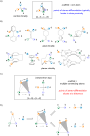



Photochemical reduction of acylimidazolium salts
Beilstein J. Org. Chem. 2025, 21, 1973–1983, doi:10.3762/bjoc.21.153
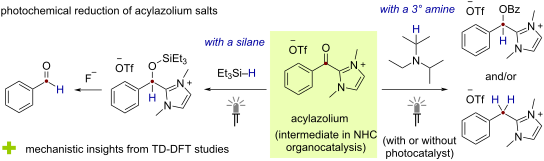
- offer many synthetic advantages while the wide availability of chiral NHCs can also allow for high levels of enantioselectivity. As effective enamine and active ester derivatives, Breslow and acylazolium intermediates A and B typically react via classical two-electron polar mechanisms, however, recent


Asymmetric total synthesis of tricyclic prostaglandin D2 metabolite methyl ester via oxidative radical cyclization
Beilstein J. Org. Chem. 2025, 21, 1964–1972, doi:10.3762/bjoc.21.152
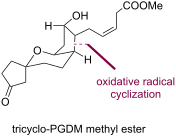
- afforded the corresponding alcohol 18 in 89% yield with excellent enantioselectivity (98% ee) [25]. The hydroxy group in 18 was then protected via treatment with TBSCl in the presence of Et3N in CH2Cl2, yielding β-keto ester 15 in 52% yield. With diketone 15 in hand, we subsequently investigated the



Enantioselective desymmetrization strategy of prochiral 1,3-diols in natural product synthesis
Beilstein J. Org. Chem. 2025, 21, 1932–1963, doi:10.3762/bjoc.21.151

- high enantioselectivity. However, since an enzymatic reaction generally produces only one of the two enantiomers, extensive enzyme screening is often required to access the desired enantiomer. Among various types of enzymes, lipases have proven to be efficient for the desymmetrization of 1,3-diols
- general mechanism of a reaction catalyzed by lipases is illustrated in Scheme 1. Additionally, the diverse three-dimensional structures of lipases confer enantioselectivity in lipase-catalyzed esterification [24][25]. Moreover, their commercial availability makes lipases an attractive option for preparing
- enhanced the reaction performance. However, excessively bulky substituents at C4 and substitutions at both C4 and C5 hindered the coordination between substrate and catalyst, and led to reduced enantioselectivity. As to the structure of 128, the electronic effect of the bromo-substituted pyridine moiety








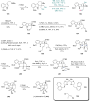
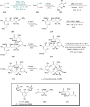


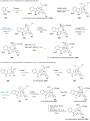


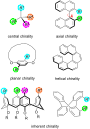
Chiral phosphoric acid-catalyzed asymmetric synthesis of helically chiral, planarly chiral and inherently chiral molecules
Beilstein J. Org. Chem. 2025, 21, 1864–1889, doi:10.3762/bjoc.21.145
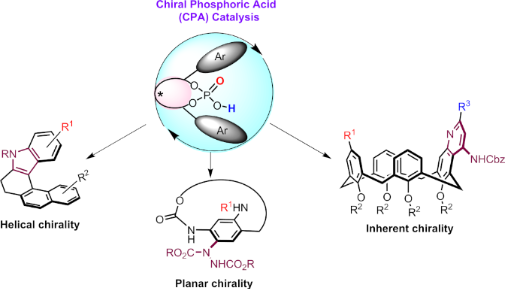
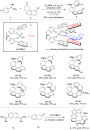
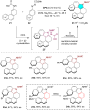
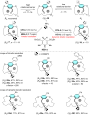
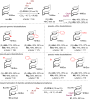
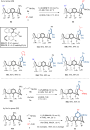
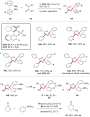
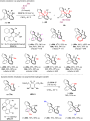
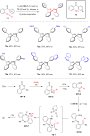
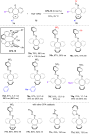
- interactions with the enehydrazine intermediate, which is essential for achieving high levels of stereocontrol. Using the optimal catalyst CPA 1, a series of aza[6]helicenes 3a,b was synthesized with excellent enantioselectivity and high yield. However, this method demonstrated notably reduced efficiency and
- stereoselectivity for the more sterically demanding aza[5]helicene 3c and aza[7]helicenes 3d–f. Furthermore, the authors expanded this methodology to a double Fischer indolization reaction between hydrazine 1i and ketone 2i, which yielded diaza[8]helicene 4 with moderate yield and high enantioselectivity after
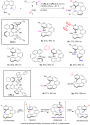
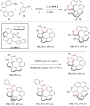
- aza[4]helicene 8e from various aldehydes with high enantioselectivity. In addition, dienamides were found to be compatible with this method, albeit requiring a switch to CPA 3 as the optimal catalyst, which generated the 1-enamide-substituted azahelicenes 8f,g, with significant potential for diverse










Systematic pore lipophilization to enhance the efficiency of an amine-based MOF catalyst in the solvent-free Knoevenagel reaction
Beilstein J. Org. Chem. 2025, 21, 1854–1863, doi:10.3762/bjoc.21.144
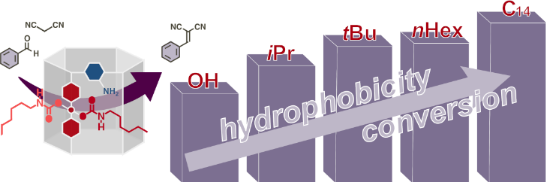
- -workers. In two separate reports, they synthesized well-defined MOFs composed of three different linkers: a proline-functionalized linker acted as the catalytic unit, while two auxiliary linkers were varied to alter catalyst activity and enantioselectivity [24], or product selectivity [25]. In those works





