


Search results
Search for "epoxy" in Full Text gives 104 result(s) in Beilstein Journal of Organic Chemistry.
Melifoliox B, a novel phloroglucin derivative isolated from Melicope barbigera (Rutaceae) and synthesis of new oxidation products from melifoliones A and B
Beilstein J. Org. Chem. 2026, 22, 535–546, doi:10.3762/bjoc.22.39
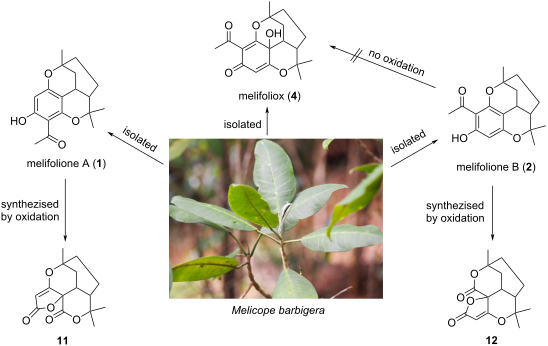
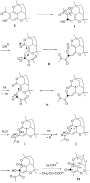
- -10b-hydroxy-6,6,9-trimethyl-1,9-epoxy-6H-dibenzo[b,d]pyran-3(10bH)-one and also propose the common name: melifoliox B for this new natural compound. The stereochemistry of 4 is characterized by the three centers of asymmetry of the isomeric melifoliones at position 6a, 9, and 10a. Since the two
- of the dichloromethane extract of Melicope barbigera leaves as a colorless and amorphous substance in an amount of 3.4 mg. fR = 0.58 on silica 60 F254-plates (Merck) with hexane/dichloromethane/methanol 5:4:1. 2-Acetyl-6a,7,8,9,10,10a-hexahydro-10b-hydroxy-6,6,9-trimethyl-1,9-epoxy-6H-dibenzo[b,d
- ), 2.26 (dt, 1H, H-10), 2.35 (s, 3H, CH3CO), 2.88 (“s”, 1H, H-10a), 6.75 (d, 2H, H-2’/H-6’), 6.97 (t, 1H, H-4’), 7.23 (t, 2H, H-3’/H-5’). Octahydro-1,1,6-trimethyl-3’,6-epoxy-spiro[1H-2-benzopyran-4,2’(5’H)-furan]-3,5’-dione (11): A mixture of 1 and 2 (300 mg, 1 mmol, ratio ca. 10:1) was dissolved in 30



A facile and practical method for the synthesis of trans-(±)-taxifolin and its derivatives via Darzens reaction
Beilstein J. Org. Chem. 2026, 22, 443–450, doi:10.3762/bjoc.22.31
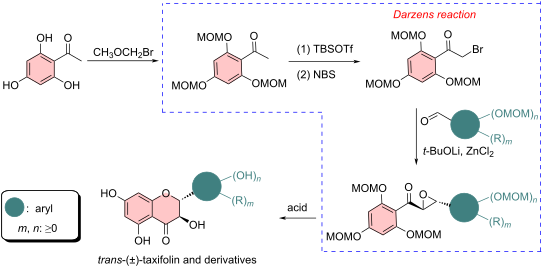
- with 2,4,6-trihydroxyacetophenone as a starting material undergoing hydroxy protection, α-bromination, construction of α,β-epoxy carbonyl products via the Darzens reaction, acid-mediated deprotection, and cyclization to afford the target compounds. This method is highlighted by satisfactory overall
- . The stereochemical outcome of the Darzens reaction may produce the α,β-epoxycarbonyl products with either the substituents on the same side or opposite side of the epoxy functionality, i.e., as cis/trans isomers. In this work, the α,β-epoxycarbonyl product contains bulky multiple-substituted benzene
- moieties (such as bis- or tris-MOMO-substituted phenyl substituents). Due to the steric hindrance, the trans-configured product with the phenyl substituents on the opposite side of the epoxy functionality is obtained. Additionally, the clean reaction process shown by TLC and the NMR spectrum of the product


Recent advances in total synthesis of illisimonin A
Beilstein J. Org. Chem. 2025, 21, 2571–2583, doi:10.3762/bjoc.21.199
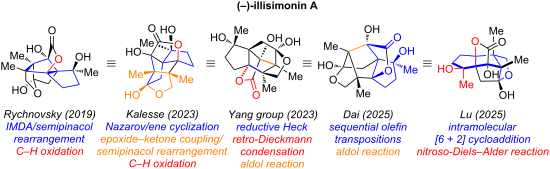
- [5.2.1.01,5]decane core with a cis-pentalene unit. The product was further processed into rearrangement precursor 46 (as an inseparable mixture, dr = 1:1.6) by TBS protection of the primary alcohol and epoxidation of the alkene with m-CPBA. Unlike Rychnovsky’s substrate, epoxy alcohol 46 underwent






Total syntheses of highly oxidative Ryania diterpenoids facilitated by innovations in synthetic strategies
Beilstein J. Org. Chem. 2025, 21, 2553–2570, doi:10.3762/bjoc.21.198
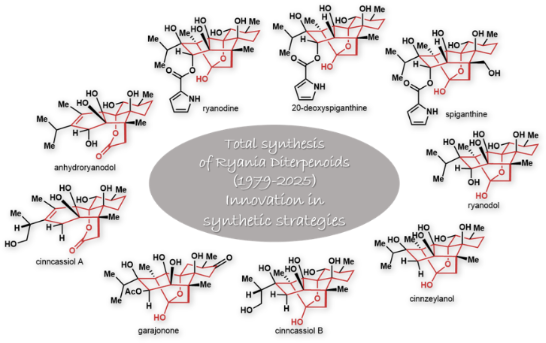
- material. Key transformations included regioselective and stereoselective alkene epoxidation, organoselenium-mediated reductive cleavage of the α,β-epoxy ketone, and a hydroxy-directed stereospecific Mukaiyama hydration. These operations successfully introduced the C6 and C10 oxidation states, enabling the
- oxidation with freshly prepared trifluoroperacetic acid in n-pentane converted 111 to bis-epoxide 112 with excellent stereoselectivity and yield. Subjecting 112 to oxidation and organoselenium-mediated regioselective α,β-epoxy ketone opening, followed by intramolecular transesterification and elimination
- , the bis-epoxy ketone exhibited distinct reactivity under ring-opening conditions compared to mono-epoxy substrates, presumably due to steric constraints. Leveraging the directing ability of the C10 hydroxy group, stereospecific Mukaiyama hydration of the C6–C7 double bond was achieved, furnishing







Transformation of the cyclohexane ring to the cyclopentane fragment of biologically active compounds
Beilstein J. Org. Chem. 2025, 21, 2416–2446, doi:10.3762/bjoc.21.185
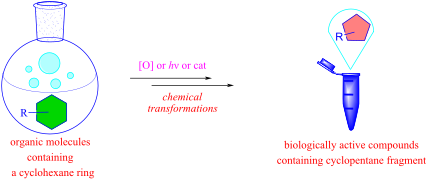
- practical importance when considering various transformations including the transformation of hexanes into cyclopentanes. An interesting photochemical rearrangement of 5,6-epoxy derivatives of the Diels–Alder adduct of LG and piperylene was described in reference [74]. This reaction leads to the formation
- with a yield of 51% (Scheme 28). As a result of the photolysis of 5,6-epoxy ketones 146 and 152, valuable derivatives of cyclopentane, 147a,b, 151, and 153 were obtained. Photochemistry is an important tool in the synthesis of natural and synthetic biologically active substances based on polycyclic
- products of epoxide ring opening. It should be noted that the position of the epoxy ring in the 6-membered ring has a major influence on the composition of reaction products. Catalysts only affect the yield of the reaction. A striking confirmation of this is the work of Berteina-Raboin and co-workers [87


C2 to C6 biobased carbonyl platforms for fine chemistry
Beilstein J. Org. Chem. 2025, 21, 2103–2172, doi:10.3762/bjoc.21.165


Oxetanes: formation, reactivity and total syntheses of natural products
Beilstein J. Org. Chem. 2025, 21, 1324–1373, doi:10.3762/bjoc.21.101
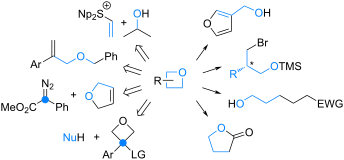
- moderate to good yields of the spirocycle. The reaction is assumed to proceed through a Michael addition followed by Williamson etherification of the resulting γ-hydroxyselenone 12. In 2022, Kleij et al. reported a domino synthesis of bicyclic 3,5-anhydrofuranoses 15 using easily accessible bis-epoxy










Synthetic approach to borrelidin fragments: focus on key intermediates
Beilstein J. Org. Chem. 2025, 21, 1135–1160, doi:10.3762/bjoc.21.91
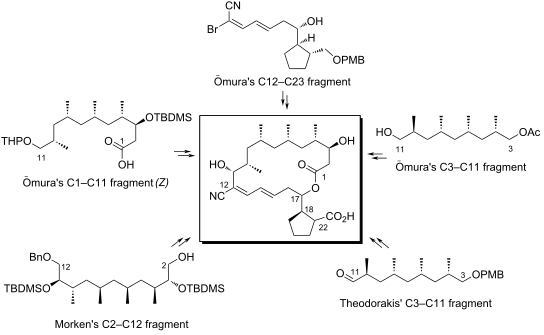
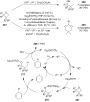
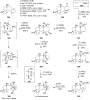
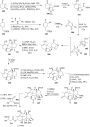
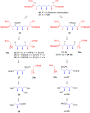
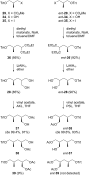
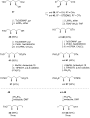
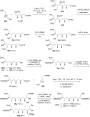
- epoxides 23b and 23a with the non-protected variant 23c, and reacting it with sulfone 27 after pre-complexation with Ti(OiPr)4, again led only to decomposition. Given the unsatisfying results, Uguen and co-workers replaced the epoxides 23a–c to monoethers 46a and 46b, derived from trans-2,3-epoxy-1,4








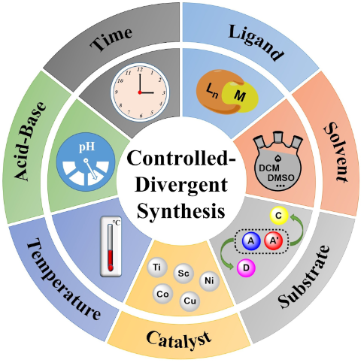
Recent advances in controllable/divergent synthesis
Beilstein J. Org. Chem. 2025, 21, 890–914, doi:10.3762/bjoc.21.73
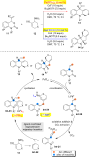
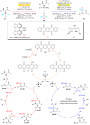
- cycloaddition reactions with substituted furans as diene component to produce the corresponding epoxy-cycloaddition adducts. The authors developed an Ir/Sc tandem catalytic reaction to convert these adducts into polysubstituted 3-haloisoquinolines 99 in one pot. After obtaining isoquinoline compounds 99 with







Photomechanochemistry: harnessing mechanical forces to enhance photochemical reactions
Beilstein J. Org. Chem. 2025, 21, 458–472, doi:10.3762/bjoc.21.33
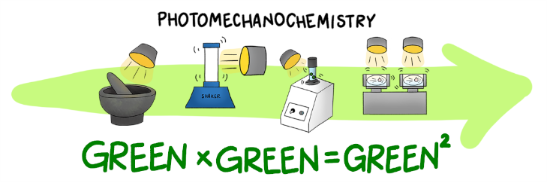
- for its high-energy input, automated operation, and reproducibility, making it ideal for larger-scale and more force-intensive reactions. Both LED strips and LED lamps are used as light sources in combination with transparent jars in PMMA, glass, or epoxy resins. It can achieve consistent results but
- research communities. This has led to the creation of hybrid systems – improvised combinations of commercial ball mills with transparent jars (e.g., PMMA, glass, quartz, or epoxy resin) and off-the-shelf LED lamps or strips. However, a standardized apparatus for photomechanochemistry is not available yet




Computational design for enantioselective CO2 capture: asymmetric frustrated Lewis pairs in epoxide transformations
Beilstein J. Org. Chem. 2024, 20, 2668–2681, doi:10.3762/bjoc.20.224
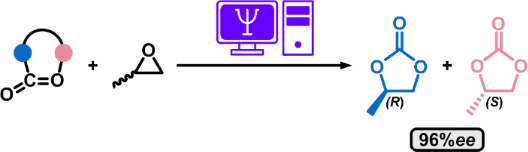
- the (S) epoxide with the (R) product was identified (Figure 8). Even more intriguingly, this new TS (TS_S_R in ), verified by the IRC calculation (Figure S5, Supporting Information File 1) is the most stable TS located (Figure 9). In this TS, the epoxy ring opens (Figure 9). Because of a shorter C–C
- distance between the CH3 group in the catalyst and the epoxy carbon atom (3.45 Å vs 3.75 Å in TS_S_S), a steric clash between the two methyl groups occurs (Figure 9). This results in an inversion of stereochemistry via rotation of the epoxy C–C bond, leading to the formation of the (R) product. As two TSs


Facile preparation of fluorine-containing 2,3-epoxypropanoates and their epoxy ring-opening reactions with various nucleophiles
Beilstein J. Org. Chem. 2024, 20, 2421–2433, doi:10.3762/bjoc.20.206
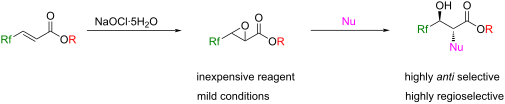
- -to-handle reagent, NaOCl·5H2O. Because very little has been disclosed about the reactivity of such 2,3-epoxyesters, their epoxy ring opening by a variety of nucleophiles was carried out and we succeeded in clarifying these chemo- as well as regioselective processes proceeding via the SN2 mechanism to
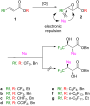
- is the high regio- and stereoselectivities of its epoxy ring opening specifically occurring at the 2 position in an SN2 manner, when it is treated with appropriate nucleophiles (Nu), leading to the formation of the 2-substituted 3-hydroxyesters with 2,3-anti stereochemistry. These characteristic
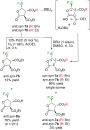
- failed in this transformation and recovery of 2b was observed (Table 2, entry 10). As was pointed out in the introductory section, the highly regioselective epoxy ring opening is well compared with the case when the nonfluorinated substrate (Ph instead of CF3 in 2b) was employed [25][26]. With the





Factors influencing the performance of organocatalysts immobilised on solid supports: A review
Beilstein J. Org. Chem. 2024, 20, 2129–2142, doi:10.3762/bjoc.20.183
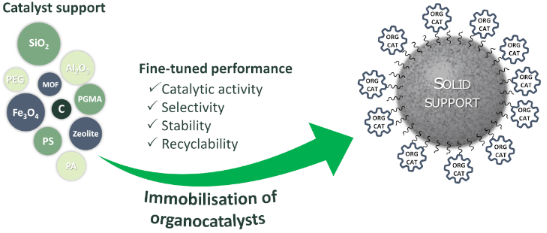
- derivatives 29–31 were immobilised on this polymer support by utilising its reactive epoxy groups (Scheme 9). These structurally diverse precatalysts were prepared by modifying the cinchona skeleton at different positions to investigate how the amino group-containing linker affects them. The immobilised


Chiral bifunctional sulfide-catalyzed enantioselective bromolactonizations of α- and β-substituted 5-hexenoic acids
Beilstein J. Org. Chem. 2024, 20, 1794–1799, doi:10.3762/bjoc.20.158
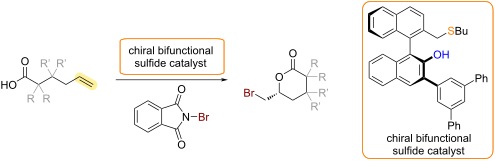
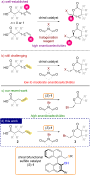
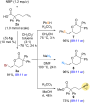
- -valerolactones 7 and 8, which are functionalized with sulfur and nitrogen, in high yields. Additionally, optically active δ-valerolactone 3a was converted to optically active epoxy-ester 9 upon treatment with potassium carbonate in methanol. Notably, the transformed products were obtained without any loss of
- were obtained in moderate to good levels of enantioselectivity. The utility of the prepared optically active bromolactonization products was demonstrated in the transformations to functionalized δ-valerolactones and epoxy-esters. These transformations proceeded with no loss of optical purity. This



Computation-guided scaffold exploration of 2E,6E-1,10-trans/cis-eunicellanes
Beilstein J. Org. Chem. 2024, 20, 1320–1326, doi:10.3762/bjoc.20.115

- -epoxide 9, which readily crystallized (Figure 2A and Figures S5–S10, Table S1 in Supporting Information File 1). Similarly, the 6,7-epoxy derivatives of klysimplexin R (3) and microeunicellene (4) were recently synthesized and isolated [11][21]; 3 cyclized to the 6/6/6-scaffold after the addition of acid
- [22]. An X-ray structure of 9 allowed us to solve its absolute configuration and measure the C2–C7 distance to be 3.31 Å. This distance matches reasonably well with the calculated distance, 3.36 Å, of the lowest energy conformer of 9. Calculation of the proposed 6,7-epoxy derivative of 2, which was


Synthesis of new representatives of A3B-type carboranylporphyrins based on meso-tetra(pentafluorophenyl)porphyrin transformations
Beilstein J. Org. Chem. 2024, 20, 767–776, doi:10.3762/bjoc.20.70
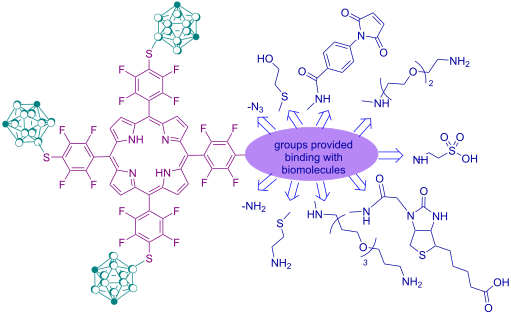
- porphyrins to other biological substrates and thus facilitate the conjugation with biomacromolecules [10][11]. The modification of the porphyrin periphery with amino-, azido-, epoxy-, hydroxy-, and maleimido-functionalities is usually used for the covalent linkage of the porphyrin to the targeted



Entry to new spiroheterocycles via tandem Rh(II)-catalyzed O–H insertion/base-promoted cyclization involving diazoarylidene succinimides
Beilstein J. Org. Chem. 2024, 20, 561–569, doi:10.3762/bjoc.20.48
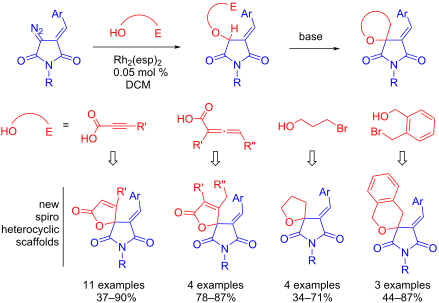
- multitarget drugs against COVID-19 [36], and amiaspochalasin C isolated from the solid culture of Aspergillus micronesiensis [37] and 1,9-epoxy-9a-hydroxystenine from the roots of Stemona tuberosa [38]) (Figure 1). Hence, the development of novel synthetic methods to construct spiro O-heterocycles constitutes


Non-noble metal-catalyzed cross-dehydrogenation coupling (CDC) involving ether α-C(sp3)–H to construct C–C bonds
Beilstein J. Org. Chem. 2023, 19, 1259–1288, doi:10.3762/bjoc.19.94
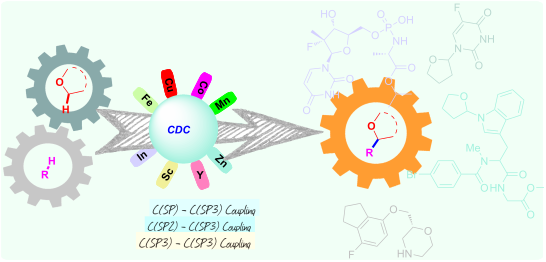
- ]. The current synthesis method depends on the reaction of organic borane with epoxy carbonyl compounds. Using the CDC reaction can save some synthesis steps [105]. Based on DDQ-mediated oxidative C–H functionalization of benzyl ethers, the mechanism can be described as a single electron transfer (SET










Cytochrome P450 monooxygenase-mediated tailoring of triterpenoids and steroids in plants
Beilstein J. Org. Chem. 2022, 18, 1289–1310, doi:10.3762/bjoc.18.135
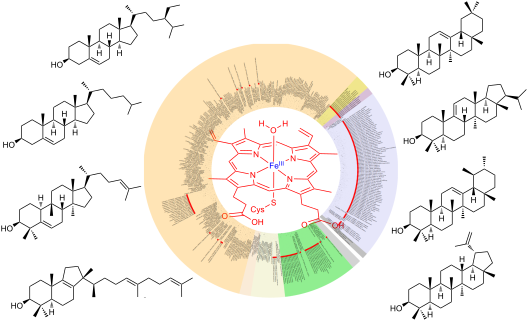
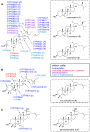
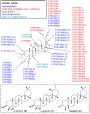
- capacity to catalyse highly regio- and stereospecific reactions on complex substrates. Besides simple hydroxylations, they can also introduce oxo, carboxy, or epoxy moieties or double bonds. Such decorations often also enable additional layers of diversification by glycosyltransferases or acyltransferases
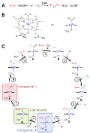
- that performs hydroxylation and epoxidation reactions of the β-amyrin (6) scaffold to produce 12,13β-epoxy-16β-hydroxy-β-amyrin [1][99]. Thus, CYP51H10 is an example of a neofunctionalised CYP recruited from primary sterol metabolism. Two members of the CYP87D subfamily decorate the tetracyclic




Shift of the reaction equilibrium at high pressure in the continuous synthesis of neuraminic acid
Beilstein J. Org. Chem. 2022, 18, 567–579, doi:10.3762/bjoc.18.59
- of 80 mgenzyme/gcarrier was achieved. Two carriers revealed lower yields with enzyme loadings of 30 and 40 mgenzyme/gcarrier (epoxy methacrylate, polymethacrylic DVB). The aldolase revealed the highest loadings with 80 mgenzyme/gcarrier for the amino methacrylate und macroporous styrene carrier. The
- methacrylate reveals the lowest calculated specific activity compared to other utilized carriers with less than 20 U/gcarrier. The highest specific activity was achieved with two epoxy-functionalized carriers (epoxy butyl methacrylate and polymethacrylic DVB) with over 100 U/gcarrier. The aldolase reveals the
- highest activities immobilized on amino methacrylate with about 25 U/gcarrier. Compared to this, the results of all other specific activities were lower with less than 10 U/gcarrier. Here the epoxy butyl methacrylate and the macroporous styrene carrier reveal slightly more activity with more than 5 U


Synthesis of piperidine and pyrrolidine derivatives by electroreductive cyclization of imine with terminal dihaloalkanes in a flow microreactor
Beilstein J. Org. Chem. 2022, 18, 350–359, doi:10.3762/bjoc.18.39
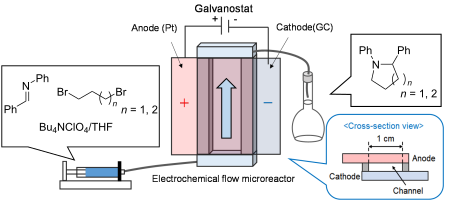
- sandwiched together. After connecting Teflon tubings to the inlets and outlet, the reactor was sealed with epoxy resin (Supporting Information File 1, Figure S2). Thus, the dimensions of the flow channel in the reactor are 1 cm width and 3 cm length, and the channel height corresponds to the thickness of the


Regioselectivity of the SEAr-based cyclizations and SEAr-terminated annulations of 3,5-unsubstituted, 4-substituted indoles
Beilstein J. Org. Chem. 2022, 18, 293–302, doi:10.3762/bjoc.18.33
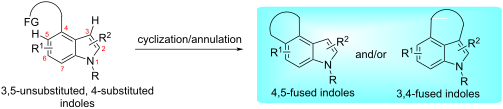
- synthesis of pyrano[2,3-e]indol-3-ols 41 via trifluoroethanol-mediated intramolecular ring-opening cyclization of 4-(2-oxiranylmethoxy)indoles 40 which were prepared by O-alkylation of 4-hydroxyindole 38 using epoxy tosylates 39 as the alkylating agents, followed by (in selected cases) N-tert


Synthesis and late stage modifications of Cyl derivatives
Beilstein J. Org. Chem. 2022, 18, 174–181, doi:10.3762/bjoc.18.19
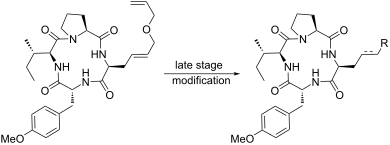
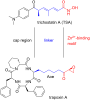
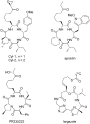
- , non-proteinogenic amino acid (2S,9S)-2-amino-9,10-epoxy-8-oxodecanoic acid (Aoe) as a zinc-binding group. Interestingly, Aoe with its α-epoxyketone motif is wide-spread among this compound class as it is present in other natural products such as Cyl-1 and Cyl-2 [16][17], chlamydocin [18], and many



In-depth characterization of self-healing polymers based on π–π interactions
Beilstein J. Org. Chem. 2021, 17, 2496–2504, doi:10.3762/bjoc.17.166
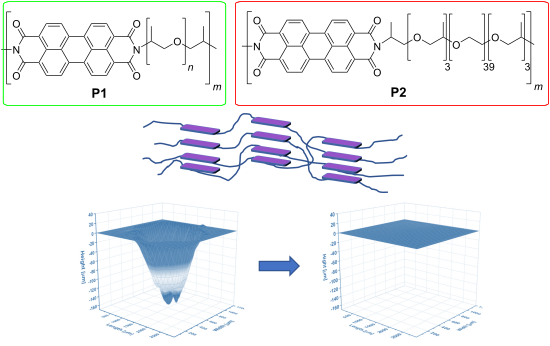
- literature [31]. In the first step, the sample was hot pressed (at 150 °C, at about 2 t for 3 minutes) in a special manufactured mold. The pressed polymer samples were embedded in epoxy resin consisting of Epoxy Resin L and Hardener CL from R&G Faserverbundstoffe GmbH, followed by grinding of the sample with


Strategies for the synthesis of brevipolides
Beilstein J. Org. Chem. 2021, 17, 2399–2416, doi:10.3762/bjoc.17.157
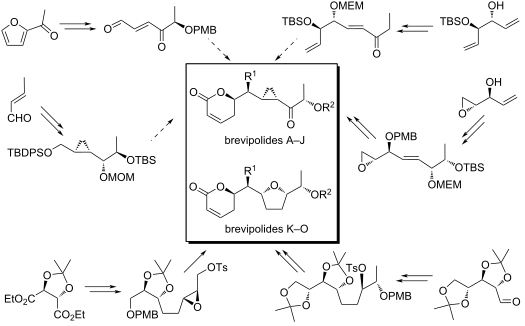
- commercially available (E)-p-methoxycinnamic acid (17). The vital intermediate 16 is expected from cyclopropyl epoxy alcohol 18, which in turn can be prepared from allylic alcohol 19 via the Furukawa-modified Simmons–Smith cyclopropanation and VO-mediated epoxidation. Acetylfuran (20) is chosen as the six
- desired epoxide 30 after one hour in 85% yield (dr 10:1). This species was next converted to the terminal carbonate derivative 31 to transform the epoxy functionality to a vicinal diol through a two-step manipulation involving protection of the terminal alcohol as Boc derivative followed by BF3·Et2O
- . Eventually, trans-crotonaldehyde (62) is selected as the precursor for this study. The study began with the enantioselective epoxidation of trans-crotonaldehyde (62) under Jørgensen conditions using organocatalyst 63, followed by a two-carbon homologation to obtain α,β-unsaturated epoxy ester 64 in 78% yield





