Search results
Search for "five-membered ring" in Full Text gives 153 result(s) in Beilstein Journal of Organic Chemistry.
Construction of CF2 moieties in FDA-approved drugs (2016–2025): industrial routes, mechanisms, and scale-up considerations
Beilstein J. Org. Chem. 2026, 22, 1122–1150, doi:10.3762/bjoc.22.91
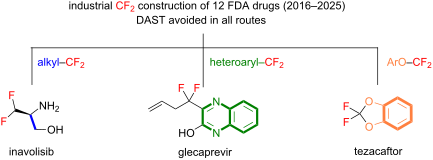
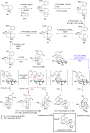
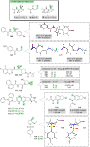
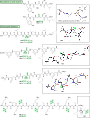
- aldehyde group in molecule 15 using DAST (a nucleophilic fluorination mechanism, see section 2.1.1 for details). This fluorination step was highly challenging. After a series of optimizations, the optimal process on the hundred-gram scale achieved only 40% yield, due to the formation of the five-membered
- ring impurity 16, which was influenced by the three-membered ring and the ester bond in molecule 15 itself. This impurity was successfully recovered as the dithioacetal of 15 in 35% yield. Overall, although intermediate 14 had already been synthesized on a 12 kg scale (29% yield over six steps, using






Spirobarbiturates with a pyrrolizidine moiety: synthesis, structure and biological evaluation
Beilstein J. Org. Chem. 2026, 22, 274–288, doi:10.3762/bjoc.22.20
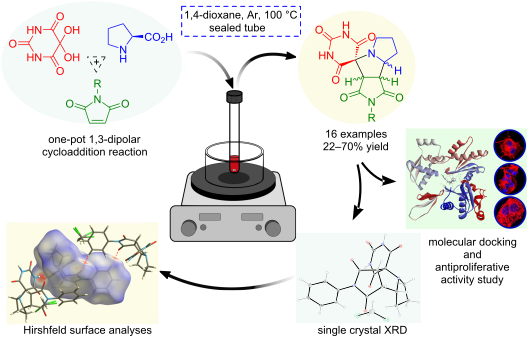
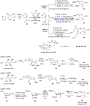
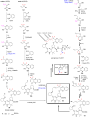
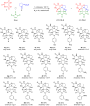
- spectrum of product 4p exhibited three doublet signals corresponding to the methine proton in a five-membered ring formed during cycloaddition. This observation indicated the formation of atropisomers in the 1,3-dipolar cycloaddition of N-(2-methoxyphenyl)maleimide (3p) which was previously reported by
- 4b and 4d (δ 2.79 and 2.35 ppm, respectively) also fall within this range. The methylene protons of the five-membered ring A (Figure 1) in endo-isomers 4a–e resonate as complex multiplets: CH22 and CH23 groups appear at δ 1.65–2.05 ppm, while CH21 is deshielded (δ 2.54–2.70 ppm), consistent with the




Recent advances in total synthesis of illisimonin A
Beilstein J. Org. Chem. 2025, 21, 2571–2583, doi:10.3762/bjoc.21.199
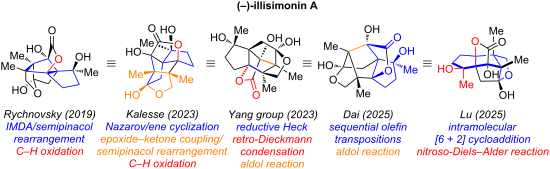
- NaOH facilitated a retro-Claisen reaction, yielding the intermediate 106, which subsequently underwent an intramolecular aldol reaction to form the five-membered ring. The resulting carboxylic acid was then esterified with TMSCHN2 to furnish ester 107, which possesses the characteristic tricyclo






Total syntheses of highly oxidative Ryania diterpenoids facilitated by innovations in synthetic strategies
Beilstein J. Org. Chem. 2025, 21, 2553–2570, doi:10.3762/bjoc.21.198
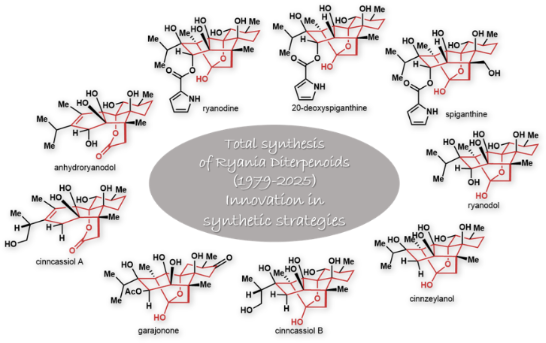
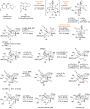
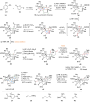
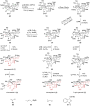
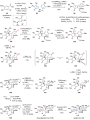
- of (+)-ryanodol (4) in just 15 steps, highlighting the Pauson–Khand cyclization and a selenium dioxide-mediated selective oxidation as key transformations [48] (Scheme 7). To construct the multi-substituted five-membered ring in the target molecule, the authors strategically employed the Pauson–Khand







The intramolecular stabilizing effects of O-benzoyl substituents as a driving force of the acid-promoted pyranoside-into-furanoside rearrangement
Beilstein J. Org. Chem. 2025, 21, 2456–2464, doi:10.3762/bjoc.21.187
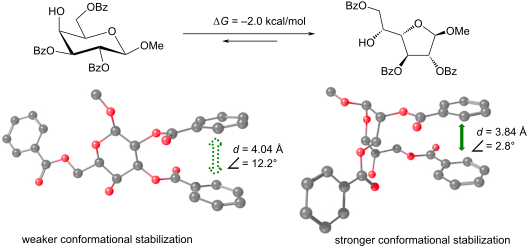
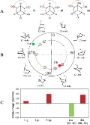
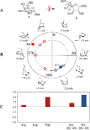
- five-membered ring due to the formation of an intramolecular hydrogen bond (Figure 2A). It has been shown that furanoside is preferentially formed in nonpolar solvents such as toluene. This form was successfully fixed and purified as benzoate derivative. Bulky substituents can also stabilize the




Synthetic study toward vibralactone
Beilstein J. Org. Chem. 2025, 21, 2376–2382, doi:10.3762/bjoc.21.182

- alkylidene carbene. Therefore, we modified the synthetic sequence and opted to construct the five-membered ring prior to β-lactone formation, identifying intermediate 19 as a potentially suitable precursor. From 19, after treatment with lithiotrimethylsilyldiazomethane [45], only tetrahydrofuran 22 was
- 1,3-diol intermediate was transformed into acetonide 25 (Scheme 5). Subsequently, the desired five-membered ring was successfully constructed through the in situ-generated alkylidene carbene 26 followed by C–H insertion; herein lies a significant electronic effect influencing this crucial step. With


Recent advances in Norrish–Yang cyclization and dicarbonyl photoredox reactions for natural product synthesis
Beilstein J. Org. Chem. 2025, 21, 2315–2333, doi:10.3762/bjoc.21.177
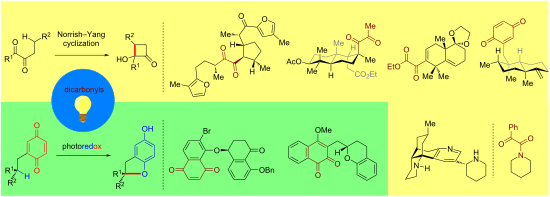
- conditions (300 W Xe lamp, MeOH/CH3CN = 3:1, −78 °C) induced the formation of the five-membered ring, forming spiroacetal (−)-107 in 68% yield with nearly complete configurational integrity (98% ee). This high stereoselectivity is attributed to three factors: (1) polar solvents enhance yields by accelerating







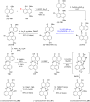
Pathway economy in cyclization of 1,n-enynes
Beilstein J. Org. Chem. 2025, 21, 2260–2282, doi:10.3762/bjoc.21.173
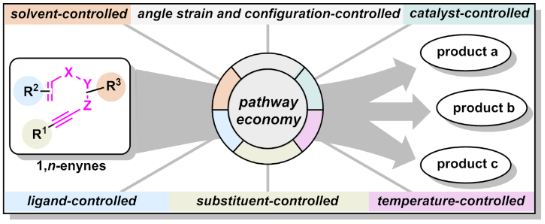
- polycyclic aromatic heterocycles (Scheme 15) [23]. Catalysts bearing the strong σ-donating IPr ligand exhibited a marked preference for the 5-exo-dig cyclization pathway, affording five-membered ring product 70 (Scheme 15, path a). When a bulky Me4XPhos ligand was employed, the reaction favored 6-endo-dig


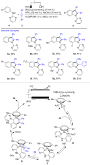
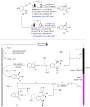
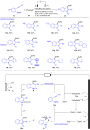
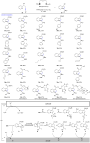
Electrochemical cyclization of alkynes to construct five-membered nitrogen-heterocyclic rings
Beilstein J. Org. Chem. 2025, 21, 2173–2201, doi:10.3762/bjoc.21.166
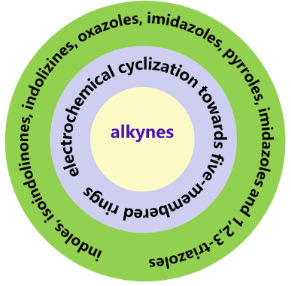
- reaction mechanisms are disclosed if available. Keywords: alkyne; catalysis; cyclization; electrochemistry; five-membered ring; Introduction Organic five-membered rings, an essential class of organic compounds, not only are frequently used as important starting materials, intermediates or ligands in


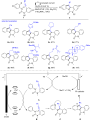



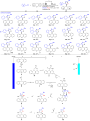
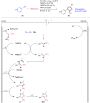

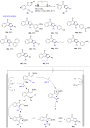


The application of desymmetric enantioselective reduction of cyclic 1,3-dicarbonyl compounds in the total synthesis of terpenoid and alkaloid natural products
Beilstein J. Org. Chem. 2025, 21, 2085–2102, doi:10.3762/bjoc.21.164
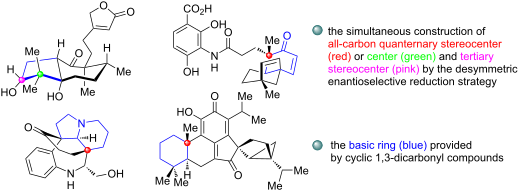
- -cyclopentanedione derivative was adopted as one of the key reactions, which facilitated the construction of the five-membered ring bearing an all-carbon quaternary center as the key chiral building block. Their synthesis began with 1,3-dione 40 (Scheme 2) [31][32], allylation of this substrate with allylic bromide


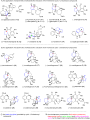


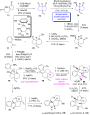

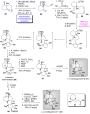


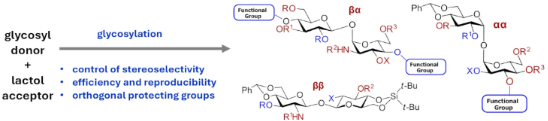
Approaches to stereoselective 1,1'-glycosylation
Beilstein J. Org. Chem. 2025, 21, 1700–1718, doi:10.3762/bjoc.21.133


Formal synthesis of a selective estrogen receptor modulator with tetrahydrofluorenone structure using [3 + 2 + 1] cycloaddition of yne-vinylcyclopropanes and CO
Beilstein J. Org. Chem. 2025, 21, 1639–1644, doi:10.3762/bjoc.21.127
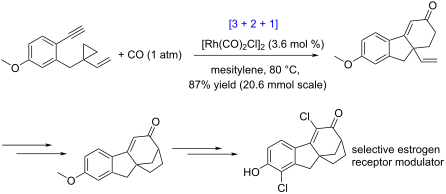
- annulation to construct the C ring (cyclohexenone ring), and an intramolecular SN2 reaction to build the D ring (five-membered ring) [15][16][17][18]. In 2013, Wallace and co-workers disclosed the second route for this molecule (Scheme 2B) [19], in which the five-membered ring B was formed by utilizing


Facile synthesis of hydantoin/1,2,4-oxadiazoline spiro-compounds via 1,3-dipolar cycloaddition of nitrile oxides to 5-iminohydantoins
Beilstein J. Org. Chem. 2025, 21, 1552–1560, doi:10.3762/bjoc.21.118

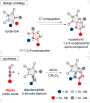
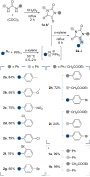
- in the formation of two new carbon–heteroatom bonds and the formation of a five-membered ring. Thus, the aryl attached to the nitrogen atom from the dipolarophile fragment is brought closer to the substituent from the C-end of the dipole. This proximity in the presence of ortho-substituents in the



Wittig reaction of cyclobisbiphenylenecarbonyl
Beilstein J. Org. Chem. 2025, 21, 1454–1461, doi:10.3762/bjoc.21.107
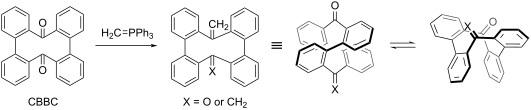
- nucleophilic substitution of the thus generated alkoxide to form an oxygen-containing five-membered ring. At least, density functional theory (DFT) calculations support that the nucleophilic attack of methylenetriphenylphosphorane to the exo-methylene unit is slightly favorable over reaction with the carbonyl



Development and mechanistic studies of calcium–BINOL phosphate-catalyzed hydrocyanation of hydrazones
Beilstein J. Org. Chem. 2025, 21, 755–765, doi:10.3762/bjoc.21.59
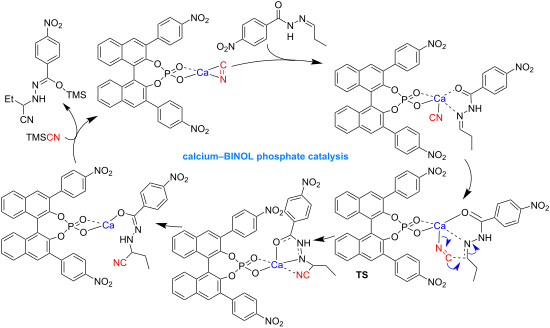
- -state structure, two bonds (Ca–O and Si–C) are broken, while a Si–O bond is simultaneously formed, in a concerted step implying a cyclic flow of six electrons in a five-membered ring. The isocyanide Ca–N–C bond angle in TS 11-12 lies between that of 7 and 9. While the replacement step is slow, and hence


Origami with small molecules: exploiting the C–F bond as a conformational tool
Beilstein J. Org. Chem. 2025, 21, 680–716, doi:10.3762/bjoc.21.54
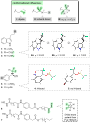
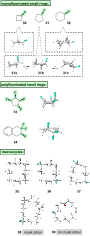
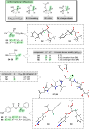
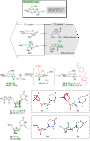
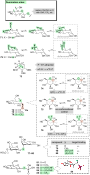
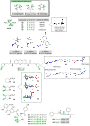
- rate and the β-stereoselectivity of the glycosylation reaction (e.g., 63 → 65 vs 64 → 66, Figure 9) [129]. Of course, the fluorine substituent remains in the product, which may or may not be advantageous depending on the particular biological context. Let us now consider furanoses (i.e., five-membered
- ring sugars). Five-membered rings are inherently more flexible than six-membered rings, so there is more scope for fluorine to influence the pucker. When fluorine is introduced anywhere across C-1–C-3 as a replacement for a hydroxy group (e.g., 67 and 68, Figure 9), the preferred ring pucker is



Unraveling aromaticity: the dual worlds of pyrazole, pyrazoline, and 3D carborane
Beilstein J. Org. Chem. 2025, 21, 412–420, doi:10.3762/bjoc.21.29
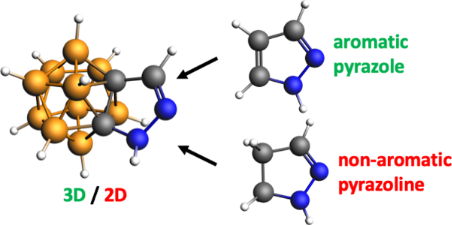
- also applied to o-carboranes fused with five-membered ring systems [39][40]. The positioning of the heteroatom in these exo rings governs bonding, leading to restricted conjugation and, consequently, no aromatic stabilization. Importantly, the magnetic field generated by the 3D cluster influences the
- the carborane and the pyrazole, i.e., B–B, C–B and C–C decrease from 1.760, to 1.674 and to 1.605 Å, respectively (Figure 2). Thus, the longer the length of the fusing bond, the lower the tension of the formed five-membered ring and the more stable the complex. The stronger strength of the C–B bond
- , although 2-pyrazoline presents a shorter 1.40 Å distance (Figure 2). Thus, and based on the above geometrical data, compared to either pyrazole or indazole molecules, can the pyrazole fused to o-carborane be referred as pyrazole? Or otherwise, should we refer to this five-membered ring as pyrazoline due to


Synthesis, characterization, antimicrobial, cytotoxic and carbonic anhydrase inhibition activities of multifunctional pyrazolo-1,2-benzothiazine acetamides
Beilstein J. Org. Chem. 2025, 21, 348–357, doi:10.3762/bjoc.21.25
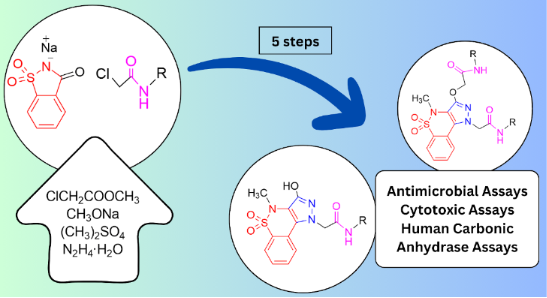
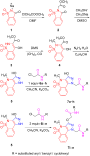
- dry DMF. The five-membered ring of this esterified benzisothiazole 2 was then expanded to form a six-membered cycle via a ring-expansion reaction in anhydrous conditions. In this reaction, the benzisothiazole scaffold was converted into a benzothiazine backbone 3 followed by N-methylation to obtain


Streamlined modular synthesis of saframycin substructure via copper-catalyzed three-component assembly and gold-promoted 6-endo cyclization
Beilstein J. Org. Chem. 2025, 21, 226–233, doi:10.3762/bjoc.21.14
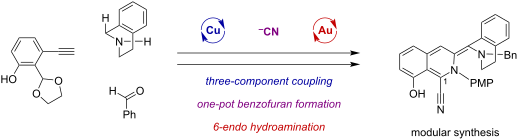
- , was obtained in one-pot, presumably via generation of the aminonitrile 17 and subsequent nucleophilic attack of the phenolic hydroxy group to form the five-membered ring. Our efforts to optimize this one-pot sequence led to the best results, affording 11 in 73% isolated yield, when acetone cyanohydrin




Emerging trends in the optimization of organic synthesis through high-throughput tools and machine learning
Beilstein J. Org. Chem. 2025, 21, 10–38, doi:10.3762/bjoc.21.3


Synthesis, structure and π-expansion of tris(4,5-dehydro-2,3:6,7-dibenzotropone)
Beilstein J. Org. Chem. 2025, 21, 1–7, doi:10.3762/bjoc.21.1
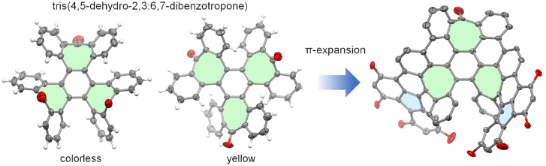
- -membered ring, and one seven-membered ring, and the third one containing three benzene rings and two seven-membered rings. The crystal structure of 3·CH2Cl2 reveals that each unit cell contains a pair of enantiomers, (M,P,M)-3 and (P,M,P)-3, co-crystallized with two molecules of CH2Cl2. Here P and M
- than the colorless crystal of Cs-1. Slow evaporation of solvent from a solution of 3 in CH2Cl2/CH3OH resulted in the formation of single crystals suitable for X-ray crystallography [27]. Compound 3 consists of three [5]helicenoid moieties, with two of them containing three benzene rings, one five


Recent advances in transition-metal-free arylation reactions involving hypervalent iodine salts
Beilstein J. Org. Chem. 2024, 20, 2891–2920, doi:10.3762/bjoc.20.243





Synthesis of tricarbonylated propargylamine and conversion to 2,5-disubstituted oxazole-4-carboxylates
Beilstein J. Org. Chem. 2024, 20, 2827–2833, doi:10.3762/bjoc.20.238

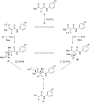
- acid amides and acetylides, respectively. When adduct 4 was treated with a base or ammonium acetate, ring closure proceeded to form a five-membered ring, accompanied by the elimination of the ethoxycarbonyl group. 2,5-Disubstituted oxazole-4-carboxylic acid derivatives are frequently found in


Computational design for enantioselective CO2 capture: asymmetric frustrated Lewis pairs in epoxide transformations
Beilstein J. Org. Chem. 2024, 20, 2668–2681, doi:10.3762/bjoc.20.224
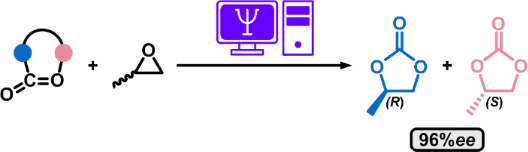
- this FLP is situated within a five-membered ring. Using this structural insight, an asymmetric catalyst was subsequently designed by strategically modifying the pyrrolidine substituent (C5 in Figure 4) based on the most efficient FLP. The coupling reaction proposed in Scheme 3 was studied. In order to


Anion-dependent ion-pairing assemblies of triazatriangulenium cation that interferes with stacking structures
Beilstein J. Org. Chem. 2024, 20, 2567–2576, doi:10.3762/bjoc.20.215
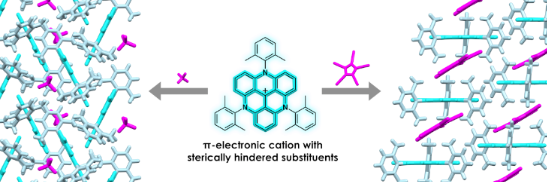
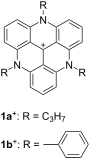
- 2+-B(C6F5)4−, the distance between the boron of B(C6F5)4− and the central carbon of TATA+ was 7.32 Å, with an offset angle of 47.1° (Figure 3d, Figure 7a, and Figures S14 and S20 in Supporting Information File 1). On the other hand, in 2+-PCCp−, the PCCp− unit (centroid of the five-membered ring