Search results
Search for "functional materials" in Full Text gives 178 result(s) in Beilstein Journal of Organic Chemistry.
Z-Selective semihydrogenation of alkynes via Ni/Lewis acid synergistic catalyzed system using DMF as hydrogen source and solvent
Beilstein J. Org. Chem. 2026, 22, 1004–1012, doi:10.3762/bjoc.22.79
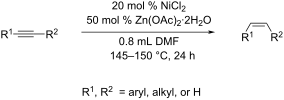
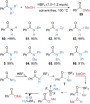
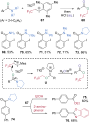
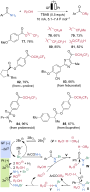
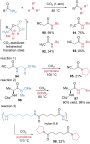
- available catalysts, and demonstrates broad applicability across a wide range of substrates. Keywords: alkynes; DMF; Ni/Lewis acid catalysis; Z-selective semihydrogenation; Introduction Z-Olefins represent important structural units in natural products, pharmaceuticals, and functional materials, making



Novel macrocycles: from synthesis to supramolecular function
Beilstein J. Org. Chem. 2026, 22, 982–985, doi:10.3762/bjoc.22.76

- versatile tools for the selective modulation of biologically relevant protein–protein interactions. The contributions collected in this thematic issue highlight the breadth and continued evolution of contemporary macrocyclic chemistry. From new ultracycle receptors to functional materials for carbon dioxide
Synthesis of sterically shielded piperidine nitroxides via acid-catalyzed heterocyclization of β-aminoketone derivatives with ketones
Beilstein J. Org. Chem. 2026, 22, 948–954, doi:10.3762/bjoc.22.74
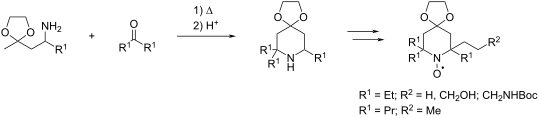
- spin labels and nitroxide-based functional materials. Synthesis of aminodioxolanes 4a,b. TMG = 1,1,3,3-tetramethylguanidine. Acid-catalyzed heterocyclization of β-aminoketones 4a,b with diethyl and dipropyl ketones. Synthesis of piperidine nitroxides from piperidines 5a,b and organometallic reagents


Recent advances in copper-catalyzed direct hydroamination of alkenes with (hetero)aromatic amines
Beilstein J. Org. Chem. 2026, 22, 925–947, doi:10.3762/bjoc.22.73
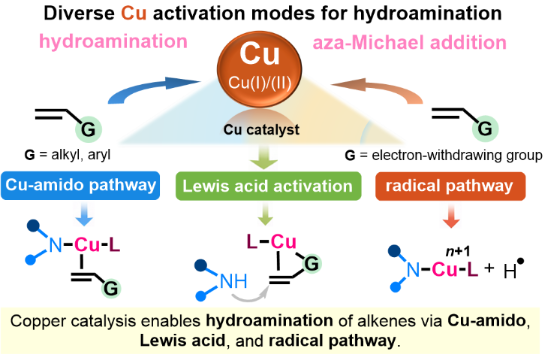
- pharmaceuticals and functional materials, making efficient C–N bond formation a fundamental transformation in synthetic chemistry. The direct hydroamination of alkenes using (hetero)aromatic N–H nucleophiles offers an atom- and step-economical strategy; however, the reduced nucleophilicity and distinct
- ; hydroamination; N-heterocycles; Introduction Nitrogen-containing aromatic compounds, particularly aromatic amines and aza-heterocycles, are indispensable structural motifs in pharmaceuticals, agrochemicals, natural products, and advanced functional materials [1][2][3][4]. Their unique electronic characteristics




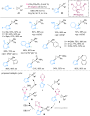


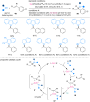

Palladium-catalyzed benzocyclization reactions of quinoline-2-carboxamides via sequential C–H/N–H functionalization
Beilstein J. Org. Chem. 2026, 22, 905–914, doi:10.3762/bjoc.22.71
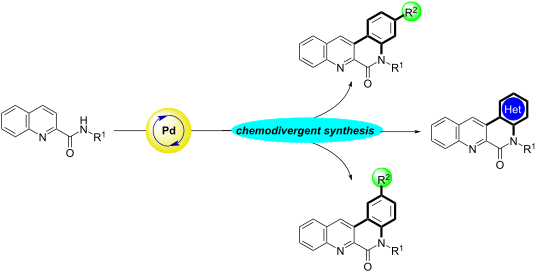
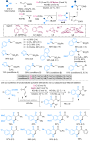
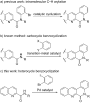
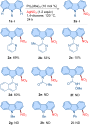
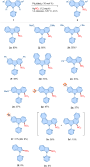
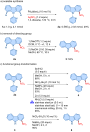
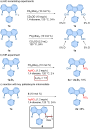
- efficient access to chemodivergent products. The developed reaction protocol is expected to be applicable to the synthesis of functional materials and bioactive molecules. Nuclear Overhauser effect (NOE) correlations in products (a) 3ab, (b) 3ac, (c) 3ad, (d) 3aj, and (e) 3ak. Various transition-metal




Knoevenagel condensation of 4,5- and 1,8-diazafluorenes
Beilstein J. Org. Chem. 2026, 22, 803–812, doi:10.3762/bjoc.22.62
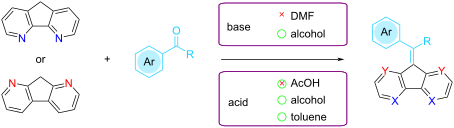
- Darya S. Cheshkina Christina S. Becker Alina A. Sonina Maxim S. Kazantsev N.N. Vorozhtsov Novosibirsk Institute of Organic Chemistry SB RAS, Lavrentieva 9, 630090 Novosibirsk, Russia 10.3762/bjoc.22.62 Abstract Diazafluorenylidenes are potential antitumor agents, ligands, and functional materials
- with ketones resulted in unique di(pyridin-2-yl)methylene)-9H-diazafluorenes being electron-deficient ligands and functional materials. Keywords: acidic conditions; diazafluorene; diazafluorenylidene; Knoevenagel condensation; protonation; Introduction Diazafluorenylidene derivatives were reported to
- the smelly solvent pyridine, moisture-sensitive environmentally aggressive reagent (TiCl4) and subsequent complicated treatment of the resulting reaction mixture making it inapplicable for large-scale high-efficiency production of functional materials. Therefore, analyzing the literature examples we




Photoorganocatalytic trifluoromethylation of (het)arenes in green conditions
Beilstein J. Org. Chem. 2026, 22, 662–671, doi:10.3762/bjoc.22.50
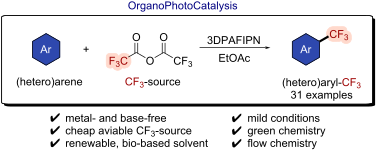
- compounds play a crucial role in pharmaceuticals, agrochemicals, and advanced functional materials. A substantial fraction of newly approved drugs feature a CF3 group, reflecting its unique ability to modulate the chemical stability, lipophilicity, and biological activity of active pharmaceutical




Continuous-flow carbonyl hydrogenation under subatmospheric to atmospheric hydrogen pressure enabled by robust heterogeneous Pt–Fe catalysts
Beilstein J. Org. Chem. 2026, 22, 575–582, doi:10.3762/bjoc.22.43
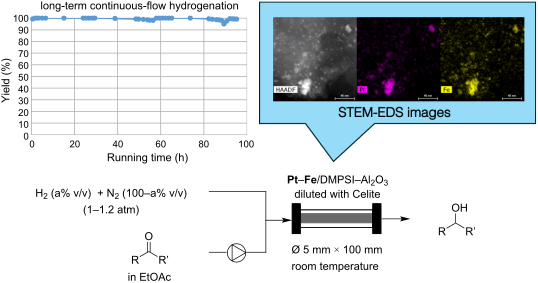
- as functional materials and pharmaceuticals [1][2][3][4]. While stoichiometric reagents and catalytic methods are widely developed for this transformation, one of the most ideal methods is heterogeneous catalysis using molecular hydrogen as a reductant, which realizes 100% atom economy [5][6][7][8][9


Get a better glimpse on sequential photoreactions of trisnorbornadienes with 19F NMR spectroscopy
Beilstein J. Org. Chem. 2026, 22, 527–534, doi:10.3762/bjoc.22.38
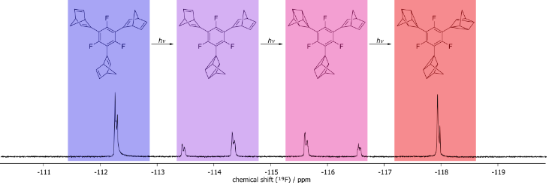
- thermal energy storage; photochemistry; photochromism; quadricyclanes; Introduction Photochromic compounds, which change their physical and chemical properties reversibly upon irradiation, figure as a versatile basis for the development of functional materials, whose performance can be switched or


Recent advances in the stereoselective synthesis of distal biaxially chiral molecules
Beilstein J. Org. Chem. 2026, 22, 461–479, doi:10.3762/bjoc.22.34
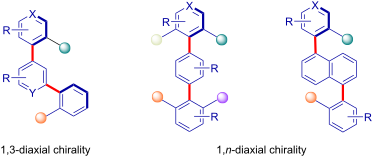
- chiral scaffolds, which arise from hindered rotation between two planes connected by a single bond, have attracted increasing attention due to their widespread applications in chiral ligands, organocatalysts [1], and functional materials [2], making them highly valuable molecular frameworks in organic
- in catalysis, drug discovery, and functional materials. Review One-step construction of remote biaxial chiral molecules In recent years, the development of asymmetric catalytic methods, including both transition-metal catalysis and organocatalysis, has provided powerful tools for the one-step
- demonstrated that such one-step catalytic approaches not only streamline the synthesis of structurally complex biaxial molecules but also open new avenues for their applications in catalysis, drug discovery, and functional materials. In 2004, Shibata and co-workers reported a novel iridium-catalyzed asymmetric


Recent advances in the cleavage of non-activated amides
Beilstein J. Org. Chem. 2026, 22, 352–369, doi:10.3762/bjoc.22.23
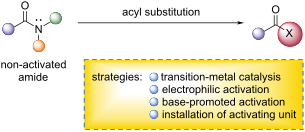
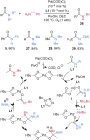
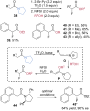
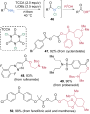
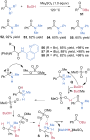
- . Keywords: amide; amide activation; esterification; non-activated amide; transamidation; Introduction Serving as a cornerstone in organic chemistry, the amide bond is a fundamental and extensively utilized functional group, playing a central role in natural products, biomolecules, and functional materials

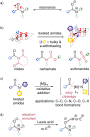
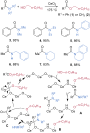

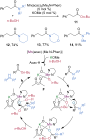
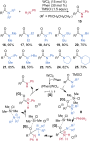



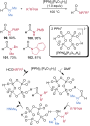


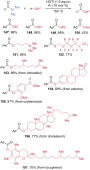

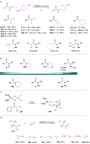


Advances in Zr-mediated radical transformations and applications to total synthesis
Beilstein J. Org. Chem. 2026, 22, 71–87, doi:10.3762/bjoc.22.3
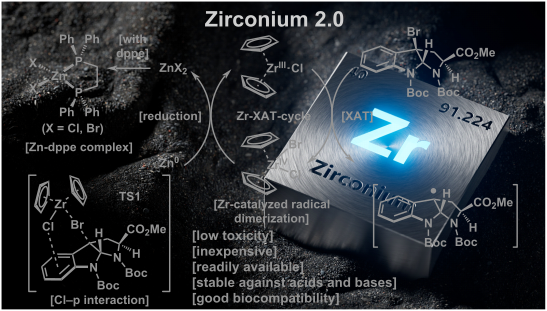
- application of zirconium catalysts in radical reactions is expected to make significant contributions to diverse fields, including drug discovery and the development of advanced functional materials. This review will provide a conceptual foundation for future research in this promising area. Historical








Tandem hydrothiocyanation/cyclization of CF3-iminopropargyl alcohols with NaSCN in the presence of AcOH
Beilstein J. Org. Chem. 2025, 21, 2694–2702, doi:10.3762/bjoc.21.207
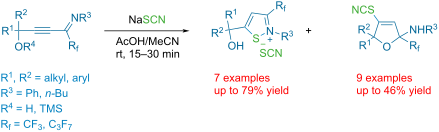
- , and organic functional materials. Additionally, CF3-substituted iminopropargyl alcohols can be easily prepared with good yields from commercially available materials in two steps [31][32]. Here, we report for the first time on the hydrothiocyanation of CF3-substituted iminopropargyl alcohols with the



Total syntheses of highly oxidative Ryania diterpenoids facilitated by innovations in synthetic strategies
Beilstein J. Org. Chem. 2025, 21, 2553–2570, doi:10.3762/bjoc.21.198
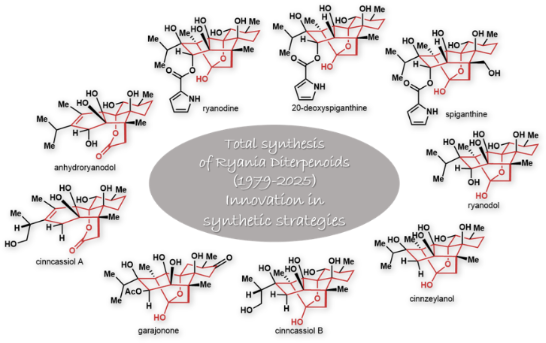
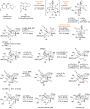
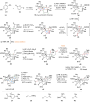
- function as an engine, consistently pushing the boundaries of the discipline. From the early synthesis of simple molecules to the current precise assembly of complex natural products and functional materials, the iteration of methods and optimization of strategies have always been key to breaking through







Palladium-catalyzed regioselective C1-selective nitration of carbazoles
Beilstein J. Org. Chem. 2025, 21, 2479–2488, doi:10.3762/bjoc.21.190
- ; palladium; Introduction Carbazole represents an important heterocyclic scaffold that is broadly present in many natural products, biologically active motifs, as well as optoelectronic and functional materials [1][2][3][4][5][6][7][8]. By virtue of its substantial application in various fields, significant
- attention has been devoted to the chemical synthesis of carbazole and its derivatives [9][10][11][12][13][14]. To access substituted carbazole cores for pharmacophores and functional materials, two main synthetic routes are: i) sequential multistep syntheses of selectively substituted carbazoles and ii
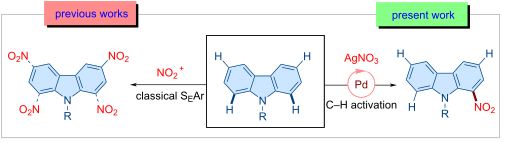
- and functional materials (Scheme 1a) [62][63][64][65][66]. Traditional electrophilic aromatic substitution methods for the nitration of carbazole typically result in a mixture of 1-nitro-, 2-nitro-, and 3-nitro-substituted isomers (Scheme 1b) [67]. Therefore, developing a method for the regioselective


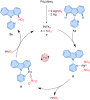
Catalytic enantioselective synthesis of selenium-containing atropisomers via C–Se bond formations
Beilstein J. Org. Chem. 2025, 21, 2447–2455, doi:10.3762/bjoc.21.186
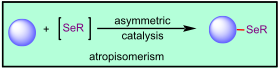
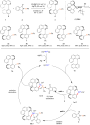
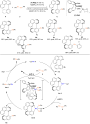
- in this review. Axially chiral selenium-containing compounds also play an irreplaceable role in asymmetric catalysis, functional materials, pharmaceutical chemistry and other fields. However, little attention has been paid to these compounds, which led to slow development and a relative lack of


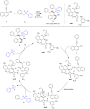
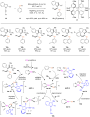
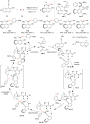
Rotaxanes with integrated photoswitches: design principles, functional behavior, and emerging applications
Beilstein J. Org. Chem. 2025, 21, 2345–2366, doi:10.3762/bjoc.21.179
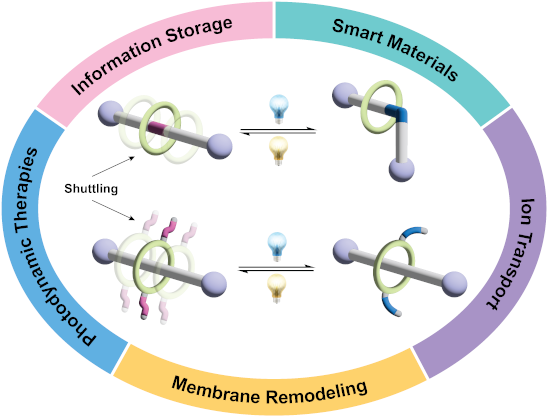
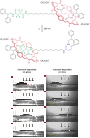
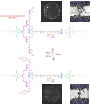
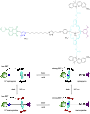
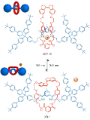
- demonstrates that mechanical motion within a rotaxane can propagate molecular-level stereochemical information to the macroscopic organization of soft matter, providing a new strategy for dynamic chirality control in functional materials. Spiropyran When spiropyrans are irradiated with UV light, the breaking





Pd-catalyzed dehydrogenative arylation of arylhydrazines to access non-symmetric azobenzenes, including tetra-ortho derivatives
Beilstein J. Org. Chem. 2025, 21, 2234–2242, doi:10.3762/bjoc.21.170
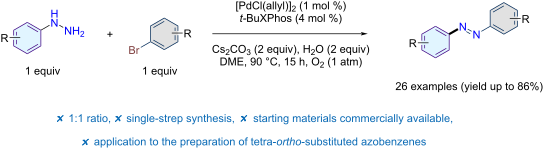
- photoswitching event involves a molecular size reduction between the E- and Z isomers, thereby driving structural changes that enable applications in molecular machines, biological allosteric modulators, and advanced functional materials (Figure 1a) [9][10][11]. Despite the widespread interest in azobenzenes
- valuable addition to existing methodologies and open further opportunities for applications in molecular probe design, functional materials, and photoresponsive systems, where ortho-substitution is often critical. General overview of azobenzene chemistry. a) Selected examples and photoisomerization of


Synthesis of triazolo- and tetrazolo-fused 1,4-benzodiazepines via one-pot Ugi–azide and Cu-free click reactions
Beilstein J. Org. Chem. 2025, 21, 2202–2210, doi:10.3762/bjoc.21.167
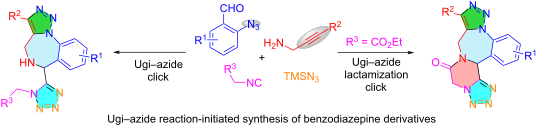
- piperazinone ring. Keywords: benzodiazepine; click reaction; multicomponent reaction; one-pot; piperazinone; polycyclic; triazole; tetrazole; Ugi–azide reaction; Introduction Triazole, tetrazole, and benzodiazepine are privileged heterocyclic rings commonly found in drug molecules and functional materials [1
- ][2][3][4][5]. For example, triazole-fused 1,4-benzodiazepins are protease inhibitors [6] and part of drug molecules such as alprazolam [7], estazolam [8], and triazolam [9] (Figure 1). Tetrazole-containing functional materials have been developed as photographic sensitizers, diagnostic contrast


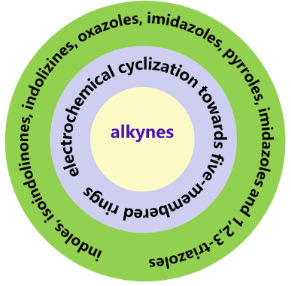
Electrochemical cyclization of alkynes to construct five-membered nitrogen-heterocyclic rings
Beilstein J. Org. Chem. 2025, 21, 2173–2201, doi:10.3762/bjoc.21.166
- , this protocol was an efficient and sustainable approach to synthesize 2,3′-biindolyl atropisomers and could be potentially applied in manufacture of functional materials, bioactive molecules and chiral ligands. Construction of isoindolinones and indolizines An electrochemical and copper-catalyzed





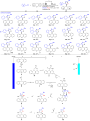
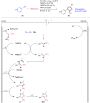

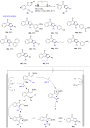


Multicomponent reactions IV
Beilstein J. Org. Chem. 2025, 21, 2082–2084, doi:10.3762/bjoc.21.163
- Thomas J. J. Muller Valentyn A. Chebanov Heinrich-Heine-Universität Düsseldorf, Institut für Organische Chemie und Makromolekulare Chemie, Universitätsstraße 1, D-40225 Düsseldorf, Germany Institute of Functional Materials Chemistry, State Scientific Institution “Institute for Single Crystals” of

Solar thermal fuels: azobenzene as a cyclic photon–heat transduction platform
Beilstein J. Org. Chem. 2025, 21, 2036–2047, doi:10.3762/bjoc.21.159
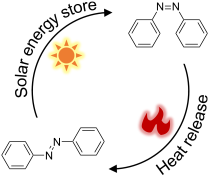
- ]. Since Olmsted’s pioneering exploration of azobenzene compounds as solar thermal fuels in 1983 [42], significant breakthroughs have been achieved through interdisciplinary integration of organic synthesis, functional materials engineering, photophysical mechanism analysis, and computational chemistry. So
- need for NIR-responsive systems. Second, although azobenzene-based fuels have evolved from conceptual designs to functional materials, many still require solvent assistance during energy charging. The use of organic solvents exacerbates environmental concerns, increases costs, complicates operation





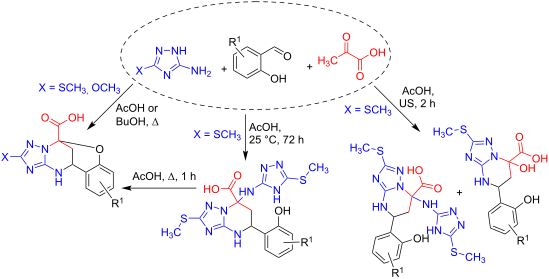
Switchable pathways of multicomponent heterocyclizations of 5-amino-1,2,4-triazoles with salicylaldehydes and pyruvic acid
Beilstein J. Org. Chem. 2025, 21, 2030–2035, doi:10.3762/bjoc.21.158
- Yana I. Sakhno Oleksander V. Buravov Kostyantyn Yu. Yurkov Anastasia Yu. Andryushchenko Svitlana V. Shishkina Valentyn A. Chebanov Institute of Functional Materials Chemistry, State Scientific Institution “Institute for Single Crystals” of National Academy of Sciences of Ukraine, Nauky Ave., 60


α-Ketoglutaric acid in Ugi reactions and Ugi/aza-Wittig tandem reactions
Beilstein J. Org. Chem. 2025, 21, 2021–2029, doi:10.3762/bjoc.21.157
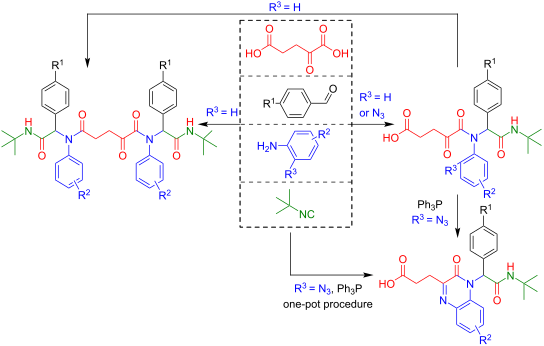
- Vladyslav O. Honcharov Yana I. Sakhno Olena H. Shvets Vyacheslav E. Saraev Svitlana V. Shishkina Tetyana V. Shcherbakova Valentyn A. Chebanov Institute of Functional Materials Chemistry, State Scientific Institution “Institute for Single Crystals” of National Academy of Sciences of Ukraine, Nauky


Chiral phosphoric acid-catalyzed asymmetric synthesis of helically chiral, planarly chiral and inherently chiral molecules
Beilstein J. Org. Chem. 2025, 21, 1864–1889, doi:10.3762/bjoc.21.145
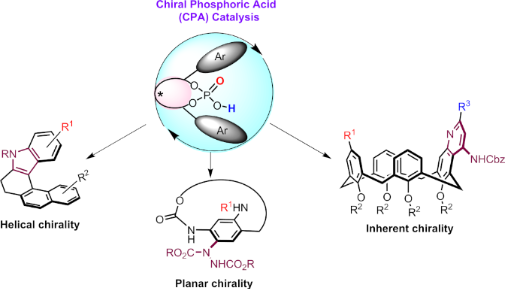
- versatility of this method in the asymmetric synthesis of diverse chiral molecular structures. Substituted [2.2]paracyclophanes represent another class of conformationally rigid, planarly chiral molecules, which have emerged as versatile scaffolds for developing chiral catalysts, ligands and functional
- materials. In 2023, our group reported the first catalytic kinetic resolution of racemic amido[2.2]paracyclophanes through a CPA-catalyzed asymmetric aromatic amination reaction [43]. Treating the racemic N-Boc-substituted [2.2]paracyclophane 48a with dibenzyl azodicarboxylate (0.7 equiv) in the presence of