Search for "intramolecular cyclization" in Full Text gives 285 result(s) in Beilstein Journal of Organic Chemistry. Showing first 200.
Beilstein J. Org. Chem. 2026, 22, 705–741, doi:10.3762/bjoc.22.55
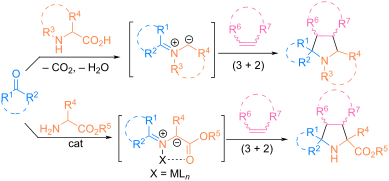
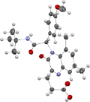
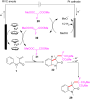
Graphical Abstract
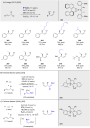
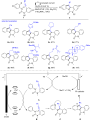
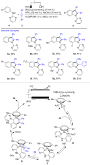
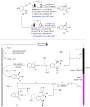
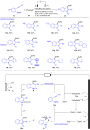
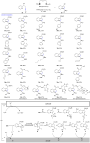
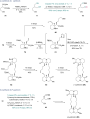
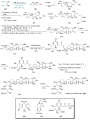
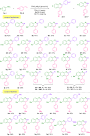
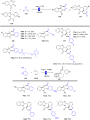
Scheme 1: Strategies for the preparation of pyrrolidine derivatives by (3 + 2) cycloaddition of azomethine yl...
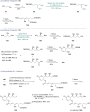
Scheme 2: (3 + 2) Cycloaddition of iminoesters to dimethylmaleate.
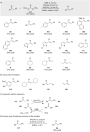
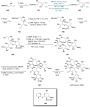
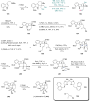
Scheme 3: Cycloaddition of 1 with various dipolarophiles catalyzed by Ag(I)-L1.
Scheme 4: Cycloaddition of 1 with tert-butyl acrylate catalyzed by Ag(I)-L2.
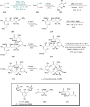
Scheme 5: Cycloaddition of 1 with dimethyl maleate catalyzed by Cu(I)-L3.
Scheme 6: Cycloaddition of 1 with alkenes catalyzed by Zn(II)-t-Bu-BOX (L4).
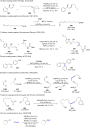
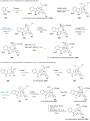
Scheme 7: (3 + 2) Cycloaddition of iminoesters to acrylates.
Scheme 8: Catalytic double (3 + 2) cycloaddition to form pyrrolizidine derivatives.
Scheme 9: (3 + 2) Cycloaddition of iminoethers to vinyl phenyl sulfone.
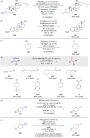
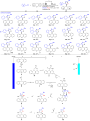
Scheme 10: Regiodivergent and enantioselective synthesis of pyrrolidines 16 and 17.
Scheme 11: Substrate-controlled regioreversible "normal" and "incomplete" 1,3-dipolar cycloaddition.
Scheme 12: Enantioselective synthesis of exo-/endo-pyrrolidines.
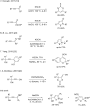
Scheme 13: (3 + 2) Cycloaddition of iminoethers 21 to dipolarophiles 22–24.
Scheme 14: Synthesis of bicyclic pyrrolidines 29 from cyclopentene-1,3-diones.
Scheme 15: (3 + 2) Cycloaddition of aldimine esters and allyl alcohols using copper-ruthenium catalysis.
Scheme 16: Synthesis of 3,3-difluoro- and 3,3,4-trifluoropyrrolidine derivatives.
Scheme 17: Use of iminoesters from natural compounds and pharmaceuticals for reactions with 1,1-difluoro- and ...
Scheme 18: Reaction of iminoesters with 1,3-enynes.
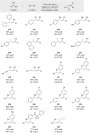
Scheme 19: Synthesis of pyrrolidines from iminoesters and vinyl(hetero)arenes.
Scheme 20: Synthesis of exo-pyrrolidines 42 and 43.
Scheme 21: Enantioselective synthesis of heteroarylpyrrolidines 45 and 46.
Scheme 22: Catalytic reaction of (3 + 2) cycloaddition of imines 12 to benzofulvenes 47.
Scheme 23: Fullerene as a dipolarophile in (3 + 2) cycloaddition reactions.
Scheme 24: Asymmetric synthesis of optically active tetrasubstituted pyrrolidines 54.
Scheme 25: (3 + 2) Cycloaddition reaction of imines 55 and α,β-unsaturated aldehydes.
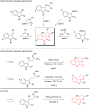
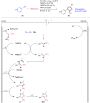
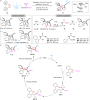
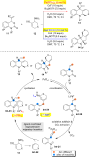
Scheme 26: Probable mechanism of enantioselective (3 + 2) cycloaddition of azomethine ylides to α,β-unsaturate...
Scheme 27: Cycloaddition between iminoesters 12 and sulfinylimines 58.
Scheme 28: (3 + 2) Cycloaddition between triarylideneacetylacetone and azomethine ylides in the presence of ti...
Scheme 29: Stereoselective synthesis of decahydropyrrolo[2,1,5-cd]indolizine 66.
Scheme 30: Synthesis of policyclic derivatives 71 and 72.
Scheme 31: Catalytic аsymmetric (3 + 2) сycloaddition of 2-pyridylimines with N-methylmaleimide.
Scheme 32: Catalytic аsymmetric (3 + 2) сycloaddition of 2-pyridylimines 1 with other dipolarophiles.
Scheme 33: Enantioselective (3 + 2) cycloaddition of silylimine with various dipolarophiles.
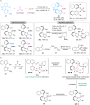
Scheme 34: Proposed mechanism of formation of pyrrolidines 78.
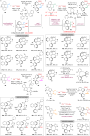
Scheme 35: Synthesis of polyheterocyclic pyrrolidines 82–91.
Scheme 36: Synthesis of spirocyclic (95) and fused (96) pyrrolidines.
Scheme 37: (3 + 2) Cycloaddition involving aromatic aldehydes 97, N-propargylmaleimide (98) and α-amino acids ...
Scheme 38: Synthesis of pyrrolizidines 106 and by-product 107.
Scheme 39: Iridium-catalyzed three-component cascade (3 + 2) cycloaddition.
Scheme 40: Intramolecular (3 + 2) cycloaddition of N-alkenylpyrrole-2-carbaldehyde 110 and α-amino acids.
Scheme 41: Three-component (3 + 2) cycloaddition involving fullerene.
Scheme 42: Four-component stereoselective one-pot synthesis of spiro-cycloadducts 119–122.
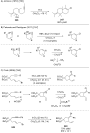
Scheme 43: Reactions of azomethine ylide 123 with cyclopropenes.
Scheme 44: Three-component reactions involving ninhydrin, cyclopropenes and acyclic α-amino acids.
Scheme 45: Reaction of cyclopropenes 138 with the N-protonated form of Ruhemann purple 137.
Scheme 46: Enantioselective (3 + 2) cycloaddition of azomethine ylides generated in situ from isatins and amin...
Scheme 47: (3 + 2) Cycloaddition of cyclohexenone 143, isatins 140 and aminomalonic diesters 141, catalyzed by...
Scheme 48: Enantioselective (3 + 2) cycloaddition of azomethine ylides generated in situ from isatins and amin...
Scheme 49: Enantioselective (3 + 2) cycloaddition of azomethine ylides generated in situ from isatins and benz...
Scheme 50: (3 + 2) Cycloaddition involving isatins, azetidine-2-carboxylic acid, maleimides or itaconimides.
Scheme 51: (3 + 2) Cycloaddition involving isatins, amino acids and tetraethylvinylidenebis(phosphonate).
Scheme 52: Synthesis of spirooxindoles 156 from triarylideneacetylacetones 155.
Scheme 53: Synthesis of spirooxindole derivatives 157–160.
Scheme 54: Synthesis of hybrid spiro-heterocycles 164–166.
Scheme 55: Formation of azomethine ylide from isatin and sarcosine.
Scheme 56: (3 + 2) Cycloaddition involving isatins, amino acids and trans-3-benzoylacrylic acid.
Scheme 57: Regioselective synthesis of spirooxindoles 170.
Scheme 58: Synthesis of hybrid spiro-heterocycles 86.
Scheme 59: (3 + 2) Cycloaddition involving acenaphthenequinones, amino acids and cyclopropenes.
Scheme 60: Synthesis of hybrid glyco-3-nitrochromane cycloadducts 179.
Scheme 61: Synthesis of spiro[indenoquinoxaline-(thia)pyrrolizidines] 90a.
Scheme 62: Three-component reactions of cyclopropenes, 11H-indeno[1,2-b]quinoxalin-11-onesand α-amino acids, s...
Scheme 63: Synthesis of hybrid glyco-3-nitrochromane cycloadducts 92.
Scheme 64: (3 + 2) Cycloaddition of 11H-benzo[4,5]imidazo[1,2-a]indol-11-one (189) with cyclopropenes and male...
Scheme 65: Diastereoselective synthesis of spiro derivatives of barbituric acid from alloxan 193, α-amino acid...
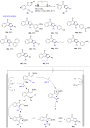
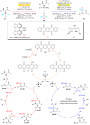
Scheme 66: Probable mechanism of formation of azomethine ylide from alloxan and ʟ-proline.
Scheme 67: Three-component reactions involving tryptanthrin 196, α-amino acids and cyclopropenes.
Beilstein J. Org. Chem. 2026, 22, 274–288, doi:10.3762/bjoc.22.20
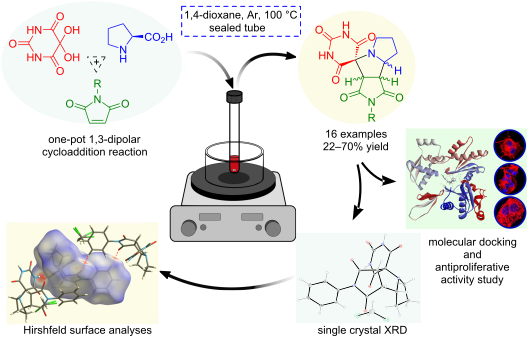
Graphical Abstract
Scheme 1: Biologically active compounds with a spirobarbiturate moiety in their structure [7-12].
Scheme 2: Biologically active alkaloids with a pyrrolizidine moiety.
Scheme 3: Previous studies on the three-component synthesis of spirobarbiturates.
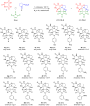
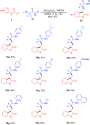
Scheme 4: Synthesis of racemic spirobarbiturates 4a–p via one-pot three-component reaction of alloxan (1), ʟ-...
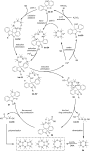
Scheme 5: A plausible mechanism of spirobarbiturate formation from alloxan (1), ʟ-proline (2), and N-substitu...
Figure 1: Schematic structures of endo- and exo-adducts of spirobarbiturates 4.
Figure 2: X-ray crystal structures of compounds 4b (CCDC 2391172, left) and 4c (CCDC 2391171, right).
Figure 3: Unit cell packing of products 4b (left) and 4c (right).
Figure 4: HS mapped with dnorm for compounds 4b (left) and 4c (right).
Figure 5: A segment of the crystal structure of compound 4b with the HS (dnorm), showing intermolecular conta...
Figure 6: A segment of the crystal structure of compound 4c with the HS (dnorm), showing intermolecular conta...
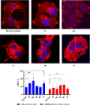
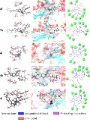
Figure 7: Microscopic images of treated cells and state of the actin cytoskeleton of Sk-mel-2 cells after cul...
Figure 8: Docked view of compounds 4f, 4g, 4i, 4k, and 4l with the target protein (PDB ID: 8DNH).
Beilstein J. Org. Chem. 2026, 22, 88–122, doi:10.3762/bjoc.22.4
Graphical Abstract
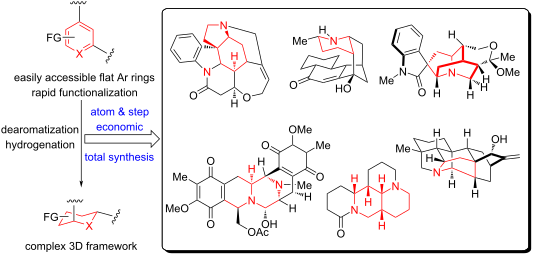
Scheme 1: The association between dearomatization and natural product synthesis.
Scheme 2: Key challenges in hydrogenation of aromatic rings.
Scheme 3: Hydrogenation of heterocyclic aromatic rings.
Scheme 4: Hydrogenation of the carbocyclic aromatic rings.
Scheme 5: Hydrogenation of the heterocycle part in bicyclic aromatic rings.
Scheme 6: Hydrogenation of the heterocycle part in bicyclic aromatic rings.
Scheme 7: Hydrogenation of benzofuran, indole, and their analogues.
Scheme 8: Hydrogenation of benzofuran, indole, and their analogues.
Scheme 9: Total synthesis of (±)-keramaphidin B by Baldwin and co-workers.
Scheme 10: Total synthesis of (±)-LSD by Vollhardt and co-workers.
Scheme 11: Total synthesis of (±)-dihydrolysergic acid by Boger and co-workers.
Scheme 12: Total synthesis of (±)-lysergic acid by Smith and co-workers.
Scheme 13: Hydrogenation of (−)-tabersonine to (−)-decahydrotabersonine by Catherine Dacquet and co-workers.
Scheme 14: Total synthesis of (±)-nominine by Natsume and co-workers.
Scheme 15: Total synthesis of (+)-nominine by Gin and co-workers.
Scheme 16: Total synthesis of (±)-lemonomycinone and (±)-renieramycin by Magnus.
Scheme 17: Total synthesis of GB13 by Sarpong and co-workers.
Scheme 18: Total synthesis of GB13 by Shenvi and co-workers.
Scheme 19: Total synthesis of (±)-corynoxine and (±)-corynoxine B by Xia and co-workers.
Scheme 20: Total synthesis of (+)-serratezomine E and the putative structure of huperzine N by Bonjoch and co-...
Scheme 21: Total synthesis of (±)-serralongamine A and the revised structure of huperzine N and N-epi-huperzin...
Scheme 22: Early attempts to indenopiperidine core.
Scheme 23: Homogeneous hydrogenation and completion of the synthesis.
Scheme 24: Total synthesis of jorunnamycin A and jorumycin by Stoltz and co-workers.
Scheme 25: Early attempt towards (−)-finerenone by Aggarwal and co-workers.
Scheme 26: Enantioselective synthesis towards (−)-finerenone.
Scheme 27: Total synthesis of (+)-N-methylaspidospermidine by Smith, Grigolo and co-workers.
Scheme 28: Dearomatization approach towards matrine-type alkaloids.
Scheme 29: Asymmetric total synthesis to (−)-senepodine F via an asymmetric hydrogenation of pyridine.
Scheme 30: Selective hydrogenation of indole derivatives and application.
Scheme 31: Synthetic approaches to the oxindole alkaloids by Qi and co-workers.
Scheme 32: Total synthesis of annotinolide B by Smith and co-workers.
Beilstein J. Org. Chem. 2026, 22, 1–63, doi:10.3762/bjoc.22.1
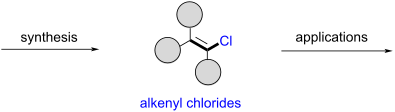
Graphical Abstract
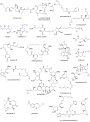
Figure 1: Representative alkenyl chloride motifs in natural products. References: Pinnaic acid [8], haterumalide ...
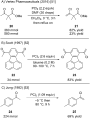
Figure 2: Representative alkenyl chloride motifs in pharmaceuticals and pesticides. References: clomifene [25], e...
Figure 3: Graphical overview of previously published reviews addressing the synthesis of alkenyl chlorides.
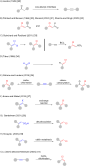
Figure 4: Classification of synthetic approaches to alkenyl chlorides.
Scheme 1: Early works by Friedel, Henry, and Favorsky.
Scheme 2: Product distribution obtained by H NMR integration of crude compound as observed by Kagan and co-wo...
Scheme 3: Side reactions observed for the reaction of 14 with PCl5.
Scheme 4: Only compounds 15 and 18 were observed in the presence of Hünig’s base.
Scheme 5: Efficient synthesis of dichloride 15 at low temperatures.
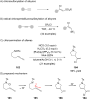
Scheme 6: Various syntheses of alkenyl chlorides on larger scale.
Scheme 7: Scope of the reaction of ketones with PCl5 in boiling cyclohexane.
Scheme 8: Side reactions occur when using excess amounts of PCl5.
Scheme 9: Formation of versatile β-chlorovinyl ketones.
Scheme 10: Mixture of PCl5 and PCl3 used for the synthesis of 49.
Scheme 11: Catechol–PCl3 reagents for the synthesis of alkenyl chlorides.
Scheme 12: (PhO)3P–halogen-based reagents for the synthesis of alkenyl halides.
Scheme 13: Preparation of alkenyl chlorides from alkenyl phosphates.
Scheme 14: Preparation of alkenyl chlorides by treatment of ketones with the Vilsmeier reagent.
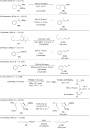
Scheme 15: Preparation of electron-rich alkenyl chlorides by treatment of ketones with the Vilsmeier reagent.
Scheme 16: Cu-promoted synthesis of alkenyl chlorides from ketones and POCl3.
Figure 5: GC yield of 9 depending on time and reaction temperature.
Figure 6: Broken reaction flask after attempts to clean the polymerized residue.
Figure 7: GC yield of 9 depending on the amount of CuCl and time.
Scheme 17: Treatment of 4-chromanones with PCl3.
Scheme 18: Synthesis of alkenyl chlorides from the reaction of ketones with acyl chlorides.
Scheme 19: ZnCl2-promoted alkenyl chloride synthesis.
Scheme 20: Regeneration of acid chlorides by triphosgene.
Scheme 21: Alkenyl chlorides from ketones and triphosgene.
Scheme 22: Various substitution reactions.
Scheme 23: Vinylic Finkelstein reactions reported by Evano and co-workers.
Scheme 24: Challenge of selective monohydrochlorination of alkynes.
Scheme 25: Sterically encumbered internal alkynes furnish the hydrochlorination products in high yield.
Scheme 26: Recent work by Kropp with HCl absorbed on alumina.
Scheme 27: High selectivities for monhydrochlorination with nitromethane/acetic acid as solvent.
Figure 8: Functionalized alkynes which typically afford the monhydrochlorinated products.
Scheme 28: Related chorosulfonylation and chloroamination reactions.
Scheme 29: Reaction of organometallic reagents with chlorine electrophiles.
Scheme 30: Elimination reactions of dichlorides to furnish alkenyl chlorides.
Scheme 31: Elimination reactions of allyl chloride 182 to furnish alkenyl chloride 183.
Scheme 32: Detailed studies by Schlosser on the elimination of dichloro compounds.
Scheme 33: Stereoselective variation caused by change of solvent.
Scheme 34: Elimination of gem-dichloride 189 to afford alkene 190.
Scheme 35: Oxidation of enones to dichlorides and in situ elimination thereof.
Scheme 36: Oxidation of allylic alcohols to dichlorides and in situ elimination thereof.
Scheme 37: Chlorination of styrenes with SOCl2 and elimination thereof.
Scheme 38: Chlorination of styrenes with SOCl2 and elimination thereof.
Scheme 39: Fluorine–chlorine exchange followed by elimination.
Scheme 40: Intercepting cations with alkynes and trapping of the alkenyl cation intermediate with chloride.
Scheme 41: Investigations by Mayr and co-workers.
Scheme 42: In situ activation of benzyl alcohol 230 with BCl3.
Scheme 43: In situ activation of benzylic alcohols with TiCl4.
Scheme 44: In situ activation of benzylic alcohols with FeCl3.
Scheme 45: In situ activation of benzylic alcohols with FeCl3.
Scheme 46: In situ activation of aliphatic chlorides and alcohols with ZnCl2, InCl3, and FeCl3.
Scheme 47: In situ generation of benzylic cations and trapping thereof with alkynes.
Scheme 48: Intramolecular trapping reactions affording alkenyl halides.
Scheme 49: Intramolecular trapping reactions affording alkenyl chlorides.
Scheme 50: Intramolecular trapping reactions of oxonium and iminium ions affording alkenyl chlorides.
Scheme 51: Palladium and nickel-catalyzed coupling reactions to afford alkenyl chlorides.
Scheme 52: Rhodium-catalyzed couplings of 1,2-trans-dichloroethene with arylboronic esters.
Scheme 53: First report on monoselective coupling reactions for 1,1-dichloroalkenes.
Scheme 54: Negishi’s and Barluenga’s contributions.
Scheme 55: First mechanistic investigation by Johnson and co-workers.
Scheme 56: First successful cross-metathesis with choroalkene 260.
Scheme 57: Subsequent studies by Johnson.
Scheme 58: Hoveyda and Schrock’s work on stereoretentive cross-metathesis with molybdenum-based catalysts.
Scheme 59: Related work with (Z)-dichloroethene.
Scheme 60: Further ligand refinement and traceless protection of functional groups with HBpin.
Scheme 61: Alkenyl chloride synthesis by Wittig reaction.
Scheme 62: Alkenyl chloride synthesis by Julia olefination.
Scheme 63: Alkenyl chloride synthesis by reaction of ketones with Mg/TiCl4 mixture.
Scheme 64: Frequently used allylic substitution reactions which lead to alkenyl chlorides.
Scheme 65: Enantioselective allylic substitutions.
Scheme 66: Synthesis of alkenyl chlorides bearing an electron-withdrawing group.
Scheme 67: Synthesis of α-nitroalkenyl chlorides from aldehydes.
Scheme 68: Synthesis of alkenyl chlorides via elimination of an in situ generated geminal dihalide.
Scheme 69: Carbenoid approach reported by Pace.
Scheme 70: Carbenoid approach reported by Pace.
Scheme 71: Ring opening of cyclopropenes in the presence of MgCl2.
Scheme 72: Electrophilic chlorination of alkenyl MIDA boronates to Z- or E-alkenyl chlorides.
Scheme 73: Hydroalumination and hydroboration of alkynyl chlorides.
Scheme 74: Carbolithiation of chloroalkynes.
Scheme 75: Chlorination of enamine 420.
Scheme 76: Alkyne synthesis by elimination of alkenyl chlorides.
Scheme 77: Reductive lithiation of akenyl chlorides.
Scheme 78: Reactions of alkenyl chlorides with organolithium reagents.
Scheme 79: Reactions of alkenyl chlorides with organolithium reagents.
Scheme 80: Addition–elimination reaction of alkenyl chloride 9 with organolithium reagents.
Scheme 81: C–H insertions of lithiumcarbenoids.
Scheme 82: Pd-catalyzed coupling reactions with alkenyl chlorides as coupling partner.
Scheme 83: Ni-catalyzed coupling of alkenylcopper reagent with alkenyl chloride 183.
Scheme 84: Ni-catalyzed coupling of heterocycle 472 with alkenyl chloride 473.
Scheme 85: Synthesis of α-chloroketones by oxidation of alkenyl chlorides.
Scheme 86: Tetrahalogenoferrate(III)-promoted oxidation of alkenyl chlorides.
Scheme 87: Chlorine–deuterium exchange promoted by a palladium catalyst.
Scheme 88: Reaction of alkenyl chlorides with thiols in the presence of AIBN (azobisisobutyronitrile).
Scheme 89: Chloroalkene annulation.
Beilstein J. Org. Chem. 2025, 21, 2716–2729, doi:10.3762/bjoc.21.209
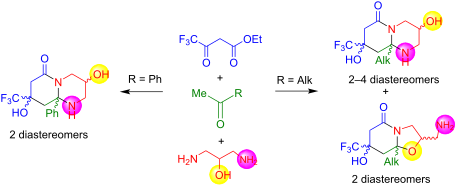
Graphical Abstract
Figure 1: Structures of bioactive molecules with trifluoromethylpyridine and piperidine frameworks.
Scheme 1: The reaction of ethyl trifluoroacetoacetate (1), acetone (2a) and 1,3- diaminopropan-2-ol (3).
Scheme 2: Three-component reaction of ethyl trifluoroacetoacetate (1), alkyl methyl ketones 2b,c and 1,3-diam...
Scheme 3: Three-component reaction of ethyl trifluoroacetoacetate (1), acetophenone (2d) and 1,3-diaminopropa...
Scheme 4: The proposed mechanism of three-component cyclization of 3-oxo ester 1, methyl ketones 2a–d and 1,3...
Figure 2: ORTEP view of compounds 4асc (a, CCDC: 2479553), 4аct (b, CCDC: 2479554), 4аtt (c, CCDC: 2479555), ...
Figure 3: ORTEP view of compound 5ctc (a, CCDC: 2479558), 5ctt (b, CCDC: 2479559) showing with the thermal el...
Figure 4: The fragments of the 1H NMR spectra (400 MHz, DMSO-d6) of diastereomers 4acc (a), 4аct (b), 4аtt (c...
Figure 5: Fragments of 1H NMR spectra (400 MHz, DMSO-d6) of hexahydrooxazolo[3,2-a]pyridin-5-ones 5ctc (a) an...
Beilstein J. Org. Chem. 2025, 21, 2694–2702, doi:10.3762/bjoc.21.207
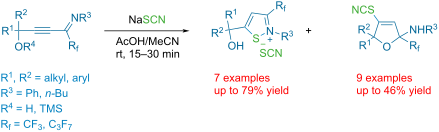
Graphical Abstract
Scheme 1: Examples of hydrothiocyanation/cyclization of alkynes.
Figure 1: 1H and 19F NMR monitoring of 1a/NaSCN/AcOH (a, b) and 1g/NaSCN/AcOH (c, d) reaction mixtures in MeC...
Scheme 2: Plausible reaction mechanism.
Scheme 3: Oxidation of isothiazolium thiocyanate 2a.
Beilstein J. Org. Chem. 2025, 21, 2383–2388, doi:10.3762/bjoc.21.183
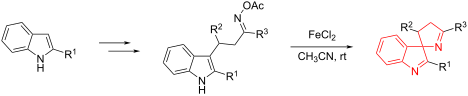
Graphical Abstract
Figure 1: Natural and synthetic bioactive spiro[indoline-3,2'-pyrrolidine] derivatives.
Scheme 1: Previous approaches and our work.
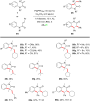
Scheme 2: The reaction of 2-arylindoles 1 with α,β-unsaturated ketones 2. aIsolated yield of the 5 mmol scale...
Scheme 3: The scope of the Fe-catalyzed spirocyclization. aIsolated yield of the 4.2 mmol scale experiment.
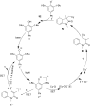
Scheme 4: The proposed mechanism of product 4 formation.
Beilstein J. Org. Chem. 2025, 21, 2334–2344, doi:10.3762/bjoc.21.178
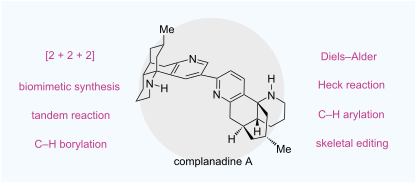
Graphical Abstract
Scheme 1: Complanadine natural products and their plausible biosynthesis.
Scheme 2: The Siegel total synthesis of complanadine A enabled by [2 + 2 + 2] cycloadditions.
Scheme 3: The Sarpong total synthesis of complanadine A enabled by a biomimetic strategy and C–H activation.
Scheme 4: The Tsukano total synthesis of complanadine A enabled by Diels–Alder cycloaddition, Heck cyclizatio...
Scheme 5: The Dai total synthesis of complanadine A using single-atom skeletal editing.
Scheme 6: Comparative summary of the four complanadine A total syntheses.
Beilstein J. Org. Chem. 2025, 21, 2283–2296, doi:10.3762/bjoc.21.174
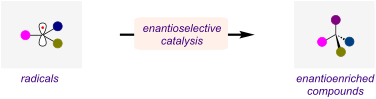
Graphical Abstract
Figure 1: Methods of radical generation (A) and general types of radical reactions (B).
Figure 2: Chiral catalysis in enantioselective radical chemistry [13-37].
Scheme 1: Diastereo- and enantioselective additions of nucleophilic radicals to N-enoyloxazolidinone and pyrr...
Scheme 2: Organocatalyzed formal [3 + 2] cycloadditions affording substituted pyrrolidines.
Scheme 3: Synthesis of a hexacyclic compound via an organocatalyzed enantioselective polyene cyclization.
Scheme 4: Nickel-catalyzed asymmetric cross-coupling reactions.
Scheme 5: Chiral cobalt–porphyrin metalloradical-catalyzed radical cyclization reactions.
Scheme 6: Enantioselective radical chaperone catalysis.
Scheme 7: Enantioselective radical addition by decatungstate/iminium catalysis.
Scheme 8: An ene-reductase-catalyzed photoenzymatic enantioselective radical cyclization/enantioselective HAT...
Scheme 9: Photoenzymatic oxidative C(sp3)–C(sp3) coupling reactions between organoboron compounds and amino a...
Scheme 10: Electrochemical α-alkenylation reactions of 2-acylimidazoles catalyzed by a chiral-at-rhodium Lewis...
Scheme 11: Regio- and enantioselective electrochemical reactions of silyl polyenolates catalyzed by a chiral n...
Beilstein J. Org. Chem. 2025, 21, 2260–2282, doi:10.3762/bjoc.21.173
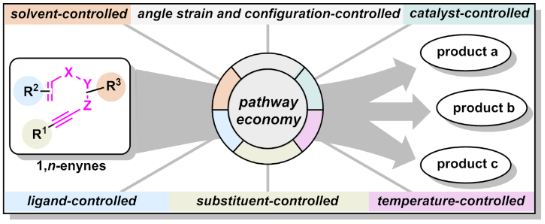
Graphical Abstract
Scheme 1: Economical synthesis and pathway economy.
Scheme 2: Au(I)-catalyzed cascade cyclization paths of 1,5-enynes.
Scheme 3: Au(I)-catalyzed cyclization paths of 1,7-enynes.
Scheme 4: I2/TBHP-mediated radical cycloisomerization paths of 1,n-enyne.
Scheme 5: Au(I)-catalyzed cycloisomerization paths of 3-allyloxy-1,6-diynes.
Scheme 6: Pd(II)-catalyzed cycloisomerization paths of 2-alkynylbenzoate-cyclohexadienone.
Scheme 7: Stereoselective cyclization of 1,5-enynes.
Scheme 8: Substituent-controlled cycloisomerization of propargyl vinyl ethers.
Scheme 9: Au(I)-catalyzed pathway-controlled domino cyclization of 1,2-diphenylethynes.
Scheme 10: Au(I)-catalyzed tandem cyclo-isomerization of tryptamine-N-ethynylpropiolamide.
Scheme 11: Au(I)-catalyzed tunable cyclization of 1,6-cyclohexenylalkyne.
Scheme 12: Substituent-controlled 7-exo- and 8-endo-dig-selective cyclization of 2-propargylaminobiphenyl deri...
Scheme 13: BiCl3-catalyzed cycloisomerization of tryptamine-ynamide derivatives.
Scheme 14: Au(I)-mediated substituent-controlled cycloisomerization of 1,6-enynes.
Scheme 15: Ligand-controlled regioselective cyclization of 1,6-enynes.
Scheme 16: Ligand-dependent cycloisomerization of 1,7-enyne esters.
Scheme 17: Ligand-controlled cycloisomerization of 1,5-enynes.
Scheme 18: Ligand-controlled cyclization strategy of alkynylamide tethered alkylidenecyclopropanes.
Scheme 19: Ag(I)-mediated pathway-controlled cycloisomerization of tryptamine-ynamides.
Scheme 20: Gold-catalyzed cycloisomerization of indoles with alkynes.
Scheme 21: Catalyst-dependent cycloisomerization of dienol silyl ethers.
Scheme 22: Cycloisomerization of aromatic enynes governed by catalyst.
Scheme 23: Catalyst-dependent 1,2-migration in cyclization of 1-(indol-2-yl)-3-alkyn-1-ols.
Scheme 24: Gold-catalyzed cycloisomerization of N-propargyl-N-vinyl sulfonamides.
Scheme 25: Gold(I)-mediated enantioselective cycloisomerizations of ortho-(alkynyl)styrenes.
Scheme 26: Catalyst-controlled intramolecular cyclization of 1,7-enynes.
Scheme 27: Brønsted acid-catalyzed cycloisomerizations of tryptamine ynamides.
Scheme 28: Catalyst-controlled cyclization of indolyl homopropargyl amides.
Scheme 29: Angle strain-dominated 6-endo-trig cyclization of propargyl vinyl ethers.
Scheme 30: Angle strain-controlled cycloisomerization of alkyn-tethered indoles.
Scheme 31: Geometrical isomeration-dependent cycloisomerization of 1,3-dien-5-ynes.
Scheme 32: Temperature-controlled cyclization of 1,7-enynes.
Scheme 33: Cycloisomerizations of n-(o-ethynylaryl)acrylamides through temperature modulation.
Scheme 34: Temperature-controlled boracyclization of biphenyl-embedded 1,3,5-trien-7-ynes.
Beilstein J. Org. Chem. 2025, 21, 2202–2210, doi:10.3762/bjoc.21.167
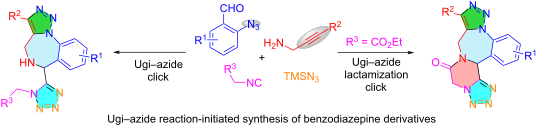
Graphical Abstract
Figure 1: Some bioactive molecules bearing triazole, tetrazole, and 1,4-benzodiazepin rings.
Scheme 1: Ugi–azide reaction for the synthesis of 1,5-DS-T-containing heterocycles.
Scheme 2: Proposed Ugi–azide-initiated synthesis of polyheterocyclic scaffolds 7 and 8.
Scheme 3: 4-CR vs stepwise Ugi–azide reactions for the synthesis of 7a.
Scheme 4: Synthesis of benzodiazepines 7a–k. Reaction conditions: 1) 0.2 mmol each of 2-azidobenzaldehyde (1a...
Scheme 5: Synthesis of polycyclic compound 8a.
Scheme 6: Synthesis of product analogs 8. Reaction conditions: 1) 0.2 mmol each of 2-azidobenzaldehyde (1a) a...
Scheme 7: Control reactions to trap the Ugi–azide adduct.
Figure 2: 1H NMR spectra of compounds 6a (red) and 8a (blue).
Scheme 8: Gram-scale one-pot synthesis of 8a.
Beilstein J. Org. Chem. 2025, 21, 2173–2201, doi:10.3762/bjoc.21.166
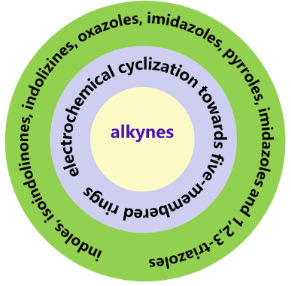
Graphical Abstract
Figure 1: Natural products and functional molecules possessing five-membered rings.
Scheme 1: Electrochemical intramolecular coupling of ureas to form indoles.
Scheme 2: Electrochemical dehydrogenative annulation of alkynes with anilines.
Scheme 3: Electrochemical annulations of o-arylalkynylanilines.
Scheme 4: Electrochemical cyclization of 2-ethynylanilines.
Scheme 5: Electrochemical selenocyclization of diselenides and 2-ethynylanilines.
Scheme 6: Electrochemical cascade approach towards 3-selenylindoles.
Scheme 7: Electrochemical C–H indolization.
Scheme 8: Electrochemical annulation of benzamides and terminal alkynes.
Scheme 9: Electrochemical synthesis of isoindolinone by 5-exo-dig aza-cyclization.
Scheme 10: Electrochemical reductive cascade annulation of o-alkynylbenzamide.
Scheme 11: Electrochemical intramolecular 1,2-amino oxygenation of alkyne.
Scheme 12: Electrochemical multicomponent reaction of nitrile, (thio)xanthene, terminal alkyne and water.
Scheme 13: Electrochemical aminotrifluoromethylation/cyclization of alkynes.
Scheme 14: Electrochemical cyclization of o-nitrophenylacetylene.
Scheme 15: Electrochemical annulation of alkynyl enaminones.
Scheme 16: Electrochemical annulation of alkyne and enamide.
Scheme 17: Electrochemical tandem Michael addition/azidation/cyclization.
Scheme 18: Electrochemical [3 + 2] cyclization of heteroarylamines.
Scheme 19: Electrochemical CuAAC to access 1,2,3-triazole.
Beilstein J. Org. Chem. 2025, 21, 2021–2029, doi:10.3762/bjoc.21.157
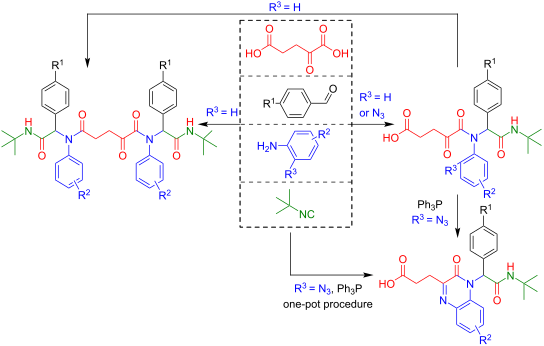
Graphical Abstract
Figure 1: Some biologically active quinoxalinone derivatives.
Scheme 1: Known multicomponent reactions of KGA.
Scheme 2: Ugi reaction involving KGA.
Scheme 3: Tandem Ugi/aza-Wittig combination involving KGA.
Figure 2: Molecular structure of 3-(4-(2-(tert-butylamino)-1-(4-methoxyphenyl)-2-oxoethyl)-5,7-dimethyl-3-oxo...
Beilstein J. Org. Chem. 2025, 21, 1984–1994, doi:10.3762/bjoc.21.154
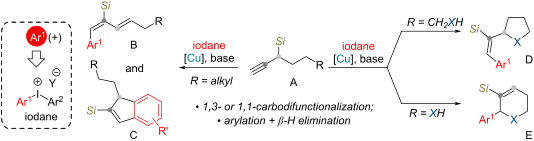
Graphical Abstract
Scheme 1: Alkyne arylation with diaryl-λ3-iodanes in the context of 1,2-silyl shift and potential cyclization....
Scheme 2: Competing mechanistic pathways for diene 10 and indene 11 formation.
Scheme 3: Reaction scope for the synthesis of arylated tetrahydrofurans 8. Conditions: All reactions were per...
Scheme 4: Synthesis of lactone and pyrrolidine derivatives. Conditions: ac7e = 0.1 mmol/mL. bReaction conditi...
Scheme 5: Proposed arylation–heterocyclization mechanism for internal nucleophile-containing silanes 7.
Scheme 6: Arylation of C5-chain containing acylamides 16a–c. aThe reaction was performed under modified condi...
Beilstein J. Org. Chem. 2025, 21, 1932–1963, doi:10.3762/bjoc.21.151
Graphical Abstract
Scheme 1: General mechanism of a lipase-catalyzed esterification.
Scheme 2: Shishido’s synthesis of (−)-xanthorrhizol (4) and (+)-heliannuol D (8).
Scheme 3: Shishido’s synthesis of a) (−)-heliannuol A (15) and b) heliannuol G (20) and heliannuol H (21).
Scheme 4: Deska’s synthesis of hyperione A (30) and ent-hyperione B (31).
Scheme 5: Huang’s synthesis of (+)-brazilin (37).
Scheme 6: Shishido’s synthesis of (−)-heliannuol D (42) and (+)-heliannuol A (43).
Scheme 7: Chênevert’s synthesis of (S)-α-tocotrienol (49).
Scheme 8: Kita’s synthesis of monoester 53.
Scheme 9: Kita’s synthesis of fredericamycin A (60).
Scheme 10: Takabe’s synthesis of (E)-3,7-dimethyl-2-octene-1,8-diol (64).
Scheme 11: Takabe’s synthesis of (18S)-variabilin (70).
Scheme 12: Kawasaki’s synthesis of (S)-Rosaphen (74) and (R)-Rosaphen (75).
Scheme 13: Tokuyama’s synthesis of a) (−)-petrosin (84) and b) (+)-petrosin (86).
Scheme 14: Fukuyama’s synthesis of leustroducsin B (96).
Scheme 15: Nanda’s synthesis of a) fragment 100, b) fragment 106 and c) (−)-rasfonin (109).
Scheme 16: Davies’ synthesis of (+)-pilocarpine (115) and (+)-isopilocarpine (116).
Scheme 17: Ōmura’s synthesis of salinosporamide A (125).
Scheme 18: Kang’s synthesis of ʟ-cladinose (124) and its derivative.
Scheme 19: Kang’s preparation of fragment 139.
Scheme 20: Kang’s synthesis of azithromycin (149).
Scheme 21: Kang’s synthesis of (−)-dysiherbaine (156).
Scheme 22: Kang’s synthesis of (−)-kaitocephalin (166).
Scheme 23: Kang’s synthesis of laidlomycin (180).
Scheme 24: Snyder’s synthesis of arboridinine (190).
Scheme 25: Ma’s synthesis of (+)-alstrostine G (203).
Scheme 26: Trost’s synthesis of (−)-18-epi-peloruside A (215).
Scheme 27: Lindel’s synthesis of (–)-dihydroraputindole (223).
Scheme 28: Iwata’s synthesis of a) (−)-talaromycin B (232) and b) (+)-talaromycin A (235).
Scheme 29: Cook’s synthesis of a) (−)-vincamajinine (240) and b) (−)-11-methoxy-17-epivincamajine (245).
Scheme 30: Cook’s synthesis of (+)-dehydrovoachalotine (249) and voachalotine (250).
Scheme 31: Cook’s synthesis of a) (−)-12-methoxy-Nb-methylvoachalotine (257) and b) (+)-polyneuridine, macusin...
Scheme 32: Trauner’s synthesis of stephadiamine (273).
Scheme 33: Garg’s synthesis of (–)-ψ-akuammigine (285).
Scheme 34: Ding’s synthesis of (+)-18-benzoyldavisinol (293) and (+)-davisinol (294).
Beilstein J. Org. Chem. 2025, 21, 1799–1807, doi:10.3762/bjoc.21.142
Graphical Abstract
Figure 1: Representative examples of bioactive quinolines.
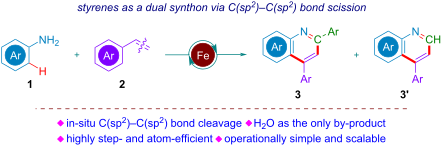
Scheme 1: C(sp2)–C(sp2) bond-cleavage strategies for quinoline synthesis.
Scheme 2: Substrate scope of various arylamines and styrenes.
Scheme 3: Scale-up studies for the synthesis of antifungal agents.
Scheme 4: Mechanistic investigations.
Scheme 5: Plausible reaction mechanism.
Beilstein J. Org. Chem. 2025, 21, 1648–1660, doi:10.3762/bjoc.21.129
Graphical Abstract
Figure 1: a) Common types of chirality. b) Representative functional molecules bearing non-central chirality.
Scheme 1: Construction of planar chirality.
Scheme 2: Construction of axial chirality.
Scheme 3: Construction of inherent chirality.
Scheme 4: Construction of helical chirality.
Scheme 5: CPA-catalyzed enantioselective Groebke–Blackburn–Bienaymé reaction.
Scheme 6: Construction of axially chiral 3-arylpyrroles via de novo pyrrole formation.
Scheme 7: Synthesis of atropoisomeric 3-arylpyrroles via central-to-axial chirality transfer.
Scheme 8: Dynamic kinetic resolution of bridged biaryls with α-acidic isocyanides.
Scheme 9: Desymmetrization of prochiral compounds with α-acidic isocyanides.
Beilstein J. Org. Chem. 2025, 21, 1603–1612, doi:10.3762/bjoc.21.124
Graphical Abstract
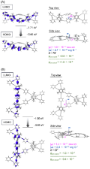
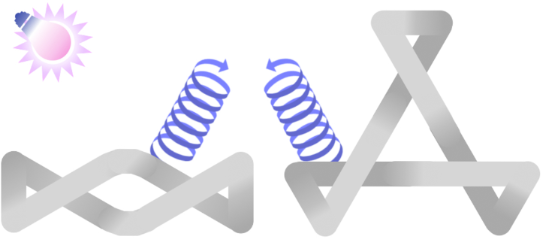
Scheme 1: Synthesis of cyclic dimer (Sp)-6 and trimer (Sp)-7.
Figure 1: UV–vis and PL spectra of (Sp)-6 and (Sp)-7 in CHCl3 (1.0 × 10⁻⁵ M). Excitation wavelength 370 nm an...
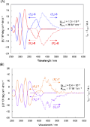
Figure 2: (A) UV, CD, PL, and CPL spectra of (Sp)- and (Rp)-6 in CHCl3 (1.0 × 10⁻⁵ M). (B) UV, CD, PL, and CP...
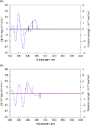
Figure 3: (A) CD spectrum of (Sp)-6 in CHCl3 (1.0 × 10⁻⁵ M), and the plot of the calculated rotatory strength...
Figure 4: Molecular orbitals and simulated CPL profiles in the S1 states of (A) (Sp)-6 and (B) (Sp)-7 (TD-MN1...
Beilstein J. Org. Chem. 2025, 21, 1272–1305, doi:10.3762/bjoc.21.99
Graphical Abstract
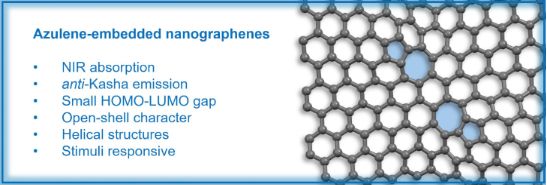
Figure 1: a) Stone–Wales (red) and azulene (blue) defects in graphene; b) azulene and its selected resonance ...
Figure 2: Examples of azulene-embedded 2D allotropic forms of carbon: a) phagraphene and b) TPH-graphene.
Scheme 1: Synthesis of non-alternant isomers of pyrene (2 and 6) using dehydrogenation.
Scheme 2: Synthesis of non-alternant isomer 9 of benzo[a]pyrene and 14 of benzo[a]perylene using dehydrogenat...
Scheme 3: Synthesis of azulene-embedded isomers of benzo[a]pyrene (18 and 22) inspired by Ziegler–Hafner azul...
Figure 3: General strategies leading to azulene-embedded nanographenes: a) construction of azulene moiety in ...
Scheme 4: Synthesis of biradical PAHs possessing significant biradical character using oxidation of partially...
Scheme 5: Synthesis of dicyclohepta[ijkl,uvwx]rubicene (29) and its further modifications.
Scheme 6: Synthesis of warped PAHs with one embedded azulene subunit using Scholl-type oxidation.
Scheme 7: Synthesis of warped PAHs with two embedded azulene subunits using Scholl oxidation.
Scheme 8: Synthesis of azulene-embedded PAHs using [3 + 2] annulation accompanied by ring expansion.
Scheme 9: Synthesis of azulene-embedded isomers of linear acenes using [3 + 2] annulation accompanied by ring...
Scheme 10: Synthesis of azulene-embedded PAHs using intramolecular C–H arylation.
Scheme 11: Synthesis of azulene-embedded isomers of acenes using intramolecular C–H arylation.
Scheme 12: Synthesis of azulene-embedded PAHs using intramolecular condensations.
Scheme 13: Synthesis of azulene-embedded PAH 89 using palladium-catalysed [5 + 2] annulation.
Scheme 14: Synthesis of azulene-embedded PAHs using oxidation of substituents around the azulene core.
Scheme 15: Synthesis of azulene-embedded PAHs using the oxidation of reactive positions 1 and 3 of azulene sub...
Scheme 16: Synthesis of azulene-embedded PAHs using intramolecular C–H arylation.
Scheme 17: Synthesis of an azulene-embedded isomer of terylenebisimide using tandem Suzuki coupling and C–H ar...
Scheme 18: Synthesis of azulene embedded PAHs using a bismuth-catalyzed cyclization of alkenes.
Scheme 19: Synthesis of azulene-embedded nanographenes using intramolecular cyclization of alkynes.
Scheme 20: Synthesis of azulene-embedded graphene nanoribbons and azulene-embedded helicenes using annulation ...
Scheme 21: Synthesis of azulene-fused acenes.
Scheme 22: Synthesis of non-alternant isomer of perylene 172 using Yamamoto-type homocoupling.
Scheme 23: Synthesis of N- and BN-nanographenes with embedded azulene unit(s).
Scheme 24: On-surface synthesis of azulene-embedded nanographenes from benzenoid precursors via dehydrogenatio...
Scheme 25: On-surface synthesis of azulene-embedded nanographenes from benzenoid precursors.
Scheme 26: On-surface synthesis of azulene-embedded nanoribbons.
Beilstein J. Org. Chem. 2025, 21, 1207–1271, doi:10.3762/bjoc.21.98
Graphical Abstract
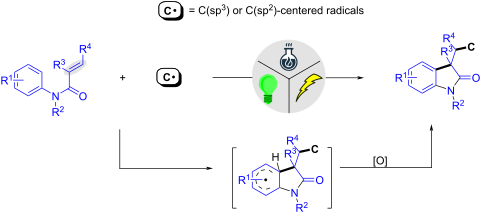
Scheme 1: DTBP-mediated oxidative alkylarylation of activated alkenes.
Scheme 2: Iron-catalyzed oxidative 1,2-alkylarylation.
Scheme 3: Possible mechanism for the iron-catalyzed oxidative 1,2-alkylation of activated alkenes.
Scheme 4: A metal-free strategy for synthesizing 3,3-disubstituted oxindoles.
Scheme 5: Iminoxyl radical-promoted cascade oxyalkylation/alkylarylation of alkenes.
Scheme 6: Proposed mechanism for the iminoxyl radical-promoted cascade oxyalkylation/alkylarylation of alkene...
Scheme 7: Bicyclization of 1,n-enynes with alkyl nitriles.
Scheme 8: Possible reaction mechanism for the bicyclization of 1,n-enynes with alkyl nitriles.
Scheme 9: Radical cyclization of N-arylacrylamides with isocyanides.
Scheme 10: Plausible mechanism for the radical cyclization of N-arylacrylamides with isocyanides.
Scheme 11: Electrochemical dehydrogenative cyclization of 1,3-dicarbonyl compounds.
Scheme 12: Plausible mechanism for the dehydrogenative cyclization of 1,3-dicarbonyl compounds.
Scheme 13: Photocatalyzed cyclization of N-arylacrylamide and N,N-dimethylaniline.
Scheme 14: Proposed mechanism for the photocatalyzed cyclization of N-arylacrylamides and N,N-dimethylanilines....
Scheme 15: Electrochemical monofluoroalkylation cyclization of N-arylacrylamides with dimethyl 2-fluoromalonat...
Scheme 16: Proposed mechanism for the electrochemical radical cyclization of N-arylacrylamides with dimethyl 2...
Scheme 17: Photoelectrocatalytic carbocyclization of unactivated alkenes using simple malonates.
Scheme 18: Plausible mechanism for the photoelectrocatalytic carbocyclization of unactivated alkenes with simp...
Scheme 19: Bromide-catalyzed electrochemical trifluoromethylation/cyclization of N-arylacrylamides.
Scheme 20: Proposed mechanism for the electrochemical trifluoromethylation/cyclization of N-arylacrylamides.
Scheme 21: Visible light-mediated trifluoromethylarylation of N-arylacrylamides.
Scheme 22: Plausible reaction mechanism for the visible light-mediated trifluoromethylarylation of N-arylacryl...
Scheme 23: Electrochemical difluoroethylation cyclization of N-arylacrylamides with sodium difluoroethylsulfin...
Scheme 24: Electrochemical difluoroethylation cyclization of N-methyacryloyl-N-alkylbenzamides with sodium dif...
Scheme 25: Photoredox-catalyzed radical aryldifluoromethylation of N-arylacrylamides with S-(difluoromethyl)su...
Scheme 26: Proposed mechanism for the photoredox-catalyzed radical aryldifluoromethylation of N-arylacrylamide...
Scheme 27: Visible-light-induced domino difluoroalkylation/cyclization of N-cyanamide alkenes.
Scheme 28: Proposed mechanism of photoredox-catalyzed radical domino difluoroalkylation/cyclization of N-cyana...
Scheme 29: Palladium-catalyzed oxidative difunctionalization of alkenes.
Scheme 30: Two possible mechanisms of palladium-catalyzed oxidative difunctionalization.
Scheme 31: Silver-catalyzed oxidative 1,2-alkyletherification of unactivated alkenes with α-bromoalkylcarbonyl...
Scheme 32: Photochemical radical cascade cyclization of dienes.
Scheme 33: Proposed mechanism for the photochemical radical cascade 6-endo cyclization of dienes with α-carbon...
Scheme 34: Photocatalyzed radical coupling/cyclization of N-arylacrylamides and.
Scheme 35: Photocatalyzed radical-type couplings/cyclization of N-arylacrylamides with sulfoxonium ylides.
Scheme 36: Possible mechanism of visible-light-induced radical-type couplings/cyclization of N-arylacrylamides...
Scheme 37: Visible-light-promoted difluoroalkylated oxindoles systhesis via EDA complexes.
Scheme 38: Possible mechanism for the visible-light-promoted radical cyclization of N-arylacrylamides with bro...
Scheme 39: A dicumyl peroxide-initiated radical cascade reaction of N-arylacrylamide with DCM.
Scheme 40: Possible mechanism of radical cyclization of N-arylacrylamides with DCM.
Scheme 41: An AIBN-mediated radical cascade reaction of N-arylacrylamides with perfluoroalkyl iodides.
Scheme 42: Possible mechanism for the reaction with perfluoroalkyl iodides.
Scheme 43: Photoinduced palladium-catalyzed radical annulation of N-arylacrylamides with alkyl halides.
Scheme 44: Radical alkylation/cyclization of N-Alkyl-N-methacryloylbenzamides with alkyl halides.
Scheme 45: Possible mechanism for the alkylation/cyclization with unactivated alkyl chlorides.
Scheme 46: Visible-light-driven palladium-catalyzed radical cascade cyclization of N-arylacrylamides with unac...
Scheme 47: NHC-catalyzed radical cascade cyclization of N-arylacrylamides with alkyl bromides.
Scheme 48: Possible mechanism of NHC-catalyzed radical cascade cyclization.
Scheme 49: Electrochemically mediated radical cyclization reaction of N-arylacrylamides with freon-type methan...
Scheme 50: Proposed mechanistic pathway of electrochemically induced radical cyclization reaction.
Scheme 51: Redox-neutral photoinduced radical cascade cylization of N-arylacrylamides with unactivated alkyl c...
Scheme 52: Proposed mechanistic hypothesis of redox-neutral radical cascade cyclization.
Scheme 53: Thiol-mediated photochemical radical cascade cylization of N-arylacrylamides with aryl halides.
Scheme 54: Proposed possible mechanism of thiol-mediated photochemical radical cascade cyclization.
Scheme 55: Visible-light-induced radical cascade bromocyclization of N-arylacrylamides with NBS.
Scheme 56: Possible mechanism of visible-light-induced radical cascade cyclization.
Scheme 57: Decarboxylation/radical C–H functionalization by visible-light photoredox catalysis.
Scheme 58: Plausible mechanism of visible-light photoredox-catalyzed radical cascade cyclization.
Scheme 59: Visible-light-promoted tandem radical cyclization of N-arylacrylamides with N-(acyloxy)phthalimides....
Scheme 60: Plausible mechanism for the tandem radical cyclization reaction.
Scheme 61: Visible-light-induced aerobic radical cascade alkylation/cyclization of N-arylacrylamides with alde...
Scheme 62: Plausible mechanism for the aerobic radical alkylarylation of electron-deficient amides.
Scheme 63: Oxidative decarbonylative [3 + 2]/[5 + 2] annulation of N-arylacrylamide with vinyl acids.
Scheme 64: Plausible mechanism for the decarboxylative (3 + 2)/(5 + 2) annulation between N-arylacrylamides an...
Scheme 65: Rhenium-catalyzed alkylarylation of alkenes with PhI(O2CR)2.
Scheme 66: Plausible mechanism for the rhenium-catalyzed decarboxylative annulation of N-arylacrylamides with ...
Scheme 67: Visible-light-induced one-pot tandem reaction of N-arylacrylamides.
Scheme 68: Plausible mechanism for the visible-light-initiated tandem synthesis of difluoromethylated oxindole...
Scheme 69: Copper-catalyzed redox-neutral cyanoalkylarylation of activated alkenes with cyclobutanone oxime es...
Scheme 70: Plausible mechanism for the copper-catalyzed cyanoalkylarylation of activated alkenes.
Scheme 71: Photoinduced alkyl/aryl radical cascade for the synthesis of quaternary CF3-attached oxindoles.
Scheme 72: Plausible photoinduced electron-transfer (PET) mechanism.
Scheme 73: Photoinduced cerium-mediated decarboxylative alkylation cascade cyclization.
Scheme 74: Plausible reaction mechanism for the decarboxylative radical-cascade alkylation/cyclization.
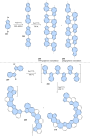
Scheme 75: Metal-free oxidative tandem coupling of activated alkenes.
Scheme 76: Control experiments and possible mechanism for 1,2-carbonylarylation of alkenes with carbonyl C(sp2...
Scheme 77: Silver-catalyzed acyl-arylation of activated alkenes with α-oxocarboxylic acids.
Scheme 78: Proposed mechanism for the decarboxylative acylarylation of acrylamides.
Scheme 79: Visible-light-mediated tandem acylarylation of olefines with carboxylic acids.
Scheme 80: Proposed mechanism for the radical cascade cyclization with acyl radical via visible-light photored...
Scheme 81: Erythrosine B-catalyzed visible-light photoredox arylation-cyclization of N-arylacrylamides with ar...
Scheme 82: Electrochemical cobalt-catalyzed radical cyclization of N-arylacrylamides with arylhydrazines or po...
Scheme 83: Proposed mechanism of radical cascade cyclization via electrochemical cobalt catalysis.
Scheme 84: Copper-catalyzed oxidative tandem carbamoylation/cyclization of N-arylacrylamides with hydrazinecar...
Scheme 85: Proposed reaction mechanism for the radical cascade cyclization by copper catalysis.
Scheme 86: Visible-light-driven radical cascade cyclization reaction of N-arylacrylamides with α-keto acids.
Scheme 87: Proposed mechanism of visible-light-driven cascade cyclization reaction.
Scheme 88: Peroxide-induced radical carbonylation of N-(2-methylallyl)benzamides with methyl formate.
Scheme 89: Proposed cyclization mechanism of peroxide-induced radical carbonylation with N-(2-methylallyl)benz...
Scheme 90: Persulfate promoted carbamoylation of N-arylacrylamides and N-arylcinnamamides.
Scheme 91: Proposed mechanism for the persulfate promoted radical cascade cyclization reaction of N-arylacryla...
Scheme 92: Photocatalyzed carboacylation with N-arylpropiolamides/N-alkyl acrylamides.
Scheme 93: Plausible mechanism for the photoinduced carboacylation of N-arylpropiolamides/N-alkyl acrylamides.
Scheme 94: Electrochemical Fe-catalyzed radical cyclization with N-arylacrylamides.
Scheme 95: Plausible mechanism for the electrochemical Fe-catalysed radical cyclization of N-phenylacrylamide.
Scheme 96: Substrate scope of the selective functionalization of various α-ketoalkylsilyl peroxides with metha...
Scheme 97: Proposed reaction mechanism for the Fe-catalyzed reaction of alkylsilyl peroxides with methacrylami...
Scheme 98: EDA-complex mediated C(sp2)–C(sp3) cross-coupling of TTs and N-methyl-N-phenylmethacrylamides.
Scheme 99: Proposed mechanism for the synthesis of oxindoles via EDA complex.
Beilstein J. Org. Chem. 2025, 21, 1171–1182, doi:10.3762/bjoc.21.94
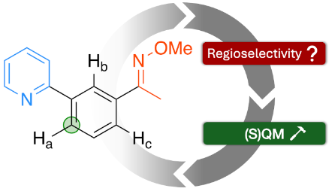
Graphical Abstract
Figure 1: Overview of the predictive workflow: For the shown substrate on the left, three unique activation s...
Figure 2: Example of the output from running the SMARTS pattern approach introduced by Tomberg et al. [9] with t...
Figure 3: An example where our algorithm found a more specific SMARTS pattern match than highlighted in Tombe...
Figure 4: An example highlighting the difficulties in prioritizing the SMARTS patterns. All three patterns ma...
Figure 5: Example of a combination of C–H bond and DG that is discarded because of the angle constraint on th...
Figure 6: Example of combinations of C–H bonds and DGs that are considered identical because of symmetry of t...
Figure 7: Example of combinations of C–H bonds and DGs that are considered identical because of symmetry of t...
Figure 8: Example of combinations of C–H bonds and DGs that are considered identical because of resonance str...
Figure 9: A: Distribution of correct (green) and wrong (red) predictions for molecules with two to five poten...
Figure 10: Molecules with five potential reaction sites that are predicted wrong by the QM workflow. The exper...
Figure 11: Predictions of reaction sites within a 1 kcal·mol−1 threshold for ten molecules are marked with a b...
Figure 12: Substrate with six potential unique reaction sites for C–H functionalization. The experimentally de...
Beilstein J. Org. Chem. 2025, 21, 890–914, doi:10.3762/bjoc.21.73
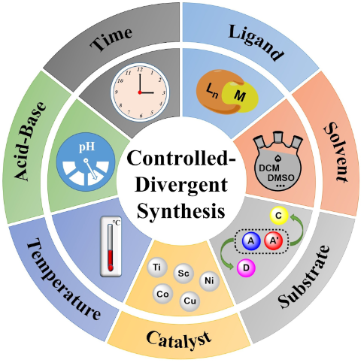
Graphical Abstract
Scheme 1: Ligand-controlled regiodivergent C1 insertion into arynes [19].
Scheme 2: Ligand effect in homogenous gold catalysis enabling regiodivergent π-bond-activated cyclization [20].
Scheme 3: Ligand-controlled palladium(II)-catalyzed regiodivergent carbonylation of alkynes [21].
Scheme 4: Catalyst-controlled annulations of strained cyclic allenes with π-allyl palladium complexes and pro...
Scheme 5: Ring expansion of benzosilacyclobutenes with alkynes [23].
Scheme 6: Photoinduced regiodivergent and enantioselective cross-coupling [24].
Scheme 7: Catalyst-controlled regiodivergent and enantioselective formal hydroamination of N,N-disubstituted ...
Scheme 8: Catalyst-tuned regio- and enantioselective C(sp3)–C(sp3) coupling [31].
Scheme 9: Catalyst-controlled annulations of bicyclo[1.1.0]butanes with vinyl azides [32].
Scheme 10: Solvent-driven reversible macrocycle-to-macrocycle interconversion [39].
Scheme 11: Unexpected solvent-dependent reactivity of cyclic diazo imides and mechanism [40].
Scheme 12: Palladium-catalyzed annulation of prochiral N-arylphosphonamides with aromatic iodides [41].
Scheme 13: Time-dependent enantiodivergent synthesis [42].
Scheme 14: Time-controlled palladium-catalyzed divergent synthesis of silacycles via C–H activation [43].
Scheme 15: Proposed mechanism for the time-controlled palladium-catalyzed divergent synthesis of silacycles [43].
Scheme 16: Metal-free temperature-controlled regiodivergent borylative cyclizations of enynes [45].
Scheme 17: Nickel-catalyzed switchable site-selective alkene hydroalkylation by temperature regulation [46].
Scheme 18: Copper-catalyzed decarboxylative amination/hydroamination sequence [48].
Scheme 19: Proposed mechanism of copper-catalyzed decarboxylative amination/hydroamination sequence [48].
Scheme 20: Enantioselective chemodivergent three-component radical tandem reactions [49].
Scheme 21: Substrate-controlled synthesis of indoles and 3H-indoles [52].
Scheme 22: Controlled mono- and double methylene insertions into nitrogen–boron bonds [53].
Scheme 23: Copper-catalyzed substrate-controlled carbonylative synthesis of α-keto amides and amides [54].
Scheme 24: Divergent sulfur(VI) fluoride exchange linkage of sulfonimidoyl fluorides and alkynes [55].
Scheme 25: Modular and divergent syntheses of protoberberine and protonitidine alkaloids [56].
Beilstein J. Org. Chem. 2025, 21, 877–883, doi:10.3762/bjoc.21.71
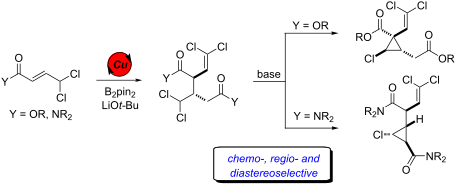
Graphical Abstract
Scheme 1: Chemodivergent reactivity observed in copper-catalyzed borylative couplings of allylic gem-dichlori...
Scheme 2: Cu-Bpin-mediated dimerization of 4,4-dichoro-2-butenoic acid derivatives.
Scheme 3: Control experiments.
Scheme 4: Proposed mechanism for the Cu-catalyzed dimerization of 4,4-dichoro-2-butenoic acid derivatives.
Scheme 5: a) KOt-Bu-mediated intramolecular cyclization of 9. b) Direct formation of cyclopropane 20 from gem...
Beilstein J. Org. Chem. 2025, 21, 770–797, doi:10.3762/bjoc.21.61
Graphical Abstract
Scheme 1: Electrosynthesis of phenanthridine phosphine oxides.
Scheme 2: Electrosynthesis of 1-aminoalkylphosphine oxides.
Scheme 3: Various electrochemical C–P coupling reactions.
Scheme 4: Electrochemical C–P coupling reaction of indolines.
Scheme 5: Electrochemical C–P coupling reaction of ferrocene.
Scheme 6: Electrochemical C–P coupling reaction of acridines with phosphites.
Scheme 7: Electrochemical C–P coupling reaction of alkenes.
Scheme 8: Electrochemical C–P coupling reaction of arenes in a flow system.
Scheme 9: Electrochemical C–P coupling reaction of heteroarenes.
Scheme 10: Electrochemical C–P coupling reaction of thiazoles.
Scheme 11: Electrochemical C–P coupling reaction of indole derivatives.
Scheme 12: Electrosynthesis of 1-amino phosphonates.
Scheme 13: Electrochemical C–P coupling reaction of aryl and vinyl bromides.
Scheme 14: Electrochemical C–P coupling reaction of phenylpyridine with dialkyl phosphonates in the presence o...
Scheme 15: Electrochemical P–C bond formation of amides.
Scheme 16: Electrochemical synthesis of α-hydroxy phosphine oxides.
Scheme 17: Electrochemical synthesis of π-conjugated phosphonium salts.
Scheme 18: Electrochemical phosphorylation of indoles.
Scheme 19: Electrochemical synthesis of phosphorylated propargyl alcohols.
Scheme 20: Electrochemical synthesis of phosphoramidates.
Scheme 21: Electrochemical reaction of carbazole with diphenylphosphine.
Scheme 22: Electrochemical P–N coupling of carbazole with phosphine oxides.
Scheme 23: Electrochemical P–N coupling of indoles with a trialkyl phosphite.
Scheme 24: Electrochemical synthesis of iminophosphoranes.
Scheme 25: Electrochemical P–O coupling of phenols with dialkyl phosphonate.
Scheme 26: Electrochemical P–O coupling of alcohols with diphenylphosphine.
Scheme 27: Electrochemical P–S coupling of thiols with dialkylphosphines.
Scheme 28: Electrochemical thiophosphorylation of indolizines.
Scheme 29: Electrosynthesis of S-heteroaryl phosphorothioates.
Scheme 30: Electrochemical phosphorylation reactions.
Scheme 31: Electrochemical P–Se formation.
Scheme 32: Electrochemical selenation/halogenation of alkynyl phosphonates.
Scheme 33: Electrochemical enantioselective aryl C–H bond activation.
Beilstein J. Org. Chem. 2025, 21, 727–735, doi:10.3762/bjoc.21.56
Graphical Abstract
Figure 1: Structure-guided approach for engineering the (non-covalent) fluorescent light-up aptamer Pepper in...
Scheme 1: Chemical structures of the HBC dye family [7]. Variations to HBC530 highlighted in red color. All dyes...
Scheme 2: Synthesis of bromoalkyl HBC derivatives 7, 8, and 9.
Scheme 3: Synthesis of the HBC ether derivative 11.
Figure 2: Pepper aptamer reacts with different HBC derivatives. Chemical structures of the HBC derivatives us...
Scheme 4: Derivatization of the HBC fluorophore 5 to generate handles with distinct electrophilic groups.
Scheme 5: Synthesis of mesylated HBC fluorophores 16, 17, and 18.
Scheme 6: Synthesis of the bifunctional HBC fluorophore 22. For an application of 22 (pulldown of circular Pe...