


Search results
Search for "probes" in Full Text gives 268 result(s) in Beilstein Journal of Organic Chemistry. Showing first 200.
Synthesis of sterically shielded piperidine nitroxides via acid-catalyzed heterocyclization of β-aminoketone derivatives with ketones
Beilstein J. Org. Chem. 2026, 22, 948–954, doi:10.3762/bjoc.22.74
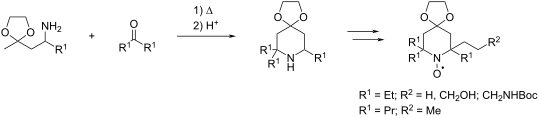
- (MRI) [4][5] and as spin probes for Overhauser MRI in vivo [6]. Piperidin-1-oxyls played a key role in the development and industrial implementation of controlled polymerization of vinyl monomers (nitroxide-mediated polymerization, NMP) [7]. The unique redox properties of these radicals underpin their
- of nitroxides and increases their lifetimes in biological systems [12], which makes these radicals promising MRI contrast agents [13], spin probes for in vivo EPRI [14][15] and antioxidant tissue protectors [16]. Existing methods for the synthesis of such sterically hindered piperidine nitroxide


A practical CO2-mediated synthesis of 5,6-carboxylated silicon-rhodamines for targeted probe development
Beilstein J. Org. Chem. 2026, 22, 915–924, doi:10.3762/bjoc.22.72
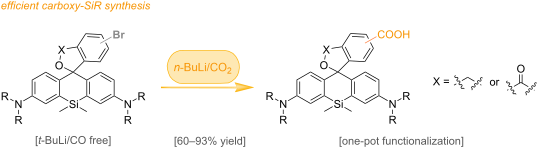
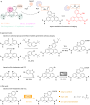
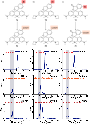
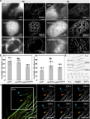
- one-pot access to HaloTag-targeted SiR probes. The resulting probes were successfully applied to long-term live-cell super-resolution imaging, allowing visualization of filopodial dynamics and mitochondrial remodeling. This work establishes a concise and efficient route to functionalized SiR dyes and
- facilitates the rapid development of targeted SiR probes. Keywords: carboxylation; CO2; fluorescent probes; silicon-rhodamine; super-resolution imaging; Introduction Rhodamine dyes, which enable fluorescence imaging in living cells – a powerful technique for studying biological systems in vivo [1][2] – have
- makes SiRs highly attractive as fluorogenic probes for precise super-resolution imaging by enabling target-specific recognition and significantly improving signal-to-noise ratio (SNR). In addition, hydroxymethyl-substituted SiR derivatives, including HMSiR [30][31] and Aze-HMSiR [32][33][34], can



Site-specific labelling of native peptides and proteins: chemical and enzymatic strategies
Beilstein J. Org. Chem. 2026, 22, 857–881, doi:10.3762/bjoc.22.67
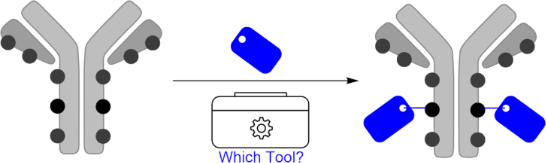
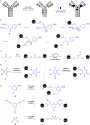
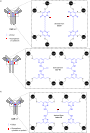
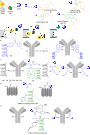
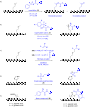
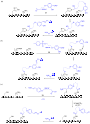
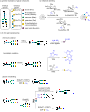
- reach USD 32 billion by 2034 (https://www.precedenceresearch.com/antibody-drug-conjugates-market), with advanced modalities such as bispecific antibody–drug conjugates (BsADC) gaining traction [2]. Leading suppliers, including ThermoFisher Scientific (Molecular Probes/Invitrogen), LI-COR Biosciences









Advantages of PROTACs in achieving selective degradation of homologous protein families
Beilstein J. Org. Chem. 2026, 22, 628–661, doi:10.3762/bjoc.22.49
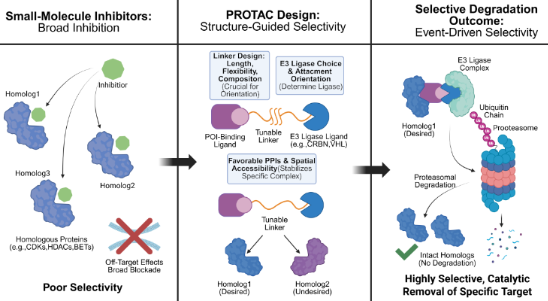
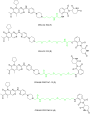
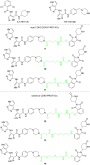
- resistance [61]. Although many small-molecule inhibitors have also been developed for CDK9 so far, due to the high homology of the CDK family, inhibitors always tend to target a variety of CDK members, thereby reducing their specificity as therapeutic agents and chemical probes and results in many adverse





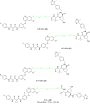
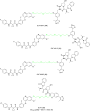


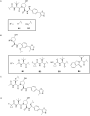


The high potential of methyl laurate as a recyclable competitor to conventional toxic solvents in [3 + 2] cycloaddition reactions
Beilstein J. Org. Chem. 2025, 21, 2389–2415, doi:10.3762/bjoc.21.184
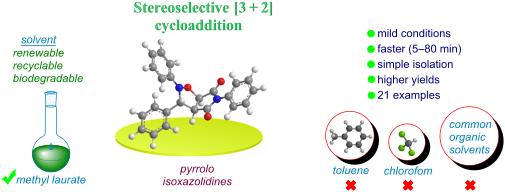
- the time- and labor-intensive nature of traditional multistep synthesis strategies. For instance, this methodology has been demonstrated to be highly advantageous in the synthesis of numerous pharmaceutical compounds, biological probes, insecticides, alkaloids, and other intricate natural compounds







Conformational effects on iodide binding: a comparative study of flexible and rigid carbazole macrocyclic analogs
Beilstein J. Org. Chem. 2025, 21, 2369–2375, doi:10.3762/bjoc.21.181
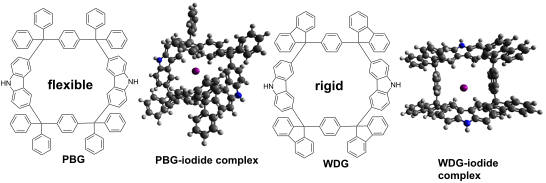
- fluorescence quenching efficiency upon iodide binding compared to the rigid WDG (KPBG/KWDG = 22.78), demonstrating its potential as a highly sensitive optical probe and offering a novel strategy for engineering dynamic supramolecular receptors. Two carbazole-based macrocyclic probes, PBG (flexible benzene ring



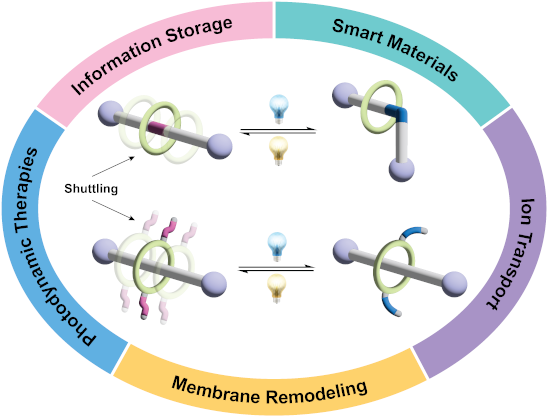
Rotaxanes with integrated photoswitches: design principles, functional behavior, and emerging applications
Beilstein J. Org. Chem. 2025, 21, 2345–2366, doi:10.3762/bjoc.21.179
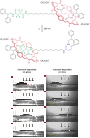
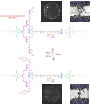
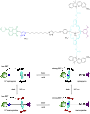
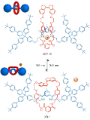
- Michael addition taking place at the active site (C=C−C=N+) in the merocyanine unit in the presence of sulfite ions, resulting in color changes from red to green. This work represents a substantial advancement in the development of rotaxane-based fluorescent probes, providing highly sensitive and





Research towards selective inhibition of the CLK3 kinase
Beilstein J. Org. Chem. 2025, 21, 2250–2259, doi:10.3762/bjoc.21.172
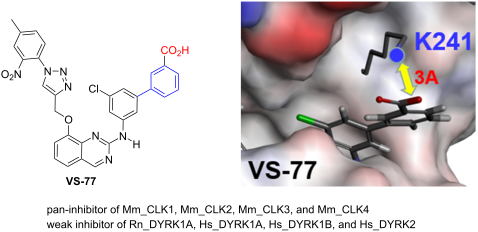
- kinases” because of the lack of functional annotations and high-quality molecular probes for functional investigations [7][8]. Thus, new studies are still required for the discovery of selective inhibitors for each of these kinases in order to better clarify their mechanisms of action and their roles in
- . However, these derivatives remain still less potent on CLK3 than on the other CLKs. Therefore, they cannot be qualified as bona fide chemical probes for this CLK3 kinase. Structural and biochemical studies have been undertaken to find more selective CLKs inhibitors. Particularly, a detailed study has


A m-quaterphenyl probe for absolute configurational assignments of primary and secondary amines
Beilstein J. Org. Chem. 2025, 21, 2211–2219, doi:10.3762/bjoc.21.168
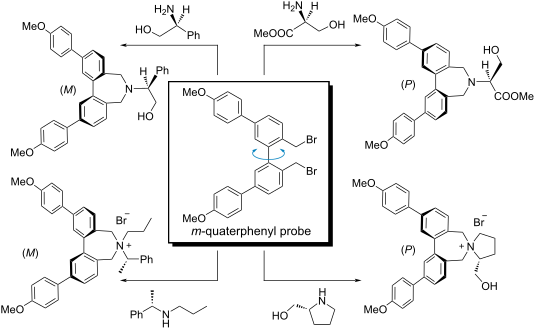
- , exciton-coupled CD has emerged as a powerful chiroptical method, providing a non-empirical correlation between the sign of the Cotton effect and the spatial arrangement of the electric transition dipole moments of interacting chromophores [7]. More recently, CD-based chiroptical probes have been developed
- configurations of chiral amines were determined. Reported chiroptical probes for determining the absolute configuration of chiral compounds only used the sign of the Cotton effect in CD. This method uses not only the sign but also the intensity of the Cotton effect in CD to determine the absolute configuration


C2 to C6 biobased carbonyl platforms for fine chemistry
Beilstein J. Org. Chem. 2025, 21, 2103–2172, doi:10.3762/bjoc.21.165
- polyamides possess unusual intrinsic luminescence and high and selective affinity towards Fe2+ and Fe3+ metal ions, which could be used as fluorescent probes in the biomedical field [195]. Heptamethine cyanine Cy7 is a very important class of intermediates in the fields of biology and photomedicine. The


Rhodium-catalysed connective synthesis of diverse reactive probes bearing S(VI) electrophilic warheads
Beilstein J. Org. Chem. 2025, 21, 1924–1931, doi:10.3762/bjoc.21.150
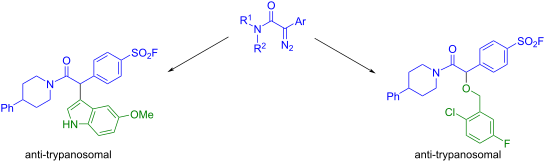
- may be enabled by screening diverse sets of reactive probes. Most existing sets of reactive probes are armed with cysteine-directed warheads, a limitation that we sought to address. A connective synthesis was developed in which α-diazoamide substrates, armed with a S(VI) warhead, were reacted with
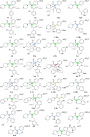
- diverse co-substrates. A high-throughput approach was used to identify promising substrate/co-substrate/catalyst combinations which were then prioritised for purification by mass-directed HPLC to yield a total of thirty reactive probes. The structural diversity of the probe set was increased by the
- multiplicity of reaction types between rhodium carbenoids and the many different co-substrate classes, and the catalyst-driven selectivity between these pathways. The probes were screened for activity against Trypanosma brucei, and four probes with promising anti-trypanosomal activity were identified


Fe-catalyzed efficient synthesis of 2,4- and 4-substituted quinolines via C(sp2)–C(sp2) bond scission of styrenes
Beilstein J. Org. Chem. 2025, 21, 1799–1807, doi:10.3762/bjoc.21.142
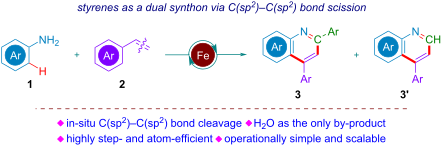
- probes for sensing and bioimaging applications (Figure 1) [16][17]. Quinoline-derived metal complexes have also demonstrated broad utility, functioning as effective catalysts in organic synthesis and finding applications across medicinal chemistry, materials science, photovoltaics, and chemical sensing




On the aromaticity and photophysics of 1-arylbenzo[a]imidazo[5,1,2-cd]indolizines as bicolor fluorescent molecules for barium tagging in the study of double-beta decay of 136Xe
Beilstein J. Org. Chem. 2025, 21, 1627–1638, doi:10.3762/bjoc.21.126
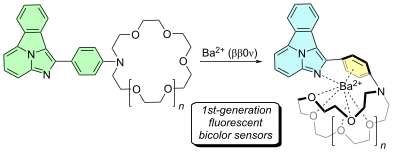
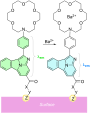
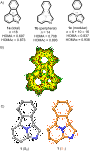
- efficiency of crown ethers as components in cation-selective fluorescent probes has been extensively explored [7][30], to the best of our knowledge no previous computational DFT studies on the selectivity of crown ethers of different sizes with Ba2+ have been reported. Therefore, we explored (Scheme 2A) the





pH-Controlled isomerization kinetics of ortho-disubstituted benzamidines: E/Z isomerism and axial chirality
Beilstein J. Org. Chem. 2025, 21, 1568–1576, doi:10.3762/bjoc.21.120
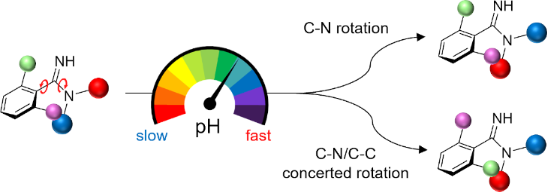
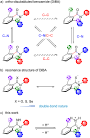
- various fields, such as functional materials, biological probes, and drugs. a) Structural features of DiBA. b) Resonance structure of the amide moiety of DiBA. c) Molecular form and protonated structure of ortho-disubstituted benzamidine. Rotational barriers of 2-bromo-N,N,6-trimethylbenzimidamide and its



Highly distinguishable isomeric states of a tripodal arylazopyrazole derivative on graphite through electron/hole-induced switching at ambient conditions
Beilstein J. Org. Chem. 2025, 21, 1496–1507, doi:10.3762/bjoc.21.112
- tapping mode and an ATM300 from RHK Technology, respectively. Aluminum-coated silicon cantilevers from Nanosensors (PPP-NCHR) were used as AFM probes. The force constant and resonance frequency of the cantilevers during the imaging were 30–34 N/m and ≈300 kHz, respectively. A Pt/Ir (80:20) tip was



Biobased carbon dots as photoreductants – an investigation by using triarylsulfonium salts
Beilstein J. Org. Chem. 2025, 21, 1024–1030, doi:10.3762/bjoc.21.84
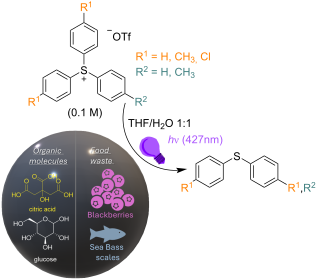
- photoreductants, and we considered triarylsulfonium salts Ar3S+X− as suitable probes. Such derivatives are photoreactive molecules characterized by a positively charged sulfur atom bonded to three aromatic moieties [20][21][22][23], mainly employed as photoacid generators in cationic polymerization [19]. Apart


Light-enabled intramolecular [2 + 2] cycloaddition via photoactivation of simple alkenylboronic esters
Beilstein J. Org. Chem. 2025, 21, 854–863, doi:10.3762/bjoc.21.69
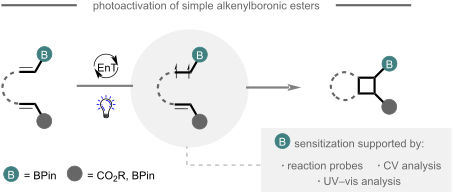
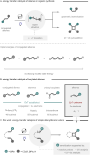
- . Herein, we demonstrate the sensitization of alkenylboronates to enable efficient intramolecular [2 + 2] cycloaddition using high energy photosensitizers (Figure 1C). Sensitization was quickly established and explored through the use of alkene scrambling (geometrical isomerization) reaction probes, to
- process (Figure 2B) [19]. In a bid to translate sensitization reaction probes to meaningful synthetic transformations, conventional intermolecular [2 + 2] cycloaddition reactions were initially trialled (Figure 3A). Preliminary reactions using styrene or methyl acrylate were unsuccessful, with no [2 + 2
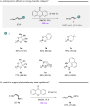
- activation (Table 2) [59][60]. As anticipated, guided by alkene scrambling reaction probes (Table 1), iridium sensitizers were unsuccessful (Table 2, entries 1 and 2). Thioxanthone provided the cyclobutyl product 4b in 10% yield (Table 2, entry 3), indicating catalysis with poor overlap between the catalyst


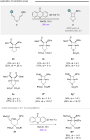

Deep-blue emitting 9,10-bis(perfluorobenzyl)anthracene
Beilstein J. Org. Chem. 2025, 21, 515–525, doi:10.3762/bjoc.21.39
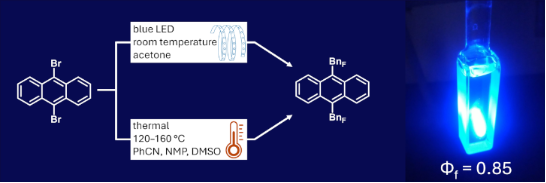
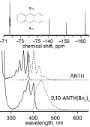
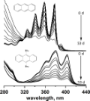
- have promising applications in optoelectronics. For example, investigation of the photophysical and electronic properties of ANTH began in the 1960s [1][2][3], and since then many new ANTH derivatives have been synthesized and explored for their use as fluorescent probes, organic semiconductors, and
- [20][21] and are not suitable as emitters for OLEDs or fluorescent probes. A family of perfluorobenzylated derivatives of another PAH, viz. perylene (PERY), was recently reported by our group [22]. We showed that the acceptor strength of PERY(BnF)n derivatives (n = 1–5) significantly increased with





Synthesis of electrophile-tethered preQ1 analogs for covalent attachment to preQ1 RNA
Beilstein J. Org. Chem. 2025, 21, 483–489, doi:10.3762/bjoc.21.35
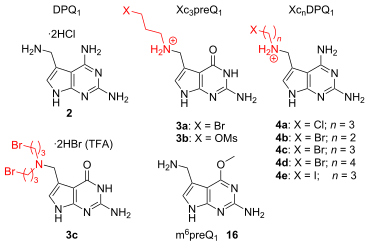
- reasonably fast labeling kinetics and up to quantitative conversion under quasi-physiological conditions [4]. Obviously, the rapid dissemination and widespread acceptance of such labeling methods depend on fast and simple access to the small molecule probes. Here, we report efficient synthetic routes to


Streamlined modular synthesis of saframycin substructure via copper-catalyzed three-component assembly and gold-promoted 6-endo cyclization
Beilstein J. Org. Chem. 2025, 21, 226–233, doi:10.3762/bjoc.21.14
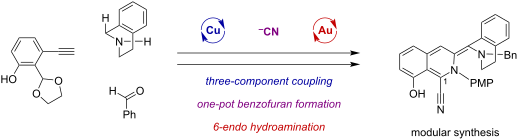
- avenues for the development of fluorescent probes based on the bis-THIQ alkaloidal scaffold. Further efforts to develop a concise and modular synthetic process for saframycins are currently underway. Representative bis-tetrahydroisoquinoline (THIQ) alkaloids and their analogues. Oxygen atoms on both the A




Synthesis of acenaphthylene-fused heteroarenes and polyoxygenated benzo[j]fluoranthenes via a Pd-catalyzed Suzuki–Miyaura/C–H arylation cascade
Beilstein J. Org. Chem. 2024, 20, 3290–3298, doi:10.3762/bjoc.20.273
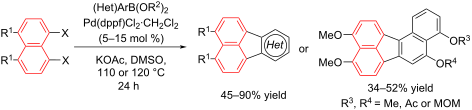
- fluorescent chemosensors and probes [4][5][6], as well as materials for applications in organic light-emitting diodes (OLEDs) [7][8][9], organic field-effect transistors (OFETs) [10], and perovskite solar cells [11]. In this respect, replacing either one or more of the carbons or rings of a fluoranthene with




Advances in the use of metal-free tetrapyrrolic macrocycles as catalysts
Beilstein J. Org. Chem. 2024, 20, 3085–3112, doi:10.3762/bjoc.20.257
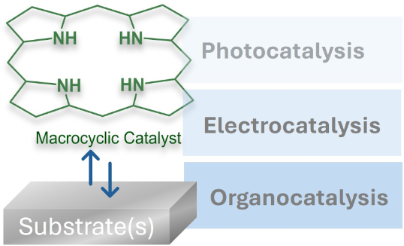
- applied in various fields, including organometallic catalysis, dye-sensitized solar cells, sensing, artificial olfactory systems, photodynamic therapy (PDT), anticancer drugs, biochemical probes, and electrochemical devices. Relevant examples of these two pyrrolic macrocycles as metal-free organocatalysts


Chemical structure metagenomics of microbial natural products: surveying nonribosomal peptides and beyond
Beilstein J. Org. Chem. 2024, 20, 3050–3060, doi:10.3762/bjoc.20.253
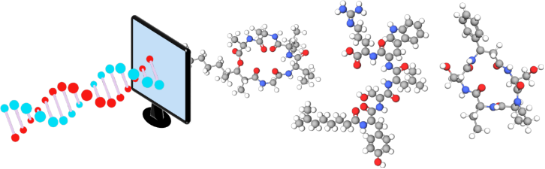
- traditional medicine formulations [2]. Modern science has found that natural products are uniquely suited as the starting point for the development of new drugs [3][4]. They may serve as chemical probes and help confirm laboratory findings [5]; furthermore, entirely new physical and chemical principles are


Tunable full-color dual-state (solution and solid) emission of push–pull molecules containing the 1-pyrindane moiety
Beilstein J. Org. Chem. 2024, 20, 3016–3025, doi:10.3762/bjoc.20.251
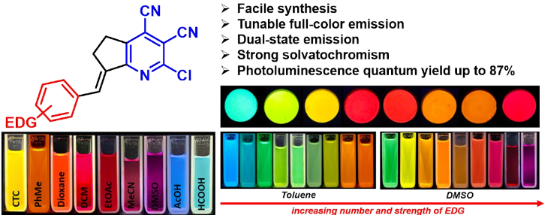
- ], positron emission tomography (PET) imaging [24], fluorescent probes and labels [25][26][27] detecting H2S in foodstuff, water, and living cells [28], Fe3+ ions [29], Hg2+ ions [30], and cyanide anions [31], for acid–base vapor sensing [32], and as candidate material for photonics devices, optical switches


Investigation of a bimetallic terbium(III)/copper(II) chemosensor for the detection of aqueous hydrogen sulfide
Beilstein J. Org. Chem. 2024, 20, 2818–2826, doi:10.3762/bjoc.20.237
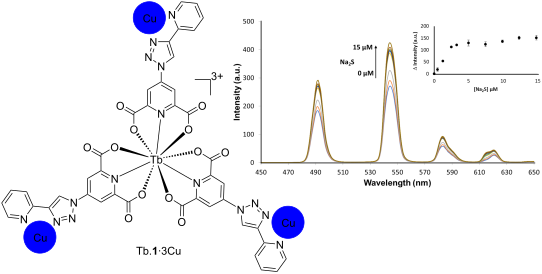
- not exhibit any discernible increase in luminescence. As far as we are aware, there are only three reports of lanthanide-based probes for the detection of gaseous hydrogen sulfide. Two are the europium(III) complexes from our group ([Eu(triazole-DPA)3·Cu]3+ and [Eu(DO2A)(triazole-DPA)·Cu]+), which are





