


Search results
Search for "purification" in Full Text gives 1642 result(s) in Beilstein Journal of Organic Chemistry. Showing first 200.
Highly electrophilic, gem- and spiro-activated trichloromethylnitrocyclopropanes: synthesis and structure
Beilstein J. Org. Chem. 2026, 22, 123–130, doi:10.3762/bjoc.22.5
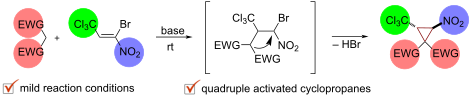
- . Visualization was performed under UV light (λ 254 nm). Reagents were obtained from commercial suppliers and used without further purification unless otherwise noted. X-ray crystallography. X-ray diffraction analysis of the structure 2, 3, 9a, and 9b was performed on a Rigaku 'SuperNova, Single source at offset


Synthesis and applications of alkenyl chlorides (vinyl chlorides): a review
Beilstein J. Org. Chem. 2026, 22, 1–63, doi:10.3762/bjoc.22.1
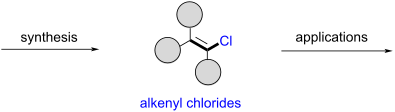
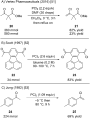
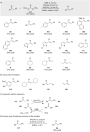
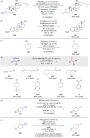
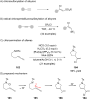
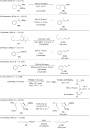
- discrepancy to product degradation during purification on neutralized silica gel (1% NEt₃) or neutral alumina. However, this hypothesis was not experimentally verified, as no control experiment involving the passage of a pure, non-volatile alkenyl chloride through the purification media was reported to assess
- compound loss or degradation at the purification step. 1.2 Exchange reactions This chapter deals with exchange reactions, meaning that a given substituent on the alkene is formally exchanged for chlorine. The reactions are very different from each other in terms of mechanism and for a full discussion the





















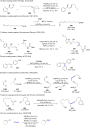


One-pot synthesis of ethylmaltol from maltol
Beilstein J. Org. Chem. 2025, 21, 2755–2760, doi:10.3762/bjoc.21.212

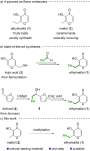
- ). Purification with flash column chromatography provided analytically pure ethylmaltol (1), which, however, displayed an off-white/yellowish color. A final vacuum distillation yielded purely white ethylmaltol (1) consistent with commercial samples. The ethylmaltol (1) thus produced was analyzed by the Central


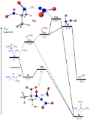
Sustainable electrochemical synthesis of aliphatic nitro-NNO-azoxy compounds employing ammonium dinitramide and their in vitro evaluation as potential nitric oxide donors and fungicides
Beilstein J. Org. Chem. 2025, 21, 2739–2754, doi:10.3762/bjoc.21.211
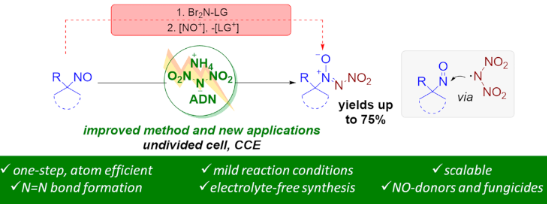
- purification. Ammonium dinitramide (ADN) [106], 2-nitro-2-nitrosopropane (1a) [107], 1-nitro-1-nitrosocyclopentane (1b) [108], 1-nitro-1-nitrosocyclohexane (1c) [109], 2-nitro-2-nitroso-1,3-diphenylpropane (1e) [110], 2,2-dimethyl-5-nitro-5-nitroso-1,3-dioxane (1f) [111], methyl 2-nitro-2-nitrosopropanoate (1g

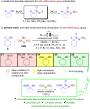




Tandem hydrothiocyanation/cyclization of CF3-iminopropargyl alcohols with NaSCN in the presence of AcOH
Beilstein J. Org. Chem. 2025, 21, 2694–2702, doi:10.3762/bjoc.21.207
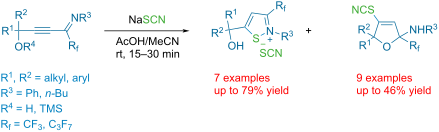
- available starting materials were used without further purification. CF3/n-C3F7-substituted iminopropargyl alcohols 1 were prepared according to published methods [31][32]. The structures of synthesized products have been proven by 1H, 13C and 2D (1Н,13С HMBC) NMR, 19F NMR techniques, as well as IR spectra

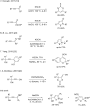


Recent advancements in the synthesis of Veratrum alkaloids
Beilstein J. Org. Chem. 2025, 21, 2657–2693, doi:10.3762/bjoc.21.206
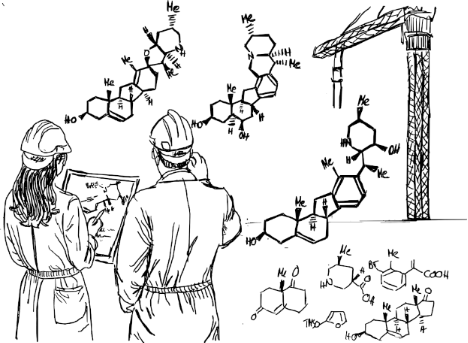
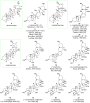
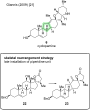
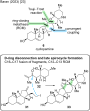
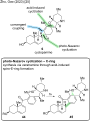
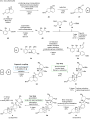
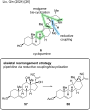
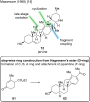
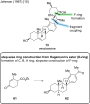
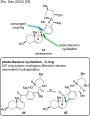
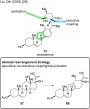
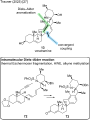
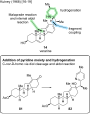
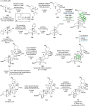
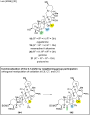
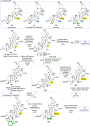
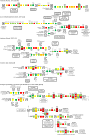
- transformation carried out in one flask terminated by a purification [11]. Nevertheless, to point out reaction telescoping (i.e., performing several reactions in one flask by sequentially adding reagents, including solvent-swaps) we opted for a visual representation indicated by black frames around the boxes
















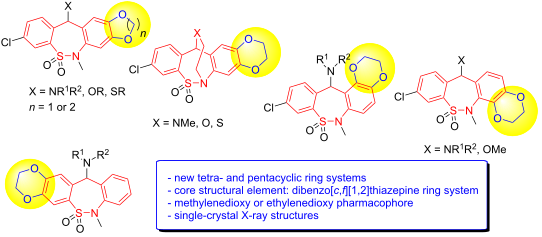
Synthesis of new tetra- and pentacyclic, methylenedioxy- and ethylenedioxy-substituted derivatives of the dibenzo[c,f][1,2]thiazepine ring system
Beilstein J. Org. Chem. 2025, 21, 2645–2656, doi:10.3762/bjoc.21.205
- numbers: CCDC 2470493 (20e), CCDC 2470491 (21g), CCDC 2470492 (23a), CCDC 2470490 (25), CCDC 2470489 (26), CCDC 2472402 (27). All reagents were purchased from commercial sources and were used without further purification. Reactions were followed by analytical thin-layer chromatography on silica gel 60


Thiazolidinones: novel insights from microwave synthesis, computational studies, and potentially bioactive hybrids
Beilstein J. Org. Chem. 2025, 21, 2618–2636, doi:10.3762/bjoc.21.203
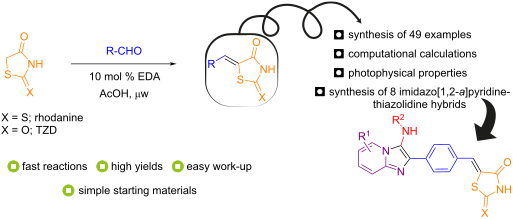
- condensation reactions involving rhodanine derivatives (26 examples). In addition, it requires a lower catalyst loading (10 mol %) and eliminates the need for further purification steps. EDDA has also been employed in reactions for the synthesis of heterocyclic compounds such as tetrahydroquinolines [67






Efficient solid-phase synthesis and structural characterization of segetalins A–H, J and K
Beilstein J. Org. Chem. 2025, 21, 2612–2617, doi:10.3762/bjoc.21.202

- purification, all cyclopeptides were obtained in 45–70% isolated yields. Structural identities were confirmed by HRESIMS, NMR, and HPLC (>95% purity). Circular dichroism (CD) spectroscopy revealed distinct secondary structures, including β-sheets (1, 2, 3, 4, 7, 8, 10) and α-helical elements (5, 6). This


Silica gel with covalently attached bambusuril macrocycle for dicyanoaurate sorption from water
Beilstein J. Org. Chem. 2025, 21, 2604–2611, doi:10.3762/bjoc.21.201
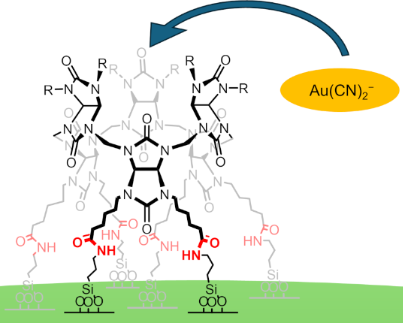
- to SG not only by electrostatic interactions but also covalently, the BU1 synthesis is straightforward lacking difficult and time-consuming purification, and it is obtained in relatively high yield over 60%. Once BU1 was prepared, its covalent attachment on the surface of SG was achieved in two steps
- and used without further purification. Dodecakis(5-carboxypentyl)bambus[6]uril (BU1) was synthesized according to a previously published procedure [13]. Infrared spectra were recorded with an Alpha spectrophotometer (Bruker). Thermogravimetric analyses were done with a Netzsch STA 449C Jupiter and


Total syntheses of highly oxidative Ryania diterpenoids facilitated by innovations in synthetic strategies
Beilstein J. Org. Chem. 2025, 21, 2553–2570, doi:10.3762/bjoc.21.198
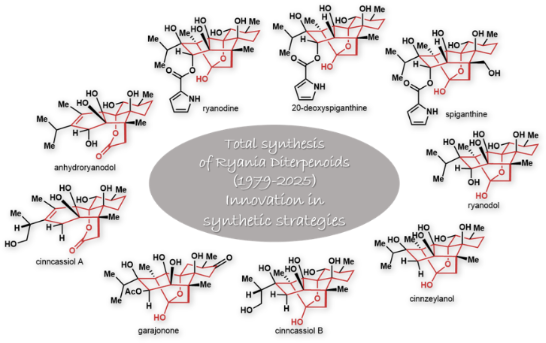
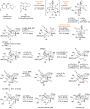
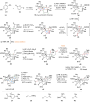
- compound 115 and establishing the correct C6 configuration. This transformation represents the first reported example of a hydroxy-directed Mukaiyama hydration reaction. The C8 carbonyl group was then protected as its 1,3-dithiolane derivative by treatment with 1,2-ethanedithiol. Without purification, the







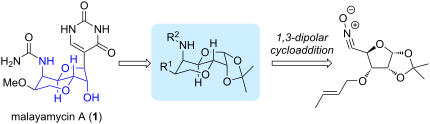
Rapid access to the core of malayamycin A by intramolecular dipolar cycloaddition
Beilstein J. Org. Chem. 2025, 21, 2542–2547, doi:10.3762/bjoc.21.196
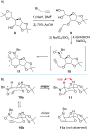
- position. Therefore, dihydroxylation [37] readily converted alkene 11 to diol 12 as a mixture of inseparable isomers. Without purification, oxidative cleavage with NaIO4 resulted in a compound with strong UV absorption, which was eventually identified as enone 14 (Scheme 3). It is assumed that the
- NaClO·5H2O, the in situ-generated nitrile N-oxide immediately underwent intramolecular dipolar cycloaddition to deliver the cycloadducts 18 in good yield as a mixture of two inseparable diastereoisomers. This telescoped step was readily performed on a gram scale without interrupted purification of the




Synthesis and characterization of a isothiouronium-calix[4]arene derivative: self-assembly and anticancer activity
Beilstein J. Org. Chem. 2025, 21, 2535–2541, doi:10.3762/bjoc.21.195
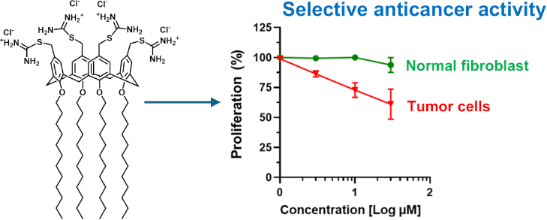
- purchased from Sigma-Aldrich (Milan, Italy) and used without further purification. Human renal adenocarcinoma 786-O cells were obtained from the American Type Culture Collection (ATCC; Manassas, VA, USA). Cells (passages 2-10) were maintained at 37 °C (5% CO2) in RPMI 1640 medium, containing 10% FBS, 2 mM ʟ


Isoorotamide-based peptide nucleic acid nucleobases with extended linkers aimed at distal base recognition of adenosine in double helical RNA
Beilstein J. Org. Chem. 2025, 21, 2513–2523, doi:10.3762/bjoc.21.193
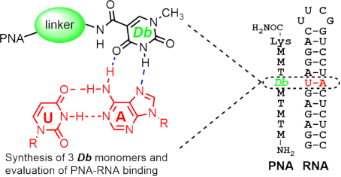
- Synthesis and biophysical assays With Db1–Db3 monomers prepared, new nucleobases were incorporated into PNA oligonucleotides (PNA1–PNA3) via solid phase peptide synthesis using Fmoc chemistry on an Expedite 8909 DNA/RNA/PNA synthesizer and following established protocols [40]. Following purification by


Effect of a photoswitchable rotaxane on membrane permeabilization across lipid compositions
Beilstein J. Org. Chem. 2025, 21, 2498–2512, doi:10.3762/bjoc.21.192
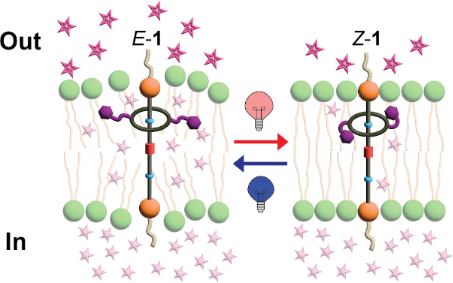
- egg yolk phosphatidylcholine (EYPC), Dipalmitoylphosphatidylcholine (DPPC), and cholesterol, all obtained from Avanti Lipids. All buffer solutions were prepared using Milli-Q Water from a Barnstead™ Water Purification System. Molecular biology grade dimethyl sulfoxide was used for stock solutions of




Ex-situ generation of gaseous nitriles in two-chamber glassware for facile haloacetimidate synthesis
Beilstein J. Org. Chem. 2025, 21, 2465–2469, doi:10.3762/bjoc.21.188
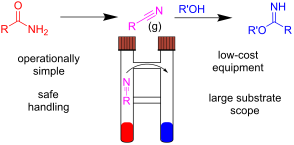
- is not easily done as the system is now under pressure. The chamber was then opened to release excess gas (on small scale) and the product in chamber B can be obtained by concentration and purification. The use of other bases than DBU, was also investigated. Similar to the synthesis of
- , as described by Schmidt [24]. The acetylated glucosyl trifluoroacetimidate 4 was synthesized in 66% yield (Figure 2). The slightly higher isolated yield is reflecting the higher stability of the product and hence an easier purification. The two-chamber method clearly works for the generation of
- were obtained when using purification by “dry column vacuum chromatography” [28], which allowed separation of anomers. In the seminal paper by Schmidt [29] dichloroacetimidates were also synthesized. They were described as too unreactive to be viable alternatives to the trichloro analogs. The synthesis


Transformation of the cyclohexane ring to the cyclopentane fragment of biologically active compounds
Beilstein J. Org. Chem. 2025, 21, 2416–2446, doi:10.3762/bjoc.21.185
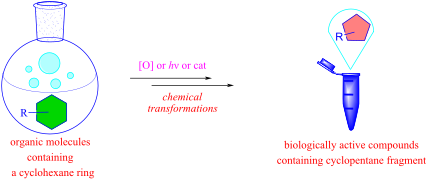
- 90% yield to (+)-stephadiamine (71). The authors noted that the identification of the structure of (+)-stephadiamine (71) was carried out without purification of the reaction mixture due to its instability on a silica gel column under acidic or basic conditions. Zhang et al. [47] proposed an


The high potential of methyl laurate as a recyclable competitor to conventional toxic solvents in [3 + 2] cycloaddition reactions
Beilstein J. Org. Chem. 2025, 21, 2389–2415, doi:10.3762/bjoc.21.184
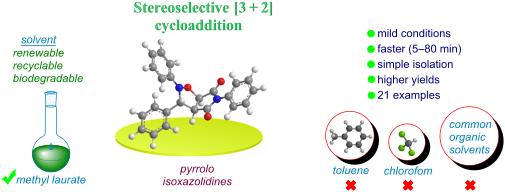
- purification techniques [62][63][64]. Synthesis of pyrrolo-isoxazolidines utilizing nitrosoarenes via the multicomponent strategy is indeed feasible [65][66]. In a similar manner, Chakraborty obtained diastereomer products, primarily in cis configuration, from the cycloaddition reaction of a fluoro or a furyl
- Chemistry, this study did not employ column chromatography for the isolation and purification of the products of interest from the reaction mixture. Otherwise, the yield of the reaction conducted in a castor oil medium would be similar to that of the other reactions. Furthermore, the rapid realization of
- potential environmental or health implications. Experimental All reagents and solvents were purchased from Merck (Merck, Darmstadt, Germany), Sigma-Aldrich (St. Louis, MO), or Acros Organics (Thermo Fisher Scientific, Geel, Belgium) and used without further purification. Thin-layer chromatography was






Rotaxanes with integrated photoswitches: design principles, functional behavior, and emerging applications
Beilstein J. Org. Chem. 2025, 21, 2345–2366, doi:10.3762/bjoc.21.179
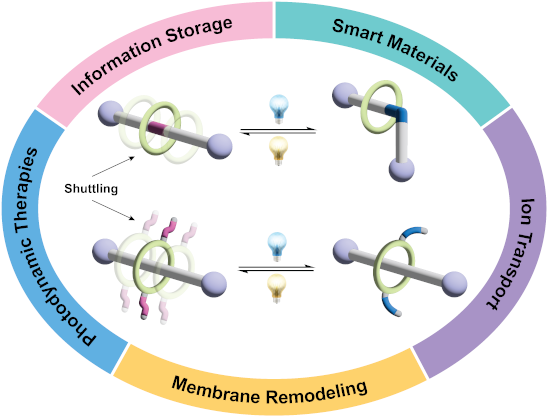
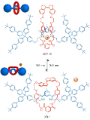
- acridane photoswitch directly into a crown ether macrocycle [82]. However, the synthesis proceeded with very low yield, and the small amount of rotaxane obtained was immediately converted to the acridinium form during purification. Attempts to regenerate the acridane were unsuccessful. Nevertheless, the





Insoluble methylene-bridged glycoluril dimers as sequestrants for dyes
Beilstein J. Org. Chem. 2025, 21, 2302–2314, doi:10.3762/bjoc.21.176
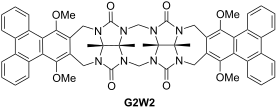
- and were used without further purification. H2 was synthesized according to a previously published procedure [39]. NMR spectra were measured on commercial spectrophotometers at 400 MHz for 1H and 100 MHz for 13C in trifluoroacetic acid with a capillary tube containing deuterated water (D2O) for



A chiral LC–MS strategy for stereochemical assignment of natural products sharing a 3-methylpent-4-en-2-ol moiety in their terminal structures
Beilstein J. Org. Chem. 2025, 21, 2243–2249, doi:10.3762/bjoc.21.171
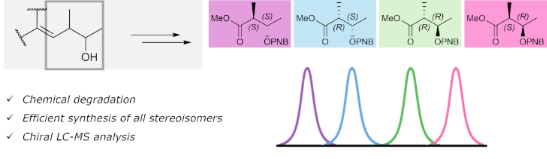
- the volatility of 13, the crude solution obtained after the workup (quenching and phase separation) was directly used in the subsequent reaction without purification. Esterification of (2S,3S)-13 with p-nitrobenzoyl chloride (PNBCl) afforded PNB ester (2S,3S)-8 in 45% yield for two steps


Pd-catalyzed dehydrogenative arylation of arylhydrazines to access non-symmetric azobenzenes, including tetra-ortho derivatives
Beilstein J. Org. Chem. 2025, 21, 2234–2242, doi:10.3762/bjoc.21.170
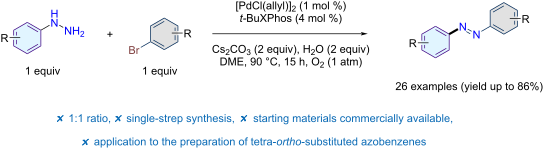
- avoiding excess reagent, and simplifies purification and scale-up. With the most suitable reaction conditions in hand, the substrate scope was examined. First, the reactivity of different aryl bromides with phenylhydrazine (1a) to form non-symmetric azobenzene was explored (Scheme 1). Most of the


Thiadiazino-indole, thiadiazino-carbazole and benzothiadiazino-carbazole dioxides: synthesis, physicochemical and early ADME characterization of representatives of new tri-, tetra- and pentacyclic ring systems and their intermediates
Beilstein J. Org. Chem. 2025, 21, 2220–2233, doi:10.3762/bjoc.21.169
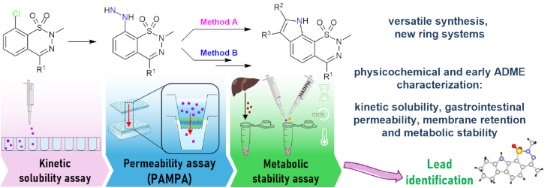
- KGaA, Darmstadt, Germany), adjusting the pH with HCl. Water for buffer and eluent preparation were provided by a Millipore Milli-Q water purification system. Kinetic aqueous solubility assay. All compounds were dissolved in DMSO to make stock solutions at 10 mM concentration. In the case of 7i, 7j, and
- to LC–MS). Pure (E)-7h was obtained by purification using flash chromatography (hexane–EtOAc). Yield: 45 mg (40%), colorless crystals. Mp 138–139 °C (EtOH); 1H NMR (600 MHz, DMSO-d6) δ 9.54 (br s, 1H), 7.80 (d, J = 8.6 Hz, 1H), 7.62 (m, 2H), 7.57 (m, 2H), 7.54 (m, 3H), 6.71 (d, J = 7.7 Hz, 1H), 3.47
- ). Pure (Z)-7h was obtained by purification using flash chromatography (hexane–EtOAc). Yield: 17 mg (15%), pale yellow crystals. Mp 145–146 °C (EtOH); 1H NMR (600 MHz, DMSO-d6) δ 9.38 (br s, 1H), 7.84 (d, J = 8.5 Hz, 1H), 7.69 (m, 1H), 7.59 (m, 2H), 7.55 (m, 3H), 6.81 (d, J = 7.7 Hz, 1H), 6.77 (t, J = 5.2


A m-quaterphenyl probe for absolute configurational assignments of primary and secondary amines
Beilstein J. Org. Chem. 2025, 21, 2211–2219, doi:10.3762/bjoc.21.168
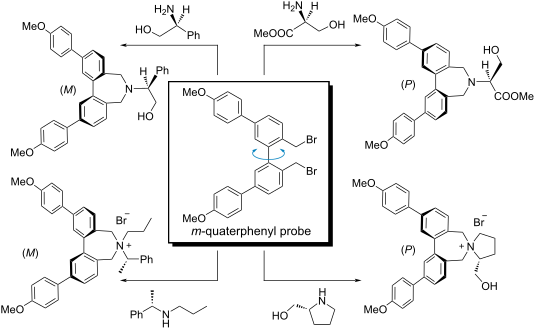
- used without further purification. Melting points were obtained with a Mel-Temp capillary apparatus and were not corrected. IR spectra were obtained as KBr disks on a JASCO FT/IR-410 spectrophotometer. The FAB mass spectra were recorded using a JEOL 600H mass spectrometer. 1H and 13C{1H} NMR spectra


Synthesis of triazolo- and tetrazolo-fused 1,4-benzodiazepines via one-pot Ugi–azide and Cu-free click reactions
Beilstein J. Org. Chem. 2025, 21, 2202–2210, doi:10.3762/bjoc.21.167
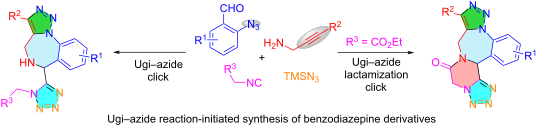
- . After evaporation of the solvent MeOH, the residue was redissolved in 2 mL of MeCN and heated at 130 °C for 2 h in a sealed vial to give product 7a in 90% yield after purification via Cu-free intramolecular click reaction (Scheme 3C) [46]. This Cu-free intramolecular cyclization provides key practical





