Search results
Search for "NMR spectra" in Full Text gives 2311 result(s) in Beilstein Journal of Organic Chemistry. Showing first 200.
Pentacyclic aromatic heterocycles from Pd-catalyzed annulation of 1,5-diaryl-1,2,3-triazoles
Beilstein J. Org. Chem. 2025, 21, 2524–2534, doi:10.3762/bjoc.21.194
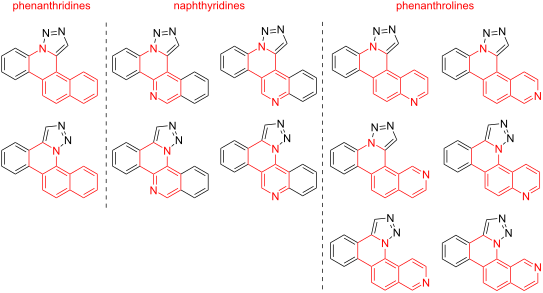
- Supporting Information Supporting Information File 4: Description of materials, experimental methods, synthetic procedures, analytical characterization and copies of NMR spectra for novel compounds. Funding Research reported in this publication was supported by the National Institute of General Medical


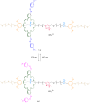
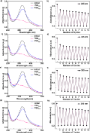
Effect of a photoswitchable rotaxane on membrane permeabilization across lipid compositions
Beilstein J. Org. Chem. 2025, 21, 2498–2512, doi:10.3762/bjoc.21.192
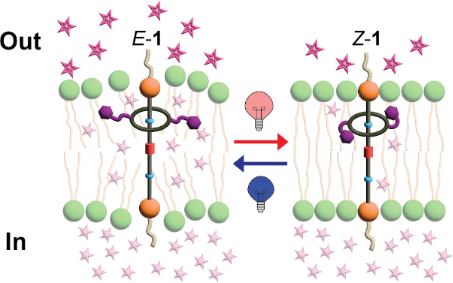
- the compounds, while chloroform was used for cholesterol and lipid stock solutions. 1H NMR spectra were recorded using Bruker AV III 400 and Bruker AV III 500 spectrometers. 13C NMR was conducted on a Bruker AV III 500 spectrometer. All chemical shifts (δ) are reported in ppm, referencing residual non




Assembly strategy for thieno[3,2-b]thiophenes via a disulfide intermediate derived from 3-nitrothiophene-2,5-dicarboxylate
Beilstein J. Org. Chem. 2025, 21, 2489–2497, doi:10.3762/bjoc.21.191
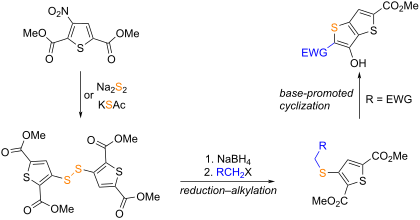
- -nucleophiles to form sulfide 2 and disulfide 3. Optimization of the reaction conditions for the reduction–alkylation of disulfide 3. Supporting Information Supporting Information File 12: Full experimental details, characterization data, copies of NMR spectra and HRMS for all new compounds. Acknowledgements



Palladium-catalyzed regioselective C1-selective nitration of carbazoles
Beilstein J. Org. Chem. 2025, 21, 2479–2488, doi:10.3762/bjoc.21.190
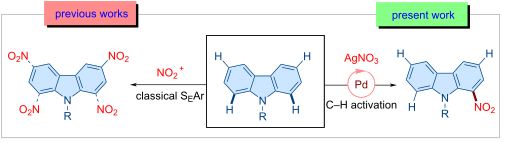
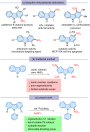
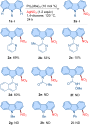
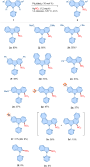
- of our method. Key mechanistic studies. Optimization studies.a Supporting Information Supporting Information File 9: Experiment details, characterization data, copy of NMR spectra of synthesized compounds, and single-crystal X-ray diffraction data. Supporting Information File 10: CIF file for 2a


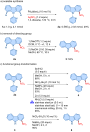
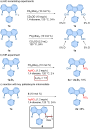
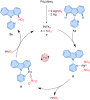
Synthesis of the tetracyclic skeleton of Aspidosperma alkaloids via PET-initiated cationic radical-derived interrupted [2 + 2]/retro-Mannich reaction
Beilstein J. Org. Chem. 2025, 21, 2470–2478, doi:10.3762/bjoc.21.189
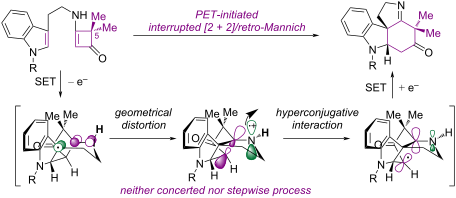
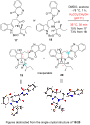
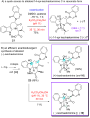
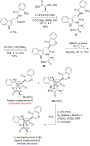
- along IRC path. e) Spin-density analyses of R-24 and F-10 (isovalue = 0.004). f) NBO analyses of the selected transient structures (isovalue = 0.04). Substrate scope. Conditions screening.a Supporting Information Supporting Information File 6: Experimental procedures, characterization data, NMR spectra


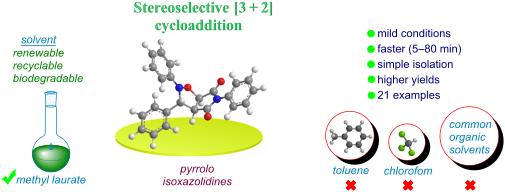
The high potential of methyl laurate as a recyclable competitor to conventional toxic solvents in [3 + 2] cycloaddition reactions
Beilstein J. Org. Chem. 2025, 21, 2389–2415, doi:10.3762/bjoc.21.184
- transition state (Scheme 2). Meanwhile, the diastereomeric ratio of interest can be determined by integrating the 1H NMR spectra, in particular by selecting the appropriate signal pairs (one from each diastereomer) belonging to the respective cycloaddition product. An example of these selected protons (trans
- in Table 1, entry 9. As illustrated in Table 5, the product yields obtained from the reactions are presented alongside the observed cis/trans diastereoisomer ratios in the presence of the respective catalysts. However, upon examination of the 1H NMR spectra of compound 3a synthesized in the presence
- performed using silica gel (60 F254, Merck, Darmstadt, Germany) plates. Melting points were recorded using a Büchi melting point B-540 apparatus (Büchi Labortechnik AG in Flawil, Switzerland). The IR spectra were measured by Spectrum Two FT-IR spectrometer (PerkinElmer, Massachusetts, USA). The NMR spectra






An Fe(II)-catalyzed synthesis of spiro[indoline-3,2'-pyrrolidine] derivatives
Beilstein J. Org. Chem. 2025, 21, 2383–2388, doi:10.3762/bjoc.21.183
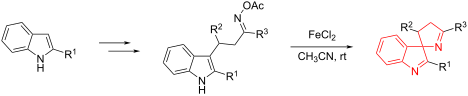
- mmol scale experiment. The scope of the Fe-catalyzed spirocyclization. aIsolated yield of the 4.2 mmol scale experiment. The proposed mechanism of product 4 formation. Supporting Information Supporting Information File 2: General reaction procedures, compound characterization data, and copies of NMR
- spectra. Acknowledgements We are grateful to the associate professor of Microbiology and Virology Dept., leading researcher of Central Research Laboratory of E. A. Vagner Perm State Medical University (Perm, Russian Federation) Godovalov A. P. for providing the clinical strains. Funding We acknowledge




Synthetic study toward vibralactone
Beilstein J. Org. Chem. 2025, 21, 2376–2382, doi:10.3762/bjoc.21.182

- . Supporting Information Supporting Information File 34: Characterization data and 1H NMR, 13C NMR spectra of the compounds. Acknowledgements The authors sincerely acknowledge all of the anonymous reviewers for their valuable comments and suggestions. Funding We are grateful for financial support from the Qin


Conformational effects on iodide binding: a comparative study of flexible and rigid carbazole macrocyclic analogs
Beilstein J. Org. Chem. 2025, 21, 2369–2375, doi:10.3762/bjoc.21.181
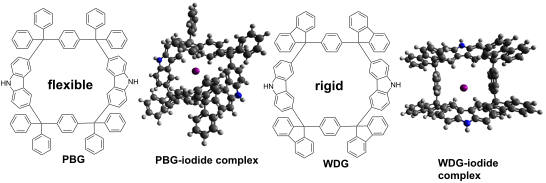
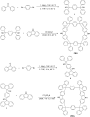
- successfully obtained. This indirectly confirmed the molecular structure of WDG [22]. The NH protons of the carbazole moiety in PBG and WDG were observed as singlets at δ 7.9706 and δ 7.8624, respectively, in their 1H NMR spectra (Figure 1a and 1b). In order to study the role and mechanism of anion recognition
- spectroscopy. Results and Discussion Partial 1H NMR spectra of PBG and WDG after binding to tetrabutylammonium iodide (TBAI) are presented in Figure 2a and 2b, respectively. All 1H NMR titrations were conducted at a fixed concentration of 8.7 mM. With the addition of 2 equivalents TBAI, the NH peak on the PBG
- , which provides a foundation for developing next-generation smart sensors with programmable anion selectivity. (a) partial 1H NMR spectrum of PBG in CDCl3 (400 MHz, CDCl3, 25 °C), (b) Partial 1H NMR spectrum of WDG in CDCl3 (400 MHz, CDCl3, 25 °C). (a) Partial 1H NMR spectra of PBG and TBAI at different



Insoluble methylene-bridged glycoluril dimers as sequestrants for dyes
Beilstein J. Org. Chem. 2025, 21, 2302–2314, doi:10.3762/bjoc.21.176
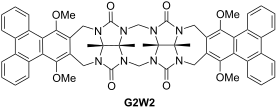
- accord with the depicted C2v-symmetric structures. Figure 3 shows the 1H NMR spectra recorded for G2W1–G2W4 in DMSO-d6 at 400 MHz. As expected, all four hosts display two singlets for the equatorial CH3 groups (a, b), two pairs of doublets for the diastereotopic CH2 groups (c,c’ and d,d’) in the expected
- and were used without further purification. H2 was synthesized according to a previously published procedure [39]. NMR spectra were measured on commercial spectrophotometers at 400 MHz for 1H and 100 MHz for 13C in trifluoroacetic acid with a capillary tube containing deuterated water (D2O) for
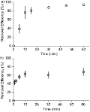
- study. 1H NMR spectra recorded (400 MHz, DMSO-d6, rt) for: a) G2W1, b) G2W2, c) G2W3, d) G2W4. Plot of removal efficiency of dyes from water after incubating with equimolar amounts (7.2 μmol) of H2 (5.0 mg), G2W1 (9.0 mg), G2W2 (7.2 mg), G2W3 (5.7 mg), and G2W4 (5.0 mg) for 1 hour at 25 °C as determined



Research towards selective inhibition of the CLK3 kinase
Beilstein J. Org. Chem. 2025, 21, 2250–2259, doi:10.3762/bjoc.21.172
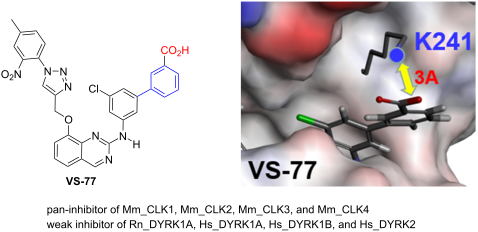
- Supporting Information Supporting Information File 26: Detailed experimental procedures and spectral data, kinase inhibition studies, molecular modelling studies, analysis of dose-dependent effect of VS-77 on the kinase activity of Mm_CLKs and copies of the 1H and 13C NMR spectra. Acknowledgements We thank


A chiral LC–MS strategy for stereochemical assignment of natural products sharing a 3-methylpent-4-en-2-ol moiety in their terminal structures
Beilstein J. Org. Chem. 2025, 21, 2243–2249, doi:10.3762/bjoc.21.171
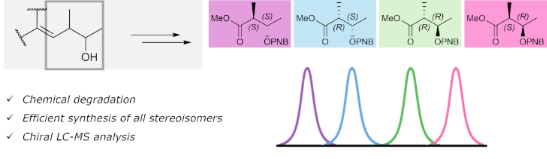
- fragment (7) from capsulactone (1). Synthesis of 4-methoxy-3-methyl-4-oxobutan-2-yl 4-nitrobenzoates (2S,3S)-8, (2S,3R)-9, (2R,3R)-10, and (2R,3S)-11. Supporting Information Supporting Information File 24: Experimental section, LC–MS chromatograms and NMR spectra. Funding This work was financially


Pd-catalyzed dehydrogenative arylation of arylhydrazines to access non-symmetric azobenzenes, including tetra-ortho derivatives
Beilstein J. Org. Chem. 2025, 21, 2234–2242, doi:10.3762/bjoc.21.170
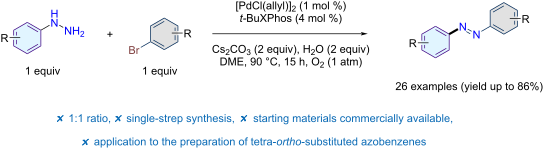
- from phenylhydrazine and aryl bromides. The gray box provides a detailed list of all identified side-products. Supporting Information Supporting Information File 20: Details of optimization experiments, full characterization data, and NMR spectra (1H, 13C, 19F) for all products. Funding L.G


Thiadiazino-indole, thiadiazino-carbazole and benzothiadiazino-carbazole dioxides: synthesis, physicochemical and early ADME characterization of representatives of new tri-, tetra- and pentacyclic ring systems and their intermediates
Beilstein J. Org. Chem. 2025, 21, 2220–2233, doi:10.3762/bjoc.21.169
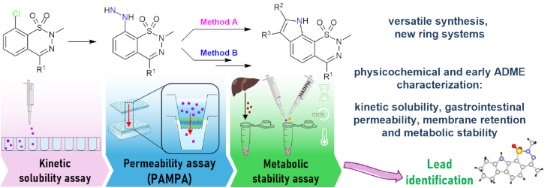
- on a Bruker ALPHA FT-IR spectrometer in KBr pellets, ν̃ was reported in cm−1. NMR spectra were recorded at 295 K on a Bruker Avance III HD 600 (600 and 150 MHz for 1H and 13C NMR spectra, respectively) spectrometer equipped with a Prodigy cryo-probe head. Full 1H and 13C assignments were achieved


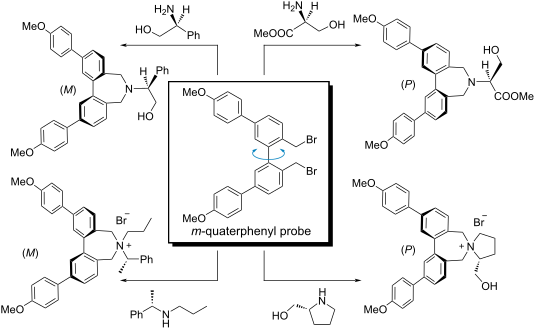
A m-quaterphenyl probe for absolute configurational assignments of primary and secondary amines
Beilstein J. Org. Chem. 2025, 21, 2211–2219, doi:10.3762/bjoc.21.168
- used without further purification. Melting points were obtained with a Mel-Temp capillary apparatus and were not corrected. IR spectra were obtained as KBr disks on a JASCO FT/IR-410 spectrophotometer. The FAB mass spectra were recorded using a JEOL 600H mass spectrometer. 1H and 13C{1H} NMR spectra
- central biphenyl moiety rotates freely, forming an equilibrium mixture of P and M conformers. Supporting Information Supporting Information File 9: Experimental procedures, characterization data including copies of NMR spectra (1H NMR, 13C NMR), CD spectra of (S)-2f and (R)-2f, theoretical calculations


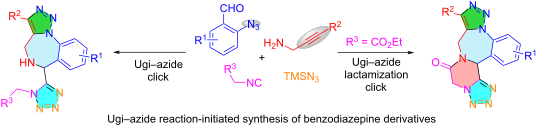
Synthesis of triazolo- and tetrazolo-fused 1,4-benzodiazepines via one-pot Ugi–azide and Cu-free click reactions
Beilstein J. Org. Chem. 2025, 21, 2202–2210, doi:10.3762/bjoc.21.167
- 1H NMR spectra are different (Figure 2). The most evident differences are the disappearance of the signal for the alkyne H at 2.36 ppm in the spectrum of 6a and the appearance of a peak at 8.14 ppm for the proton on the triazole ring of 8a. The aromatic protons in 8a show two distinct doublets and
- 7a–k in 36–90% yields, 8a–g in 77–92% yields. Note: When 2-yn-1-amine hydrochlorides 2b–e were employed in this one-pot reaction, Et3N (0.3 mol, 1.5 equiv) was added into the vessel at the initial stage. Some bioactive molecules bearing triazole, tetrazole, and 1,4-benzodiazepin rings. 1H NMR spectra


Further elaboration of the stereodivergent approach to chaetominine-type alkaloids: synthesis of the reported structures of aspera chaetominines A and B and revised structure of aspera chaetominine B
Beilstein J. Org. Chem. 2025, 21, 2072–2081, doi:10.3762/bjoc.21.162
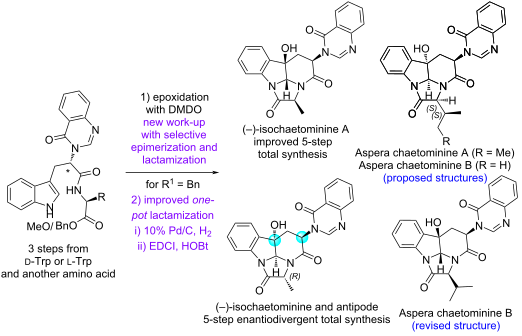
- 1H and 13C NMR are methanol-d4 that is different from Tan’s work [21] who used DMSO-d6 to record 1H and 13C NMR spectra of (–)-chaetominine (1). Thus we undertook the synthesis of the proposed structures of aspera chaetominines A (12) and B (13). By adopting our first-generation strategy [57][58][61
- incorrect. It is worth noting that compound 12 has been obtained in our previous investigation [65]. However, the 1H and 13C NMR spectra were recorded in DMSO-d6 which prevent a direct comparison with the data of aspera chaetominine A. We next addressed the synthesis of aspera chaetominine B (13). Employing
- (–)-isochaetominine C (6), whose absolute configuration is tentatively assigned as 2R,3R,11S,14R. It is worth noting that compound 13 has been obtained in our previous investigation [63]. However, the 1H and 13C NMR spectra were recorded in DMSO-d6 which prevent a direct comparison with the data of aspera



Switchable pathways of multicomponent heterocyclizations of 5-amino-1,2,4-triazoles with salicylaldehydes and pyruvic acid
Beilstein J. Org. Chem. 2025, 21, 2030–2035, doi:10.3762/bjoc.21.158
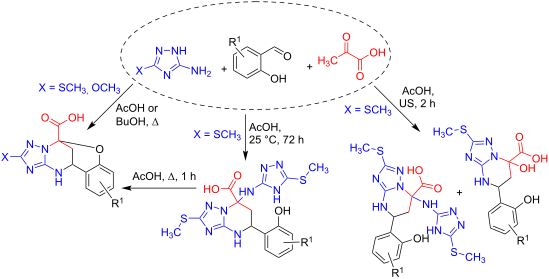
- control of the reaction, while oxygen-bridged heterocycles 4 are formed under thermodynamic control. The purity and structure of compounds 4 and 5 were established by elemental analysis, mass spectrometry, 1H and 13C NMR spectroscopy, and X-ray diffraction study (Figure 1). For example, the 1H NMR spectra
- characterized by the following signals in the 1H NMR spectra: a proton singlet of the pyrimidine NH group at 8.30–8.31 ppm, a multiplet of aromatic protons in the region of 6.95–7.51 ppm, a proton multiplet of the CH group at 4.65–4.68 ppm and singlet for protons for the triazole CH3O group at 3.7 ppm. The 1H
- NMR spectra of heterocyclic acids 5a–c exhibited a broad singlet of proton of the carboxyl group at 11.88–14.02 ppm, a singlet of proton of the hydroxy group at 9.41–9.86 ppm, a singlet of proton of the pyrimidine NH group at 7.72–7.91 ppm, a singlet of proton of the triazolylamine NH group at 7.44


α-Ketoglutaric acid in Ugi reactions and Ugi/aza-Wittig tandem reactions
Beilstein J. Org. Chem. 2025, 21, 2021–2029, doi:10.3762/bjoc.21.157
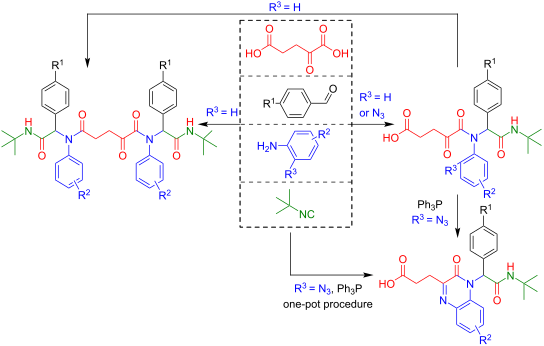
- and 13C NMR spectroscopy, and by X-ray diffraction study (see Experimental part). The 1H NMR spectra of compounds 5 are characterized by the following signals: a broad carboxyl group proton singlet at 12.10–12.17 ppm, an NH group proton singlet at 7.74–8.02 ppm, an aromatic protons multiplet at 6.52
- compared to compounds 5, which can be clearly seen in the spectrum of compound 8h with both substituted ortho-positions of the amine moiety. In our opinion, this indicates the presence of rotamerism [59][60] caused by the restricted rotation of the sterically hindered amide group. The 1H NMR spectra of
- the 1H NMR spectra of quinoxalinones 9, a shift of the methylene groups signal to a weaker field (2.90–3.14 ppm and 2.63–2.77 ppm) is observed in comparison to compounds 8 (2.60–3.06 ppm and 2.14–2.35 ppm). Furthermore, comparison of the 13C NMR spectra of compounds 8 and 9 shows a characteristic


Aryl iodane-induced cascade arylation–1,2-silyl shift–heterocyclization of propargylsilanes under copper catalysis
Beilstein J. Org. Chem. 2025, 21, 1984–1994, doi:10.3762/bjoc.21.154
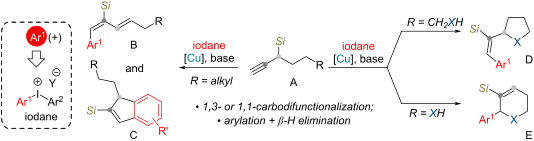
- NMR spectra. Interestingly, the internal alkyne 7c (R = Ph, Si = TIPS) was completely unreactive under both standard arylation conditions (70 °C in EtOAc) and higher reaction temperatures (110 °C in BuOAc). In these cases, the starting material was recovered with no signs of degradation. This
- . Conditions screening for copper-catalyzed arylation–cyclization of propargylsilane 7d. Supporting Information Supporting Information File 4: Experimental data, synthesis procedures, 1H and 13C NMR spectra, and X-ray data. Funding This work was supported by the Latvian Council of Science Grant LZP-2023/1


Photochemical reduction of acylimidazolium salts
Beilstein J. Org. Chem. 2025, 21, 1973–1983, doi:10.3762/bjoc.21.153
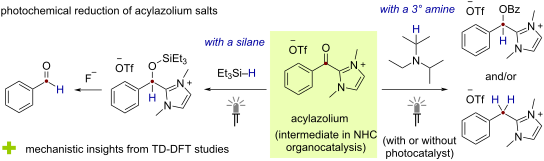
- ) step to form the zwitterionic alkoxide E and the oxidized DIPEA iminium ion F. Notably, small signals consistent with trace amounts of the alkoxide species E were occasionally detected in the crude 1H NMR spectra of reactions conducted both in the presence and absence of a photocatalyst (see Supporting
- -mediated reduction developed above. Performing the same reaction with a selection of electronically diverse derivatives of 1 bearing 4-CF3 (6), 4-CO2Me (7) and 4-OMe (8) groups also resulted in the formation of reduced products with 1H NMR spectra consistent with O-silylated species (1H NMR yields: from 6
- : Experimental procedures, characterization data of all isolated products, details of UV–vis, time-course and computational studies as well as copies of NMR spectra for novel compounds. Acknowledgements We thank Prof. Dr. Beate Koksch and the AG Koksch (FU Berlin) for supervisory assistance and helpful


Asymmetric total synthesis of tricyclic prostaglandin D2 metabolite methyl ester via oxidative radical cyclization
Beilstein J. Org. Chem. 2025, 21, 1964–1972, doi:10.3762/bjoc.21.152
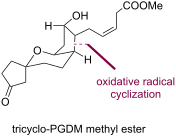
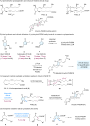
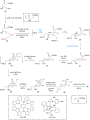
- ester 4. Optimization of conditions to convert diketone 15 into cyclopentanone 14.a Supporting Information Supporting Information File 42: Experimental procedures, characterization data and copies of 1H and 13C NMR spectra. Acknowledgements We thank Prof. Zhen Yang (Peking University) for helpful



Rhodium-catalysed connective synthesis of diverse reactive probes bearing S(VI) electrophilic warheads
Beilstein J. Org. Chem. 2025, 21, 1924–1931, doi:10.3762/bjoc.21.150
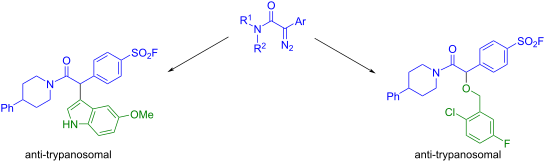
- ). Outcomes of reactions between α-diazoamide substrates and co-substrates. Supporting Information Supporting Information File 40: Experimental part and NMR spectra of synthesised compounds. Acknowledgements We thank Dan Cox, Samuel Liver, Chris Arter, Jeanine Williams, Mark Howard, Alex Heyam, Lawrence


Synthesis, biological and electrochemical evaluation of glycidyl esters of phosphorus acids as potential anticancer drugs
Beilstein J. Org. Chem. 2025, 21, 1909–1916, doi:10.3762/bjoc.21.148

- ) shows a singlet at +32 ppm; for diglycidyl methylphosphate (2) and triglycidyl phosphate (3) also a singlet in the region 0–1 ppm is observed, despite the presence of a chiral carbon atom in the oxirane fragment. In the 1H NMR spectra of esters 1–3 the characteristic signals of the oxirane fragment at
- . Experimental General. All reactions and manipulations were carried out under dry pure N2 in standard Schlenk apparatus. All solvents were distilled from sodium/benzophenone or phosphorus pentoxide and stored under nitrogen before use. The NMR spectra were recorded on a Bruker MSL-400 (1H 400 MHz, 31P 161.7 MHz
- , 13C 100.6 MHz). 1H and 13C NMR data are reported with reference to solvent resonances, and 31P NMR spectra were reported with respect to external 85% H3PO4 (0 ppm). All experiments were carried out using standard Bruker pulse programs. Infrared (IR) spectra were recorded on a Bruker Vector-22


Stereoselective electrochemical intramolecular imino-pinacol reaction: a straightforward entry to enantiopure piperazines
Beilstein J. Org. Chem. 2025, 21, 1897–1908, doi:10.3762/bjoc.21.147
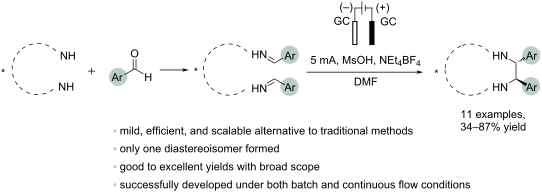
- procedures and physical data for the new compounds, copies of 1H and 13C NMR spectra of the prepared compounds. Acknowledgements The authors thank Prof. A. Puglisi (Università degli Studi di Milano) for valuable discussions. For the single-crystal X-ray diffraction analysis the Unitech COSPECT (Università