


Search results
Search for "function" in Full Text gives 1173 result(s) in Beilstein Journal of Organic Chemistry. Showing first 200.
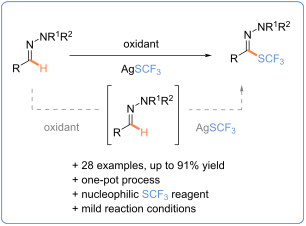
C–H Trifluoromethylthiolation of aldehyde hydrazones
Beilstein J. Org. Chem. 2024, 20, 2883–2890, doi:10.3762/bjoc.20.242
- Victor Levet Balu Ramesh Congyang Wang Tatiana Besset INSA Rouen Normandie, Univ Rouen Normandie, CNRS, Normandie Univ, COBRA UMR 6014, INC3M FR 3038, F-76000 Rouen, France Beijing National Laboratory for Molecular Sciences CAS key Laboratory of Molecular Recognition and Function CAS Research



N-Glycosides of indigo, indirubin, and isoindigo: blue, red, and yellow sugars and their cancerostatic activity
Beilstein J. Org. Chem. 2024, 20, 2840–2869, doi:10.3762/bjoc.20.240
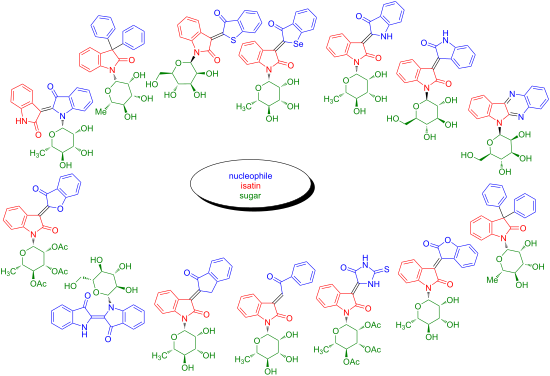
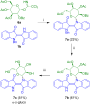
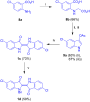
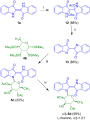
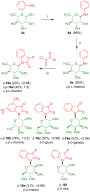
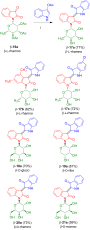
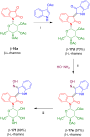
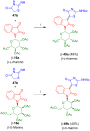
- presence of the oxime group (Scheme 21). In fact, it represents one of the most active non-glycosylated indirubin derivatives against cancer [11][28]. It has been reported that the free NH function of the indirubin is crucial for CDK inhibition. The reaction of isatin with thiaindan-3-one has been reported
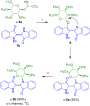
- mentioned above, that the free NH function of indirubin is important for CDK inhibition. We have shown in our group by enzyme studies that glycoside β-33b, lacking the free NH-function, does not act as a CDK inhibitor, despite its high activity against melanoma cells and other cancers [32]. These results
- point to a completely different mode of action. In fact, the exact function of glycosylation is not clear. However, it might be assumed that the carbohydrate moiety increases the water solubility of the indirubin which results in a higher bioavailability of the drug. It might be speculated that the











Investigation of a bimetallic terbium(III)/copper(II) chemosensor for the detection of aqueous hydrogen sulfide
Beilstein J. Org. Chem. 2024, 20, 2818–2826, doi:10.3762/bjoc.20.237
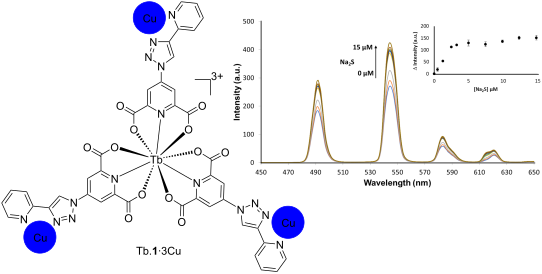
- for the detection of both gaseous and/or aqueous H2S are shown in Figure 1 [12][16][17]. These sensors all function via the copper sequestration mechanism, where upon addition of hydrogen sulfide to the quenched bimetallic species, luminescence modulation occurs. In our quest for highly selective
- proposed to function by Cu2+ sequestration. The remaining report is of a terbium(III) complex [Tb(DPA-N3)3]3− (Figure 7), which contains an aryl azide-functionalized ligand. In this system the azide functionality prohibits the energy transfer to the lanthanide ion, effectively quenching luminescence. In


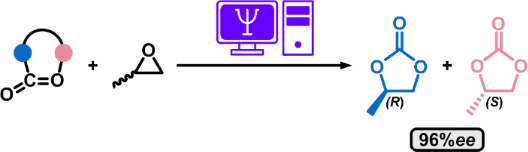
Computational design for enantioselective CO2 capture: asymmetric frustrated Lewis pairs in epoxide transformations
Beilstein J. Org. Chem. 2024, 20, 2668–2681, doi:10.3762/bjoc.20.224
- performance, for example, the reaction rate, is displayed as a function of the catalyst–substrate interaction, for example, the adsorption energy when considering a heterogeneous catalyst (Figure 1A). The resulting plot exhibits a volcano-like shape consisting of at least two slopes with the best-performing
- determines a function such as E1 = f(E2, TS3). The quality of these correlations is assessed through the square of the Pearson coefficient. The pair of stationary points has to correlate with the energies of the six stationary points previously presented. The quality of the pair considered to describe well


The scent gland composition of the Mangshan pit viper, Protobothrops mangshanensis
Beilstein J. Org. Chem. 2024, 20, 2644–2654, doi:10.3762/bjoc.20.222
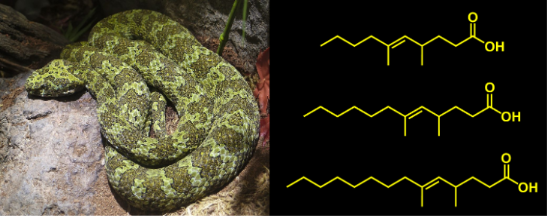
- -hexadecylglycerol, as well as other common long-chain alcohols and amides. Although a general defensive function has been proposed for snake abdominal scent glands, the specific chemistry and moderate amounts of acids reported here may suggest a function in chemical signaling for the Mangshan pit viper. In addition
- common fatty acids, which allow for easier evaporation, make acids A–F suitable to be used in chemical communication of P. mangshanensis. However, actual proof of function can only be obtained by bioassays with synthetic material. Interestingly, there are a few structurally related compounds in the
- of several microderivatizations and finally confirmed structurally by synthesis. The structural uniqueness of the compounds, not found in other snake species, suggests a function, may it be in chemical communication, defense, or other traits. The other scent gland constituents are commonly found in


Deciphering the mechanism of γ-cyclodextrin’s hydrophobic cavity hydration: an integrated experimental and theoretical study
Beilstein J. Org. Chem. 2024, 20, 2635–2643, doi:10.3762/bjoc.20.221
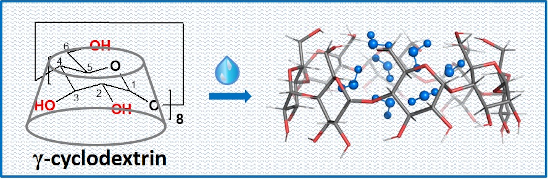
- is described in the first two papers in the series on the hydration of α-CD and β-CD, respectively [13][14]. The performed M062X/6-31G(d,p) frequency calculations for each structure ascertain that the wave function corresponds to a minimum on a potential energy hypersurface, but also yields the


Applications of microscopy and small angle scattering techniques for the characterisation of supramolecular gels
Beilstein J. Org. Chem. 2024, 20, 2608–2634, doi:10.3762/bjoc.20.220
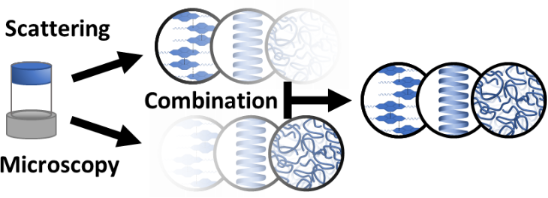
- result of a photon or neutron of wavelength (λ) scattering off the sample at an angle of 2φ (Equation 1 and Figure 12). Typically, a 2D detector measures the scattered radiation to determine the scattering intensity (I(q)) and is measured as a function of q. The scattering vector has units of reciprocal


Efficient modification of peroxydisulfate oxidation reactions of nitrogen-containing heterocycles 6-methyluracil and pyridine
Beilstein J. Org. Chem. 2024, 20, 2599–2607, doi:10.3762/bjoc.20.219
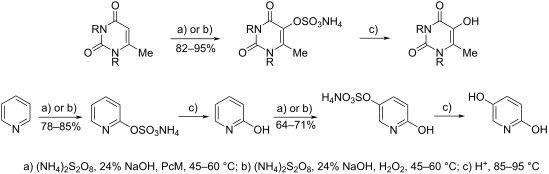
- are widely used in pharmacology due to their pronounced biological activities and low toxicities. The introduction of a hydroxy function into uracil and pyridine molecules has led to compounds with antioxidant, anti-inflammatory, and immunomodulatory activity (3-hydroxy-6-methyl-2-ethylpyridine, 5
- : oxidation; 6-methyluracil; peroxydisulfate; phthalocyanine catalysts; pyridine; Introduction The Elbs and Boyland–Sims peroxydisulfate oxidation reactions offer a convenient means of introducing the hydroxy function into phenols and aromatic amines [1]. The oxidation of phenol using peroxydisulfate was


Machine learning-guided strategies for reaction conditions design and optimization
Beilstein J. Org. Chem. 2024, 20, 2476–2492, doi:10.3762/bjoc.20.212

- nodes and edges through recursive message passing and a readout function, resulting in a molecular representation. There are many variants of GNN models [140][141][142][143], most of which are based on the message passing neural network (MPNN) framework proposed by Gilmer et al. [144]. Encoding
- mapping (AAM) is a process that establishes the correspondence between atoms before and after a reaction, reflecting the reaction mechanism. AAM-exempted methods [145][146][147][148][149][150] apply graph convolutions to each reactant and product molecule separately, and then use a pooling function or


HFIP as a versatile solvent in resorcin[n]arene synthesis
Beilstein J. Org. Chem. 2024, 20, 2469–2475, doi:10.3762/bjoc.20.211
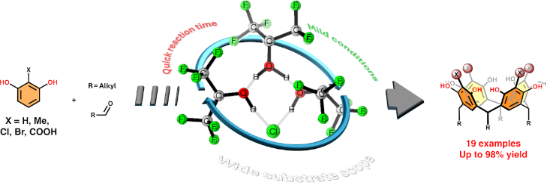
- unique bowl-shape structures and self-assembly in solution have facilitated their widespread use as building blocks in nanomaterials [61][62]. Nevertheless, precisely due to their vast number of applications, functionalized resorcin[n]arenes are needed that meet the needs of the desired function. For


Homogeneous continuous flow nitration of O-methylisouronium sulfate and its optimization by kinetic modeling
Beilstein J. Org. Chem. 2024, 20, 2408–2420, doi:10.3762/bjoc.20.205
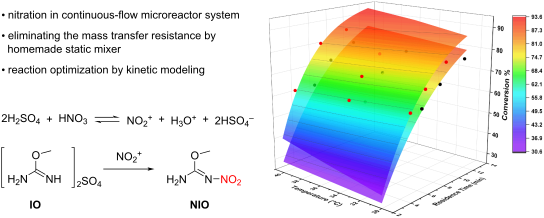
- . Determining the apparent reaction kinetics The variation in the conversion of IO (xIO) as the function of time (t) at different temperatures (30 °C, 35 °C, 40 °C) and H2SO4 mass fractions (88%, 90%, 92%, 94%, 96%, and 98%) is depicted in Figure S3 in Supporting Information File 1 and subsequently modeled
- type of compound, and Mc is the activity coefficient function introduced in the next section. By shifting the terms in Equation 9, Equation 10 can be obtained as: Therefore, by plotting as the vertical coordinate and Mc as the horizontal coordinate, the values of n and k0 can be obtained from the
- , specifically when the H2SO4 concentrations were between 15.2 and 18.4 mol/L. By fitting the predicted data, Mc as a function of the H2SO4 concentration at a given temperature was determined (Figure S4 in Supporting Information File 1). In addition, the values of Mc for different sulfuric acid concentrations at


![[Graphic 1]](/bjoc/content/inline/1860-5397-20-205-i17.svg?max-width=637&scale=1.18182)



Asymmetric organocatalytic synthesis of chiral homoallylic amines
Beilstein J. Org. Chem. 2024, 20, 2349–2377, doi:10.3762/bjoc.20.201
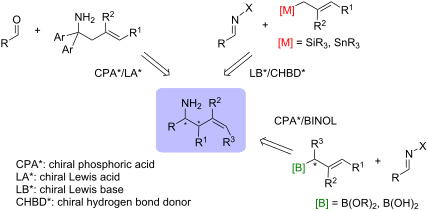
- , creating the desired syn-(2R,3S)-homoallylic amine 120 in high diastereo- and enantioselectivity. The reaction was tested with various aryl, benzyl, allyl, and alkyl-functionalised β-formyl N-morpholinyl amides 119; the amide function was also varied. Yields were scattered across the 31–90% range, with the








Improved deconvolution of natural products’ protein targets using diagnostic ions from chemical proteomics linkers
Beilstein J. Org. Chem. 2024, 20, 2323–2341, doi:10.3762/bjoc.20.199
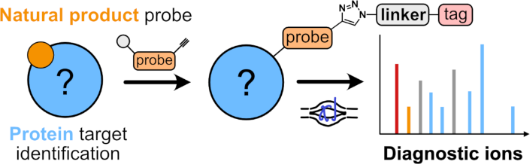
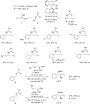
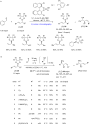
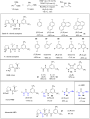
- conjugate(s) and the desired analytical output with the information about the protein and conjugate identity. Thus, the linkers have not only the function to simply connect the probe scaffold with an affinity or reporter tag, but they carry previously underappreciated features enhancing the capabilities of


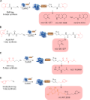
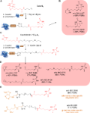


Hydrogen-bond activation enables aziridination of unactivated olefins with simple iminoiodinanes
Beilstein J. Org. Chem. 2024, 20, 2305–2312, doi:10.3762/bjoc.20.197
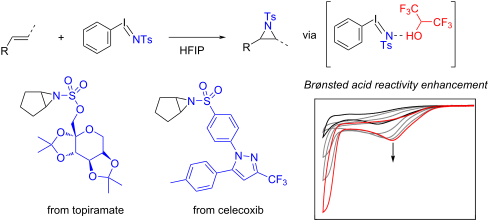
- ]. Iminoiodinanes (ArI=NR) are a subclass of hypervalent iodine reagents that function as nitrene equivalents in synthesis [5][6]. The direct reaction of iminoiodinanes with olefins, which could be envisioned to give rise to aziridines directly, is typically not observed and thus families of transition metal


Catalysing (organo-)catalysis: Trends in the application of machine learning to enantioselective organocatalysis
Beilstein J. Org. Chem. 2024, 20, 2280–2304, doi:10.3762/bjoc.20.196
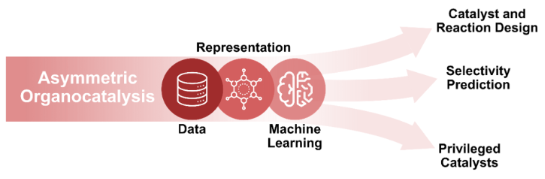
- ]. While the accuracy of the model is paramount, interpretability is also highly desirable. In this regard, MLR bears the advantage that it yields a directly interpretable function which can be used for mechanistic inference. However, it is important to note that the caveat of correlation and causality
- their OSCAR [31] database, the authors used the NaviCatGA genetic algorithm [118] to find the most general catalysts. The fitness function comprised multiple objectives, including the median of the enantioselectivity and activity across the generality probing set. The usage of a multi-objective


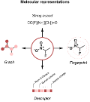


Cell-free protein synthesis with technical additives – expanding the parameter space of in vitro gene expression
Beilstein J. Org. Chem. 2024, 20, 2242–2253, doi:10.3762/bjoc.20.192
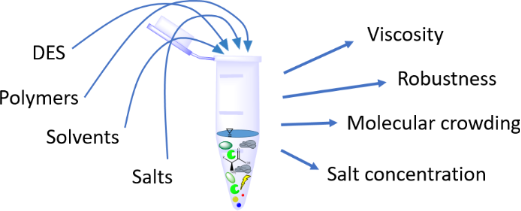
- of the intracellular environment on the function and cellular behavior of proteins are composition, viscosity, and macromolecular crowding [16], these parameters could have a strong impact on the protein synthesis performance using CFPS. For example, the addition of chemical chaperones, such as



Natural resorcylic lactones derived from alternariol
Beilstein J. Org. Chem. 2024, 20, 2171–2207, doi:10.3762/bjoc.20.187

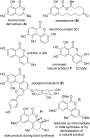


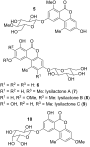


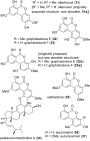

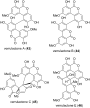


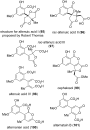
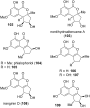
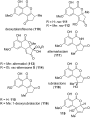


Computational toolbox for the analysis of protein–glycan interactions
Beilstein J. Org. Chem. 2024, 20, 2084–2107, doi:10.3762/bjoc.20.180
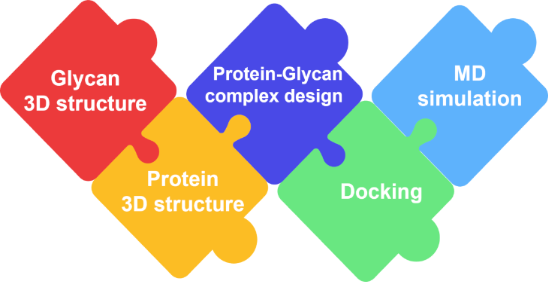
- physical functions [3]. Glycoscience encompasses the comprehensive study of glycans focusing on their structural, biosynthetic, biological and evolutionary aspects [4], thus playing a central role in the identification and characterisation of the glycome’ structure and function, and in unveiling its
- of chemical processes [20][21], transporting and storing molecules [22], transducing and integrating information [23] providing structural and mechanical support [24], and generating movement [25], among other functions [26]. To fold and carry out their function properly, proteins often need post
- simulations, it is fundamental not only to build their 3D structure but also to choose the appropriate force field, that is a set of empirical energy functions and parameters used to calculate the potential energy of a system as a function of the molecular coordinates. The collection of equations and



Diastereoselective synthesis of highly substituted cyclohexanones and tetrahydrochromene-4-ones via conjugate addition of curcumins to arylidenemalonates
Beilstein J. Org. Chem. 2024, 20, 2016–2023, doi:10.3762/bjoc.20.177
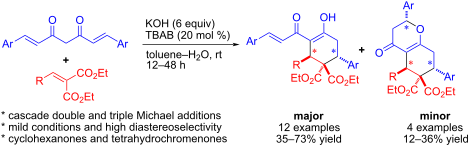
- properties such as anticancer, anti-HIV protease, anti-ageing, anti-inflammatory and anti-oxidant, to name a few [12][13][14][15][16][17][18][19][20][21][22][23]. Considering the fact that curcumin’s uniqueness is associated with its ability to function as a multifunctional substrate in various organic


Understanding X-ray-induced isomerisation in photoswitchable surfactant assemblies
Beilstein J. Org. Chem. 2024, 20, 2005–2015, doi:10.3762/bjoc.20.176
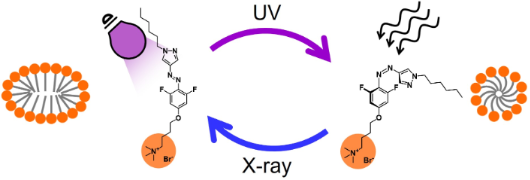
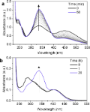
- irradiation to form the Z-rich PSS and addition of excess hydrobromic acid as a function of time held in the dark. The grey lines indicate time intervals of (a) 3 minutes and (b) 1 hour. Effect of X-ray exposure time on high-concentration samples of AAPTAB in water, (a) 10 wt % and (b) 90 wt %, after ex-situ



Negishi-coupling-enabled synthesis of α-heteroaryl-α-amino acid building blocks for DNA-encoded chemical library applications
Beilstein J. Org. Chem. 2024, 20, 1922–1932, doi:10.3762/bjoc.20.168
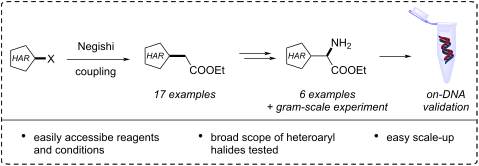
- crucial function in many biological processes. Due to their bifunctional character, they have been also used for combinatorial chemistry purposes, such as the preparation of DNA-encoded chemical libraries. We developed a practical synthesis for α-heteroaryl-α-amino acids starting from an array of small
- , while also holding a crucial function in many biological processes [8]. Non-canonical amino acids (NCAs) are widely used in medicinal chemistry [9]. Not surprisingly, they also find broad use as bifunctional building blocks (BBs) for DELs. In an early example, an 800-million-members DEL utilized Fmoc




The Groebke–Blackburn–Bienaymé reaction in its maturity: innovation and improvements since its 21st birthday (2019–2023)
Beilstein J. Org. Chem. 2024, 20, 1839–1879, doi:10.3762/bjoc.20.162
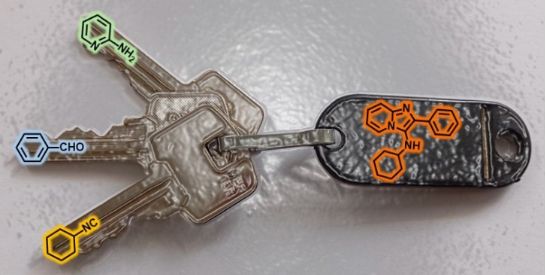
- . Sashidhara et al. reported no conversion, while Liu et al. reported a 58% yield of the GBB product, postulating the ability of ethylene glycol to function as an activator (through hydrogen bonding) and a facilitator of proton transfer. After this discovery, ethylene glycol has never been employed in GBB






Hetero-polycyclic aromatic systems: A data-driven investigation of structure–property relationships
Beilstein J. Org. Chem. 2024, 20, 1817–1830, doi:10.3762/bjoc.20.160
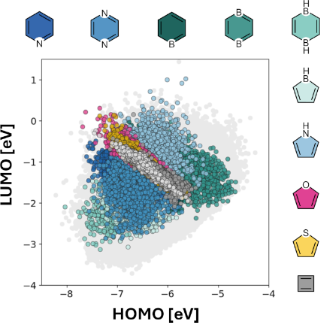
- properties as a function of the number of building blocks of each type (from 1–4; the number of examples containing more than 4 building blocks of a single type are too few to be statistically meaningful). Not surprisingly, the trends shown in Figure 10 reiterate and further substantiate some of the previous



Discovery of antimicrobial peptides clostrisin and cellulosin from Clostridium: insights into their structures, co-localized biosynthetic gene clusters, and antibiotic activity
Beilstein J. Org. Chem. 2024, 20, 1800–1816, doi:10.3762/bjoc.20.159
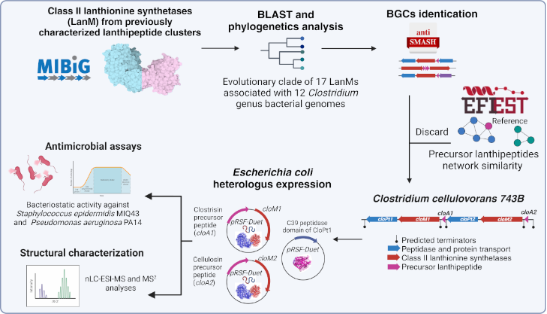
- function–structure relationships and how they impact biological activity. Since we have not found evidence of horizontal transfer of the cloA1 and cloA2 gene clusters, it is an interesting speculation that they could constitute the origin of this family and that, by duplicating one of these clusters, C




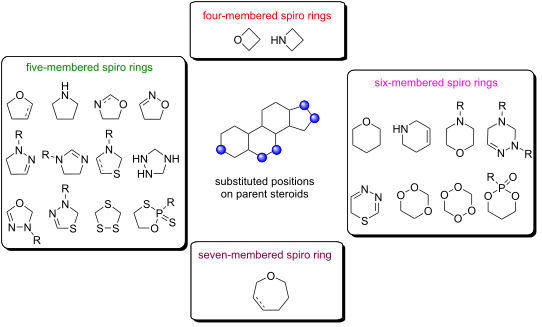
Syntheses and medicinal chemistry of spiro heterocyclic steroids
Beilstein J. Org. Chem. 2024, 20, 1713–1745, doi:10.3762/bjoc.20.152
- epoxide was then opened by treatment with sodium azide and boric acid, yielding the azide derivative 146 in 87% from estrone. A subsequent reduction of the azide with LiAlH4 provided the aminoalcohol derivative 147 in 64% yield. Then, a chloroacetamido moiety was formed at the amino function in 51% yield





