Search results
Search for "derivatives" in Full Text gives 2844 result(s) in Beilstein Journal of Organic Chemistry. Showing first 200.
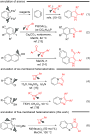
Approaches to stereoselective 1,1'-glycosylation
Beilstein J. Org. Chem. 2025, 21, 1700–1718, doi:10.3762/bjoc.21.133
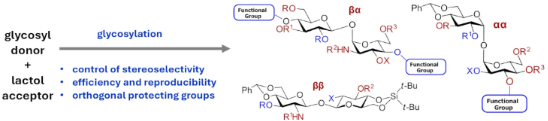
- anomeric configuration of the lactol acceptor is particularly challenging when the desired form is not thermodynamically favored, as is the case with β-mannose derivatives. A refined strategy employing cyclic stannanes to lock the anomeric hydroxy group of a mannose-derived lactol in the equatorial
- sucrose derivatives in plants [79][80][81]. In this case, the carboxymethyl group in the 2-thioethyl fructofuranoside was locked by an intramolecular bridge formed by the TIPDS group to the C4–OH [1,4-O-(1,1,3,3-tetraisopropyldisiloxane-1,3-diyl) bridge], resulting in a β-directing fructofuranosyl donor
- its derivatives include the use of β-ᴅ-psicofuranosyl donors [84][85] and the intracellular aglycon delivery (IAD) strategy [86]. Electron-withdrawing groups, often used for the temporary protection of hydroxy functions in pyranoses, can significantly reduce the nucleophilicity of both glycosyl donors


Continuous-flow-enabled intensification in nitration processes: a review of technological developments and practical applications over the past decade
Beilstein J. Org. Chem. 2025, 21, 1678–1699, doi:10.3762/bjoc.21.132
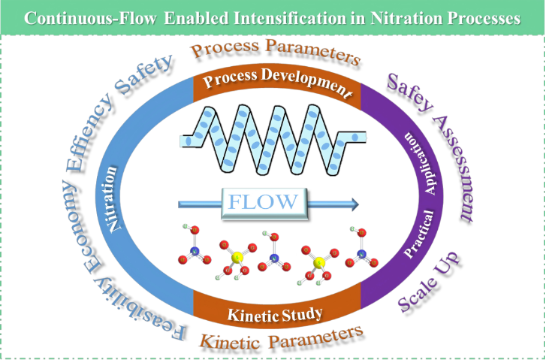
- -flow configurations demonstrate superior safety and efficiency. While the synthetic significance of nitration is underscored by the broad utility of nitro derivatives, persistent technical challenges including regioselectivity control, over-nitration phenomena, and substrate oxidation side reactions
- conversion efficiency, selectivity drift toward undesirable polynitrated derivatives, and by-product formation kinetics that are particularly critical in nitration processes. The integration of long-term stability evaluations and stress testing significantly mitigates scale-up failure risks by identifying
- (e.g., dinitro/trinitro derivatives). These hazardous by-products arise from the tendency of electron-rich substrates to undergo overnitration, drastically increasing detonation potential. Consequently, rigorous safety assessments are critically important for processes involving nitration reactions




Structural analysis of stereoselective galactose pyruvylation toward the synthesis of bacterial capsular polysaccharides
Beilstein J. Org. Chem. 2025, 21, 1671–1677, doi:10.3762/bjoc.21.131

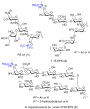
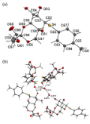
- derivatives, enabling the exploration of the practical applications of PSA1 while simultaneously enhancing our understanding of synthetic chemistry. To simplify the synthetic process, glycosylation was facilitated by employing preactivation and the differences in acceptor reactivity. Using the p
- for O4-linked synthesis in preparing various PS A1 derivatives. In our research, we carried out the synthesis of the PSA1 molecule as part of a broader effort to validate chemical synthesis methodologies. This work involved verifying our experimental techniques and understanding the underlying


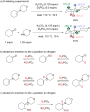
Influence of the cation in hypophosphite-mediated catalyst-free reductive amination
Beilstein J. Org. Chem. 2025, 21, 1661–1670, doi:10.3762/bjoc.21.130

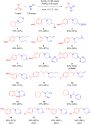
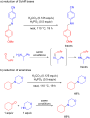
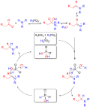
- cation and not its reduction. H2PO3− generated as a result of the first step could reduce a new portion of iminium ions in a similar way forming another molecule of the target amine and ortho-phosphoric acid derivatives. Based on the obtained data we can highlight two main reasons why the developed


Photocatalysis and photochemistry in organic synthesis
Beilstein J. Org. Chem. 2025, 21, 1645–1647, doi:10.3762/bjoc.21.128

- ; photochemistry; Soon after its first reported synthesis in 1936 [1], [Ru(bpy)3]Cl2 (bpy = 2,2'-bipyridine) and its derivatives attracted significant attention due to their photophysical properties [2][3][4]. These complexes can efficiently absorb visible light through a metal-to-ligand charge transfer (MLCT

Formal synthesis of a selective estrogen receptor modulator with tetrahydrofluorenone structure using [3 + 2 + 1] cycloaddition of yne-vinylcyclopropanes and CO
Beilstein J. Org. Chem. 2025, 21, 1639–1644, doi:10.3762/bjoc.21.127
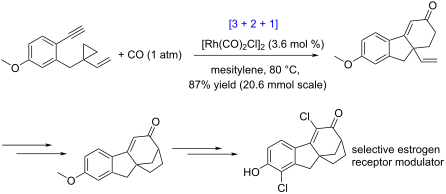
- bridged tetrahydrofluorenone derivatives, represented by molecules V and VI, showed significant ERβ binding affinity and high selectivity [15][16][17][18][19]. So far, there are only two routes for accessing bridged tetrahydrofluorenone derivative VI. The first one shown in Scheme 2A includes a Robinson
- finding new strategies for these molecules and their derivatives are still required for future medicinal investigations. Due to this, we decided to explore a new approach to VI, which is reported here. Our approach is inspired by the Lei’s synthesis of ent-kaurane diterpenoids (Scheme 3A) [22] which share
- target molecule. This route can provide new derivatives for further searching new SERMs. The synthetic strategy can be applied to other molecules with [3.2.1] framework. Of the same importance, the gram scale (4 g) of the [3 + 2 + 1] reaction with 87% reaction yield demonstrates the practical use of this


3-Aryl-2H-azirines as annulation reagents in the Ni(II)-catalyzed synthesis of 1H-benzo[4,5]thieno[3,2-b]pyrroles
Beilstein J. Org. Chem. 2025, 21, 1595–1602, doi:10.3762/bjoc.21.123

- for the synthesis of benzo[4,5]thieno[3,2-b]pyrroles are lacking and obtaining their derivatives remains challenging [24][25], the reaction we discovered could significantly facilitate access to compounds of this type. To test the generality and usefulness of the reaction, we investigated a variety of
- methanol. The driving force of this process is the formation of an aromatic thiophene system. To demonstrate the practicability and synthetic utility of this method for the synthesis of benzo[4,5]thieno[3,2-b]pyrrole derivatives, several transformations of compound 3b were carried out (Scheme 4



Thermodynamic equilibrium between locally excited and charge transfer states in perylene–phenothiazine dyads
Beilstein J. Org. Chem. 2025, 21, 1577–1586, doi:10.3762/bjoc.21.121
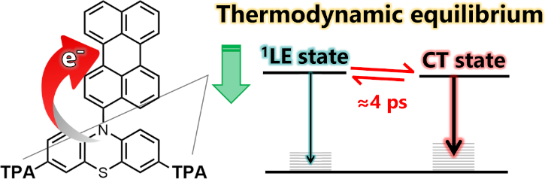
- featuring high photostability and strong visible absorption. Perylene–phenothiazine (Pe–PTZ) derivatives have been previously investigated for their excited-state dynamics [15]. Incorporating additional electron-donating groups such as triphenylamine (TPA) onto the PTZ core is expected not only to enhance
- series of novel Pe–PTZ derivatives by incorporating electron-donating triphenylamine (TPA) units and phenyl spacers to systematically modulate the donor strength and the spatial distance between the donor and acceptor. Four compounds – Pe–PTZ, Pe–PTZ(TPA), Pe–PTZ(TPA)2, and Pe–Ph–PTZ(TPA)2 – were
- shown in Supporting Information File 1. Energy levels and steady-state optical properties Time-dependent density functional theory (TD-DFT) calculations were performed to gain insights into the electronic structures of Pe–PTZ derivatives at B3LYP/6-31+G(d,p) level of theory (Figure 2) [18]. The





pH-Controlled isomerization kinetics of ortho-disubstituted benzamidines: E/Z isomerism and axial chirality
Beilstein J. Org. Chem. 2025, 21, 1568–1576, doi:10.3762/bjoc.21.120
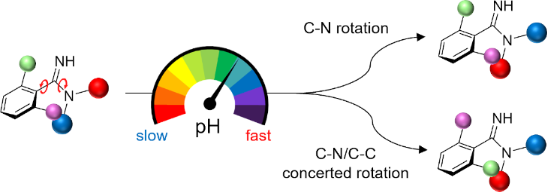
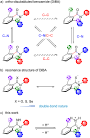
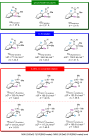
- benzamidine derivatives as a novel pH-responsive molecular switch. Keywords: atropisomer; conformation; isomerization; molecular switch; organobase; Introduction pH-Responsive molecular motors and switches are a class of functional organic molecules capable of reversible structural and electronic changes



Facile synthesis of hydantoin/1,2,4-oxadiazoline spiro-compounds via 1,3-dipolar cycloaddition of nitrile oxides to 5-iminohydantoins
Beilstein J. Org. Chem. 2025, 21, 1552–1560, doi:10.3762/bjoc.21.118

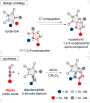
- another cycle via the single quaternary carbon atom C5 demonstrated significant biological activity, greater than analogs with non-spiro-bonded cyclic fragments [3][4]. Hydantoin derivatives also exhibit a wide range of biological activities. Compounds containing the hydantoin pharmacophore group, are
- of double and triple bonds, most of the described reactions are related to dipolarophiles with C=C, C≡C or C=S bonds [7]. However, the [3 + 2]-cycloaddition of nitrile oxides to exocyclic C=N bonds, is a much less explored area. There are few known reactions of these dipoles with imino derivatives of
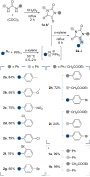
- developed for existing spiro systems to the new hybrid drugs. In this work a similar modification of imidazolidine derivatives was performed for the first time for the synthesis of spiro-hydantoins. The title reactions were carried out using two alternative techniques for the generation of the reactive 1,3



Azide–alkyne cycloaddition (click) reaction in biomass-derived solvent CyreneTM under one-pot conditions
Beilstein J. Org. Chem. 2025, 21, 1544–1551, doi:10.3762/bjoc.21.117
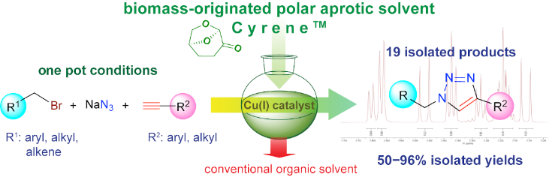
- -dioxane) or low (DMF, NMP, DMSO) (Figure 1). While low conversion was still detected in biomass-originated 2-MeTHF, MeLev, and EtLev established better performance. When their corresponding 4-alkoxy derivatives were applied, moderate (Me-4MeOV) or slightly lower (Et-4EtOV) conversions could be observed
- 1,2,3-triazole derivatives were generally obtained with good to excellent yields (50–96%). Both electron-withdrawing (fluoro (3b) or trifluoromethyl (3c)) and electron-donating (methoxy, phenoxy, and alkyl (3d–h)) groups were tolerated on the acetylene reaction partner species. In accordance with
- -triazoles in CyreneTM (Figure 4). It was shown that the protocol resulted in the formation of products 3a and 5b–f with yields of 57–91% depending on the structure of the bromide derivatives. The isolated yields were in the same range as reported by Citarella et al. [39]. The presence of a terminal carbon


General method for the synthesis of enaminones via photocatalysis
Beilstein J. Org. Chem. 2025, 21, 1535–1543, doi:10.3762/bjoc.21.116
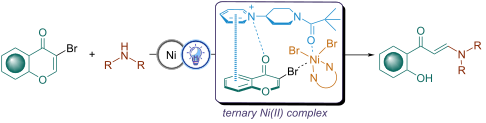
- intermediates in the synthesis of several derivatives with important applications in medicinal chemistry. Furthermore, many marketed drugs feature the enaminone structural moiety. In this context, we have developed a photoredox and nickel catalytic system to rapidly forge the enaminone scaffold from 3
- -bromochromones via a Michael reaction of an amine with an electron-deficient alkene moiety and subsequent photocatalyzed debromination. With this dual catalytic system, a range of structurally diverse enaminone derivatives have been achieved in good yields with total trans selectivity. Mechanistic studies
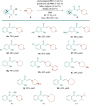
- electrophilicity of the β-carbon due to the electron-donating nature of the methyl group. Subsequently, we turned our attention to investigate a range of amine derivatives 8 under the standard conditions. When morpholine was replaced by piperidine, the expected enaminone 9g was provided, albeit in lower yield




Ambident reactivity of enolizable 5-mercapto-1H-tetrazoles in trapping reactions with in situ-generated thiocarbonyl S-methanides derived from sterically crowded cycloaliphatic thioketones
Beilstein J. Org. Chem. 2025, 21, 1508–1519, doi:10.3762/bjoc.21.113
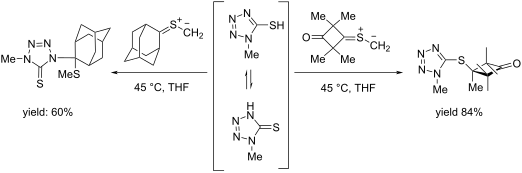
- chemoselectivity was observed in reactions of 1a with 5-mercaptotetrazole 4b. However, due to a lower reactivity observed for 4c,d towards 1a, the experiments with these derivatives were unsuccessful and formation of undesired side products was observed in both cases. Unexpectedly, a different chemoselectivity was
- cyclobutanone derivatives 1b, 1c and 1d suggest that the type of the spiro-substituent may play an important role in the rearrangement process. Whereas thioaminals 9 obtained in reactions with 1b and 1d tend to easily undergo the rearrangement leading to the corresponding dithioacetals 10, the analogous process
- polymer chemistry [36] and the crop protection industry [37] as well. Therefore, in extension of a typically synthetic work, a preliminary study on biological activity of the hitherto unreported 1H-tetrazole derivatives such as thioaminals 9 and dithioacetals 10 was carried out and it demonstrated that


Highly distinguishable isomeric states of a tripodal arylazopyrazole derivative on graphite through electron/hole-induced switching at ambient conditions
Beilstein J. Org. Chem. 2025, 21, 1496–1507, doi:10.3762/bjoc.21.112
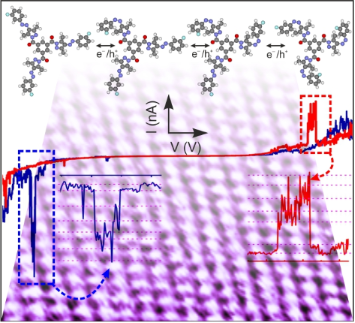
- derivatives play a crucial role in realizing efficient bidirectional photoswitches with longer half-lives [18][19]. In particular, replacing one of the phenyl units in AB with a five-membered heterocycle and the resulting Z isomer of phenylazoheteroarenes has extended half-life ranging up to 1000 days and
- hydrogelator [25], photoregulation of DNA nanosystems [26], in controlling surface wettability [27], and in solar energy conversion [28]. Considering these advantages, we synthesized C3 symmetric tripodal azopyrazole-based derivatives having a trimesoyl core and aroylazole connections as a solid-state
- changes abruptly. In other words, the abrupt change in current is caused by isomerization or geometrical changes in the molecule. The change in tunneling current has been earlier used to identify geometrical changes/isomerization of spin-cross-over molecule [7] and azobenzene derivatives [10][11][12][15




Heterologous biosynthesis of cotylenol and concise synthesis of fusicoccane diterpenoids
Beilstein J. Org. Chem. 2025, 21, 1489–1495, doi:10.3762/bjoc.21.111
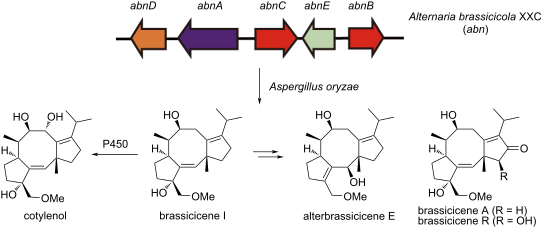
- with limited chemical transformations is highly desirable and should enable the discovery of new fusicoccane derivatives with improved biological activity. Inspired by the biosynthetic machinery of terpenoids, we have reported a hybrid synthetic strategy for accessing bioactive terpenoids by combining


Photoredox-catalyzed arylation of isonitriles by diaryliodonium salts towards benzamides
Beilstein J. Org. Chem. 2025, 21, 1480–1488, doi:10.3762/bjoc.21.110
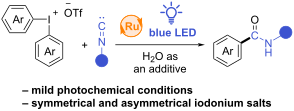
- significant attention within organic and medicinal chemistry. Commonly, amide bonds are formed via the reaction of carboxylic acids or their derivatives with appropriate amines (Scheme 1A) [4]. Although this conventional approach is effective and straightforward, it usually suffers from harsh conditions and


Copper catalysis: a constantly evolving field
Beilstein J. Org. Chem. 2025, 21, 1477–1479, doi:10.3762/bjoc.21.109

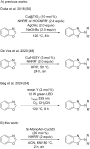
- straightforward workup and minimized free copper on solution. Due to this, the catalyst could be regenerated and reused in up to eight cycles. Upon optimization, this practical and versatile method could be used for the synthesis of several benzoxazole derivatives. A Letter was contributed by D’Andrea and Jademyr
- process of 4,4-dichloro-2-butenoic acid derivatives and bis(pinacolato)diboron is described [10]. The transformations feature excellent chemo-, regio-, and diastereoselectivities, and the resulting products are highly functionalized. Due to this, they were considered as versatile building blocks for the
Microwave-enhanced additive-free C–H amination of benzoxazoles catalysed by supported copper
Beilstein J. Org. Chem. 2025, 21, 1462–1476, doi:10.3762/bjoc.21.108
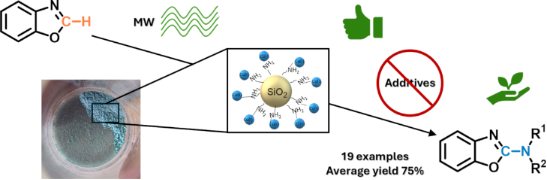
- synthesis of various benzoxazole derivatives, demonstrating its versatility and practical applicability. Keywords: aerobic oxidation; copper; grafted silica; heterogeneous catalysis; microwave; Introduction 2-Aminoazoles are nitrogenous heterocyclic compounds of high relevance due to their biological and
- methods are simple, inexpensive and scalable, making the catalyst reliable and suitable for large scale production. This study aims to optimise an efficient, user-friendly and heterogeneously catalysed procedure that enables the rapid synthesis of 2-aminobenzoxazole derivatives. A key focus is leveraging
- determine the percentage composition of starting material and products 2a, 2a-o and 2a-o-hydrol. The reaction was perfectly reproducible and no other derivatives were observed. As shown in Figure 1b, when the reaction was conducted without a catalyst, only ring opening was observed, accounting for 47%. By



Wittig reaction of cyclobisbiphenylenecarbonyl
Beilstein J. Org. Chem. 2025, 21, 1454–1461, doi:10.3762/bjoc.21.107
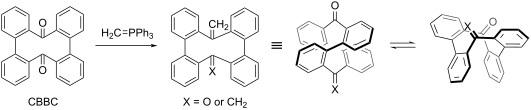
- peripherally modified CBBC derivatives have also been prepared and were shown to have fascinating properties [17][18][19][20][21]. For example, carbazole-substituted donor–acceptor-type CBBC derivatives exhibit both efficient circularly polarized luminescence (CPL) and thermally activated delayed fluorescence
- internally functionalized DBC derivatives [22]. The dihedral angle between the mean planes of the two terminal benzene units is 83°, which is comparable to those of other derivatives. Next, products 3 and 5 were analyzed by variable temperature (VT) 1H NMR spectroscopy. The 1H NMR spectrum of bis-olefin 5 in



Advances in nitrogen-containing helicenes: synthesis, chiroptical properties, and optoelectronic applications
Beilstein J. Org. Chem. 2025, 21, 1422–1453, doi:10.3762/bjoc.21.106
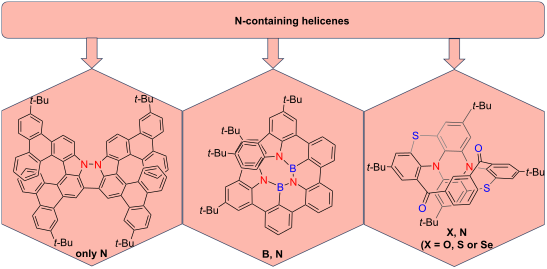
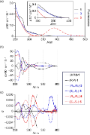
- systems – has granted access to increasingly complex helicene frameworks with well-defined chirality. This review systematically summarizes recent advancements in the synthesis, structural engineering, and chiroptical performance of nitrogen-doped helicenes and their heteroatom-doped derivatives
- [33] and Ishigaki’s [34] groups independently reported a class of highly twisted nitrogen-doped heptalene derivatives (e.g., compound 20a), which exhibit consistent absorption at 315 nm and blue fluorescence centered near 450 nm, regardless of the substituents. These compounds display redox and
- , Tanaka’s group synthesized benzannulated double aza[9]helicene 32a and its alkylated derivatives 32b and 32c via a one-pot oxidative fusion strategy [46]. Compared to the parent compound 32a (ΦF = 0.07), compounds 32b and 32c exhibit significantly enhanced ΦF (0.35), red-shifted absorption bands, and |gabs

Tautomerism and switching in 7-hydroxy-8-(azophenyl)quinoline and similar compounds
Beilstein J. Org. Chem. 2025, 21, 1404–1421, doi:10.3762/bjoc.21.105
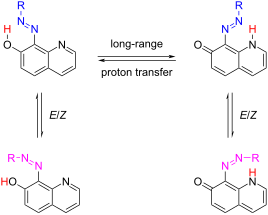
- ESIPT exists along with the cis/trans isomerization, creating a rather complicated interplay between two competitive processes. Experimental [49][75][76][77][78][79][80] and theoretical [81][82][83][84] studies of compound 3 and derivatives clearly indicate the excited-state competition between the
- and excited state) were optimized without restrictions, using tight optimization criteria and an ultrafine grid in the computation of two-electron integrals and their derivatives. The true minima were verified by performing frequency calculations in the corresponding environment. The implicit




N-Salicyl-amino acid derivatives with antiparasitic activity from Pseudomonas sp. UIAU-6B
Beilstein J. Org. Chem. 2025, 21, 1388–1396, doi:10.3762/bjoc.21.103
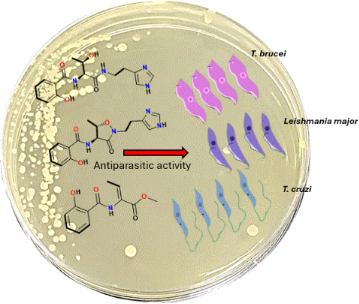
- human system. In this study, we isolated two previously undescribed N-salicyl-amino acids as natural products (1 and 2) and other two new derivatives (3 and 4) from the organic extract of a culture broth in a modified starch–glucose–glycerol (SGG) medium of Pseudomonas sp. UIAU-6B. The structure of the


High-pressure activation for the solvent- and catalyst-free syntheses of heterocycles, pharmaceuticals and esters
Beilstein J. Org. Chem. 2025, 21, 1374–1387, doi:10.3762/bjoc.21.102
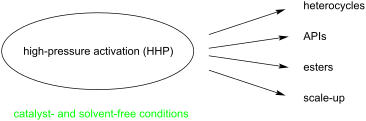
- protocol was even applied in the elegant syntheses of platencin [30], and steroid derivatives [31]. Despite these encouraging applications, there is a broad area to be developed for the advancement of green synthesis efforts. Continuing our program on developing environmentally benign synthetic methods [32


Oxetanes: formation, reactivity and total syntheses of natural products
Beilstein J. Org. Chem. 2025, 21, 1324–1373, doi:10.3762/bjoc.21.101
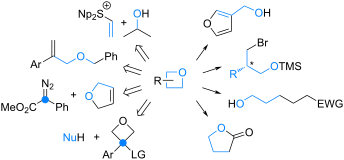
- epoxides and heteroatom-stabilised carbocations generated from alkenes (Scheme 10). In 1992, Arjona and co-workers examined the synthesis of 4,7-dioxatricyclo[3.2.1.03,6]octane derivatives 45 via intramolecular cyclisation of the corresponding hydroxyalkene precursors 44 using arylsulphenyl and arylselenyl
- electrophilicity of the carbonyl [74]. The oxetane products were obtained in good to high yields and further transformed into useful sulphone, butenolide and tetrahydrofuran derivatives. Besides laboratory-scale reactions, this ring expansion has also found applications in industry, specifically for a multi
- approach to these derivatives can proceed through functionalisations of readily available oxetane-containing building blocks. The most versatile precursor of these building blocks is 3-oxetanone (133) which was first recognised by Carreira and colleagues (Scheme 34). Besides describing its possible










Recent advances and future challenges in the bottom-up synthesis of azulene-embedded nanographenes
Beilstein J. Org. Chem. 2025, 21, 1272–1305, doi:10.3762/bjoc.21.99
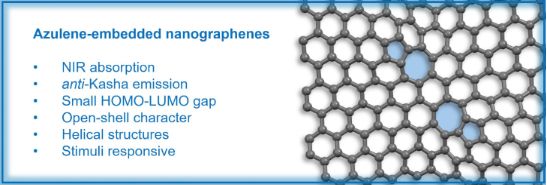
- formation of two tropylium fragments within a single molecule. Additionally, they exhibit typical azulene-like optical absorption and the aromatic properties characteristic of azulene subunits. Liu and co-workers extended this chemistry to substituted naphthalene derivatives which led to chrysene fused with