


Search results
Search for "dimerization" in Full Text gives 292 result(s) in Beilstein Journal of Organic Chemistry. Showing first 200.
Photochemical generation of the 2,2,6,6-tetramethylpiperidine-1-oxyl (TEMPO) radical from caged nitroxides by near-infrared two-photon irradiation and its cytocidal effect on lung cancer cells
Beilstein J. Org. Chem. 2019, 15, 863–873, doi:10.3762/bjoc.15.84
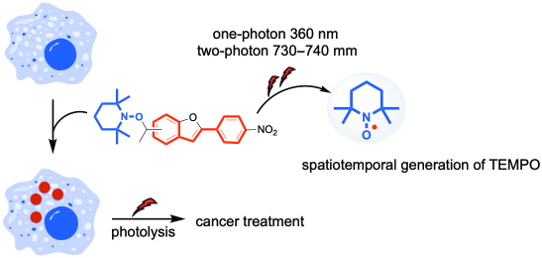
- counterparts (65.8% vs 85.5%). Keywords: caged compound; nitroxide; photolysis; radical; theranostics; two-photon; Introduction Nitroxides (aminoxyl radicals) possess a delocalized unpaired electron and exhibit negligible dimerization reactivity, making them persistent open-shell species [1][2][3][4]. In






Design, synthesis and spectroscopic properties of crown ether-capped dibenzotetraaza[14]annulenes
Beilstein J. Org. Chem. 2019, 15, 617–622, doi:10.3762/bjoc.15.57

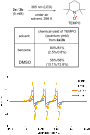
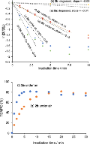
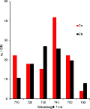
- prepared and their binding properties toward sodium and potassium ions were studied in addition to transition metals. Sakata et al. reported the syntheses and characterization of nickel(II), copper(II) [25] and oxovanadium(IV) [26] complexes of crown ether-annulated DBTAAs, which caused dimerization in the


Gold-catalyzed ethylene cyclopropanation
Beilstein J. Org. Chem. 2019, 15, 67–71, doi:10.3762/bjoc.15.7
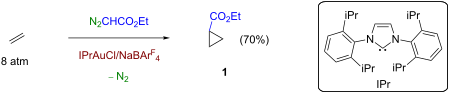
- diazo reagent must be added in one portion before pressurizing the system. This fact constitutes the main drawback when working with this alkene, and a highly chemoselective catalyst toward cyclopropanation over carbene dimerization is needed to enhance the former transformation. In a first array of
- spectroscopy. It is worth mentioning that when diethyl diazomalonate or ethyl 2-phenyldiazoacetate were employed as the carbene precursor, no cyclopropanes were detected, only olefins formed from carbene dimerization as well as unreacted diazo compounds were identified at the end of the reaction. Conclusion We


Ruthenium-based olefin metathesis catalysts with monodentate unsymmetrical NHC ligands
Beilstein J. Org. Chem. 2018, 14, 3122–3149, doi:10.3762/bjoc.14.292
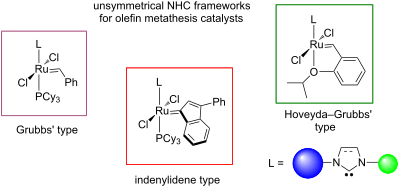
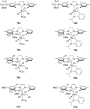
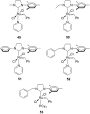
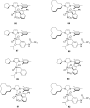
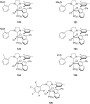
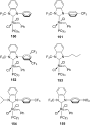
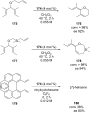
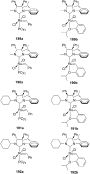
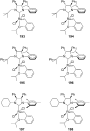
- -hexene, giving no conversion at room temperature and dimerization at 85 °C. Exchanging the chloride ligands for iodide ligands led to catalysts 80 and 82 with superior latent behavior that allowed for the latent ROMP of norbornene derivatives (e.g., 83, Scheme 9). In order to improve the selectivities in



















MoO3 on zeolites MCM-22, MCM-56 and 2D-MFI as catalysts for 1-octene metathesis
Beilstein J. Org. Chem. 2018, 14, 2931–2939, doi:10.3762/bjoc.14.272
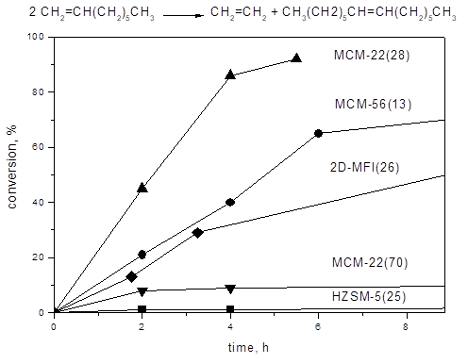
- double bond isomerization followed by cross metathesis and (ii) 1-octene oligomerization (mainly dimerization). The extent of these reactions depends strongly on the support acidity. Highly acidic supports MCM-22(28) and MCM-56(13) delivered a catalyst of rather low selectivity (up to 14% conversion to


The influence of the cationic carbenes on the initiation kinetics of ruthenium-based metathesis catalysts; a DFT study
Beilstein J. Org. Chem. 2018, 14, 2872–2880, doi:10.3762/bjoc.14.266
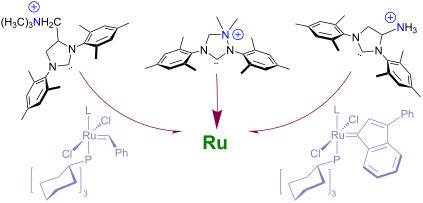
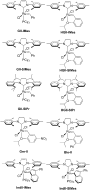
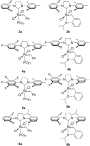
- , but also on the properties and initiation rates of the most important ruthenium-based metathesis catalysts, including Grubbs, indenylidene, and Hoveyda–Grubbs complexes, as well as carbene dimerization. We also considered two different solvents: dichloromethane, which is a standard solvent for
- , using M06-D3 approach. Previously we have shown that the addition of D3 correction gives very good agreement with the experimental data for Hov and Hoveyda-like systems as well as for investigations of carbenes dimerization [38][49]. As a result we decided to use the M06-D3 functional in calculations of
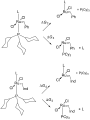
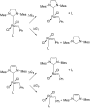
- Gibbs free energies all system apart from 1st generation Grubbs and indenylidene-like complexes, for which we used pure M06. Results for all systems and both M06 and M06-D3 methods are listed in Supporting Information File 1. Dimerization The tendency of selected NHC to dimerize is a well-known and



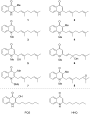
Synthesis and biological evaluation of 1,2-disubstituted 4-quinolone analogues of Pseudonocardia sp. natural products
Beilstein J. Org. Chem. 2018, 14, 2680–2688, doi:10.3762/bjoc.14.245

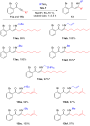
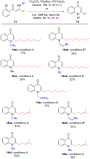
- substituent in our previous study, for which these copper-catalysed conditions resulted in dimerization [11]. Following the discovery of this substrate-dependent dichotomy with respect to optimal reaction conditions, the entire library of compounds was successfully cyclised. Whilst the yields ranged from low




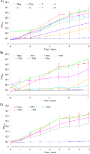

Microfluidic light-driven synthesis of tetracyclic molecular architectures
Beilstein J. Org. Chem. 2018, 14, 2418–2424, doi:10.3762/bjoc.14.219
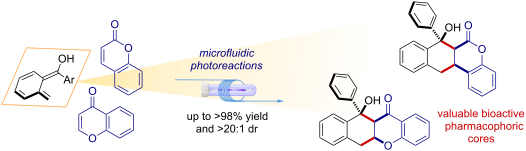
- , producing only traces of the expected sulfur-containing adduct 4i. As a matter of fact, compound 2e showed a high tendency to undergo a light-promoted [2 + 2] dimerization reaction, thus preventing the envisaged [4 + 2] cycloaddition pathway [13]. Next, the chromone scaffold 3a, which is a precursor of


Nucleoside macrocycles formed by intramolecular click reaction: efficient cyclization of pyrimidine nucleosides decorated with 5'-azido residues and 5-octadiynyl side chains
Beilstein J. Org. Chem. 2018, 14, 2404–2410, doi:10.3762/bjoc.14.217
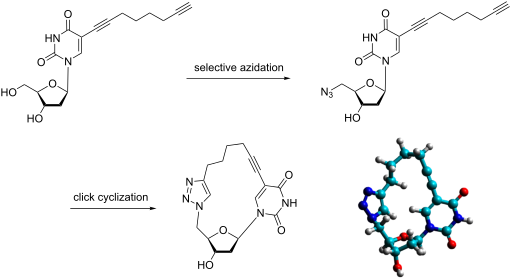
- %) together with the dimeric side product 3 (4.5%, Scheme 1) [37]. The moderate yield of the 5’azido-dC derivative results from incomplete conversion. Possibly, traces of copper used for the Sonogashira cross coupling and high substrate concentration were initiating dimerization of azide 2. Nevertheless, an
- . Conclusion The synthesis of a macrocycle is often described as an intramolecular cyclization of a bifunctional precursor molecule. However, in many cases competition exists with dimerization and polymerization. Therefore, we were delighted to see that the intramolecular cyclization, utilizing dU and dC


Dynamic light scattering studies of the effects of salts on the diffusivity of cationic and anionic cavitands
Beilstein J. Org. Chem. 2018, 14, 2212–2219, doi:10.3762/bjoc.14.195
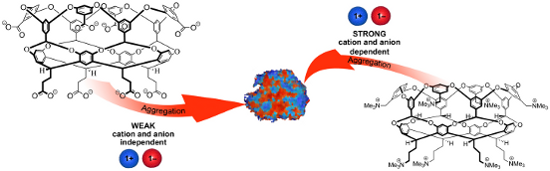
- fluoride and chloride did not induce aggregation of positively charged host 2, this cavitand exhibited marked aggregation as a function of bromide and iodide concentration. Specifically, bromide induced small but significant amounts of dimerization, whilst iodide induced extreme aggregation. Moreover, in


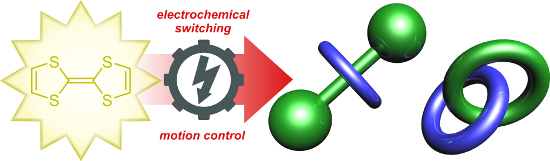
Tetrathiafulvalene – a redox-switchable building block to control motion in mechanically interlocked molecules
Beilstein J. Org. Chem. 2018, 14, 2163–2185, doi:10.3762/bjoc.14.190
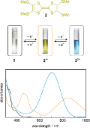
- -type arrangement in the dimer [34]. Furthermore, the equilibrium between a paramagnetic monomer and a diamagnetic dimer makes the use of electron paramagnetic resonance (EPR) spectroscopy ideal to follow the dimerization process [36]. Mixed-valence and radical-cation interactions in the solid state are
- sometimes described as “conductive” and “isolating” form, respectively. However, in solution both dimers display very low stabilities with dimerization energies of only a few kJ mol−1 at room temperature [36]. Therefore, these weakly associated dimers are virtually absent at ambient conditions in solution
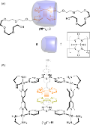
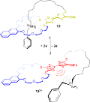
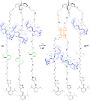
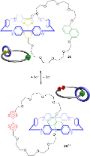
- supramolecular complexes with confined spaces which provide a very high local concentration and shift the equilibrium towards the dimer side. The use of TTF dimerization has been recognized lately as additional possibility to drive motion in MIMs. Recent examples will be discussed in the following section. 2











Applications of organocatalysed visible-light photoredox reactions for medicinal chemistry
Beilstein J. Org. Chem. 2018, 14, 2035–2064, doi:10.3762/bjoc.14.179
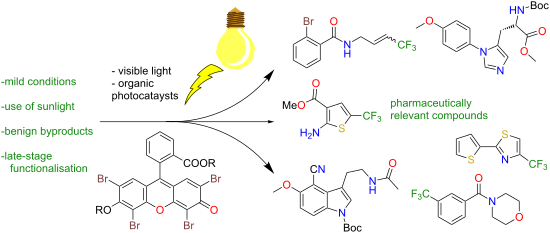
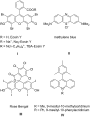
- reaction specifically investigated the dimerization of thiols. Some of the experiments carried out by the group were in a flow chemistry set up, exemplifying the scalability of the procedure. In addition, the oxidant that achieves the transformation is molecular oxygen, making this a very sustainable route




A self-assembled photoresponsive gel consisting of chiral nanofibers
Beilstein J. Org. Chem. 2018, 14, 1994–2001, doi:10.3762/bjoc.14.174
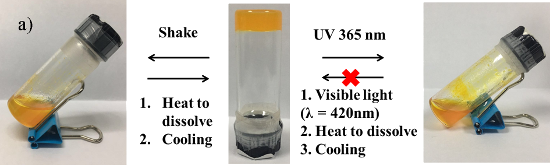
- compound 3. These two azobenzene moieties within the molecule are close and the dimerization of the UPy moiety results in a more crowded structure. The circular dichroism (CD) spectrum was then measured to trace the different states of aggregation in solution of compound 3 in different solvents. Benzene


Defining the hydrophobic interactions that drive competence stimulating peptide (CSP)-ComD binding in Streptococcus pneumoniae
Beilstein J. Org. Chem. 2018, 14, 1769–1777, doi:10.3762/bjoc.14.151
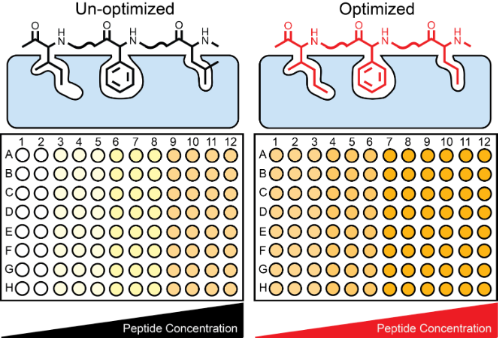
- Leu13 in receptor binding. Alternatively, since the ComD receptors are predicted to dimerize upon activation, Leu13 may have a role in stabilizing the dimerization process prior to phosphorylating the response regulator, ComE. Lastly, it is possible that CSP1 interacts with the ComD1 receptor using more


Synthesis of pyrimido[1,6-a]quinoxalines via intermolecular trapping of thermally generated acyl(quinoxalin-2-yl)ketenes by Schiff bases
Beilstein J. Org. Chem. 2018, 14, 1734–1742, doi:10.3762/bjoc.14.147

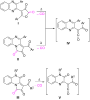
- be explained by a concurrent process of ketene dimerization (Scheme 2) [29] in comparison to the intermolecular trapping of it by benzalaniline (2a). Since the yields of the target product 3a decreased and the yields of compound 5a increased at prolonged time of reaction, the formation of the target




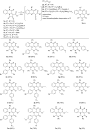


Drug targeting to decrease cardiotoxicity – determination of the cytotoxic effect of GnRH-based conjugates containing doxorubicin, daunorubicin and methotrexate on human cardiomyocytes and endothelial cells
Beilstein J. Org. Chem. 2018, 14, 1583–1594, doi:10.3762/bjoc.14.136
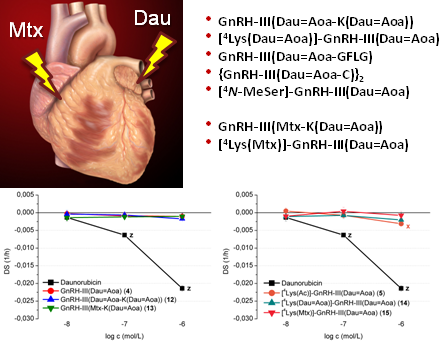
- cleavable oligopeptide spacers (e.g., GFLG, YRRL) [15][21], dimerization of the targeting GnRH-III unit [22], attachment of drugs through different linkages (e.g., ester, amide or oxime bond) [14][23], and multiplication of drugs [24][25] were pursued in order to achieve an increased antitumor effect. The
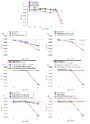
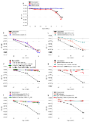
- types through the whole concentration range measured. These trends correlate with the antitumor activity of the conjugates. It was also found that the dimerization of Dau containing conjugates (9–11) did not lead to a significant change in toxicity on any cardiac cell types, except conjugate {[4N-MeSer
- ]-GnRH-III(Dau=Aoa-C)}2 (10) that showed higher cytotoxicity on cardiomyocytes. It is worth mentioning that the dimerization increased the enzymatic stability of the conjugates without losing their antitumor effect. Because conjugate 9 with significant antitumor effect did not show cytotoxicity either on


[3 + 2]-Cycloaddition reaction of sydnones with alkynes
Beilstein J. Org. Chem. 2018, 14, 1317–1348, doi:10.3762/bjoc.14.113
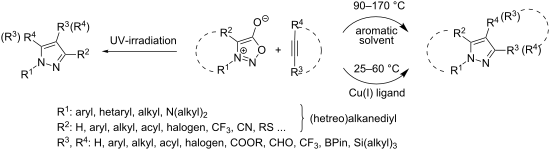
- reaction pathway to proceed via the corresponding N-phenylnitrilimine. The yields (Table 3) are generally lower than those of reactions performed under thermal conditions – most probably due to the lower stability of the key intermediate – N-phenylnitrilimine – which can undergo dimerization or reverse


An unusual thionyl chloride-promoted C−C bond formation to obtain 4,4'-bipyrazolones
Beilstein J. Org. Chem. 2018, 14, 1287–1292, doi:10.3762/bjoc.14.110
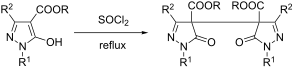
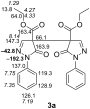
- prepared. Moreover, the structure of a representative 5,5'-dioxo-4,4'-bipyrazole-4,4'-dicarboxylate was confirmed by X-ray crystal structure analysis. Keywords: dimerization; NMR (1H; 13C; 15N); pyrazolones; thionyl chloride; X-ray structure analysis; Introduction Many biologically active substances
- corresponding dimers of type 3 were obtained in moderate to good yields (Scheme 3). In order to check if these dimerization reactions also occur with other 5-hydroxypyrazoles carrying a C=O function at pyrazole C4 we subjected ketone 4 and hydrazide 5 to the same reaction conditions. In both cases, a plethora
- → 3 is unclear. Dimerization by air oxidation can be ruled out as performing the reaction under N2 atmosphere provided the same result. It should be mentioned that for the oxovanadium(V)-mediated dimerization of 4-aroyl-5-hydroxypyrazoles mentioned above a radical mechanism was postulated [32


A survey of chiral hypervalent iodine reagents in asymmetric synthesis
Beilstein J. Org. Chem. 2018, 14, 1244–1262, doi:10.3762/bjoc.14.107
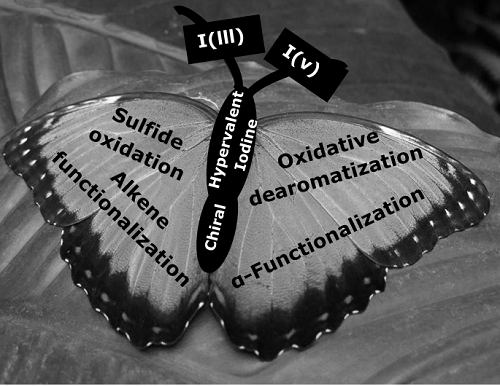
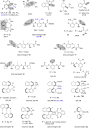
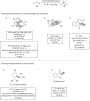
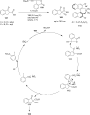
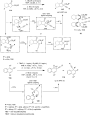
- spirocyclization of naphthol carboxylic acid [34]. Later Birman et al. reported a new variation of a chiral I(V) reagent, namely 2-(o-iodoxyphenyl)oxazoline derivative 28 [35]. The reagent was applied to an asymmetric [4 + 2] Diels–Alder dimerization of phenolic derivatives 29 to construct tricyclic derivatives 30
- . Asymmetric oxidation of sulfides by chiral hypervalent iodine reagents. Oxidative dearomatization of naphthol derivatives by Kita et al. [4 + 2] Diels–Alder dimerization reported by Birman et al. m-CPBA guided catalytic oxidative naphthol dearomatization. Oxidative dearomatization of phenolic derivatives by



One hundred years of benzotropone chemistry
Beilstein J. Org. Chem. 2018, 14, 1120–1180, doi:10.3762/bjoc.14.98
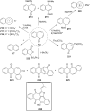
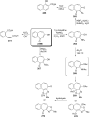
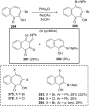
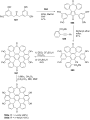
- substantial contribution of 13B to 13A in the ground state. Moreover, it was found that the photochemical behavior of 230 depended on the state of the irradiation medium. For example, the smooth [π10 + π10] dimerization of 13 to give dimeric product 233 was realized with the irradiation (>420 nm) of 13 in a








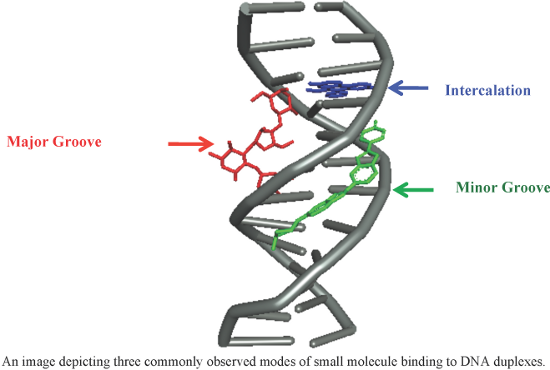
An overview of recent advances in duplex DNA recognition by small molecules
Beilstein J. Org. Chem. 2018, 14, 1051–1086, doi:10.3762/bjoc.14.93
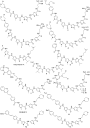
- ). This has been attributed to strong self-association (dimerization) in an antiparallel, head-to-tail orientation in aqueous solution during complex formation with duplex DNA oligomers verified via NOE experiments [61]. They further reported several structurally diverse MGBs, derived from distamycin, in






Cross-coupling of dissimilar ketone enolates via enolonium species to afford non-symmetrical 1,4-diketones
Beilstein J. Org. Chem. 2018, 14, 992–997, doi:10.3762/bjoc.14.84
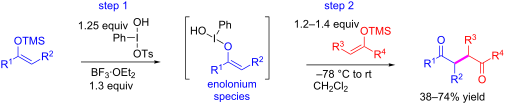
- path to 1,4-dicarbonyl compounds. However, while oxidative dimerization of enolates is fairly straightforward [6][7], the coupling of two dissimilar enolates is contrastingly highly challenging. The more similar in steric and electronic properties the two dissimilar enolates become, the more difficult
- ) with 4 (R1 = Ph, R2 =H) afforded 20 in 51% yield. Since both meso-23 and rac-23 are well-described in the literature [33], we chose to study the diastereoselectivity of the reaction using the dimerization of enol ether 21. The geometry of the TMS enol ether 21 was established as being exclusively Z



Local energy decomposition analysis of hydrogen-bonded dimers within a domain-based pair natural orbital coupled cluster study
Beilstein J. Org. Chem. 2018, 14, 919–929, doi:10.3762/bjoc.14.79
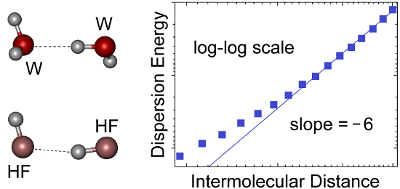
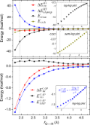
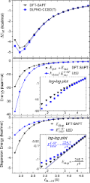
- publications [23][24][25][26][27][28][29][30][31][32][33]. We thus only recall here the main features of this technique. Within a supramolecular approach, the energy of a molecular adduct XY relative to the total energies of noninteracting fragments X and Y, i.e, dimerization energy (ΔE), can be written as
- CCSD(T) result of 2.737 Å with a quintuple−ζ basis [71]. The equilibrium ΔEe and zero-point corrected ΔE0 dimerization energies of water and HF dimers are given in Table 1. These correspond to the equilibrium De and zero-point D0 dissociation energies with opposite sign, respectively. The ΔEe value of
- kcal/mol) values at the CCSD(T)/CBS level [74]. It was shown [74] that the effects of quadruple excitations Q (−0.008 ± 0.004 kcal/mol), relativity (0.016 ± 0.001 kcal/mol), and the diagonal Born–Oppenheimer correction (−0.012 ± 0.000 kcal/mol) to the dimerization energy of the HF dimer are negligible


Phosphodiester models for cleavage of nucleic acids
Beilstein J. Org. Chem. 2018, 14, 803–837, doi:10.3762/bjoc.14.68



Investigating radical cation chain processes in the electrocatalytic Diels–Alder reaction
Beilstein J. Org. Chem. 2018, 14, 642–647, doi:10.3762/bjoc.14.51
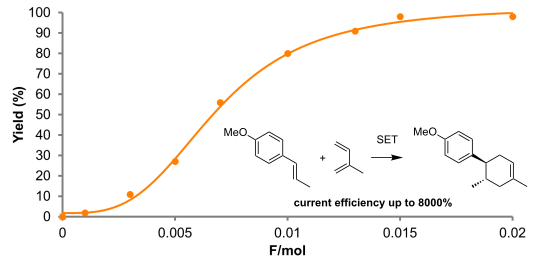
- the catalytic cycle (Figure 1). The concentration of substrates must be balanced to lengthen the chain process, since a higher concentration of trans-anethole (1) is effective for the bulk SET, but it can also cause undesired self-dimerization. We intentionally stopped the reaction at 0.01 F/mol in
- ). However, some dimerization of trans-anethole (1) via the trapping of the radical cation (1·+) by neutral trans-anethole was also detected in both cases (Scheme 2). Since the undesired dimerization can decrease the current efficiency, we raised the amount of isoprene (2) from 3 to 10 equivalents in order
- efficiency of 3167% (Table 2, entry 4). Under these conditions, the undesired dimerization of trans-anethole (1) took place to give the dimer 4. However, we found that the electrochemical radical cation Diels–Alder reaction was also possible from the dimer, whose photochemical version was reported by Yoon





