Search results
Search for "chirality" in Full Text gives 314 result(s) in Beilstein Journal of Organic Chemistry. Showing first 200.
Synthesis and optical resolution of 4,5-diaminohomoadamantane: a promising scaffold for chiral ligands and bioactive compounds
Beilstein J. Org. Chem. 2026, 22, 1013–1022, doi:10.3762/bjoc.22.80
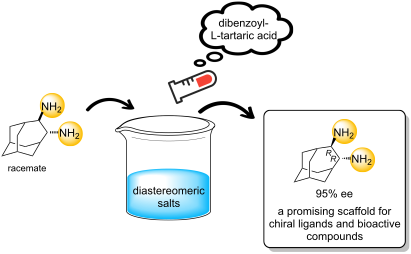
- decided to focus on new approaches to the synthesis of 4,5-diaminohomoadamantane, its chiral resolution, and to test its applicability as chirality-inducing ligand in selected model reactions. We commenced the study using a route for the synthesis of 4,5-diaminohomoadamantane from azidoxime 4. Initially


Synthesis of heterocycles based on azomethine ylides from α-amino acids (or amines) and carbonyl compounds
Beilstein J. Org. Chem. 2026, 22, 705–741, doi:10.3762/bjoc.22.55
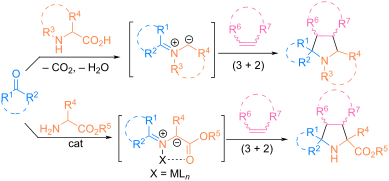
- [56]. In 2021, Wang and co-workers developed a novel catalytic system based on Cu(I) and the bulky phosphoramidite ligand L16 with triple homoaxial chirality, allowing β-substituted alkenylheteroarenes 44, which lack a strong electron-withdrawing substituent in heteroarenes, to act as effective
- optically pure products. Thus, fullerene can be used as an effective template for the chiral resolution of racemates [60]. In 2025, Morisaki and Sato reported an asymmetric synthesis termed “reflexive chirality transfer”, which provides direct access to optically active tetrasubstituted pyrrolidine
- -serine, ʟ-methionine, β-naphthylalanine, phenylglycine, 4-iodophenylalanine, on the achiral Cu(I)/L17 complex leads to the formation of enolates with copper-centered chirality in the form of complex D. Next, complex D interacts with dipolarophiles 53, including fumaronitrile, N-substituted maleimides, β


Kinetic resolution of racemic planar-chiral vinylcymantrenes by molybdenum-catalyzed asymmetric metathesis dimerization
Beilstein J. Org. Chem. 2026, 22, 568–574, doi:10.3762/bjoc.22.42
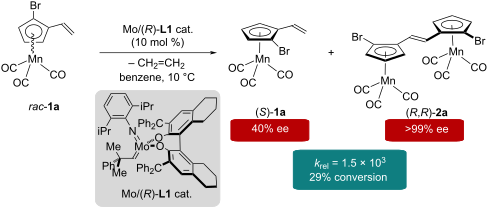
- resolution; molybdenum; olefin metathesis; planar chirality; Introduction The development of the well-defined molybdenum- [1][2] or ruthenium-alkylidene [3][4][5] catalysts has proven the olefin metathesis reaction to be a powerful tool in organic synthesis. Asymmetric extension is a recent trend in
- ], reveals that the molybdenum-catalyzed asymmetric metathesis reactions are powerful tools to control planar chirality in various transition-metal complexes. ORTEP drawing of the X-ray structure of (S,S)-(–)-2b with atom numbering (thermal ellipsoids set at the 30% probability level). Selected bond lengths


Recent advances in the stereoselective synthesis of distal biaxially chiral molecules
Beilstein J. Org. Chem. 2026, 22, 461–479, doi:10.3762/bjoc.22.34
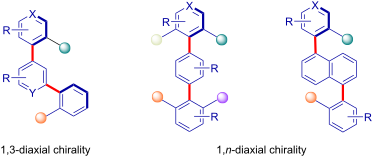
- distal axial chiralities are widely applied in chiral ligands, natural products, and anticancer agents, with their unique spatial configurations endowing them with distinctive functions and values. Although significant progress has been made in the asymmetric synthesis of distal biaxial chirality
- , overcoming the challenges of steric complexity and dynamic stability to achieve efficient and general construction remains a critical issue. This review summarizes recent advances in the field of distal biaxial chirality, highlighting three major synthetic strategies: direct one-step construction of distal
- biaxial chirality, multistep sequential generation, and conversion from central to biaxial chirality, with the aim of providing new perspectives and methodologies for further development in this area. Keywords: axially chiral compounds; stereoselective synthesis; Introduction In recent years, axially


Synthesis and stereochemical analysis of dynamic planar chiral oxa[7]orthocyclophene
Beilstein J. Org. Chem. 2026, 22, 436–442, doi:10.3762/bjoc.22.30

- oxacyclophene enabled the efficient and divergent synthesis of C6-substituted derivatives. The stereochemical analysis of the oxacyclophenes revealed that the iodo- and methyl-substituted derivatives have reasonable stereochemical stability. The planar chirality of the methyl-substituted oxacyclophene was
- successfully transformed into central chirality by epoxidation without loss of enantiomeric purity. Keywords: dynamic chirality; medium-sized heterocycle; orthocyclophene; planar chirality; stereochemical analysis; Introduction In the course of our study on planar chiral medium-sized cyclic molecules [1][2
- ][3][4][5][6][7][8][9][10], we previously synthesized hetera[7]orthocyclophenes 1 having a heteroatom-embedded ansa-chain (X = O or NR) and an (E)-alkene moiety (Figure 1) [6][9], and found that the orthocyclophenes exhibit dynamic planar chirality in a wide range of stereochemical stability depending






Cone p-aminocalix[4]arenes enriched with ‘clickable’ alkyne or azide functionalities
Beilstein J. Org. Chem. 2026, 22, 399–415, doi:10.3762/bjoc.22.28
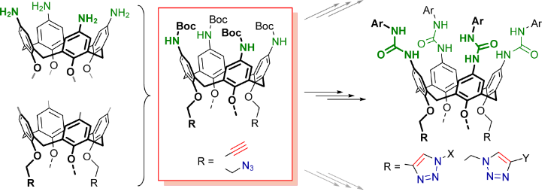
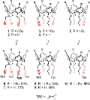
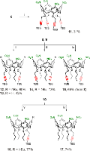
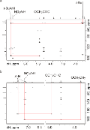
- pairs of distal triazole groups, and C4v-symmetric tetraureas 47 and 50. Due to the phenomenon of supramolecular chirality caused by the direction of hydrogen bonds in the capsules [100], tetraureacalixarenes of the first type should form two regioisomeric homodimers possessing C1-symmetry or a single
- become diastereotopic due to the supramolecular chirality of the heterodimeric capsule (see inserts in Figure 4e). Due to the higher symmetry of both homo- and heterodimeric capsules formed by ditriazolated tetraureas 48 and 51 (Figure 5), the 1H NMR spectra acquired from solutions of these compounds or




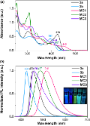
Electrosynthetic access to unsymmetrical oxaza[8]helicenes with high chiral stability and strong circularly polarized luminescence (CPL)
Beilstein J. Org. Chem. 2026, 22, 372–382, doi:10.3762/bjoc.22.25
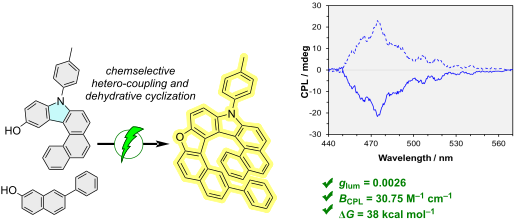
- ; electrochemistry; emission; helical elongation; helicene; photophysical; Introduction Chirality is a pervasive feature of natural and artificial systems, and chiral small molecules continue to underpin advances in chemistry and materials science [1][2]. Among them, helicenes – ortho-condensed polycyclic aromatic
- hydrocarbons (PAHs) built from angularly annulated rings – occupy a distinctive niche because their non-planar, screw-shaped architectures generate inherent, configurational chirality [3][4][5]. This helicity originates from intramolecular steric congestion and stabilizing π–π interactions between terminal




Non-central chirality in organic chemistry
Beilstein J. Org. Chem. 2026, 22, 370–371, doi:10.3762/bjoc.22.24

- ; chiroptical properties; molecular chirality; Chirality is a foundational concept in organic chemistry, traditionally framed around tetrahedral carbon stereocenters. Over the past decades, however, it has become increasingly clear that molecular handedness is not confined to localized points in space. Axes
- , planes, helices, and more global structural features can equally serve as stereogenic elements, giving rise to what is broadly termed non-central chirality. Rather than constituting a single structural motif, non-central chirality encompasses a diverse family of stereogenic architectures whose
- commonality lies in how chirality emerges from extended molecular frameworks, dynamic conformational landscapes, or topological constraints. As such, non-central chirality challenges both our synthetic capabilities and our conceptual understanding of stereochemical control. Numerous reviews have addressed
Arene activation via π-bond localization: concepts and opportunities
Beilstein J. Org. Chem. 2026, 22, 257–273, doi:10.3762/bjoc.22.19
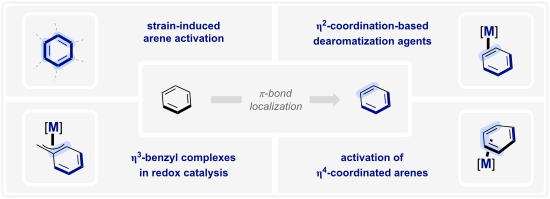
- dimension of control: chirality at the metal center. The resulting enantioenriched complexes have enabled a suite of asymmetric transformations (vide infra) [47]. Structure and properties To rationalize and predict the enhanced reactivity of η2-bound arenes, it is instructive to first examine the properties




Screwing the helical chirality through terminal peri-functionalization
Beilstein J. Org. Chem. 2026, 22, 205–212, doi:10.3762/bjoc.22.14
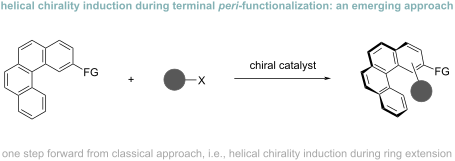
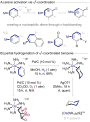
- Devesh Chandra Sachin Upendra Sharma Chemical Technology Division, CSIR-IHBT, Palampur, HP 176 061, India Academy of Scientific and Innovative Research (AcSIR), Ghaziabad-201002, India 10.3762/bjoc.22.14 Abstract Helical chirality is an important, but underrated form of chirality than other types
- of chirality. Molecules with helical chirality impart a crucial role in several biological phenomena as well as in modern materials applications. Classically, the generation of chiral helicity in organic molecules relies on a ring extension by means of cycloaddition and related reactions. Recently
- , the peri-functionalization approach paved a new pathway for the generation of chiral helical molecules. In this article, we highlight the key advancements in these parallel approaches for the generation of helical chiral architectures. Keywords: catalysis; C–H functionalization; helical chirality


Asymmetric Mannich reaction of aromatic imines with malonates in the presence of multifunctional catalysts
Beilstein J. Org. Chem. 2026, 22, 151–157, doi:10.3762/bjoc.22.8
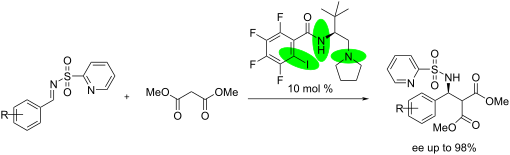
- between the catalyst and the reagents. The chirality of the catalysts is derived from either amino acid or amino alcohols (including cinchona alkaloid derivatives). There are three exceptional structures: catalysts A-H and E-H, which are the hydrogen analogues of the corresponding iodine-containing


Design and synthesis of an axially chiral platinum(II) complex and its CPL properties in PMMA matrix
Beilstein J. Org. Chem. 2026, 22, 143–150, doi:10.3762/bjoc.22.7
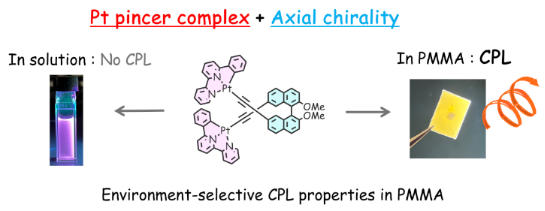
- increased to 4%. CD spectra showed distinct Cotton effects in the MLCT region, and CPL signals were observed only in the PMMA matrices, with a dissymmetry factor |glum| = 0.4 × 10⁻³. These results demonstrate that axial chirality of the binaphthyl moiety governs the three-dimensional chiral arrangement of
- two platinum(II) chromophore units, leading to the chiroptical properties in the MLCT region through exciton coupling under restricted molecular motion. Keywords: axial chirality; chiral chemistry; circularly polarized luminescence (CPL); phosphorescence; platinum(II) complex; Introduction
- also from the perspective of fundamental chemistry. In recent years, the design and synthesis of luminescent pincer-type platinum(II) metal complexes incorporating chirality, as well as the study of their physicochemical properties, have gained significant interest [18][19][20][21][22]. Such efforts


Highly electrophilic, gem- and spiro-activated trichloromethylnitrocyclopropanes: synthesis and structure
Beilstein J. Org. Chem. 2026, 22, 123–130, doi:10.3762/bjoc.22.5
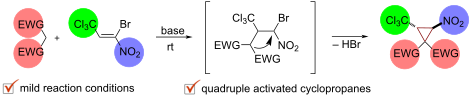
- and 9b (1.3:1 dr, according to the 1H NMR spectrum) due to the axial chirality of this molecule. The mixture was easily separated by silica gel column chromatography. Each of the isomers is characterized by the trans-configuration of the nitro- and trichloromethyl groups in the cyclopropane ring (3JH


Total synthesis of natural products based on hydrogenation of aromatic rings
Beilstein J. Org. Chem. 2026, 22, 88–122, doi:10.3762/bjoc.22.4
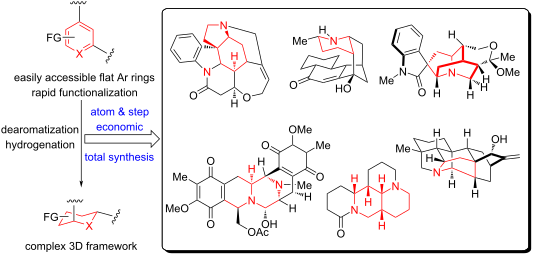
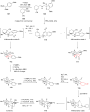
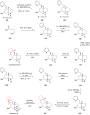
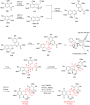
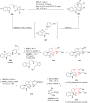
- be noted that in the presence of water, the reaction would undergo transamination with the pyridinium nitrogen moiety while inducing chirality on the ring. Hydrogenation of carbocyclic aromatic rings: In 2021, Andersson and co-workers reported a rhodium-catalyst precursor capable of operating in both
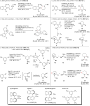
- ). During attempts to reduce intermediate 181 via asymmetric hydrogen atom transfer (HAT), the authors found that 181 exists as a racemic mixture, with chirality originating from its axially chiral biaryl structure. Owing to the steric hindrance introduced by substituents, 181 exists as a pair of











Transformation of the cyclohexane ring to the cyclopentane fragment of biologically active compounds
Beilstein J. Org. Chem. 2025, 21, 2416–2446, doi:10.3762/bjoc.21.185
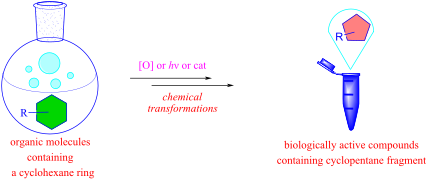
- reported a stereospecific reduction of an acyloin ring controlled by the chirality of a glucose fragment at position C5, and suggested a possible mechanism for hydrogen migration during the conversion of C5 (sp2) to C5 (sp3). The key 3,4,6-trihydroxycyclohexadienone 76 was obtained by a sequence of Friedel


Rotaxanes with integrated photoswitches: design principles, functional behavior, and emerging applications
Beilstein J. Org. Chem. 2025, 21, 2345–2366, doi:10.3762/bjoc.21.179
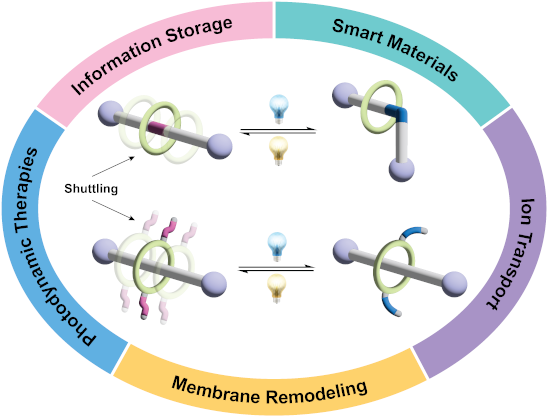
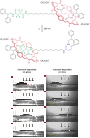
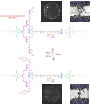
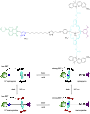
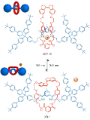
- demonstrates that mechanical motion within a rotaxane can propagate molecular-level stereochemical information to the macroscopic organization of soft matter, providing a new strategy for dynamic chirality control in functional materials. Spiropyran When spiropyrans are irradiated with UV light, the breaking





Enantioselective radical chemistry: a bright future ahead
Beilstein J. Org. Chem. 2025, 21, 2283–2296, doi:10.3762/bjoc.21.174
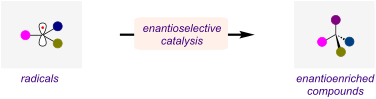
- synthesis. Strategies for asymmetric radical reactions Stereoselectivity in radical reactions can be challenging to control. Many radicals are highly reactive, and radicals moreover have typically low inversion barriers, resulting in no permanent chirality at the radical center. Stereochemistry in radical


A m-quaterphenyl probe for absolute configurational assignments of primary and secondary amines
Beilstein J. Org. Chem. 2025, 21, 2211–2219, doi:10.3762/bjoc.21.168
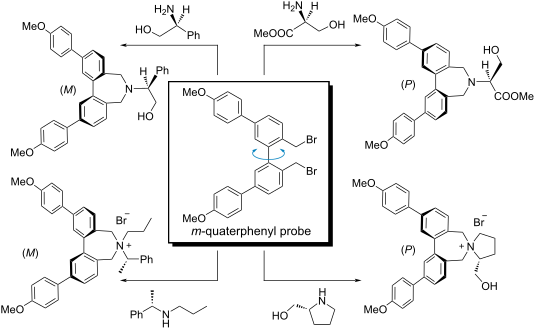
- at room temperature [41][42][43]. The central biphenyl moiety of conjugates 2a–h also rotates freely, forming an equilibrium mixture of P and M conformers. The relative amounts of P and M conformers depend on the chirality of the linked amine moieties. Figure 1a shows the UV and CD spectra of the


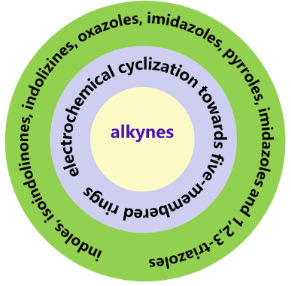
Electrochemical cyclization of alkynes to construct five-membered nitrogen-heterocyclic rings
Beilstein J. Org. Chem. 2025, 21, 2173–2201, doi:10.3762/bjoc.21.166
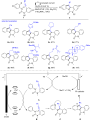
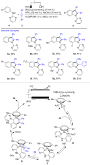
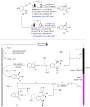
- alkynes bearing heteroatoms such as ynamides and thioalkynes would be enhanced in future research; (2) since axial chirality is critical in natural products and pharmaceuticals, it would be significant to apply the electrochemical annulation of alkynes in formation of organic rings with axial chirality








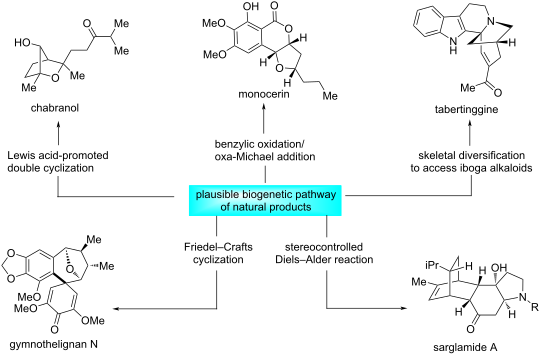
Bioinspired total syntheses of natural products: a personal adventure
Beilstein J. Org. Chem. 2025, 21, 2048–2061, doi:10.3762/bjoc.21.160
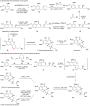
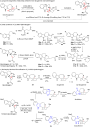
- obtained axial chirality is identical to the naturally occurring one. Almost at the same time, Soorukram and co-workers reported the same approach to access the dibenzocyclooctene member gymnothelignan V [41]. Next, we examined the bioinspired transformation of the linear skeleton to the spirocycle. By



Measuring the stereogenic remoteness in non-central chirality: a stereocontrol connectivity index for asymmetric reactions
Beilstein J. Org. Chem. 2025, 21, 1995–2006, doi:10.3762/bjoc.21.155
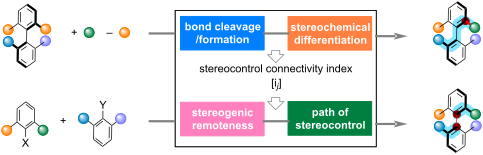
- remained an intuitive and empirical practice, particularly for reactions that create non-central chirality. We put forward a stereocontrol connectivity index to parameterize asymmetric reactions according to the bond connectivity relationships between the prochiral stereogenic elements, the reactive sites
- , and the stereochemical-defining substituents. The indices can be generated based on analysis of the chemical structures of the starting materials and products, without mechanistic insights of the transformation. Representative examples of reactions that establish point chirality, axial chirality
- , planar chirality, and “inherent chirality” are illustrated using the stereocontrol connectivity index produced following a unified 3-step process. Application of such stereochemical classification could facilitate the development of new synthetic methodologies and catalyst systems to construct diverse




Enantioselective desymmetrization strategy of prochiral 1,3-diols in natural product synthesis
Beilstein J. Org. Chem. 2025, 21, 1932–1963, doi:10.3762/bjoc.21.151

- 25 with vinyl butanoate and PPL delivered monoester 26 in 92% yield (99% ee). The axial chirality was transferred to the C7’ stereocenter through a Ag(I)-catalyzed cycloisomerization of the allenol, constructing the dihydrofuran ring. Lipase-catalyzed ester hydrolysis provided allylic alcohol 27












Synthesis of N-doped chiral macrocycles by regioselective palladium-catalyzed arylation
Beilstein J. Org. Chem. 2025, 21, 1917–1923, doi:10.3762/bjoc.21.149
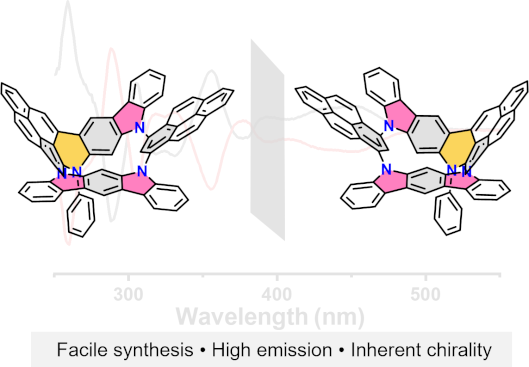
- ; inherent chirality; N-doped macrocycle; nonplanarity; regioselective cyclization; Introduction Chiral macrocycles have attracted significant research interest owing to their diverse applications in enantioselective recognition [1][2], catalysis [3][4], and circularly polarized luminescence [5][6
- ]. Generally, chirality in macrocycles arises from subunits featuring classical chiral elements [7], such as central, axis, planar and helical configurations. In contrast, inherent chirality represents a non-classical phenomenon where chirality emerges from the rigid and nonplanar architecture of macrocycles
- that inherently lacks symmetry [8][9]. One of the most typical representatives are calix[4]arenes (Figure 1a), first reported by Böhmer in 1994 [10], where asymmetric substitutions on the macrocyclic rim induce inherent chirality. Subsequent advancements have identified other inherent chiral systems




Chiral phosphoric acid-catalyzed asymmetric synthesis of helically chiral, planarly chiral and inherently chiral molecules
Beilstein J. Org. Chem. 2025, 21, 1864–1889, doi:10.3762/bjoc.21.145
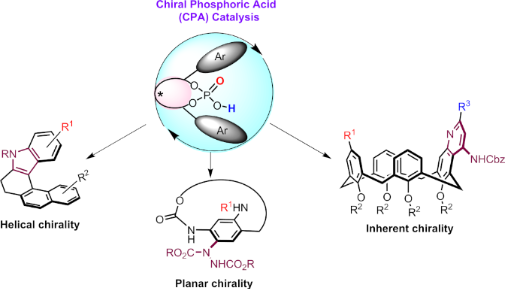
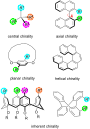
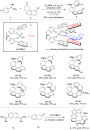
- .21.145 Abstract Chiral molecules, distinguished by nonsuperimposability with their mirror image, play crucial roles across diverse research fields. Molecular chirality is conventionally categorized into the following types: central chirality, axial chirality, planar chirality and helical chirality, along
- with the more recently introduced inherent chirality. As one of the most prominent chiral organocatalysts, chiral phosphoric acid (CPA) catalysis has proven highly effective in synthesizing centrally and axially chiral molecules. However, its potential in the asymmetric construction of other types of
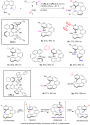
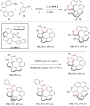
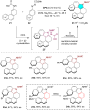
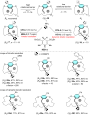
- molecular chirality has been investigated comparatively less. This Review provides a comprehensive overview of the recent emerging advancements in asymmetric synthesis of planarly chiral, helically chiral and inherently chiral molecules using CPA catalysis, while offering insights into future developments











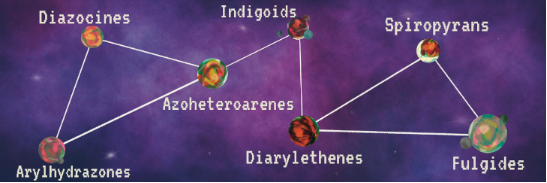
Photoswitches beyond azobenzene: a beginner’s guide
Beilstein J. Org. Chem. 2025, 21, 1808–1853, doi:10.3762/bjoc.21.143
- led to a strong decrease in the thermal half-life, suggesting water is also involved in the Z–E thermal isomerisation process [70]. Bridged indigos have also been reported for which the Z-isomers are unstable. By bridging the two nitrogen atoms, these compounds show planar chirality and can be