Search results
Search for "electron-transfer" in Full Text gives 363 result(s) in Beilstein Journal of Organic Chemistry. Showing first 200.
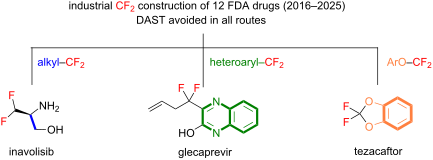
Construction of CF2 moieties in FDA-approved drugs (2016–2025): industrial routes, mechanisms, and scale-up considerations
Beilstein J. Org. Chem. 2026, 22, 1122–1150, doi:10.3762/bjoc.22.91
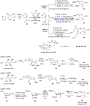
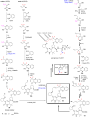
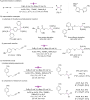
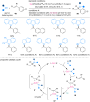
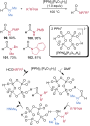
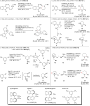
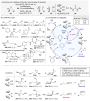
- -electron transfer (SET) generates the C6F13· radical, which then adds to 1-octene to afford 11 in 75% yield [36]. Substrate 71 can be synthesized from 69 by reaction with CCl4 in the presence of a Zn–Cu couple [37], with 70% yield [38]. In addition to the above three radical routes, route d is based on a






Electrochemical reduction of unsaturated carbon–carbon bonds via 3d transition-metal catalysis
Beilstein J. Org. Chem. 2026, 22, 955–981, doi:10.3762/bjoc.22.75
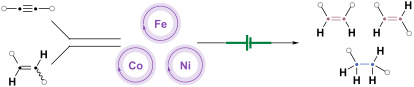
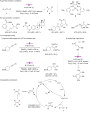
- controlled syn-addition pathway that furnishes Z-alkenes [10], whereas Birch-type reductions via single-electron transfer (SET) promote an anti-addition process that enables the formation of E-alkenes [11][12]. Beyond the classical strategies, recent advances have enabled the highly efficient chemo- and
- through inner-sphere substrate organization. From this perspective, alkene reduction is relatively more challenging because of the lower π-basicity of alkenes. Alternatively, outer-sphere electron transfer, mediated by electrolysis, or the strategic use of redox mediators and co-catalysts could also
- electrode is particularly critical, as it directly governs interfacial electron transfer [41][42][43][44][45]. In most preparative settings, a two-electrode system is adopted for its operational simplicity, wherein the anode withdraws electrons and the cathode delivers them, thus maintaining charge balance








Recent advances in copper-catalyzed direct hydroamination of alkenes with (hetero)aromatic amines
Beilstein J. Org. Chem. 2026, 22, 925–947, doi:10.3762/bjoc.22.73
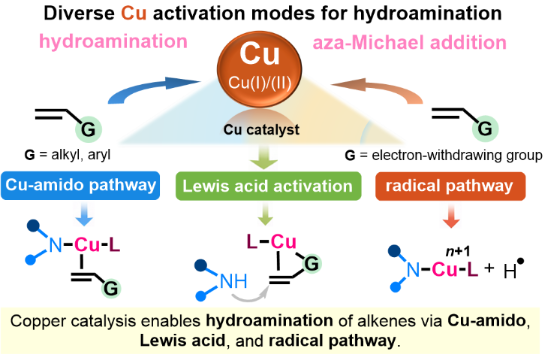
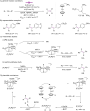
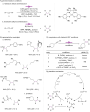
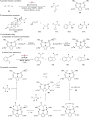
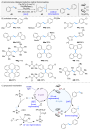
- -electron transfer process accompanied by hydrogen atom abstraction from CH3CN, generating a benzyl radical and a higher-valent organocopper intermediate V. The benzyl radical was subsequently captured by the copper species to furnish the hydroamination product while regenerating the copper catalyst







Site-specific labelling of native peptides and proteins: chemical and enzymatic strategies
Beilstein J. Org. Chem. 2026, 22, 857–881, doi:10.3762/bjoc.22.67
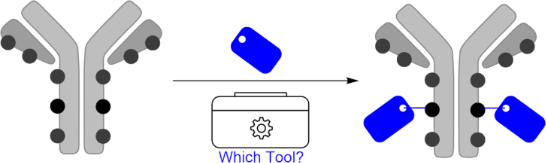
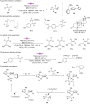
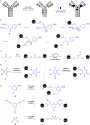
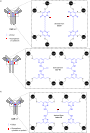
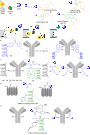
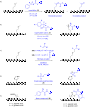
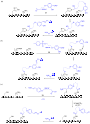
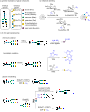
- (19) was later adapted for modification of an asparagine (Asn) residue in the Fc domain of trastuzumab [61]. Rhodium has also been used in visible-light-triggered single-electron transfer (SET) reactions, enabling labelling under mild conditions with spatiotemporal control. Another strategy employs a








The trans-influence in gold chemistry from a catalytic perspective
Beilstein J. Org. Chem. 2026, 22, 838–856, doi:10.3762/bjoc.22.66
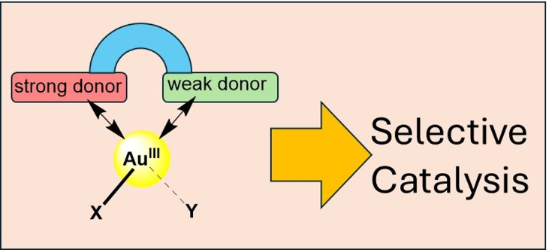
- and/or phosphines. Given that DMAD has a low reduction potential (−0.8 V) compared to that of diphenylacetylene (−2.1 V), it has been proposed that these DMAD insertions involve electron transfer and generation of the DMAD radical anion in the solvent cage, followed by ligand recombination [50


Unsymmetrical sulfoxides with sterically hindered catechol fragment: synthesis, structure, electrochemical properties, and antiradical activity
Beilstein J. Org. Chem. 2026, 22, 828–837, doi:10.3762/bjoc.22.65
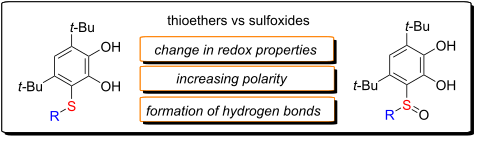
- comparative assessment of the electrochemical properties of the synthesized catechol sulfoxides and their precursors thioethers enables the proposal of an electrooxidation mechanism, the identification of electron transfer centers, and the elucidation of differences in the redox behavior of catechols
- compounds; it is based on electron transfer from a potential antioxidant to the ABTS cation radical (ABTS∙+) as an acceptor [54]. The IC50(ABTS∙+) values for synthesized catechol sulfoxides ranged from 8.4 to 17.5 µM, which is slightly higher than those measured for thioethers (7.2–12.5 µM). The IC50 values


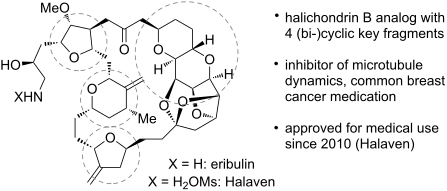
Modern synthetic pathways towards eribulin and its subunits
Beilstein J. Org. Chem. 2026, 22, 495–526, doi:10.3762/bjoc.22.37
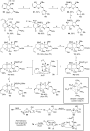
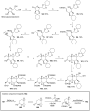
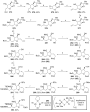
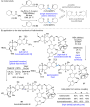
- proved to be suitable for the cyclization towards 35 and the eventual macrocyclization was achieved via coupling of the alkyl bromide unit with the thioester. Mechanistically, this reaction is enabled by the formation of an intermediate alkylzinc halide, which is produced by single electron transfer








Electrosynthetic access to unsymmetrical oxaza[8]helicenes with high chiral stability and strong circularly polarized luminescence (CPL)
Beilstein J. Org. Chem. 2026, 22, 372–382, doi:10.3762/bjoc.22.25
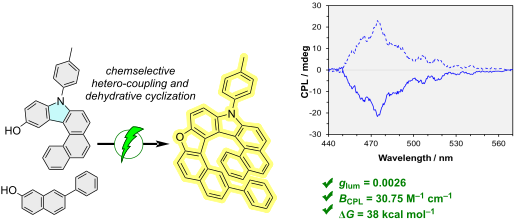
- products were detected under the optimized conditions (Scheme 2). Based on our previous reports [48][56], DFT calculations, and cyclic voltammetry (CV) analyses (Figure 1), anodic single-electron transfer (SET) is expected to occur first from 3, generating the electrophilic radical cation [3]·+ as 3 (Eox




Recent advances in the cleavage of non-activated amides
Beilstein J. Org. Chem. 2026, 22, 352–369, doi:10.3762/bjoc.22.23
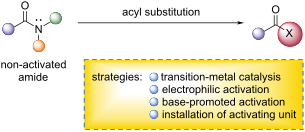
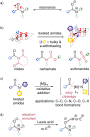
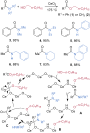
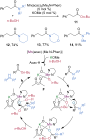
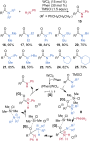
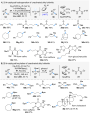
- a radical pathway. Selectfluor undergoes a single-electron transfer (SET) with Cu(II) to generate the dicationic radical species AI, which abstracts a hydrogen atom from the PMB group to form a benzylic radical intermediate AJ. A subsequent SET process generates an acyliminium intermediate AK, which
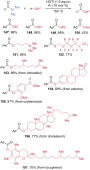
- aniline furnishing acetylanilide 158 in 87% yield. A wide range of arylamines bearing electron-donating or electron-withdrawing substituents, as well as heteroarylamines, were also competent nucleophiles, delivering the corresponding amides 159–161 in good yields. EPR studies suggested a single-electron
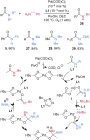
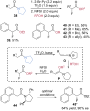
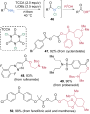
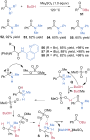
- -transfer (SET)-driven mechanism. Coordination of the arylamine to the potassium cation followed by deprotonation generates potassium amide salt AB. A SET process forms amine radical AC, which then transfers an electron to the amide, generating radical anion AD. Coupling of AC and AD forms a tetrahedral










Ring contraction and ring expansion reactions in terpenoid biosynthesis and their application to total synthesis
Beilstein J. Org. Chem. 2026, 22, 289–343, doi:10.3762/bjoc.22.21
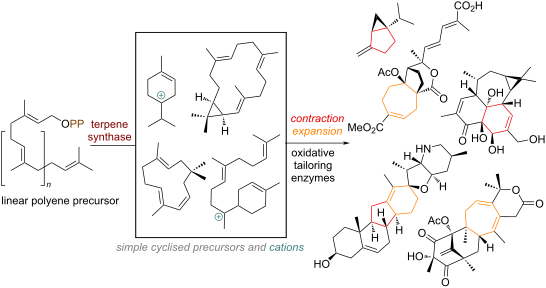
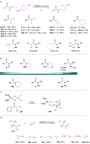
- diradical at the unsaturated ketone (62a), cyclisation to form an intermediary highly substituted cyclopropane (62b) followed by single-electron transfer to the zwitterionic 62c and rearrangement to either the dense connectivity of lumisantonin (63), or carbocation capture by solvolysis of intermediate 64a






Total synthesis of natural products based on hydrogenation of aromatic rings
Beilstein J. Org. Chem. 2026, 22, 88–122, doi:10.3762/bjoc.22.4
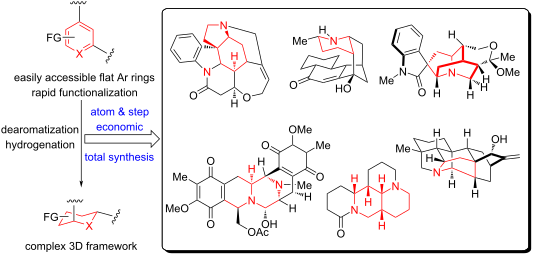
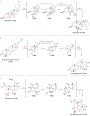
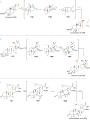
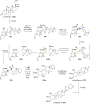
- in quinoline to generate hexahydroquinoline using a Ru catalyst (Scheme 8) [67]. When (S,S,S)-DKP was used as a ligand, the hydrogenation of the carbon ring was highly selective. Reduction of aromatic rings via hydride or electron transfer pathways Beyond catalytic hydrogenation, aromatic rings can
- also be reduced through hydride-based or electron-transfer pathways, which provide complementary modes of reactivity that are often orthogonal to metal-catalyzed hydrogenation systems. Classical dissolving-metal reductions such as the Birch reduction convert arenes into 1,4-dihydro intermediates via
- sequential electron transfer and protonation, enabling regioselective partial dearomatization that is difficult to achieve under hydrogenation conditions. Likewise, hydride reagents – including NaBH3CN, DIBAL-H, and other aluminum or borohydride derivatives – have been widely employed for the selective











Advances in Zr-mediated radical transformations and applications to total synthesis
Beilstein J. Org. Chem. 2026, 22, 71–87, doi:10.3762/bjoc.22.3
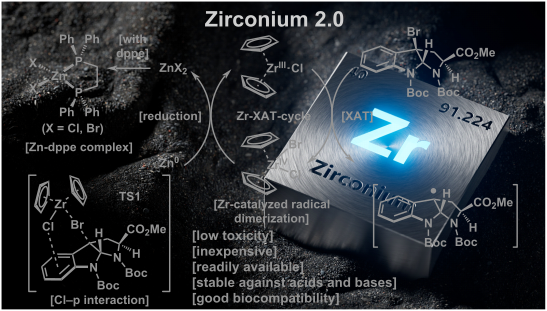
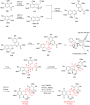
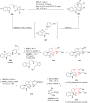
- hydrogen atom from 1,4-cyclohexadiene to furnish the alcohol product. The active species Cp2ZrIII(OTf) is then regenerated via single-electron transfer (SET) from the Ir photocatalyst. Notably, the addition of thiourea 26 significantly improved the regioselectivity in this reaction. According to NMR








Visible-light-driven NHC and organophotoredox dual catalysis for the synthesis of carbonyl compounds
Beilstein J. Org. Chem. 2025, 21, 2584–2603, doi:10.3762/bjoc.21.200
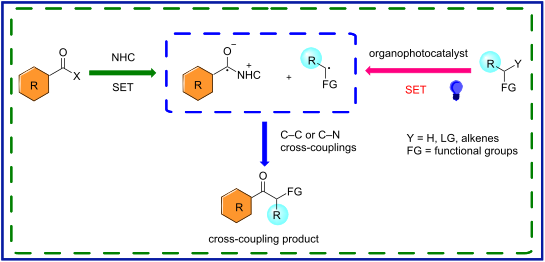
- and the acylazolium complex B (Ep = −0.81 V vs SCE), single-electron transfer (SET) reduction of B was thermodynamically feasible; however, the efficiency was found to be significantly low. The oxidation potential was measured to be around [Ep = +0.72 V] vs SCE, indicating that it is sufficiently




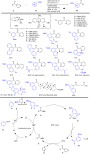

Synthesis of the tetracyclic skeleton of Aspidosperma alkaloids via PET-initiated cationic radical-derived interrupted [2 + 2]/retro-Mannich reaction
Beilstein J. Org. Chem. 2025, 21, 2470–2478, doi:10.3762/bjoc.21.189
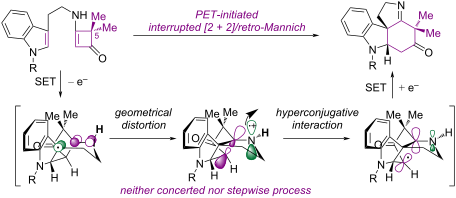
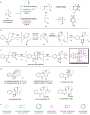
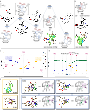
- involves a formal 1,3-C shift. Keywords: Aspidosperma alkaloids; [2 + 2]-cycloaddition/retro-Mannich reaction; DFT study; photoinduced electron transfer; Introduction Photochemical reactions, which enable the construction of topologically complex architectures from simple building blocks, have attracted
- valuable strategy for synthesizing natural and unnatural products from simple building blocks [4]. Three distinct photoinitiated approaches have been established for the formation of the [2 + 2] cycloadducts: direct irradiation [5][6], energy transfer (EnT) [7], and photoinduced electron transfer (PET, or
- intricacies of the key PET reaction for formation of the unique bicyclo[2.2.0]hexane unit present in the proposed intermediate L (Figure 1). In the presence of the excited photocatalyst [FCNIr(III)Pic]*, the substrate participates in an oxidative single-electron transfer (SET) process, which leads to the


An Fe(II)-catalyzed synthesis of spiro[indoline-3,2'-pyrrolidine] derivatives
Beilstein J. Org. Chem. 2025, 21, 2383–2388, doi:10.3762/bjoc.21.183
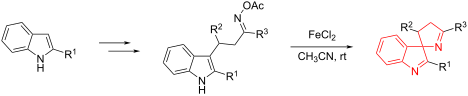
- bond cleavage to generate an N-imidoyl radical intermediate that undergoes intramolecular cyclization to yield the spirocyclic product (Scheme 1, path g) [14]. Notably, iron is known to exhibit similar behavior in single-electron transfer (SET) processes [15][16][17]. In fact, we previously




Conformational effects on iodide binding: a comparative study of flexible and rigid carbazole macrocyclic analogs
Beilstein J. Org. Chem. 2025, 21, 2369–2375, doi:10.3762/bjoc.21.181
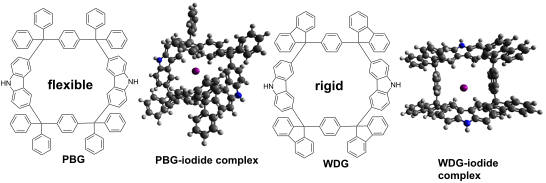
- peaks appeared, indicating that photoelectron transfer occurred between iodine ions and the macrocycles [27][28], and fluorescence quenching was due to the photoinduced electron transfer (PET) effect between iodine ions and acceptors, resulting in non-radiative dissipation of excited state energy rather



Rotaxanes with integrated photoswitches: design principles, functional behavior, and emerging applications
Beilstein J. Org. Chem. 2025, 21, 2345–2366, doi:10.3762/bjoc.21.179
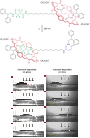
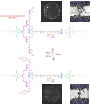
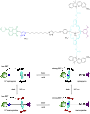
- , electron transfer from the pyrene to the dithienylethene acceptor occurs, quenching its fluorescence. Moreover, faster quenching was observed when the macrocycles were closer to the dithienylethene unit [59]. Considering the discoveries on tunable fluorescence, Alene and co-workers combined the
- dithienylethene is in the closed form, caused by photoinduced electron transfer (PET) from the fluorescent pyrene stopper to the acceptor dithienylethene (Figure 15). Moreover, the efficiency of the PET is modulated by the macrocycle shuttling motion between the two recognition sites due to differences in





Recent advances in Norrish–Yang cyclization and dicarbonyl photoredox reactions for natural product synthesis
Beilstein J. Org. Chem. 2025, 21, 2315–2333, doi:10.3762/bjoc.21.177
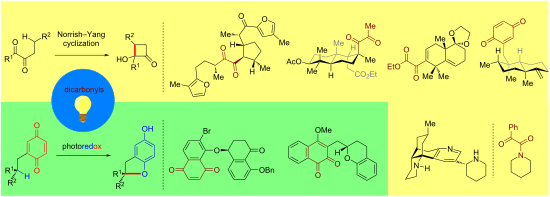
- can further undergo ring-opening or rearrangement reaction to assemble complex molecular frameworks. Additionally, quinone photoredox reactions involving single-electron transfer (SET) processes provide novel strategies for the stereoselective synthesis of useful structures such as spiroketals. This
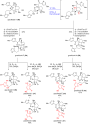
- electron transfer for zwitterionic intermediate (e.g., (−)-106b or (+)-106b) formation; (2) protic solvents (e.g., MeOH) improve ee values through H-bonding stabilization, which reduces intermediate flexibility; (3) low temperatures enhance the optical purity by slowing conformational changes without







Enantioselective radical chemistry: a bright future ahead
Beilstein J. Org. Chem. 2025, 21, 2283–2296, doi:10.3762/bjoc.21.174
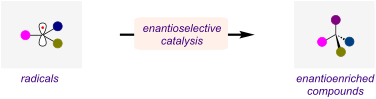
- include the use of transition metals or photoredox catalysts. In photoredox catalysis, radical generation often involves single-electron transfer (SET) to or from a photoexcited state of a photoredox catalyst, usually a metal complex or organic molecule. Two other notable strategies for radical generation
- catalysts. The drawbacks of chiral Lewis acids have been overcome to an extent using organocatalysis. The use of photochemistry to generate radicals by light-induced electron transfer has resulted in elegant enantioselective radical transformations. Several transition-metal photocatalysts [9] and organo
- ]. MacMillan obtained chiral free radicals by stoichiometric single electron transfer (SET) oxidation of enamines, formed by the reaction between chiral secondary amines and aldehydes. This mode of activation was called SOMO (singly occupied molecular orbital) catalysis and was employed in several organic


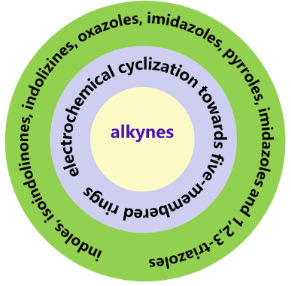
Electrochemical cyclization of alkynes to construct five-membered nitrogen-heterocyclic rings
Beilstein J. Org. Chem. 2025, 21, 2173–2201, doi:10.3762/bjoc.21.166
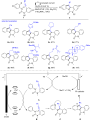
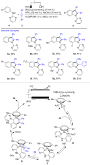
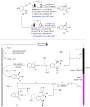
- ] generated [Cp2Fe]+ along with cathodic reduction of MeOH to H2 and MeO− acting as a base. Deprotonation of 1a using MeO− produced the anion A, which underwent single-electron transfer (SET) with [Cp2Fe]+ to give the nitrogen-centered radical B with regeneration of [Cp2Fe] [164][165][166][167][168][169][170
- -alkynylbenzamide 25 occurred to form the corresponding isoindolinone 26 in reasonable yields. According to the experimental results and previous investigations [209][210][211], the proposed reaction mechanism was described. Initially, proton-coupled electron transfer took place between n-Bu4NOAc and 2
- -diisopropylethylamine (DIPEA) to give the corresponding isoindolinone 28 in 32–90% yield. A plausible reaction mechanism was presented according to the experimental results and earlier works [213][214]. Firstly, the proton coupled electron transfer (PCET) procedure of 27 formed the amidyl radical B, which performed 5








Understanding the origin of stereoselectivity in the photochemical denitrogenation of 2,3-diazabicyclo[2.2.1]heptene and its derivatives with non-adiabatic molecular dynamics
Beilstein J. Org. Chem. 2025, 21, 2007–2020, doi:10.3762/bjoc.21.156
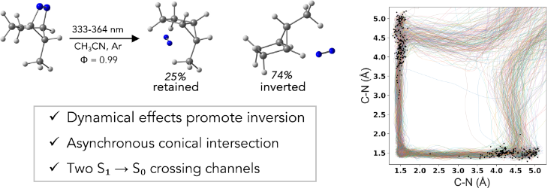
- starting materials for different types of reactions including thermal isomerization to cyclopentenes [36][37][38] and 1,4-pentadienes [37][38], chemical electron-transfer oxidations to cyclopentene [39] and cycloaddition reactions with electron-deficient alkenes and alkynes [38][40][41] (Scheme 1b


Photochemical reduction of acylimidazolium salts
Beilstein J. Org. Chem. 2025, 21, 1973–1983, doi:10.3762/bjoc.21.153
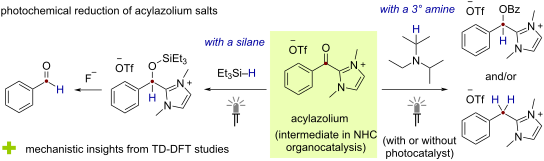
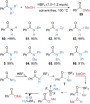
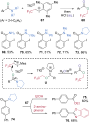
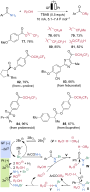
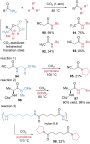
- photocatalyst radical anion ([PC]·−) and the DIPEA radical cation D (Scheme 1). Single-electron transfer from [PC]·− to the benzoylazolium species 1 would then regenerate the ground-state photocatalyst and afford the Breslow radical anion C, which could in turn react with D in a hydrogen-atom-transfer (HAT
- conditions monitored over 48 h by 1H NMR. Plausible mechanism for the photocatalytic reduction of benzoylimidazolium salt 1 with DIPEA. [PC] = photocatalyst; SET = single-electron transfer; HAT = hydrogen atom transfer. Plausible mechanism for the photocatalyst-free reduction of benzoylimidazolium salt 1
- direct excitation of the benzoylazolium salt with the excited state species 1*, which subsequently reacts with TESH. Comparison of the redox potential of the silane (+1.54 V vs ferrocene) with the estimated excited-state potential of the azolium salt 1* (+1.70 V vs ferrocene) suggest that direct electron


Research progress on calixarene/pillararene-based controlled drug release systems
Beilstein J. Org. Chem. 2025, 21, 1757–1785, doi:10.3762/bjoc.21.139
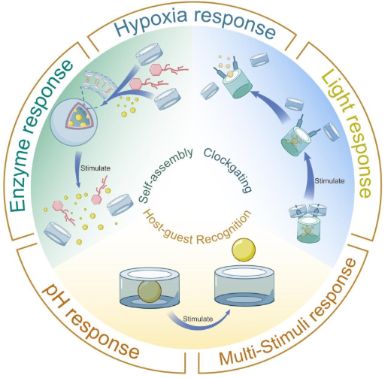
- times. This bis-vesicle structure possesses the following intelligent responsive characteristics: (1) temperature sensitivity originating from the enthalpy-driven nature of the host–guest interaction; (2) redox responsiveness due to the reversible electron transfer of MVC12; (3) competitive complexation






Photocatalysis and photochemistry in organic synthesis
Beilstein J. Org. Chem. 2025, 21, 1645–1647, doi:10.3762/bjoc.21.128
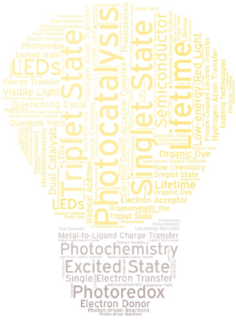
- Review article discussing photocatalysts capable of harnessing low-energy red light to trigger chemical reactions [19]. In addition to photoredox catalysis, several mechanistic platforms that leverage light – such as the use of electron donor–acceptor complexes [20], proton-coupled electron transfer [21

Thermodynamic equilibrium between locally excited and charge transfer states in perylene–phenothiazine dyads
Beilstein J. Org. Chem. 2025, 21, 1577–1586, doi:10.3762/bjoc.21.121
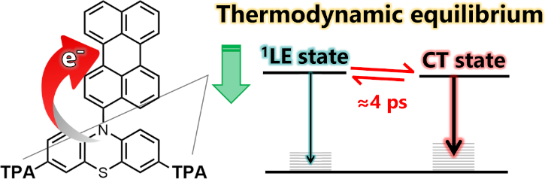
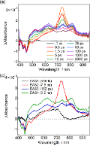
- demonstrate that precise electronic and geometric design can enable controllable excited-state behavior in orthogonal molecular systems. Keywords: charge transfer; electron transfer; molecular dyad; transient absorption; Introduction Photoinduced electron transfer and charge separation are fundamental
- dynamics of these molecules, transient absorption spectroscopy measurements spanning the femtosecond to microsecond timescales were conducted. When electron transfer occurs between the donor and acceptor, the spin–spin interaction becomes weaker, facilitating the formation of triplet excited states upon
- the PTZ(TPA)2 moiety and the Pe radical anion almost instantaneously. The electron transfer occurs extremely rapidly (within the instrumental response function, <100 fs), likely via a direct CT transition. Subsequently, both signals showed growth components with time constants of 2.4 and 639 ps