Search results
Search for "morpholine" in Full Text gives 115 result(s) in Beilstein Journal of Organic Chemistry.
Design, synthesis and biological evaluation of 2,5-diaryloxazolo[4,5-d]pyrimidin-7-ylamines as selective cytotoxic agents against HeLa cells
Beilstein J. Org. Chem. 2026, 22, 390–398, doi:10.3762/bjoc.22.27

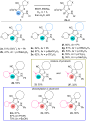
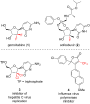
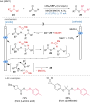
- cytotoxicity by two times (compound 3). Whereas its substitution by morpholine lead to inactive compound 2. The same result was obtained by substituting 2-piperidin-1-ylpropylamine in 1 with hexahydro-1,5-methanopyrido[1,2-a][1,5]diazocin-8-one (6). However, methylation of the phenyl group at the 5-position of
- addition of a 4-chlorophenyl group instead of the methyl group as a functional motif at position 7 (4) sharply reduced the cytotoxicity of compound 1. The substitution of piperidine by morpholine in this motif in compound 4 resulted in a 2-fold increase in the activity of the obtained derivative 5. However


Dialkylaminoalkylation of β-ketosulfones via ring-opening of 3-sulfonylpyrrolidines
Beilstein J. Org. Chem. 2026, 22, 383–389, doi:10.3762/bjoc.22.26
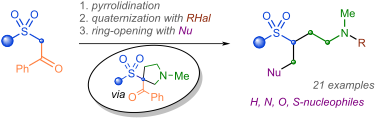
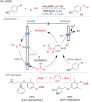
- , piperidine, morpholine, or 1,2,3,4-tetrahydroisoquinoline (THIQ). A special curiosity was associated with the use of mercaptans as nucleophiles for the synthesis of aminobutanes 4 containing both sulfide and sulfone moieties. To our delight, an excess of butylmercaptan or thiophenol readily afforded products
- -amine (5) in 77% yield (Scheme 4). This observation prompted us to examine methoxy and morpholine adducts 4a and 4o in the same process that resulted in the isolation of sulfonylamine 5 in 69 and 48%, respectively. The literature search revealed that previously Langler and co-authors observed the




Base-promoted deacylation of 2-acetyl-2,5-dihydrothiophenes and their oxygen-mediated hydroxylation
Beilstein J. Org. Chem. 2026, 22, 192–204, doi:10.3762/bjoc.22.13
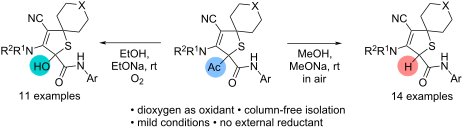
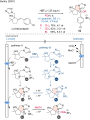
- that the oxidized product formed from morpholine- (1f) and piperidine-substituted (1k) 2,5-dihydrothiophenes in 60 (2f) and 53% (2k) yield. Oxidation of the dimethylamino-substituted 2,5-dihydrothiophene 1l afforded a mixture of products in 25% (OH-substituted, 2l) and 32% (H-substituted, 2l′) yield
- lower donor character compared to pyrrolidine, but higher than that of morpholine and piperidine. As a result, a mixture of products 2l and 2l′ is formed. Starting dihydrothiophenes 1 form more stable anions B in comparison with regioisomers 4 due to the delocalization of the negative charge over the




Symmetrical D–π–A–π–D indanone dyes: a new design for nonlinear optics and cyanide detection
Beilstein J. Org. Chem. 2026, 22, 131–142, doi:10.3762/bjoc.22.6
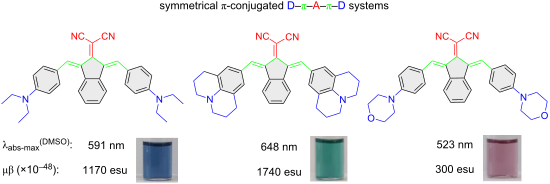
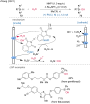
- * transition from the donor group to the dicyanovinyl, and longer wavelength absorption maxima are the n–π* transition of the conjugated structure [2]. Alkylamino groups (diethylamino, julolidine, and morpholine) as donor groups in chromophores have different electron-donor properties, causing a shift in the
- absorption wavelengths due to ICT transition to the dicyanovinylene acceptor [29][30][31]. The dyes show a bathochromic shift in absorption maxima, with the increased electron-donating tendency (Figure 2 and Table 2). Dyes 2a and 2c have free rotating alkylamino groups as diethylamino and morpholine


Thiazolidinones: novel insights from microwave synthesis, computational studies, and potentially bioactive hybrids
Beilstein J. Org. Chem. 2025, 21, 2618–2636, doi:10.3762/bjoc.21.203
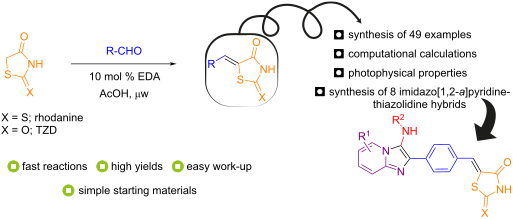
- ], diammonium phosphate (DAP) [43], and tetrabutylammonium bromide (TBAB) [44]. Organic bases like morpholine [45], triethylamine [46], ethanolamine, and piperidine [47] and heterogeneous catalysts from Cu [48], Ti [49], and Zn [50] metal compounds have also been used. Common solvents are ethanol [51], toluene






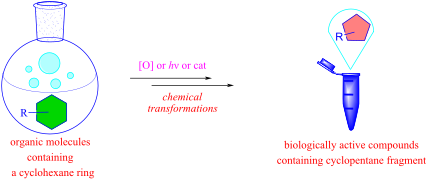
Transformation of the cyclohexane ring to the cyclopentane fragment of biologically active compounds
Beilstein J. Org. Chem. 2025, 21, 2416–2446, doi:10.3762/bjoc.21.185
- Me2S to give dialdehyde 28 and reaction of compound 28 with colloidal potassium in toluene. During aldol condensation in the presence of morpholine-camphorsulfonic acid (CSA) or ʟ-proline, a stable aldehyde 30 was isolated in yields of 50% and 75%, respectively. Decarbonylation and corresponding


Halogenated butyrolactones from the biomass-derived synthon levoglucosenone
Beilstein J. Org. Chem. 2025, 21, 2297–2301, doi:10.3762/bjoc.21.175
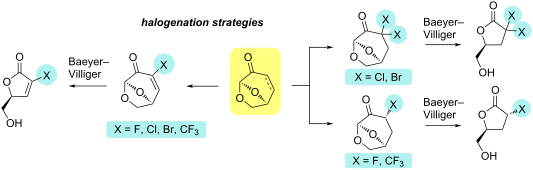
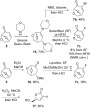
- morpholine via an aza-Michael addition and condensation (Scheme 3). It was envisaged that the β-amino group could act as a stable functional group resulting in Baylis–Hillman-like reactivity. An extensive survey of reaction conditions using Selectfluor and N-fluorobenzenesulfonimide (NFSI) as the sources of




Rhodium-catalysed connective synthesis of diverse reactive probes bearing S(VI) electrophilic warheads
Beilstein J. Org. Chem. 2025, 21, 1924–1931, doi:10.3762/bjoc.21.150
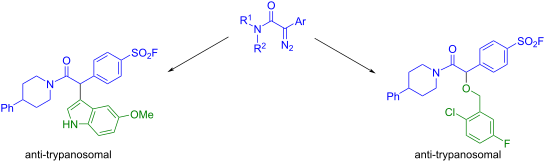
- successful execution of this approach and the demonstration of biological function of the resulting reactive probes. Results and Discussion We prepared five α-diazoamide substrates bearing S(VI) electrophiles (Scheme 1 and Table 1) [15]. Initially, three amines – morpholine, 4-phenylpiperidine and


Influence of the cation in hypophosphite-mediated catalyst-free reductive amination
Beilstein J. Org. Chem. 2025, 21, 1661–1670, doi:10.3762/bjoc.21.130

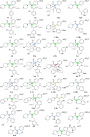
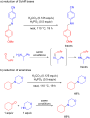
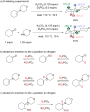
- benchmark reaction between cyclohexanone and morpholine was carried out (full optimization details are provided in Supporting Information File 1). The reaction could proceed in the presence of only H3PO2 furnishing the model product in 70% yield (Table 1, line 1) at 130 °C, for 4 h. To conduct the
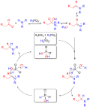
- check the reduction pathway D-labeling experiments were carried out. The experiments with D3PO2 illustrated that D-atoms were distributed between α- and β-positions to nitrogen in the product in case of both reduction of enamine and reductive amination of cyclohexanone with morpholine (Scheme 4a


General method for the synthesis of enaminones via photocatalysis
Beilstein J. Org. Chem. 2025, 21, 1535–1543, doi:10.3762/bjoc.21.116
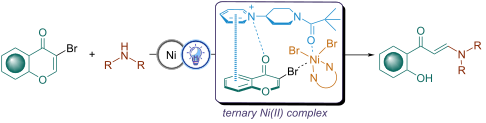
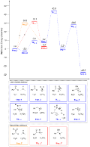
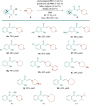
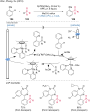
- carried out by using 3-bromochromone (7a) and morpholine (8a) as model substrates in the presence of Ni(II) salt (5 mol %) and ligand (5 mol %), a pyridinium salt (1 equiv) and a photocatalyst (1 mol %) under 427 nm blue LEDs. After carefully screening of the reaction parameters (Table 1 and Tables S1–S7
- electrophilicity of the β-carbon due to the electron-donating nature of the methyl group. Subsequently, we turned our attention to investigate a range of amine derivatives 8 under the standard conditions. When morpholine was replaced by piperidine, the expected enaminone 9g was provided, albeit in lower yield
- the excited form of PC1 and 3-bromochromone (7a), a direct interaction occurred between PC1* and morpholine (8a, Figure S3, Supporting Information File 1). Based on these results, the most plausible scenario might be that the reaction starts with the excitation of PC1 at 427 nm to generate the highly




Microwave-enhanced additive-free C–H amination of benzoxazoles catalysed by supported copper
Beilstein J. Org. Chem. 2025, 21, 1462–1476, doi:10.3762/bjoc.21.108
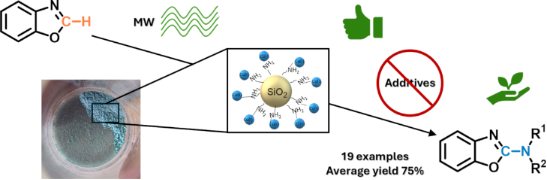
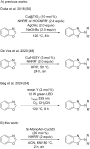
- Information File 1 for the syntheses of derivatives 1k, 1m–s). Encouragingly, all 16 amines were successfully converted to the corresponding 2-aminobenzoxazole derivatives with yields greater than 50%. Beyond piperidine, other cyclic amines, such as morpholine, piperazine, and pyrrolidine, also reacted



Reactions of acryl thioamides with iminoiodinanes as a one-step synthesis of N-sulfonyl-2,3-dihydro-1,2-thiazoles
Beilstein J. Org. Chem. 2025, 21, 1397–1403, doi:10.3762/bjoc.21.104
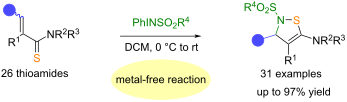
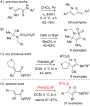
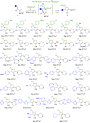
- of the 2,3-dihydro-1,2-thiazole ring in the range of 6.44–6.06 ppm, and multiplets corresponding to the morpholine fragment in the range of 3.80–2.89 ppm or protons of residues of other amino groups in the range of 3.51–1.31 ppm. In the 13C NMR spectra, characteristic signals of the C-4 atom of the
- , the atom N(2) deviates from the RMS plane S(1)C(3)C(4)C(5) by 0.461 Å. The atom of the N(1) morpholine fragment has a planar configuration with significant asymmetry in the lengths of C–N bonds. Due to the electron-acceptor effects of substituents, the C(3)‒H bond exhibits significant polarity and is



Recent advances and future challenges in the bottom-up synthesis of azulene-embedded nanographenes
Beilstein J. Org. Chem. 2025, 21, 1272–1305, doi:10.3762/bjoc.21.99
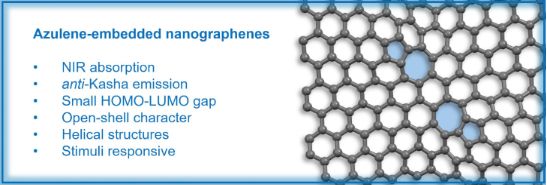
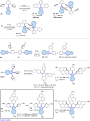
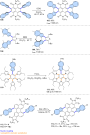
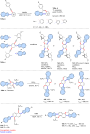
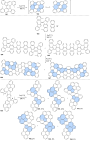
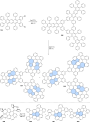
- methoxide or morpholine, giving the corresponding substitution products 131 and 132 in 60% and 74%, respectively. Very recently, during revision of this work, Aratani and co-workers reported the use of this strategy in the synthesis of two azulene-embedded isomers of perylene monoimide [88]. Cyclization of






Cryptophycin unit B analogues
Beilstein J. Org. Chem. 2025, 21, 526–532, doi:10.3762/bjoc.21.40
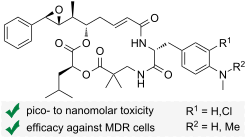
- , MeOCH2CH2OMe, HOCH2CH2OH, rt, 5 min, 89% (for 26)/14% (for 2), over three steps each; d) Pd(PPh3)4, morpholine, CH2Cl2, rt, 90 min, 74%. IC50 values of synthesised cryptophycins against KB-3-1 and KB-V1 cell lines. Supporting Information The supplementary crystallographic data for this article can be obtained



Advances in the use of metal-free tetrapyrrolic macrocycles as catalysts
Beilstein J. Org. Chem. 2024, 20, 3085–3112, doi:10.3762/bjoc.20.257
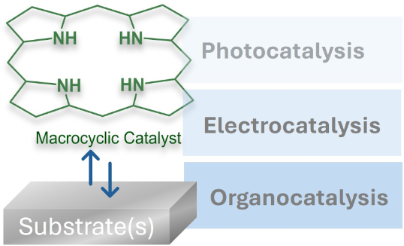
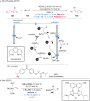
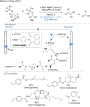
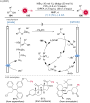
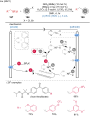
- various amines tested, only the secondary amines (morpholine) led to product formation, confirming the formation of enamine in the catalytic cycle. The proposed mechanism suggested that the amine, photocatalyst, and light each played crucial roles (Figure 14). The porphyrin acted as both a photoredox unit


Recent advances in transition-metal-free arylation reactions involving hypervalent iodine salts
Beilstein J. Org. Chem. 2024, 20, 2891–2920, doi:10.3762/bjoc.20.243





C–H Trifluoromethylthiolation of aldehyde hydrazones
Beilstein J. Org. Chem. 2024, 20, 2883–2890, doi:10.3762/bjoc.20.242
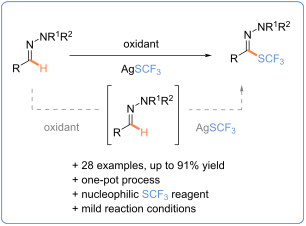
- morpholine hydrazone derived from 4-nitrobenzaldehyde was selected as a model substrate (Table 1). The latter was engaged in a two-step process: 1) halogenation to provide the corresponding N,N-hydrazonoyl bromide, which will then undergo an anion metathesis upon the addition of AgSCF3 to the reaction
- reaction was beneficial to the outcome of the reaction, affording 5a in 55% yield. However, some other hydrazones 6a–8a were reluctant (for more details, see Supporting Information File 1) [75]. Then, the scope of the reaction was investigated using the hydrazones derived from morpholine (Scheme 3



A review of recent advances in electrochemical and photoelectrochemical late-stage functionalization classified by anodic oxidation, cathodic reduction, and paired electrolysis
Beilstein J. Org. Chem. 2024, 20, 2500–2566, doi:10.3762/bjoc.20.214
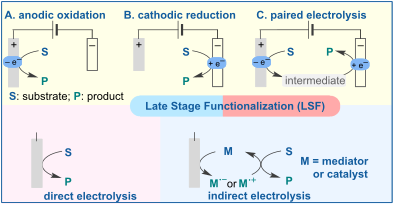
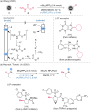
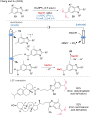
- . Additionally, pyrrolidine, anazepane, and morpholine scaffolds successfully underwent the reaction. Another notable feature of this method is its high diastereoselectivity. All products were ultimately obtained as p-toluenesulfonic acid salts (Scheme 27). In 2021, Zhang et al. developed an electrochemical




























Heterocycle-guided synthesis of m-hetarylanilines via three-component benzannulation
Beilstein J. Org. Chem. 2024, 20, 2208–2216, doi:10.3762/bjoc.20.188
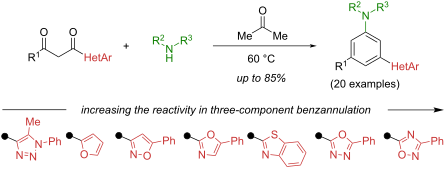
- amines with different nucleophilicity, namely benzylamine (primary alkylamine), morpholine (secondary alkylamine) and aniline (aromatic amine). We first examined the reaction of 1,2,4-oxadiazole-1,3-diketone 1a (σm/σp 0.463/0.575, which is quite close to the constants of the CO2Me group, so a successful
- reaction was expected, Figure 2) with morpholine under previously found conditions (Scheme 2). To our delight, the meta-1,2,4-oxadiazole aniline 3ab, formed by the sequence of aldol-type reactions, was isolated in 80% yield and its structure was confirmed by NMR and single crystal X-ray analysis (CCDC
- 2356151). No significant improvement in the yield was observed by varying the reaction conditions. Surprisingly, the reaction of 1,3-diketone 1a, morpholine and acetone without the use of molecular sieves and acid catalysis (conditions A) resulted in 81% yield of meta-substituted aniline 3ab. Applying the


Harnessing the versatility of hydrazones through electrosynthetic oxidative transformations
Beilstein J. Org. Chem. 2024, 20, 1988–2004, doi:10.3762/bjoc.20.175
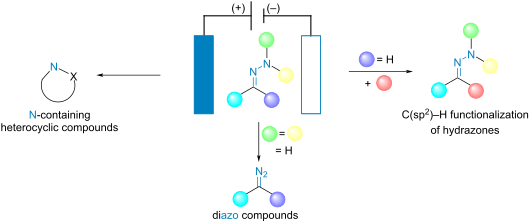
- ) atom were well tolerated and the best result was obtained with a morpholine ring. Based on cyclic voltammetry studies, the transformation initiated with the anodic oxidation of hydrazone 101 to form highly electrophilic radical cationic species 104. Subsequent addition of azide 102 and desilylation



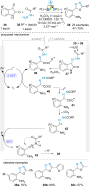
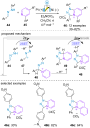
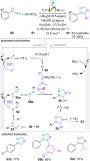
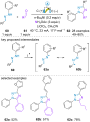





The Groebke–Blackburn–Bienaymé reaction in its maturity: innovation and improvements since its 21st birthday (2019–2023)
Beilstein J. Org. Chem. 2024, 20, 1839–1879, doi:10.3762/bjoc.20.162
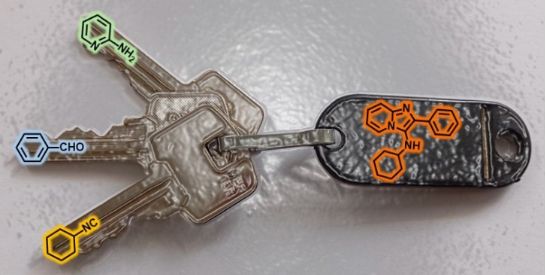
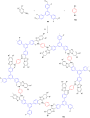
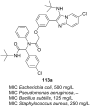
- aliphatic aldehydes showed a higher variability (50–98%) and in some cases also the classic Ugi adducts were observed. Regarding the isocyanide, excellent yields were achieved for all tested reagents, such as aromatic, aliphatic, and sterically hindered ones. Problems were only observed using a morpholine






Syntheses and medicinal chemistry of spiro heterocyclic steroids
Beilstein J. Org. Chem. 2024, 20, 1713–1745, doi:10.3762/bjoc.20.152
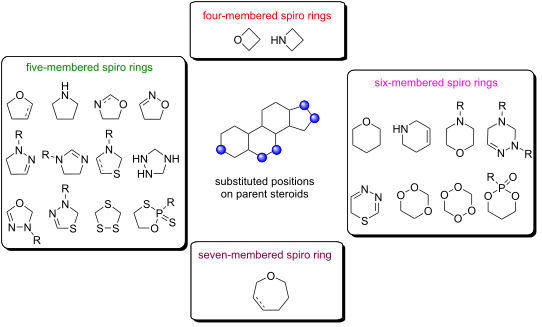
- promoted by the action of sodium hydride, alkylation of the morpholine nitrogen atom on 129 provided a diverse range of compounds (Scheme 36). In 2013, the same reaction sequence was reported by Poirier’s group, resulting in a spiromorpholinone at C-3 position derived from epi-ADT that exhibited activity
- reactions. To increase the molecular diversity at the morpholine ring, tertiary amines were formed by nucleophilic substitution. A final removal of the cyclic ketal group in aq sulfuric acid provided spiromorpholinone derivatives 134a–e, 136a–e, and 138 (Scheme 37). Spiromorpholinones were evaluated as


Regioselective quinazoline C2 modifications through the azide–tetrazole tautomeric equilibrium
Beilstein J. Org. Chem. 2024, 20, 675–683, doi:10.3762/bjoc.20.61
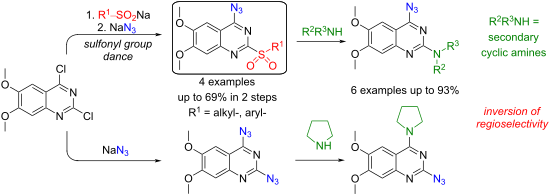
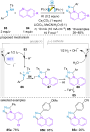
- explanation for the present tetrazole form in the solutions. Surprisingly, FTIR and X-ray analyses of 12a in the solid state indicated the existence of 12a in the azide form. In subsequent experiments it was discovered that for less nucleophilic N-nucleophiles (piperidine, morpholine, N-methylpiperazine) C2


Palladium-catalyzed three-component radical-polar crossover carboamination of 1,3-dienes or allenes with diazo esters and amines
Beilstein J. Org. Chem. 2024, 20, 661–671, doi:10.3762/bjoc.20.59
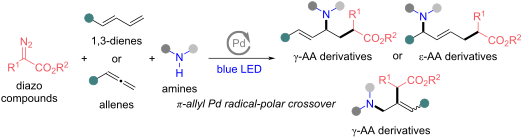
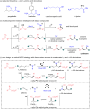
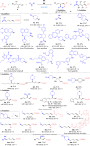
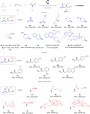
- reactive under the photocatalytic conditions, providing the corresponding 1,2-adducts 6a, 6b, and 6c smoothly in 73%, 93% and 34% yields, respectively. Commercially available amines with a broad range of heterocyclic rings (e.g., morpholine, piperazine, pyrrolidine, homopiperazine) also readily

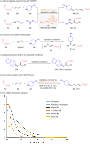


Morpholine-mediated defluorinative cycloaddition of gem-difluoroalkenes and organic azides
Beilstein J. Org. Chem. 2023, 19, 1545–1554, doi:10.3762/bjoc.19.111
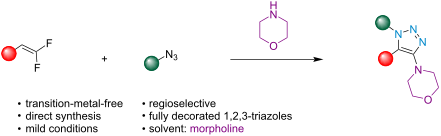
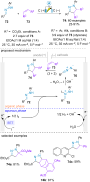
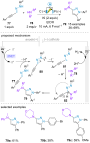
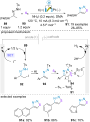
- gem-difluoroalkenes with organic azides in morpholine as a solvent to construct fully decorated morpholine-substituted 1,2,3-triazoles. Mechanistic studies revealed the formation of an addition–elimination intermediate of morpholine and gem-difluoroalkenes prior to the triazolization reaction via two
- reactions with azoles and amines (Figure 1B) are also well-precedented [10]. Herein, we address a critical gap in the literature and report the discovery of a cycloaddition of gem-difluoroalkenes and organic azides mediated by a base and with morpholine as a solvent. The cycloaddition adducts, 1,4,5
- -trisubstituted-1,2,3-triazoles, with a pendant morpholine at the C-4 position are formed with complete regiocontrol via β-fluoride elimination in an SNV-like transformation (Figure 1C). 1,2,3-Triazoles are a privileged scaffold in medicinal chemistry with a myriad of pharmacological activities against cancer [11