Search results
Search for "nucleoside" in Full Text gives 162 result(s) in Beilstein Journal of Organic Chemistry.
Construction of CF2 moieties in FDA-approved drugs (2016–2025): industrial routes, mechanisms, and scale-up considerations
Beilstein J. Org. Chem. 2026, 22, 1122–1150, doi:10.3762/bjoc.22.91
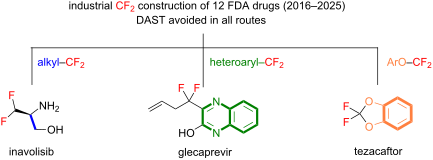
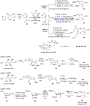
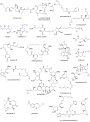
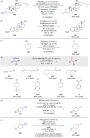
- therapy. The introduction of fluorine-containing groups such as CF2 into drug molecules can significantly alter their properties, including metabolic stability, lipophilicity, conformation, and hydrogen-bonding capacity [1]. For example, fluorine substitution on sugar moieties can modify nucleoside




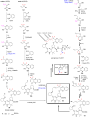


Preparation of 3-(alkylamino)imidazo[1,2-a]pyridine-2-carbaldehydes via Kornblum oxidation and unexpected ring-opening reactions of the corresponding alcohols under oxidative conditions
Beilstein J. Org. Chem. 2026, 22, 763–770, doi:10.3762/bjoc.22.58
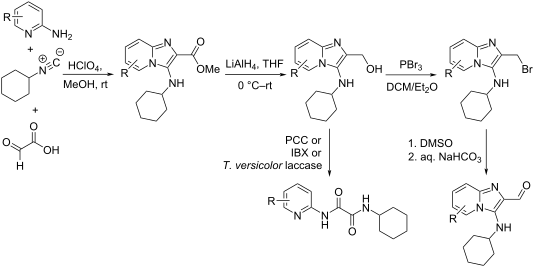
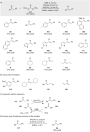
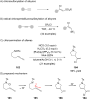
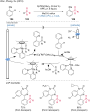
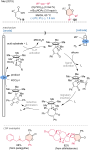
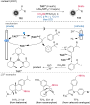
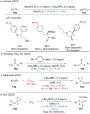
- [17][18][19]. Our own interest in the chemistry of imidazo[1,2-a]pyridines arose from the discovery that compounds such as 5 exhibit significant activity against wild-type HIV-1, acting as non-nucleoside reverse transcriptase inhibitors (NNRTIs) [5]. Subsequent investigations revealed that these


Synthesis and applications of alkenyl chlorides (vinyl chlorides): a review
Beilstein J. Org. Chem. 2026, 22, 1–63, doi:10.3762/bjoc.22.1
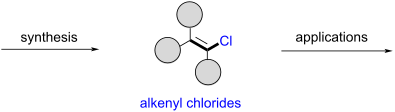
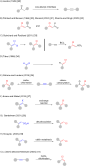
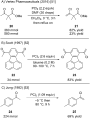
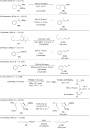
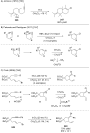
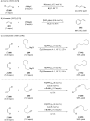
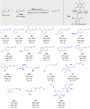
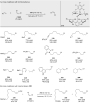
- HIV-1 non-nucleoside reverse transcriptase inhibitor, they aimed to improve the preparation of compound 19, whose yield had previously been limited to 22% following a similar route. They noticed that in situ-generated species such as POCl3 or HCl triggered ring opening of dichloride 15 to produce a























Competitive cyclization of ethyl trifluoroacetoacetate and methyl ketones with 1,3-diamino-2-propanol into hydrogenated oxazolo- and pyrimido-condensed pyridones
Beilstein J. Org. Chem. 2025, 21, 2716–2729, doi:10.3762/bjoc.21.209
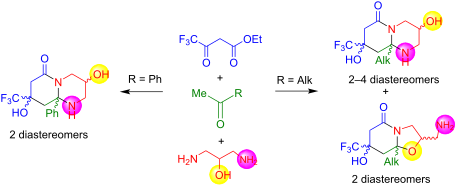
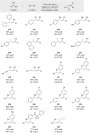
- promise for the three-component approach we have proposed. The importance of trifluoromethyl-containing pyridine and piperidine systems is well known for both medical and agrochemical applications [30]. Thus, many medicinal agents have such fragments, for example, the non-nucleoside reverse transcriptase


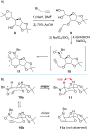
Rapid access to the core of malayamycin A by intramolecular dipolar cycloaddition
Beilstein J. Org. Chem. 2025, 21, 2542–2547, doi:10.3762/bjoc.21.196
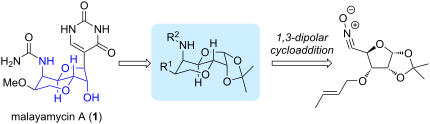
- development of potent fungicides. Keywords: dipolar cycloaddition; elimination; fungicide; nucleoside; oxazoline; Introduction Modern agriculture relies on various effective fungicides to combat crop diseases for achieving significant gains [1]. However, the long-term and widespread use of chemicals and
- as alternatives to existing fungicides as well as enhancing the control spectrum and persistence [3]. A group of scientists at Syngenta reported a bicyclic perhydrofuropyran C-nucleoside malayamycin A (1) from the soil bacterium Streptomyces malaysiensis [4] (Figure 1). This novel compound was found
- metabolites and exhibit intriguing bioactivities (2–4, Figure 1). These antifungal nucleoside agents have been received great attention from the scientific community and several elegant syntheses have been disclosed [9][10][11][12][13][14][15]. Specifically, Hanessian and co-workers reported the first total




Halogenated butyrolactones from the biomass-derived synthon levoglucosenone
Beilstein J. Org. Chem. 2025, 21, 2297–2301, doi:10.3762/bjoc.21.175
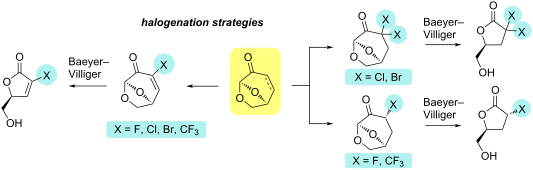
- Johannes Puschnig Martyn Jevric Ben W. Greatrex Faculty of Medicine and Health, University of New England, Armidale, NSW, 2351, Australia 10.3762/bjoc.21.175 Abstract Halogenated butyrolactones are found in a variety of bioactive materials and used for the construction of nucleoside analogues
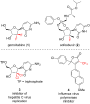
- intermediate in synthesis [1][2]. Several nucleoside analogue drugs are prepared using γ-butyrolactones, that when reduced give pentose sugars that can be used as glycosyl donors [3][4]. A number of these clinically used drugs contain fluorine as a hydroxy bioisostere at C2, most notably gemcitabine (1) and
- sofosbuvir (2). Fluorination at C2 in the nucleoside results in metabolic stability and resistance to hydrolysis as it destabilizes the formation of a C1 oxocarbenium ion [5][6]. Trifluoromethylated γ-butyrolactones also find applications as antiviral agents, for example, lactone 4 which has activity against



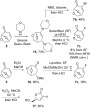

Preparation of a furfural-derived enantioenriched vinyloxazoline building block and exploring its reactivity
Beilstein J. Org. Chem. 2025, 21, 1737–1741, doi:10.3762/bjoc.21.136

- potent gonadotropin-releasing hormone receptor antagonists with potential application as anticancer drugs [25] and as nucleoside analogs with antiviral potency [26]. According to the reaction mechanism proposed by Elliott et al., the aza-Diels–Alder reaction of vinyloxazoline S-6 with TsNCO is a step


Approaches to stereoselective 1,1'-glycosylation
Beilstein J. Org. Chem. 2025, 21, 1700–1718, doi:10.3762/bjoc.21.133
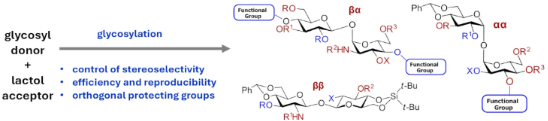
- structural components in mycobacterial glycans, microbial oligosaccharide and nucleoside antibiotics, as well as biologically active mimetics of bacterial pathogen-associated molecular patterns (PAMPs). As integral components of PAMPs, 1,1′-linked disaccharide-containing biomolecules play important roles in
- ][12][13][14] and the nucleoside antibiotic tunicamycin [15][16][17], etc. These molecules play essential roles in cell signaling, host–pathogen interactions, and pathogenesis and, being the constituent of pathogen-associated molecular patterns (PAMPs), can function as critical virulence factor [7][18
- synthesis of neotrehalosamines related to the sugar moiety of the nucleoside antibiotic tunicamycin was performed using benzoylated 2-(benzoyloxyimino)-protected GlcN bromide donor 5, which enabled 1,2-cis stereochemical control through the non-participating C-2 benzoyloxyimino group, leading to the


Oxetanes: formation, reactivity and total syntheses of natural products
Beilstein J. Org. Chem. 2025, 21, 1324–1373, doi:10.3762/bjoc.21.101










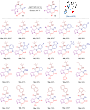
Silver(I) triflate-catalyzed post-Ugi synthesis of pyrazolodiazepines
Beilstein J. Org. Chem. 2025, 21, 915–925, doi:10.3762/bjoc.21.74
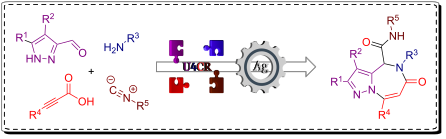
- anesthesia [14]. The imidazo[4,5-d][1,3]diazepine core is present in pentostatin and coformycin, which are naturally occurring N-nucleoside inhibitors of adenosine deaminase, known for their antibiotic and anticancer properties [15][16][17]. These examples highlight the importance of developing novel




Synthesis of electrophile-tethered preQ1 analogs for covalent attachment to preQ1 RNA
Beilstein J. Org. Chem. 2025, 21, 483–489, doi:10.3762/bjoc.21.35
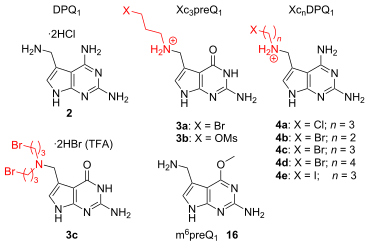
- novel compound DPQ1. Keywords: deazapurines; heterocycles; pyrrolopyrimidines; queuosine; riboswitches; ribozymes; RNA alkylation; RNA labelling; Introduction Pre-queuosine 1 (preQ1) is a biosynthetic precursor of the hypermodified nucleoside queuosine (Q) that is found in the wobble position of
- nucleoside queuosine (Q) occurring as natural tRNA modifications. Purine ring numbering is indicated in grey. The synthetic targets of this study are highlighted in grey: Natural riboswitch ligand pre-queuosine 1 (preQ1), a novel preQ1 analog with altered base-pairing properties (2,6-diamino-pre-queuosine 2


Heteroannulations of cyanoacetamide-based MCR scaffolds utilizing formamide
Beilstein J. Org. Chem. 2025, 21, 217–225, doi:10.3762/bjoc.21.13
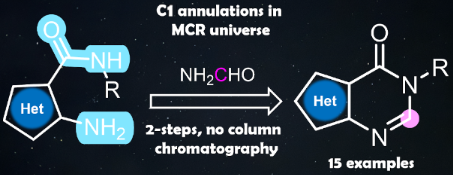
- under the umbrella of C1 chemistry was to provide a straightforward access to the privileged scaffold of fused heteroannulated pyrimidones, which demonstrate a broad range of biological activities [28][29][30][31][32][33][34][35], including use as emissive nucleoside analogues [36][37][38]. Moreover


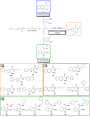


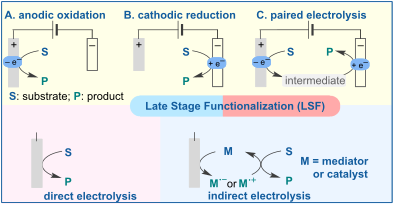
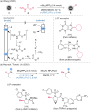
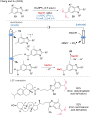
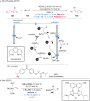
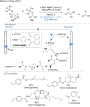
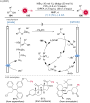
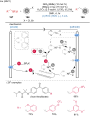
A review of recent advances in electrochemical and photoelectrochemical late-stage functionalization classified by anodic oxidation, cathodic reduction, and paired electrolysis
Beilstein J. Org. Chem. 2024, 20, 2500–2566, doi:10.3762/bjoc.20.214









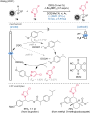
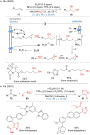

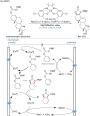


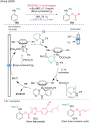
















Cell-free protein synthesis with technical additives – expanding the parameter space of in vitro gene expression
Beilstein J. Org. Chem. 2024, 20, 2242–2253, doi:10.3762/bjoc.20.192
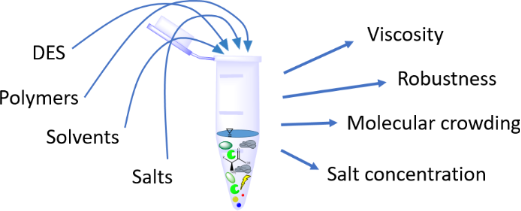
- encoding for the target protein, amino acids and nucleoside triphosphates as substrates, an energy regeneration system and other additives such as polyethylene glycol (PEG) [9]. Although CFPS has been used and improved since the 1960s, there are challenges in its application such as low production volumes

Generation of multimillion chemical space based on the parallel Groebke–Blackburn–Bienaymé reaction
Beilstein J. Org. Chem. 2024, 20, 1604–1613, doi:10.3762/bjoc.20.143

- (sEH) inhibitors [50], HIV-1 non-nucleoside reverse transcriptase inhibitors [51], or potential agents against visceral leishmaniasis [52] were found (Figure 8). Conclusion The Groebke–Blackburn–Bienaymé (GBB) reaction, a three-component condensation of amino heterocycles, aldehydes, and isonitriles


Synthesis of 1,4-azaphosphinine nucleosides and evaluation as inhibitors of human cytidine deaminase and APOBEC3A
Beilstein J. Org. Chem. 2024, 20, 1088–1098, doi:10.3762/bjoc.20.96
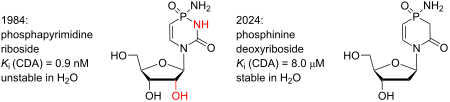
- of the University of Auckland, Level 2, 3A Symonds Street, Auckland 1142, New Zealand 10.3762/bjoc.20.96 Abstract Nucleoside and polynucleotide cytidine deaminases (CDAs), such as CDA and APOBEC3, share a similar mechanism of cytosine to uracil conversion. In 1984, phosphapyrimidine riboside was
- characterised as the most potent inhibitor of human CDA, but the quick degradation in water limited the applicability as a potential therapeutic. To improve stability in water, we synthesised derivatives of phosphapyrimidine nucleoside having a CH2 group instead of the N3 atom in the nucleobase. A charge
- development of more potent CDA and APOBEC3 inhibitors. Keywords: APOBEC3; cytidine deaminase; enzyme activity; inhibitor; nucleoside; nucleotide; zebularine; Introduction Spontaneous hydrolytic deamination of cytosine to uracil (Figure 1A) is very slow under ambient conditions [1], but it is greatly


Novel analogues of a nonnucleoside SARS-CoV-2 RdRp inhibitor as potential antivirotics
Beilstein J. Org. Chem. 2024, 20, 1029–1036, doi:10.3762/bjoc.20.91
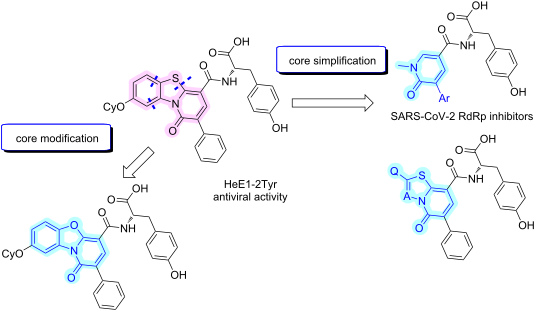
- , and they also compete with the intracellular pool of natural nucleoside triphosphates (NTPs). Nonnucleotide analogue inhibitors (NNAIs) do not face these challenges as they bind to both active but also allosteric sites of the RdRp, and therefore they represent a promising NAI alternative [12]. Since


1,4-Dithianes: attractive C2-building blocks for the synthesis of complex molecular architectures
Beilstein J. Org. Chem. 2023, 19, 115–132, doi:10.3762/bjoc.19.12
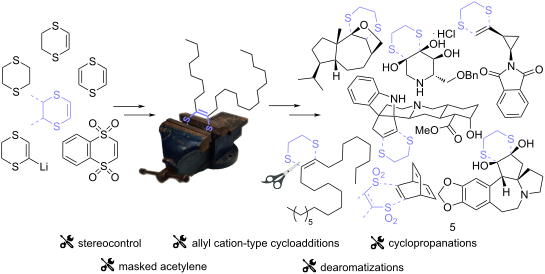
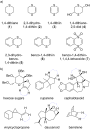
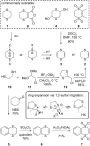
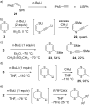
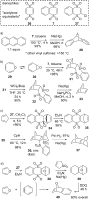
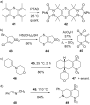
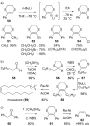
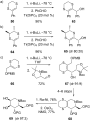
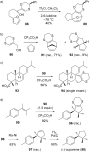
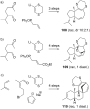
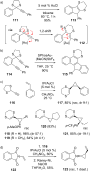
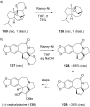
- context, 1,4-dithianes can thus also be considered as synthetic equivalents of cyclohexanes. Oxidative decoration of the carbon atoms in the dithiane ring can also be achieved via Pummerer-type chemistry, as illustrated by Pallumbo’s racemic synthesis of the dihydrodithiin-based nucleoside analog 135 via











Inline purification in continuous flow synthesis – opportunities and challenges
Beilstein J. Org. Chem. 2022, 18, 1720–1740, doi:10.3762/bjoc.18.182
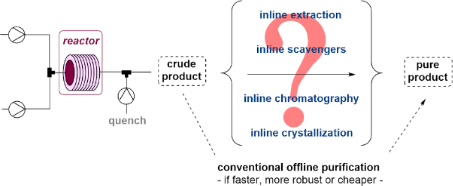
- excellent route for the efficient and cost-effective preparation of different building blocks including nucleoside derivatives and ʟ-pipecolic acid. High efficiency was achieved with simple trapping columns downstream of the biocatalytic process, to separate the pure products from the mixture and




A new route for the synthesis of 1-deazaguanine and 1-deazahypoxanthine
Beilstein J. Org. Chem. 2022, 18, 1617–1624, doi:10.3762/bjoc.18.172
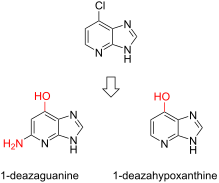
- nitration. A further strength of our route is divergency, additionally enabling the synthesis of 1-deazahypoxanthine (c1I base). Keywords: deazapurine; heterocycles; imidazopyridines; nucleoside; nucleotides; pyrrolopyrimidines; RNA atomic mutagenesis; Introduction Deazapurines (imidazopyridines and


New triazole-substituted triterpene derivatives exhibiting anti-RSV activity: synthesis, biological evaluation, and molecular modeling
Beilstein J. Org. Chem. 2022, 18, 1524–1531, doi:10.3762/bjoc.18.161
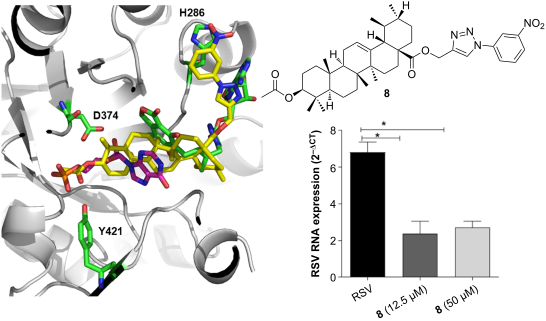
- , University of São Paulo, Ribeirão Preto, SP 14040-020, Brazil 10.3762/bjoc.18.161 Abstract Respiratory syncytial virus (RSV) is a major cause of acute lower respiratory tract infections in infants. Currently, ribavirin, a nucleoside analog containing a 1,2,4-triazole-3-carboxamide moiety, is a first-line
- with COVID-19 precautions; however, they state that less RSV cases now could reduce immunity and they fear there will be a rebound in infections after the pandemic [4][5][6][7]. As a therapeutic resource, ribavirin, a nucleoside analog prodrug containing a 1,2,4-triazole-3-carboxamide moiety (RBV


Make or break: the thermodynamic equilibrium of polyphosphate kinase-catalysed reactions
Beilstein J. Org. Chem. 2022, 18, 1278–1288, doi:10.3762/bjoc.18.134
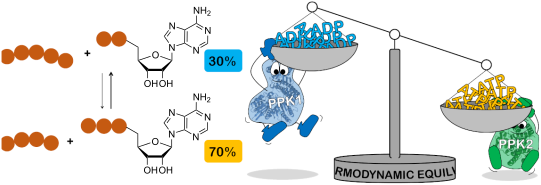
- side reactivity of PPK2 enzymes [22]. An alternative explanation might be the PPK equilibrium: most PPKs accept a broad range of nucleoside substrates, therefore some 2-Cl-dATP produced could be a substrate for a PPK2 catalysed 2-Cl-dATP/2-Cl-dADP equilibrium. Conclusion PPK2, and also PPK1 enzymes are
- `-monophosphate (5F-UMP). The phosphorylation of the NMP is catalysed by the ATP dependent nucleoside monophosphate kinase yielding a 5F-UDP and ADP. 5F-UDP is then phosphorylated by pyruvate kinase under consumption of phosphoenol pyruvate [42]. c) Ranking of different phosphate donors that can be used for ATP


Asymmetric organocatalytic Michael addition of cyclopentane-1,2-dione to alkylidene oxindole
Beilstein J. Org. Chem. 2022, 18, 167–173, doi:10.3762/bjoc.18.18
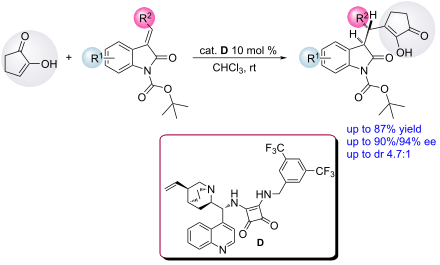
- using CPD as a precursor for high value-added fine chemicals such as a homocitric acid lactone was published by our group [19]. Since then we have developed synthetic pathways for lycoperdic acid [20] and nucleoside analogues [21] starting from CPD. The organocatalytic methods for the synthesis of


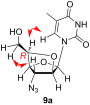
Chemical and chemoenzymatic routes to bridged homoarabinofuranosylpyrimidines: Bicyclic AZT analogues
Beilstein J. Org. Chem. 2022, 18, 95–101, doi:10.3762/bjoc.18.10
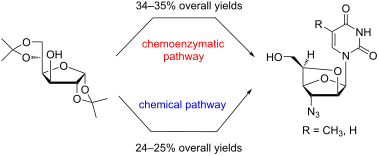
- -glucofuranose following chemoenzymatic and chemical routes in 34–35% and 24–25% overall yields, respectively. The quantitative and diastereoselective acetylation of primary hydroxy over two secondary hydroxy groups present in the key nucleoside precursor was mediated with Lipozyme® TL IM in 2
- acetylation; Introduction In the last few decades, modification of nucleoside/nucleotide analogues has been a field of keen interest to researchers due to their therapeutic properties for treatment of cancer, viral and microbial infections [1][2][3][4][5][6][7][8][9]. The very first cytotoxic
- chemotherapeutic agents used for the treatment of cancer were nucleoside analogues and nucleobases [10]. Azidothymidine (1, AZT) was the first approved drug for the treatment of human immunodeficiency virus (HIV) [11][12]. Subsequently, a large number of sugar modified nucleosides, such as ddC (zalcitabine) [13



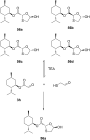
Synthetic strategies toward 1,3-oxathiolane nucleoside analogues
Beilstein J. Org. Chem. 2021, 17, 2680–2715, doi:10.3762/bjoc.17.182
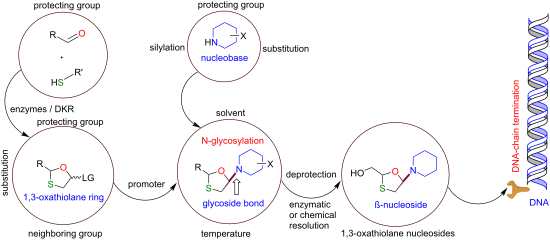
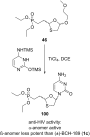
- sulfur atom at the 3’-position, these compounds have proved to be structurally potent nucleoside analogues, and the best example is BCH-189. The majority of methods traditionally involves the chemical modification of nucleoside structures. It requires the creation of artificial sugars, which is
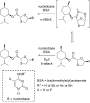
- -oxathiolane ring with different nucleobases in a way that only one isomer is produced in a stereoselective manner via N-glycosylation. An emphasis has been placed on the C–N-glycosidic bond constructed during the formation of the nucleoside analogue. The third focus is on the separation of enantiomers of 1,3
- -oxathiolane nucleosides via resolution methods. The chemical as well as enzymatic procedures are reviewed and segregated in this review for effective synthesis of 1,3-oxathiolane nucleoside analogues. Keywords: chiral auxiliaries; enzymes; Lewis acids; N-glycosylation; 1,3-oxathiolane sugar and nucleosides