Search results
Search for "switching" in Full Text gives 332 result(s) in Beilstein Journal of Organic Chemistry. Showing first 200.
Construction of CF2 moieties in FDA-approved drugs (2016–2025): industrial routes, mechanisms, and scale-up considerations
Beilstein J. Org. Chem. 2026, 22, 1122–1150, doi:10.3762/bjoc.22.91
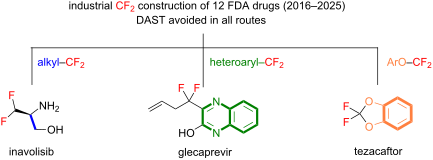
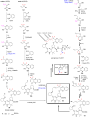
- . It is noteworthy that a study [13] found that the yield of the difluoro acid 38 in route c decreased significantly during scale-up when using diphenyl phosphoryl azide (DPPA) for the Curtius rearrangement (the reason for the decrease was not described). Switching to the Schmidt reaction using NaN3






Z-Selective semihydrogenation of alkynes via Ni/Lewis acid synergistic catalyzed system using DMF as hydrogen source and solvent
Beilstein J. Org. Chem. 2026, 22, 1004–1012, doi:10.3762/bjoc.22.79
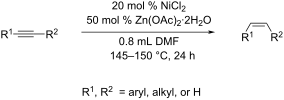
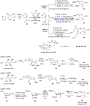
- switching the solvent to DMA (entry 25). These results further confirm the unique advantages of DMF acting as both solvent and hydrogen source. After the above full-parameter condition optimization, the optimized conditions were established as: 20 mol % NiCl2, 50 mol % Zn(OAc)2·2H2O, in DMF at 150 °C for 24



The role of spacer length and flexibility in peptide self-assembly
Beilstein J. Org. Chem. 2026, 22, 986–996, doi:10.3762/bjoc.22.77
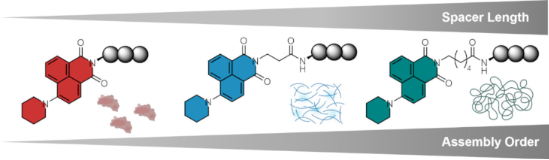
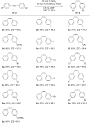
- fluorophores, the three peptide conjugates were investigated at 100 μM under non-assembling conditions (100% TFE) and assembling conditions (1% TFE, 99% PBS). In the dissolved state (100% TFE, Figure 3B), all three peptide conjugates exhibited similar absorbance maxima at 430 ± 2 nm. Upon switching to aqueous


A practical CO2-mediated synthesis of 5,6-carboxylated silicon-rhodamines for targeted probe development
Beilstein J. Org. Chem. 2026, 22, 915–924, doi:10.3762/bjoc.22.72
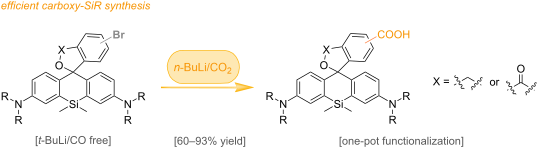
- switching and fluorogenic responses, making rhodamines particularly valuable for advanced imaging beyond the optical diffraction limit [14][15][16][17][18][19]. Replacement of the conventional bridging oxygen atom with silicon shifts the emission of rhodamines from red to the far-red region (typically λem



Halogenated azobenzene acrylates: from efficient solution photoswitching to stable solid-state photochromic materials
Beilstein J. Org. Chem. 2026, 22, 782–794, doi:10.3762/bjoc.22.60
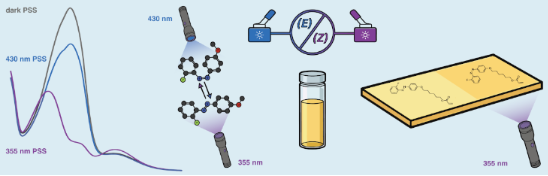
- a very useful tool to tune the thermal and optical properties, light-induced switching in particular. Monohalogen derivatives exhibited up to 93% E → Z photoconversion efficiency in solution, whereas the efficiency of dihalogen analogues is lower by 20%, which is ascribed to their nonplanar
- ; photoswitch; polymer; thin film; Introduction The azobenzene photoinduced E/Z isomerization represents a well-investigated switching process that found various utilizations [1][2][3][4]. In contrast to the state-of-the-art achieved in solution and despite its perhaps even greater application potential, a
- derivatives). See Supporting Information File 1, Figures S53–64 for a similar visualization of the frontier molecular orbitals in all studied molecules. Photoinduced E/Z-isomerization The photoinduced E ↔ Z switching was investigated using 355 nm (forward switch) and 430 nm (reverse switch) LEDs. The E/Z


Synthesis of heterocycles based on azomethine ylides from α-amino acids (or amines) and carbonyl compounds
Beilstein J. Org. Chem. 2026, 22, 705–741, doi:10.3762/bjoc.22.55
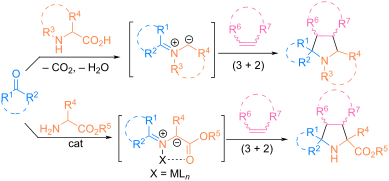
- dimethyl fumarate, acrylates, and N-methylmaleimide, were also studied in the cycloaddition reaction (Scheme 3). Lower enantioselectivity was observed in these cases, and the most important result was a significant improvement in enantioselectivity upon switching from methyl acrylate to bulk tert-butyl


Harnessing light energy with molecules
Beilstein J. Org. Chem. 2026, 22, 680–682, doi:10.3762/bjoc.22.52
- study of substituent effects in a large selection of N-acetylated phenylazopyrazole photoswitches. Pittelkow, Antonov, and co-workers [17] present a study on tautomerism and switching in 7-hydroxy-8-(azophenyl)quinoline and similar π-expanded azobenzene compounds. The photoisomerization quantum yield is
Configuration–packing synergy enabling integrated crystalline-state RTP and amorphous-state TADF
Beilstein J. Org. Chem. 2026, 22, 224–236, doi:10.3762/bjoc.22.16
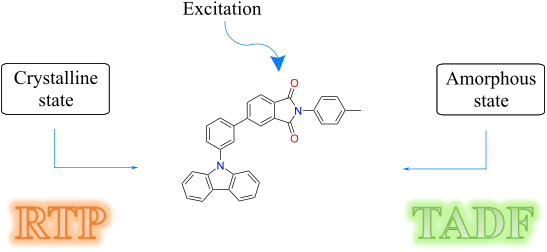
- exciton recovery and enhancing device performance in both solution and solid states. Although significant progress has been made in developing systematic molecular and solid-state engineering strategies for RTP and TADF, examples of simultaneous “phosphorescence-delayed fluorescence” switching within a
- configuration design and material-scale packing/confinement engineering to enable the controlled switching between RTP and TADF. Among the potential receptor units, imide, with its strong electron-withdrawing nature and prominent n→π* contribution from the two carbonyl groups, offers a dual advantage: it
- , the triplet exciton management and channel selectivity in different phases of PI-Cz 1 were systematically studied, validating the feasibility of “configuration-packing synergy” for controllable RTP–TADF switching within the same molecule. Results and Discussion Single crystals of 1 were successfully


One-pot synthesis of ethylmaltol from maltol
Beilstein J. Org. Chem. 2025, 21, 2755–2760, doi:10.3762/bjoc.21.212

- opted for deprotonation with lithium reagents. Attempted double deprotonation with methyl lithium afforded a complex reaction mixture, from which ethylmaltol (1) was isolated in 11% together with an inseparable impurity tentatively assigned as 6 based on NMR analysis (Table 1, entry 2). Switching to the

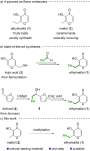

Thiazolidinones: novel insights from microwave synthesis, computational studies, and potentially bioactive hybrids
Beilstein J. Org. Chem. 2025, 21, 2618–2636, doi:10.3762/bjoc.21.203
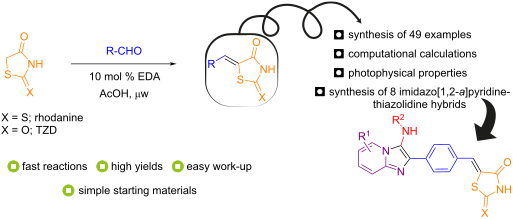
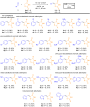
- -benzylidenethiazol-4-one (3’) in moderate yield (Scheme 1). The implications and scope of this finding will be published in due course. Switching to aromatic (pyridine) or tertiary amines (Et3N) resulted in low yields (Table 1, entries 11 and 12). In contrast, the use of ethylenediamine (EDA) stood out, delivering






Effect of a photoswitchable rotaxane on membrane permeabilization across lipid compositions
Beilstein J. Org. Chem. 2025, 21, 2498–2512, doi:10.3762/bjoc.21.192
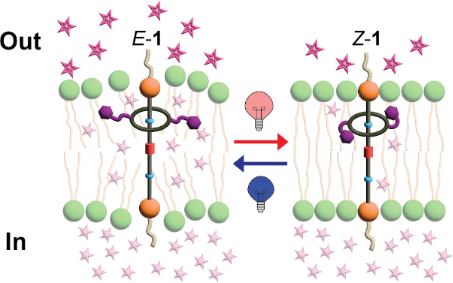
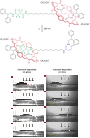
- permeabilization in bilayers of varying rigidity and whether membrane phase influences its photoswitching behavior. To address these questions, we investigated the light-induced switching of rotaxane 1 in large unilamellar vesicles (LUVs) composed of lipids representative of distinct membrane phases. Membrane
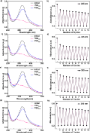
- five switching cycles. The total incubation time of the LUVs with rotaxane 1 was 68 minutes, during which the cumulative irradiation time was 5 minutes at 370 nm and 5 minutes at 467 nm (Table 1, Figure 4b, Figure 5, and Supporting Information File 1, S2.3). This experimental setup enabled a direct
- accumulation, rather than by direct alterations in lipid packing from the azobenzene moiety itself [15]. For instance, in EYPC/Chol 8:2 bilayers, azobenzene switching likely leads to a redistribution of the rotaxane within the membrane, with the macrocycle positioned closer to the lipid–water interface in the




Rotaxanes with integrated photoswitches: design principles, functional behavior, and emerging applications
Beilstein J. Org. Chem. 2025, 21, 2345–2366, doi:10.3762/bjoc.21.179
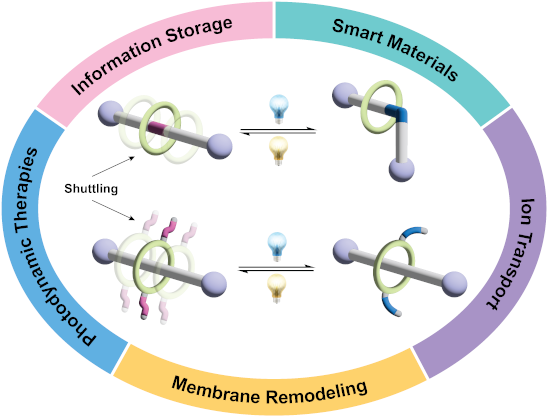
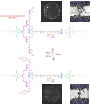
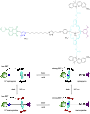
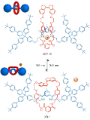
- shuttling dynamics. In this review, we discuss key examples of photoswitchable rotaxanes, organized according to the position of the photoswitch, either embedded in the axle or incorporated into the macrocycle. We examine the major classes of photoswitches used, including their switching mechanisms and the
- , thereby avoiding the terminal cationic sites [25]. The shuttling is restored by the thermal reaction that regenerates the neutral acridane [24][25][26]. The same group also demonstrated that similar rotaxanes can be incorporated onto gold nanoparticles and retain their photoreactivity and switching
- unhindered macrocycle movement, enabling effective K+ ion transport. Upon photoisomerization, the cis isomer restricts the macrocycle’s motion and slows ion transport (Figure 6). Importantly, this switching is reversible, permitting precise light-triggered control of ion transport. Such photoswitchable and





Comparative analysis of complanadine A total syntheses
Beilstein J. Org. Chem. 2025, 21, 2334–2344, doi:10.3762/bjoc.21.178
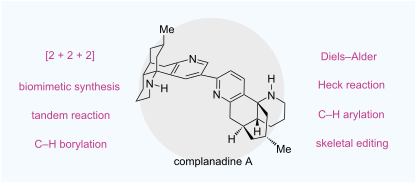
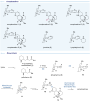
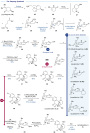
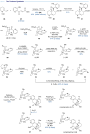
- alkyne-nitrile partner, the undesired regioisomer (2,2’-bipyridyl product) was obtained as the major product. Switching the alkyne-nitrile partner from 19, bearing a benzyl group, to the formyl-substituted partner 23, combined with addition of 8 equivalents of PPh3, successfully inverted the


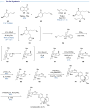

Aryl iodane-induced cascade arylation–1,2-silyl shift–heterocyclization of propargylsilanes under copper catalysis
Beilstein J. Org. Chem. 2025, 21, 1984–1994, doi:10.3762/bjoc.21.154
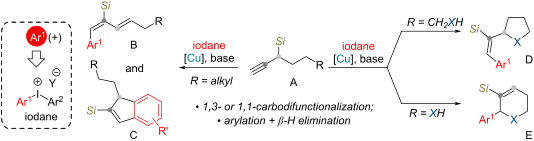
- -donating substituents demonstrated higher yields (p-Tol > p-BrC6H4) (Table 2, entries 3 and 4). The p-bromo-substituted iodane I-6, albeit in a more modest yield, gave the diene 10d with 98:2 selectivity. Switching to the more sterically challenged triisopropylsilyl (TIPS) group (Table 2, entry 2) resulted


Photochemical reduction of acylimidazolium salts
Beilstein J. Org. Chem. 2025, 21, 1973–1983, doi:10.3762/bjoc.21.153
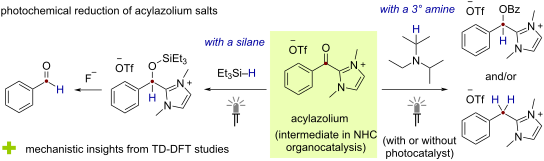
- , switching from MeCN to the chlorinated solvents DCM, DCE and chlorobenzene led to a decline in the formation of the fully reduced product 2 with O-benzoylated species 3 being obtained as the major product (38% in DCM, 35% in DCE, 38% in PhCl cf. 6–8% of 2, Table 1, entries 10–12). Significant reduction of 1
- efficiency observed upon switching from blue to UV-A light irradiation. Nevertheless, alternative scenarios involving the potential formation of excited donor–acceptor (EDA) complexes between benzoylazolium species 1 and DIPEA were considered. Measurements of the UV–vis spectra in the presence of the amine
- above. A further intriguing result was obtained upon switching from a chlorosilane to a hydrosilane. To our surprise, irradiating benzoylimidazolium species 1 with UV-A light (λmax = 370 nm) in MeCN (0.05 M) in the presence Et3SiH (TESH, 1.2 equiv) led to smooth conversion into the silylated species 5


Photoswitches beyond azobenzene: a beginner’s guide
Beilstein J. Org. Chem. 2025, 21, 1808–1853, doi:10.3762/bjoc.21.143
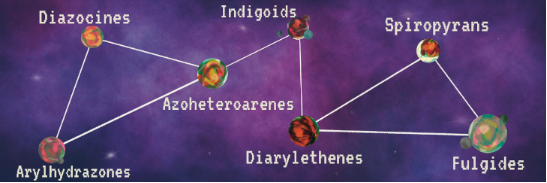
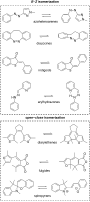
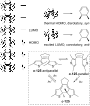
- explain the important terminology and discuss the synthesis, switching mechanisms, and properties of seven interesting photoswitch classes, namely azoheteroarenes, diazocines, indigoid photoswitches, arylhydrazones, diarylethenes, fulgides, and spiropyrans. Keywords: photoswitches; photoswitch properties
- ; synthesis of photoswitches; switching mechanisms; tutorial review; Introduction Photophysical properties and switching mechanism Key learning points Switching mechanisms and the change in properties. Overview of the major classes of photoswitches beyond azobenzenes. Main synthetic pathways for their
- be easily calculated. According to the thermal half-life, photoswitches are usually classified in P-type (thermally stable, with long half-life) and T-type (thermally unstable) [3]. The quantum yield Φ measures the efficiency of the switching, and it relates the number of photons absorbed nx to the






Research progress on calixarene/pillararene-based controlled drug release systems
Beilstein J. Org. Chem. 2025, 21, 1757–1785, doi:10.3762/bjoc.21.139
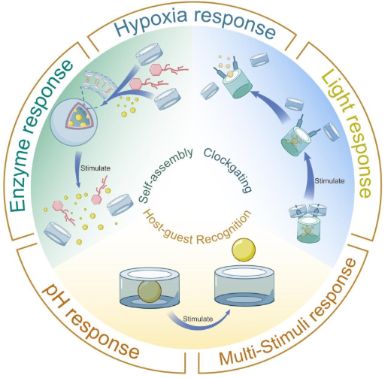
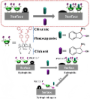
- to particular light wavelengths, displays reversible switching between its trans and cis forms, a molecular behavior well-documented in light-responsive systems. Initially, Azo-SMX, bearing an azobenzene unit, exists in a trans form and creates a stable complex with the PA5 component within the






Preparation of a furfural-derived enantioenriched vinyloxazoline building block and exploring its reactivity
Beilstein J. Org. Chem. 2025, 21, 1737–1741, doi:10.3762/bjoc.21.136

- . Further scale-up could be achieved by switching to flow conditions, or designing a continuous tank reactor [27]. Several attempts were made to explore enantioenriched vinyloxazoline 6 as a chiral building block. While additions to the double bond were not successful, vinyloxazoline 6 was found to be a


Approaches to stereoselective 1,1'-glycosylation
Beilstein J. Org. Chem. 2025, 21, 1700–1718, doi:10.3762/bjoc.21.133
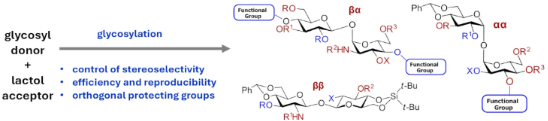
- (Scheme 2). Switching from “disarming” ester to “arming” benzyl protecting groups, as in the donor 21, enhanced the activation of the glycosidic center, resulting in the formation of a substantial amount of the methyl glycoside by-product and a reduced yield of the 1,1'-disaccharide 22. Securing the


Azobenzene protonation as a tool for temperature sensing
Beilstein J. Org. Chem. 2025, 21, 1528–1534, doi:10.3762/bjoc.21.115
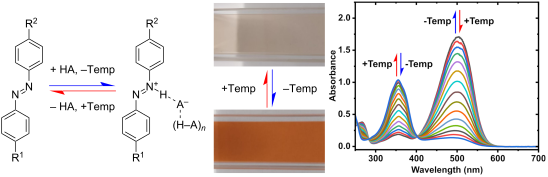
- heavy metal detection [16][19] and humidity sensing [20]. The color changes can be either reversible or irreversible, depending on the mechanism of operation. Spectral tuning also enables switching with low-energy light, eliminating the need for potentially harmful UV irradiation [21]. Utilizing
- different azo compounds [23][24][25]. More recent work has harnessed protonation to enable red-light switching [12][13][26] and to control the stability of the cis-isomer [27][28][29]. These studies have focused on how protonation affects isomerization, with less attention given on how external stimuli


Highly distinguishable isomeric states of a tripodal arylazopyrazole derivative on graphite through electron/hole-induced switching at ambient conditions
Beilstein J. Org. Chem. 2025, 21, 1496–1507, doi:10.3762/bjoc.21.112
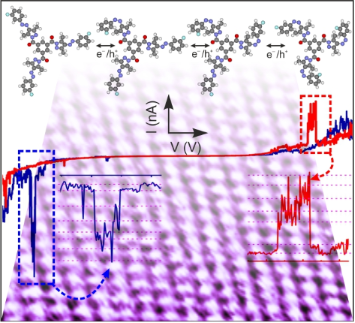
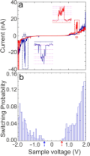
- states in solution phase, all the eight states are remarkably stable on the surface and are well distinguishable by the tunneling current passing through the molecule at the tunneling junction. The change in current upon switching between these states is approximately an order of magnitude. This is
- atomically precise write and read tool like an STM tip. Keywords: azo compounds; electron/hole-induced isomerization; isomerization; molecular switches; switching; Introduction Molecular electronic devices have been predicted to outperform silicon-based devices [1][2]. Reprogrammable arrays of molecular
- triggered through external stimuli to induce the switching and to modulate the function. Photo-triggerable molecular switches like azobenzene (AB) [10][11][12][13], spiropyran [14], diarylethene [15] and multifunctional AB [16] have attracted a lot of interest due to the distinct differences in the



Advances in nitrogen-containing helicenes: synthesis, chiroptical properties, and optoelectronic applications
Beilstein J. Org. Chem. 2025, 21, 1422–1453, doi:10.3762/bjoc.21.106
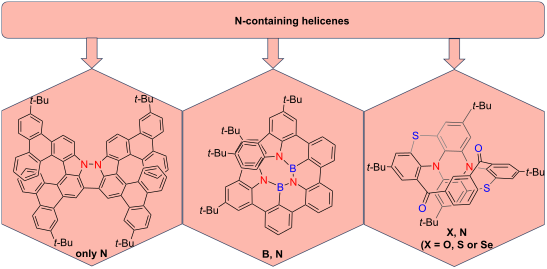
- with Ru(II) to form NIR-emissive complexes that exhibit redox-responsive chiroptical switching, notably with complex 8 showing reversible electronic circular dichroism (ECD) upon oxidation [21]. Liao and co-workers introduced a narrowband CP-TADF emitter 9, characterized by a narrow emission bandwidth
- BCPL value of 13.2 M−1 cm−1. Notably, compound 21c undergoes reversible redox interconversion to its radical cation 21c•+ and dicationic 21c2+ states via chemical oxidation, enabling controllable switching between antiaromatic and aromatic configurations. These results provide a compelling strategy for

Tautomerism and switching in 7-hydroxy-8-(azophenyl)quinoline and similar compounds
Beilstein J. Org. Chem. 2025, 21, 1404–1421, doi:10.3762/bjoc.21.105
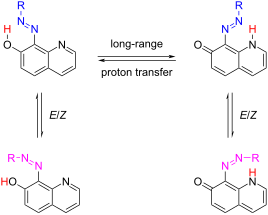
- solution as a mixture of azo and two hydrazone tautomers, as shown by the experimental and theoretical results, upon irradiation switching, based on long-range proton transfer, occurs in a limited extent. 8-(4-Hydroxy-1,2,3,5-tetrafluorophenyldiazenyl)quinolin-7-ol exists as a single enol (azo) tautomer
- E/Z isomerization around the C=N bond leads to reduced efficiency of the tautomeric based switching [52]. In this respect, based on the excellent stability of the azo compounds, it is interesting to understand the effect of the competitive proton transfer and E/Z switching by replacement of the
- OH functionality in compound 2 gives possibility to influence the tautomerism in this compound dynamically by protonation/deprotonation. The tautomeric and switching properties of compounds 1 and 2 have been revealed by using quantum-chemical calculations, UV–vis and NMR spectroscopy and UV




Oxetanes: formation, reactivity and total syntheses of natural products
Beilstein J. Org. Chem. 2025, 21, 1324–1373, doi:10.3762/bjoc.21.101
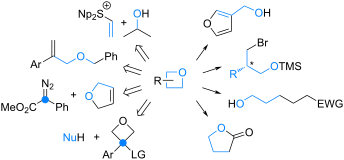
- alkenes and high diastereocontrol (dr ≥ 80:20) was achieved for trisubstituted ones. Switching the bromonium activator to the iodonium analogue only led to a lower yield. This haloetherification method was further expanded by McLaughlin and Roberts in 2022 who reported a convenient two-step sequence
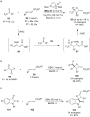
- % yield. Interestingly, only the xylono-lactone showed complete inversion of the configuration at C-2 while the lyxono-lactone showed complete retention of the configuration. The ribono- and arabinono-lactone displayed predominant retention and inversion, respectively. Switching the triflyl group for the










A versatile route towards 6-arylpipecolic acids
Beilstein J. Org. Chem. 2025, 21, 1104–1115, doi:10.3762/bjoc.21.88
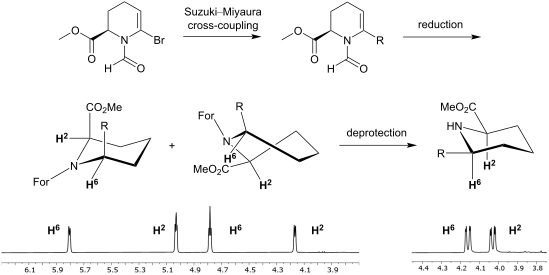
- given by switching one in an equatorial position. Using Pd/C and H2 for hydrogenation reactions usually leads to reduction of double or triple bonds, while aromatic systems tend not to be affected [58]. However, 3m and 3p undergo hydrogenation in the aromatic moiety, while 3p displays a complete