Search results
Search for "transition state" in Full Text gives 463 result(s) in Beilstein Journal of Organic Chemistry. Showing first 200.
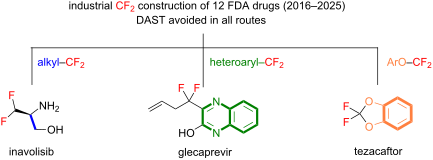
Construction of CF2 moieties in FDA-approved drugs (2016–2025): industrial routes, mechanisms, and scale-up considerations
Beilstein J. Org. Chem. 2026, 22, 1122–1150, doi:10.3762/bjoc.22.91
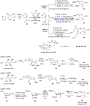
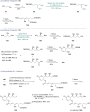
- temperature of −65 °C, and the iodomethyl pivalate tends to form gel-like spheres under low-temperature magnetic stirring, which is detrimental to scale-up operations. Route d utilizes 82 and 80 to form 83 via a six-membered ring transition state, followed by Fleming–Tamao oxidation [42] to convert 83 into






Recent advances in copper-catalyzed direct hydroamination of alkenes with (hetero)aromatic amines
Beilstein J. Org. Chem. 2026, 22, 925–947, doi:10.3762/bjoc.22.73
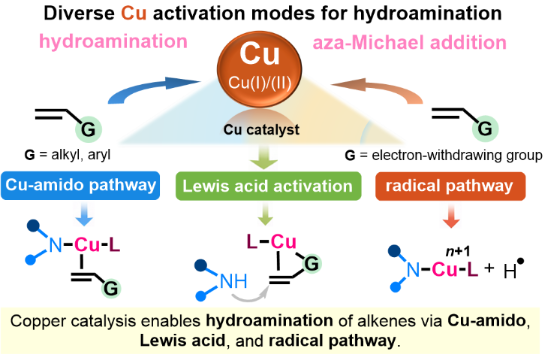
- . Subsequent protodemetalation released the hydroamination product and regenerated the Cu catalyst. Experimental and computational studies further supported the five-center aminocupration transition state, which accounted for the unusual N2-selectivity of pyrazole nucleophiles. This study presents the first


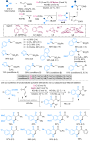


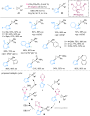


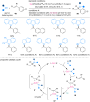

Chiral cyclopropenimine-catalyzed enantioselective Michael reactions of phenol and benzofuran-derived α,β-unsaturated pyrazolamides with benzophenone-imine of glycine esters
Beilstein J. Org. Chem. 2026, 22, 888–896, doi:10.3762/bjoc.22.69
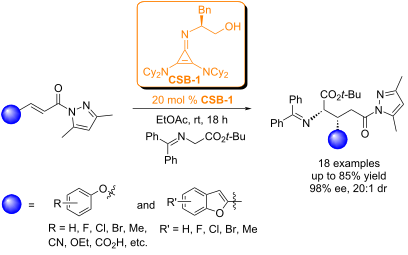
- stereospecific ability of CSB-1. This may be due to a more flexible hydrogen-bonding donor group and a smaller steric hinderance in CSB-1 than in other cyclopropenimines to provide good hydrogen-bonding interaction in the transition state [13]. With decreasing amount of CSB-1 from 20 mol % to 10 mol %, the yield
- ion pair A, which attacks β-substituted α,β-unsaturated pyrazolamide 5a to provide transition state B. Transition state B may be stabilized through an H-bonding interaction network between the two substrates and CSB-1. Additionally, π–π stacking between the two phenyl groups of 2a and 5a may also
- enhance the formation of transition state B. The highly diastereomic ratio of 6a in syn-form may be generated from transition state B. The formation of intermediate C is the rate-limiting step. When intermediate C is formed, the protonation happened rapidly to afford 6a in high enantioselectivity. The


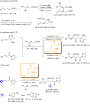

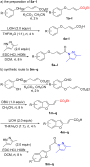

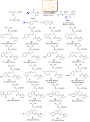


Diastereodivergent electrophilic trapping of α-boryl lithium derivatives
Beilstein J. Org. Chem. 2026, 22, 882–887, doi:10.3762/bjoc.22.68
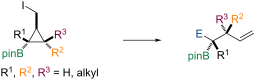
- revealed that the electrophile preferentially approaches from the face opposite the coordinating lithium cation, with the lowest-energy transition state stabilized by a lithium cation–vinyl interaction (see A in Scheme 1) [34]. Results and Discussion The intricate interplay of the coordination and steric




The trans-influence in gold chemistry from a catalytic perspective
Beilstein J. Org. Chem. 2026, 22, 838–856, doi:10.3762/bjoc.22.66
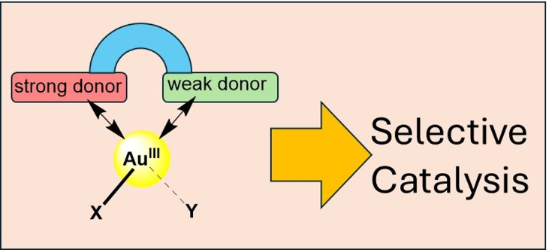
- structure and bonding in the transition state. As summarised in an early review by Appleton, Clark and Manzer [22], both σ-donation and π-effects of the ligands are important. Ligands with strong trans-influence are typically either strong π-acceptors such as CO and CN−, and strong σ-donors, like


Rongalite addition to dienones: diastereoselectivity in cyclic sulfone synthesis; stereochemical rationalization and prospects as a general conjugate nucleophile
Beilstein J. Org. Chem. 2026, 22, 742–752, doi:10.3762/bjoc.22.56

- used to rationalize the diastereoselectivity of the reaction by transition-state modeling, and showcases the conformational subtleties of sulfur-containing rings. Extension of the original reaction to double intermolecular additions is also demonstrated along with a comparative study of Rongalite with
- therefore more likely that steric effects in the transition state for the putative cyclization to give 8 are prohibitive. Indeed, we were unable to locate a transition state for this process computationally. In order to test the limits of the reaction with related substitution patterns in this process, we
- reaction of this type. What follows is an examination of the transition state structures leading to the trans and cis-isomers 12a and 12b; although the transition states leading to 1a and 1b may differ slightly in energy, they are very similar in appearance to those for 12a and 12b. Examination of the




Synthesis of heterocycles based on azomethine ylides from α-amino acids (or amines) and carbonyl compounds
Beilstein J. Org. Chem. 2026, 22, 705–741, doi:10.3762/bjoc.22.55
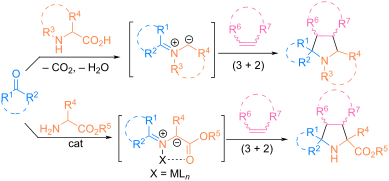
- high yields (77–98%) and good enantioselectivity (67–92% ee). The in situ-generated azomethine ylide is coordinated to the metal center and oriented in transition state A due to the spatial repulsion between the aryl or cyclohexyl group in the ylide and the cyclohexyl fragments of ligand L7, while its
- constraints and π–π interactions occurring in transition state E between the aromatic rings of the enone and iminoester substrates. It has been also demonstrated that in this particular (3 + 2) cycloaddition reaction ligand L9 acts as a pseudo-bidentate ligand. The formation of the enone Cu−O bond and the
- dissociation of the amine nitrogen of L9 from the Cu(I) center in the transition state F leads to a change in regioselectivity and the formation of cycloadduct 17 [46]. A similar catalytic system was successfully used for the asymmetric (3 + 2) cycloaddition of azomethine ylides with trisubstituted


Experimental and DFT studies on the regioselective methanolysis of 5-azido-9-oxabicyclo[6.1.0]nonan-4-yl 4-nitrobenzoate isomers
Beilstein J. Org. Chem. 2026, 22, 547–556, doi:10.3762/bjoc.22.40
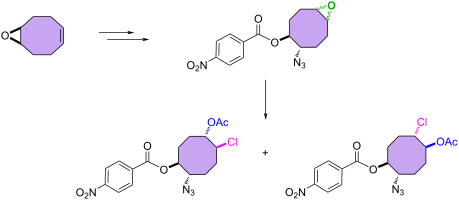
- difference between TS1 and TS2 (4.7 kcal/mol), compared to that between TS3 and TS4 (6.9 kcal/mol), can be attributed to hydrogen-bond stabilization in TS2, indicating that conformational effects play a more dominant role than hydrogen bonding in determining transition-state stability. Mulliken charge


Recent advances in the stereoselective synthesis of distal biaxially chiral molecules
Beilstein J. Org. Chem. 2026, 22, 461–479, doi:10.3762/bjoc.22.34
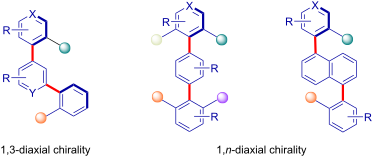
- potential applications in ligand and catalyst development. In a complementary direction, Smith’s group achieved the highly enantioselective synthesis of axially chiral naphthamides (Scheme 6) [47]. Their strategy employed transition-state hydrogen bonding to induce substrate deracemization, followed by


Synthesis and stereochemical analysis of dynamic planar chiral oxa[7]orthocyclophene
Beilstein J. Org. Chem. 2026, 22, 436–442, doi:10.3762/bjoc.22.30

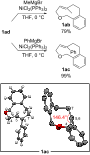
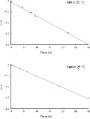
- still observed in the measurement at 5 °C, albeit only slightly. The phenyl-substituent effect on the stereochemical stability can be understood as a destabilization of the ground state due to the transannular repulsion, and a stabilization of the transition state for racemization by a conjugation






Recent advances in the cleavage of non-activated amides
Beilstein J. Org. Chem. 2026, 22, 352–369, doi:10.3762/bjoc.22.23
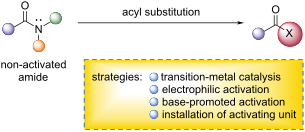
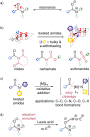
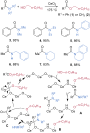
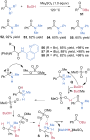
- generates the imidate-like intermediate Q. Subsequent nucleophilic attack of BuOH on the methyl group of Q leads to transition state R, accompanied by the departure of butyl methyl ether. Further attack of BuOH on the O-protonated amide, followed by an intramolecular proton transfer, furnishes transition
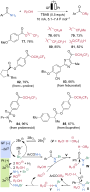
- intermediate anion X via the activated transition state W. Subsequent reorganization of hydrogen bonding toward the nitrogen center promotes C–N bond cleavage to give the ester product and intermediate Y. Decomposition of Y regenerates V and produces NH2Br, which is reduced at the cathode back to bromide
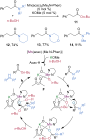
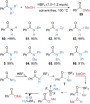
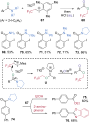
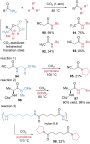
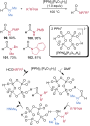
- (CO2) can catalyze transamidation reactions of amides by activating and stabilizing the tetrahedral transition state, which is a key intermediate (Scheme 16) [64]. Under a CO2 atmosphere, electron-deficient primary amides underwent smooth transamidation with butylamine to afford amide products 90 and










Spirobarbiturates with a pyrrolizidine moiety: synthesis, structure and biological evaluation
Beilstein J. Org. Chem. 2026, 22, 274–288, doi:10.3762/bjoc.22.20
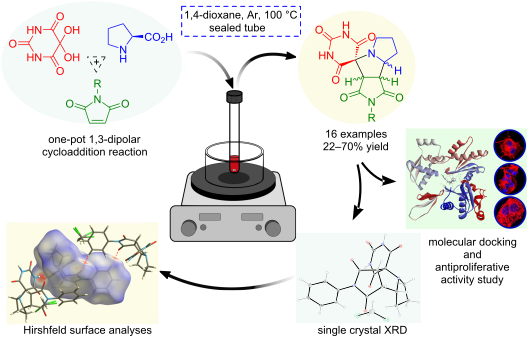
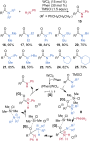
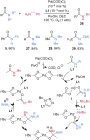
- preferential formation of the endo-adduct (upper pathway). The predominance of exo-isomers in some cases probably reflects insufficient stabilization due to secondary orbital interactions in the transition state [43]. It should be noted separately that secondary cyclic amino acids such as azetidine-2




Screwing the helical chirality through terminal peri-functionalization
Beilstein J. Org. Chem. 2026, 22, 205–212, doi:10.3762/bjoc.22.14
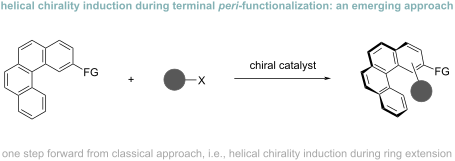
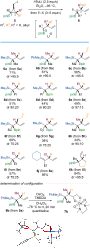
- phosphine oxide and the nitro-functionalized oxa[5]helicene. This ion-pairing interaction was also studied using NMR titration and Job’s plot analysis. The transition state depicted in Figure 3 was found to be most favorable providing the product with M-configuration. Looking ahead, these strategies may


Advances in Zr-mediated radical transformations and applications to total synthesis
Beilstein J. Org. Chem. 2026, 22, 71–87, doi:10.3762/bjoc.22.3
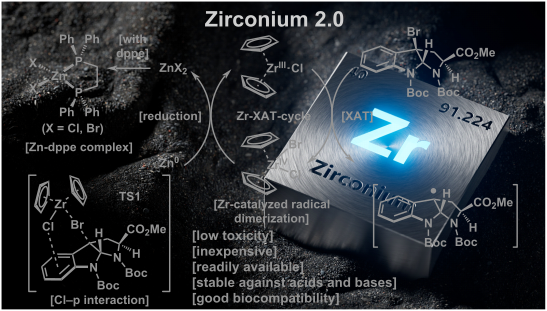
- for the success of the reaction. DFT calculations suggested that in the transition state (TS1), a Cl–π interaction between the chlorine atom on the zirconocene catalyst and the aromatic ring of the substrate facilitated rapid halogen atom transfer (XAT), generating a radical at the C3 position of
- potential and stabilizing the radical pathway. The DFT calculations are shown in Scheme 13A. The activation barrier for the XAT process was calculated to be ΔG‡ = 8.0 kcal/mol, indicating that this process can proceed spontaneously around room temperature. Moreover, the transition state (TS1) suggested the








Reactivity umpolung of the cycloheptatriene core in hexa(methoxycarbonyl)cycloheptatriene
Beilstein J. Org. Chem. 2026, 22, 64–70, doi:10.3762/bjoc.22.2
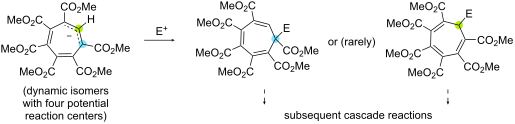
- hydrogen, conversely, induces the i-chlorination. Besides the obvious steric influence, the ester group slightly reduces the negative charge at the nucleophilic center (Figure 3) and can also influence the electronegative transition state in terms of orbital overlap. Additionally, we considered the


Mechanistic insights into hydroxy(tosyloxy)iodobenzene-mediated ditosyloxylation of chalcones: a DFT study
Beilstein J. Org. Chem. 2025, 21, 2703–2715, doi:10.3762/bjoc.21.208
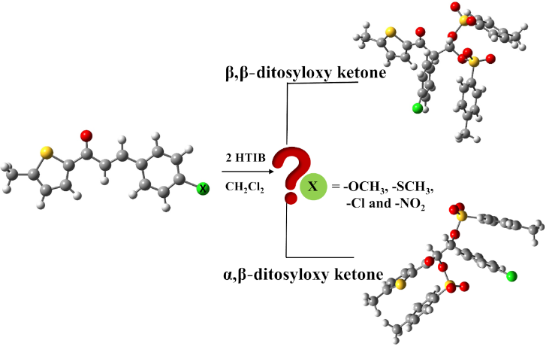
- while the 6-31G+(d,p) was used for remaining other atoms. The geometries of all ground state and transition state structures are optimized using the above specified basis sets and exchange-correlation functional. The effect of solvent was also taken into account using the SMD implicit solvation model
- . The solvent considered for the present study was dichloromethane (CH2Cl2). Frequency calculations were performed for all optimized structures to confirm the stationary point and transition state. Intrinsic reaction coordinate (IRC) calculations were carried out to validate the transition states. The
- . Effect of substituent group present on the migrating aryl ring on relative free energies (G) and relative potential energies (E) of the transition state, intermediates and product for the reaction pathway leading to formation of β,β-ditosyloxy ketones. The energies are reported relative to the reactant


Recent advances in total synthesis of illisimonin A
Beilstein J. Org. Chem. 2025, 21, 2571–2583, doi:10.3762/bjoc.21.199
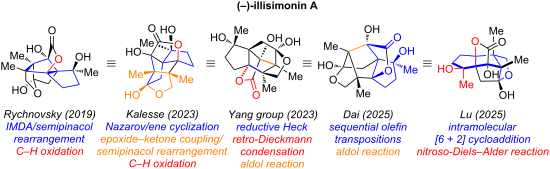
- . However, subsequent density functional theory (DFT) calculations by the Tantillo group on rearrangements of potential biosynthetic precursors revealed that structure 10 corresponds to a transition state rather than a stable intermediate of the 1,2-alkyl migration [27]. Their study further indicated that






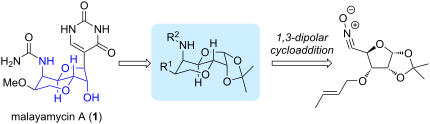
Rapid access to the core of malayamycin A by intramolecular dipolar cycloaddition
Beilstein J. Org. Chem. 2025, 21, 2542–2547, doi:10.3762/bjoc.21.196
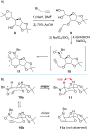
- undesired stereochemistry at C3 due to a possible chair-like transition state like 10a (Scheme 2B). This phenomenon is consistent with the observations from previous syntheses [31][35][36]. We anticipated that late-stage epimerization might invert the configuration once the acyl group is revealed at the C2




Synthesis of the tetracyclic skeleton of Aspidosperma alkaloids via PET-initiated cationic radical-derived interrupted [2 + 2]/retro-Mannich reaction
Beilstein J. Org. Chem. 2025, 21, 2470–2478, doi:10.3762/bjoc.21.189
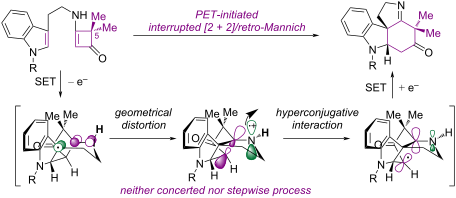
- formation of IN1. The radical cation IN1 served as the reference point for DFT investigations. As illustrated in Figure 2a, facilitated by a favorable radical cation–π interaction [31], IN1 proceeds to the first radical addition transition state (TS1), with an energy barrier of 8.3 kcal/mol. This leads to
- undergo reductive SET in the presence of [FCNIr(II)Pic]−. This leads to the regeneration of [FCNIr(III)Pic] to complete the catalytic cycle and formation of the final product via proton transfer. Intrinsic reaction coordinate (IRC) analysis showed the reaction coordinate connecting the transition state


The high potential of methyl laurate as a recyclable competitor to conventional toxic solvents in [3 + 2] cycloaddition reactions
Beilstein J. Org. Chem. 2025, 21, 2389–2415, doi:10.3762/bjoc.21.184
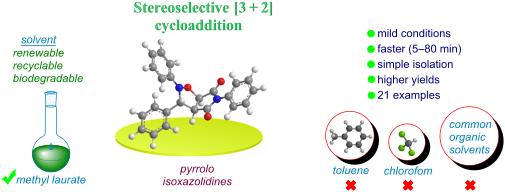
- solvent polarity results in a decrease in rate constants. This phenomenon is attributed to the lower polarity of the transition state in comparison to that of the initial compounds [61]. Furthermore, these methods often require harsh reaction conditions, prolonged reaction times, and laborious
- ]. The 28:72 exo/endo (cis/trans) isomer ratio (Table 1, entry 9), obtained in this cycloaddition reaction indicates that the endo transition state is more stable, and that the thermodynamically more stable trans isomer is the major product in the reaction proceeding diastereoselectively through this
- transition state (Scheme 2). Meanwhile, the diastereomeric ratio of interest can be determined by integrating the 1H NMR spectra, in particular by selecting the appropriate signal pairs (one from each diastereomer) belonging to the respective cycloaddition product. An example of these selected protons (trans


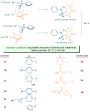


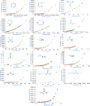


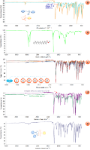
Pathway economy in cyclization of 1,n-enynes
Beilstein J. Org. Chem. 2025, 21, 2260–2282, doi:10.3762/bjoc.21.173
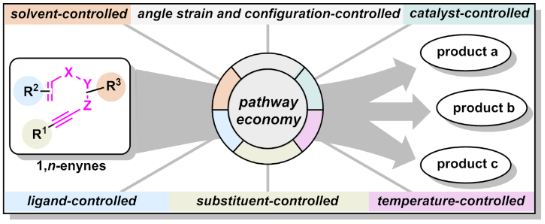
- configuration exert pronounced effects on reaction pathways. These substrate-specific geometric parameters directly dictate transition state formation during ring closure. Recent advances demonstrated that deliberate manipulation of angle strain and configuration enabled divergent skeletal outcomes under


Asymmetric total synthesis of tricyclic prostaglandin D2 metabolite methyl ester via oxidative radical cyclization
Beilstein J. Org. Chem. 2025, 21, 1964–1972, doi:10.3762/bjoc.21.152
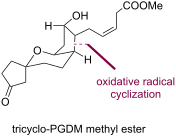
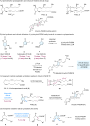
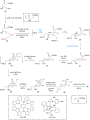
- a single diastereomer (Table 1, entry 4). To explain this diastereoselectivity, we hypothesize that the C–O bond, which occupies an axial position in the proposed transition state TS-1, could avert an additional hyperconjugative interaction (σ*C-O/π) that renders the reacting C=C bond electron
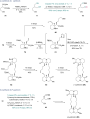
- connection of C8 and C12 in compound 21 could be realized through a photoredox-catalyzed radical cyclization of unactivated alkene-substituted β-ketoester 27. This reaction was expected to involve a 5-exo-trig radical cyclization via transition state TS-3 [38], in which the diastereoselectivity could be



Enantioselective desymmetrization strategy of prochiral 1,3-diols in natural product synthesis
Beilstein J. Org. Chem. 2025, 21, 1932–1963, doi:10.3762/bjoc.21.151

- with the desired C6 chiral center was constructed via intermediate 229, where the sulfinyl group induced K+–oxygen chelation to form a six-membered transition state prior to protonation from the less hindered face. Acid-mediated epimerization at C9 of 230 yielded compound 231, which was transformed












Preparation of spirocyclic oxindoles by cyclisation of an oxime to a nitrone and dipolar cycloaddition
Beilstein J. Org. Chem. 2025, 21, 1890–1896, doi:10.3762/bjoc.21.146
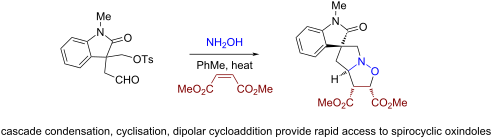
- stereoisomer has the ring-junction NC–H bond, the imide carbonyls, and the oxindole carbonyl all cis to one another across the two newly formed rings. This must arise from a preference for an exo transition state that places the incoming maleimide away from the oxindole carbonyl. The cascade chemistry allows


Chiral phosphoric acid-catalyzed asymmetric synthesis of helically chiral, planarly chiral and inherently chiral molecules
Beilstein J. Org. Chem. 2025, 21, 1864–1889, doi:10.3762/bjoc.21.145
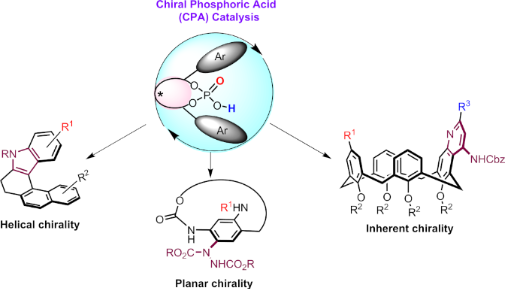
- CPA-catalyzed cyclization of INT-E through the dual hydrogen bonding activation transition state TS-1 afforded the eight-membered heterocycle INT-F with a stereogenic center. Through the elimination of aniline 73, the saddle-shaped dibenzo[1,5]diazocine 72 was produced via a central-to-inherent