


Search results
Search for "air" in Full Text gives 744 result(s) in Beilstein Journal of Organic Chemistry. Showing first 200.
Controlled supramolecular assemblies of luminescent tridentate cyclometalated alkynylgold(III) amphiphiles in aqueous media
Beilstein J. Org. Chem. 2026, 22, 1097–1106, doi:10.3762/bjoc.22.88
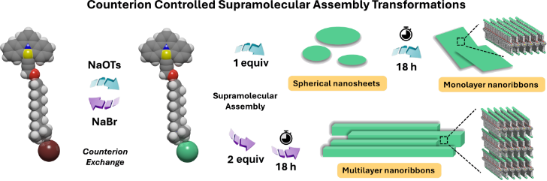
- 16M CCD camera. Atomic force microscopy (AFM): The atomic force microscopy was performed on a JPK NanoWizard V BioScience AFM (Bruker) equipped on Nikon ECLIPSE Ti-2 microscope with a cantilever (RFESPG-75, Bruker). The measurement of the assembled morphology was conducted in air with the Peakforce


Semisynthesis, characterisation, and antibacterial evaluation of a novel lecanoric acid-derived amide library
Beilstein J. Org. Chem. 2026, 22, 1023–1032, doi:10.3762/bjoc.22.81
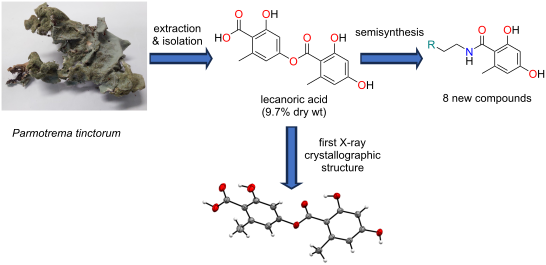
- characterisation of a novel biodiscovery screening library. Additionally, we report the antibacterial evaluation of the isolated natural products and semisynthetics against the Gram-negative human pathogen, Pseudomonas aeruginosa. Results and Discussion Air-dried and ground Parmotrema tinctorum specimens were
- private property in Holland Park, Queensland, Australia on the 5th of April 2023. Patrick McCarthy and Jack Elix performed the taxonomic identification of the lichen. The freshly collected lichen was air-dried at room temperature for one month prior to the extraction and isolation chemistry. A voucher
- specimen has been deposited at the Institute for Biomedicine and Glycomics, Griffith University, Brisbane, QLD 4111, Australia. Extraction and isolation The air-dried and ground specimen of Parmotrema tinctorum (10.0 g) was extracted sequentially with CH2Cl2 (250 mL, 2 h) and MeOH (250 mL, 2 h; 250 mL, 16


Z-Selective semihydrogenation of alkynes via Ni/Lewis acid synergistic catalyzed system using DMF as hydrogen source and solvent
Beilstein J. Org. Chem. 2026, 22, 1004–1012, doi:10.3762/bjoc.22.79
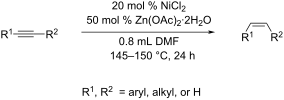
- . Overall, this work provides a practical and cost-effective alternative to existing semihydrogenation methods and highlights the potential of base metal synergistic catalysis in stereocontrolled synthetic transformations. Experimental All experiments were performed under air. An oven-dried reaction vessel



Recent advances in copper-catalyzed direct hydroamination of alkenes with (hetero)aromatic amines
Beilstein J. Org. Chem. 2026, 22, 925–947, doi:10.3762/bjoc.22.73
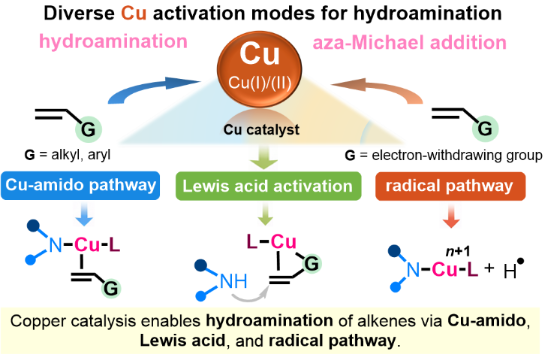
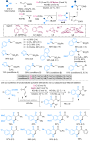
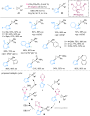
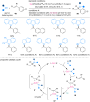
- carbonyl compounds 5 to form the β-amino ketone intermediates, which subsequently underwent base-mediated intramolecular cyclization using KOt-Bu and air oxidation of the resulting 2,3-dihydro-4(1H)-quinolinone intermediates 7 in the presence of HCl to yield functionalized quinolin-4(1H)-one derivatives 6
- Scheme 7, the use of an air- and moisture-stable (CAAC)Cu–Cl catalyst in the presence of KOt-Bu enabled the efficient hydroamination of activated olefins 12 bearing electron-withdrawing groups such as esters, nitriles, and sulfone substituents. Under these conditions, various anilines reacted efficiently
- functionality generated a hemiaminal intermediate, which underwent Cu(I)-assisted air oxidation to produce the corresponding amide intermediate 27. Subsequent intramolecular aza-Michael addition of the pyridinyl nitrogen to the activated α,β-unsaturated ester led to cyclization, ultimately furnishing the







The trans-influence in gold chemistry from a catalytic perspective
Beilstein J. Org. Chem. 2026, 22, 838–856, doi:10.3762/bjoc.22.66
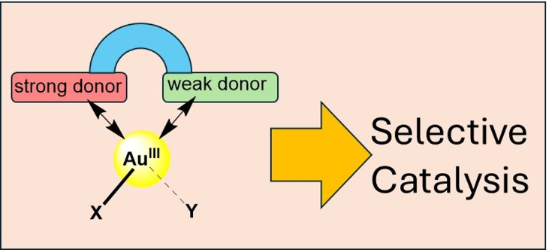
- (II) congener, K[PtCl3(ethylene)] [28], as well as the first examples of gold(III) alkyne [29], CO [30], hydride [31] and σ-complexes [32] (Scheme 3). The olefin complexes were isolated as microcrystalline powders which as dry solids are fairly stable in air at room temperature. The olefin bonding is
- chemical reactivity. For example, 8a proved stable to air, water and acetic acid, although stronger acids like trifluoroacetic lead to decomposition due to protolytic cleavage of one of the Au–phenyl bonds [31][32]. The stabilising effect of the N-donor in C^N^C ligands is seen quite generally and leads to


Knoevenagel condensation of 4,5- and 1,8-diazafluorenes
Beilstein J. Org. Chem. 2026, 22, 803–812, doi:10.3762/bjoc.22.62
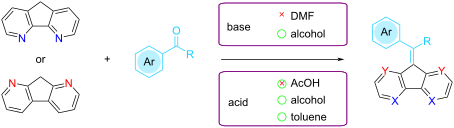
- washed sequentially with water, methanol, hexane, then dried in air. General method (A2) for the condensation in other acidic conditions A mixture of diazafluorene (30.0 mg, 0.18 mmol), ammonium acetate (60.5 mg, 0.79 mmol), and aldehyde (0.20 mmol), glacial acetic acid (0.02 mL, 0.36 mmol), ethanol or
- , methanol, hexane, and dried in air. In the case of absence of any precipitate, the solutions were extracted with chloroform, dried over anhydrous MgSO4 and concentrated under reduced pressure. The products were purified either by column chromatography on silica gel (eluent ethyl acetate) or by addition of
- diethyl ether to the residue after evaporation followed by filtration of the resulting precipitate, which was then washed with diethyl ether, and dried in air. General method (B1) for the condensation in basic conditions In a manner analogous to [34]. A solution of diazafluorene (30.0 mg, 0.18 mmol) in




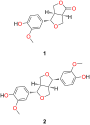
Anti-invasive and cytotoxic evaluation of a (+)-pinoresinol-based semisynthetic library against glioblastoma
Beilstein J. Org. Chem. 2026, 22, 691–704, doi:10.3762/bjoc.22.54
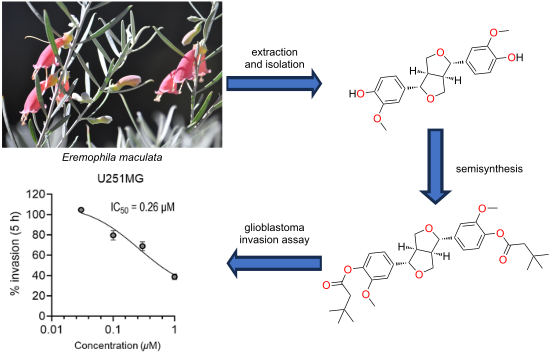
- cancer cells from moving. In this study, a unique plant-derived lignan‑based library was screened against glioblastoma (brain cancer) cell lines to evaluate anti-invasive and cytotoxicity effects. Results and Discussion The air-dried and ground seeds of E. maculata were sequentially extracted with CH2Cl2
- biota library housed at the Institute for Biomedicine and Glycomics, Griffith University, Australia. This seed sample was collected on December 3, 1993 at Mount Crosby, Queensland, Australia. A voucher specimen (AQ600324) has been deposited with the Queensland Herbarium. Extraction and isolation The air



Photoorganocatalytic trifluoromethylation of (het)arenes in green conditions
Beilstein J. Org. Chem. 2026, 22, 662–671, doi:10.3762/bjoc.22.50
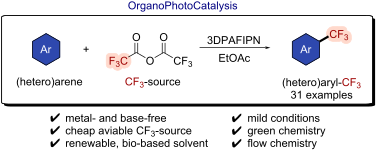
- protocol [16]. Finally, a series of control experiments was carried out. No product formation was observed in the absence of catalyst (Table 1, entry 11), in the dark (entry 12), in the presence of TEMPO (entry 13), or under an air atmosphere (entry 14). Based on the optimization studies, the standard
- , radical trapping experiments were conducted. In line with the results obtained during the optimization, no product formation was observed in the presence of TEMPO or under air (Table 2, entries 13 and 14). To further probe the mechanism, the reaction mixture from the TEMPO-containing experiment was


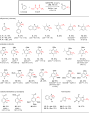


Modern synthetic pathways towards eribulin and its subunits
Beilstein J. Org. Chem. 2026, 22, 495–526, doi:10.3762/bjoc.22.37
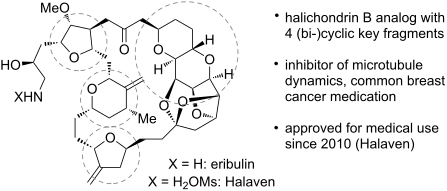
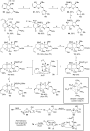
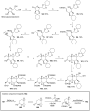
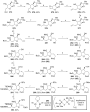
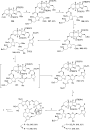
- , 38, 39 (proton sponge), LiCl, Mn, ZrCp2Cl2, MeCN, EtOAc; (b) SrCO3, t-BuOH, H2O, open air; (c) Pd2dba3, PCyp3, CrCl3, NbCpCl4, Zn(0), DMI, THF; PCyp3: tricyclopentylphosphine; DMI: 1,3-dimethyl-2-imidazolidinone. Synthesis of 45. Above: Reaction conditions: (a) methoxyacetic acid, BF3·OEt2, DCM, −30








Recent advances in the stereoselective synthesis of distal biaxially chiral molecules
Beilstein J. Org. Chem. 2026, 22, 461–479, doi:10.3762/bjoc.22.34
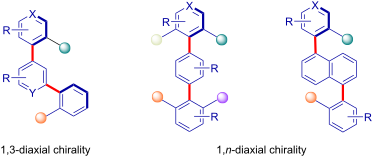
- axially chiral bridged teraryl molecules 34 (Scheme 9) [50]. This method provided access to biaxial bridged eight-membered terphenyl atropisomers with broad substrate scope, high yields, and operational simplicity under air. In parallel, Shi’s group developed a cobalt-catalyzed asymmetric synthesis of


Synthesis of diaryl phosphates using phytic acid as a phosphorus source
Beilstein J. Org. Chem. 2026, 22, 213–223, doi:10.3762/bjoc.22.15
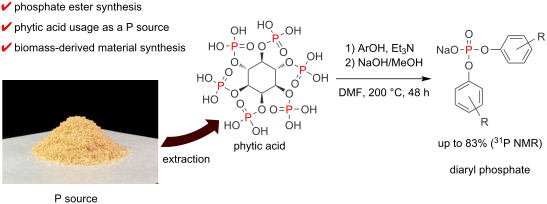
- for 1 h. The delipidated rice bran was filtered through a non-woven filter and dried in air overnight. A 1.0 M HCl solution (300 mL) was poured into the rice bran, and the produced mixture was stirred with a magnetic stirrer for 1 h. After stirring, the pH of the extract was adjusted to 4.5 with 8.0 M




Base-promoted deacylation of 2-acetyl-2,5-dihydrothiophenes and their oxygen-mediated hydroxylation
Beilstein J. Org. Chem. 2026, 22, 192–204, doi:10.3762/bjoc.22.13
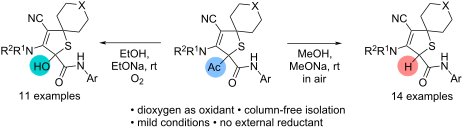
- products (Scheme 1D) or the deacetylated products (Scheme 1E) have been developed. Results and Discussion Dihydrothiophene 1a was selected as a model substrate for our optimization study (Table 1). Initially, this compound was treated in ethanolic solution (2 mL) at room temperature in air for 1 h in the
- air this reaction proceeded more selectively, and the pure product 3a was isolated in 78% yield (Table 1, entry 9). Hydroxy-substituted product 2a also formed in solution of iPrOH or n-BuOH, and this product was isolated in 35 or 46% yields, respectively (Table 1, entries 10 and 11). In a solution of
- -dihydrothiophene 2a were found to be the use of 5.0 equiv of sodium in an oxygen saturated ethanolic solution at rt for 1 h. The deacylated product 3a was synthesized in high yield when the reaction was performed with 5.0 equiv of sodium in methanolic solution at rt for 1 h in contact with air. With these optimal


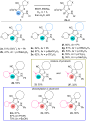


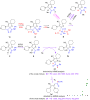
Synthesis of new tetra- and pentacyclic, methylenedioxy- and ethylenedioxy-substituted derivatives of the dibenzo[c,f][1,2]thiazepine ring system
Beilstein J. Org. Chem. 2025, 21, 2645–2656, doi:10.3762/bjoc.21.205
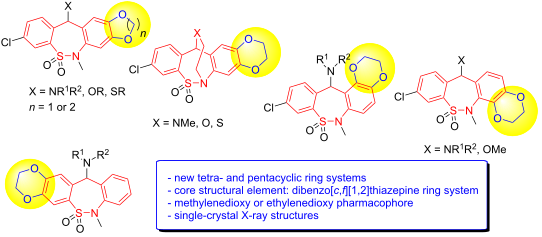
- room temperature (ca 3 h). The crystalline product separated was filtered, washed with diluted hydrochloric acid (5%, 2 × 50 mL) and water (2 × 50 mL), then air-dried to give crude 7 (17.6 g of off-white solid). The two-phase filtrate was separated, the strongly acidic aqueous phase was washed with DCM
- dissolved in 10 mL of water, containing 6 mmol of HCl). It was stirred at room temperature for 5 h, the solid product obtained was filtered, washed with water (2 × 3 mL), and air-dried. It was dissolved in acetone (20 mL), the solution was treated with charcoal (0.20 g), and evaporated in vacuo. The residue


Silica gel with covalently attached bambusuril macrocycle for dicyanoaurate sorption from water
Beilstein J. Org. Chem. 2025, 21, 2604–2611, doi:10.3762/bjoc.21.201
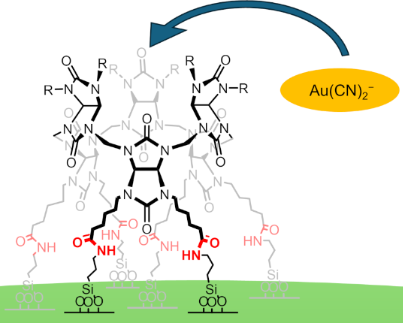
- was filtered and thoroughly washed with DMF, water and methanol in order to remove byproducts and unreacted BU1. After air-drying, SG-NHCO-BU1 was obtained. Preparation of SG-BU1 For the preparation of SG-BU1 with electrostatically bound BU1 on the surface of silica gel, a-SG (0.9 g) was suspended in
- DMF (15 mL) and BU1 (0.1 g), dissolved in a minimum amount of DMF, was added. The dispersion was mechanically shaken (180 rpm) at ambient temperature for 5.5 h. Afterwards, the dispersion was filtered, washed with DMF (5×) and methanol (5×) to remove unattached BU1. After air-drying in a hood


Assembly strategy for thieno[3,2-b]thiophenes via a disulfide intermediate derived from 3-nitrothiophene-2,5-dicarboxylate
Beilstein J. Org. Chem. 2025, 21, 2489–2497, doi:10.3762/bjoc.21.191
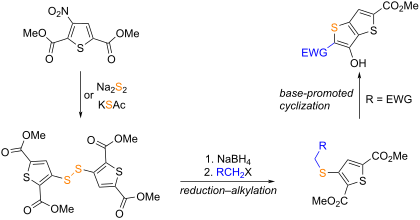
- visible region, and improved morphological stability [4][5][6]. Recent reports have shown that the development of alkyl-supported TT-based semiconductors has led to high-performance, air-stable OFETs [7], while integration of TT frameworks into donor–acceptor architectures has enabled the development of



The high potential of methyl laurate as a recyclable competitor to conventional toxic solvents in [3 + 2] cycloaddition reactions
Beilstein J. Org. Chem. 2025, 21, 2389–2415, doi:10.3762/bjoc.21.184
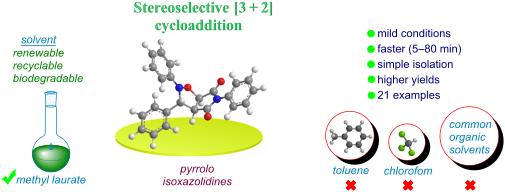
- chloroform and toluene do not pose a risk to 3 species (please see the green colored icons). In terms of environmental risk factors, the persistence of methyl laurate in soil, sediment and water, with the exception of air, is significantly lower than that of the other two solvents (values are calculated in
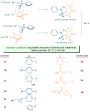
- of hexane and dried in open air. The resulting mixture of isomers was subjected to direct NMR analysis, without any additional purification or separation steps. Versatile compounds via cycloaddition reactions. a) Radar view of the physical properties of methyl laurate. b) Oral toxicity values of






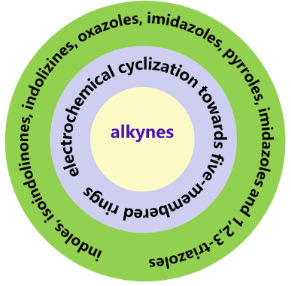
Electrochemical cyclization of alkynes to construct five-membered nitrogen-heterocyclic rings
Beilstein J. Org. Chem. 2025, 21, 2173–2201, doi:10.3762/bjoc.21.166
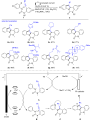
- (0.3 mmol) and n-Bu4NBF4 (0.45 mmol), under electrolysis (Pt plate as electrodes, 5 mA) at air for 10 h. Electron-donating (Me, Et, t-Bu and OMe) or electron-withdrawing (Cl, Br and F) groups involved phenylacetylenes, 1-ethynylnaphthalene and 2-ethynylthiophene were tolerated well under these reaction





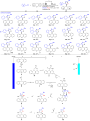
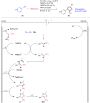

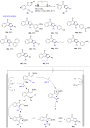


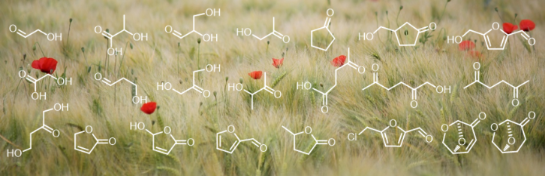
C2 to C6 biobased carbonyl platforms for fine chemistry
Beilstein J. Org. Chem. 2025, 21, 2103–2172, doi:10.3762/bjoc.21.165
- a C1 building block for the N-formylation of secondary amines to formamides under catalyst-free conditions and air as oxidant. This method was applied to different aromatic and aliphatic (both cyclic and acyclic) amines (Scheme 3) [31]. Already in 1955, Parham and Reiff reported the synthesis and


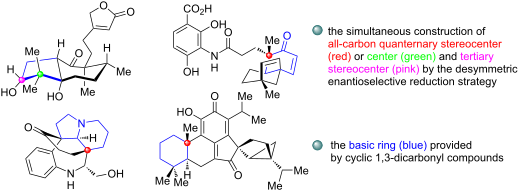
The application of desymmetric enantioselective reduction of cyclic 1,3-dicarbonyl compounds in the total synthesis of terpenoid and alkaloid natural products
Beilstein J. Org. Chem. 2025, 21, 2085–2102, doi:10.3762/bjoc.21.164
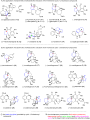
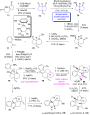
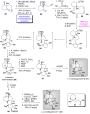
- and aldehyde 37, which was prepared with 9 steps from commercially available (+)-citronellol, underwent a Reformatsky-type radical addition under the conditions of Et3B/air/Bu3SnH to deliver aldol product [16]. Dehydration of the secondary alcohol gave (E)-38. The HAT radical cyclization [17] of 38 in







Photoswitches beyond azobenzene: a beginner’s guide
Beilstein J. Org. Chem. 2025, 21, 1808–1853, doi:10.3762/bjoc.21.143
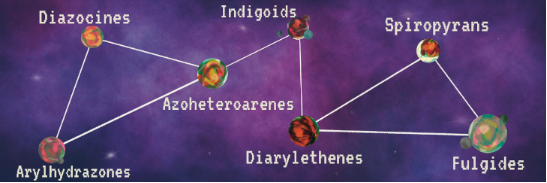
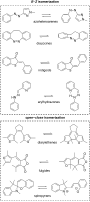
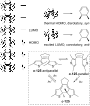
- , this form is not stable, and it easily undergoes irreversible oxidation under air to give phenanthrene (IV). This challenge was addressed by substituting the hydrogen atoms with methyl groups in 124-II. Moreover, the E–Z isomerisation could be avoided by adding a ring to the central double bond, thus






Fe-catalyzed efficient synthesis of 2,4- and 4-substituted quinolines via C(sp2)–C(sp2) bond scission of styrenes
Beilstein J. Org. Chem. 2025, 21, 1799–1807, doi:10.3762/bjoc.21.142
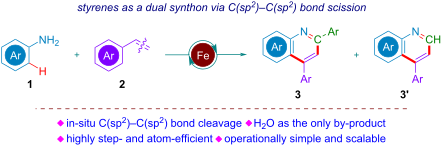
- [53]. In this work, the authors used a stoichiometric amount of Zn(OTf)3 as a Lewis acid catalyst and air as the oxidant for the reaction. Jana and colleagues demonstrated an atom-efficient pseudo-three-component C–H annulation reaction catalyzed by Yb and Cu, which involved nitrosoarenes and styrene


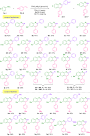


Formal synthesis of a selective estrogen receptor modulator with tetrahydrofluorenone structure using [3 + 2 + 1] cycloaddition of yne-vinylcyclopropanes and CO
Beilstein J. Org. Chem. 2025, 21, 1639–1644, doi:10.3762/bjoc.21.127
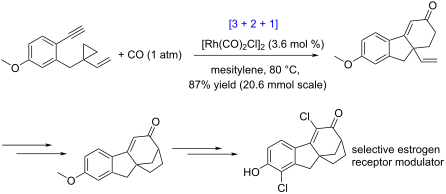
- target Heck coupling, finding that using 1,4-dioxane as the solvent and 20 mol % PdCl2 as the catalyst, 11 could be obtained in 40% yield in the air. We tried by using more catalyst, or adding O2 (or CuCl2) as oxidant, but all these efforts did not give improved reaction yields (the reason for this was


Facile synthesis of hydantoin/1,2,4-oxadiazoline spiro-compounds via 1,3-dipolar cycloaddition of nitrile oxides to 5-iminohydantoins
Beilstein J. Org. Chem. 2025, 21, 1552–1560, doi:10.3762/bjoc.21.118

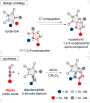
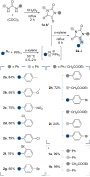
- triethylamine solution was slowly added dropwise to the reaction mixture at 0 °C under an inert gas atmosphere to avoid moisture from the air (“classical” method). In another method, the base was inserted via diffusion of NEt3 into a solution containing the dipolarophile and dipole precursor (see Figure S1 in



General method for the synthesis of enaminones via photocatalysis
Beilstein J. Org. Chem. 2025, 21, 1535–1543, doi:10.3762/bjoc.21.116
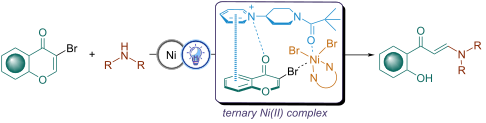
- adduct 10 was identified using GC–MS (Figure S1, Supporting Information File 1). When the reaction was performed under air-equilibrated conditions, the intended product 9a was obtained in a 31% yield, indicating that air influenced the interaction between the Ni-catalyst and the α,β-unsaturated carbonyl




Ambident reactivity of enolizable 5-mercapto-1H-tetrazoles in trapping reactions with in situ-generated thiocarbonyl S-methanides derived from sterically crowded cycloaliphatic thioketones
Beilstein J. Org. Chem. 2025, 21, 1508–1519, doi:10.3762/bjoc.21.113
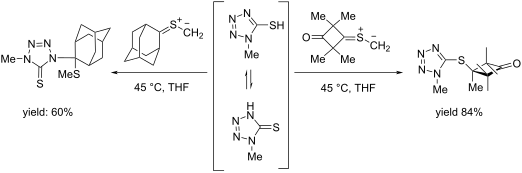
- hours of cooling a colorless solid was separated. The crystalline material was filtered off and dried in the air at rt. 10-Thia-7,8-diazatrispiro[4.0.46.0.411.15]hexadec-7-en-16-one (2c): Yield: 910.0 mg (91%); mp 53‒55 °C (dec.); 1H NMR (CDCl3) δ 1.32–1.39 (m, 2H), 1.39–1.48 (m, 2H), 1.53–1.60 (m, 2H





