


Search results
Search for "electrophilic" in Full Text gives 819 result(s) in Beilstein Journal of Organic Chemistry. Showing first 200.
An undecacyclic carbon-centered hydrocarbon radical: synthesis and investigation
Beilstein J. Org. Chem. 2026, 22, 1196–1204, doi:10.3762/bjoc.22.95
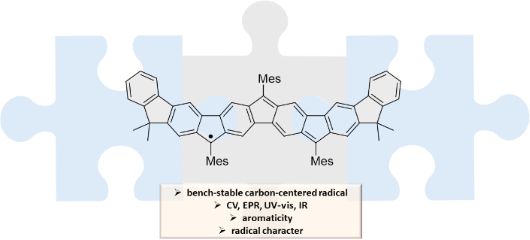
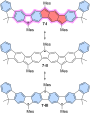
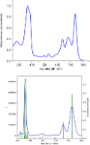
- -conjugated system. The target radical was obtained in eight consecutive synthetic steps with an overall yield of 7%, with a Suzuki coupling and cyclization via electrophilic aromatic substitution (SEAr) serving as key steps. Mesityl substituents attached to the five-membered rings provide kinetic






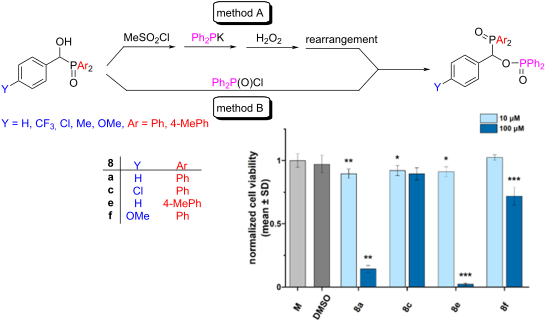
The surprising reaction of (chloro- and methanesulfonyloxy)(phenyl)methylphosphonates and –(phenyl)methylphosphine oxides with potassium diphenylphosphide followed by oxidation
Beilstein J. Org. Chem. 2026, 22, 1160–1167, doi:10.3762/bjoc.22.93
- electrophilic than that of the P(O)(OEt)2 function, the latter center may be approached easier than the more hindered P(O)Ph2 unit. The other possibility is that the bis(>P(O))hydroxymethylene derivative 9, that is as a matter of fact, the adduct of α-oxophosphonate 10 and diphenylphosphine oxide, or that of α
- afford a single isomer. However, in the instance, when Ar = 4-MePh, the selectivity may be explained by electronic reasons, as the P atom of the P(O)Ph2-function is more electrophilic than that of the P(O)(4-MePh)2 moiety. Purification by column chromatography afforded products 8a–e in 37–56% yields


Construction of CF2 moieties in FDA-approved drugs (2016–2025): industrial routes, mechanisms, and scale-up considerations
Beilstein J. Org. Chem. 2026, 22, 1122–1150, doi:10.3762/bjoc.22.91
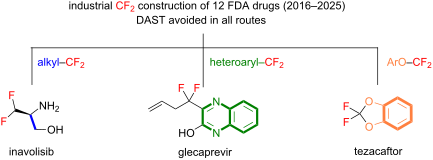
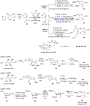
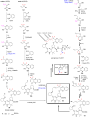
- approaches and building block-based approaches. Key process steps and scale-up data are summarized in Table 1. The article systematically discusses four types of reaction mechanisms – nucleophilic fluorination, electrophilic fluorination, radical pathways, and carbene insertion – and evaluates their
- -ring CF2 fragments, as reviewed in 2024 [4]. In 2025, Sun et al. [5] systematically reviewed recent methods for constructing CF2 groups, categorizing them by reaction mechanism (radical difluoromethylation, transition-metal-catalyzed difluoromethylation, nucleophilic and electrophilic
- electrophilic nature of alkylidene 28, the reaction also produced 29, an addition product of 28 with ethanol, as well as an addition product of 28 with water. Screening of Lewis acids revealed that the addition of magnesium chloride effectively suppressed the formation of the water adduct, and although the by






One-pot four-component sequential synthesis of S-alkyl dithiocarbamates using lipase as a biocatalyst
Beilstein J. Org. Chem. 2026, 22, 1048–1056, doi:10.3762/bjoc.22.83
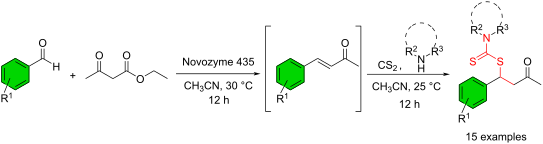
- the development of efficient and diverse synthetic methodologies for S-alkyl dithiocarbamates remains crucial. The synthesis of S-alkyl dithiocarbamates is primarily achieved through multicomponent reactions [17][18] that involve primary or secondary amines, carbon disulfide (CS2), and electrophilic


Cascade transformation of 2-(diazoacetyl)-2H-azirines to 2-aroyl-3-hydroxy-1H-pyrroles via condensation with aromatic aldehydes
Beilstein J. Org. Chem. 2026, 22, 897–904, doi:10.3762/bjoc.22.70
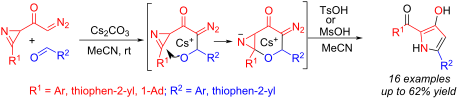
- starting diazoketone 1a–i and l, while under the conditions used it was not possible to achieve complete conversion of diazoketones 1j,k and the yield of compounds 5n,o was 18 and 23%, respectively. The first step of the reaction fails with aliphatic aldehyde (propanal) and the weakly electrophilic N
- -methylpyrrole-2-carbaldehyde and 4-hydroxybenzaldehyde, likely due to a shift in equilibrium toward the starting compounds. The reaction with strongly electrophilic, acceptor-substituted aromatic aldehydes, 4-nitro-, 4-cyanobenzaldehydes, and pyridine-4-carbaldehyde, is accompanied by complete resinification of


Diastereodivergent electrophilic trapping of α-boryl lithium derivatives
Beilstein J. Org. Chem. 2026, 22, 882–887, doi:10.3762/bjoc.22.68
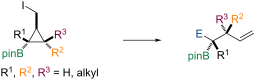
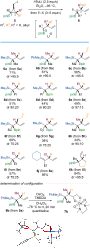
- facial selectivity during electrophilic trapping. These findings expand the synthetic utility of α-boryl lithium intermediates and provide insight into the origins of their diastereoselectivity. Keywords: α-boryl lithium; diastereoselectivity; (iodomethyl)cyclopropylboronic esters; ring-opening
- diverse catalytic and stereoselective transformations [28][29][30][31][32][33]. In this context, we have recently demonstrated that a broad range of arylated (iodomethyl)cyclopropylboronic ester 2 [34] undergo ring-opening reactions, followed by electrophilic trapping of the resulting α-boryl carbanion
- regioselectivity. The use of various electrophiles enabled the synthesis of acyclic boronic esters featuring vicinal tri- and tetrasubstituted stereocenters. Cyclopropylmethyl iodide starting materials. Synthesis and reactivity of α-boryl lithium species. Diastereodivergent electrophilic trapping of α-boryl




Site-specific labelling of native peptides and proteins: chemical and enzymatic strategies
Beilstein J. Org. Chem. 2026, 22, 857–881, doi:10.3762/bjoc.22.67
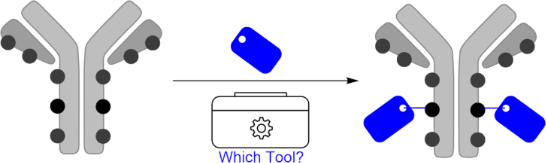
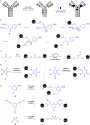
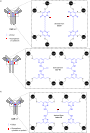
- proteins, including somatostatin, immunoglobulins (across all isotypes and subclasses), insulin and interleukin-10 naturally contain disulfide bridges. These can be selectively reduced to yield two nucleophilic thiols for reaction with bis-electrophilic reagents to rebridge the cysteines, while introducing
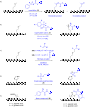
- for enzyme modification [46]. This concept evolved into activity-based protein profiling (ABPP), pioneered by the Cravatt group, where peptides or small molecules bearing electrophilic groups covalently react with active-site residues, enabling phenotype-driven functional profiling in a complex
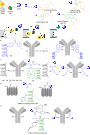
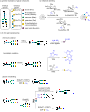
- substrate profiling. Affinity-guided labelling. a) Reagents and catalysts appended to the binder include electrophilic motifs 14–17 as well as b) benzophenone 18, c) rhodium complexes 19, d) 4-dimethylaminopyridine 20 (DMAP), and e) pyridinium aldoxime 21 (PyOx). Chemical sequence to convert subtilisin








The trans-influence in gold chemistry from a catalytic perspective
Beilstein J. Org. Chem. 2026, 22, 838–856, doi:10.3762/bjoc.22.66
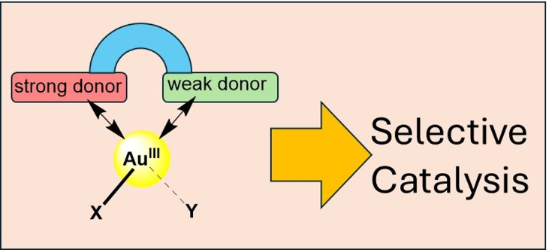
- H–H bond cleavage had been reported earlier by Rocchigiani et al. for the highly electrophilic ether adduct [(C^N–CH)Au(C6F5)OEt2]+ which shows “frustrated Lewis pair” (FLP)-like reactivity (Scheme 7) [32]. The electrophilic character of CO ligated to gold explains why gold is more active than


Synthesis and structural elucidation of a novel bis-spirooxindole from isatin and ethylenediamine
Beilstein J. Org. Chem. 2026, 22, 813–820, doi:10.3762/bjoc.22.63

- approaches [2][3][4][5]. In this context, comprehensive medicinal chemistry studies consistently highlight the prominence of isatin-derived frameworks among bioactive and anticancer agents [6]. The remarkable reactivity of the isatin scaffold arises from its dual functionality, combining an electrophilic C-3
- complexity and, in some cases, unexpected reaction outcomes. In reactions involving amino acids or diamines, the coexistence of multiple nucleophilic and electrophilic sites can give rise to competing pathways and polycyclic architectures. A well-documented example is the condensation of isatin (1) with ʟ
- and 24 may coexist in equilibrium. The diimine 24 could also be in equilibrium with its tautomeric form 27. If the enol present in 27 attacks intramolecularly the other imine, it would produce a non-stabilised imine 28, which would be electrophilic and hence susceptible to reduction either by the


Knoevenagel condensation of 4,5- and 1,8-diazafluorenes
Beilstein J. Org. Chem. 2026, 22, 803–812, doi:10.3762/bjoc.22.62
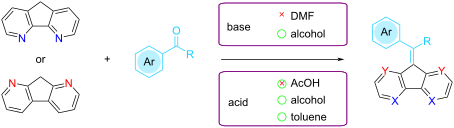
- . Specifically, solvation by aprotic DMF having a high dipole moment promotes the formation of the [Na+–diazafluorenyl−] ion pair, whose anion displays insufficient nucleophilicity for interaction with weakly electrophilic aldehydes (e.g., benzaldehyde and 4-methoxybenzaldehyde). On the other hand, tert-butanol




Rongalite addition to dienones: diastereoselectivity in cyclic sulfone synthesis; stereochemical rationalization and prospects as a general conjugate nucleophile
Beilstein J. Org. Chem. 2026, 22, 742–752, doi:10.3762/bjoc.22.56

- experimental and computational study of the diastereoselectivity of cyclic sulfone synthesis by reaction of Rongalite with doubly electrophilic dienones is presented. Computational methods, including density functional theory, conformational search methods, and internal reaction coordinate methods, have been
- (indicated). There is nothing to suggest from the calculations that an inherent reactivity problem prevents the initial addition of Rongalite to the enone, especially given that the singly electrophilic 2,6-dimethylbenzalacetone is known to participate in reactions with conjugate nucleophiles [25]. It is
- donors [47] or, given the high solubility of Rongalite in water, phase-transfer catalysis [48]. Our earlier results indicate that tolerance of steric effects is greater in reactions with doubly electrophilic substrates that render the second conjugate addition intramolecular, justifying our choice of




Synthesis of heterocycles based on azomethine ylides from α-amino acids (or amines) and carbonyl compounds
Beilstein J. Org. Chem. 2026, 22, 705–741, doi:10.3762/bjoc.22.55
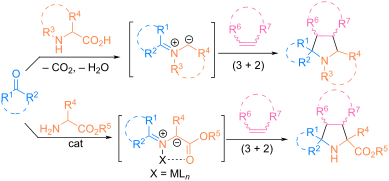
- from imino esters, catalyzed by chiral Cu(I,II) and Ag(I) complexes, are widely used. Reactions using α-amino acids proceed, in most cases, without the use of catalysts, with high yields and high stereoselectivity. Electrophilic alkenes of various structures, (hetero)aromatic olefins and benzofulvenes
- compounds were reviewed. Rare methods for preparing azomethine ylides using pyridylimines and α-silylimine were described. Electrophilic alkenes, styrene derivatives, and new, previously undescribed unsaturated substrates were frequently used as dipolarophiles. The contribution of our research group to the
- iminoester 1 with tert-butyl acrylic acid ester 4 occurs first. This is followed by condensation of pyrrolidine 9 with cinnamic aldehyde (10) to form azomethine ylide B, which enters into a second diastereoselective 1,3-DC with various electrophilic alkenes. The authors used acrylic acid esters, vinylphenyl


Photoorganocatalytic trifluoromethylation of (het)arenes in green conditions
Beilstein J. Org. Chem. 2026, 22, 662–671, doi:10.3762/bjoc.22.50
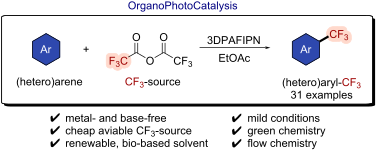
- that CF3· behaves as an electrophilic radical [31][32], it was expected to react preferentially with electron-rich substrates compared to electron-neutral or electron-deficient ones. To probe this trend, trifluoromethylation was examined with substrates bearing donor substituents (methoxyarenes) and
- CF3 radical, is an endothermic process. The subsequent attack of the electrophilic CF3 radical on the benzene ring, accompanied by its oxidation, proceeds through exothermic steps. The proton transfer to the solvent constitutes the most favorable step, resulting in an overall free energy change (ΔG
- that the addition of the electrophilic CF3 radical to the aromatic ring may differ in energetic profile between the two substrates (Scheme 5). However, DFT calculations showed that the thermodynamic parameters for both processes are comparable, indicating that other elementary steps may be responsible




Computational prediction of C–H hydricities and their use in predicting the regioselectivity of electron-rich C–H functionalisation reactions
Beilstein J. Org. Chem. 2026, 22, 603–610, doi:10.3762/bjoc.22.46
- . These properties encompass the site of metabolism [25][27], the strengths of hydrogen bond donors and acceptors [28][29][30], the regioselectivity of electrophilic aromatic substitution reactions [10], C–H pKa values [3], and electro- and nucleophilicity [31]. Building on the methodology from Finkelmann


![[Graphic 6]](/bjoc/content/inline/1860-5397-22-46-i8.svg?max-width=637&scale=1.18182)


Kinetic resolution of racemic planar-chiral vinylcymantrenes by molybdenum-catalyzed asymmetric metathesis dimerization
Beilstein J. Org. Chem. 2026, 22, 568–574, doi:10.3762/bjoc.22.42
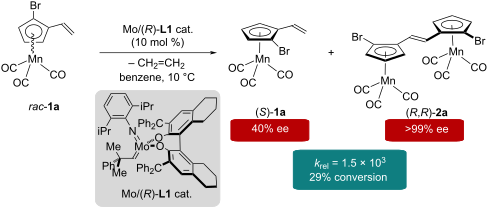
- (I). Indeed, the Friedel–Crafts acetylation of cymantrene, a typical electrophilic aromatic substitution reaction, is much slower than that of ferrocene. Consequently, vinylcymantrenes are electron-deficient olefins and less reactive in olefin metathesis. For this reason, the present AMD/KR reactions


Modern synthetic pathways towards eribulin and its subunits
Beilstein J. Org. Chem. 2026, 22, 495–526, doi:10.3762/bjoc.22.37
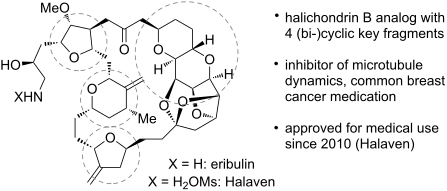
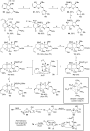
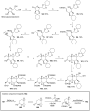
- )/Cr(II)-mediated coupling of 1-bromo-2-trimethylsilylethene, acidic cleavage of the remaining cyclohexylidene ring, TBDMS-protection of the three alcohol units and electrophilic substitution of the silyl moiety to afford vinyl iodide 103 was applied. Eventually, ester 103 was reduced to target





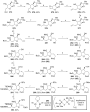


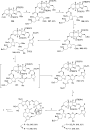

Structural reassignment of compound 968, an allosteric glutaminase inhibitor
Beilstein J. Org. Chem. 2026, 22, 455–460, doi:10.3762/bjoc.22.33
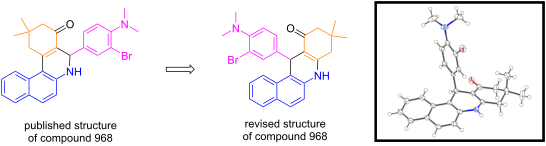
- demands of the proliferative state creates an opportunity to selectively target cancer cells [1][7]. Chemical inhibition of GLS has emerged as an attractive anticancer strategy, and several classes of GLS inhibitors have been discovered [1][2]. DON is a diazo-containing electrophilic glutamine analog that


Electrosynthetic access to unsymmetrical oxaza[8]helicenes with high chiral stability and strong circularly polarized luminescence (CPL)
Beilstein J. Org. Chem. 2026, 22, 372–382, doi:10.3762/bjoc.22.25
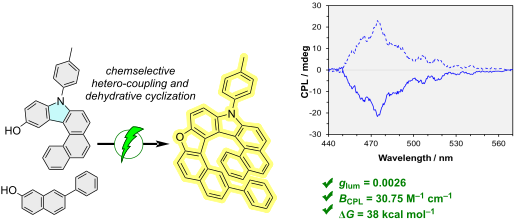
- products were detected under the optimized conditions (Scheme 2). Based on our previous reports [48][56], DFT calculations, and cyclic voltammetry (CV) analyses (Figure 1), anodic single-electron transfer (SET) is expected to occur first from 3, generating the electrophilic radical cation [3]·+ as 3 (Eox




Recent advances in the cleavage of non-activated amides
Beilstein J. Org. Chem. 2026, 22, 352–369, doi:10.3762/bjoc.22.23
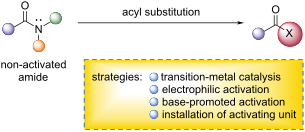
- catalysis, electrophilic activation, strong base-counter-cation systems, and N-based activating groups that enable chemoselective bond cleavage. Together, these developments provide powerful tools for amide functionalization and offer new opportunities for efficient, practical, and selective syntheses
- , such methods often exhibit limited substrate scope, generally restricted to amides with low steric hindrance, such as DMF or DMAC. In recent years, several new strategies have emerged to overcome these limitations: (i) transition-metal-free activation using electrophilic reagents, (ii) strong-base
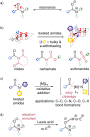
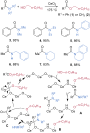
- generates a reactive intermediate I. Subsequent exchange of L1 with benzylamine enables intramolecular nucleophilic attack, leading to transamidation. Transition-metal-free electrophilic activation Since the keteniminium ion, which can be readily generated by electrophilic activation of enolizable tertiary




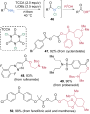
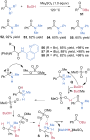
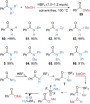
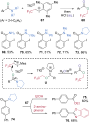






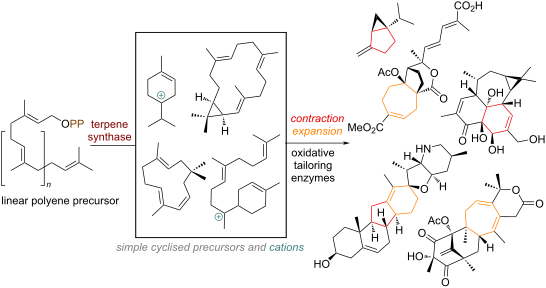
Ring contraction and ring expansion reactions in terpenoid biosynthesis and their application to total synthesis
Beilstein J. Org. Chem. 2026, 22, 289–343, doi:10.3762/bjoc.22.21
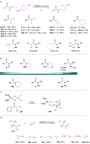
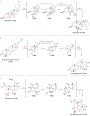
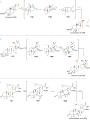
- addition towards the highly electrophilic α-diketone moiety. With this, the bicyclic lathyrane skeleton of jolkinol C (45) is assembled selectively from casbene. The large family of indole meroterpenoids [94][95][96][97][98] also contains an interesting, enzyme-mediated ring-expansion reaction. According






Arene activation via π-bond localization: concepts and opportunities
Beilstein J. Org. Chem. 2026, 22, 257–273, doi:10.3762/bjoc.22.19
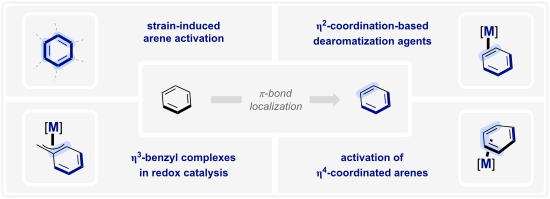
- disrupting the aromatic core, such as electrophilic and nucleophilic aromatic substitutions, transition metal-catalyzed cross-couplings [11], and C–H functionalizations [12]. Taken together with their natural abundance, these transformations have established arenes and heteroarenes as versatile synthetic
- of π-bond localization in arenes and its influence on reactivity can be traced back to the early 1930s, when Mills and Nixon investigated how the annelation of small rings to aromatic systems influences the regioselectivity of electrophilic substitutions in tetralin vs indane (Figure 3A) [16
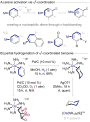
- ; Figure 4B) [44][45][46]. Collectively, these changes alter the innate reactivity of the arene, steering η2-coordinated systems toward electrophilic addition, cycloaddition, and hydrogenation processes. While many transition metals can engage aromatic rings through η2-coordination, only a handful have




A mild and atom-efficient four-component cascade strategy for the construction of biologically relevant 4-hydroxyquinolin-2(1H)-one derivatives
Beilstein J. Org. Chem. 2026, 22, 244–256, doi:10.3762/bjoc.22.18
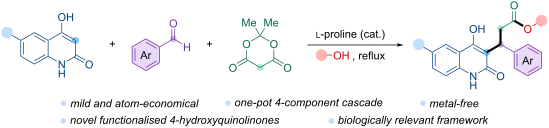
- renders the pyranoquinoline carbonyl more electrophilic than that of the acyclic ester, facilitating its alcoholysis at elevated temperature and extended reaction times. Consequently, pyranoquinolines may be regarded as kinetic products, formed rapidly under mild conditions, whereas the open-chain esters
- represent thermodynamically favored, more stable products formed upon prolonged heating. To support the hypothesis that the carbonyl carbon atom in pyranoquinoline exhibits higher electrophilicity than in the open-chain ester, quantum chemical calculations were performed to evaluate their electrophilic
- quantification was performed using a set of quantum chemical descriptors that describe electrophilic properties of an atom: Fukui atomic index, f+ [46], condensed local electrophilicity index, ω, condensed local softness, s+, and relative electrophilicity index, s+/s− [47] (Table 1). These quantities


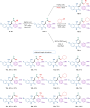
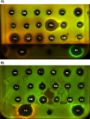
Circumventing Mukaiyama oxidation: selective S–O bond formation via sulfenamide–alcohol coupling
Beilstein J. Org. Chem. 2026, 22, 158–166, doi:10.3762/bjoc.22.9
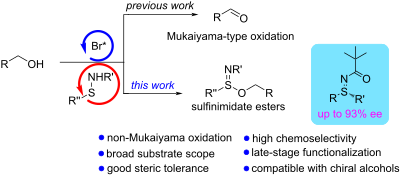
- [11][12][13][14]. The highly polarized S–O bond imparts distinctive reactivity, making them promising modular electrophilic intermediates for the construction of complex and functionally rich sulfur–nitrogen architectures [14]. Despite their synthetic potential, general and efficient methods for the
- sulfenamide precursors [35]. These studies collectively underscore the synthetic potential of sulfenamides as central electrophilic platforms [36] and the advances regarding the synthesis and reactivity have been comprehensively reviewed very recently [37]. Nevertheless, existing protocols, including our own
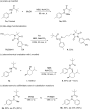
- limitations, we envisioned that highly electrophilic sulfilimidoyl intermediates – generated in situ via N-halosuccinimide-mediated oxidative activation of sulfenamides – could be directly intercepted by alcohols under basic conditions to furnish structurally diverse sulfinimidate esters [32]. In particular


Highly electrophilic, gem- and spiro-activated trichloromethylnitrocyclopropanes: synthesis and structure
Beilstein J. Org. Chem. 2026, 22, 123–130, doi:10.3762/bjoc.22.5
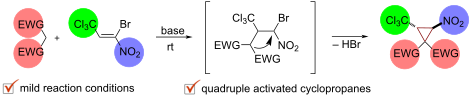
- -Petersburg 199034, Russia 10.3762/bjoc.22.5 Abstract New highly electrophilic gem- and spiro-activated trichloromethylnitrocyclopropanes were obtained by the Michael-initiated ring closure (MIRC) reaction of 1-bromo-1-nitro-3,3,3-trichloropropene with linear and cyclic CH-acids catalyzed by bases
- of ring opening or expanding [11][12][13]. Thus, known trichloromethyl-containing cyclopropanes can serve as precursors for hard-to-access halogenated β,γ- and γ,δ-unsaturated esters [14][15]. Nitrocyclopropanes are known as highly electrophilic substrates and can form a carbanion stabilized by the


Reactivity umpolung of the cycloheptatriene core in hexa(methoxycarbonyl)cycloheptatriene
Beilstein J. Org. Chem. 2026, 22, 64–70, doi:10.3762/bjoc.22.2
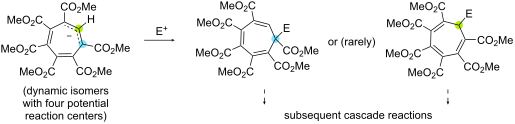
- reactions mainly involve the initial electrophilic attack onto the α-position relative to the hydrogen atom. The selectivity is either due to the high stability of the α-nucleophilic conformer or due to the promotion by the adjacent ester group. Cascade reactions upon the target connection, if installed
- potassium 1 (Figure 2) undergoes reactions with various electrophilic reagents which presented the first examples of unexpected pathways for the derivatization of cycloheptatrienes [17][18][19]. However, the anion is highly symmetric and does not challenge regioselectivity. Therefore, besides the
- isomer of anion 2 we analyzed the structure of its highest occupied molecular orbital (HOMO) and the distribution of the electrophilic Fukui function (f–) [28] – the difference in electron density between the anion and the derived radical by abstraction of one electron (Figure 2). Both approaches





