Search results
Search for "organometallic" in Full Text gives 339 result(s) in Beilstein Journal of Organic Chemistry. Showing first 200.
Electrochemical reduction of unsaturated carbon–carbon bonds via 3d transition-metal catalysis
Beilstein J. Org. Chem. 2026, 22, 955–981, doi:10.3762/bjoc.22.75
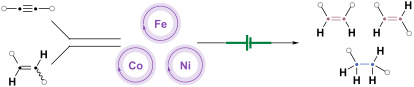
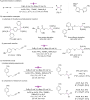
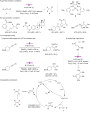
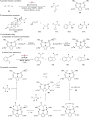
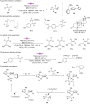
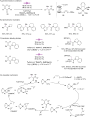
- metal–alkenyl intermediate. In some cases, this organometallic species can further undergo chain walking, where iterative β-hydride elimination and reinsertion enable migration of the metal center along the carbon skeleton before product release, thereby allowing remote hydrogenation or positional
- (37.8 kcal mol−1) bonds in the Co–salen complex disfavor the formation of a persistent vinyl–cobalt σ-bond intermediate. Consequently, the resulting vinyl radical is more appropriately described as undergoing cage escape, thereby favoring a radical-type pathway rather than an organometallic sequence
- chemoselectivity and broad functional-group tolerance (Scheme 10B). A key aspect of this work is the hydride-free hydrogenation pathway, enabled by inner-sphere metal–substrate interactions involving organometallic intermediates, which allows a distinct electron- and proton-transfer manifold in alkyne reduction








Synthesis of sterically shielded piperidine nitroxides via acid-catalyzed heterocyclization of β-aminoketone derivatives with ketones
Beilstein J. Org. Chem. 2026, 22, 948–954, doi:10.3762/bjoc.22.74
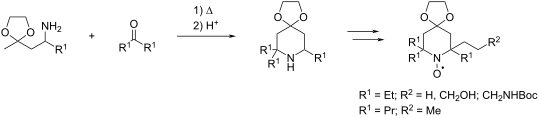
- subsequent reaction with moderately basic organometallic reagents, such as 2-alkynyl- and 2-allylmagnesium halides, enables the facile introduction of diverse substituents, including those with functional groups. If necessary, the multiple carbon–carbon bonds in the side chain can be subjected to
- reactions of cyclic nitrones with organometallic compounds is a fruitful approach for the synthesis of sterically shielded radicals of the pyrrolidine, imidazoline, and imidazolidine series [23], including those with functional groups in the side chains [24]. Here we applied this strategy for the synthesis
- nucleophilic addition [34][35]. Conversely, less basic organometallic reagents, such as vinylmagnesium bromide [34], ethynylmagnesium bromide [23], or allylmagnesium chloride [36], readily undergo addition, yielding the corresponding nitroxides. Ketonitrone 6a was treated with various alkynylmagnesiun bromides


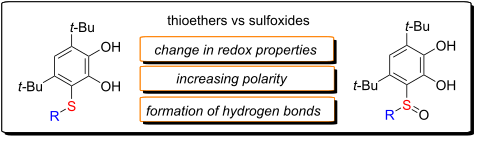
Unsymmetrical sulfoxides with sterically hindered catechol fragment: synthesis, structure, electrochemical properties, and antiradical activity
Beilstein J. Org. Chem. 2026, 22, 828–837, doi:10.3762/bjoc.22.65
- , Pushkin str., 1, 355017, Stavropol, Russia Kurnakov Institute of General and Inorganic Chemistry, Russian Academy of Sciences, Leninskii prosp., 31, 119071, Moscow, Russia Razuvaev Institute of Organometallic Chemistry, Russian Academy of Sciences, Tropinina str., 49, 603137, Nizhniy Novgorod, Russia


Kinetic resolution of racemic planar-chiral vinylcymantrenes by molybdenum-catalyzed asymmetric metathesis dimerization
Beilstein J. Org. Chem. 2026, 22, 568–574, doi:10.3762/bjoc.22.42
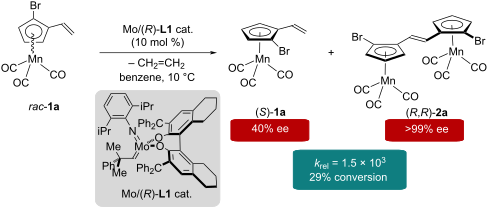
- the excellent tolerance of the Mo-/Ru-metathesis catalysts toward the organometallic substrates. The olefin metathesis protocols could be extended to the asymmetric synthesis of diverse planar-chiral transition metal complexes either by the kinetic resolution of the racemic substrates [14][15][16] or


Advances in Zr-mediated radical transformations and applications to total synthesis
Beilstein J. Org. Chem. 2026, 22, 71–87, doi:10.3762/bjoc.22.3
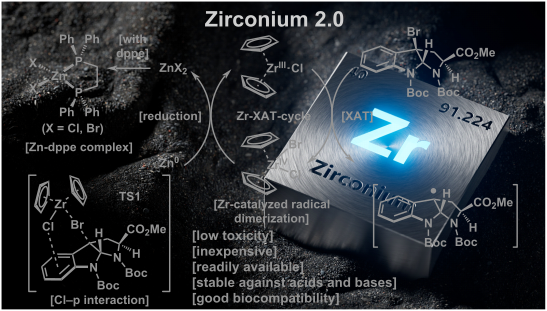
- . Zirconium was first discovered by Klaproth in 1789 and subsequently isolated by Berzelius in 1824. In 1952, Wilkinson and Birmingham synthesized zirconium-containing organometallic compounds, pioneering research in organozirconium chemistry [2]. In 1974, Schwartz et al. reported the Schwartz reagent, which





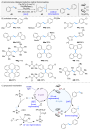


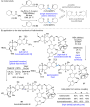
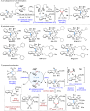

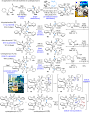
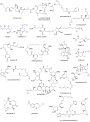
Synthesis and applications of alkenyl chlorides (vinyl chlorides): a review
Beilstein J. Org. Chem. 2026, 22, 1–63, doi:10.3762/bjoc.22.1
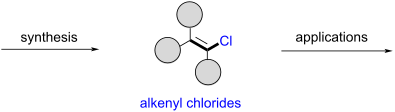
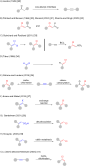
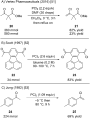
- described a ruthenium-catalyzed conversion of alkenyl triflates to alkenyl chlorides (Scheme 22C) [80]. A subsequent study from the same group demonstrated that [Cp*Ru(MeCN)3]OTf could serve as an alternative catalyst, thereby avoiding the need for in situ reduction of Ru(III) to Ru(II) by organometallic























Palladium-catalyzed regioselective C1-selective nitration of carbazoles
Beilstein J. Org. Chem. 2025, 21, 2479–2488, doi:10.3762/bjoc.21.190
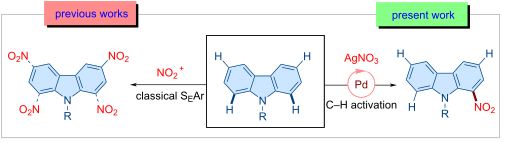
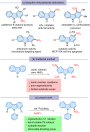
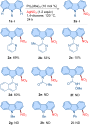
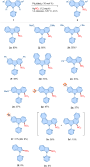
- functionalized starting materials, reduces organometallic waste generation, has a broad substrate scope and a higher functional group compatibility, and features better resource- and step-economies [37][38][39][40][41][42][43][44][45][46][47]. In this context, several recent studies enabled the regioselective


Enantioselective radical chemistry: a bright future ahead
Beilstein J. Org. Chem. 2025, 21, 2283–2296, doi:10.3762/bjoc.21.174
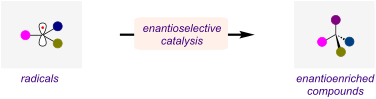
- enantioenriched catalysts ranging from chiral organometallic complexes to organocatalysts (small organic molecules) have been designed, synthesized, and successfully used in several organic transformations [1][2][3]. Despite these advances, catalytic methods involving radical intermediates were very rare until
- reducing ability of copper(I), substrates can be reduced to radicals and oxidize copper(I) to copper(II) in the process. Copper(II) can oxidize other organic radicals to cations by SET or reversibly react with other radicals to form copper(III) species that can undergo fundamental organometallic steps such
- substrates or organometallic complexes upon photoexcitation has enabled the synthetic community to access reactive open-shell species under very mild conditions. The ability of excited photocatalysts to induce other reagents, substrates, or other catalysts to participate in new activation modes makes them a


Enantioselective desymmetrization strategy of prochiral 1,3-diols in natural product synthesis
Beilstein J. Org. Chem. 2025, 21, 1932–1963, doi:10.3762/bjoc.21.151

- enantioselective desymmetrization of prochiral 1,3-diols within complex structures can be realized using organometallic catalysts composed of copper or zinc salts and different types of chiral ligands. In general, the ability to control the stereoselectivity of the product by using the enantiomer of the ligand in












Photocatalysis and photochemistry in organic synthesis
Beilstein J. Org. Chem. 2025, 21, 1645–1647, doi:10.3762/bjoc.21.128
- implement. Two decades later, photocatalysis and photochemistry remain among the most studied topics in modern organic synthesis. Nowadays, chemists can choose from a wide range of organometallic [12][13], organic [14][15], or heterogeneous photocatalysts [16][17] to trigger visible-light photoredox

Transition-state aromaticity and its relationship with reactivity in pericyclic reactions
Beilstein J. Org. Chem. 2025, 21, 1613–1626, doi:10.3762/bjoc.21.125

- defined by Doering and Detert [6], this concept has been extended well beyond benzenoid molecules to organometallic, inorganic, and even saturated molecules. As a result, besides classical π-aromaticity, other aromaticity types such as Möebius, spherical, or excited-state aromaticity (to name a few) have


Synthesis of optically active folded cyclic dimers and trimers
Beilstein J. Org. Chem. 2025, 21, 1603–1612, doi:10.3762/bjoc.21.124

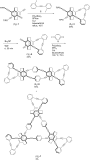
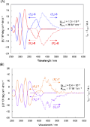
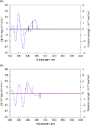
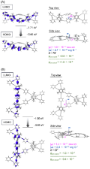
- substituent(s) at appropriate position(s) on the benzene rings [8]. Enantiopure planar chiral [2.2]paracyclophanes have been used as chiral auxiliaries and chiral ligands for transition metals in the fields of organic and organometallic chemistry [9][10][11][12][13][14][15][16][17][18][19][20]. In 2012


Enhancing chemical synthesis planning: automated quantum mechanics-based regioselectivity prediction for C–H activation with directing groups
Beilstein J. Org. Chem. 2025, 21, 1171–1182, doi:10.3762/bjoc.21.94
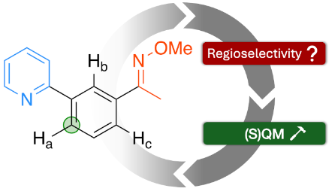
- bonds in organic chemicals. Therefore, their selective functionalization is essential for advancing the synthesis of complex molecules like pharmaceuticals, polymers, or agrochemicals [1][2][3]. Advancements in organometallic catalysis have facilitated significant progress in this area through C–H


Synthetic approach to borrelidin fragments: focus on key intermediates
Beilstein J. Org. Chem. 2025, 21, 1135–1160, doi:10.3762/bjoc.21.91
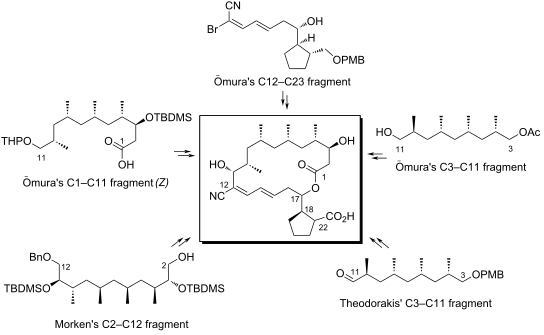
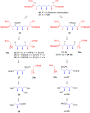
- in their laboratory. The strategy primarily involved the reaction of a chiral organometallic reagent 115 with a chiral allyl electrophile 114, as depicted in Scheme 18. The resulting deoxypropionate 113 was obtained with the newly formed stereocenter controlled by the reagent directing group (RDG
- ) attached to the allyl precursor 114. Iteration of this process required ozonolysis of 113, followed by its conversion to an organometallic intermediate 116, which was then reacted with allyl 114 to yield another deoxypropionate product, 117. The synthesis began with the preparation of the precursor chiral
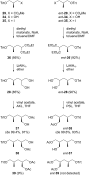
- undesired oxidation to the corresponding phosphane oxide. The work continued with the preparation of the chiral organometallic reagent 124. Starting from known bromide 122, which was readily accessible from Roche ester (R)-121 [52] or 1,3-diol 123 [53][54] through literature procedures, the Grignard reagent








Gold extraction at the molecular level using α- and β-cyclodextrins
Beilstein J. Org. Chem. 2025, 21, 1116–1125, doi:10.3762/bjoc.21.89
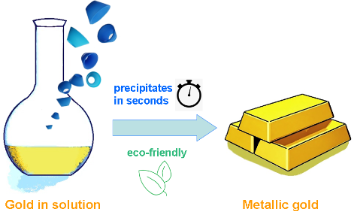
- coordination with inorganic and organometallic complexes involves hydrophobic interactions and van der Waals forces (mainly with the organic parts of these guests). Several forces are at play in the formation of supramolecular assemblies with gold in the form of haloaurate ions, as detailed in the forthcoming


A convergent synthetic approach to the tetracyclic core framework of khayanolide-type limonoids
Beilstein J. Org. Chem. 2025, 21, 926–934, doi:10.3762/bjoc.21.75
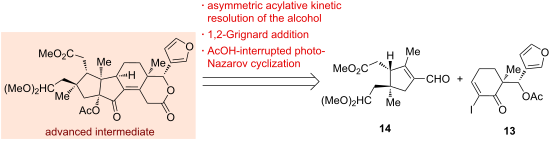
- stage was set for the construction of the target skeleton through a 1,2-addition (Scheme 4). Preliminary trials to generate organometallic species via Li/I exchange under various conditions (n-BuLi, t-BuLi, or t-BuLi in combination with CeCl3 or MgBr2) led to rapid decomposition, likely due to inherent




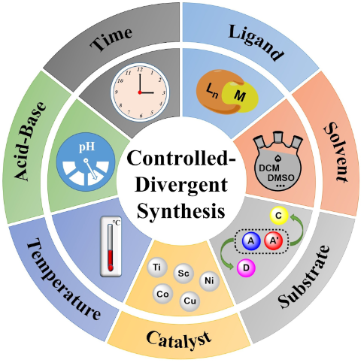
Recent advances in controllable/divergent synthesis
Beilstein J. Org. Chem. 2025, 21, 890–914, doi:10.3762/bjoc.21.73
- , 3663 North Zhongshan Road, Shanghai 200062, PR China School of Chemistry and Chemical Engineering, Henan Normal University, Xinxiang, Henan 453007, PR China State Key Laboratory of Organometallic Chemistry, Shanghai Institute of Organic Chemistry, Chinese Academy of Sciences, 345 Lingling Road


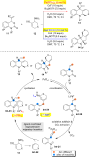

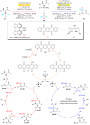


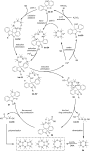


Development and mechanistic studies of calcium–BINOL phosphate-catalyzed hydrocyanation of hydrazones
Beilstein J. Org. Chem. 2025, 21, 755–765, doi:10.3762/bjoc.21.59
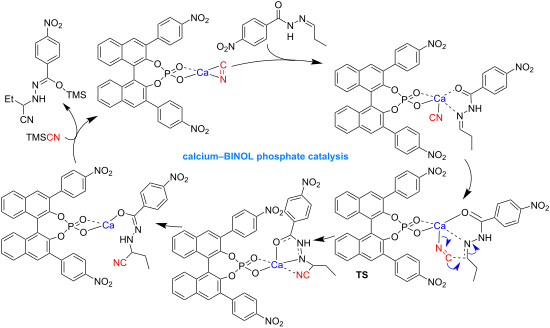
- Erlangen-Nürnberg, Nikolaus-Fiebiger Strasse 10, 91058 Erlangen, Germany Department of Chemistry and Pharmacy, Chair of Inorganic and Organometallic Chemistry, Friedrich-Alexander-Universität Erlangen-Nürnberg, Egerlandstrasse 1, 91058 Erlangen, Germany 10.3762/bjoc.21.59 Abstract Asymmetric


Recent advances in allylation of chiral secondary alkylcopper species
Beilstein J. Org. Chem. 2025, 21, 639–658, doi:10.3762/bjoc.21.51
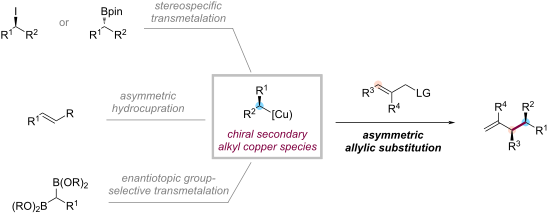
- scope and efficiency of these reactions. A notable advancement came from Knochel's introduction of dialkylzinc reagents in 1999, which substantially broadened the range of applicable organometallic compounds [23]. Subsequent significant progress was achieved independently by Feringa and Alexakis through
- their exploration of phosphoramidite ligands with various organometallic nucleophiles [24][25]. The field was further advanced by the research group of Hoveyda, who made substantial contributions by introducing bidentate N-heterocyclic carbene (NHC)-based chiral ligands, achieving high selectivity with
- into a powerful and versatile tool in asymmetric synthesis, capable of employing a wide array of organometallic reagents that furnish the desired compounds with high efficiency and selectivity. The regioselective asymmetric construction of stereogenic carbon centers from prochiral allylic substrates





Sequential two-step, one-pot microwave-assisted Urech synthesis of 5-monosubstituted hydantoins from L-amino acids in water
Beilstein J. Org. Chem. 2025, 21, 596–600, doi:10.3762/bjoc.21.46
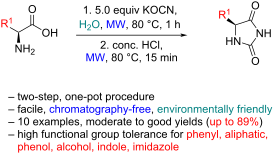
- ]. Furthermore, several methods for hydantoin synthesis have been reported. The modified Bucherer–Bergs reaction using nitriles or methyleneaziridines with organometallic reagents gave moderate yields of 40–77% and 48–75%, respectively [7][8]. Amino acids remain key building blocks, with approaches involving


Organocatalytic kinetic resolution of 1,5-dicarbonyl compounds through a retro-Michael reaction
Beilstein J. Org. Chem. 2025, 21, 473–482, doi:10.3762/bjoc.21.34
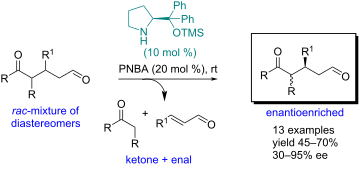
- organometallic catalysis [15], enzymatic catalysis [16], aminocatalysis [17][18][19], and hydrogen-bonding catalysis [20][21][22]. The Michael addition reaction is a versatile synthetic methodology that allows the formation of new carbon–carbon and carbon–heteroatom bonds through the coupling of electron-poor


Unraveling aromaticity: the dual worlds of pyrazole, pyrazoline, and 3D carborane
Beilstein J. Org. Chem. 2025, 21, 412–420, doi:10.3762/bjoc.21.29
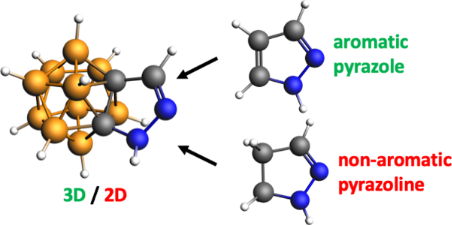
- , exceptional thermal and chemical stability, and robust synthetic versatility [16][17] – make carborane derivatives essential components in various fields. These include pharmaceuticals [18][19][20][21][22], boron neutron capture therapy (BNCT) [23][24][25][26], organometallic ligands [27], and functional


Advances in the use of metal-free tetrapyrrolic macrocycles as catalysts
Beilstein J. Org. Chem. 2024, 20, 3085–3112, doi:10.3762/bjoc.20.257
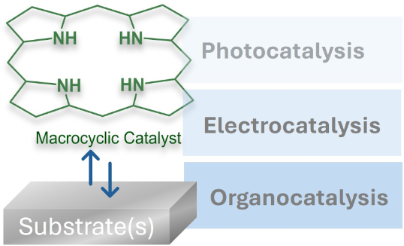
- applied in various fields, including organometallic catalysis, dye-sensitized solar cells, sensing, artificial olfactory systems, photodynamic therapy (PDT), anticancer drugs, biochemical probes, and electrochemical devices. Relevant examples of these two pyrrolic macrocycles as metal-free organocatalysts


Recent advances in transition-metal-free arylation reactions involving hypervalent iodine salts
Beilstein J. Org. Chem. 2024, 20, 2891–2920, doi:10.3762/bjoc.20.243

- or without the use of transition metals [44]. Thus, they address both the financial and environmental challenges associated with organic synthesis by acting as environmentally benign substitutes for costly organometallic catalysts and heavy-metal-based oxidants. Diaryl iodide salts consist of two
- salt, subsequently leading to decarboxylative C–C coupling. Notably, this method achieves the incorporation of two fluorine atoms in the benzyl position without resorting to hazardous fluorination reagents, transition-metal catalysts, or organometallic compounds. The utility of this reaction is




Multicomponent synthesis of α-branched amines using organozinc reagents generated from alkyl bromides
Beilstein J. Org. Chem. 2024, 20, 2834–2839, doi:10.3762/bjoc.20.239
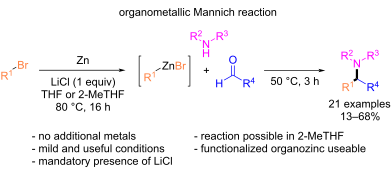
- ]. Since its discovery in 1912, the reaction has benefitted from regular improvements over the years and recent developments, such as the use of organometallic species as nucleophiles in the so-called “organometallic Mannich reaction”, which have helped to expand the boundaries of the original process [4
- ]. In this context, while significant contributions have highlighted the reliable use of diverse organometallic species in the three-component coupling, most examples of sp3-hybridized compounds have remained restricted to allyl [5] or benzyl [5][6] organometallic reagents. Conversely, examples of
- organometallic Mannich couplings involving nonstabilized organometallics are uncommon and mostly limited to dialkylzinc reagents, likely due to their commercial availability, their significant reactivity, and their functional-group tolerance [7][8][9][10]. However, the molecular diversity accessible with these