Search results
Search for "pyrrole" in Full Text gives 310 result(s) in Beilstein Journal of Organic Chemistry. Showing first 200.
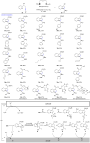
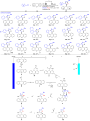
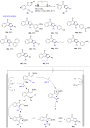
Discovery of sugarnitriles A and B, and structural reassignment of SF-2140, from a sugarcane endophytic actinomycete Amycolatopsis sp. JS-O27
Beilstein J. Org. Chem. 2026, 22, 1114–1121, doi:10.3762/bjoc.22.90
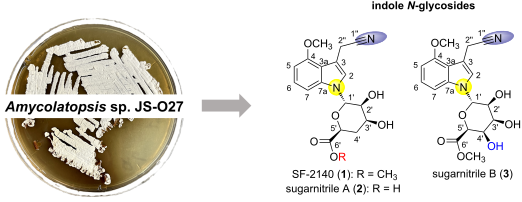
- supported the presence of a pyrrole ring, and the HMBC correlations from H-2'' to C-3a indicated that the pyrrole ring is fused with a benzene ring at C-3a and C-7a to form an indole skeleton. The DEPT135 spectrum supported the assignment of C-1'' as a quaternary carbon, and the chemical shift of C-1'' (δC


Novel macrocycles: from synthesis to supramolecular function
Beilstein J. Org. Chem. 2026, 22, 982–985, doi:10.3762/bjoc.22.76
- . Danjou and colleagues [41] explored the use of macrocyclic scaffolds for environmental remediation, particularly in the extraction of radioactive contaminants. The authors synthesized a phenoxycalix[4]pyrrole framework functionalized with multiple hydroxamic acid groups for the selective removal of
Recent advances in copper-catalyzed direct hydroamination of alkenes with (hetero)aromatic amines
Beilstein J. Org. Chem. 2026, 22, 925–947, doi:10.3762/bjoc.22.73
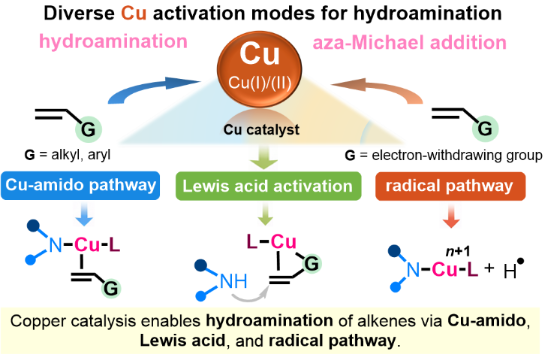
- significantly affecting the reaction efficiency. In addition to simple anilines, diverse heteroaromatic amines including indole, pyrrole, triazole, carbazole, and imidazole derivatives participated effectively in the copper-catalyzed conjugate addition, providing the corresponding β-amino products 3 in high







Cascade transformation of 2-(diazoacetyl)-2H-azirines to 2-aroyl-3-hydroxy-1H-pyrroles via condensation with aromatic aldehydes
Beilstein J. Org. Chem. 2026, 22, 897–904, doi:10.3762/bjoc.22.70
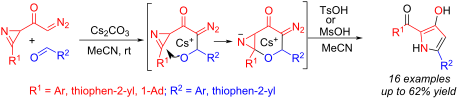
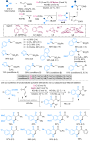
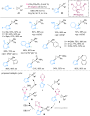
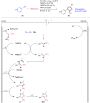
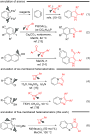
- described so far [23][24], optimization of the reaction conditions was carried out with the aim of developing a new method for the preparation of 2-aroyl-3-hydroxypyrroles (Table 1). Thus, as a result of optimization it was found that the best yields of pyrrole 5a was achieved by treating the reaction
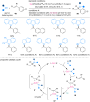
- mixture was observed in the presence of AcOH, TfOH, TFAA, and BF3⋅Et2O. This is clearly due to the complex mechanism of formation of pyrrole 5a. The role of acid catalysis follows from the plausible mechanism of transformation of the bicyclic intermediate (1RR,3SR,6RR)-Phe-4 to pyrrole 5 shown in Scheme 4
- passes through relatively low barrier (ΔG# = 24.7 kcal/mol), yielding intermediate I. Deprotonation of the latter leads to ketene J, which via rotation across single bond (intermediate K) can cyclize to carbene L. An intramolecular H-shift to the carbene center in L leads to the final pyrrole 5. Further


Synthesis of heterocycles based on azomethine ylides from α-amino acids (or amines) and carbonyl compounds
Beilstein J. Org. Chem. 2026, 22, 705–741, doi:10.3762/bjoc.22.55
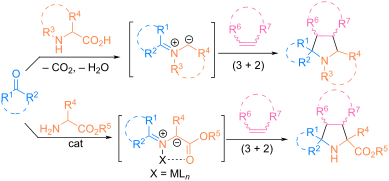
- constructing the structure of spiro[indoline-3,2'-pyrrole]. In a study by Zhao and co-workers, asymmetric 1,3-dipolar cycloaddition of azomethine ylides derived from isatin and benzylamines to maleimides was catalyzed by Cinchona alkaloid-based squaramide L24 (Scheme 49) [99]. The cycloaddition proceeded


Synthesis and uranyl(VI) extraction performance of a calix[4]pyrrole–tetrahydroxamic acid receptor
Beilstein J. Org. Chem. 2026, 22, 486–494, doi:10.3762/bjoc.22.36
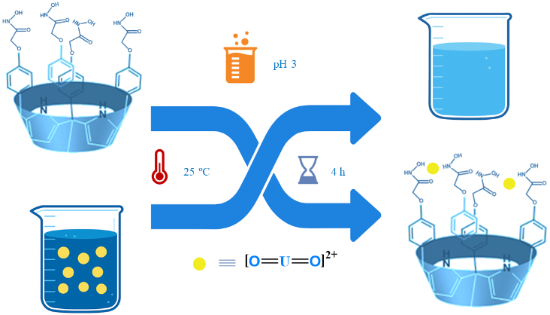
- extractants. Here, we report the design and synthesis of PCP HA, a phenoxycalix[4]pyrrole scaffold functionalized with four hydroxamic acid (HA) groups, and evaluate its uranium(VI) extraction potential. PCP HA was synthesized from its ester precursor (PCP E) via hydroxyaminolysis using KOH, achieving a 95
- supramolecular material for the removal of uranyl from aqueous media. Keywords: gamma spectroscopy; hydroxamic acid; phenoxycalix[4]pyrrole; solid–liquid extraction; uranyl(VI) extraction; Introduction Over the past few decades, supramolecular chemistry has advanced intensively establishing itself as a central
- their 2,5-positions through sp3-hybridized meso-carbon atoms [10]. The ability of CPs to selectively bind anions [11], cations, ion pairs and neutral guest species, combined with the versatility to introduce diverse functional groups, has enabled the fabrication of calix[4]pyrrole-based supramolecular


Electrosynthetic access to unsymmetrical oxaza[8]helicenes with high chiral stability and strong circularly polarized luminescence (CPL)
Beilstein J. Org. Chem. 2026, 22, 372–382, doi:10.3762/bjoc.22.25
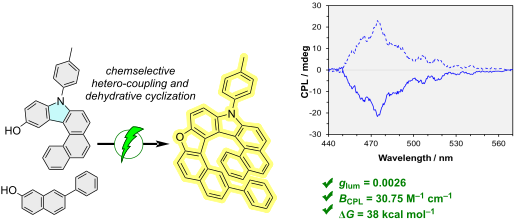
- attributed to magnetic coupling between the face-to-face terminal rings, in line with the Johnson–Bovey model, given the inter-ring distances of approximately 3.75–3.79 Å [59]. On the other hand, the aromaticity of the pyrrole rings (A and A′) and benzene rings G and G′ in 5a and 5b decreases, which can be




Arene activation via π-bond localization: concepts and opportunities
Beilstein J. Org. Chem. 2026, 22, 257–273, doi:10.3762/bjoc.22.19
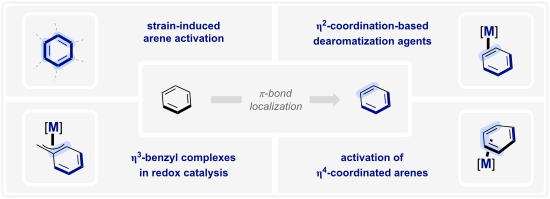
- its utility. For example, while Os(II) displays a marked preference for coordination at the C(2) and C(3) positions of pyrrole, it can also access the less stable 3,4-η2-isomer (Figure 7C) [51]. This species exhibits significantly higher reactivity in certain transformations. In this way, η2
- -coordination of pyrrole transforms the aromatic framework into an azomethine ylide intermediate. This reactive species can engage in a [3 + 2] cycloaddition with activated olefins such as maleic anhydride to form 7-azabicycloheptene complex 8 rather than an electrophilic addition product. An analogous scenario




Silica gel with covalently attached bambusuril macrocycle for dicyanoaurate sorption from water
Beilstein J. Org. Chem. 2025, 21, 2604–2611, doi:10.3762/bjoc.21.201
- example, an amphiphilic poly(methyl methacrylate)-based polymer modified with calix[4]pyrrole was found to form micelles in water that capture anions from caesium salts and can be precipitated from solution upon heating [11]. Similarly, a hydrogel composed of poly(vinyl alcohol) cross-linked by a “Texas


Total syntheses of highly oxidative Ryania diterpenoids facilitated by innovations in synthetic strategies
Beilstein J. Org. Chem. 2025, 21, 2553–2570, doi:10.3762/bjoc.21.198
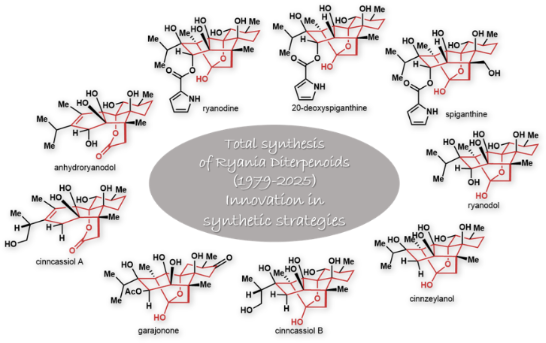
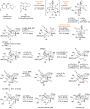
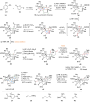
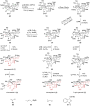
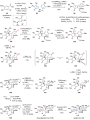
- activities and serves as a potent modulator of intracellular calcium release channels. In contrast to ryanodol (4), compound 1 possesses a pyrrole-2-carboxylate ester moiety at the C3 position. This ester group can be cleaved via hydrolysis to yield 4. However, the reverse transformation – the synthesis of
- ryanodine (1) from ryanodol (4) – had long eluded chemists. The primary challenge involved the selective installation of the bulky pyrrole unit onto the sterically congested C3 secondary hydroxy group within a polyfunctionalized, polyhydroxylated framework. In 2016, building upon prior work, the Inoue group
- reported the first total synthesis of ryanodine from ryanodol [47] (Scheme 5). Their strategy utilized a novel boronate protecting group to mask the four syn-oriented hydroxy groups. A critical step was the in-situ generation of the pyrrole-2-carboxylate unit from a glycine ester and 1,3-bis(dimethylamino







An Fe(II)-catalyzed synthesis of spiro[indoline-3,2'-pyrrolidine] derivatives
Beilstein J. Org. Chem. 2025, 21, 2383–2388, doi:10.3762/bjoc.21.183
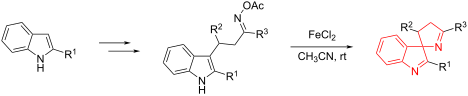
- , a highly diastereoselective method for the synthesis of dihydrospiro[indoline-3,2'-pyrrole]-2-ones has been developed (Scheme 1, path a) [7]. This transformation proceeds via a Lewis acid-mediated conjugate addition of vinyl azides to electron-deficient alkenes, followed by denitrogenative




Comparative analysis of complanadine A total syntheses
Beilstein J. Org. Chem. 2025, 21, 2334–2344, doi:10.3762/bjoc.21.178
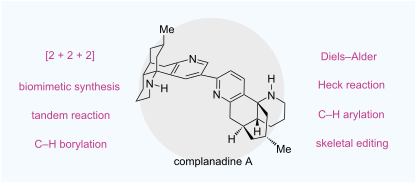
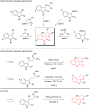
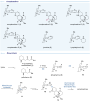
- a novel single-atom skeletal editing strategy [32][33] to form the pyridine from a pyrrole and a similar pyridine N-oxide directed ortho C–H arylation to forge the C2–C3’ linkage as the Tsukano synthesis, but with a much less reactive 3-chloropyridine as the cross-coupling partner. As shown in
- Paal–Knorr pyrrole synthesis delivered 63, which was unstable and spontaneously cyclized to provide 64. Compound 64 was then advanced to tetracyclic intermediate 67 in a one-pot tandem process, which initiated with Staudinger azide reduction with PPh3 to form a primary amine. After reversible
- hemiaminal opening and amine–ketone condensation, iminium ion 65 was produced for the next pyrrole nucleophilic addition to form a strategically important C–C bond and afford 66, which was protected as Boc carbamate in the same pot to give 67 in 96% yield from 64. In this tandem sequence, the nucleophilicity



Insoluble methylene-bridged glycoluril dimers as sequestrants for dyes
Beilstein J. Org. Chem. 2025, 21, 2302–2314, doi:10.3762/bjoc.21.176
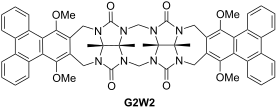
- that β-cyclodextrin (Figure 1)-based polymers could remove organic micropollutants from water [15][16]. For example, in 2021, Sessler and co-workers reported the synthesis of a calix[4]pyrrole (Figure 1)-based porous organic polymer, which exhibits the rapid uptake of dyes from water [17]. In addition
- uptake capacity of H2 for methylene blue, it must be substantially lower than that of previously reported pillar[5]arene (51 mg g−1) and calix[4]pyrrole (454 mg g−1) polymers [17][20]. Host G2W1 functions the best as sequestrant for methylene violet achieving an 87% removal efficiency when excess G2W1



Thiadiazino-indole, thiadiazino-carbazole and benzothiadiazino-carbazole dioxides: synthesis, physicochemical and early ADME characterization of representatives of new tri-, tetra- and pentacyclic ring systems and their intermediates
Beilstein J. Org. Chem. 2025, 21, 2220–2233, doi:10.3762/bjoc.21.169
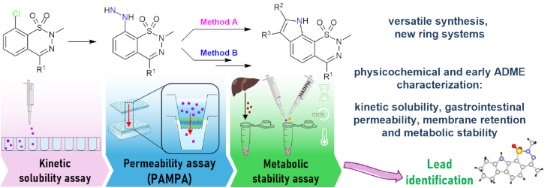
- -dioxides, we aimed at elaborating a synthetic procedure for the preparation of their pyrrole-fused counterparts, 2,9-dihydro[1,2,3]thiadiazino[5,6-g]indole 1,1-dioxide derivatives. The simple and versatile process led, via Fischer indole cyclization of the corresponding hydrazones, to a wide structural


Electrochemical cyclization of alkynes to construct five-membered nitrogen-heterocyclic rings
Beilstein J. Org. Chem. 2025, 21, 2173–2201, doi:10.3762/bjoc.21.166
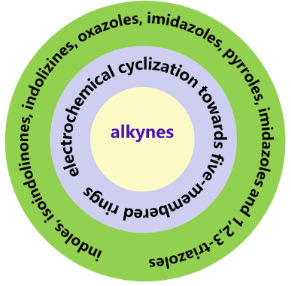
- nucleophilic substitution of D afforded target indeno[1,2-c]pyrrole 40a along with eliminating I. Notably, this oxidant-free and catalyst-free approach could be potentially applied in the pharmaceutical manufacture. A Rh-promoted synthesis of pyrroles through annulation of alkynes and enamides was demonstrated
- by Ackermann in 2023 (Scheme 16) [266]. Using GF as anode, Pt as cathode, NaOAc as the electrolyte and [Cp*Rh(MeCN)3](SbF6)2 as the catalyst, the annulation between alkyne 41 and enamide 42 succeeded, forming the corresponding pyrrole 43 in good yield. Although this transformation employing
- and reductive cascade annulation of o-alkynylbenzamides. An electrochemical intramolecular 1,2-amino oxygenation of alkynes provided indolizines in reasonable yields. The electrochemical multicomponent reaction was also developed for the construction of oxazole. Pyrrole could be prepared by








C2 to C6 biobased carbonyl platforms for fine chemistry
Beilstein J. Org. Chem. 2025, 21, 2103–2172, doi:10.3762/bjoc.21.165
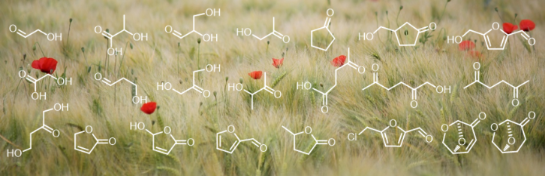
- [188]. Conversion of furfural to pyrrole and proline: Zhou and Yan reported a route bridging commercial biomass feedstock with high-value N-containing chemicals through pyrrole as a hub molecule. Furfural was converted into pyrrole in 75% yield via tandem decarbonylation–amination reactions over tailor


Photoswitches beyond azobenzene: a beginner’s guide
Beilstein J. Org. Chem. 2025, 21, 1808–1853, doi:10.3762/bjoc.21.143
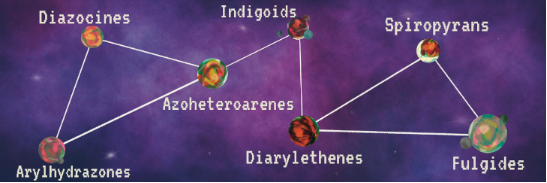
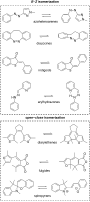
- wavelength (P-type) or through thermal back isomerisation (T-type). As a general rule, the absorption can be red-shifted by the choice of electron-donating rings (pyrrole, thiophene), while electron-withdrawing rings (pyridine, pyrimidine, pyrazole, imidazole, thiazole) give the opposite effect [12
- photophysical properties of this photoswitch class. The vast possibility of combinations and the straightforward syntheses make these compounds extremely attractive, however, somewhat difficult to strictly categorise: among the azoheteroarenes we find mainly nitrogen-based heterocycles such as pyrazole, pyrrole
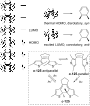
- interesting results: in the case of derivative 63 containing pyrrole, capable of hydrogen bonding with the carbonyl oxygen (Scheme 20, left) [61][62], the E form is obtained almost quantitatively upon irradiation. In the case of pyridine-containing derivative 64 (Scheme 20, right) no photoswitching is






Unique halogen–π association detected in single crystals of C–N atropisomeric N-(2-halophenyl)quinolin-2-one derivatives and the thione analogue
Beilstein J. Org. Chem. 2025, 21, 1748–1756, doi:10.3762/bjoc.21.138
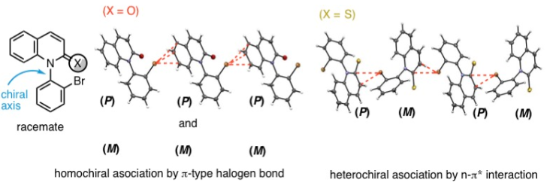
- diverse C–N atropisomeric compounds possessing carboxamide, imide, lactam, sulfonamide, indole, pyrrole, imidazole, carbazole and amine skeletons have been reported by many groups [1][2][3][4][5][6][7][8][9]. C–N atropisomers are attractive compounds from the viewpoint of not only synthetic organic


Catalytic asymmetric reactions of isocyanides for constructing non-central chirality
Beilstein J. Org. Chem. 2025, 21, 1648–1660, doi:10.3762/bjoc.21.129

- chiral INT-C, which, after imine-enamine tautomerization, led to the formation of final product 28. α-Acidic isocyanide-based transformations De novo arene formation In 2019, Zhu and co-workers developed the first example of catalytic enantioselective Yamamoto–de Meijere pyrrole synthesis [36][37
- Groebke–Blackburn–Bienaymé reaction. Construction of axially chiral 3-arylpyrroles via de novo pyrrole formation. Synthesis of atropoisomeric 3-arylpyrroles via central-to-axial chirality transfer. Dynamic kinetic resolution of bridged biaryls with α-acidic isocyanides. Desymmetrization of prochiral





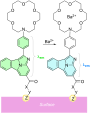
On the aromaticity and photophysics of 1-arylbenzo[a]imidazo[5,1,2-cd]indolizines as bicolor fluorescent molecules for barium tagging in the study of double-beta decay of 136Xe
Beilstein J. Org. Chem. 2025, 21, 1627–1638, doi:10.3762/bjoc.21.126
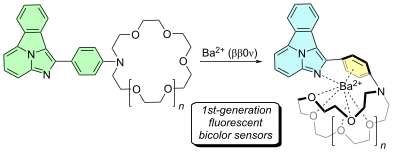
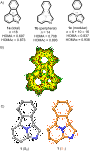
- the modular model 1c, with a vortex in the bond connecting the phenyl group with the pyrrole ring. Interestingly, paratropic ring currents are observed close to the molecular plane. This conclusion is reinforced by the NICS computed for the four rings of 1. As shown in Table 1, the isotropic NICS
- values at the molecular plane are always negative, but the pyrrole ring shows the lowest value. Indeed, if the NICSzz(0) values are considered, a paratropic character is observed at the center of the pyrrole and imidazole rings. The situation is more consistent when the NICS values are computed 1 Å above
- compound in the ground state. Since it is known that the aromaticity rules are reversed in 1ππ* excited states [28], the high fluorescent response of 1 is connected with its higher aromaticity at the excited S1 state. Actually, the two peripheric C–C bonds of the central pyrrole ring are slightly shorter





3-Aryl-2H-azirines as annulation reagents in the Ni(II)-catalyzed synthesis of 1H-benzo[4,5]thieno[3,2-b]pyrroles
Beilstein J. Org. Chem. 2025, 21, 1595–1602, doi:10.3762/bjoc.21.123

- method for the synthesis of 3-arylbenzo[4,5]thieno[3,2-b]pyrroles has been developed via pyrrole ring annulation to the aromatic benzo[b]thiophene system, using 3-arylazirines as a N‒C=C synthon. The reaction is catalyzed by Ni(hfacac)2 and proceeds through the azirine ring opening across the N=C3 bond
- reactions of intermolecular annulation of a variety of non-aromatic five- [4][5][6] and six-membered carbo- and heterocycles [7][8][9] with azirines, which occur under transition metal catalysis or photocatalysis. Annulation of the pyrrole ring to an aromatic system is limited to reactions of functionalized
- reactions of heteroaromatics with azirines are known only for 2-chloro- and 2-sulfanylpyridines [14][15], which result in the formation of imidazo[1,2-a]pyridines (Scheme 1, reactions 4 and 5). To the best of our knowledge, no successful methods enabling the fusion of a pyrrole or azole ring to a 5-membered



Synthesis of an aza[5]helicene-incorporated macrocyclic heteroarene via oxidation of an o-phenylene-pyrrole-thiophene icosamer
Beilstein J. Org. Chem. 2025, 21, 1561–1567, doi:10.3762/bjoc.21.119
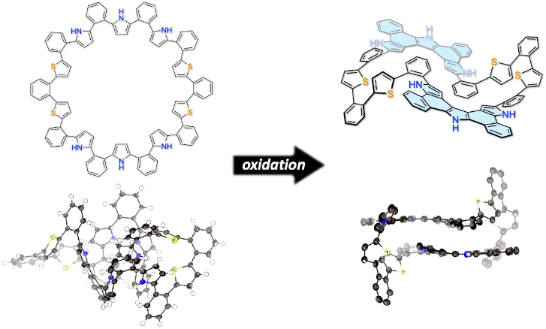
- , Japan 10.3762/bjoc.21.119 Abstract The intramolecular oxidative fusion reaction of macrocyclic heteroaromatic arrays has provided strained polycyclic heteroaromatic macrocycles as promising functional molecules. In this study, we prepared an ortho-phenylene-pyrrole-thiophene hybrid icosamer, as the
- largest macrocycle ever synthesized is a dodecameric hybrid array of 1,2-phenylene, 2,5-thienylene, and 2,5-pyrrolylene units [22][23]. The intramolecular oxidative coupling of these arrays afforded heterohelicene-incorporated macrocycles D and E, depending on the relative arrangements of the pyrrole and
- thiophene units [24][25]. The influence of heteroaromatic positioning on the reaction outcome has been rationalized in our previous work [25]. As a further extension of this molecular design, herein we report the synthesis of an o-phenylene-pyrrole-thiophene hybrid icosamer and its oxidative fusion to yield


Advances in nitrogen-containing helicenes: synthesis, chiroptical properties, and optoelectronic applications
Beilstein J. Org. Chem. 2025, 21, 1422–1453, doi:10.3762/bjoc.21.106
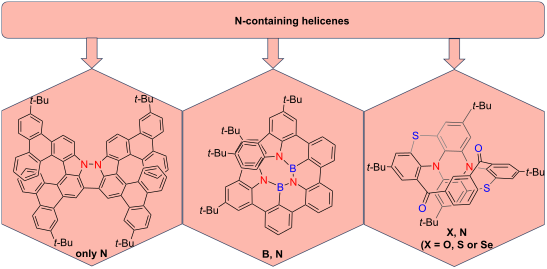
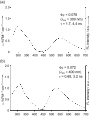
- , thereby advancing their application in multifunctional chiral photonic and sensing platforms. In 2025, Gryko’s group synthesized a series of heterohelicenes 34a–c, featuring a 1,4-dihydropyrrolo[3,2-b]pyrrole (DHPP) core [48] (Table 10). The compounds exhibit similar absorption and emission profiles
- extended π-conjugation and distinct photophysical characteristics. Furthermore, they established a mild electrochemical protocol for synthesizing oxaza[7]helicenes incorporating pyrrole and furan units [87]. This method afforded products in 50–86% yield with Faradaic efficiencies up to 77%. Among them

Oxetanes: formation, reactivity and total syntheses of natural products
Beilstein J. Org. Chem. 2025, 21, 1324–1373, doi:10.3762/bjoc.21.101
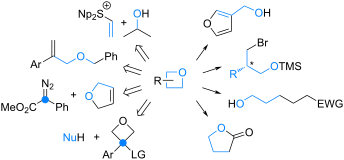
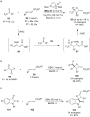
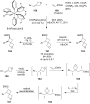
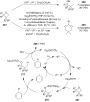
- (necessary for aromatisation) are promoted by trifluoroacetic acid under similarly mild conditions. In case of the pyrrole synthesis, the same precursors are treated with a primary amine in DCM and the reaction mixture is heated at 40 °C for 12–24 h. As 1,4-addition also takes place during this process, two










Synthesis of pyrrolo[3,2-d]pyrimidine-2,4(3H)-diones by domino C–N coupling/hydroamination reactions
Beilstein J. Org. Chem. 2025, 21, 1010–1017, doi:10.3762/bjoc.21.82
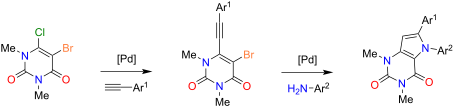
- absorption band. With respect to the phenyl group attached to the pyrrole nitrogen, the presence of the electron-withdrawing CF3 group led to a slight hypsochromic shift (4j). In the case of compound 4l, containing a 4-trifluoromethylphenyl group attached to the nitrogen, no significant shift of the