


Search results
Search for "photophysical properties" in Full Text gives 209 result(s) in Beilstein Journal of Organic Chemistry. Showing first 200.
Synthesis and characterizations of highly luminescent 5-isopropoxybenzo[rst]pentaphene
Beilstein J. Org. Chem. 2025, 21, 270–276, doi:10.3762/bjoc.21.19
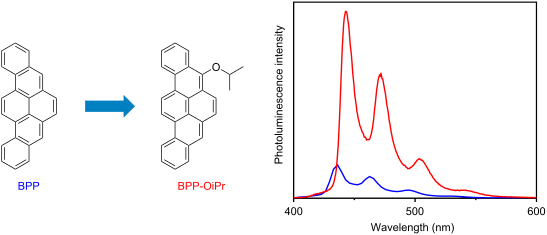
- reaction conditions to selectively obtain BPP-OiPr 3 in 55% yield from dialdehyde 1. Additionally, oxidation of BPP-OiPr 3 provided BPP-dione 4 in 70% yield. The photophysical properties of BPP-OiPr 3 and BPP-dione 4 were carefully studied, examining the solvent-polarity dependence of their optical spectra
- allow more radiative transitions. On the other hand, a broad and featureless PL spectrum with the maximum at 538 nm was observed for BPP-dione 4 in toluene with a high PLQY of 0.62, which is again significantly enhanced from that of BPP 2. To gain further insight into the photophysical properties of BPP
- -0495, Japan X-ray diffraction facility, Department of Chemistry, 100 E. 24th Street, The University of Texas at Austin, Austin, TX 78712, USA 10.3762/bjoc.21.19 Abstract A benzo[rst]pentaphene (BPP) substituted by an isopropoxy group (BPP-OiPr) was synthesized in a facile manner. Its photophysical




Effect of substitution position of aryl groups on the thermal back reactivity of aza-diarylethene photoswitches and prediction by density functional theory
Beilstein J. Org. Chem. 2025, 21, 242–252, doi:10.3762/bjoc.21.16
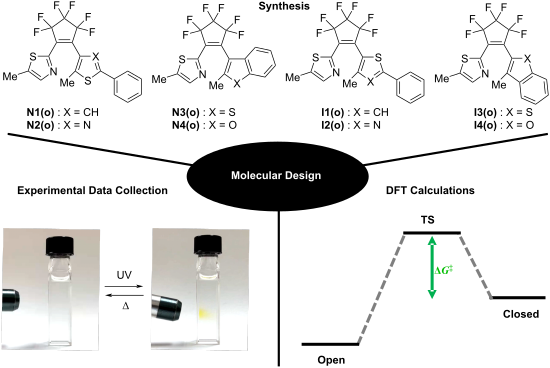
- confirmed that the colorless solution of N4(o) turned yellow upon irradiation with UV light and returned to the initial color upon removal of the irradiation. The photophysical properties of N3, N4, and I1–I4 are summarized in Table 1 together with the data of N1 and N2. Thermal back reactivity in n-hexane
- experimental values. These results contribute to the design of advanced photochromic materials with tailored thermal and photophysical properties. Experimental General Commercially available reagents were used as received for the syntheses. Solvents used for spectroscopy were of spectroscopic grade or purified
- -diarylethene derivatives N1–N4 and I1–I4 investigated in this work. Synthetic route to aza-diarylethenes N4 and I1–I4. Photophysical properties and activation parameters for the thermal back reaction of compounds N1–N4 and I1–I4 in n-hexane. The differences in ΔG‡ between the theoretical value by DFT



Synthesis, characterization, and photophysical properties of novel 9‑phenyl-9-phosphafluorene oxide derivatives
Beilstein J. Org. Chem. 2024, 20, 3299–3305, doi:10.3762/bjoc.20.274
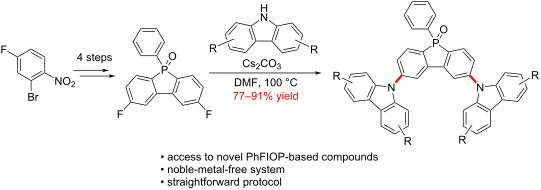
- HRMS spectrometry were in full agreement with the expected structures, and single-crystal X-ray diffraction analysis was conducted to confirm the structure of compound 7-H. Moreover, the photophysical properties of these PhFlOP derivatives were determined by UV–vis absorption and photoluminescence
- studies, revealing that their photophysical behavior can be affected by the different substituents in the donor carbazole group. Keywords: carbazole; D−A−D type; noble-metal-free system; 9‑phenyl-9-phosphafluorene oxide; photophysical properties; Introduction π-Conjugated molecular materials containing
- electrochemical studies, showing that the photophysical properties of PhFlOP depend on the nature of the electron-donating groups [31]. Later, Wu and co-workers introduced various electron donors to the PhFlOP unit to form new TADF emitters with high electroluminescence efficiency [32][33]. Despite this progress




Synthesis of acenaphthylene-fused heteroarenes and polyoxygenated benzo[j]fluoranthenes via a Pd-catalyzed Suzuki–Miyaura/C–H arylation cascade
Beilstein J. Org. Chem. 2024, 20, 3290–3298, doi:10.3762/bjoc.20.273
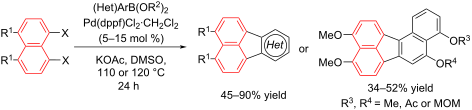
- focus of extensive research within the past two decades due to their interesting structural features, attractive photophysical properties, and diverse applications [2]. Indeed, fluoranthenes are particularly useful in supramolecular chemistry, organic electronics, and materials science [3] as




Efficient synthesis of fluorinated triphenylenes with enhanced arene–perfluoroarene interactions in columnar mesophases
Beilstein J. Org. Chem. 2024, 20, 3263–3273, doi:10.3762/bjoc.20.270
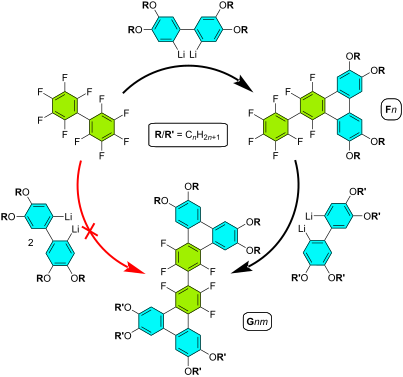
- compounds, Gnm, exhibit a rectangular columnar phase (Colrec) also over large temperature ranges from ambient up to 183 and 164 °C, respectively. The unsymmetrically alkoxy-substituted derivative, G48, also displays a Colrec over a similar temperature range. The compounds’ photophysical properties have also
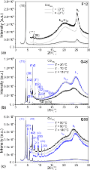
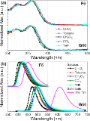
- . Photophysical properties: UV–vis absorption and photoluminescence UV–vis absorption and fluorescence spectra of the synthesized fluorine polycyclic aromatic hydrocarbons Fn and Gnm were measured in solution (in various solvents) and thin film and the results are summarized in Figure 6 and Table S7 in Supporting



Tunable full-color dual-state (solution and solid) emission of push–pull molecules containing the 1-pyrindane moiety
Beilstein J. Org. Chem. 2024, 20, 3016–3025, doi:10.3762/bjoc.20.251
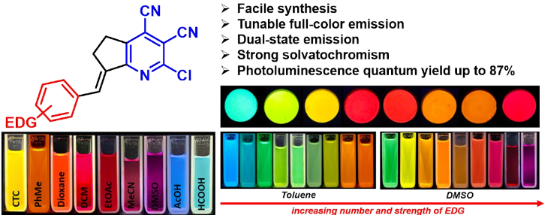
- 1i and 1iH+ in acidic solution. Solvatochromic properties of compound 1i. Photophysical properties of stilbazoles 1 in toluene. Photophysical properties of stilbazoles 1 in DMSO. Solid-state photoluminescence of stilbazoles 1. Supporting Information Supporting Information File 2: Synthetic procedure


Synthesis of benzo[f]quinazoline-1,3(2H,4H)-diones
Beilstein J. Org. Chem. 2024, 20, 2708–2719, doi:10.3762/bjoc.20.228
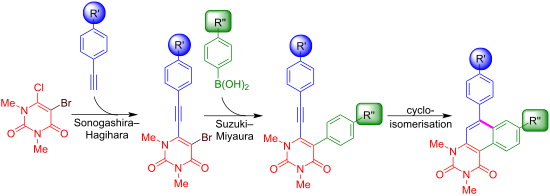
- other compounds with medicinal or photophysical properties [52][53][54][55]. Compounds A are related to the class of natural products known as coumestans, while B resembles flavins. While the medical potential of coumestans is still the subject of current research, interesting photocatalytic properties
- properties All synthesized compounds exhibit photoluminescence by excitation with UV light. Hence, we studied the photophysical properties of all obtained derivatives 5 by steady-state absorption and fluorescence spectroscopy. The influence of the substitution pattern on the photophysical properties is
- various functional groups. The optical properties of as-prepared derivatives were investigated by steady-state absorption and photoluminescence spectroscopy. The photophysical properties are strongly altered by the presence N,N-dimethylaniline functional groups on the scaffold, which leads to strongly




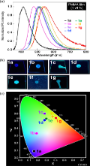
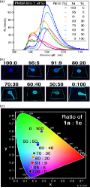
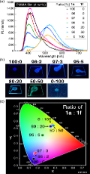
Photoluminescence color-tuning with polymer-dispersed fluorescent films containing two fluorinated diphenylacetylene-type fluorophores
Beilstein J. Org. Chem. 2024, 20, 2682–2690, doi:10.3762/bjoc.20.225
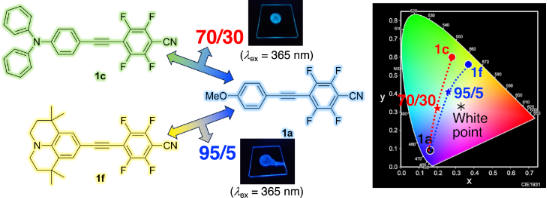
- 10 s. For photophysical measurements, thin and smooth films were prepared by spin-coating followed by solvent evaporation. Photophysical properties The PL spectra and quantum yields were measured using a Quantaurus-QY C11347-01 absolute PL quantum yield spectrometer (Hamamatsu Photonics, Japan). The


Novel truxene-based dipyrromethanes (DPMs): synthesis, spectroscopic characterization and photophysical properties
Beilstein J. Org. Chem. 2024, 20, 2163–2170, doi:10.3762/bjoc.20.186
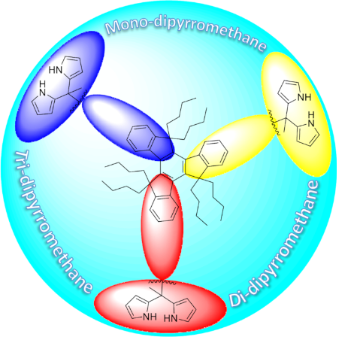
- in addition to the stimulating photophysical properties and distinct architectures emerging from the self-assembly processes [42]. Noticeably, most extensively used DPMs belong to the 4,4-difluoro-4-bora-3a,4a-diaza-s-indacene (BODIPY), owing to their high propensity toward chemical manipulations and


Multicomponent syntheses of pyrazoles via (3 + 2)-cyclocondensation and (3 + 2)-cycloaddition key steps
Beilstein J. Org. Chem. 2024, 20, 2024–2077, doi:10.3762/bjoc.20.178

- agrochemical uses of pyrazoles [13] include insecticides [14], herbicides [15], and fungicides [16]. Furthermore, they are widely applied for the assembly of supramolecular ensembles [17] and molecular systems capable of photoinduced electron transfer [18]. Due to their pertinent photophysical properties [19


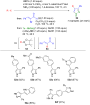


A new platform for the synthesis of diketopyrrolopyrrole derivatives via nucleophilic aromatic substitution reactions
Beilstein J. Org. Chem. 2024, 20, 1933–1939, doi:10.3762/bjoc.20.169
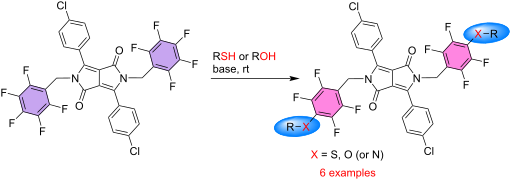
- region [3][4]. In turn, N-substituted DPP derivatives are soluble in common organic solvents, exhibit large molar extinction coefficients, Stokes shifts in the range of 10–70 nm and high fluorescence quantum yields [5][6][7]. Due to their outstanding photophysical properties, DPP-based dyes have been
- consistently displayed the protonated molecular ion [M + H]+ as the base peak. The UV–vis and fluorescence spectra of DPP derivatives 3a–f, 4a, 4d and 4f in DMF are presented in Figure 1, and their photophysical properties are summarized in Table 1. These compounds are highly fluorescent, and their UV–vis


The Groebke–Blackburn–Bienaymé reaction in its maturity: innovation and improvements since its 21st birthday (2019–2023)
Beilstein J. Org. Chem. 2024, 20, 1839–1879, doi:10.3762/bjoc.20.162
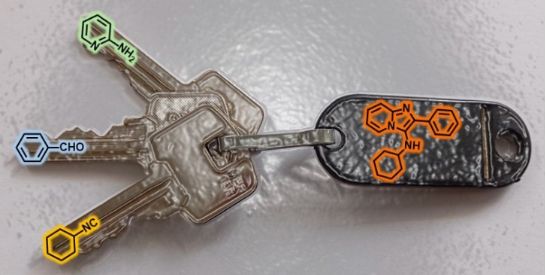
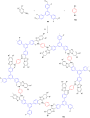
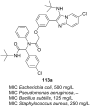
- on biological activities or photophysical properties (i.e., fluorescence) of GBB adducts. Another advantage is that, by replacing the amidine component (classically 2-aminopyridines) with other heterocycles, different scaffolds are obtained, and this is extremely efficient in diversity-oriented
- generation of new scaffolds by coupling the GBB reaction with other transformations; d) the study of the biological and pharmacological properties of these fused heterocycles; e) the study of the photophysical properties of the GBB adducts. At the end of this overview, conclusions will be drawn about the






A facile three-component route to powerful 5-aryldeazaalloxazine photocatalysts
Beilstein J. Org. Chem. 2024, 20, 1831–1838, doi:10.3762/bjoc.20.161
- artificial systems. Additionally, 5-deazaflavins have emerged as prospective antitumor agents [9][10]. Surprisingly, among the broad family of flavin derivatives, 5-deazaalloxazines have received less attention regarding their photophysical properties, despite their close similarity to the above-mentioned 5
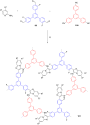
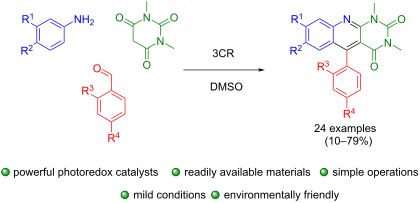
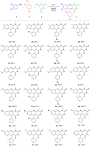
- of photocatalysts by tuning their redox and photophysical properties. Thus, we successfully developed a one-pot, three-component synthetic method with those substituents in 5-aryldeazaflavins 1 on the deazaisoalloxazine core or on the phenyl ring by condensation of N-substituted anilines, aromatic
- methyl substituents were chosen to enhance the photophysical properties and photostability of the desired photocatalysts. It should be noted that our method encountered limitations when applying strongly deactivated anilines substituted with CF3 or acetyl groups, with no formation of 5




Photoswitchable glycoligands targeting Pseudomonas aeruginosa LecA
Beilstein J. Org. Chem. 2024, 20, 1486–1496, doi:10.3762/bjoc.20.132
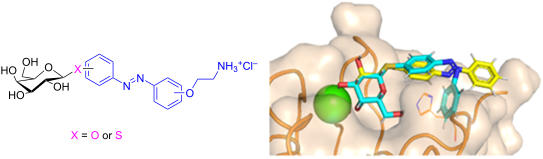
- possess excellent photophysical properties and strong affinity for targeted LecA with Kd values in the micromolar range. Analysis of the thermodynamic contribution indicates that the Z-azobenzene isomers have a systematically stronger favorable enthalpy contribution than the corresponding E-isomers, but
- 1). All the photophysical properties of compounds 1–5 are summarized in Table 1 (spectra are shown in Figure S1–S24 in Supporting Information File 1). Concerning the meta-substituted azobenzene 2, a 30 nm blue shift is observed for the π→π* transition (λmax = 321 nm) as well as a lower absorption


Synthesis and optical properties of bis- and tris-alkynyl-2-trifluoromethylquinolines
Beilstein J. Org. Chem. 2024, 20, 1246–1255, doi:10.3762/bjoc.20.107
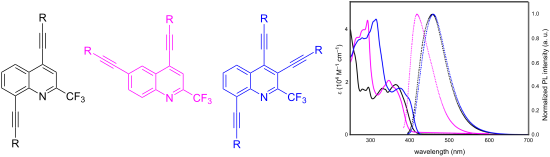
- and applied to palladium-catalysed Sonogashira reactions. Optimised reaction conditions allow the synthesis of various bis- or tris-alkynylated products in one step. Products were generally obtained in high yields and intensive fluorescence. The photophysical properties of selected compounds were








Mechanistic investigations of polyaza[7]helicene in photoredox and energy transfer catalysis
Beilstein J. Org. Chem. 2024, 20, 1236–1245, doi:10.3762/bjoc.20.106
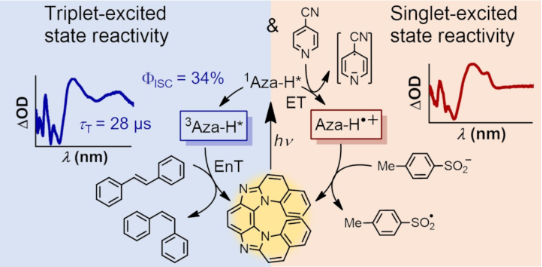
- photocatalyst (PC•+/PC = +1.12 V vs SCE) is then regenerated by an electron transfer from sodium p-toluenesulfinate (TsNa) (Ts•/Ts− = +0.70 V vs SCE) closing the photocatalytic cycle [45]. Unlike other prominent photocatalysts, little to nothing is known about the reactivity, the photophysical properties or the




Introduction of peripheral nitrogen atoms to cyclo-meta-phenylenes
Beilstein J. Org. Chem. 2024, 20, 1207–1212, doi:10.3762/bjoc.20.103
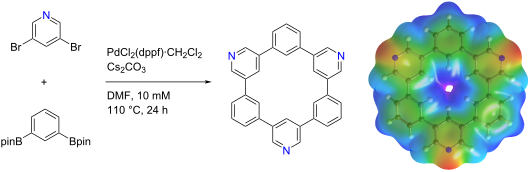
- achieved with one-pot Suzuki–Miyaura coupling to arrange phenylene rings and pyridinylene rings in an alternating fashion. Analyses with UV–vis spectroscopy showed changes in the photophysical properties with nitrogen doping, and X-ray crystallographic analyses experimentally revealed the presence of
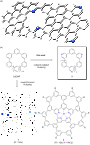
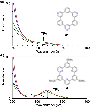
- dopants. Photophysical properties of 3a and 3b. (a) UV–vis spectrum of 3a in CHCl3. (b) UV–vis spectrum of 3b in CHCl3. For reference, the spectra of [6]CMP and [8]CMP from the literature are also shown in gray [15]. Crystal structures of 3a and 3b. (a) Molecular structures. Biaryl dihedral angles (ω) are



Novel route to enhance the thermo-optical performance of bicyclic diene photoswitches for solar thermal batteries
Beilstein J. Org. Chem. 2024, 20, 1053–1068, doi:10.3762/bjoc.20.93
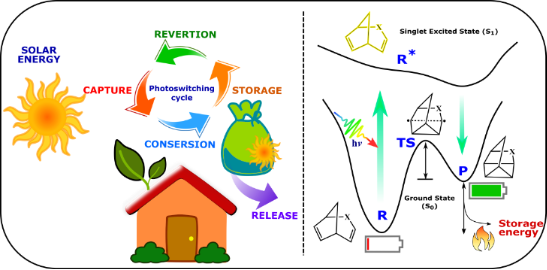
- we report our attempt to enhance both the thermochemical and photophysical properties in a single-bridged bicyclic diene (BBD)-based photoswitch by elongating the unsaturated bridge with different heteroatomic units. To elucidate the best elongation unit, the energy storage capacity and the TBR
- barriers were accounted using the DLPNO-CCSD(T) and (8,8)-CASPT2 methods, respectively. The photophysical properties including the absorption onset, excitation wavelengths, and the absorption intensities were extensively investigated with the time-dependent calculations. The result provides information on
- , the improvement of both the thermochemical and photophysical properties of a photoswitching couple is a challenging task. The bicyclooctadiene/tetracyclooctane (BOD/TCO) couple structurally resembles the NBD/QC pair but has an extended saturated bridge due to the additional methylene (-CH2-) unit. An


Synthesis and properties of 6-alkynyl-5-aryluracils
Beilstein J. Org. Chem. 2024, 20, 898–911, doi:10.3762/bjoc.20.80
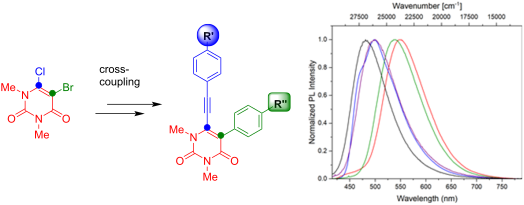
- synthesized by other methods and the single Suzuki reaction on uracil is well studied [42][69][70][71]. Physical properties The photophysical properties of selected derivatives were investigated by steady-state absorption and photoluminescence spectroscopy. The influence of the substitution pattern on the
- photophysical properties is displayed in Figure 4. Corresponding photophysical data and quantum yields are described in Table 2. The analysis of the absorption spectra revealed that the spectra can be divided into a short-wave and long-wave region. In the long wavelength region (350–500 nm) all measured
- gives first insights into the optical properties. It was observed that the photophysical properties could be partially modulated by the chosen substituents. Experimental General information Nuclear magnetic resonance spectra (1H/13C/19F NMR) were recorded on a Bruker AVANCE 300 III, 250II, or 500. The


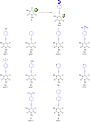

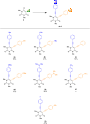
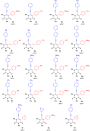


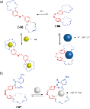
Switchable molecular tweezers: design and applications
Beilstein J. Org. Chem. 2024, 20, 504–539, doi:10.3762/bjoc.20.45





Mono or double Pd-catalyzed C–H bond functionalization for the annulative π-extension of 1,8-dibromonaphthalene: a one pot access to fluoranthene derivatives
Beilstein J. Org. Chem. 2024, 20, 427–435, doi:10.3762/bjoc.20.37
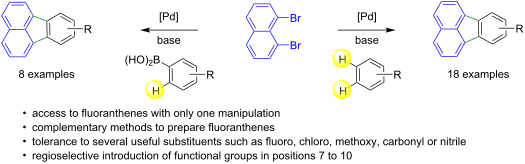
- ; palladium; Introduction Substituted polyaromatics such as fluoranthenes (Figure 1) are widely used in materials chemistry due to their physical properties, and the introduction of a suitable functional group on the appropriate positions of fluoranthenes either allows their photophysical properties to be


Photochromic derivatives of indigo: historical overview of development, challenges and applications
Beilstein J. Org. Chem. 2024, 20, 228–242, doi:10.3762/bjoc.20.23
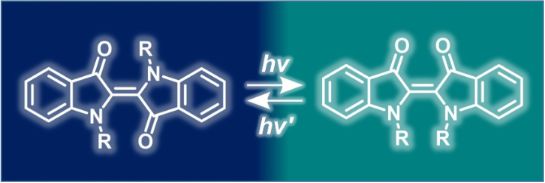
- towards indigo and its derivatives have been recently reviewed in detail by Hecht and Huang [9]. Strucutre and photophysical properties of indigo Indigo dye is blue crystalline powder, which starts to melt at above 390 °C and sublimes in vacuum at above 170 °C [2]. In 1980, it was discovered that indigo
- interest and, therefore, has been investigated comprehensively. To understand the photochemical and photophysical properties of indigo, a great number of theoretical and experimental studies [25][26][27][28][29][30][31][32][33][34][35] have been performed so far, which allowed to characterize excited state
- accelerated in the presence of acid. In 2017 and 2022, Hecht, Jacquemin and co-workers successfully synthesized a range of N,N'-disubstituted indigos, including N,N'-dialkyl derivatives, using novel approaches and investigated their photophysical properties, in particular, the thermal half-lives and the ratio





Perspectives on push–pull chromophores derived from click-type [2 + 2] cycloaddition–retroelectrocyclization reactions of electron-rich alkynes and electron-deficient alkenes
Beilstein J. Org. Chem. 2024, 20, 125–154, doi:10.3762/bjoc.20.13
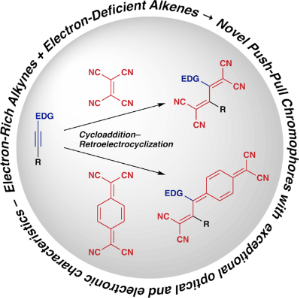
- particular, Diederich et al. conducted a theoretical investigation on the photophysical properties of 1,1,2,4,4-pentacyanobuta-1,3-diene (PCBD) (63) [134]. Compound 63 and the TCBD 64 demonstrated no discernible luminescence at room temperature and 77 K (Figure 4). Transient absorption spectral measurements
- . Concurrently, the excited electron was extensively delocalized over the entire pentacyanobutadiene moiety. The researchers postulated the following description for the photophysical properties of 64: a nonradiative deactivation process occurred via a CI, which was similar to that observed in the case of 63
- TCBD, donor–acceptor conjugated systems have been systematically developed by coupling the TCBD motif with an electron donor, resulting in the experimental observation of photoinduced electron- and energy-transfer events. In 2014, comprehensive investigations on the photophysical properties of


Biphenylene-containing polycyclic conjugated compounds
Beilstein J. Org. Chem. 2023, 19, 1895–1911, doi:10.3762/bjoc.19.141
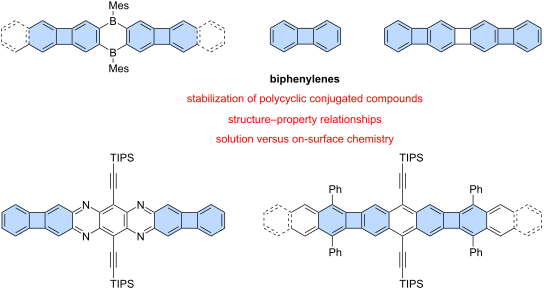
- 616 nm. Based on the photophysical properties of compounds 54a and 54b, which were synthesized in the previous study (Scheme 11), it is evident that the addition of the second biphenylene-fused pyrazine group to the structure leads to a substantial red shift towards the NIR region. This observation
- not be separated by physical methods, it was not possible to study their photophysical properties separately. Nonetheless, comparison of the properties of POAs 73 and 84 has provided essential data. Closely resembling compound 73, the red color of POA 84 is attributed to an extensively broad



Aromatic systems with two and three pyridine-2,6-dicarbazolyl-3,5-dicarbonitrile fragments as electron-transporting organic semiconductors exhibiting long-lived emissions
Beilstein J. Org. Chem. 2023, 19, 1867–1880, doi:10.3762/bjoc.19.139
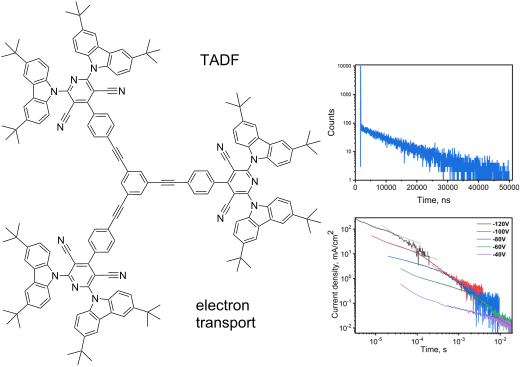
- compounds. In general, polyaromatic π-systems with pyridine-3,5-dicarbonitrile fragments demonstrate promising potential for use in organic electronic devices, such as OLEDs. Keywords: charge transport; intramolecular charge transfer; photophysical properties; pyridine-3,5-dicarbonitrile; Introduction The
- of pyridine-3,5-dicarbonitrile-derived electron-acceptor and acridine electron–donor moieties. The films of molecular mixtures of these emitters with the hosts exhibited excellent photophysical properties [6]. They showed PLQY of up to 91%, tiny singlet–triplet energy gaps of 0.01 eV, and ultrashort
- compounds 6–9 were confirmed by the spectral data and elemental analyses. Remarkably, despite a highly hindered structure, compound 9 exhibits good solubility in non-polar solvents. Photophysical properties The electronic structures of compounds 6–9 in the ground and excited states were investigated by





