


Search results
Search for "polymers" in Full Text gives 587 result(s) in Beilstein Journal of Organic Chemistry. Showing first 200.
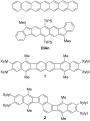
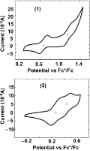
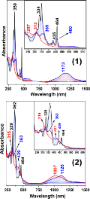
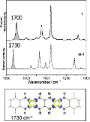
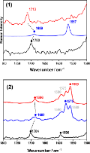
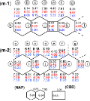
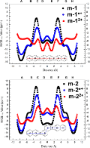
Oxidation of [3]naphthylenes to cations and dications converts local paratropicity into global diatropicity
Beilstein J. Org. Chem. 2025, 21, 277–285, doi:10.3762/bjoc.21.20
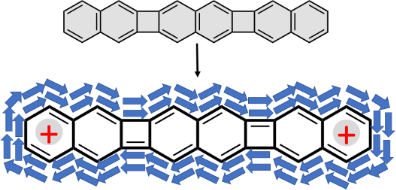
- shift (NICS) calculations and anisotropy of the current induced density (ACID) plots, as they evidenced the presence of a perimetral diatropic global ring current upon oxidation. Keywords: ACID; aromaticity; force constants; NICS; spectroscopy; Introduction Since the discovery of conjugated polymers
- systems in which charge defects are responsible for conductivity in their corresponding conducting polymers. Acenes are the archetypal structure of small polycyclic aromatic hydrocarbons with a π-electron structure expanded over a sequence of linearly fused benzenes [4]. Whereas acenes, up to substituted


Heteroannulations of cyanoacetamide-based MCR scaffolds utilizing formamide
Beilstein J. Org. Chem. 2025, 21, 217–225, doi:10.3762/bjoc.21.13
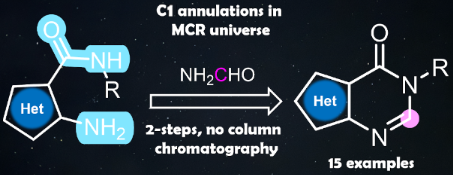
- be established as a C1 feedstock. [25]. Its high polarity and dielectric constant (it is miscible with water) [26], with the ability to solubilize a wide range of reagents, from salts to polymers, proteins and saccharides, renders formamide an excellent C1 building block [25][27]. Thus, our target




Dioxazolones as electrophilic amide sources in copper-catalyzed and -mediated transformations
Beilstein J. Org. Chem. 2025, 21, 200–216, doi:10.3762/bjoc.21.12
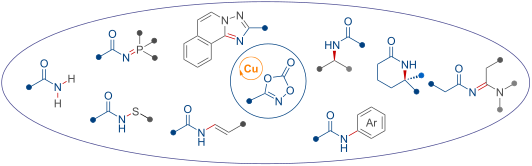
- leads to the formation of the N-acyl amidine product 10. 1.4 N-Arylation of dioxazolones Amides bearing N-substituents are key structural motifs in a wide range of polymers [82], natural products [83], and pharmaceuticals [84][85]. Conventional synthetic routes for N-arylamides typically involve the


Hydrogen-bonded macrocycle-mediated dimerization for orthogonal supramolecular polymerization
Beilstein J. Org. Chem. 2025, 21, 179–188, doi:10.3762/bjoc.21.10
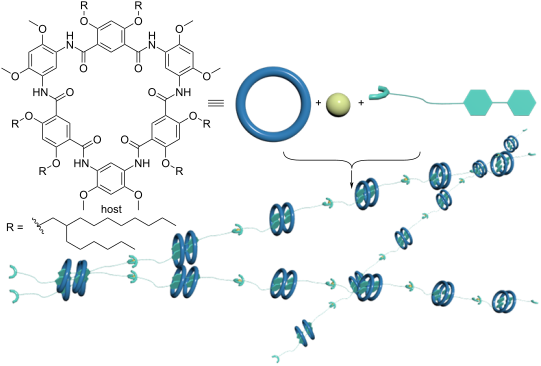
- Wentao Yu Zhiyao Yang Chengkan Yu Xiaowei Li Lihua Yuan College of Chemistry, Sichuan University, Chengdu 610064, China 10.3762/bjoc.21.10 Abstract Orthogonal self-assembly represents a useful methodology to construct supramolecular polymers with AA- and AB-type monomers, as commonly used for
- covalently linked polymers. So far, the design of such monomers has relied heavily on three-dimensional macrocycles, and the use of two-dimensional shape-persistent macrocycles for this purpose remains rather rare. Here, we demonstrate a dimerization motif based on a hydrogen-bonded macrocycle that can be
- effectively applied to form orthogonal supramolecular polymers. The macrocycle-mediated connectivity was confirmed by single-crystal X-ray diffraction, which revealed a unique 2:2 binding motif between host and guest, bridged by two cationic pyridinium end groups through π-stacking interactions and other

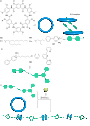


Hot shape transformation: the role of PSar dehydration in stomatocyte morphogenesis
Beilstein J. Org. Chem. 2025, 21, 47–54, doi:10.3762/bjoc.21.5
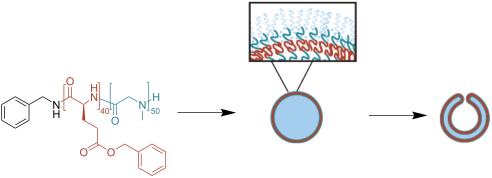
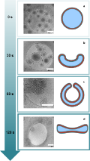
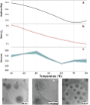
- ) in biomedical applications, boasting advantages in biocompatibility and degradability. While the self-assembly behavior of block copolymers containing polysarcosine-containing polymers has been reported, their potential for shape transformation remains largely untapped, limiting their versatility
- broadening their potential applications in drug delivery and nanotechnology. Our findings shed light on the unique capabilities of polysarcosine-based polymers, paving the way for further exploration and harnessing of their distinctive properties in biomedical research. Keywords: biodegradable; poly(benzyl
- of the non-degradable PEG segment is still ongoing as PEG is regarded as the benchmark for hydrophilic polymers used in drug delivery [7]. The non-biodegradability of PEG under most conditions, coupled with recently discovered immunogenic responses to it, has led to increasing concerns [8][9]. This


Emerging trends in the optimization of organic synthesis through high-throughput tools and machine learning
Beilstein J. Org. Chem. 2025, 21, 10–38, doi:10.3762/bjoc.21.3
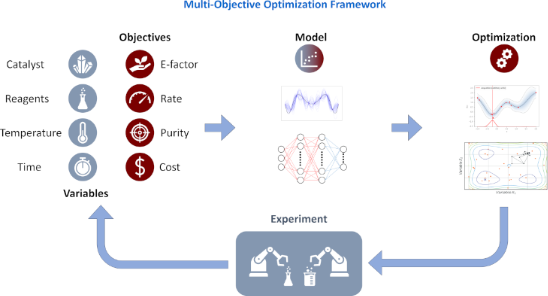
- this robotic system promises remarkable applications in materials, polymers, and chemical synthesis. Most automated synthesis platforms are based on expensive scientific equipment, have a large equipment footprint, and need extensive reconfiguration to adapt to new synthetic protocols. To address this


Efficient synthesis of fluorinated triphenylenes with enhanced arene–perfluoroarene interactions in columnar mesophases
Beilstein J. Org. Chem. 2024, 20, 3263–3273, doi:10.3762/bjoc.20.270
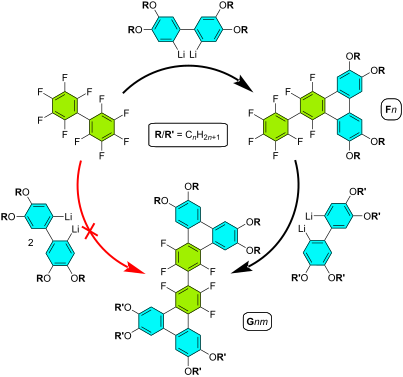
- reaction. This “palladium-free” reaction between 2Li-BPn and C6F5–C6F5 possesses several advantages: easily available starting chemicals, low cost, efficient, and versatile, displaying the potential to synthesize more complicated fluoroarene molecules and polymers. These fluorine-containing triphenylenes



Cyclodextrin-based rotaxanes for polymer materials: challenge on simultaneous realization of inexpensive production and defined structures
Beilstein J. Org. Chem. 2024, 20, 3026–3049, doi:10.3762/bjoc.20.252
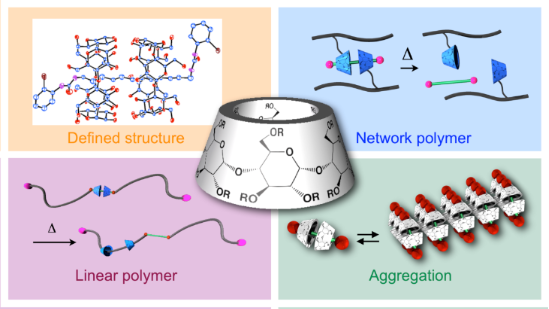
- -0083 Tokyo, Japan 10.3762/bjoc.20.252 Abstract Owing to their dynamic natures, rotaxane-based polymers are attractive motifs for developing stimuli-responsive materials. However, the accurate control of the rotaxane structure, which can be achieved via multistep synthesis, is key to utilizing the
- material. Concurrently, implementing a scale-up synthesis procedure to exploit the application potential of rotaxane-based polymers induces structural ambiguities, thereby presenting a significant trade-off between realizing inexpensive production and defined structures. To overcome this rotaxane-synthesis
- challenge, cyclodextrin (CD) can be employed as a promising alternative owing to its low production cost. Thus, this study presents an overview of the precise synthesis of CD-based rotaxane and its application to polymers to simultaneously ensure inexpensive production and realize defined structures






Advances in radical peroxidation with hydroperoxides
Beilstein J. Org. Chem. 2024, 20, 2959–3006, doi:10.3762/bjoc.20.249
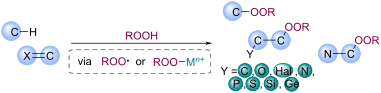
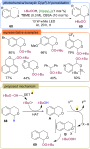
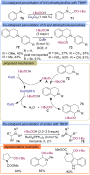
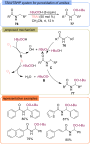
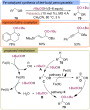
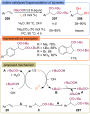
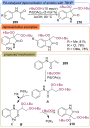
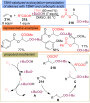
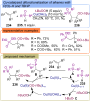
- range of polymers [1]. They are also applied as curing, hardening and crosslinking agents [2]. Global demand for organic peroxides is expected to increase as the use of engineered plastics increases and production capacity is expanded. In addition, the need for polymers is expected to increase due to


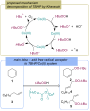

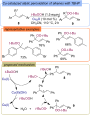


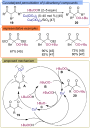
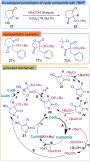


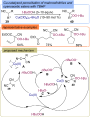


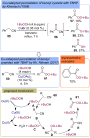
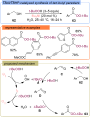

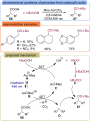


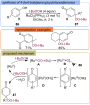


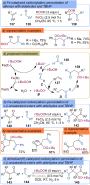


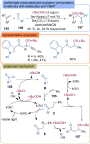
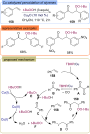


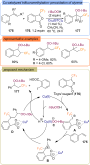
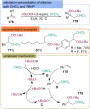

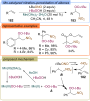
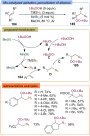





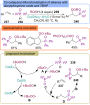
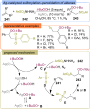


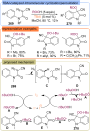


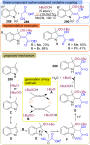

gem-Difluorovinyl and trifluorovinyl Michael acceptors in the synthesis of α,β-unsaturated fluorinated and nonfluorinated amides
Beilstein J. Org. Chem. 2024, 20, 2946–2953, doi:10.3762/bjoc.20.247
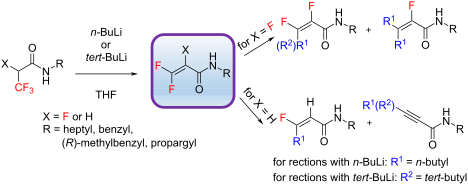
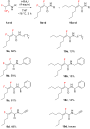
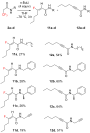
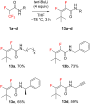
- using organolithium reagents (Scheme 1), revealing new avenues in fluorinated unsaturated amide synthesis, which are present in numerous natural products, pharmaceuticals, and polymers [34][35][36][37][38]. The obtained α,β-unsaturated amides may represent promising structural motifs for further




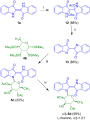
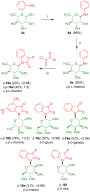
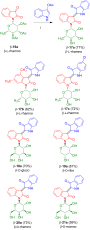
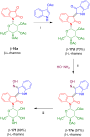
N-Glycosides of indigo, indirubin, and isoindigo: blue, red, and yellow sugars and their cancerostatic activity
Beilstein J. Org. Chem. 2024, 20, 2840–2869, doi:10.3762/bjoc.20.240
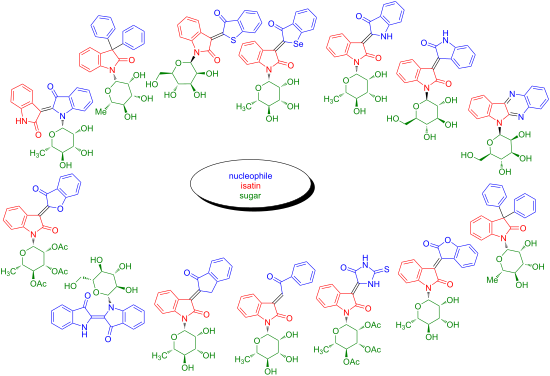
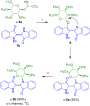
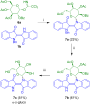
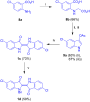
- ][9][10]. In this context, the best CDK2 inhibitory activities were observed for indirubin-derived oximes [11]. Yellow colored isoindigo received a lot of attention as constituent of polymers applied as semi-conducting materials, organic light emitting materials (OLED), and for related applications









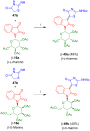


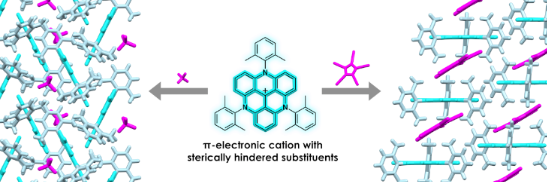
Anion-dependent ion-pairing assemblies of triazatriangulenium cation that interferes with stacking structures
Beilstein J. Org. Chem. 2024, 20, 2567–2576, doi:10.3762/bjoc.20.215
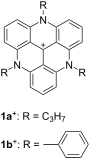
- . Moreover, the N-aryl-substituted TATA+ cations have been used as the building units of porous organic polymers for capturing CO2 [27]. Cations with characteristic electron-deficient planar triangular geometries were used as scaffolds for various supramolecular cage structures [28][29]. Although



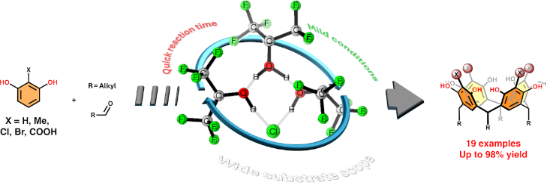
HFIP as a versatile solvent in resorcin[n]arene synthesis
Beilstein J. Org. Chem. 2024, 20, 2469–2475, doi:10.3762/bjoc.20.211
- , e.g., polymers and capsules [80]. In that regard, 2,6-dihydroxybenzoic acid is known to also yield inseparable mixtures [9][81]. However, a couple of reports describe successful syntheses with reaction yields ≈40% using 2,6-dihydroxybenzoic acid and formaldehyde under basic conditions [38]. Recently


Cell-free protein synthesis with technical additives – expanding the parameter space of in vitro gene expression
Beilstein J. Org. Chem. 2024, 20, 2242–2253, doi:10.3762/bjoc.20.192
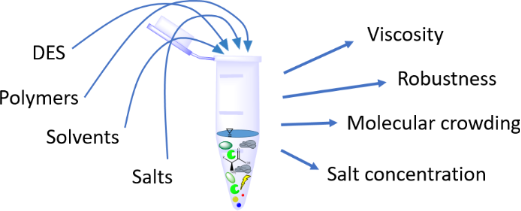
- osmolarity using ten different technical additives including organic solvents, polymers, and salts. It is shown that the synthesis of two model proteins, namely superfolder GFP (sfGFP) and the enzyme truncated human cyclic GMP-AMP synthase fused to sfGFP (thscGAS-sfGFP), is very robust against most of the
- alcohols, polyols, polyions or polymers, has a positive effect on protein stability and the soluble fraction expressed with CFPS [17]. The variable composition of CFPS systems with a high number of ingredients and possible reaction conditions [13] thus opens a large parameter space. In addition, non
- some of the gaps in the consideration of the general physical properties and potential effects on the performance of Escherichia coli-based CFPS. We use technical additives, such as water-soluble macromolecular polymers and salts, which are commonly used as deep eutectic solvents (DES) and extend the


Metal-free double azide addition to strained alkynes of an octadehydrodibenzo[12]annulene derivative with electron-withdrawing substituents
Beilstein J. Org. Chem. 2024, 20, 2234–2241, doi:10.3762/bjoc.20.191
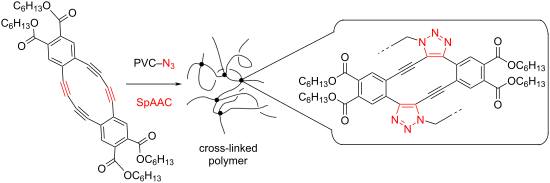
- introduced into octadehydrodibenzo[12]annulene. In this report, the synthesis of new octadehydrodibenzo[12]annulene derivatives, regioselective double addition of organic azides, and an application to crosslinking polymers are described. Keywords: annulene; click chemistry; polymerization; strain-promoted
- ], and crosslinked polymers [14][15][16][17]. Since crosslinking polymers requires high reaction efficiency under mild conditions, developing such reactions is crucial. We previously reported the regioselective double azide addition to octadehydrodibenzo[12]annulene with hexyloxy substituents (DBA-OHex
- the strain-promoted double azide addition feature, DBA 5 was evaluated as a crosslinker for azidated polymers. After 5 (5 mol %) was added to a partially azidated poly(vinyl chloride) (PVC-N3) (x = 0.11, n = 1000) in THF, the solvent was gradually evaporated on a Teflon boat. The resulting self




O,S,Se-containing Biginelli products based on cyclic β-ketosulfone and their postfunctionalization
Beilstein J. Org. Chem. 2024, 20, 2143–2151, doi:10.3762/bjoc.20.184
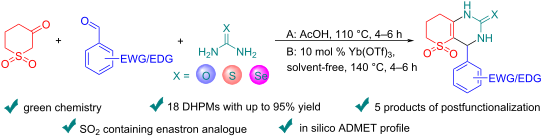
- organic and medicinal chemists. DHPMs are found in a variety of marine-sourced alkaloids, which are essential for creating biologically active natural products [10]. Some of the DHPM derivatives are also known as functional polymers, adhesives, and fabric dyes [8][12]. In recent decades, the scope of the



Factors influencing the performance of organocatalysts immobilised on solid supports: A review
Beilstein J. Org. Chem. 2024, 20, 2129–2142, doi:10.3762/bjoc.20.183
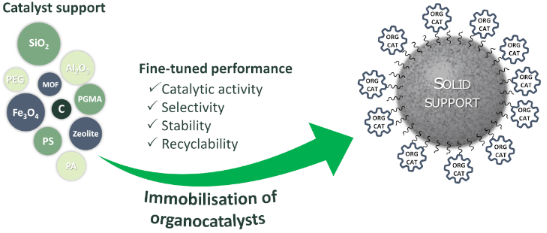
- ]. The role of the polymers as supports for catalysts is not merely passive. These supports significantly influence the reaction environment and catalytic efficiency [42]. Attachment methods, spacer lengths, and polymer nature profoundly impact the catalyst's performance and recyclability. Various
- immobilization strategies, including covalent bonding and encapsulation, cater to different polymer types. Soluble polymers enhance diffusion, while insoluble ones ensure stability and high loading capacities [42]. Silica is also widely applied due to its ease of functionalisation and thermal stability [43]. The
- modifications play a more important role. MOFs are a type of porous crystalline polymers where organic ligands are coordinated to metal clusters [80][81][82][83][84][85][86][87][88][89][90]. The framework can be post-synthetically modified by functional organic sites, often specifically chiral functionalities


Computational toolbox for the analysis of protein–glycan interactions
Beilstein J. Org. Chem. 2024, 20, 2084–2107, doi:10.3762/bjoc.20.180
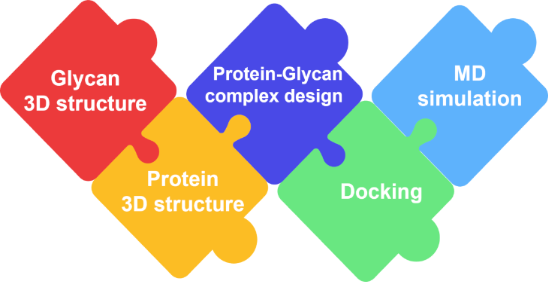
- python framework that allows users to prepare carbohydrate structures for atomistic simulations of complex glycoproteins, glycolipids and carbohydrate polymers in the GROMACS force field format (see below). Polysaccharides can be prepared by using the prepreader.py tool, glycoproteins and glycolipids by


Multicomponent syntheses of pyrazoles via (3 + 2)-cyclocondensation and (3 + 2)-cycloaddition key steps
Beilstein J. Org. Chem. 2024, 20, 2024–2077, doi:10.3762/bjoc.20.178

- consecutive three-component approach in a polymer analogous fashion with diynes 105, terephthaloyl chloride (106), and hydrazines to synthesize high molecular weight pyrazole-based polymers 107 (Scheme 38) [132]. The materials 107 fluoresce in THF solutions, form thin films, and possess high thermal stability




The Groebke–Blackburn–Bienaymé reaction in its maturity: innovation and improvements since its 21st birthday (2019–2023)
Beilstein J. Org. Chem. 2024, 20, 1839–1879, doi:10.3762/bjoc.20.162
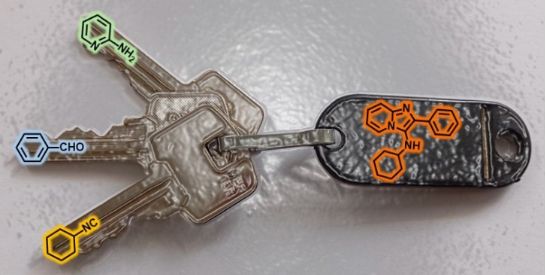
- GBB products were introduced to the subsequent reactions in the same pot without isolating them from the reaction mixture. In the one-pot multicomponent reaction, three substrates with di- or tri-functional groups were engaged in the GBB reaction to produce the heterocyclic polymers. Panda and
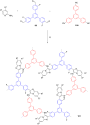
- (41–67%). Multicomponent polymerizations are simple and efficient methods to construct a library of polymers with great structural complexity and diversity, including fused-heterocyclic polymers[64]. Tang et al. [65] reported the transition-metal-free multicomponent polymerization of dialdehydes 96a–c
- and diisocyanides 97a,b in the presence of 2-aminopyridine (1, Scheme 30). The polymerization was carried out under mild conditions (in ethanol as the solvent and p-TsOH as the catalyst) and delivered six polymers featured with high yields (up to 98%), molecular weight (up to 41,700 g/mol), atom






A facile three-component route to powerful 5-aryldeazaalloxazine photocatalysts
Beilstein J. Org. Chem. 2024, 20, 1831–1838, doi:10.3762/bjoc.20.161
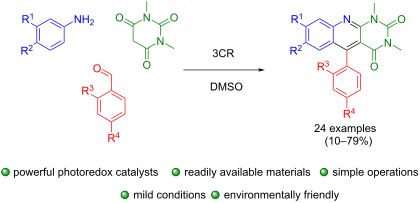
- of applications in medicinal chemistry, chemosensors, polymers and catalysis [1][2][3][4][5][6][7][8]. Among them, flavins (Fl) are essential redox-active natural compounds that act as enzyme cofactors in numerous biochemical processes [9]. Structurally related to flavins are isomeric alloxazines




Synthesis and characterization of 1,2,3,4-naphthalene and anthracene diimides
Beilstein J. Org. Chem. 2024, 20, 1767–1772, doi:10.3762/bjoc.20.155
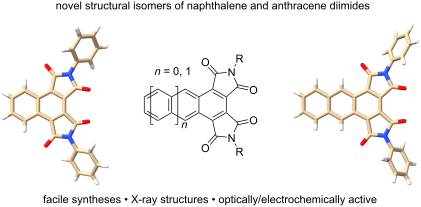
- robust polymers, supramolecular assemblies, and (opto)electronic materials. The vast majority of this research has focused on 1,2,4,5-benzene (pyromellitic), 1,4,5,8-naphthalene, and 3,4,9,10-perylene diimides. Beyond these, researchers have demonstrated that translocating the cyclic imides around the
- 1,2,5,6- [9][10] and 2,3,6,7-naphthalene diimides (NDIs) have been produced and utilized in electronically active polymers (Figure 1). The linear extension of 1,4,5,8-naphthalene diimide to produce tetracene [11] and hexacene [12] diimides, some with interesting properties such as near-IR absorption, has


Polymer degrading marine Microbulbifer bacteria: an un(der)utilized source of chemical and biocatalytic novelty
Beilstein J. Org. Chem. 2024, 20, 1635–1651, doi:10.3762/bjoc.20.146
- nitrogen sources [114][115]. Chitin is traditionally degraded with environmentally unfriendly concentrated acids or alkalis. Chitinases are hydrolytic enzymes that degrade glycosidic bonds between chitin polymers and belong to the GH-18 and GH-19 family [116]. Chitinases can be also classified as endo- or
- broad pH range between 5.0 and 9.0 and was highly expressed in Pichia pastoris [79]. Carrageenase Carrageenans are sulfated saccharide polymers with a wide range of commercial applications. The differential sulfation patterns allow for carrageenans to be differentiated into three basic forms – κ-, ι




New triazinephosphonate dopants for Nafion proton exchange membranes (PEM)
Beilstein J. Org. Chem. 2024, 20, 1623–1634, doi:10.3762/bjoc.20.145
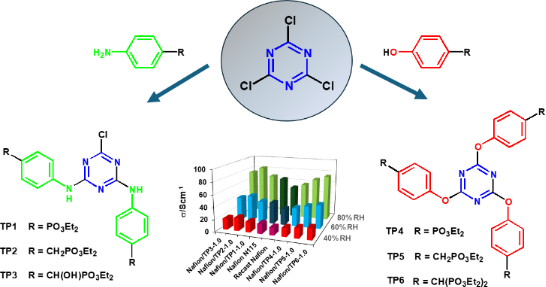
- structural properties of the membranes restrain their stability and durability, their humidity and temperature application conditions, and their efficiency and consequently, the performance of fuel cells or eletrolysers [18][19]. Many organic polymers with acidic functional groups have been developed as
- of phosphonic acid derivatives into commercial Nafion polymers increment their proton conduction properties. The synthesized compounds (TP1–TP6) were attempted to be applied as dopants in the preparation of new proton exchange membranes. With this in mind, new doped membranes were prepared by




Selectfluor and alcohol-mediated synthesis of bicyclic oxyfluorination compounds by Wagner–Meerwein rearrangement
Beilstein J. Org. Chem. 2024, 20, 1462–1467, doi:10.3762/bjoc.20.129
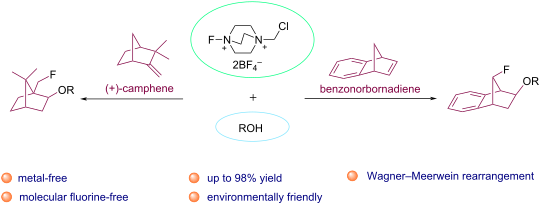
- ] and many more (Figure 1). On the other hand, with unusual geometry and high reactivity norbornadiene and benzonorbornadiene derivative bicyclic compounds attract great attention by researchers with their use as building blocks in different application areas such as polymers, solar energy storage





