Search results
Search for "sustainable" in Full Text gives 346 result(s) in Beilstein Journal of Organic Chemistry. Showing first 200.
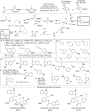
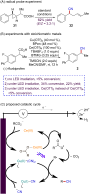
Cu(OTf)2-catalyzed multicomponent reactions
Beilstein J. Org. Chem. 2025, 21, 122–145, doi:10.3762/bjoc.21.7

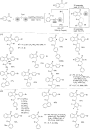
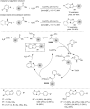
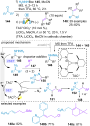
- type of reaction. Review Three-component reactions Several three-component procedures have been successfully carried out using Cu(OTf)2 as a catalyst. These processes have been exploited mainly to access nitrogen compounds endowed with various structures, in a faster and more sustainable way than
- , secondary aliphatic or aromatic amines and thiols in the presence of catalytic Cu(OTf)2 (1 mol %) in aqueous media was proven to be a sustainable procedure to access thioaminals 5, avoiding high temperatures and/or hazardous reagents required by classical conditions (Scheme 4) [18]. The 1,2


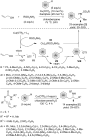








Emerging trends in the optimization of organic synthesis through high-throughput tools and machine learning
Beilstein J. Org. Chem. 2025, 21, 10–38, doi:10.3762/bjoc.21.3
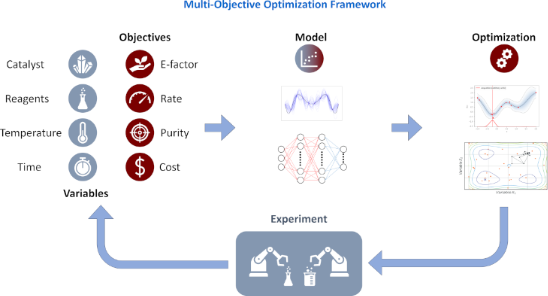
- , differing from established isolation and separation techniques, holds the promise of not only enhancing the efficiency of HTE flow synthesis but also paving the way for more sustainable growth in this research area. Autonomous self-optimizing flow reactors Autonomous self-optimizing flow reactors (ASFRs
- energy consumption and reduced use of hazardous materials, contributing to more sustainable chemical processes. Integrating ML algorithms to simultaneously optimize multiple parameters such as yield, purity, and cost within a closed-loop represents a significant advancement in process design. Furthermore


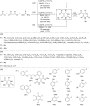
Multicomponent reactions driving the discovery and optimization of agents targeting central nervous system pathologies
Beilstein J. Org. Chem. 2024, 20, 3151–3173, doi:10.3762/bjoc.20.261

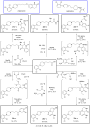
- rapid generation of chemical libraries with high diversity in a time-efficient and environmentally sustainable manner. In this review, we focus on central nervous system (CNS) disorders, particularly Alzheimer's disease, Parkinson's disease, schizophrenia, depression, and epilepsy, where MCRs have




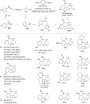
Extension of the π-system of monoaryl-substituted norbornadienes with acetylene bridges: influence on the photochemical conversion and storage of light energy
Beilstein J. Org. Chem. 2024, 20, 3061–3068, doi:10.3762/bjoc.20.254
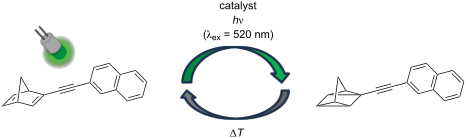
- ; Sonogashira–Hagihara coupling; Introduction The application of sustainable energy storage and supply has become a very important issue both from an economic and ecological point of view. In particular, the global energy demand is continuously expanding because of the increasing population, the development of


C–H Trifluoromethylthiolation of aldehyde hydrazones
Beilstein J. Org. Chem. 2024, 20, 2883–2890, doi:10.3762/bjoc.20.242
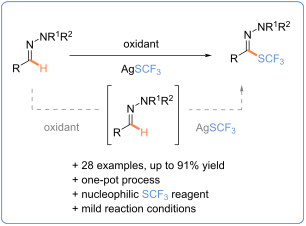
- various transformations [54][55][56][57][58][59][60][61][62][63][64]. In consequence, a large number of transition-metal-catalyzed or radical-mediated processes for C–H functionalization of aldehyde hydrazones has flourished over the years. An ideal scenario for a direct and sustainable synthetic route



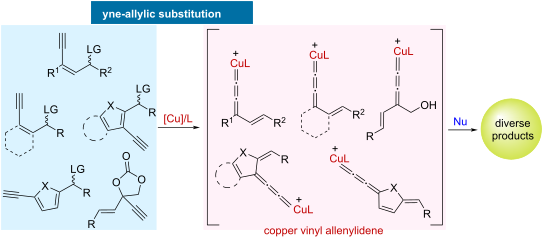
Copper-catalyzed yne-allylic substitutions: concept and recent developments
Beilstein J. Org. Chem. 2024, 20, 2739–2775, doi:10.3762/bjoc.20.232
- -value oxazolidinones with exceptional yields and enantioselectivities. This not only addresses the challenge of CO2 waste but also opens new avenues for the sustainable synthesis of complex molecules. Comprehensive mechanistic investigations underscored the pivotal role of DABCO in promoting CO2 capture









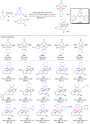


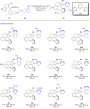


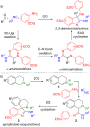
Synthesis of spiroindolenines through a one-pot multistep process mediated by visible light
Beilstein J. Org. Chem. 2024, 20, 2722–2731, doi:10.3762/bjoc.20.230
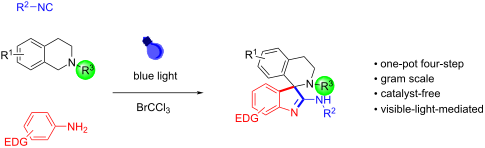
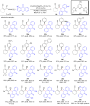
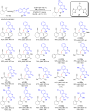
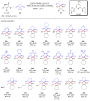
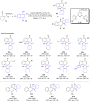
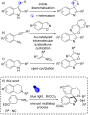
- aromatic substitution giving the final spiro-indolenine. The scope of the process has been investigated with respect to all three components. Simple operations, mild conditions, and good yields make this strategy a convenient and sustainable way to obtain novel spiro-indolenine derivatives. Keywords




Young investigators in natural products chemistry, biosynthesis, and enzymology
Beilstein J. Org. Chem. 2024, 20, 2720–2721, doi:10.3762/bjoc.20.229

- Jeffrey D. Rudolf Lena Barra Takayoshi Awakawa Department of Chemistry, University of Florida, PO Box 117200, Gainesville, FL 32611, USA Fachbereich Chemie, Universität Konstanz, Universitätsstraße 10, 78464 Konstanz, Germany RIKEN Center for Sustainable Resource Science, Wako, Saitama 351-0198
Computational design for enantioselective CO2 capture: asymmetric frustrated Lewis pairs in epoxide transformations
Beilstein J. Org. Chem. 2024, 20, 2668–2681, doi:10.3762/bjoc.20.224
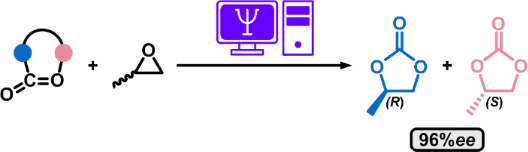
- catalyst efficiency and selectivity in sustainable chemistry applications. Keywords: asymmetric catalysis; carbon dioxide; CO2; epoxide; frustrated Lewis pairs (FLPs); volcano plot; Introduction The field of frustrated Lewis pairs (FLPs) has flourished since their seminal discovery in 2006 by Stephan and


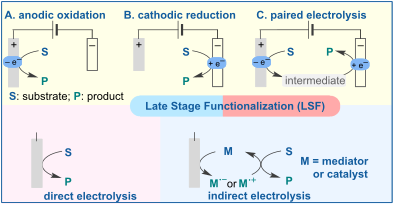
A review of recent advances in electrochemical and photoelectrochemical late-stage functionalization classified by anodic oxidation, cathodic reduction, and paired electrolysis
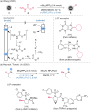
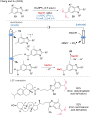
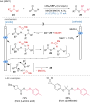
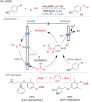
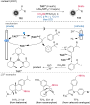
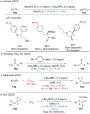
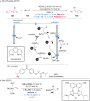
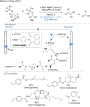
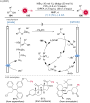
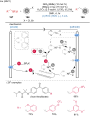
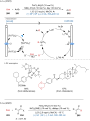
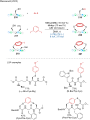
Beilstein J. Org. Chem. 2024, 20, 2500–2566, doi:10.3762/bjoc.20.214










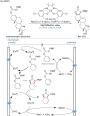


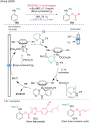
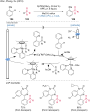


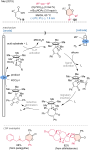














Machine learning-guided strategies for reaction conditions design and optimization
Beilstein J. Org. Chem. 2024, 20, 2476–2492, doi:10.3762/bjoc.20.212
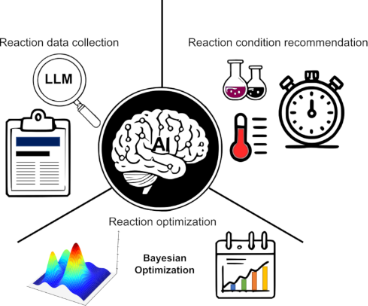
- Lung-Yi Chen Yi-Pei Li Department of Chemical Engineering, National Taiwan University, No. 1, Sec. 4, Roosevelt Road, Taipei 10617, Taiwan Taiwan International Graduate Program on Sustainable Chemical Science and Technology (TIGP-SCST), No. 128, Sec. 2, Academia Road, Taipei 11529, Taiwan 10.3762
- propels the field of synthetic chemistry forward, making it more innovative, efficient, and sustainable. The ongoing development of ML in reaction conditions design and optimization holds the promise of unlocking new capabilities and achieving transformative breakthroughs in the field. Schematic diagram


Stereoselective mechanochemical synthesis of thiomalonate Michael adducts via iminium catalysis by chiral primary amines
Beilstein J. Org. Chem. 2024, 20, 2313–2322, doi:10.3762/bjoc.20.198
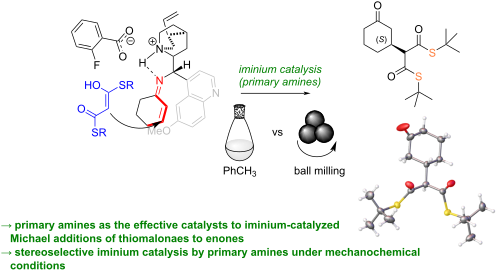
- ][7][8]. Furthermore, the integration of mechanochemistry and organocatalysis leads to the development of more sustainable transformations, characterized by reduced reaction times, decreased catalyst loadings, and significantly diminished solvent usage and waste production [9][10][11]. The pioneering
- sustainable transformations characterized by reduced reaction times. An unprecedented combination of mechanochemistry with organocatalysis, notably chiral amine-catalyzed stereoselective reactions, has been extensively investigated. While primary amine-catalyzed reactions under ball milling conditions are
- less documented, they offer prospects for substrate diversification using a more sustainable approach. Efforts to enhance reactivity through nucleophile modifications, such as transitioning from oxoesters to thioesters, show promise in enhancing reaction progress. However, the efficacy of catalysts


Factors influencing the performance of organocatalysts immobilised on solid supports: A review
Beilstein J. Org. Chem. 2024, 20, 2129–2142, doi:10.3762/bjoc.20.183
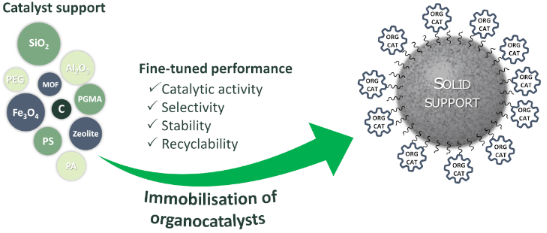
- controllability of surface, geometry, and pore size makes silica-based materials sustainable and functionalisable supports for organocatalytic reactions [44]. The particle morphology of mesoporous silica can be tuned to various shapes, including spheres, tubes, and rods of various dimensions [45], by using a co
- , contributing to more sustainable and efficient catalytic processes. Esterification of oleic acid (1) with propylsulfonic acid (Pr-SO3H)-functionalised mesoporous silica catalyst 4. Using confinement of organocatalytic units for improving the enantioselectivity of silica-supported organocatalysts in the Michael


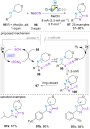
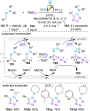
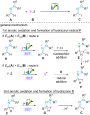
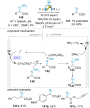
Harnessing the versatility of hydrazones through electrosynthetic oxidative transformations
Beilstein J. Org. Chem. 2024, 20, 1988–2004, doi:10.3762/bjoc.20.175
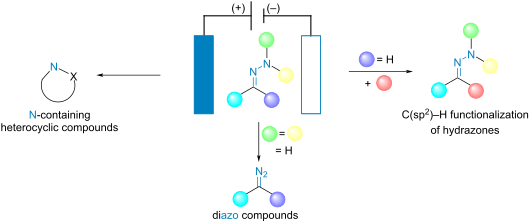
- appealing opportunities to take advantage of the versatility of this reagent. Such an approach can either ameliorate the previous methods in a more sustainable and efficient fashion or provide a mean for the discovery of new reactivity. Herein, this review aims to give an overview of the state of the art in



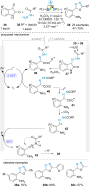
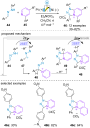
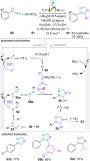
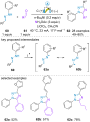





The Groebke–Blackburn–Bienaymé reaction in its maturity: innovation and improvements since its 21st birthday (2019–2023)
Beilstein J. Org. Chem. 2024, 20, 1839–1879, doi:10.3762/bjoc.20.162
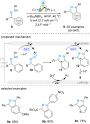
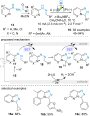
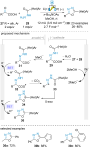
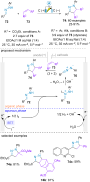
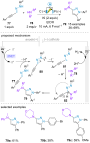
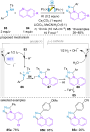
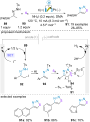
- only for most of unhindered small ones), their partial instability and their potential toxicity [27], thus in situ generation represents a sustainable alternative for their conventional use and this issue has been recently reviewed by Baht and Heravi [28]. In situ generation of isocyanides has been
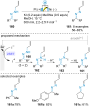
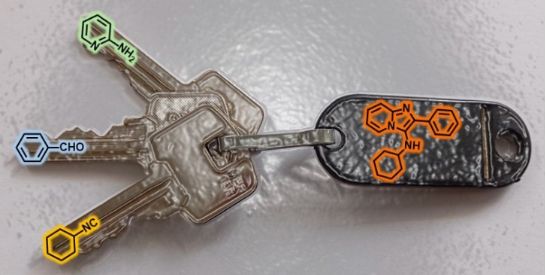
- different combinations of starting materials and elucidating the effect of substituents on each of the partners [1]. Since 2019, research has been focused on broadening its scope with the aim of moving towards a more sustainable chemistry or to impart specific properties to the final products, therefore a
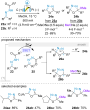
- adducts. An intriguing study is reported by Porcal et al. [35] in which they evaluate the use of 5-hydroxymethylfurfural (5-HMF, 23). Nowadays, the need to move towards more sustainable protocols is impending and the emphasis on green chemistry and on the use of renewable carbon sources is huge. Indeed






Synthesis of polycyclic aromatic quinones by continuous flow electrochemical oxidation: anodic methoxylation of polycyclic aromatic phenols (PAPs)
Beilstein J. Org. Chem. 2024, 20, 1746–1757, doi:10.3762/bjoc.20.153
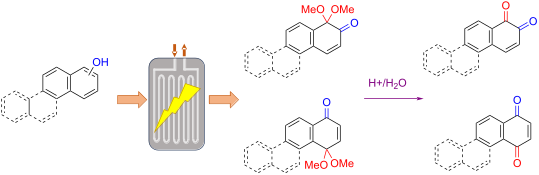
- making them less desirable for industrial scale [19]. Electrochemical synthesis methods have a huge potential and this field is currently undergoing a renaissance [20][21][22][23][24]. Replacing chemical oxidants with electric current reduces waste production and gives a sustainable and inherently safe





Ring opening of photogenerated azetidinols as a strategy for the synthesis of aminodioxolanes
Beilstein J. Org. Chem. 2024, 20, 1671–1676, doi:10.3762/bjoc.20.148
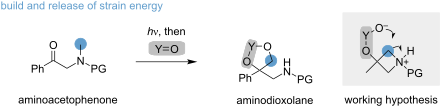
- demonstrated that the build and release of strain energy can be combined in a simple reaction sequence when appropriately tuning the reaction parameters. Our system relies on a photochemical Norrish–Yang cyclization of α-aminoacetophenones, which provides a sustainable entry to highly strained azetidinols. It



Methyltransferases from RiPP pathways: shaping the landscape of natural product chemistry
Beilstein J. Org. Chem. 2024, 20, 1652–1670, doi:10.3762/bjoc.20.147
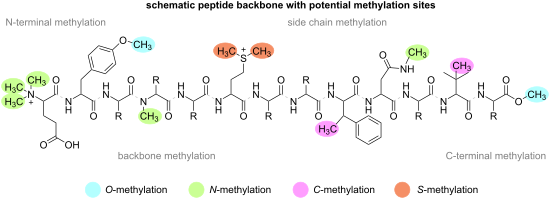
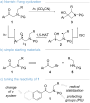
- peptide methylation. Biocatalysis provides an efficient and sustainable alternative to chemical synthesis strategies. Both NRPS and RiPP biosynthetic machineries can be used for cell-based or in vitro strategies [53]. Especially well suited as biocatalysts are MTs from RiPP pathways, as they demonstrate






New triazinephosphonate dopants for Nafion proton exchange membranes (PEM)
Beilstein J. Org. Chem. 2024, 20, 1623–1634, doi:10.3762/bjoc.20.145
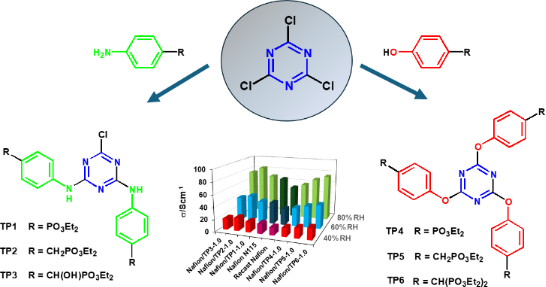
- , renewable, and environmental-friendly technological processes are being considered using electrochemical devices which convert chemical to electric energy and/or vice versa that, when associated to renewable energy sources, can promote sustainable energy systems [1][2][3][4]. Among them are included proton
- acid groups [22]. These membranes have an excellent chemical stability, but their high proton conduction is dependent of the water content of the membranes which limits their operating temperature range to 80 °C [23]. The importance of the membranes for the new sustainable energy sources fostered the




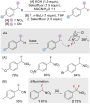
Benzylic C(sp3)–H fluorination
Beilstein J. Org. Chem. 2024, 20, 1527–1547, doi:10.3762/bjoc.20.137

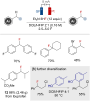
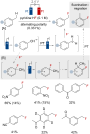
- incorporate fluorine into compounds of interest, with regio and site selectivity pre-determined by the nature of the functionalised carbon. However, the development of C(sp3)–H fluorination methods represents a more sustainable and versatile approach, as there is no requirement to pre-functionalise the



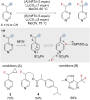

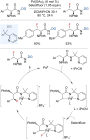
















Electrophotochemical metal-catalyzed synthesis of alkylnitriles from simple aliphatic carboxylic acids
Beilstein J. Org. Chem. 2024, 20, 1497–1503, doi:10.3762/bjoc.20.133
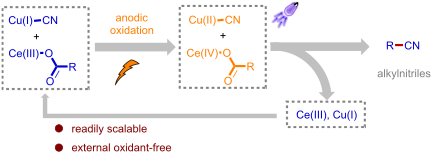
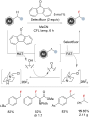
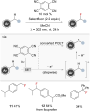
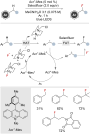
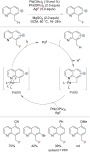
- .20.133 Abstract We report a practical and sustainable electrophotochemical metal-catalyzed protocol for decarboxylative cyanation of simple aliphatic carboxylic acids. This environmentally friendly method features easy availability of substrates, broad functional group compatibility, and directly


Synthesis of 4-functionalized pyrazoles via oxidative thio- or selenocyanation mediated by PhICl2 and NH4SCN/KSeCN
Beilstein J. Org. Chem. 2024, 20, 1453–1461, doi:10.3762/bjoc.20.128
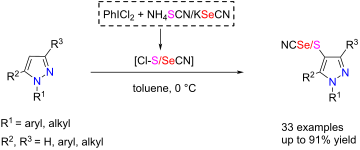
- presented a method for the C–H thiocyanation of pyrazoles by using a sustainable catalyst of graphite-phase carbon nitride (g-C3N4) under visible light irradiation (Scheme 1c) [2]. Furthermore, Yao harnessed an electrochemical approach to form the electrophilic SCN+ intermediate, which reacted with


Predicting bond dissociation energies of cyclic hypervalent halogen reagents using DFT calculations and graph attention network model
Beilstein J. Org. Chem. 2024, 20, 1444–1452, doi:10.3762/bjoc.20.127
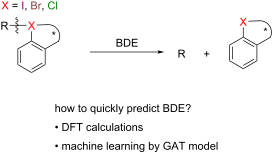
- calculation data. Acknowledgements Thanks to Prof. Dr. Jun Zhang (Shenzhen Bay Laboratory) and Ms. Qiufen Chen (Shenzhen Bay Laboratory & Southern University of Science and Technology) for their help in machine learning as well as Prof. Dr. Xin Li (Nankai University) and Haihe Laboratory of Sustainable


Synthesis of cyclic β-1,6-oligosaccharides from glucosamine monomers by electrochemical polyglycosylation
Beilstein J. Org. Chem. 2024, 20, 1421–1427, doi:10.3762/bjoc.20.124
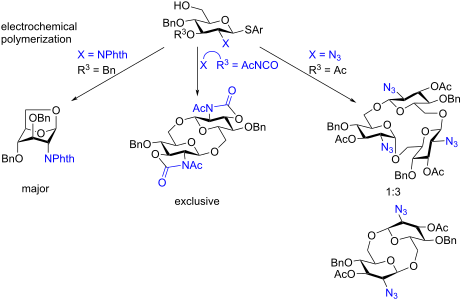
- Md Azadur Rahman Hirofumi Endo Takashi Yamamoto Shoma Okushiba Norihiko Sasaki Toshiki Nokami Department of Chemistry and Biotechnology, Tottori University, 4-101 Koyamacho-minami, Tottori city, 680-8552 Tottori, Japan Center for Research on Green Sustainable Chemistry, Faculty of Engineering


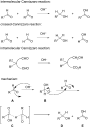
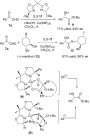
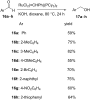
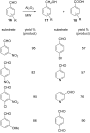
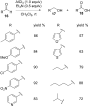
Synthetic applications of the Cannizzaro reaction
Beilstein J. Org. Chem. 2024, 20, 1376–1395, doi:10.3762/bjoc.20.120
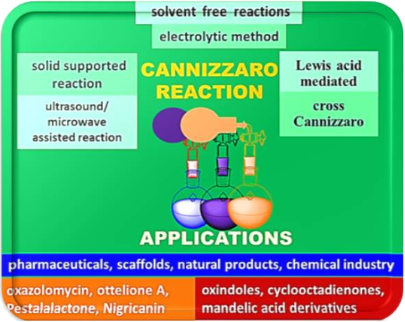
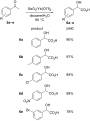
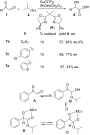
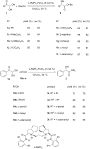
- , solvents, and technologies for the Cannizzaro reaction reflects the broader trend in organic synthesis towards more sustainable and efficient practices. The focus of this review is to highlight some recent advances in synthetic strategies and applications of the Cannizzaro reaction towards the synthesis of
- modern modifications using mild and sustainable reagents, solvents, advanced instrumental techniques, and catalysts in both intramolecular and intermolecular versions of the reaction have made the Cannizzaro reaction an important tool for the synthesis of diverse molecules containing alcohol, acid, ester