Search results
Search for "resolution" in Full Text gives 818 result(s) in Beilstein Journal of Organic Chemistry. Showing first 200.
Recent advances in organocatalytic atroposelective reactions
Beilstein J. Org. Chem. 2025, 21, 55–121, doi:10.3762/bjoc.21.6
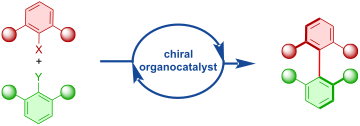
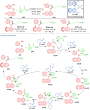
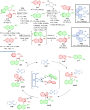
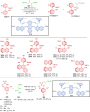
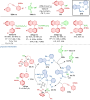
- enantioselectivities in similar desymmetrization reactions [39][40][41][42]. The dynamic kinetic resolution (DKR) of racemic 2-arylbenzaldehydes 62 with α-bromoenals 63 led to axially chiral products 64 [43]. Triazolium salt C20 as an NHC pre-catalyst was the most efficient for achieving high yields and enantiomeric
- enantioselectivities. Compound 66d was incorporated into a thiourea organocatalyst framework and successfully tested in kinetic resolution with 73% enantioselectivity. The chiral phosphoric acid (CPA) (R)-C22 was used to catalyze the formation of a C–N chiral axis in the axially chiral product 68 from biarylamines 67
- enantioselectivity during the nucleophilic addition, and the subsequent aromatization completes central-to-axial chirality conversion delivering products 68. Dynamic kinetic resolution of naphthylindoles 69 was performed by reaction with bulky electrophiles such as azodicarboxylates 70 or o-hydroxybenzyl alcohols 72











Synthesis, structure and π-expansion of tris(4,5-dehydro-2,3:6,7-dibenzotropone)
Beilstein J. Org. Chem. 2025, 21, 1–7, doi:10.3762/bjoc.21.1
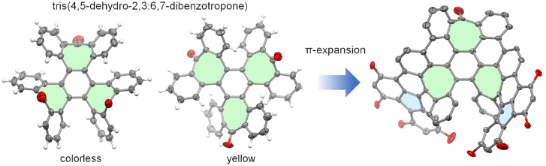
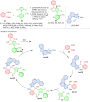
- Scholl reaction conditions. The structure of 3 was confirmed with single crystal X-ray crystallography, as detailed later. In addition, another product with a molecular ion peak of 1695.9115 in the high-resolution mass spectrum (Supporting Information File 1, Figure S6) was isolated in trace amounts


Enantioselective regiospecific addition of propargyltrichlorosilane to aldehydes catalyzed by biisoquinoline N,N’-dioxide
Beilstein J. Org. Chem. 2024, 20, 3069–3076, doi:10.3762/bjoc.20.255
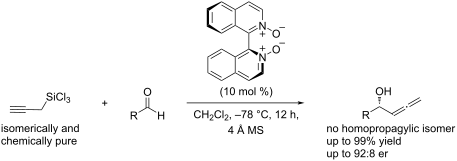
- propargyltrichlorosilane [35][36] (Scheme 2). Other notable asymmetric catalytic approaches to prepare α-allenic alcohols (R2 = H) include the Corey–Bakshi–Shibata reduction of allenyl ketones [37], enzymatic [38][39][40], non-enzymatic [41] kinetic resolution of racemic α-allenic alcohols, and asymmetric 1,4


Cyclodextrin-based rotaxanes for polymer materials: challenge on simultaneous realization of inexpensive production and defined structures
Beilstein J. Org. Chem. 2024, 20, 3026–3049, doi:10.3762/bjoc.20.252






4,6-Diaryl-5,5-difluoro-1,3-dioxanes as chiral dopants for liquid crystal compositions
Beilstein J. Org. Chem. 2024, 20, 2940–2945, doi:10.3762/bjoc.20.246
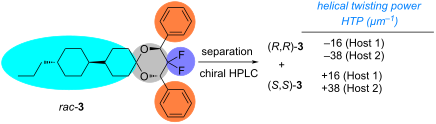
- still remain elusive and are not well understood [29]. Recently we have become interested in the preparation of racemic [30] anti- and highly enantioenriched 2,2-difluoro-1,3-diols [30][31][32] through an acylative double catalytic kinetic resolution (DoCKR) process [33]. While the 1,3-diol motif is


Synthesis of tricarbonylated propargylamine and conversion to 2,5-disubstituted oxazole-4-carboxylates
Beilstein J. Org. Chem. 2024, 20, 2827–2833, doi:10.3762/bjoc.20.238

- -4200 spectrometer equipped with an ATM detector. High-resolution mass spectra (HRMS) were obtained with a Bruker compact mass spectrometer APCI–TOF set at positive mode. The melting point was measured on an SRS-OptiMelt automated melting point system. Preparation of N,O-acetal 1 In a manner analogous


Investigation of a bimetallic terbium(III)/copper(II) chemosensor for the detection of aqueous hydrogen sulfide
Beilstein J. Org. Chem. 2024, 20, 2818–2826, doi:10.3762/bjoc.20.237
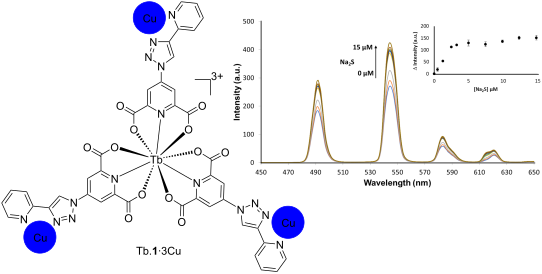
- conditions. High-resolution mass spectrometry (HRMS) analysis and the 1H NMR spectrum were consistent with formation of the Tb.1 complex (Figures S1 and S2 in Supporting Information File 1). Luminescence characterization of Tb.1 As anticipated, based on the previously reported europium complex ([Eu(triazole
- magnetic resonance (1H NMR) spectra was recorded on a Bruker DRX400 spectrometer operating at 400 MHz. High-resolution mass spectrometry (HRMS) was performed using a Bruker BioApex 47e FTMS with an analytical electrospray source employing NaI for accurate mass calibration (ESI). UV–vis absorption spectra


Synthesis of benzo[f]quinazoline-1,3(2H,4H)-diones
Beilstein J. Org. Chem. 2024, 20, 2708–2719, doi:10.3762/bjoc.20.228
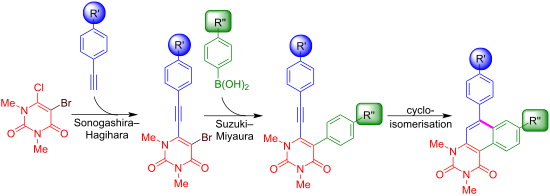
- ), strong (s), medium (m), weak (w) or very weak (vw). UV–vis spectra were recorded on a Cary 60 UV–vis spectrophotometer and emission spectra were recorded on an Agilent Cary Eclipse fluorescence spectrophotometer. Basic and high-resolution mass spectra (MS/HRMS) were measured on instruments coupled to a




The scent gland composition of the Mangshan pit viper, Protobothrops mangshanensis
Beilstein J. Org. Chem. 2024, 20, 2644–2654, doi:10.3762/bjoc.20.222
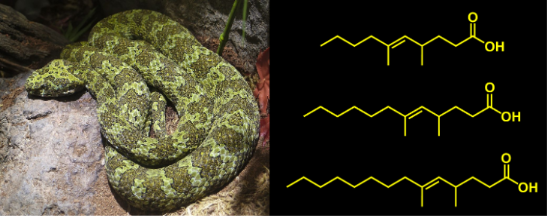
- acids, comparison with in-house and other spectral libraries revealed no close match with known compounds. High-resolution EI gas chromatography (HREI–GC–MS) of compound D suggested a molecular formula of C14H26O2 (m/z 226.18962 [M]+, calcd 226.19328), and two double-bond equivalents. The characteristic
- column (30 m × 0.25 mm, 0.25 µm film thickness) with helium as the carrier gas. The eluted compounds were applied to a ZnSe disk rotating at 4 mm/min at −40 °C. The resulting IR spectra were processed using GRAMS/AI 9.2 software (Thermo Fisher Scientific). High-resolution mass spectrometry data were


Applications of microscopy and small angle scattering techniques for the characterisation of supramolecular gels
Beilstein J. Org. Chem. 2024, 20, 2608–2634, doi:10.3762/bjoc.20.220
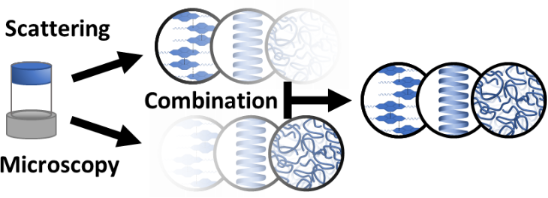
- structures. Some of the key features and capabilities of these techniques are summarised in Table 1. CLSM is a fluorescence microscopy technique capable of acquiring high-resolution optical images at selected depths of the sample. This is achieved by exciting compounds with laser light and, by using a
- pinhole to select focal planes, allows fluorescence at various depths to be focused and imaged. The resulting 2D focal plane images can be stacked to yield a 3D fluorescence image of high resolution, allowing complex morphologies to be visualised (Figure 2) [11]. While CLSM provides in situ 3D imaging
- systems are indeed representative. CLSM also often has poor resolution due to the use of light used for imaging. Other fluorescent imaging techniques such as super resolution fluorescence microscopy (for example, stimulated emission depletion (STED) microscopy or point accumulation for imaging in


Synthesis and cytotoxicity studies of novel N-arylbenzo[h]quinazolin-2-amines
Beilstein J. Org. Chem. 2024, 20, 2592–2598, doi:10.3762/bjoc.20.218
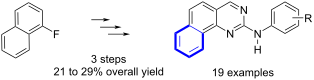
- better accuracy on small coupling constants, resolution in 1H NMR was enhanced using Traficante. All compounds were purified by flash column chromatography on silca gel unless otherwise noted. Melting points were obtained using an Electrothermal IA9200 series digital apparatus with thin-wall glass tube
- used to hold mp samples for capillary mp determination. FTIR spectra were recorded on a Bruker Alpha apparatus with spectra further analysed with spectragryph 1.2.4 version. The absorption bands were reported in cm−1. High-resolution mass spectra were recorded in the Centre Régional de Mesures


Base-promoted cascade recyclization of allomaltol derivatives containing an amide fragment into substituted 3-(1-hydroxyethylidene)tetronic acids
Beilstein J. Org. Chem. 2024, 20, 2585–2591, doi:10.3762/bjoc.20.217
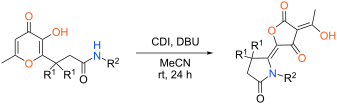
- formation of various unidentified byproducts. The obtained tetronic acids 4 are solid crystalline compounds, whose structure was proved by 1H, 13C NMR spectroscopy and high-resolution mass spectrometry. The 1H NMR spectra of the synthesized products contain characteristic signals of protons of the methyl
- solvent signals (DMSO-d6: 2.50 ppm (1H NMR) and 39.52 ppm (13C NMR)). High-resolution mass spectra (HRMS) were obtained on a Bruker micrOTOF II instrument using electrospray ionization (ESI). The melting points were determined on a Kofler hot stage apparatus. A magnetic stirrer IKA C-MAG HS 7 was used for


Asymmetric organocatalytic synthesis of chiral homoallylic amines
Beilstein J. Org. Chem. 2024, 20, 2349–2377, doi:10.3762/bjoc.20.201
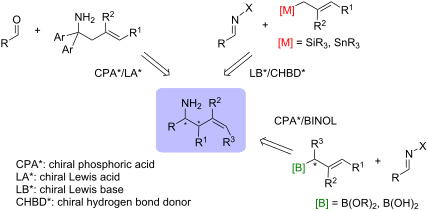
- for the resolution of chiral amines [28]. However, it was not until 2004 that they were recognised as efficient chiral Brønsted acid organocatalysts for asymmetric Mannich reactions [29]. Malkov and co-workers revealed [30] that (R)-TRIP can act as a very efficient catalyst for the kinetic resolution
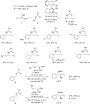
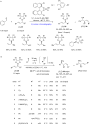
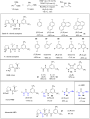
- -substituted aldimines. This was later addressed by the same researchers [15], who developed an organocatalytic kinetic resolution of secondary boronates to furnish bench-stable homochiral (S)-35. The latter were then employed in the asymmetric allylation of in situ-formed primary aldimines 37, leading
- resolution of chiral secondary allylboronates 35. In late 2020, an important method for synthesising enantiopure terminal (E)-trifluoromethyl homoallylic amines 44 was described by Szabó and co-workers (Scheme 9) [31]. This methodology is based on the use of enantiopure α-trifluoromethylallylboronic acids 43








Tandem diazotization/cyclization approach for the synthesis of a fused 1,2,3-triazinone-furazan/furoxan heterocyclic system
Beilstein J. Org. Chem. 2024, 20, 2342–2348, doi:10.3762/bjoc.20.200
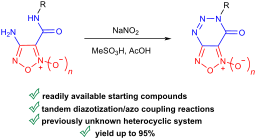
- , indicating that the developed tandem protocol does not depend on the presence of the N-oxide moiety in the parent heterocycle. All synthesized triazinones 1 and 7 were fully characterized by IR, 1H and 13C NMR spectroscopy, and high-resolution mass spectrometry. The structure of compounds 1b and 7h was


Improved deconvolution of natural products’ protein targets using diagnostic ions from chemical proteomics linkers
Beilstein J. Org. Chem. 2024, 20, 2323–2341, doi:10.3762/bjoc.20.199
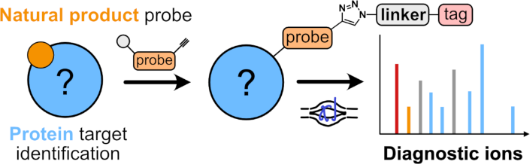
- sufficient resolution and depth [52]. In general, cleavable linkers can be divided into two main groups based on the cleavage mechanism, which can be either enzymatic or chemical. The advantage of cleavable linkers is the possibility to combine stringent enrichment, ensured by the biotin–streptavidin complex




Stereoselective mechanochemical synthesis of thiomalonate Michael adducts via iminium catalysis by chiral primary amines
Beilstein J. Org. Chem. 2024, 20, 2313–2322, doi:10.3762/bjoc.20.198
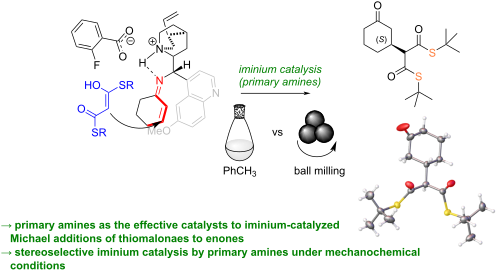
- nearly equimolar pairs of diastereomeric products due to the lack of appropriate conditions for resolution among the six tested chiral stationary phases. To our surprise, reactions conducted in the ball mill did not lead to the formation of new C–C bonds, and even after extending the reaction time, a


Catalysing (organo-)catalysis: Trends in the application of machine learning to enantioselective organocatalysis
Beilstein J. Org. Chem. 2024, 20, 2280–2304, doi:10.3762/bjoc.20.196

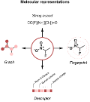
- enantioselectivities of a kinetic resolution of benzyl alcohols and an enantiodivergent fluorination of allylic alcohols, observing good correlations for both reactions. Since then, the proposed NCI descriptors have been successfully applied to multiple different reactions, such as an allenoate Claisen rearrangement




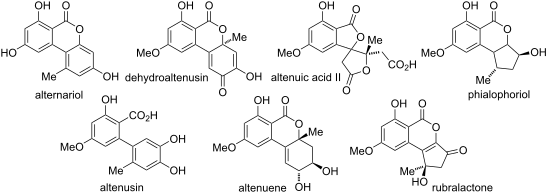
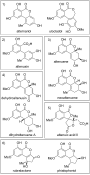
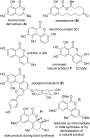
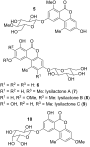
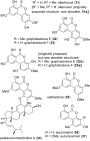
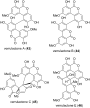
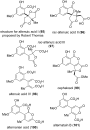
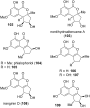
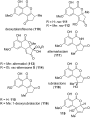
Natural resorcylic lactones derived from alternariol
Beilstein J. Org. Chem. 2024, 20, 2171–2207, doi:10.3762/bjoc.20.187










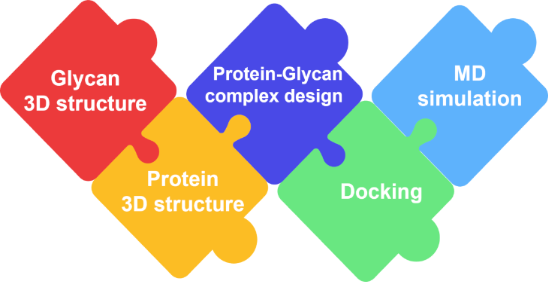
Computational toolbox for the analysis of protein–glycan interactions
Beilstein J. Org. Chem. 2024, 20, 2084–2107, doi:10.3762/bjoc.20.180


Understanding X-ray-induced isomerisation in photoswitchable surfactant assemblies
Beilstein J. Org. Chem. 2024, 20, 2005–2015, doi:10.3762/bjoc.20.176
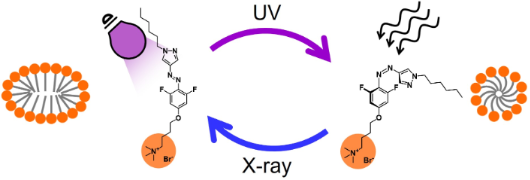
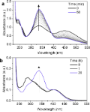
- a balance between accessing greater time-resolution and achieving a better signal-to-noise ratio. For an X-ray irradiation time of ≤2 s, a single X-ray frame (500 ms) was used, whereas for >2 s, an average of 3 frames was used. For the measurements at high concentration, samples were loaded into a



A facile three-component route to powerful 5-aryldeazaalloxazine photocatalysts
Beilstein J. Org. Chem. 2024, 20, 1831–1838, doi:10.3762/bjoc.20.161
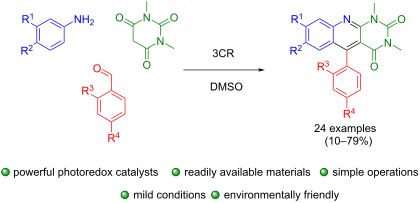
- assigned using MestreNova. High-resolution mass spectra were obtained on Q-Tof Micro (Waters), equipped with a quadrupole and time-of-flight (TOF) analyser and a multichannel plate (MCP) detector. The melting points were measured on a Boetilus melting point apparatus and are not corrected. UV–vis spectra


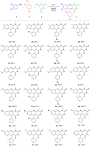


Hetero-polycyclic aromatic systems: A data-driven investigation of structure–property relationships
Beilstein J. Org. Chem. 2024, 20, 1817–1830, doi:10.3762/bjoc.20.160
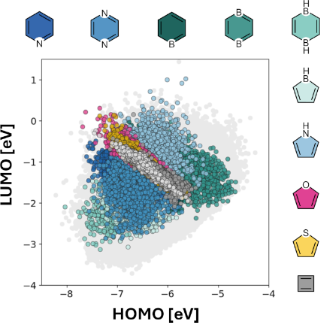
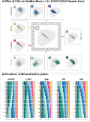
- the effect of global structural features on the set of electronic properties detailed above (HOMO, LUMO, Gap, AIP, AEA). At this lowest resolution analysis, we aim to ascertain to what extent the overall molecular size and geometry determines molecular properties. Molecular size The molecular size of
- structural resolution: a) global properties, b) atomic composition, and c) building block composition. At each of these levels, we analyzed the data according to various structural features, to elucidate the underlying structure–property relationships and delineate clear principles that can aid in rational



Polymer degrading marine Microbulbifer bacteria: an un(der)utilized source of chemical and biocatalytic novelty
Beilstein J. Org. Chem. 2024, 20, 1635–1651, doi:10.3762/bjoc.20.146
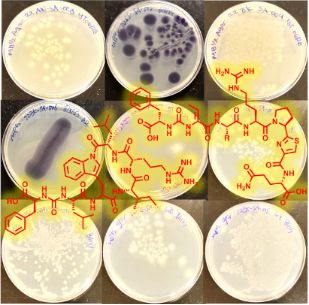
- known parabens (2, 5, 6, and 11), five new ones (7–10, and 12) were identified. Their structures were elucidated by high-resolution mass spectrometry (HRMS) and 1D and 2D nuclear magnetic resonance (NMR). The configuration in 8 and 10 remained undetermined. Antimicrobial activities of compounds 2 and 5




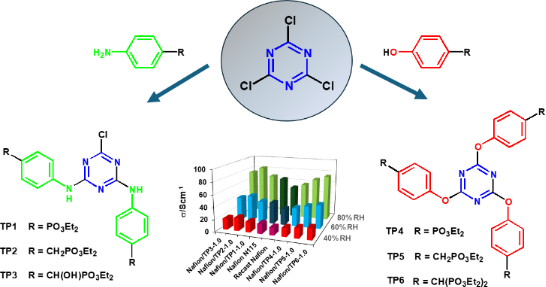
New triazinephosphonate dopants for Nafion proton exchange membranes (PEM)
Beilstein J. Org. Chem. 2024, 20, 1623–1634, doi:10.3762/bjoc.20.145
- of the membranes was carried out on a Perkin Elmer Spectrum Two, with an attenuated total reflectance (ATR) module, with a wavenumber range from 450 to 4000 cm−1, and their band wavelengths are quoted in cm−1. Low-resolution and high-resolution (HRMS) mass spectra (MS) were performed on an APEX-Q




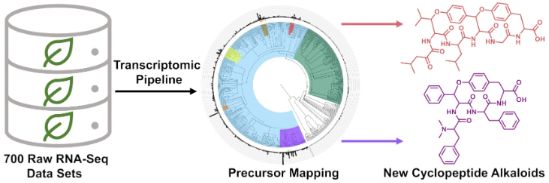
Mining raw plant transcriptomic data for new cyclopeptide alkaloids
Beilstein J. Org. Chem. 2024, 20, 1548–1559, doi:10.3762/bjoc.20.138
- dataset used are listed in this Supporting Table File along with core peptide sequence alignments. Supporting Information File 11: The full cladogram with species names as a high-resolution pdf. Supporting Information File 12: The split burpitide precursor peptide HMM and output from all 700