Search results
Search for "functionalization" in Full Text gives 806 result(s) in Beilstein Journal of Organic Chemistry. Showing first 200.
Photoredox-catalyzed intramolecular nucleophilic amidation of alkenes with β-lactams
Beilstein J. Org. Chem. 2024, 20, 2461–2468, doi:10.3762/bjoc.20.210
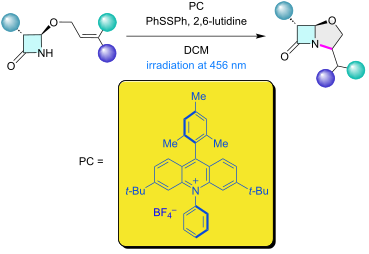
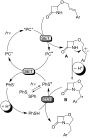
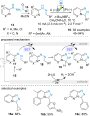
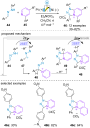
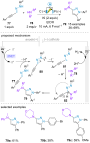
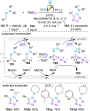
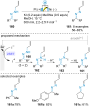
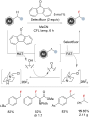
- ; Introduction Access to nitrogen radicals for the functionalization of alkenes is a field under active investigation [1][2][3][4], as it gives the possibility to directly introduce nitrogen into an alkyl chain (alkene carboamination) to obtain valuable nitrogen-containing molecules [5][6]. Among several N
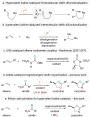
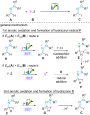
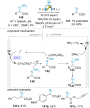
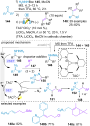
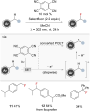
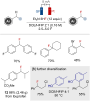
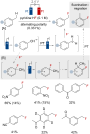
- functionalization of amides with alkenes under photoredox conditions. Another viable approach for amide functionalization through photoredox catalysis involves the nucleophilic addition, in the presence of base, of an amide to a radical cation obtained by oxidation of an unfunctionalized alkene moiety (Figure 1A
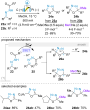
- functionalization of amides with alkenes under oxidative conditions, the oxidation potential of the alkene plays a pivotal role in the oxidation to a radical cation through photoredox catalysis [26]. Alkenes that are less functionalized possess a higher oxidation potential, necessitating the use of potent




Synthesis, electrochemical properties, and antioxidant activity of sterically hindered catechols with 1,3,4-oxadiazole, 1,2,4-triazole, thiazole or pyridine fragments
Beilstein J. Org. Chem. 2024, 20, 2378–2391, doi:10.3762/bjoc.20.202
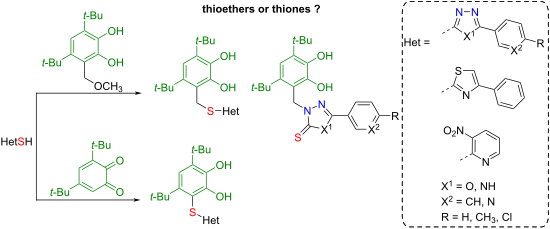
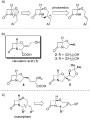
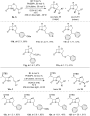
- neuroprotective, antihypoxic effects, act as antiparkinsonian agents [3][4][5], exhibit antitumor and antibacterial activity [6][7][8], possess antioxidant properties for regulating free radical processes [9][10][11]. The functionalization of polyphenolic compounds by introducing various substituents or




Hydrogen-bond activation enables aziridination of unactivated olefins with simple iminoiodinanes
Beilstein J. Org. Chem. 2024, 20, 2305–2312, doi:10.3762/bjoc.20.197
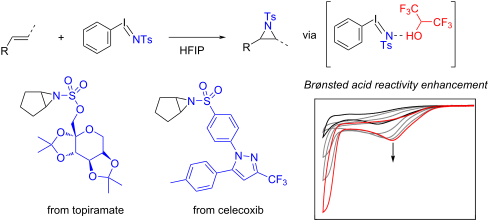
- the combination of synthetically tunable iodine-centered electrophilicity and the diversity of substrate functionalization mechanisms that can be accessed [1][2]. Large families of iodine(III)- and iodine(V)-based reagents have been developed – including iodobenzene diacetate (PhI(OAc)2, PIDA
- ), Koser’s reagent (PhI(OH)OTs), Zhdankin’s reagent (C6H4(o-COO)IN3, ABX), and Dess–Martin periodinane (DMP) – and find application in an array of synthetically important transformations including olefin difunctionalization, carbonyl desaturation, alcohol oxidation, and C–H functionalization [3][4


Deuterated reagents in multicomponent reactions to afford deuterium-labeled products
Beilstein J. Org. Chem. 2024, 20, 2270–2279, doi:10.3762/bjoc.20.195
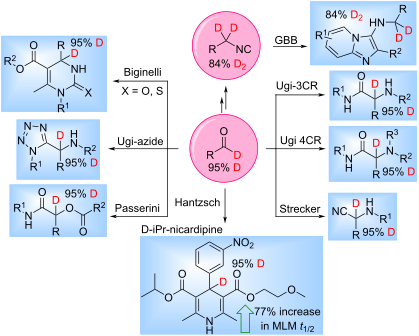
- flexibility [8]. Indeed, early incorporation of deuterium during hit generation may negate the need for late-stage C–H functionalization which often requires strong external oxidants or affords products with significantly lower biological activity [25][26][27]. Thus, eight MCRs were evaluated for D-reagent


Heterocycle-guided synthesis of m-hetarylanilines via three-component benzannulation
Beilstein J. Org. Chem. 2024, 20, 2208–2216, doi:10.3762/bjoc.20.188
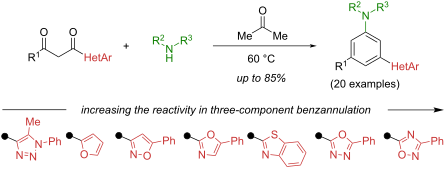
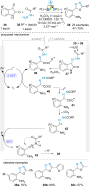
- mainly via metal-catalyzed C–N or C–C bond formation. Despite recent advances in the area of remote C–H functionalization, this strategy still requires some pre-functionalization of the starting material or the use of directing groups [28][29][30][31][32]. An alternative strategy is based on aromatic


From perfluoroalkyl aryl sulfoxides to ortho thioethers
Beilstein J. Org. Chem. 2024, 20, 2108–2113, doi:10.3762/bjoc.20.181
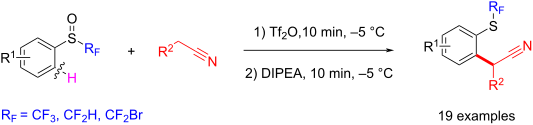
- -pot two-step protocol. Several aryl-SCF3 compounds are reported by variation of the nitrile or of the trifluoroalkyl sulfoxide starting material. The variation of the perfluoroalkyl chain was also possible. Keywords: ortho functionalization; rearrangement; sulfoxide; Introduction Since decades
- study, many research groups described a strategy for ortho-C–H functionalization of aryl sulfoxides with various nucleophiles via a cascade reaction of interrupted Pummerer reaction/sigmatropic rearrangement (Scheme 1a) [6][7][8][9][10][11]. A large range of nucleophiles, such as phenols [12][13][14][15



Multicomponent syntheses of pyrazoles via (3 + 2)-cyclocondensation and (3 + 2)-cycloaddition key steps
Beilstein J. Org. Chem. 2024, 20, 2024–2077, doi:10.3762/bjoc.20.178
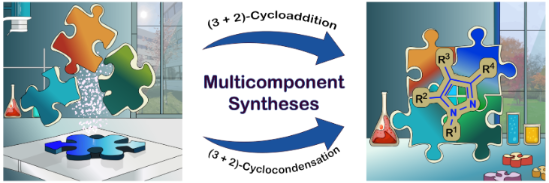
- starting from 3-aminocrotononitrile to yield pyrazole 28. The authors explicitly mention that aryl ketones do not transform using this method. Besides, the functionalization of 1,3-dicarbonyl compounds and their subsequent conversion into pyrazoles can be conducted in a one-pot fashion. For instance
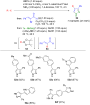
- phosphane ligands is crucial for the selectivity in this reaction. Suzuki coupling can also serve for the functionalization of iodochromones 55, which, as α,β-unsaturated ketones, undergo ring opening under the reaction conditions, followed by Michael addition–cyclocondensation. Xie et al. devised a method
- as byproducts in proportions of less than 10%. Copper catalysis opens the unique opportunity to form C–N bonds, e.g., for N-functionalization of pyrazoles in a one-pot fashion. Raghunadh et al. developed a process for the synthesis of 1,3-substituted pyrazoles 76, introducing aryl substituents at




Harnessing the versatility of hydrazones through electrosynthetic oxidative transformations
Beilstein J. Org. Chem. 2024, 20, 1988–2004, doi:10.3762/bjoc.20.175
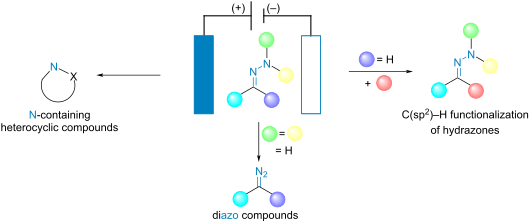
- readily available hydrazones under mild, safe and oxidant-free reaction conditions. This review presents a comprehensive overview of oxidative electrosynthetic transformations of hydrazones. It includes the construction of azacycles, the C(sp2)−H functionalization of aldehyde-derived hydrazones and the
- access to diazo compounds as either synthetic intermediates or products. A special attention is paid to the reaction mechanism with the aim to encourage further development in this field. Keywords: C–H functionalization; diazo compound; electrosynthesis; hydrazone; nitrogen-containing heterocycle
- hydrazones can act as radical acceptors for the synthesis of functionalized amines or hydrazones through reductive functionalization [21][25][26] or oxidative C(sp2)–H functionalization [27][28], respectively. Consequently, given their rich reactivity profile, exploring new synthetic transformations of








Radical reactivity of antiaromatic Ni(II) norcorroles with azo radical initiators
Beilstein J. Org. Chem. 2024, 20, 1967–1972, doi:10.3762/bjoc.20.172
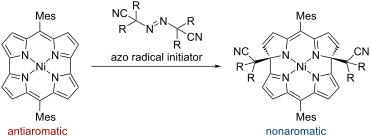
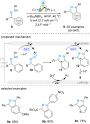
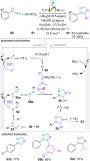
- species has remained unexplored. Here, we disclose the radical functionalization of Ni(II) norcorroles with simple and frequently used azo radical initiators to furnish nonconjugated macrocycles with bowl-shaped structures [27]. The photophysical and electronic properties of the obtained products are also


A new platform for the synthesis of diketopyrrolopyrrole derivatives via nucleophilic aromatic substitution reactions
Beilstein J. Org. Chem. 2024, 20, 1933–1939, doi:10.3762/bjoc.20.169
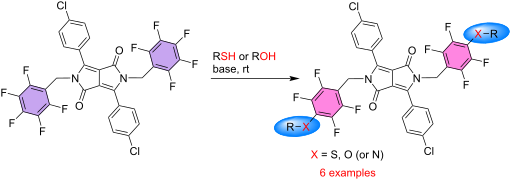
- or novel properties can be prepared by conventional chemical modifications of simple DPP derivatives [3][18]. The most frequently used transformations include: i) N-alkylation with adequately functionalized alkyl groups [19][20][21][22], ii) N-arylation [23][24][25], and functionalization at the 3,6


Novel oxidative routes to N-arylpyridoindazolium salts
Beilstein J. Org. Chem. 2024, 20, 1906–1913, doi:10.3762/bjoc.20.166
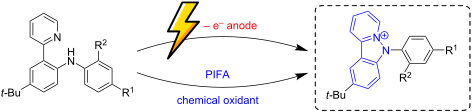
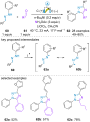
- -stage functionalization; easily available ortho-pyridyl-substituted diarylamines are used as the precursors. Keywords: anodic oxidation; diarylamines; electrochemical cyclization; pyridoindazolium salts; reversible ring closure; Introduction Aromatic polyfused N-heterocycles are of interest as a
- electric current. Both approaches can be considered as a late-stage functionalization; the easily available ortho-pyridyl-substituted diarylamines are used as the precursors. The direct approaches to N-arylpyridoindazolium salts elaborated herein open a route to broadening a scope of these practically


The Groebke–Blackburn–Bienaymé reaction in its maturity: innovation and improvements since its 21st birthday (2019–2023)
Beilstein J. Org. Chem. 2024, 20, 1839–1879, doi:10.3762/bjoc.20.162
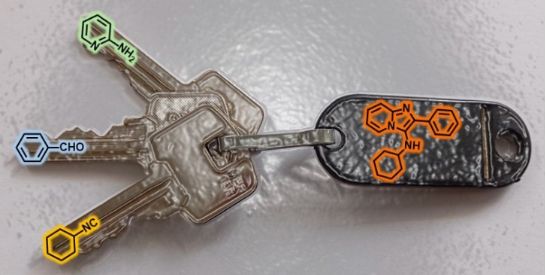
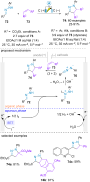
- excellent yields (71–89%). Dömling et al. have used glyoxal dimethyl acetal as orthogonal bifunctional monoprotected aldehyde to synthetize GBB dimers as potential fluorophores. More details are given in chapter 5 [43]. The GBB reaction can be exploited also in the late-stage functionalization of natural
- found to be compatible to the reaction conditions and a gram-scale synthesis was carried out to demonstrate the versatility of this methodology. 3.3 Post functionalization of GBB adducts The structural complexity of the original scaffolds of the GBB adducts can be increased by decorating the structure
- of substrates (i.e., aldehydes or isocyanides) with additional functional groups for further modifications. Unlike the one-pot synthesis strategy, the adducts were isolated before being subjected to the post functionalization


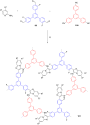
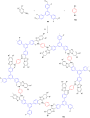


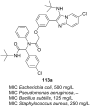


Harnessing unprotected deactivated amines and arylglyoxals in the Ugi reaction for the synthesis of fused complex nitrogen heterocycles
Beilstein J. Org. Chem. 2024, 20, 1758–1766, doi:10.3762/bjoc.20.154
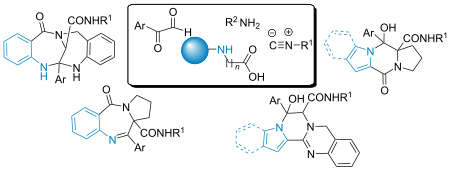
- drugs highlighting their importance in the discovery of novel bioactive compounds. However, their synthesis often faces challenges, including complex functionalization and lengthy reaction sequences. Multicomponent reactions, notably the Ugi reaction, have emerged as powerful tools to address these


Syntheses and medicinal chemistry of spiro heterocyclic steroids
Beilstein J. Org. Chem. 2024, 20, 1713–1745, doi:10.3762/bjoc.20.152
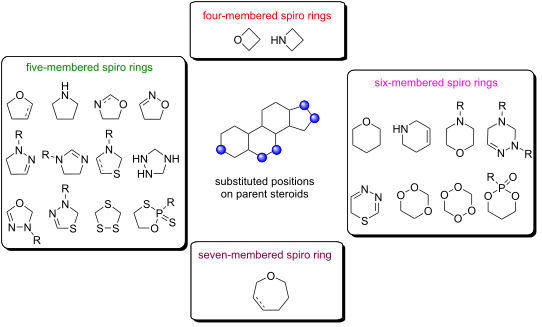
- substituents of the new heterocycle rather than functionalization on C-3 (Scheme 22). Spirothiazolidine steroids Horiuchi et al. introduced a novel synthetic approach for the preparation of steroidal spiro 1,3-thiazolidines from 2α-bromo-3-oxo steroids, exemplified by compound 76 [46]. Initially, treatment of


Chemo-enzymatic total synthesis: current approaches toward the integration of chemical and enzymatic transformations
Beilstein J. Org. Chem. 2024, 20, 1693–1712, doi:10.3762/bjoc.20.151
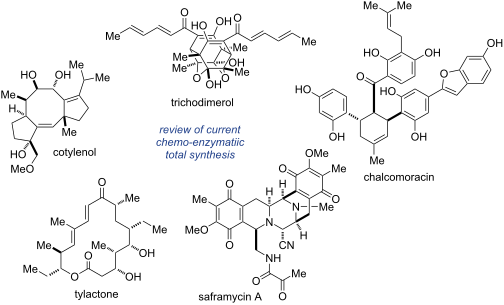
- using an enzyme or at what stage in a synthesis the enzyme is employed: 1) regio- and stereoselective late-stage functionalization of core scaffolds, 2) in situ generation of highly reactive intermediates, and 3) the one-step construction of macrocyclic or fused multicyclic scaffolds via regio- and
- categorized into three distinct classifications based on the type of enzymatic conversions: 1) regio- and stereoselective late-stage functionalization of core scaffolds, 2) in situ generation of highly reactive intermediates, and 3) one-step construction of macrocyclic or fused multicyclic scaffolds. This
- -stage enzymatic functionalization of core scaffolds could be effective. Selectivity towards target biomolecules can be tailored by gradually increasing the oxidation level of the complex scaffold or by further site- and stereoselective modifications. Through rational enzyme engineering, the selectivity




Ring opening of photogenerated azetidinols as a strategy for the synthesis of aminodioxolanes
Beilstein J. Org. Chem. 2024, 20, 1671–1676, doi:10.3762/bjoc.20.148
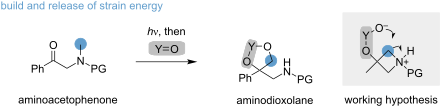
- functionalization step such as a ring-opening event is implemented, facilitated by the pre-installed strain energy of the four-membered ring [5][6][7]. The implementation of a build and release strategy, as depicted in Scheme 1a, necessitates the full compatibility of both individual reaction steps, thus placing
- that target a combination of photochemical ring closure and subsequent functionalization are still underdeveloped [4][5][6][7]. Within this work, we describe our endeavours in identifying a suitable substrate to meet the photochemical requirements of the Norrish–Yang cyclization and allow for
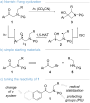
- . Build and release approach for the functionalization of simple precursors. a) General overview. b) Embedding azetidines into the general synthetic strategy. Modularity of the Norrish–Yang cyclization for the synthesis of azetidines. Ring-opening reactions using electron-deficient ketones and boronic



pKalculator: A pKa predictor for C–H bonds
Beilstein J. Org. Chem. 2024, 20, 1614–1622, doi:10.3762/bjoc.20.144
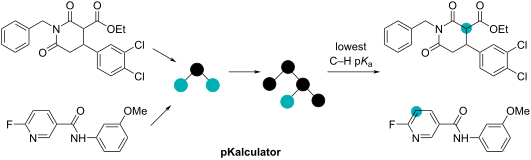
- industry to implement such C–H transformations to diversify different types of molecules ranging from small drug-like molecules to intermediates and lead compounds. Especially late-stage functionalization is a promising emerging field that allows chemists to efficiently explore the chemical space in


![[Graphic 9]](/bjoc/content/inline/1860-5397-20-144-i12.svg?max-width=637&scale=1.3000021)


Benzylic C(sp3)–H fluorination
Beilstein J. Org. Chem. 2024, 20, 1527–1547, doi:10.3762/bjoc.20.137

- . This review aims to give context to these transformations and strategies, highlighting the different tactics to achieve fluorination of benzylic C–H bonds. Keywords: benzylic; C–H functionalization; fluorination; photoredox catalysis; Introduction The development of new fluorination methodologies is




















Tetrabutylammonium iodide-catalyzed oxidative α-azidation of β-ketocarbonyl compounds using sodium azide
Beilstein J. Org. Chem. 2024, 20, 1510–1517, doi:10.3762/bjoc.20.135
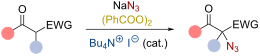
- addition, the recent years have seen remarkable progress in utilizing electrophilic azide-transfer reagents, i.e., hypervalent iodine-based compounds, for (asymmetric) α-azidations [16][17][18][19][20][21][22][23]. Besides these valuable approaches, which either require appropriate pre-functionalization of
- α-S(e)CN-functionalization of different pronucleophiles [39] as well as the benzylic azidation of alkylphenol derivatives with NaN3 using TBAI as a catalyst [41]. Considering the fact that TBAI clearly represents one of the most easily available quaternary ammonium iodides and keeping in mind our


Towards an asymmetric β-selective addition of azlactones to allenoates
Beilstein J. Org. Chem. 2024, 20, 1504–1509, doi:10.3762/bjoc.20.134
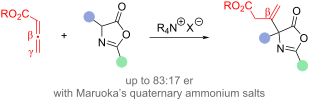
- thus wondering if we could extend this ammonium salt-catalyzed β-selective allenoate functionalization strategy to other amino acid classes. Azlactones 1 have previously been used for γ-selective additions to allenoates under chiral phosphine catalysis [28]. In addition, glycine Schiff base derivatives


Electrophotochemical metal-catalyzed synthesis of alkylnitriles from simple aliphatic carboxylic acids
Beilstein J. Org. Chem. 2024, 20, 1497–1503, doi:10.3762/bjoc.20.133
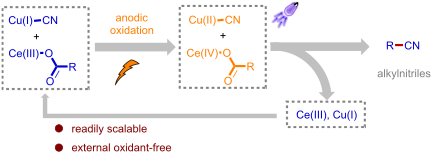
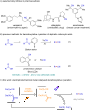
- intermediates in organic synthesis for the construction of all-carbon-substituted quaternary centers (Figure 1A). However, conventional methods for the synthesis of tertiary alkylnitriles such as direct functionalization of alkylnitriles [10] and hydrocyanation of alkenes [11][12][13][14] are typically hindered
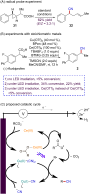
- electrophotochemical transition metal catalysis [26][27][28][29][30][31] as a unique and powerful synthetic platform for radical decarboxylative functionalization of aliphatic carboxylic acids [32][33][34][35][36][37]. In particular, the commonly required high activation energy for radical decarboxylation was provided


Photoswitchable glycoligands targeting Pseudomonas aeruginosa LecA
Beilstein J. Org. Chem. 2024, 20, 1486–1496, doi:10.3762/bjoc.20.132
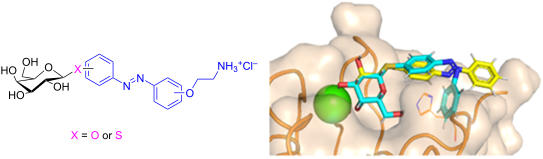
- were prepared by the diazonium coupling method according to a reported procedure [39][40]. Then the coupling with tetra-O-acetylated β-galactosylthiol 13 catalyzed by Xantphos Pd-G3 [38] as precatalyst followed by post-functionalization furnished the desired β-S-galactosyl azobenzenes 3, 4, and 5 in


Predicting bond dissociation energies of cyclic hypervalent halogen reagents using DFT calculations and graph attention network model
Beilstein J. Org. Chem. 2024, 20, 1444–1452, doi:10.3762/bjoc.20.127
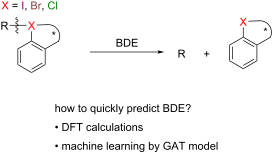
- hypervalent iodine(III) reagents has been developed [12][13][14][15][16][17] (Figure 1), including the well-known Zhdankin reagents [13] and Togni reagents [14]. These reagents are popularly used as electrophilic group transfer reagents [18][19] in a variety of reactions, such as C–H functionalization [20][21


Challenge N- versus O-six-membered annulation: FeCl3-catalyzed synthesis of heterocyclic N,O-aminals
Beilstein J. Org. Chem. 2024, 20, 1412–1420, doi:10.3762/bjoc.20.123
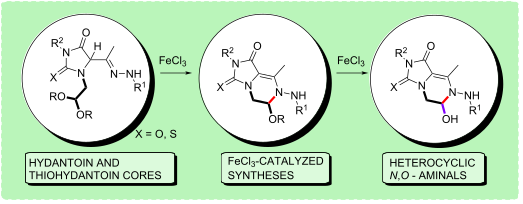
- to afford, by a chemospecific Lewis acid-catalyzed ring-closure protocol, valuable heterocyclic N,O-aminals (Scheme 1). Results and Discussion Since the direct functionalization of N-heterocycles offers an attractive entry to important molecular targets that might otherwise require lengthy synthetic




Hypervalent iodine-catalyzed amide and alkene coupling enabled by lithium salt activation
Beilstein J. Org. Chem. 2024, 20, 1405–1411, doi:10.3762/bjoc.20.122

- .20.122 Abstract Hypervalent iodine catalysis has been widely utilized in olefin functionalization reactions. Intermolecularly, the regioselective addition of two distinct nucleophiles across the olefin is a challenging process in hypervalent iodine catalysis. We introduce here a unique strategy using