


Search results
Search for "heterocyclic" in Full Text gives 985 result(s) in Beilstein Journal of Organic Chemistry. Showing first 200.
Synthetic applications of the Cannizzaro reaction
Beilstein J. Org. Chem. 2024, 20, 1376–1395, doi:10.3762/bjoc.20.120
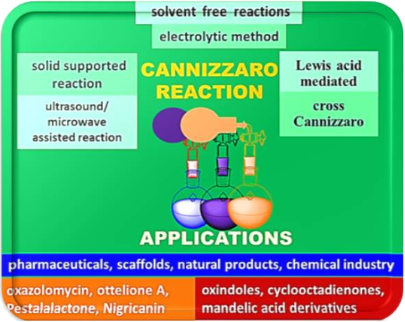
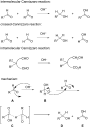
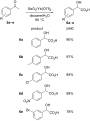
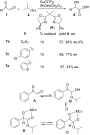
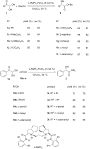
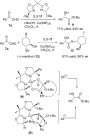
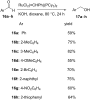
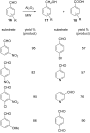
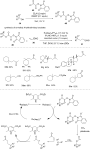
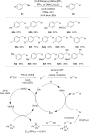
- reaction. AlCl3-mediated Cannizzaro disproportionation of aldehydes. Ru–N-heterocyclic carbene catalyzed dehydrogenative synthesis of carboxylic acids. Intramolecular desymmetrization of tetraethylene glycol. Desymmetrization of oligoethylene glycol dialdehydes. Intramolecular Cannizzaro reaction of calix







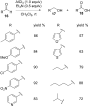


Generation of alkyl and acyl radicals by visible-light photoredox catalysis: direct activation of C–O bonds in organic transformations
Beilstein J. Org. Chem. 2024, 20, 1348–1375, doi:10.3762/bjoc.20.119
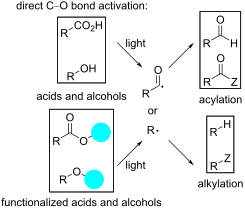
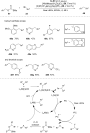
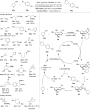
- and provide the desired products with good yield. Cyclopentanol-derived oxalates, some heterocyclic oxalates, and natural-product-derived oxalates were also compatible with this method. In 2018, Chu and co-workers [47] devised an elegant protocol for achieving syn-alkylarylation of terminal alkynes

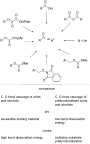


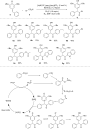
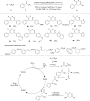

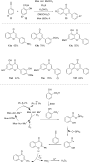
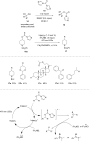
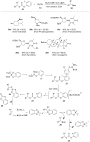


Rhodium-catalyzed homo-coupling reaction of aryl Grignard reagents and its application for the synthesis of an integrin inhibitor
Beilstein J. Org. Chem. 2024, 20, 1341–1347, doi:10.3762/bjoc.20.118
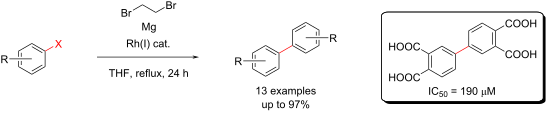
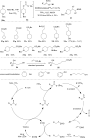
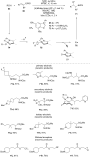
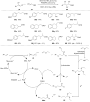
- heterocyclic or aliphatic bromides scarcely proceeded. A Rh(III)–bis(aryl) complex, which might be formed from RhCl(PPh3)3 and the aryl Grignard reagents, plays an important role in giving the homo-coupling products in this reaction. Furthermore, we applied the reaction to the synthesis of a novel inhibitor


Synthesis of 1,2,3-triazoles containing an allomaltol moiety from substituted pyrano[2,3-d]isoxazolones via base-promoted Boulton–Katritzky rearrangement
Beilstein J. Org. Chem. 2024, 20, 1334–1340, doi:10.3762/bjoc.20.117
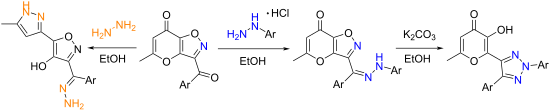
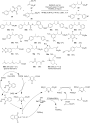
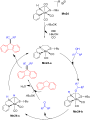
- elaborated. The suggested approach can be applied to various aromatic and heterocyclic hydrazines. At the same time for unsubstituted hydrazine the Boulton–Katritzky recyclization is not implemented. In this case the opening of the pyranone ring was observed leading to pyrazolylisoxazole derivatives. Both
- types of aforementioned structures were proved by X-ray analysis. Keywords: allomaltol; Boulton–Katritzky rearrangement; hydrazones; pyrano[2,3-d]isoxazolones; recyclization; 1,2,3-triazoles; Introduction The Boulton–Katritzky rearrangement (BKR) also known as mononuclear heterocyclic rearrangement is
- ionic liquids [8][9]. Also, thermal and photochemical variants of studied recyclization are known in the literature [10][11]. Besides that, an unusual procedure for Boulton–Katritzky reaction including the use of surfactants is suggested by Fontana and co-workers [12]. Other heterocyclic systems capable


Phenotellurazine redox catalysts: elements of design for radical cross-dehydrogenative coupling reactions
Beilstein J. Org. Chem. 2024, 20, 1292–1297, doi:10.3762/bjoc.20.112
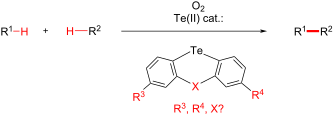
- reactions. In this study, we revisit the design of the phenotellurazine redox catalysts. In particular, we investigate the level of cooperativity between the Te- and N-centers, the effect of secondary versus tertiary N-centers, the effect of heterocyclic versus non-heterocyclic structures, and the effect of
- of secondary versus tertiary N-centers, the effect of heterocyclic versus non-heterocyclic structures, and the effect of various substitution patterns. Results and Discussion With this aim in mind, we thus started investigating Te(II) redox catalyst candidates that do not necessarily carry a N-atom
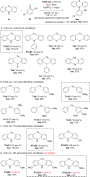
- investigate and optimize their redox contribution within the Te(II) catalysts. Multiple synthetic efforts were therefore deployed in order to access several key Te(II) targets, both with and without N-functional groups, in heterocyclic as well as in non-heterocyclic fashion. These were then investigated in



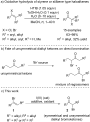
Oxidative hydrolysis of aliphatic bromoalkenes: scope study and reactivity insights
Beilstein J. Org. Chem. 2024, 20, 1286–1291, doi:10.3762/bjoc.20.111
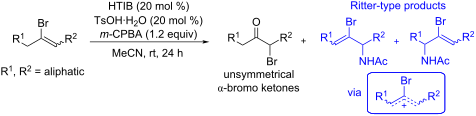
- heterocyclic compounds [20][21][22]. Particularly dialkyl bromoketones have been utilized in natural product synthesis [23][24][25], also as a precursor to reactive oxyallyl cation intermediates [26][27][28], and for their photochemical reactions [29]. However, the direct halogenation of unsymmetrical ketones



Domino reactions of chromones with activated carbonyl compounds
Beilstein J. Org. Chem. 2024, 20, 1256–1269, doi:10.3762/bjoc.20.108
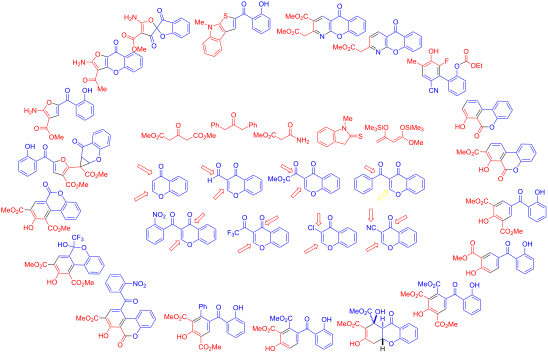
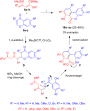
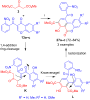
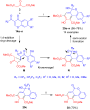
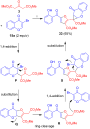
- , we studied also cyclization reactions of chromones with heterocyclic enamines [30][31]. The present review aims to provide a personalized account of our work related to domino reactions of various types of chromones with carbonyl compounds, such as 3 and 4, and with 1,3-bis(silyloxy)-1,3-butadienes


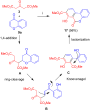







The Ugi4CR as effective tool to access promising anticancer isatin-based α-acetamide carboxamide oxindole hybrids
Beilstein J. Org. Chem. 2024, 20, 1213–1220, doi:10.3762/bjoc.20.104
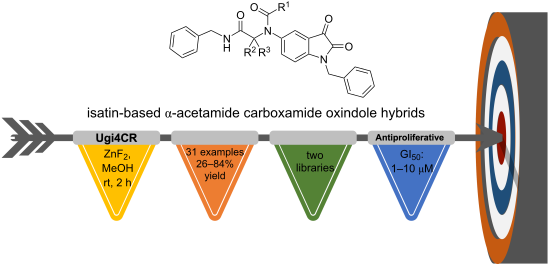
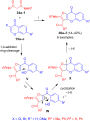
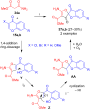
- -acetamide carboxamide oxindole hybrids 5 was obtained in moderate yields (26–63%), at room temperature, in short time (2 hours), proving the efficiency and the generality of this methodology. Aliphatic (2a, 2c and 2m), aromatic (2d, 2f, 2g, 2k and 2l), heterocyclic (2e, 2h, 2i, 2n and 2o), alkyne 2b and
- alkene 2j carboxylic acids were used successfully in this MCR, demonstrating a great reaction scope (Scheme 2 and Figure 2). Remarkably, the best yields were obtained when heterocyclic carboxylic acid components like 1H-pyrrole-3-carboxylic acid (2n), 2-furoic acid (2o) and 5-nitrofuran-2-carboxylic acid
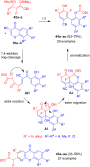
- the 3-protected oxindole counterparts 5 and 7, in moderate to good yields (Scheme 4). The best yield was obtained when 3-protected oxindole derivatives 5 possess an aromatic or heterocyclic unit substituted in the 5-amide position of the oxindole ring. Compounds 8c, 8d, 8e and 8m were obtained in 83





Manganese-catalyzed C–C and C–N bond formation with alcohols via borrowing hydrogen or hydrogen auto-transfer
Beilstein J. Org. Chem. 2024, 20, 1111–1166, doi:10.3762/bjoc.20.98

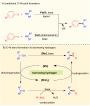
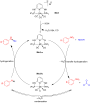
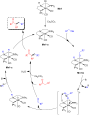
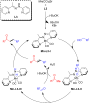
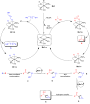
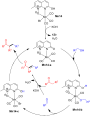
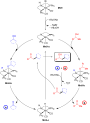
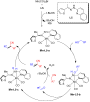
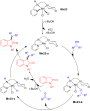
- heterocyclic alcohols were tested and showed good functional group tolerances. However, ester and nitrile-substituted ketones were not alkylated with this protocol. The proposed mechanism showed that the Mn(CO)5Br reacted with ligand L3 to generate the active complex Mn-L3-I in the presence of a base. The
- mechanism suggested that dearomatization–aromatization pathways operated for the dehydrogenation of the alcohol and C–C bond formations. After the successful attempt of bidentate N-heterocyclic carbene-manganese complex-catalyzed N-alkylation of amines with alcohols at room temperature [41], Liu and Ke's
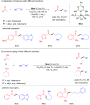
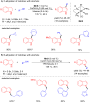
- group planned the α-alkylation of ketones using alcohols as an alkylating agent [64]. A number of substituted aromatic and heterocyclic ketones with different alcohols were tested and gave good to excellent yields (38–96%) using 4 mol % of Mn6 and 50 mol % of NaOH in toluene at 110 °C for 2 h (Scheme 33



























Mild and efficient synthesis and base-promoted rearrangement of novel isoxazolo[4,5-b]pyridines
Beilstein J. Org. Chem. 2024, 20, 1069–1075, doi:10.3762/bjoc.20.94
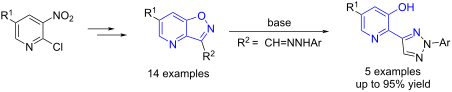
- Figure 1. A number of isoxazolo[4,5-b]pyridines has been described in patents, however, there are only a few methods for their synthesis reported in the literature. First representatives of this heterocyclic system were described by Gewald et al. in 1980 [14]. The known methods are usually based on
- -oriented heterocyclic systems. Some examples of biologically active isoxazolo[4,5-b]pyridines with antibacterial [8], anticancer [12] and cytotoxic [10][13] acitivities. Biologically active analogs of compounds 13. X-ray crystal structures of compounds 12c (top left; the second crystallographically unique


Novel analogues of a nonnucleoside SARS-CoV-2 RdRp inhibitor as potential antivirotics
Beilstein J. Org. Chem. 2024, 20, 1029–1036, doi:10.3762/bjoc.20.91
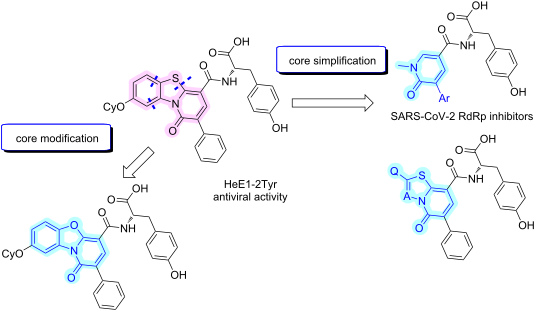
- the beginning of the pandemic, a variety of heterocyclic small molecules – either of natural or synthetic origin – was reported as promising inhibitors of the SARS-CoV-2 RdRp [13][14][15]. However, compounds with a sufficient combination of high potency and suitable pharmacokinetic properties are
- . We focused on the modification of the central heterocyclic core and on the simplification and truncation of the relatively large molecule 1 (Figure 1). In this work, replacing the sulfur atom with a (bio)isosteric oxygen atom yielded two novel structural analogues, whilst our effort towards more
- , led to two crucial mesoionic compounds, 22 and 27. The recrystallized intermediates then underwent a formal cycloaddition with ethyl acrylate, followed by the elimination of H2S, forming the desired heterocyclic core structures (intermediates 23 and 28, respectively). A subsequent saponification step


Auxiliary strategy for the general and practical synthesis of diaryliodonium(III) salts with diverse organocarboxylate counterions
Beilstein J. Org. Chem. 2024, 20, 1020–1028, doi:10.3762/bjoc.20.90
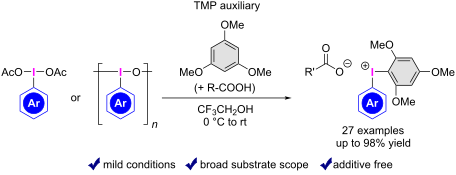
- practical, direct approach for the synthesis of aryl(TMP)iodonium(III) carboxylates, utilizing readily accessible iodosoarenes or (diacetoxyiodo)arenes as starting materials in a fluoroalcohol solvent (Scheme 2C). This protocol allows for the synthesis of electron-rich, electron-poor, heterocyclic, and


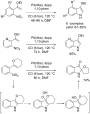
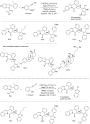
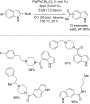
Carbonylative synthesis and functionalization of indoles
Beilstein J. Org. Chem. 2024, 20, 973–1000, doi:10.3762/bjoc.20.87
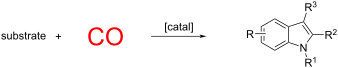
- the synthesis of high-value compounds. Given the great importance of heterocyclic compounds, the carbonylative approach has become increasingly important for their synthesis. In this mini-review, as a class of benzo-fused nitrogen-containing heterocyclic compounds, we summarized and discussed the
- recent achievements on the synthesis and functionalization of indole derivatives via carbonylative approaches. Keywords: carbonylation; functionalization; indole; metal catalyst; organometallic chemistry; Introduction Indole is a heterocyclic compound consisting of a benzene ring fused with a pyrrole
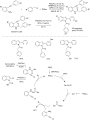
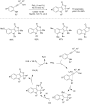
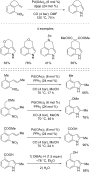
- complexes are important for the synthesis of heterocyclic and non-heterocyclic compounds. In 2009, Arthuis and co-workers developed a new process for the synthesis of 2-aroylindoles and 2-heteroaroylindoles by a one-pot palladium-catalyzed domino reaction that involves an initial C,N-coupling followed by












Innovative synthesis of drug-like molecules using tetrazole as core building blocks
Beilstein J. Org. Chem. 2024, 20, 950–958, doi:10.3762/bjoc.20.85
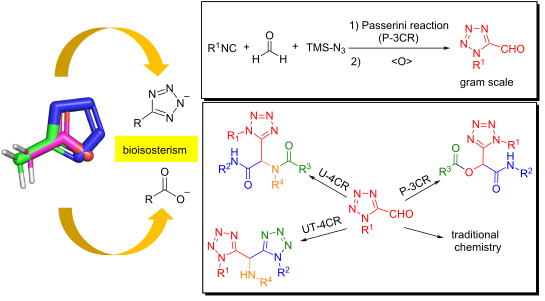
- moderate to good yields, mainly lower yields were obtained with β-cyanoethyl isocyanide (e.g., 3g). In addition, good substrate tolerance was also achieved for the acid component with both aliphatic, aromatic, and heterocyclic acids. The excellent overall performance of these tetrazole-aldehyde building

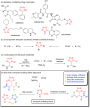

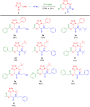


One-pot Ugi-azide and Heck reactions for the synthesis of heterocyclic systems containing tetrazole and 1,2,3,4-tetrahydroisoquinoline
Beilstein J. Org. Chem. 2024, 20, 912–920, doi:10.3762/bjoc.20.81
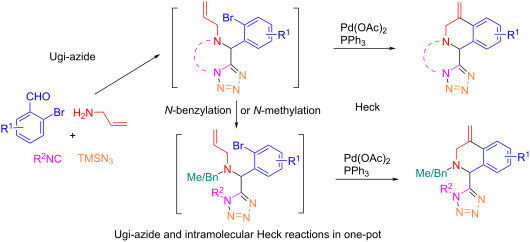
- Chemistry and Center for Green Chemistry, University of Massachusetts Boston, 100 Morrissey Blvd, Boston, MA 02125, USA 10.3762/bjoc.20.81 Abstract A new method for the synthesis of heterocyclic systems containing tetrazole and tetrahydroisoquinoline is developed via the performance of one-pot Ugi-azide
- -tetrazoles (1,5-DS-1H-Ts) B. The performance of post-condensation reactions of UA-4CR adducts has resulted in various 1,5-DS-1H-Ts containing heterocyclic compounds [28][29][30][31][32], such as bis-heterocyclic lactam-tetrazoles [33][34], 2-tetrazolylmethyl-2,3,4,9-tetrahydro-1H-β-carbolines [35
- ], ketopiperazinetetrazoles [36], imidazotetrazolodiazepinones [37], tetracyclic tetrazolylpyridoimidazoquinolines [38], bis-heterocyclic 1,5-disubstituted tetrazoleindolizines [39] and (E)-12-tetrazolyl-5H-quinazolino[3,2-a]quinazolines [40]. Among them, the Hulme group reported a UA-4CR/post-condensation sequence to give


(Bio)isosteres of ortho- and meta-substituted benzenes
Beilstein J. Org. Chem. 2024, 20, 859–890, doi:10.3762/bjoc.20.78
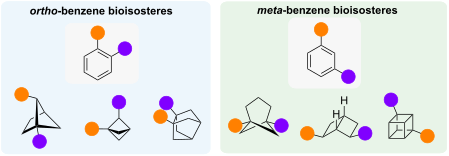
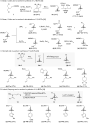
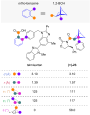
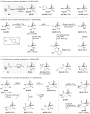
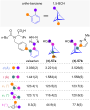
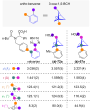
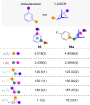
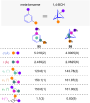
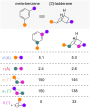
- was also employed for the synthesis of 1,2,4-BCHs [35]. Heterocycle-substituted BCHs were accessed by [2π + 2σ] photocycloaddition by Glorius and co-workers [79] and Houk, Glorius and co-workers [80]. This reactivity was enabled by triplet energy transfer catalysis activating the heterocyclic

















Ortho-ester-substituted diaryliodonium salts enabled regioselective arylocyclization of naphthols toward 3,4-benzocoumarins
Beilstein J. Org. Chem. 2024, 20, 841–851, doi:10.3762/bjoc.20.76
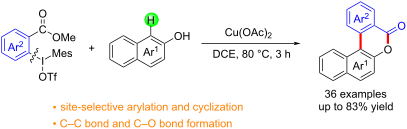
- have been employed in benzocyclization and arylocyclization reactions, enabling intramolecular cyclization by forming aromatic or heterocyclic rings as a part of cyclic structures [8]. In these reactions, the dual activation of a C–I bond and vicinal C–H bonds/functional groups features a distinct


Palladium-catalyzed three-component radical-polar crossover carboamination of 1,3-dienes or allenes with diazo esters and amines
Beilstein J. Org. Chem. 2024, 20, 661–671, doi:10.3762/bjoc.20.59
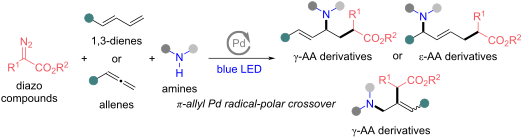
- reactive under the photocatalytic conditions, providing the corresponding 1,2-adducts 6a, 6b, and 6c smoothly in 73%, 93% and 34% yields, respectively. Commercially available amines with a broad range of heterocyclic rings (e.g., morpholine, piperazine, pyrrolidine, homopiperazine) also readily



HPW-Catalyzed environmentally benign approach to imidazo[1,2-a]pyridines
Beilstein J. Org. Chem. 2024, 20, 628–637, doi:10.3762/bjoc.20.55
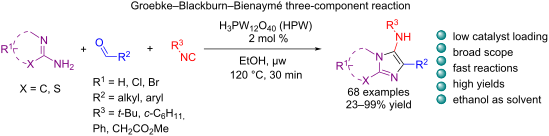
- green catalyst with greater chemical and thermal stability in comparison to other heteropolyacids [43]. HPW has been shown to catalyze MCRs in the synthesis of heterocyclic compounds with high efficiency and chemoselectivity (Figure 2), including functionalized benzo[c]chromeno[2,3-a]phenazine [44
- imidazo[1,2-a]pyridine core [13]. Examples of application of HPW as catalyst in the synthesis of heterocyclic compounds through multicomponent reaction approaches. a) Reported phosphomolybdic acid-catalyzed synthesis of imidazo[1,2-a]pyridines via GBB-3CR. b) Attempts to reproduce the results reported in




A laterally-fused N-heterocyclic carbene framework from polysubstituted aminoimidazo[5,1-b]oxazol-6-ium salts
Beilstein J. Org. Chem. 2024, 20, 621–627, doi:10.3762/bjoc.20.54
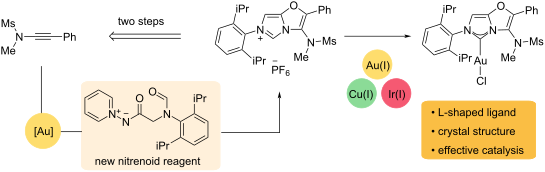
- ; imidazolium; NHC; Introduction Imidazolium-derived nucleophilic heterocyclic carbenes (NHCs) have had a sustained impact across the fields of organometallic and main group chemistry, transition-metal catalysis, materials synthesis and organocatalysis [1]. Laterally annellated polycyclic NHCs offer a useful


Entry to new spiroheterocycles via tandem Rh(II)-catalyzed O–H insertion/base-promoted cyclization involving diazoarylidene succinimides
Beilstein J. Org. Chem. 2024, 20, 561–569, doi:10.3762/bjoc.20.48
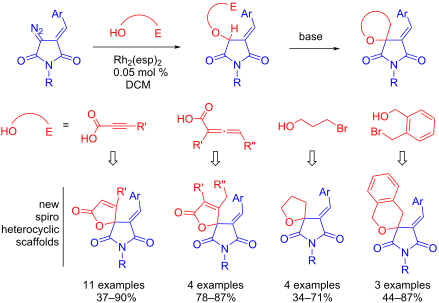
- ., Saint Petersburg 191036, Russian Federation Department of Medicinal Chemistry, Institute of Chemistry, Saint Petersburg State University, 26 Universitetskiy pr., Peterhof 198504, Russian Federation 10.3762/bjoc.20.48 Abstract A facile approach to novel medicinally relevant spiro heterocyclic scaffolds
- (namely furan-2(5H)-ones, tetrahydrofurans and pyrans spiro-conjugated with the succinimide ring) has been developed. The protocol consists of Rh(II)-catalyzed insertion of heterocyclic carbenes derived from diazoarylidene succinimides (DAS) into the O–H bond of propiolic/allenic acids or brominated
- . Conclusion We have devised a straightforward access to novel spiro-annulated O-heterocyclic frameworks based on Rh2(esp)2-catalyzed insertion of carbenes derived from diazoarylidene succinimides (DAS) into the O–H bond of propiolic or allenic acids, as well as 3-bromopropan-1-ol and 2-(bromomethyl)benzyl


Synthesis and biological profile of 2,3-dihydro[1,3]thiazolo[4,5-b]pyridines, a novel class of acyl-ACP thioesterase inhibitors
Beilstein J. Org. Chem. 2024, 20, 540–551, doi:10.3762/bjoc.20.46
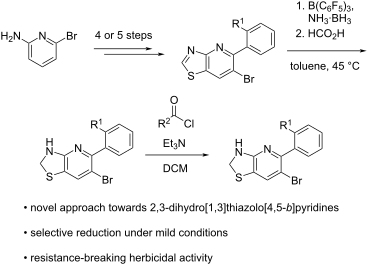
- greenhouse tests in line with competitive application rates and hints for crop selectivity, particularly in wheat and soy. Furthermore, the new heterocyclic lead structures have the potential to mitigate and affect weeds that have become resistant towards commercial herbicides, such as resistant blackgrass


Green and sustainable approaches for the Friedel–Crafts reaction between aldehydes and indoles
Beilstein J. Org. Chem. 2024, 20, 379–426, doi:10.3762/bjoc.20.36
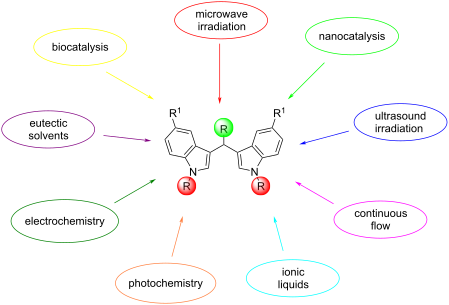
- solvent (Scheme 6) [90]. The scope of this methodology was tested with a variety of substituted aliphatic, aromatic or heterocyclic aldehydes and ketones, affording excellent results. Product conversion rates ranged from 81%, for the less reactive ketones, to 100% for activated aromatic aldehydes bearing
- be addressed. The most recent application of halogen bonding in the synthesis of BIMs was introduced in 2023 by Galathri et al., who employed an N-heterocyclic iod(az)olium salt as the monodentate catalyst [96]. This approach utilized water as the reaction solvent and employed a low catalyst loading




Mechanisms for radical reactions initiating from N-hydroxyphthalimide esters
Beilstein J. Org. Chem. 2024, 20, 346–378, doi:10.3762/bjoc.20.35
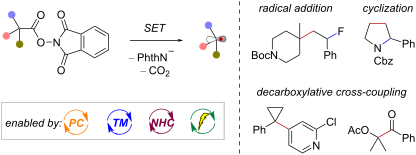
- overview of the diverse mechanisms that have been proposed for radical based transformations initiating from NHPI esters. The discussion is organized into four sections: (i) mechanisms under photochemical conditions, (ii) initiation by metal catalysis and stoichiometric reductants, (iii) N-heterocyclic
- undergo addition to the heterocyclic radical acceptor 19 through a ternary transition state 20 involving hydrogen bonding interactions with the chiral phosphate co-catalyst. Notably, a follow-up report revealed that the radical addition is reversible, and that the selectivity determining step involves the
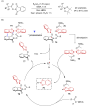
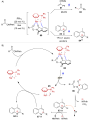
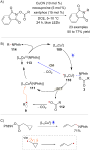
- , accompanied by the formation of cyano-B(pin) 142. Importantly, in the absence of ZnCl2, intermediate 140 could be detected by HRMS and 11B NMR, highlighting the pivotal role of ZnCl2 in promoting rearomatization. N-Heterocyclic carbene (NHC) catalysis In 2019, Nagao and Ohmiya reported the decarboxylative








Facile approach to N,O,S-heteropentacycles via condensation of sterically crowded 3H-phenoxazin-3-one with ortho-substituted anilines
Beilstein J. Org. Chem. 2024, 20, 336–345, doi:10.3762/bjoc.20.34
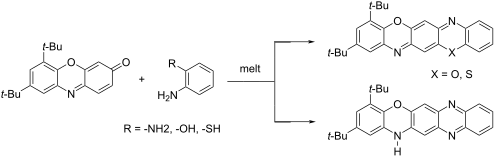
- structure, 3H-phenoxazin-3-ones can easily be accessed through oxidative couplings of o-aminophenols [3][4] or N-aryl-o-benzoquinone imines [5][6]. Further, they can serve as efficient precursors of pentacyclic N,O-heterocyclic compounds that possess promising properties for application in fluorescent





