Search results
Search for "interaction" in Full Text gives 1290 result(s) in Beilstein Journal of Organic Chemistry. Showing first 200.
Understanding X-ray-induced isomerisation in photoswitchable surfactant assemblies
Beilstein J. Org. Chem. 2024, 20, 2005–2015, doi:10.3762/bjoc.20.176
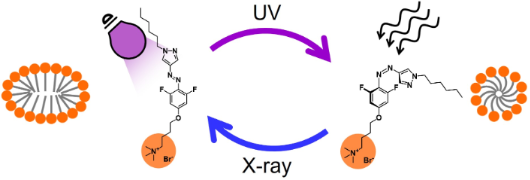
- was seen on reverse isomerisation using blue light (Table S1, Supporting Information File 1), which may suggest that the larger micelle size in the E isomer is obtained by slow agglomeration over time. The interaction of ionising radiation, such as X-rays, with water is known to result in a radiolysis
- , respectively, with comparable dimensions to those in H2O (Tables S1 and S3, Supporting Information File 1). However, there is a large difference in the interactions between AAPTAB micelles on switching solvents, which can be seen as a decrease in the interaction hump in the SAXS pattern at Q ≈ 0.045 Å−1
- the samples ex-situ for 3.5 hours to achieve a Z-rich PSS, where the percentage isomerised has been determined previously using 1H NMR spectroscopy [20]. The 10 wt % sample was measured over 800 X-ray exposures of 250 ms each. The initial Z-rich PSS SAXS pattern shows a strong interaction peak at Q



Allostreptopyrroles A–E, β-alkylpyrrole derivatives from an actinomycete Allostreptomyces sp. RD068384
Beilstein J. Org. Chem. 2024, 20, 1981–1987, doi:10.3762/bjoc.20.174
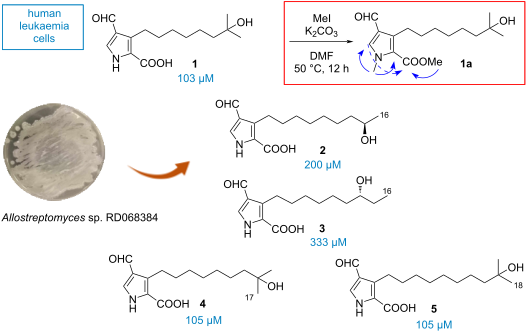
- [31]. Range-separated hybrid GGA (RSH-GGA) functional, including dispersive interaction with 6-31G* as the polarization basis set (ωB97X-D/6-31G* method), was used for energy and geometry optimization [32]. Bioactivity Cytotoxicity and tyrosinase assays were carried out according to the procedures


Regioselective alkylation of a versatile indazole: Electrophile scope and mechanistic insights from density functional theory calculations
Beilstein J. Org. Chem. 2024, 20, 1940–1954, doi:10.3762/bjoc.20.170
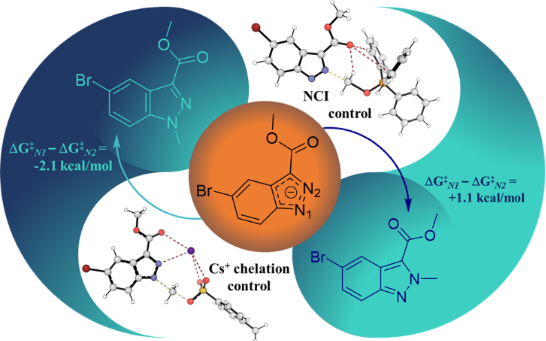
- the N1-product with highly similar energy (averaging −16.8 kcal/mol). The N2-s-cis and N2-s-trans TSs leading to the N2-product were higher in energy and led to the higher energy N2 products. The critical difference between N1-s-cis and N2-s-cis is the presence of the N2–Cs+–O non-covalent interaction


Solvent-dependent chemoselective synthesis of different isoquinolinones mediated by the hypervalent iodine(III) reagent PISA
Beilstein J. Org. Chem. 2024, 20, 1914–1921, doi:10.3762/bjoc.20.167
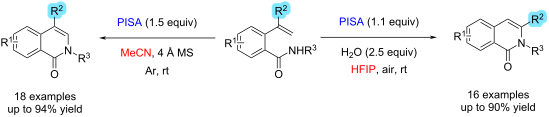
- the substrate, and thus preventing the possible interaction between the amide moiety and PISA, as opposed to CH3CN. The olefin moiety of the complex then interacts with the exposed central iodine(III) atom in PISA [25], forming the intermediate D. Similar cyclic iodonium intermediates were also




Novel oxidative routes to N-arylpyridoindazolium salts
Beilstein J. Org. Chem. 2024, 20, 1906–1913, doi:10.3762/bjoc.20.166
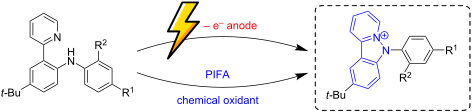
- equivalent nitrogen atoms (aN = 6.56 G) as well as additional triplet splitting provided by hyperfine interaction with a pair of equivalent protons (aH = 1.89 G). In contrast, only traces of this admixture were detected for the diarylamines with electron-withdrawing substituents. This is in line with our


Access to 2-oxoazetidine-3-carboxylic acid derivatives via thermal microwave-assisted Wolff rearrangement of 3-diazotetramic acids in the presence of nucleophiles
Beilstein J. Org. Chem. 2024, 20, 1894–1899, doi:10.3762/bjoc.20.164

- ketenes 2 generated by a thermally promoted Wolff rearrangement [3]. The interaction of such ketenes with nucleophiles of different nature could serve as a source of libraries of structurally diverse 2-oxoazetidine-3-carboxylic acid derivatives 3 (Scheme 1). The 2-oxoazetidine-3-carboxylic acid
- the exocyclic carbonyl group by preformed ring contraction and interaction of the intermediate ketene with the selected nucleophile. Various aromatic and aliphatic amines as well as alcohols and thiols can be used as nucleophiles. 5-Monosubstituted diazotetramic acids give exclusively trans


The Groebke–Blackburn–Bienaymé reaction in its maturity: innovation and improvements since its 21st birthday (2019–2023)
Beilstein J. Org. Chem. 2024, 20, 1839–1879, doi:10.3762/bjoc.20.162
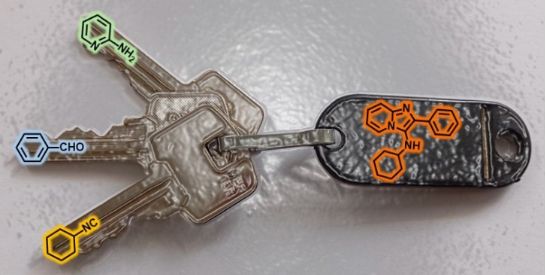
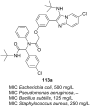
- a [1,5]-H shift [19], indazolo[3’,2’:2,3]imidazo[1,5-c]quinazolin-6(5H)-one 18 (Scheme 7) [20]. The favorable host–guest interaction between 14 and the reactants (demonstrated by 2D NMR and FTIR spectroscopy as well as by scanning electron micrography), combined with the acidity of the succinyl
- its nucleophilicity and improving its orientation. Furthermore, Ser105 formed a strong hydrogen bond also with benzaldehyde, making it a better electron acceptor. Interestingly, also the imine intermediate showed strong interaction with Thr40 and Ser105 residues, so becoming a good electrophile for
- the addition of tert-butyl isocyanide. On the other hand, the addition of tert-butyl isocyanide on the imine altered the orientation of adduct 19, suppressing the interaction with Ser105 (Scheme 8). Very recently, Tyagi et al. reported the double encapsulation of CALB and Pd(PPh3)4 within silica






Discovery of antimicrobial peptides clostrisin and cellulosin from Clostridium: insights into their structures, co-localized biosynthetic gene clusters, and antibiotic activity
Beilstein J. Org. Chem. 2024, 20, 1800–1816, doi:10.3762/bjoc.20.159
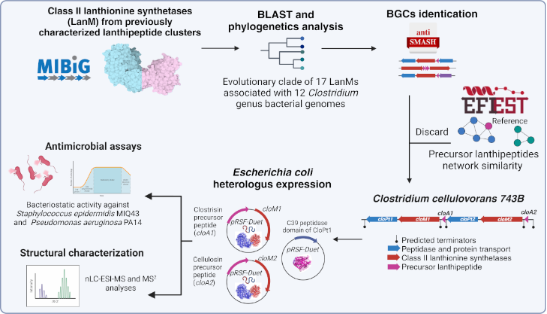
- experimental MIBiG sequences, were processed in MEGA X [55]. The sequences were aligned using MUSCLE [56] with specific parameters: Open gap: −2.90, Extended gap: 0.00, hydrophobicity multiplier: 1.20, maximum interaction: 16, ensemble method (interactions 1,2): UPGMA, ensemble method (others interactions




Synthesis and characterization of 1,2,3,4-naphthalene and anthracene diimides
Beilstein J. Org. Chem. 2024, 20, 1767–1772, doi:10.3762/bjoc.20.155
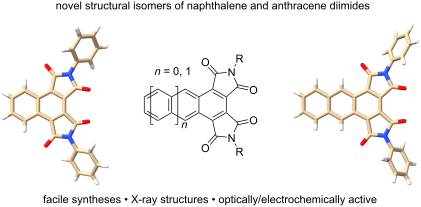
- the π-interaction involving two 8-Ph molecules pointed in the same nominal direction is not linearly aligned, but is instead twisted by 19°. This angle, likely enforced by the sterics of the phenyl groups, may be an interesting approach to inducing helical turns in supramolecular assemblies derived
- the longer interaction distances and interceding incorporation of CH2Cl2 (Figure 2b). Furthermore, in 8-Ph the interstack C=O···H–C interaction is skewed such as to involve only one C=O, compared to the symmetric dual-contact that is seen for 7-Ph. Optical and electronic characterization The


Syntheses and medicinal chemistry of spiro heterocyclic steroids
Beilstein J. Org. Chem. 2024, 20, 1713–1745, doi:10.3762/bjoc.20.152
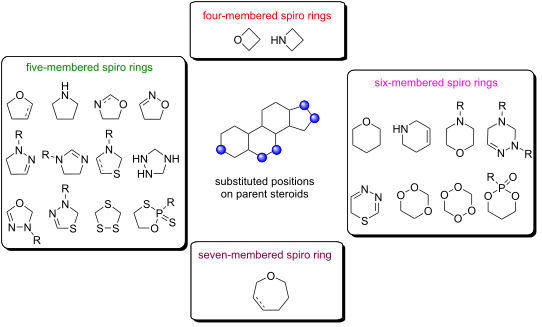
- . According to the mechanism, the heterocyclic ring closes by the attack of the bulky radical -CO-HN• over the α steroidal side to circumvent the 1,3-diaxial interaction with the methyl group at C-10. Spiro-1,3,4-oxadiazoline steroid Shamsuzzaman et al. achieved the synthesis of 5’-acetamido-3’-acetyl-(3R


Oxidation of benzylic alcohols to carbonyls using N-heterocyclic stabilized λ3-iodanes
Beilstein J. Org. Chem. 2024, 20, 1677–1683, doi:10.3762/bjoc.20.149
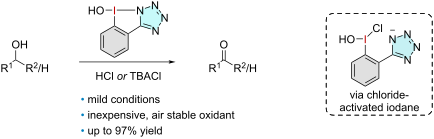
- ]. A crystal structure was additionally obtained for tetrazine 1c. Bond lengths and angles were similar to those of known five-membered NHIs [25], including a strong intramolecular interaction between the nitrogen of the tetrazine and the hypervalent iodine atom (I1–N1: 2.44(4) Å; the sum of VdW radii




Methyltransferases from RiPP pathways: shaping the landscape of natural product chemistry
Beilstein J. Org. Chem. 2024, 20, 1652–1670, doi:10.3762/bjoc.20.147
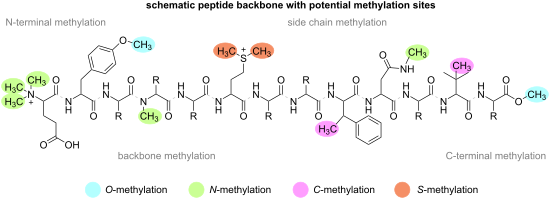
- biocatalytic applications. The co-crystallisation of LahSB with bound SAH provides important details about the structure–function relationship, the substrate–enzyme interaction, and the cofactor binding site (Figure 5). This structural information, including the residues involved in binding, is essential for





Regio- and stereochemical stability induced by anomeric and gauche effects in difluorinated pyrrolidines
Beilstein J. Org. Chem. 2024, 20, 1572–1579, doi:10.3762/bjoc.20.140
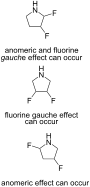
- systems [5]. This conformational preference is attributed to an electrostatic gauche effect, where an attractive NH2+∙∙∙Fδ− interaction reinforces the well-known hyperconjugative gauche effect. Additionally, NH∙∙∙F hydrogen bonding has been proposed to play a role in stabilizing conformers of certain 3
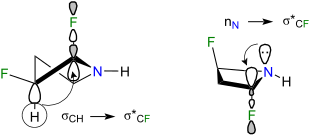
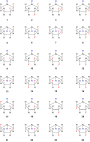
- Figure 5 and Table 2. This disparity in stability was largely attributed to the relative orientation of the nitrogen electron lone pair and the adjacent C–F bond, facilitating an anomeric interaction characterized by nN→σ*CF electron delocalization. Isomer 2 also demonstrated such an orientation, but the
- , less stabilizing σCC→σ*CF interactions were anticipated. Moreover, besides the anomeric interaction, the pseudoaxially oriented C–F bonds in 17 and 19 facilitated efficient electron donation from vicinal antiperiplanar C–H bonds through σCH→σ*CF interactions (Figure 6). The methylene group separating





Photoswitchable glycoligands targeting Pseudomonas aeruginosa LecA
Beilstein J. Org. Chem. 2024, 20, 1486–1496, doi:10.3762/bjoc.20.132
- bacterial infections occur by adhesion to host tissues through receptor–ligand interaction between bacterial carbohydrate-binding proteins (lectins) and oligosaccharides at the host cell surface. Pseudomonas aeruginosa (PA), a Gram-negative, opportunistic and ubiquitous environmental bacterium, is known as
- reversible light modulation of their activity since each isomer shows distinct structural and electronic properties [13]. Photoisomerization-induced conformational and polarity changes may allow to increase or decrease the interaction with the target protein or receptors, then modulate the drug potency on
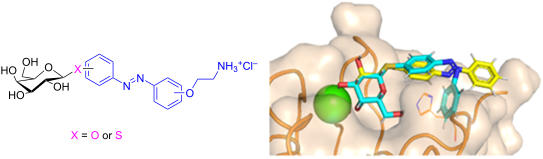
- different sizes and substituents are tolerated on the aryl aglycon, we decided to replace the aryl aglycon by photoswitchable azobenzene in both O- and S-galactosides (Figure 1B) to investigate their binding affinity and the influence of the photoisomerization on the lectin interaction. The ammonium group


Bioinformatic prediction of the stereoselectivity of modular polyketide synthase: an update of the sequence motifs in ketoreductase domain
Beilstein J. Org. Chem. 2024, 20, 1476–1485, doi:10.3762/bjoc.20.131
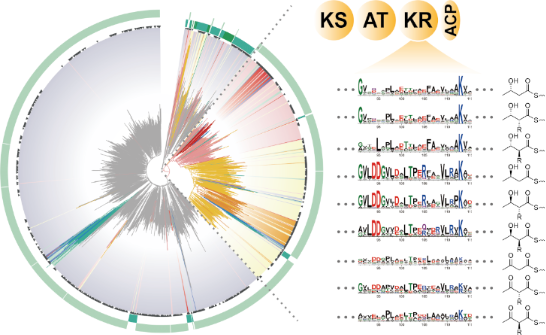
- the sequence of both KR subdomains [13]. This suggests a strong domain–domain interaction between KR and DH, as observed in the structure of KR-DH-ER tridomain (Figure 2c) [24], and indicates that KRs in β-modules and γ/δ-modules may not be generally interchangeable for domain swapping. However, the
- KRC, the N-terminal helix αB and the lid region αFG located at the C-terminal of KRC (Figure 2d). Indeed, this lid region exhibits a direct interaction with the DH and DH-KR linker (Figure 2c). However, such interaction was not observed between the N-terminal helix αB and DH in the crystal structure
- of DH-ER-KR tridomain (Figure 2c). This finding suggests that the helix αB may have an allosteric interaction with DH or potential large conformational changes between DH and KR during catalysis. Sequence logo analysis of KRC from β-modules Based on the clear stereoselectivity-dependent clades


A comparison of structure, bonding and non-covalent interactions of aryl halide and diarylhalonium halogen-bond donors
Beilstein J. Org. Chem. 2024, 20, 1428–1435, doi:10.3762/bjoc.20.125
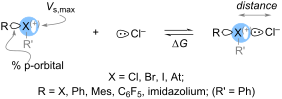
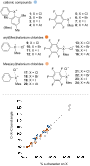
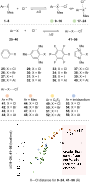
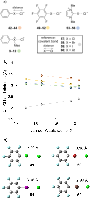
- halogen-bond formation by the linear combination of the % p-orbital character on the halogen and energy of the σ-hole on the halogen-bond donor. Keywords: aryl halide; diarylhalonium; halogen; halogen bond; non-covalent interaction; Introduction Halogen bonding has emerged as an important attractive
- interaction in a wide range of applications that include crystal engineering, drug discovery and light-emitting materials [1][2][3][4]. Although, halogen bonding was first “observed” over 200 years ago [5][6] and the structural characteristics were elucidated in the latter half of the nineteenth century [7
- halogen-bond interaction of diarylhalonium salts with pyridine decreased with increasing s-character used by the central halogen atom in the bond opposite the halogen bond; this is effectively the s-character in the σ*-orbital [21]. Conceptually, halogen-bond donors are commonly described by the




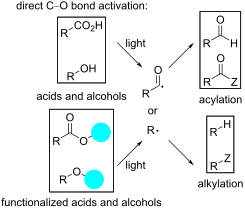
Generation of alkyl and acyl radicals by visible-light photoredox catalysis: direct activation of C–O bonds in organic transformations
Beilstein J. Org. Chem. 2024, 20, 1348–1375, doi:10.3762/bjoc.20.119
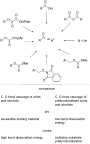
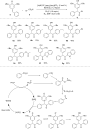
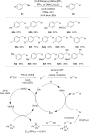
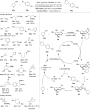
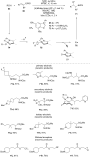
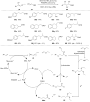
- conventional metal hydrides, such as tin or silicon hydrides. The reaction mechanism is interesting since first, a Lewis acid–base adduct is generated by interaction of Et3N with a boron atom of bis(catecholato)diboron (B2cat2, 19). As a result, one of the catecholate ligands experiences an increase in
- -mediated deoxygenative trifluoromethylation technique worked with both benzylic and unactivated thiocarbonates. The proposed mechanism starts with the homolysis of (bpy)Cu(III)(CF3)3 by blue-light irradiation, which produces CF3 radicals and (bpy)Cu(II)(CF3)2. Subsequently, the interaction between the CF3
- subsequently undergoes addition to B2cat2 (19) to produce the boryl radical 41. Here, the choice of solvent is also important. The interaction between DMF and the boryl radical 41 assists B–B bond scission to furnish the target borylated products and an intermediate 43, which is oxidized by [Ir(IV





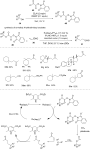
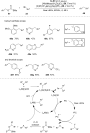

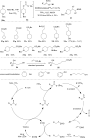
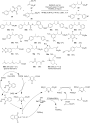
Synthesis of 1,2,3-triazoles containing an allomaltol moiety from substituted pyrano[2,3-d]isoxazolones via base-promoted Boulton–Katritzky rearrangement
Beilstein J. Org. Chem. 2024, 20, 1334–1340, doi:10.3762/bjoc.20.117
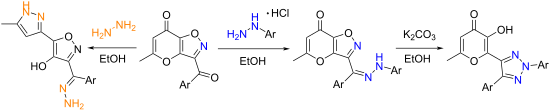
- Constantine V. Milyutin Andrey N. Komogortsev Boris V. Lichitsky N.D. Zelinsky Institute of Organic Chemistry, Russian Academy of Sciences, Leninsky Pr., 47, Moscow, 119991, Russian Federation 10.3762/bjoc.20.117 Abstract For the first time, the interaction of aroyl containing pyrano[2,3-d
- can be used as starting materials in the studied condensation. We tested this hypothesis using the interaction of ketone 1b and phenylhydrazine hydrochloride (2a). It was shown that reflux of the starting compounds in ethanol for 1 h leads to the target hydrazone 3b in 64% yield (Scheme 3). It should
- , t-BuNHNH2). Unfortunately, in this case interaction of ketones 1 with aforementioned hydrazines led only to a complex mixture of unidentified products. At the same time the use of benzhydrazide or semicarbazide in the similar condensation resulted in recovery of starting compounds 1. Further, in


Diameter-selective extraction of single-walled carbon nanotubes by interlocking with Cu-tethered square nanobrackets
Beilstein J. Org. Chem. 2024, 20, 1298–1307, doi:10.3762/bjoc.20.113
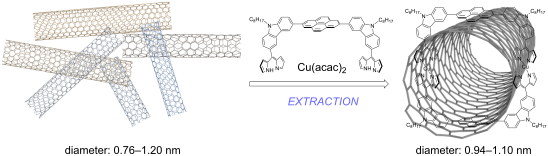
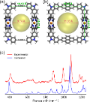
- 1b and SWNTs in these samples. The difference in the intensity and Raman shift of the signals in the radial breathing mode (RBM) region would be another evidence for the strong intermolecular interaction between Cu-nanobrackets 1b and SWNTs. The interlocking of the SWNTs may restrict its radial




Phenotellurazine redox catalysts: elements of design for radical cross-dehydrogenative coupling reactions
Beilstein J. Org. Chem. 2024, 20, 1292–1297, doi:10.3762/bjoc.20.112
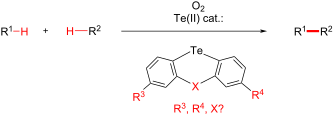
- -substrate interaction. Phenotellurazine-catalyzed cross-dehydrogenative couplings. Screening of new Te(II)-catalyst candidates. ODCB: ortho-dichlorobenzene. Phenotellurazine-catalyzed cross-dehydrogenative indole dimerization. Supporting Information Supporting Information File 84: Experimental section and


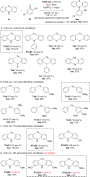

Domino reactions of chromones with activated carbonyl compounds
Beilstein J. Org. Chem. 2024, 20, 1256–1269, doi:10.3762/bjoc.20.108
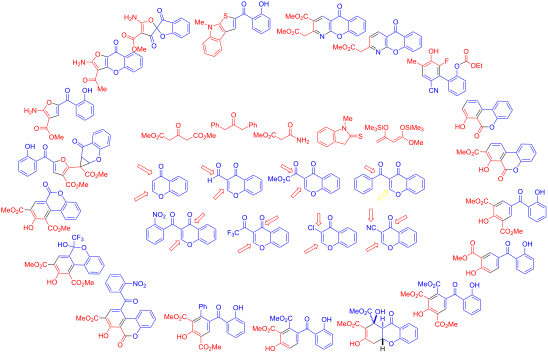
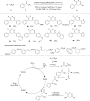
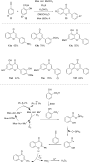
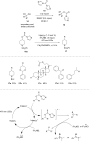
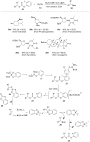
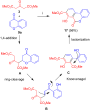
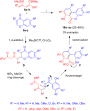
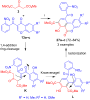
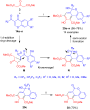
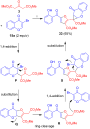
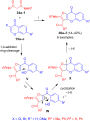
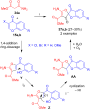
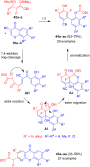
- for long chained 2-fluoro-1,3-bis(silyloxy)-1,3-butadienes. In conclusion, the interaction of activated carbonyl compounds with chromones offer a great variety of different reaction pathways leading to various types of products with potential applications in materials science and medicinal chemistry









Synthesis and optical properties of bis- and tris-alkynyl-2-trifluoromethylquinolines
Beilstein J. Org. Chem. 2024, 20, 1246–1255, doi:10.3762/bjoc.20.107
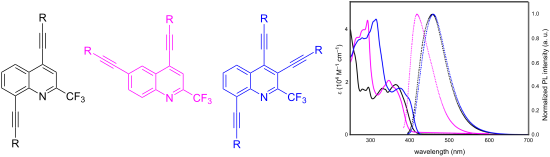
- electronic push–pull interaction of the thiophene and the quinoline moieties via the alkyne. Finally, we focussed on the synthesis of tris-alkynylated quinolines starting from 3,4,8-tribromo-2-(trifluoromethyl)quinoline (11). Starting material 11 was synthesized in very good yield from quinolone 3 by








Competing electrophilic substitution and oxidative polymerization of arylamines with selenium dioxide
Beilstein J. Org. Chem. 2024, 20, 1221–1235, doi:10.3762/bjoc.20.105
- structure, it self-organized through π–π interaction between the oxamide motif and the aryl π-framework. Further, the CH…O=C interaction facilitated the formation of ladder-like packing in the solid state (Figure S36, Supporting Information File 1). The molecular structure of oxamide 13 is shown in Figure 3
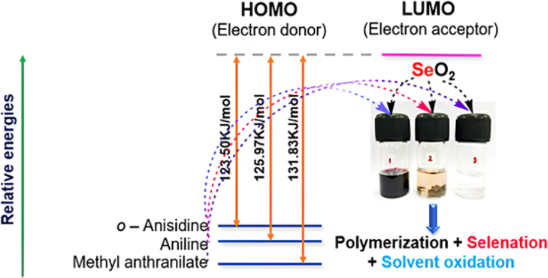
- methyl anthranilate structure from the ideal Lewis structure. The lone pair electron of nitrogen was donated to the non-Lewis orbital (i.e., LP*) of the adjacent carbon C(4) (see Figure 8), with a high interaction energy of 93.62 kcal⋅mol−1. Such an interaction was not found for aniline and o-anisidine
- . Instead, for o-anisidine and aniline, the lone pair electrons were delocalized into the antibonding NBO (i.e., BD*) with a smaller interaction energy of ≈26 kcal⋅mol−1. In other words, as shown in Scheme 8, the lone electron pair present at the nitrogen atom was delocalized into the π-conjugated system


Stability trends in carbocation intermediates stemming from germacrene A and hedycaryol
Beilstein J. Org. Chem. 2024, 20, 1189–1197, doi:10.3762/bjoc.20.101
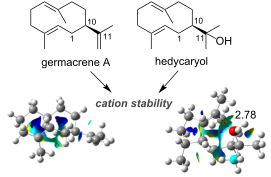
- interaction is even more distinct when inspecting the electronic energies (Figure S1, Supporting Information File 1), where we observe a significant stabilizing effect of the hydroxyl–cation interaction for F-OH and H-OH. This is clearly discernible from the C+···OH distances (Figure 4, Table 1) and visible
- from the NCI plots. In general, stabilization of some 5-7 bicyclic carbocations (e.g., F-OH and H-OH) are via C+···OH interactions, which are facilitated by the carbocation and hydroxyl functionality being located in the relatively flexible 7-membered ring. This type of interaction is absent in case of
- . Additionally, we carried out NBO analysis for other hedycaryol cations, and due to large bond distances between C+···OH, no such charge transfer is observed, i.e., E(2) = 0. In these cases, the interaction is likely of a classical electrostatic nature. Next, to better understand the influence of carbocation


Two-fold addition reaction of silylene to C60: structural and electronic properties of a bis-adduct
Beilstein J. Org. Chem. 2024, 20, 1179–1188, doi:10.3762/bjoc.20.100
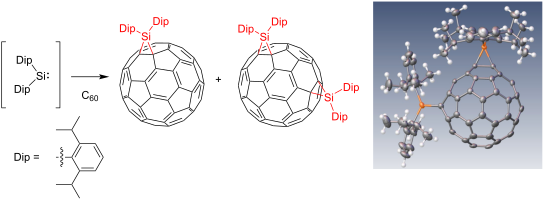
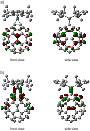
- . The regioselectivity in the addition reaction of 1 with C70 was explained earlier in terms of the interaction between the HOMO of 1 and the LUMO of C70 [16]. The reaction mechanism of ethylene with a silylene substituted with thiolate ligands has been studied using theoretical calculations, in which
- 3 may involve the interaction of 1 with the LUMO of 2a. The HOMO of 2a is observed mainly around the cis-1 and e′′ bonds among the 6,6-bonds, although the cis-1 bond would not be susceptible to the second silylene addition because of its steric hindrance. Alternatively, the interaction of the LUMO
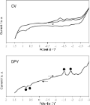
- . Also, the HOMO of 2a is observed around the cis-1 and e′′ bonds, although the cis-1 bond would be sterically protected from the second silylene addition. Alternatively, the interaction of the LUMO of 1 with e′′ bonds of 2 should be considered. Electrochemical measurements (CV and DPV) were taken to