


Search results
Search for "naphthalene" in Full Text gives 215 result(s) in Beilstein Journal of Organic Chemistry. Showing first 200.
The role of spacer length and flexibility in peptide self-assembly
Beilstein J. Org. Chem. 2026, 22, 986–996, doi:10.3762/bjoc.22.77
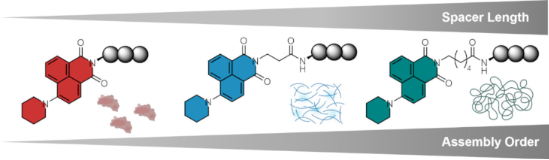
- -cysteine-alanine (ICA) tripeptides containing carbon spacers of 6, 3, or 0 methylene units linking the peptide backbone to a hydrophobic naphthalene (Nap) π-block. Using complementary spectroscopic and microscopic techniques, we show that spacer length controls the balance between conformational
- of the pro-assembling tripeptide Ile-Cys-Ala (ICA), which forms fibrous networks upon functionalization with aromatic groups at the N-terminus [35]. To enable both, π–π interactions and fluorescence-based characterization, we chose a naphthalene imide fluorophore as the hydrophobic segment (Nap). The
- naphthalene imide spacers were synthesized in two steps starting from 4-bromo-1,8-naphthalic anhydride (1) (Scheme 1 and Supporting Information File 1, Scheme S1). First, the bromo substituent in compound 1 was replaced by piperidine in a metal-free Buchwald–Hartwig amination reaction to obtain 6-(piperidin-1


Novel macrocycles: from synthesis to supramolecular function
Beilstein J. Org. Chem. 2026, 22, 982–985, doi:10.3762/bjoc.22.76

- rings. Importantly, the study demonstrates a pronounced size-matching effect, showing how cavity dimensions can be tuned to selectively recognize specific dicarboxylate chain lengths. Subsequently, Kato, Ogoshi, and colleagues [35] report the selective monoformylation of naphthalene-fused propellanes
- . The observed regioselectivity originates from through-space electronic communication between the naphthalene units, which suppresses multiple substitution pathways across the remaining framework. Owing to their defined three-dimensional shape and moderate conformational flexibility, the resulting
Photoorganocatalytic trifluoromethylation of (het)arenes in green conditions
Beilstein J. Org. Chem. 2026, 22, 662–671, doi:10.3762/bjoc.22.50
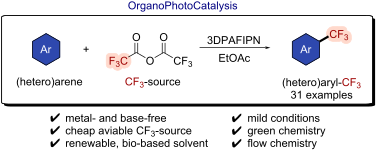
- ); unreactive substrates are shown in Supporting Information File 1, Schemes S4 and S5. Benzene, toluene, tert-butylbenzene, biphenyl, naphthalene, o-xylene, and durene afforded the corresponding products 2–8 in moderate yields. In contrast, mesitylene, a less electron-enriched substrate than durene, gave




Recent advances in the stereoselective synthesis of distal biaxially chiral molecules
Beilstein J. Org. Chem. 2026, 22, 461–479, doi:10.3762/bjoc.22.34
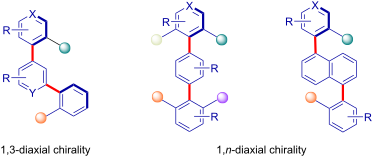
- reaction of prochiral N-arylmaleimides with NHC-derived chiral dienolates and contain as many as four chiral centers along with distal biaxial chirality. In 2025, Cai and co-workers developed an efficient approach for constructing triaxially chiral polysubstituted naphthalene scaffolds 82 (Scheme 23) [62
- biaxially chiral 1,4-distyryl-2,3-naphthalene diols. H-Bond-enabled enantioselective synthesis of remote biaxially chiral amides mediated by the counterion. Enantioselective synthesis of biaryl products with twofold chiral axes. Iridium-catalyzed C–H alkylation to obtain the distal biaxial atropisomers. Co
- chiral polysubstituted naphthalene scaffolds. Enantioselective Ni-catalyzed Suzuki–Miyaura cross-coupling reaction. The stereoselective synthesis of axial chiral indole–quinoline systems. The synthesis of bisbenzofuran atropisomeric oligoarenes containing two distal C–C stereogenic axes. Funding This


Arene activation via π-bond localization: concepts and opportunities
Beilstein J. Org. Chem. 2026, 22, 257–273, doi:10.3762/bjoc.22.19
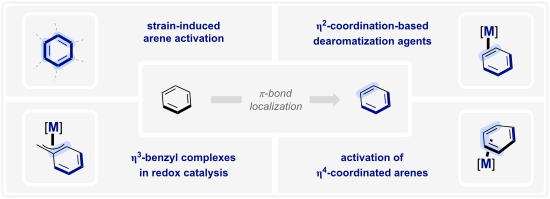
- unfolds in η2-naphthalene complexes, where transient formation of the less favored 2,3-η2-isomer imparts o-quinodimethane character (Figure 7) [52]. The third reactivity mode is purely activating in nature, with the metal acting as a π-donor that increases and localizes the electron density of the
- (chloromethyl)naphthalene derivatives (Scheme 7A), thereby expanding the synthetic utility of the overarching platform [87]. This transformation furnished either ortho- or para-substituted carbocycles, depending on the substitution pattern of the malonate. Crucially, selective arene functionalization over
- ]. Beyond the η6-mode, characteristic of transition metal carbonyl chemistry, these electron-rich anions can engage arenes such as benzene and naphthalene in an η4-fashion, localizing their π-systems. In direct analogy to the ruthenium complex, two-electron reduction of the parent η6-arene complexes [Cr(CO




Total synthesis of natural products based on hydrogenation of aromatic rings
Beilstein J. Org. Chem. 2026, 22, 88–122, doi:10.3762/bjoc.22.4
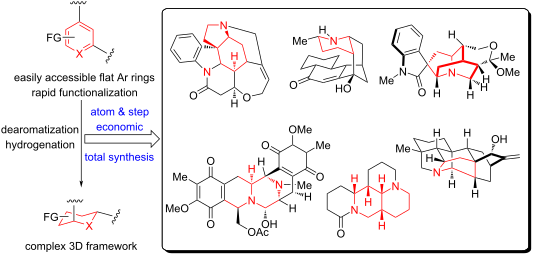
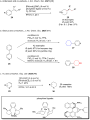
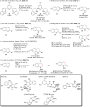
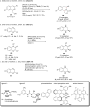
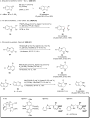
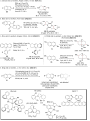
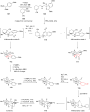
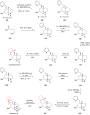
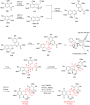
- metal catalyst to completely hydrogenate substituted naphthalene to saturated 6–6 fused bicycle (Scheme 8) [65][66]. The target decahydronaphthalene was obtained in high yield and high enantioselectivity. In 2024, Ding and co-workers reported a method for the selective hydrogenation of the carbon ring










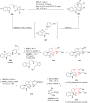

Pentacyclic aromatic heterocycles from Pd-catalyzed annulation of 1,5-diaryl-1,2,3-triazoles
Beilstein J. Org. Chem. 2025, 21, 2524–2534, doi:10.3762/bjoc.21.194
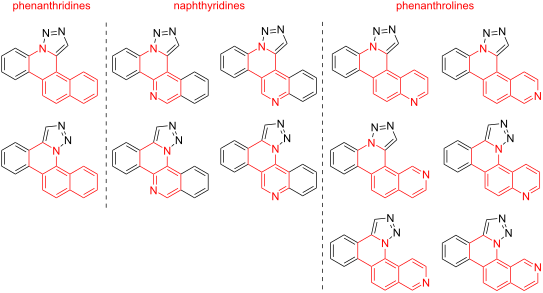
- ring itself to also include benzophenanthridine, dibenzonaphthyridine, and benzophenanthroline heterocycles of previously unreported identity (Figure 2). In addition to studying how naphthalene, quinolone, and isoquinoline incorporation impact click and annulation efficiency, characterizing the
- -diaryl-1,2,3-triazoles 7–12 into target pentacyclic aromatic heterocycles 13–18. Yields of annulation reactions for naphthalene-containing analog 13 (90%) was appreciably higher than for quinoline and isoquinoline derivatives 14–18 (31–72%). Due to triazole subunit connectivity to the napththalene
- thermal heating conditions [46] was successful for preparing these compounds. Yields of annulation reactions for the naphthalene-containing analog 31 (65%) was once again appreciably higher than that of the quinoline and isoquinoline derivatives 32–36 (31–51%), but there appeared to be no significant


Catalytic enantioselective synthesis of selenium-containing atropisomers via C–Se bond formations
Beilstein J. Org. Chem. 2025, 21, 2447–2455, doi:10.3762/bjoc.21.186
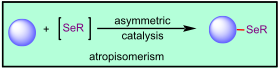
- excellent conversion rates (up to 95% yield) and high enantioselectivity (up to 96% ee). Notably, isoquinoline derivatives containing polycyclic naphthalene moieties or ortho-substituted phenyl groups also demonstrated good reactivity and compatibility. DFT calculations indicated that the C–Se bond
- ]. When a para-fluorine substituent is present on the naphthalene ring of the substrate, the reaction proceeds with a yield of up to 90% and an enantioselectivity reaching 92% ee. The methodology demonstrates a broad substrate scope, accommodating various polycyclic naphthalene isoquinolines as well as


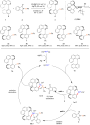
Insoluble methylene-bridged glycoluril dimers as sequestrants for dyes
Beilstein J. Org. Chem. 2025, 21, 2302–2314, doi:10.3762/bjoc.21.176
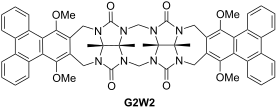
- environmental concern. We report the design, synthesis, and characterization of a series of methylene-bridged glycoluril dimers G2W1–G2W4 that are insoluble in water and that differ in the nature of their aromatic sidewalls (G2W4: benzene, G2W3: naphthalene, G2W1 and G2W2: triphenylene). We tested G2W1–G2W4
- glycoluril tetramer-derived acyclic CB[n] (e.g., M1) containing benzene, naphthalene, and anthracene aromatic sidewalls bearing O(CH2)3SO3Na water-solubilizing groups and found that the hosts with larger sidewalls displayed higher affinity toward hydrophobic alicyclic cationic guests [42][43]. Conversely, we
- found that the water-soluble naphthalene-walled glycoluril dimer G2M2 (Figure 1) – with its roughly co-planar aromatic walls – is selective for planar aromatic cations as guests [38]. In order the complement the tricyclic ring system present in the panel of dyes (Figure 2), we envisioned the use of even



Pathway economy in cyclization of 1,n-enynes
Beilstein J. Org. Chem. 2025, 21, 2260–2282, doi:10.3762/bjoc.21.173
- dual roles as solvent and nucleophile, the gold-catalyzed intermolecular Markovnikov addition of methanol to the gold-activated alkyne proceeded to afford dienol intermediate 4. The intermediate 4 subsequently underwent a regioselective 6-endo-trig cyclization, generating the naphthalene core 7 (Scheme
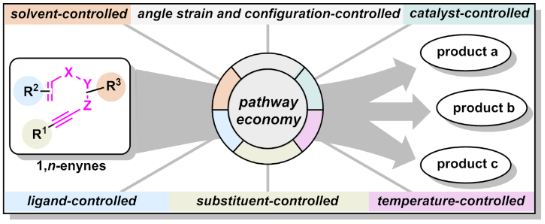
- regioselective syntheses of indene, indenone, and naphthalene derivatives from simple aromatic 1,5-enyne substrates. In 2020, a solvent-controlled strategy for Au(I)-catalyzed divergent syntheses of phenanthrene and dihydrophenanthrene derivatives was developed by the Rodríguez group (Scheme 3) [10]. In
- -catalyzed cyclization approach using aromatic enyne derivatives, where substituent control governed the stereoselective syntheses of naphthalene and indene cores (Scheme 7) [14]. When the alkyne terminus of the substrate 27 bore an alkyl or aryl substituent, the Ph3PAuCl/AgOTf-catalyzed 6-endo-dig


Continuous-flow-enabled intensification in nitration processes: a review of technological developments and practical applications over the past decade
Beilstein J. Org. Chem. 2025, 21, 1678–1699, doi:10.3762/bjoc.21.132
- coupled with the reaction kinetics. The lumped kinetics of the nitration of naphthalene were determined by Mule et al. [30] and used for modeling CSTR operation. Hussain et al. [35] and Kulkarni et al. [36] determined the lumped kinetics for the dinitration of N-(1-ethylpropyl)-3,4-dimethylaniline using
- extent, achieving full compensation remains highly challenging, particularly for nitration systems that are critically dependent on mass transfer efficiency. For example, in the nitration of naphthalene studied by Xu et al. [21], the yield of the target product decreased from 94.96% to 87.81%, even when



Oxetanes: formation, reactivity and total syntheses of natural products
Beilstein J. Org. Chem. 2025, 21, 1324–1373, doi:10.3762/bjoc.21.101










Recent advances and future challenges in the bottom-up synthesis of azulene-embedded nanographenes
Beilstein J. Org. Chem. 2025, 21, 1272–1305, doi:10.3762/bjoc.21.99
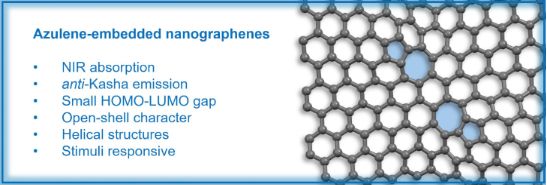
- is highly valuable, as such molecules provide deeper insights into structure–property relationships [16][17]. Azulene, an isomer of naphthalene, is the smallest non-alternant, non-benzenoid aromatic compound (Figure 1b). It consists of an electron-rich pentagon and an electron-deficient heptagon
- , resulting in a significant dipole moment of 1.08 D [18]. Due to its unique non-alternant topology, azulene exhibits a smaller energy gap compared to that of isomeric naphthalene and unusual emission from the S2 state (anti-Kasha’s emission), as a consequence of its non-mirror related highest occupied
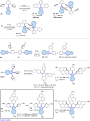
- of a naphthalene-bridged double [6]helicene (Scheme 6) [46]. Depending on the amount of DDQ used for oxidation, the yield of 36 reached up to 22%, while 37 was obtained in up to 27% yield. The proposed mechanism for the formation of 36 and 37 involves an arenium ion-mediated 1,2-phenyl shift followed






Selective monoformylation of naphthalene-fused propellanes for methylene-alternating copolymers
Beilstein J. Org. Chem. 2025, 21, 1183–1191, doi:10.3762/bjoc.21.95
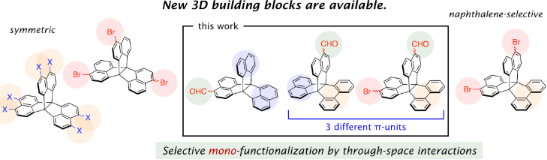
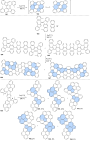
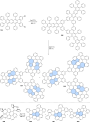
- blocks, we herein report electrophilic formylation of naphthalene-fused [3.3.3]- and [4.3.3]propellanes as the first selective single-point functionalization by virtue of through-space electronic communications between the naphthalene units. The propellane skeletons have well-defined 3D structures and
- positions while retaining molecular symmetry (Figure 1) [44][45][46]. One functional group was selectively introduced to each naphthalene ring of fully π-fused [4.3.3]- and [3.3.3]propellane, [4.3.3] and [3.3.3], respectively [47][48][49][50][51][52][53][54][55]. In this work, we report the introduction of
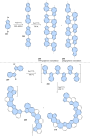
- interactions between the naphthalene units. The monoformyl products are reduced to corresponding alcohols, which are then reacted under Friedel–Crafts conditions. Amorphous methylene-alternating copolymers are obtained without particular macrocyclic oligomers. Due to the 3D components, the linear copolymers


Supramolecular assembly of hypervalent iodine macrocycles and alkali metals
Beilstein J. Org. Chem. 2025, 21, 1095–1103, doi:10.3762/bjoc.21.87
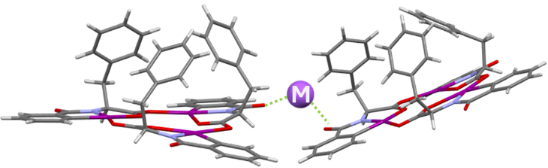
- . Results and Discussion We have reported the synthesis of several variations of valine and phenylalanine-based HIMs that are based on benzene-, naphthalene-, and anthraquinone systems [18][19]. This study employed a phenylalanine and iodobenzoic acid-based HIM system owing to its simplicity in synthesis



Salen–scandium(III) complex-catalyzed asymmetric (3 + 2) annulation of aziridines and aldehydes
Beilstein J. Org. Chem. 2025, 21, 1087–1094, doi:10.3762/bjoc.21.86
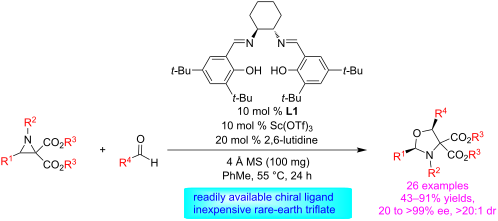
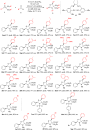
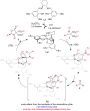
- desired products 3bc, 3bd, 3bi, and 3bk in relatively low yields and enantioselectivities. The strongly electron-deficient 4-nitrobenzaldehyde (2l) showed the highest enantioselectivity, affording the desired product 3bl in 63% yield and >99% ee. Polycyclic fused naphthalene-1-carbaldehyde (2m) and



Regioselective formal hydrocyanation of allenes: synthesis of β,γ-unsaturated nitriles with α-all-carbon quaternary centers
Beilstein J. Org. Chem. 2025, 21, 800–806, doi:10.3762/bjoc.21.63
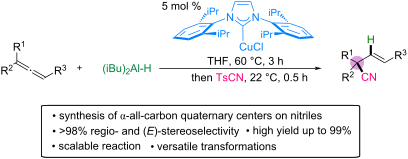
- , bromo, trifluoromethyl, or methoxy groups on the phenyl ring, were smoothly converted into β,γ-unsaturated nitriles 3t–x with high efficiency. Particularly, allenes 1y and 1z containing benzodioxane or naphthalene moieties were well-tolerated under these reaction conditions, affording nitriles 3y and 3z




Acyclic cucurbit[n]uril bearing alkyl sulfate ionic groups
Beilstein J. Org. Chem. 2025, 21, 717–726, doi:10.3762/bjoc.21.55
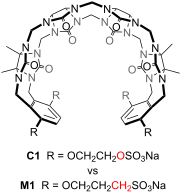
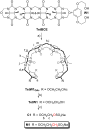
- modular synthesis, acyclic CB[n] can be easily modified synthetically [42][43][44][45][46][47][61]. Acyclic CB[n]-type receptors featuring different length glycoluril oligomers (monomer–pentamer) and different aromatic walls (e.g., naphthalene, anthracene, triptycene) have been studied [42][62][63][64][65




Binding of tryptophan and tryptophan-containing peptides in water by a glucose naphtho crown ether
Beilstein J. Org. Chem. 2025, 21, 541–546, doi:10.3762/bjoc.21.42
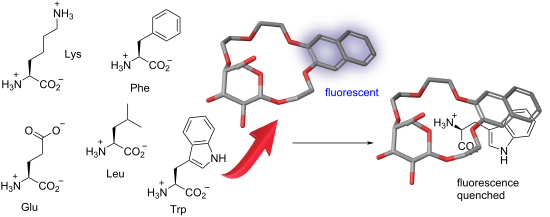
- binds free tryptophan selectively in aqueous media. Furthermore, it is capable of binding to tryptophan within model tripeptides. The naphthalene functionality in the glucose-derived receptor enables the study of guest binding using fluorescence spectroscopy. Keywords: amino acids; macrocyclic
- in water [21]. Crown ether 1 is particularly suited for the sensing of Trp methyl ester, which it binds with a higher affinity than the Phe and Tyr esters. Additionally, the binding of Trp-OMe results in a highly efficient fluorescence quenching of the naphthalene unit in the receptor. Herein, we
- protons of 1 shifted downfield and a marginal downfield shift of several crown ether protons as well as H-1 and H-3 of the glucopyranose was also observed. These observations suggest that the main interaction between 1 and H-Trp-OH is the π–π stacking between the naphthalene unit of 1 and the indole


The effect of neighbouring group participation and possible long range remote group participation in O-glycosylation
Beilstein J. Org. Chem. 2025, 21, 369–406, doi:10.3762/bjoc.21.27
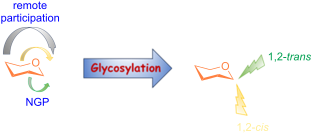
- capable of being cleaved by two possible orthogonal pathways. The first method involves a relay approach by catalytic hydrogenation followed by the application of 1,8-bis(dimethylamino)naphthalene (bDMAN) which selectively cleaves the protecting group while keeping the other ester groups intact. The




Red light excitation: illuminating photocatalysis in a new spectrum
Beilstein J. Org. Chem. 2025, 21, 296–326, doi:10.3762/bjoc.21.22
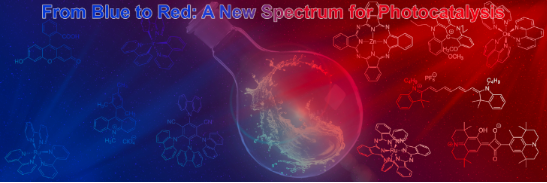
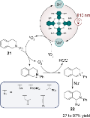
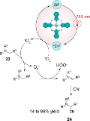
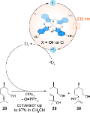
- in yields ranging from 70% to 99%, with minimal byproducts. Even more complex substrates, like naphthalene and pyrene derivatives, underwent efficient oxidation, suggesting the method’s utility in functionalizing more challenging aromatic frameworks. The mechanism of this reaction was explored in
















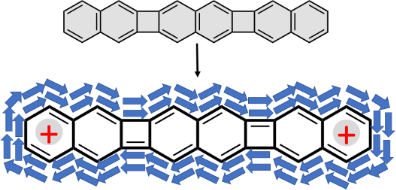
Oxidation of [3]naphthylenes to cations and dications converts local paratropicity into global diatropicity
Beilstein J. Org. Chem. 2025, 21, 277–285, doi:10.3762/bjoc.21.20
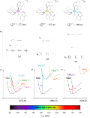
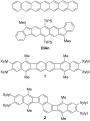
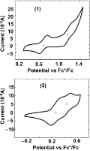
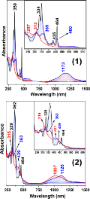
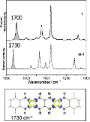
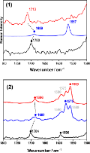
- to 1, the spectrum of 1•+ is characterized by a downshift by 11 cm−1 of the ν(CC)exo-CBD vibration, together with the emergence of a new band at 1567 cm−1 which was assigned to a ν(CC)NAP mode (CC stretching mode of the naphthalene moieties) on the basis of the normal mode calculation (Table S1 in
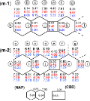
- Supporting Information File 1). Upon second oxidation, the former Raman vibrational band upshifts by 24 cm−1 for 12+, and the naphthalene ν(CC)NAP stretching one disappears. Overall, the evolution of the CBD breathing mode, throughout the series 1→1•+→12+ is 1700 → 1689 → 1713 cm−1. Figure 5 shows the Raman
- indicator of structural uniformity within the NAP rings, the three-folded band in 2•+ suggests the presence of different CC bonds in the naphthalene groups. The Raman spectrum of the doubly oxidized form also showed a similar profile to that of 2•+, with the only change of the relative intensities of the


Cu(OTf)2-catalyzed multicomponent reactions
Beilstein J. Org. Chem. 2025, 21, 122–145, doi:10.3762/bjoc.21.7

- in the final product 37 (Scheme 28) [46]. Analogously, benzo[g]chromene derivatives 38 were achieved starting from 2-hydroxynaphthalene-1,4-dione, aromatic aldehydes and malononitrile with copper triflate as catalyst and ultrasonic irradiation (Scheme 29) [47]. Naphthalene-annulated 2-aminothiazoles
- 39 were prepared exploiting the multicomponent reaction by using aminonaphthalenes, CS2 and secondary amines. The mechanism involved the Ullmann-type coupling of the bromo(amino)naphthalene with the dithiocarbamate salt followed by intramolecular nucleophilic attack of the naphthalene amino group to
- isoxazole-linked imidazo[1,2-a]azines 35. Synthesis of 2,3-dihydro-1,2,4-triazoles 36. Synthesis of naphthopyrans 37. Synthesis of benzo[g]chromene derivatives 38. Synthesis of naphthalene annulated 2-aminothiazoles 39, piperazinyl-thiazoloquinolines 40 and thiazolocoumarins 41. Synthesis of furo[3,4-b










Synthesis of acenaphthylene-fused heteroarenes and polyoxygenated benzo[j]fluoranthenes via a Pd-catalyzed Suzuki–Miyaura/C–H arylation cascade
Beilstein J. Org. Chem. 2024, 20, 3290–3298, doi:10.3762/bjoc.20.273
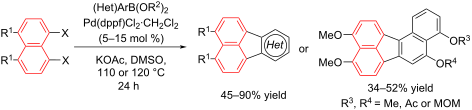
- methodology, the previously known naphthalene dibromide 14 was prepared in two steps from 1,8-DHN (19) [56] serving as the second coupling partner. The Pd-catalyzed cascade reaction between 14 and 22 afforded the targeted benzo[j]fluoranthene 18 in 52% yield. Overall, the synthesis of 18, which was used as
- synthesis of benzo[j]fluoranthene 23 in six steps (Scheme 3). In this sequence, 1,8-DHN (19) was first converted to 1-acetoxy-8-methoxynaphthalene (24) via a selective mono-methylation of 19 followed by acetylation by acetyl chloride in 88% yield over two steps. The more electron-rich ring of naphthalene 24
- ring with the -OMe group on 25, while the halogen (bromine) is on the opposite ring with the -OMe group on naphthalene 30. This small yet important difference allowed us to synthesize benzo[j]fluoranthenes 23 and 28 selectively with free -OH groups at different positions. Bromonaphthalene 30 was




Extension of the π-system of monoaryl-substituted norbornadienes with acetylene bridges: influence on the photochemical conversion and storage of light energy
Beilstein J. Org. Chem. 2024, 20, 3061–3068, doi:10.3762/bjoc.20.254
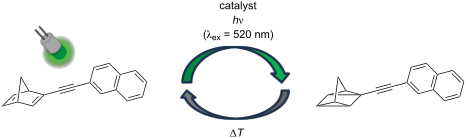
- derivatives, and is, thus, more pronounced for the naphthalene-bridged compounds. Likewise, the increased size of the conjugated π-system also led to a red shift of the absorption bands in comparison with the ones of the corresponding norbornadiene derivatives without acetylene bridges (1b,e) [29][30
- - and 2,6-position of the naphthalene unit resulted in low quantum yields, whereas the attachment of the norbornadiene at the 1- or 1,4-position led to significantly higher quantum yields, which is in accordance with previous observations with naphthyl-substituted derivatives [29][30]. Apparently, there





