Search results
Search for "nuclear magnetic resonance" in Full Text gives 130 result(s) in Beilstein Journal of Organic Chemistry.
The role of spacer length and flexibility in peptide self-assembly
Beilstein J. Org. Chem. 2026, 22, 986–996, doi:10.3762/bjoc.22.77
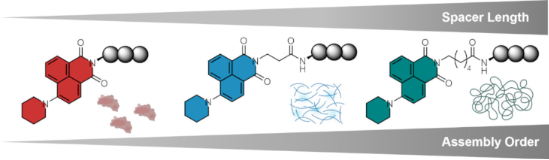
- -assembly. The peptides have been analyzed with respect to their assembly properties using assembly conversion determinations, fluorescence microscopy, transmission electron microscopy (TEM), atomic force microscopy (AFM), circular dichroism (CD) spectroscopy, and nuclear magnetic resonance (NMR


Structural reassignment of compound 968, an allosteric glutaminase inhibitor
Beilstein J. Org. Chem. 2026, 22, 455–460, doi:10.3762/bjoc.22.33
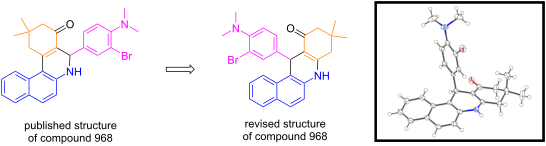
- diffractometer. Nuclear magnetic resonance spectra were recorded on a JEOL ECX400 spectrometer. Glutaminase assays were measured on a Tecan Infinite M nano spectrophotometer. Reagents and solvents for chemical synthesis were used without additional purification. Chemical synthesis 3-Bromo-4


Synthesis and anti-cancer activity of naphthalimide–organylselanyl conjugates
Beilstein J. Org. Chem. 2026, 22, 416–435, doi:10.3762/bjoc.22.29
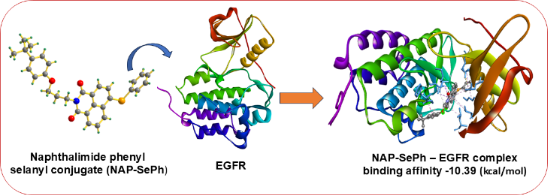
- F254). Nuclear magnetic resonance (NMR) spectra were recorded on a Bruker Avance 400 MHz FT-NMR and a Bruker Avance III 500 MHz spectrometer. 1H, 13C, and 77Se NMR spectra were acquired in CDCl3, with chemical shifts (δ) reported in ppm. Singlet (s), doublet (d), doublet of doublets (dd), triplet (t


Synthesis of diaryl phosphates using phytic acid as a phosphorus source
Beilstein J. Org. Chem. 2026, 22, 213–223, doi:10.3762/bjoc.22.15
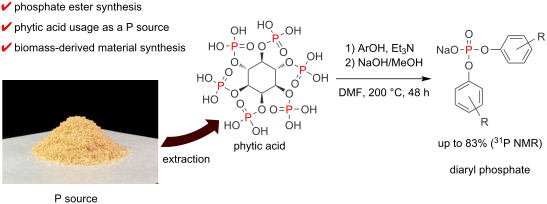
- products of phosphate diesters were obtained through the reactions of commercially available phytic acid and aromatic alcohols with 31P nuclear magnetic resonance yields up to 83%. We also isolated a portion of the reaction substrates with yields up to 60%. Next, we extracted phytic acid from rice bran
- diaryl phosphate was isolated as a sodium salt, and the isolated yields are listed below. The yields in parentheses represent 31P nuclear magnetic resonance (NMR) yields defined based on a calibration curve using triphenylphosphine oxide as an internal standard. The isolation of 2c and 2j was not




Conformational effects on iodide binding: a comparative study of flexible and rigid carbazole macrocyclic analogs
Beilstein J. Org. Chem. 2025, 21, 2369–2375, doi:10.3762/bjoc.21.181
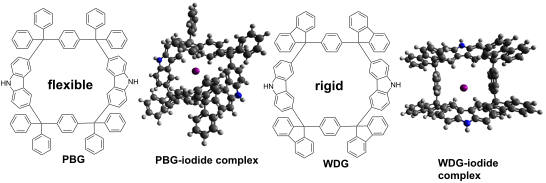
- rotationally restricted, all its accessible conformations constitute a subset of PBG's conformations. The binding constants and conformational change mechanisms of the two analogs were quantitatively evaluated by proton nuclear magnetic resonance spectroscopy (1H NMR), ultraviolet–visible absorption



A chiral LC–MS strategy for stereochemical assignment of natural products sharing a 3-methylpent-4-en-2-ol moiety in their terminal structures
Beilstein J. Org. Chem. 2025, 21, 2243–2249, doi:10.3762/bjoc.21.171
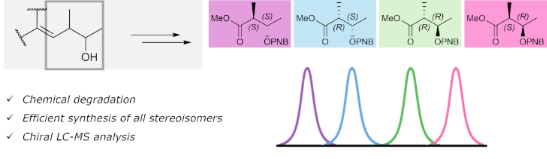
- research areas, including the development of synthetic methodologies, the investigation of modes of action, and the evaluation of pharmacological potential, among others. Advancements in spectroscopic techniques, such as nuclear magnetic resonance (NMR) and mass spectrometry (MS), have enabled the


Systematic pore lipophilization to enhance the efficiency of an amine-based MOF catalyst in the solvent-free Knoevenagel reaction
Beilstein J. Org. Chem. 2025, 21, 1854–1863, doi:10.3762/bjoc.21.144
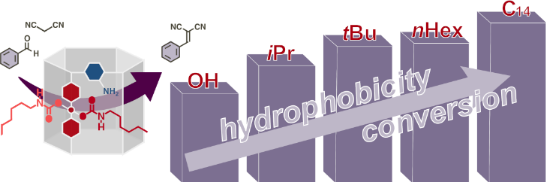
- respective isocyanate in acetonitrile at 80 °C; KSU-1 reacted with isopropyl, tert-butyl, n-hexyl, and tetradecyl isocyanate to generate KSU-1iPr and KSU-1t-Bu, KSU-1n-Hex, and KSU-1C14, respectively. Successful post synthetic reaction was observed by proton nuclear magnetic resonance (1H NMR) spectroscopy


Convenient alternative synthesis of the Malassezia-derived virulence factor malassezione and related compounds
Beilstein J. Org. Chem. 2025, 21, 1730–1736, doi:10.3762/bjoc.21.135

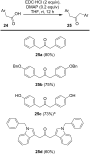
- . Concentration under reduced pressure refers to the removal of solvent using a rotary evaporator, unless stated otherwise. All NMR spectra were obtained using a Bruker ASCEND 400 MHz spectrometer at the Nuclear Magnetic Resonance Research Resource (NMR-3, Dalhousie University). Chemical shifts (δ in ppm) for


Structural analysis of stereoselective galactose pyruvylation toward the synthesis of bacterial capsular polysaccharides
Beilstein J. Org. Chem. 2025, 21, 1671–1677, doi:10.3762/bjoc.21.131

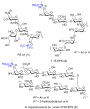
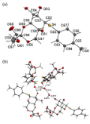
- successfully obtained. Subsequently, the compound was used for the synthesis of zwitterionic polysaccharide A1 (PS A1) precursor, and a clear structural elucidation was applied by using nuclear magnetic resonance and X-ray. Keywords: carbohydrates; capsular polysaccharides; diastereochemistry; glycosylation


pH-Controlled isomerization kinetics of ortho-disubstituted benzamidines: E/Z isomerism and axial chirality
Beilstein J. Org. Chem. 2025, 21, 1568–1576, doi:10.3762/bjoc.21.120
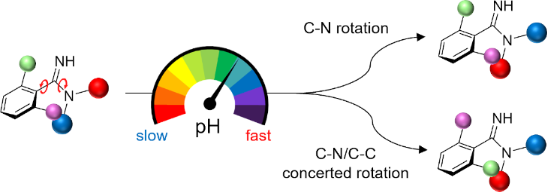
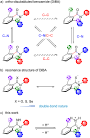
- bond rotation was investigated by variable temperature nuclear magnetic resonance (VT-NMR) spectra (Figure 3) in DMSO-d6 [27]. In the case of the molecular form of amidine 1 (Figure 3a), the signals corresponding to the two methyl groups resulting from the amidine E/Z isomerism were observed separately



Wittig reaction of cyclobisbiphenylenecarbonyl
Beilstein J. Org. Chem. 2025, 21, 1454–1461, doi:10.3762/bjoc.21.107
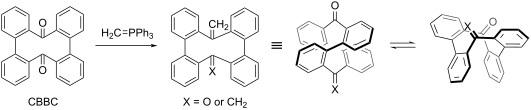
- byproduct and exhibited similar polarity as compound 5. The obtained compounds 3, 4, and 5 were identified using nuclear magnetic resonance (NMR) spectroscopy and mass spectrometry (MS) (see Supporting Information File 1) as well as single crystal X-ray diffraction analysis (vide infra). Furthermore, the



Unraveling cooperative interactions between complexed ions in dual-host strategy for cesium salt separation
Beilstein J. Org. Chem. 2025, 21, 845–853, doi:10.3762/bjoc.21.68
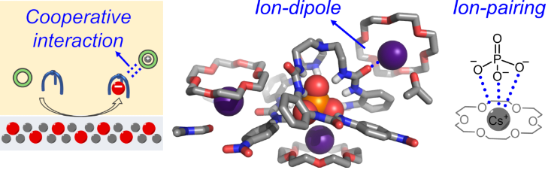
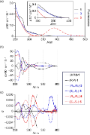
- by the joint Cambridge Crystallographic Data Centre and Fachinformationszentrum Karlsruhe Access Structures service via https://www.ccdc.cam.ac.uk/. Supporting Information File 50: Nuclear magnetic resonance (NMR), mass and X-ray diffraction data. Acknowledgements We thank support from Analysis


4-(1-Methylamino)ethylidene-1,5-disubstituted pyrrolidine-2,3-diones: synthesis, anti-inflammatory effect and in silico approaches
Beilstein J. Org. Chem. 2025, 21, 817–829, doi:10.3762/bjoc.21.65
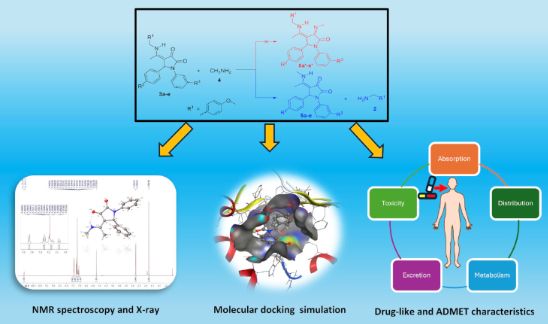
- , we report the synthesis of 4-(1-methylamino)ethylidene-1,5-disubstituted pyrrolidine-2,3-diones via a reversible transimination reaction between Schiff’ base (C=N) linkage-containing pyrrolidine-2,3-dione derivatives and methylamine with yields of 80 to 92%. In addition to nuclear magnetic resonance
- -pyrroline-2-ones 1a–e and 4-methoxybenzylamine (2) in absolute ethanol yielded 4-[1-(4-methoxybenzyl)amino]ethylidene-1,5-disubstituted pyrrolidine-2,3-diones 3a–e (Scheme 1) [19][20][21]. In addition to nuclear magnetic resonance spectroscopy (1D, 2D NMR), the structure of 3a has also been proven via
- -disubstituted pyrrolidine-2,3-diones were successfully synthesized via reversible transimination reaction. The structure of all compounds was evaluated using nuclear magnetic resonance (NMR) spectroscopy and, especially, with the molecular structure of compound 5a further confirmed through single-crystal X-ray


Cyclodextrin-based rotaxanes for polymer materials: challenge on simultaneous realization of inexpensive production and defined structures
Beilstein J. Org. Chem. 2024, 20, 3026–3049, doi:10.3762/bjoc.20.252
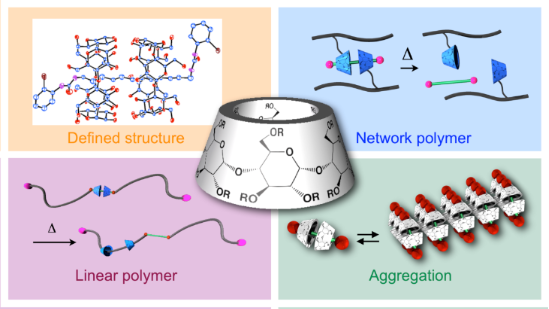
- formation of this inclusion complex, circular dichroism spectroscopy represents a powerful tool when combined with nuclear magnetic resonance (NMR) and X-ray single-crystal analysis. This is because the induced circular dichroism (ICD) can be observed on the guest molecule of the inclusion complex derived






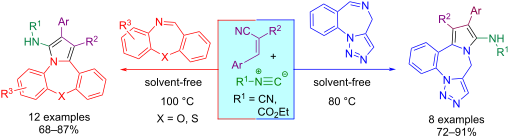
Synthesis of pyrrole-fused dibenzoxazepine/dibenzothiazepine/triazolobenzodiazepine derivatives via isocyanide-based multicomponent reactions
Beilstein J. Org. Chem. 2024, 20, 2870–2882, doi:10.3762/bjoc.20.241
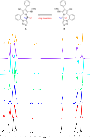
- nuclear magnetic resonance) spectra of compound 6f (DMSO-d6, 300 MHz) at 25–85 °C; spectrum A: 25 °C, spectrum B: 35 °C, spectrum C: 45 °C, spectrum D: 55 °C, spectrum E: 65 °C, spectrum F: 75 °C and spectrum E: 85 °C. The crystal structure of 6a (CCDC2365306). UV–vis absorption for compounds 4a, 6c and





Investigation of a bimetallic terbium(III)/copper(II) chemosensor for the detection of aqueous hydrogen sulfide
Beilstein J. Org. Chem. 2024, 20, 2818–2826, doi:10.3762/bjoc.20.237
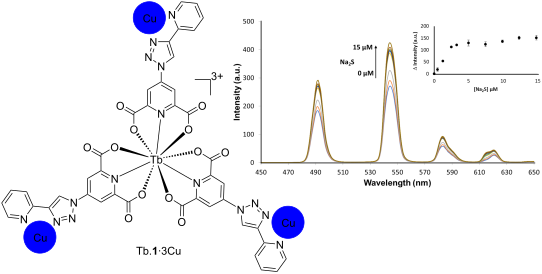
- magnetic resonance (1H NMR) spectra was recorded on a Bruker DRX400 spectrometer operating at 400 MHz. High-resolution mass spectrometry (HRMS) was performed using a Bruker BioApex 47e FTMS with an analytical electrospray source employing NaI for accurate mass calibration (ESI). UV–vis absorption spectra
- interaction is the focus of our future research studies. Experimental Synthetic materials and methods The Cu2+ ions were sourced from Cu(NO3)2·5H2O (Cat. #1027900250, Sigma-Aldrich). The synthesis of 4-(2-pyridyl)-1,2,3-triazole dipicolinic acid (L) was conducted as previously described [16]. Proton nuclear


Synthesis of benzo[f]quinazoline-1,3(2H,4H)-diones
Beilstein J. Org. Chem. 2024, 20, 2708–2719, doi:10.3762/bjoc.20.228
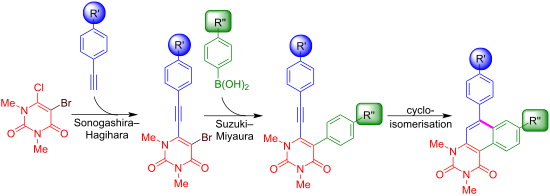
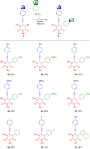
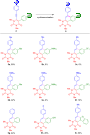
- , bathochromically shifted absorption and emission spectra with elevated extinction coefficients and quantum yields up to 71%. Further studies will be directed to the synthesis to polycyclic, π-conjugated uracil derivatives. Experimental General information Nuclear magnetic resonance spectra (1H/13C/19F NMR) were




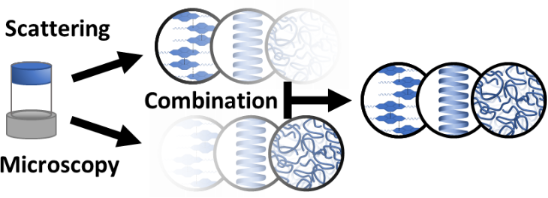
Applications of microscopy and small angle scattering techniques for the characterisation of supramolecular gels
Beilstein J. Org. Chem. 2024, 20, 2608–2634, doi:10.3762/bjoc.20.220


Anion-dependent ion-pairing assemblies of triazatriangulenium cation that interferes with stacking structures
Beilstein J. Org. Chem. 2024, 20, 2567–2576, doi:10.3762/bjoc.20.215
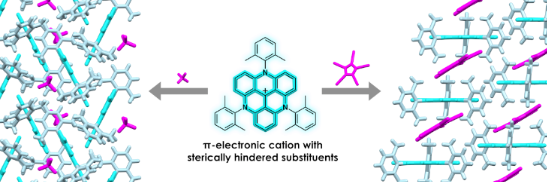
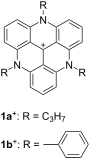
- assemblies, 2+-BF4− was further treated with NaPF6, LiB(C6F5)4, and NaPCCp for the ion-pair metathesis to afford ion pairs 2+-X− (X− = PF6−, B(C6F5)4−, and PCCp−) in 44–68% yields. The obtained ion pairs were characterized using 1H, 13C, and 19F nuclear magnetic resonance (NMR) and matrix-assisted laser



Synthesis and conformational analysis of pyran inter-halide analogues of ᴅ-talose
Beilstein J. Org. Chem. 2024, 20, 2442–2454, doi:10.3762/bjoc.20.208
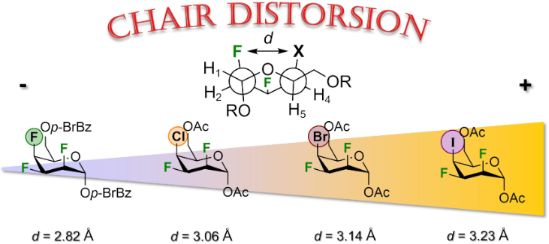
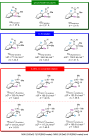
- ) [24]. The solution and the solid-state conformational analysis were supplemented with DFT calculations to understand key conformational drivers. This study adds more data to the field of nuclear magnetic resonance (NMR) spectroscopy of polyhalogenated molecules. It should be noted that the NMR


gem-Difluorination of carbon–carbon triple bonds using Brønsted acid/Bu4NBF4 or electrogenerated acid
Beilstein J. Org. Chem. 2024, 20, 2261–2269, doi:10.3762/bjoc.20.194
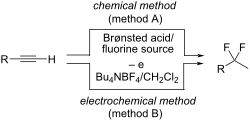
- ) was reacted with the Brønsted acid (X equiv) and the fluorine source (Y equiv) in the solvent (4 mL) at temperature of T (°C) for Z hours. The chemical yield of the desired product, (5,5-difluorohexyl)benzene (2a), was evaluated for reaction optimization by using the 19F nuclear magnetic resonance



A facile three-component route to powerful 5-aryldeazaalloxazine photocatalysts
Beilstein J. Org. Chem. 2024, 20, 1831–1838, doi:10.3762/bjoc.20.161
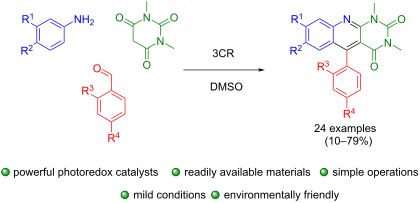
- named using ChemDraw. Nuclear magnetic resonance (NMR) spectra were recorded on an Agilent 400-MR DDR2 (399.94 MHz for 1H, 100.58 MHz for 13C, 376.50 MHz for 19F) or on a JNM-ECZ500R NMR spectrometer, JEOL Resonance, (500.16 MHz for 1H, 125.77 MHz for 13C, 470.60 MHz for 19F) at 298 K unless otherwise




Ring opening of photogenerated azetidinols as a strategy for the synthesis of aminodioxolanes
Beilstein J. Org. Chem. 2024, 20, 1671–1676, doi:10.3762/bjoc.20.148
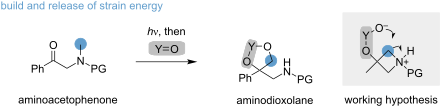
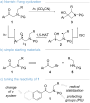
- chosen as a preferred solvent because it is known to facilitate Norrish–Yang-cyclizations and allows simple analysis by nuclear magnetic resonance (NMR) spectroscopy [10]. Our results are summarized in Table 1. When p-toluenesulfonyl (Ts) was used as a PG at nitrogen, azetidine 3a was obtained in 81



Polymer degrading marine Microbulbifer bacteria: an un(der)utilized source of chemical and biocatalytic novelty
Beilstein J. Org. Chem. 2024, 20, 1635–1651, doi:10.3762/bjoc.20.146
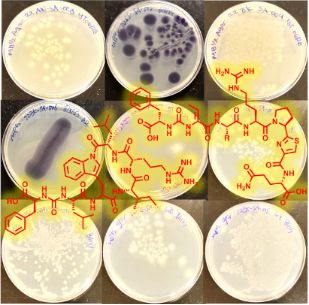
- known parabens (2, 5, 6, and 11), five new ones (7–10, and 12) were identified. Their structures were elucidated by high-resolution mass spectrometry (HRMS) and 1D and 2D nuclear magnetic resonance (NMR). The configuration in 8 and 10 remained undetermined. Antimicrobial activities of compounds 2 and 5




New triazinephosphonate dopants for Nafion proton exchange membranes (PEM)
Beilstein J. Org. Chem. 2024, 20, 1623–1634, doi:10.3762/bjoc.20.145
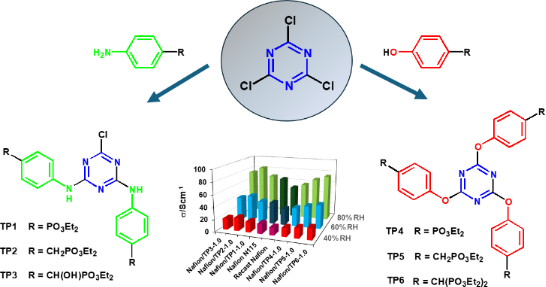
- characterization of the dopants was carried out by Fourier-transform infrared spectroscopy (FTIR), nuclear magnetic resonance (NMR) spectroscopy and mass spectrometry (MS). 1H, 13C and 31P NMR characterization was done using different one- and two-dimensional techniques, and were obtained on a Bruker Avance III HD