Search results
Search for "photophysical properties" in Full Text gives 209 result(s) in Beilstein Journal of Organic Chemistry. Showing first 200.
Controlled supramolecular assemblies of luminescent tridentate cyclometalated alkynylgold(III) amphiphiles in aqueous media
Beilstein J. Org. Chem. 2026, 22, 1097–1106, doi:10.3762/bjoc.22.88
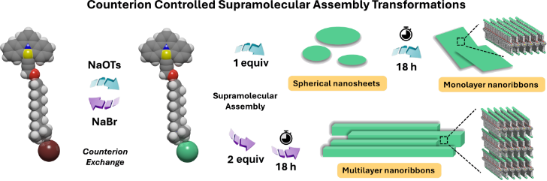
- counterion exchange, thereby achieving a controllable transformation of supramolecular nanostructures. With meticulous investigations of self-assembly processes, photophysical properties, and counterion-dependent structural transformations of GA, a new molecular framework for counterion-controlled
- all newly synthesized compounds and GA were unambiguously characterized by 1H , 13C NMR spectroscopy and high-resolution mass spectrometry (HRMS) (Supporting Information File 1, Figures S8–S13). Photophysical properties and assembly of GA A freshly prepared aqueous solution of GA (13.4 mM, 1.0 wt


Get a better glimpse on sequential photoreactions of trisnorbornadienes with 19F NMR spectroscopy
Beilstein J. Org. Chem. 2026, 22, 527–534, doi:10.3762/bjoc.22.38
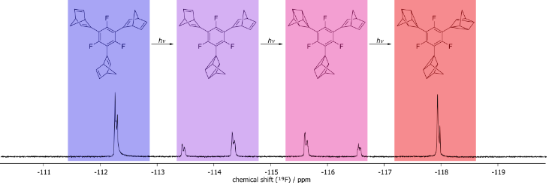
- comparison of the synthesis and photophysical properties of the fluoro-substituted norbornadiene 1f with the ones of the parent compound 1b revealed that the yield of the Suzuki–Miyaura coupling reaction is significantly lower for the former [22], presumably because of the steric hindrance induced by the


Recent advances in the stereoselective synthesis of distal biaxially chiral molecules
Beilstein J. Org. Chem. 2026, 22, 461–479, doi:10.3762/bjoc.22.34
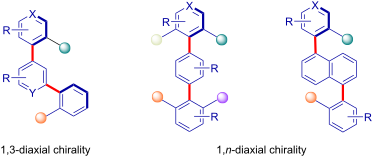
- , investigation of the photophysical properties revealed that the enantiomers exhibited promising features for chiral functional materials, including circularly polarized luminescence (CPL). More recently, Tu’s group described a cobalt-catalyzed direct oxidative coupling of phenols, enabling the synthesis of


Configuration–packing synergy enabling integrated crystalline-state RTP and amorphous-state TADF
Beilstein J. Org. Chem. 2026, 22, 224–236, doi:10.3762/bjoc.22.16
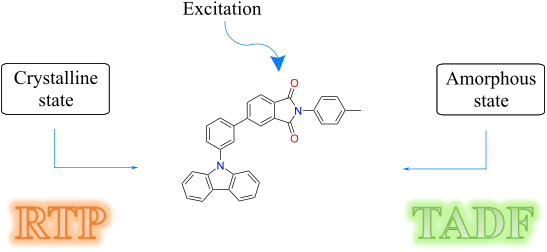
- exhibit TADF, which is a process where delayed fluorescence is observed due to thermal activation. Alternatively, the material may also exhibit RTP, depending on the environmental conditions and the specific molecular interactions. These findings highlight the promising photophysical properties of 1
- and the intermolecular interactions within the crystal structure of 1, which alter the photophysical properties compared to the isolated monomers. In contrast to traditional light-emitting (LE) processes, which typically exhibit a fine structure due to vibrational transitions and other molecular
- photophysical properties of 1, particularly its ability to exhibit RTP at room temperature. TD-DFT (time-dependent density functional theory) calculations were carried out to explore and analyze the theoretical structure and electronic properties of the compound. These calculations provided valuable insights


Symmetrical D–π–A–π–D indanone dyes: a new design for nonlinear optics and cyanide detection
Beilstein J. Org. Chem. 2026, 22, 131–142, doi:10.3762/bjoc.22.6
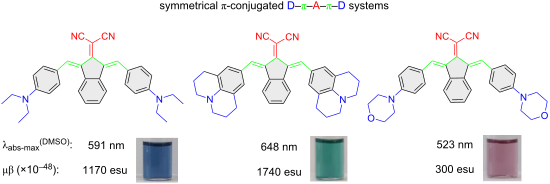
- photophysical properties of the dyes. The sensitivity/selectivity properties of the dyes to anions were investigated in DMSO and aqueous media, revealing that the dyes were selectively responsive only to cyanide anions. Changes after interactions were determined through absorption spectra and color changes
- under ambient light. In addition, interaction mechanisms of dyes with cyanide were studied using the 1H NMR titration method, and it was determined that they interacted through an addition mechanism. Photophysical properties and interaction mechanisms of the compounds were also supported through density
- spectrometry methods (Figures S1–S10 in Supporting Information File 1). Optical properties of dyes Photophysical properties of dyes 2a–c were assessed in four different organic solvents with various polarities (DMSO, acetone, chloroform, and THF) via absorption spectra and DFT calculations (Table 2). Figure 2a


Thiazolidinones: novel insights from microwave synthesis, computational studies, and potentially bioactive hybrids
Beilstein J. Org. Chem. 2025, 21, 2618–2636, doi:10.3762/bjoc.21.203
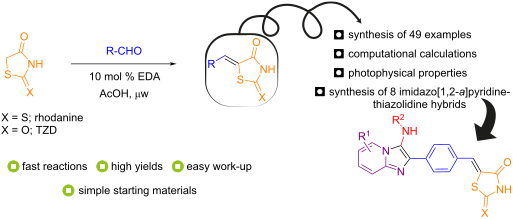
- compounds 3n and 4n was carried out using torsion angle analysis and 13C NMR chemical shift calculations to evaluate the absence of expected signals in the NMR spectra of these compounds. Their photophysical properties were also assessed, confirming a preference for a fluorescence mechanism via an ICT
- -bonded carbon atom. Given that 3n and 4n contain donor–acceptor (DA)-type groups separated by a π-bond, the study of their photophysical properties has become particularly interesting. This structural arrangement often facilitates an internal charge transfer (ICT) process, which is common for such
- compounds [79]. The colorimetric properties of rhodanine-derived compound 3n were used in the determination of silver [80] and gold [81] metals, and as a fluorescent sensor for detection of human serum albumin (HSA) [82]. Despite this, the TZD-derived compound 4n had its photophysical properties neglected






Rotaxanes with integrated photoswitches: design principles, functional behavior, and emerging applications
Beilstein J. Org. Chem. 2025, 21, 2345–2366, doi:10.3762/bjoc.21.179
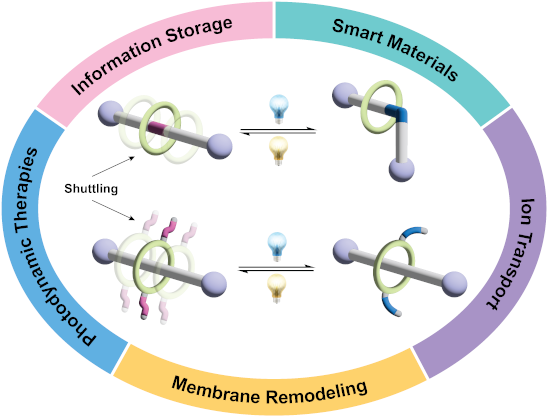
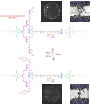
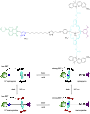
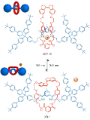
- photophysical properties [56]. Contrary to azobenzenes, where the isomerization modulates the position of the macrocycle, in dithienylethene-based rotaxanes, it is the shuttling of the macrocycle that modulates the fluorescence and photoswitching behavior of the dithienylethene. For example, Yin and co-workers





Understanding the origin of stereoselectivity in the photochemical denitrogenation of 2,3-diazabicyclo[2.2.1]heptene and its derivatives with non-adiabatic molecular dynamics
Beilstein J. Org. Chem. 2025, 21, 2007–2020, doi:10.3762/bjoc.21.156
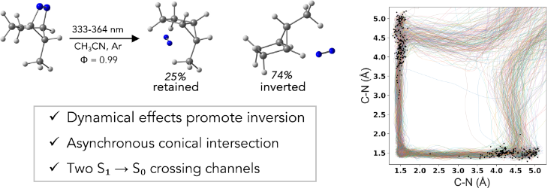
- combined with state-of-the-art multireference quantum mechanical calculations to understand the photophysical properties and mechanisms of these diazabicyclo[2.2.1]heptenes. The energetically accessible lowest excitations are nNN(σCN) → π* and range from 3.94–3.97 eV. From the >292 trajectories, the
- 0.045. These results show agreement between the electronic nature of the transition of TD-DFT, CASSCF, and CASPT2, showing that the chosen active space can capture the photophysics of the molecules. Table 1 provides the photophysical properties for the optimized ground-state geometry. However
- of 2,3-diazabicyclo[2.2.1]hept-2-enes (Scheme 2). This report shows the first multiconfigurational NAMD simulation studies to understand the photochemical denitrogenation mechanism of 2,3-diazabicyclo[2.2.1]hept-2-enes. Results and Discussion We started our studies on characterizing the photophysical


Synthesis of N-doped chiral macrocycles by regioselective palladium-catalyzed arylation
Beilstein J. Org. Chem. 2025, 21, 1917–1923, doi:10.3762/bjoc.21.149
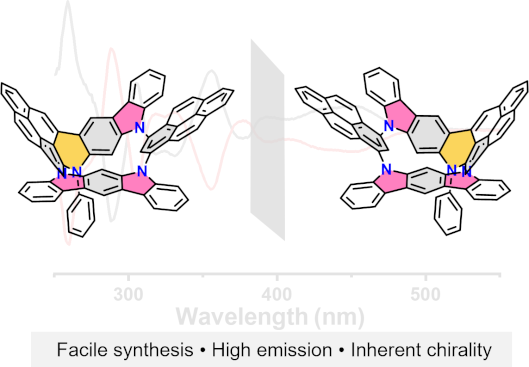
- revealed the formation of isomeric products depending on the substituents on the N atoms. Notably, two intrinsically chiral macrocycles MC1 and MC3 with C1 symmetry were successfully obtained. These macrocycles exhibit exceptional photophysical properties, particularly remarkable high fluorescence quantum
- chiral macrocycles, have been reported [17][25], highlighting a critical gap in the design of chiral macrocycles with tailored electronic landscapes. Herein, we reported the synthesis, characterizations and photophysical properties of inherent chiral N-doped macrocycles (Figure 1b) via regioselective




Photoswitches beyond azobenzene: a beginner’s guide
Beilstein J. Org. Chem. 2025, 21, 1808–1853, doi:10.3762/bjoc.21.143
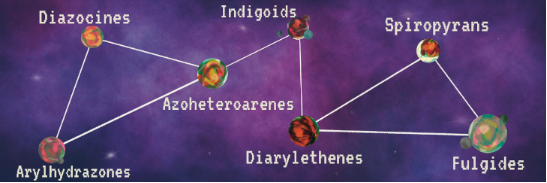
- ; synthesis of photoswitches; switching mechanisms; tutorial review; Introduction Photophysical properties and switching mechanism Key learning points Switching mechanisms and the change in properties. Overview of the major classes of photoswitches beyond azobenzenes. Main synthetic pathways for their
- preparation. Before introducing the different photoswitch classes in this review, we familiarise ourselves with different photophysical properties. A photochromic molecule can switch reversibly between a stable and a metastable state, which are shown in an energetic profile as two local minima (Figure 1
- with a photoswitch, several factors must be considered: substituents, temperature, and solvent strongly affect the photophysical properties. For instance, the presence of electron-withdrawing (for instance -Cl, -Br, -CN, -NO2) and electron-donating groups (-alkyl, -OR, -NR2), which are directly






Photocatalysis and photochemistry in organic synthesis
Beilstein J. Org. Chem. 2025, 21, 1645–1647, doi:10.3762/bjoc.21.128
- ; photochemistry; Soon after its first reported synthesis in 1936 [1], [Ru(bpy)3]Cl2 (bpy = 2,2'-bipyridine) and its derivatives attracted significant attention due to their photophysical properties [2][3][4]. These complexes can efficiently absorb visible light through a metal-to-ligand charge transfer (MLCT

On the aromaticity and photophysics of 1-arylbenzo[a]imidazo[5,1,2-cd]indolizines as bicolor fluorescent molecules for barium tagging in the study of double-beta decay of 136Xe
Beilstein J. Org. Chem. 2025, 21, 1627–1638, doi:10.3762/bjoc.21.126
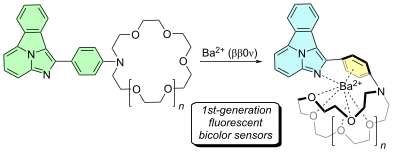
- + prompted us to compare the photophysical properties of unbound compound 18 in the presence of Ba(ClO4)2. The values corresponding to the adiabatic absorption (S0(optimized) → S1*, adiabatic absorption) and emission (S1(optimized) → S0, fluorescence) are reported in Table 2, together with the differences
- responsible for the bicolor behavior of the sensor. Interaction with barium perchlorate results in a slightly different coordination pattern, although the bicolor behavior observed in the experimental fluorescence spectra is preserved. These photophysical properties were observed in DFT and TDDFT calculations
- scaffold. The chemical synthesis, photophysical properties and suitability for barium tagging will be published in due course. Two possible double beta decay modes. Left: with emission of two electronic antineutrinos (ββ2ν). Right: neutrinoless double beta decay (ββ0ν). General structure of first





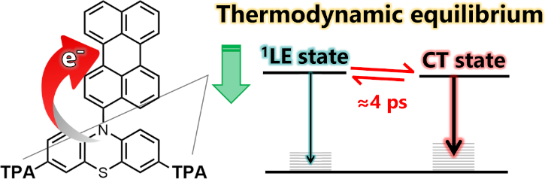
Thermodynamic equilibrium between locally excited and charge transfer states in perylene–phenothiazine dyads
Beilstein J. Org. Chem. 2025, 21, 1577–1586, doi:10.3762/bjoc.21.121
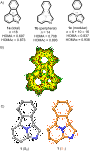
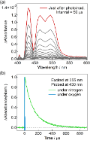
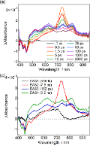
- synthesized and characterized (Figure 1). Their photophysical properties were comprehensively examined by steady-state and time-resolved emission and absorption spectroscopy. Furthermore, time-dependent density functional theory (TD-DFT) calculations were performed to support the experimental findings
- critical role of the electronic D–A interaction and the stabilization of the 1LE state of the PTZ moiety by excited-state induced planarization. These results highlight the importance of structural relaxation in the excited state for controlling photophysical properties, and demonstrate that even within a




Advances in nitrogen-containing helicenes: synthesis, chiroptical properties, and optoelectronic applications
Beilstein J. Org. Chem. 2025, 21, 1422–1453, doi:10.3762/bjoc.21.106
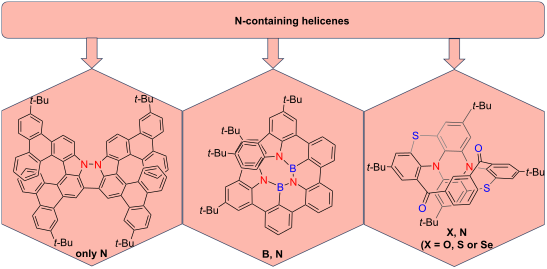
- chiroptical and photophysical properties, highlighting the expanding potential of these molecules in chiral optoelectronics. Yorimitsu’s group developed a series of dihetero[8]helicenes through a systematic asymmetric synthesis. Among these, diaza[8]helicene 5 exhibited pronounced chiroptical activity, with
- conjugated systems, enabling the design of donor–acceptor helicenes with tunable photophysical properties. In 2020, Ema and co-workers developed a series of chiral carbazole-based BODIPY analogues 35a–f, derived from helical carbazole-based BF2 dyes [49] (Table 11). These analogues exhibit red-shifted
- yields and notable photophysical properties [71]. Both helicenes display high ΦF as 73% for 56a and 69% for 56b. Notably, compound 56b exhibits markedly enhanced |gabs| and |glum| values of 2.1 × 10⁻³ and 2.3 × 10⁻³, approximately 4.5-fold greater than that of compound 56a. Its red CPL emission at 615 nm

Synthesis of pyrrolo[3,2-d]pyrimidine-2,4(3H)-diones by domino C–N coupling/hydroamination reactions
Beilstein J. Org. Chem. 2025, 21, 1010–1017, doi:10.3762/bjoc.21.82
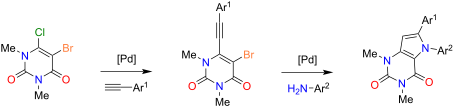
- -substituted compound 4h. No conversion was observed for starting materials 3g,h containing electron-withdrawing substituents located at the phenylacetylene moiety (products 4n,p). In addition, no conversion was observed for 3-methylaniline (product 4o). The photophysical properties of selected pyrrolo[3,2-d



Study of tribenzo[b,d,f]azepine as donor in D–A photocatalysts
Beilstein J. Org. Chem. 2025, 21, 935–944, doi:10.3762/bjoc.21.76
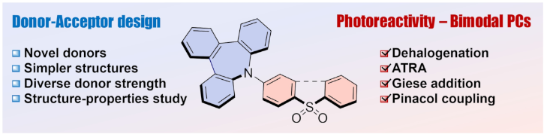
- interesting photophysical properties compared to common substrates like c, diphenylamine (d), and phenoxazine (e) [28][29][30]. However, their potential as D-unit in organic PCs remains unexplored. For this reason, studying this avenue could unlock new opportunities for the synthesis and design of more
- relationships. We further studied their photocatalytic potential as bimodal PCs and demonstrated their potential use in different reductive and oxidative quenching processes. Results and Discussion Photophysical properties analysis We started our study with three different sulfur-based acceptors, namely
- negatively impact photocatalytic activity, showing similar results in some of the benchmark reactions carried out during this analysis. Our findings suggest that antiaromatic compounds like TBA could replace traditional nitrogen donors in PCs, offering good redox potentials and competitive photophysical



Substituent effects in N-acetylated phenylazopyrazole photoswitches
Beilstein J. Org. Chem. 2025, 21, 830–838, doi:10.3762/bjoc.21.66
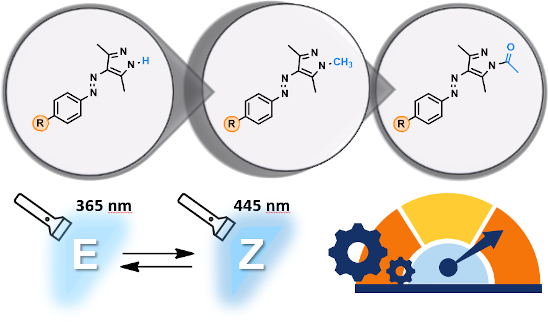
- synthesizing NH-substituted, methylated-, and acetylated arylazopyrazoles. Conditions: A) NaNO2, AcOH + HCl at 0 °C, then, 2,4-pentanedione, NaOAc in EtOH + H2O, reflux; B) MeNHNH2, EtOH, reflux; C) NH2NH2, EtOH, reflux; D) AcCl, NaOAc in DCM, 0 °C to rt. Photophysical properties of synthesized PAP derivatives
- structural modifications affect the synthesis, photochemical, and thermal behavior of PAP derivatives introducing NAc-PAPs as novel compound set with enhanced photochemical performance. Our findings provide valuable guidance for designing functional PAPs with tailor-made photochemistry and photophysical
- properties, which may broaden their application in areas such as molecular switches, photodynamic materials, and optoelectronics. UV–vis absorption spectra of selected NAc-PAP derivatives in CH3CN. The strong π→π* can be observed in the region of 330–360 nm. A) Time-resolved UV–vis absorption spectra of NAc


Synthesis and photoinduced switching properties of C7-heteroatom containing push–pull norbornadiene derivatives
Beilstein J. Org. Chem. 2025, 21, 807–816, doi:10.3762/bjoc.21.64
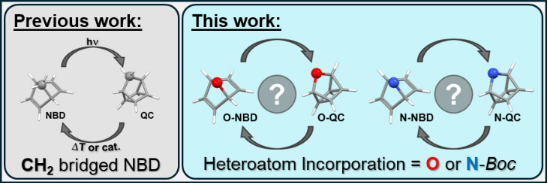
- to QC conversions were either incomplete due to photodecomposition or led to the formation of additional species, it was not feasible to ascertain isomerization quantum yields. Conclusion In summary, we have presented the synthesis and photophysical properties of a library of heterocyclic push–pull




Carbon-rich materials: from polyaromatic molecules to fullerenes and other carbon allotropes
Beilstein J. Org. Chem. 2025, 21, 798–799, doi:10.3762/bjoc.21.62

- their unique electronic and photophysical properties, research in the area of carbon-rich molecules and polyaromatic molecules became explosive in their activity and a numerous new studies and directions have emerged. Because of dramatic expansion and development of these research areas, these molecules
Deep-blue emitting 9,10-bis(perfluorobenzyl)anthracene
Beilstein J. Org. Chem. 2025, 21, 515–525, doi:10.3762/bjoc.21.39
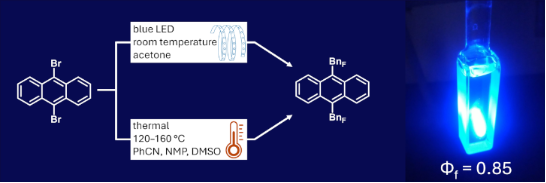
- , respectively. In this work, we explored the effects of the bulky and electron-withdrawing substituent perfluorobenzyl (BnF) on the photophysical properties and on the air- and photostability of ANTH for the first time. We hypothesized that the steric bulk of BnF and the flexibility of the –CF2– moiety between
- increasing n [22]. In this work, we report the first synthesis of ANTH(BnF)n derivatives (n = 1, 2), molecular and solid-state structures, and their photophysical properties. Results and Discussion Synthesis Perfluoroalkylation of anthracene has been previously achieved by bottom-up syntheses [23], three
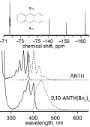
- devices, can differ and this requires further studies. Photophysical properties Absorption and emission spectra of ANTH and 9,10-ANTH(BnF)2 are shown in Figure 1. The maximum λabs and λem values for ANTH and the 9,10-disubstituted ANTH derivatives are shown in Table 1. The maximum λem of 9,10-ANTH(BnF)2





Unprecedented visible light-initiated topochemical [2 + 2] cycloaddition in a functionalized bimane dye
Beilstein J. Org. Chem. 2025, 21, 500–509, doi:10.3762/bjoc.21.37
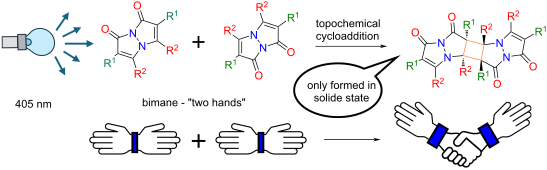
- light irradiation, undergoing rearrangement and photodegradation, so there may be a risk of degradation if irradiation using UV light is tried. Alternatively, the lack of a [2 + 2] cycloaddition of Me2B, may be due to its photophysical properties not allowing for a reaction to occur, rather than the
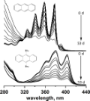
- its photophysical properties. While a pure sample of the dimer has not yet been isolated, a UV–vis spectrum of Cl2B after 1.75 hours of irradiation in DCM was recorded. The peak corresponding to the remaining monomer was observed, along with a new peak blueshifted by 47 nm compared to the parent
- 1:1 (v/v) solution which was left to evaporate at room temperature over the course of a few days. Photophysical properties Fluorescence spectra were measured on a Horiba FluoroMax Plus spectrofluorimeter. UV–vis spectra were measured on a Shimadzu UV-1900i UV–vis spectrophotometer. Absorption and


Synthesis of N-acetyl diazocine derivatives via cross-coupling reaction
Beilstein J. Org. Chem. 2025, 21, 490–499, doi:10.3762/bjoc.21.36
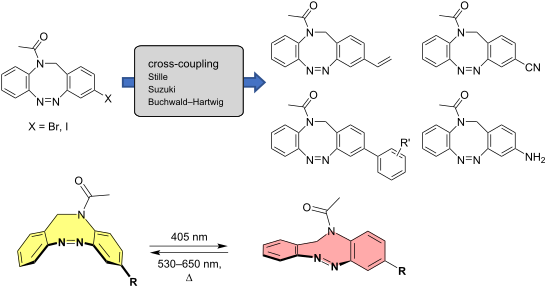
- Abstract Diazocines are photoswitches derived from azobenzenes by bridging the two phenyl rings in ortho position with a CH2CH2 group forming an eight membered (diazocine) ring. Diazocine is superior to most azobenzenes in almost all photophysical properties (switching efficiency, quantum yield
- photoswitches with superior photophysical properties. The parent ethylene-bridged diazocine shows excellent switching photoconversion between the Z and the E configurations (Γ(Z → E)385nm = 92% and Γ(E → Z)520nm > 99% in n-hexane) due to well-separated n–π*-transitions in the visible part of the electromagnetic
- ). The reverse effect was observed with amino-substituted 21. The photophysical properties of photoswitchable drugs in photopharmacology are usually determined in organic solvents. Their natural environment, however, is the aqueous phase. There is a risk of overestimating the performance of photochromic


Photomechanochemistry: harnessing mechanical forces to enhance photochemical reactions
Beilstein J. Org. Chem. 2025, 21, 458–472, doi:10.3762/bjoc.21.33

- light and promote mass transfer. As understanding of the methodology advances, the development of more complex synthetic strategies, including C–H, C–C, and C–heteroatom-bond formation, is expected [79]. Moreover, we anticipate that the difference in photophysical properties between organic molecules in




Unraveling aromaticity: the dual worlds of pyrazole, pyrazoline, and 3D carborane
Beilstein J. Org. Chem. 2025, 21, 412–420, doi:10.3762/bjoc.21.29
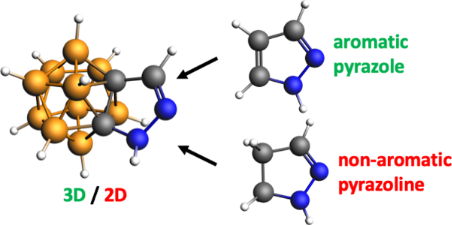
- photoinduced electron transfer [8][9]. Thanks to their notable photophysical properties, pyrazoles are applied in OLED technology [10]. Noticeably, in its ground state, pyrazole (C3H4N2) is an aromatic molecule that follows Hückel's rule, with two formal double bonds and a lone pair on one nitrogen generating


Red light excitation: illuminating photocatalysis in a new spectrum
Beilstein J. Org. Chem. 2025, 21, 296–326, doi:10.3762/bjoc.21.22
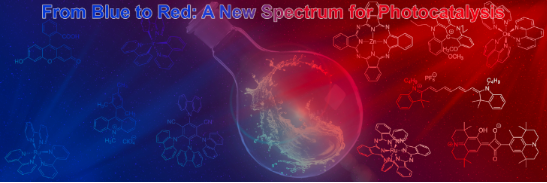
- advantageous for large-scale applications, offering enhanced safety and operational simplicity. Traditionally, research in this field has focused on metal-based photocatalysts, particularly those based on transition metals like ruthenium and osmium due to their intrinsic photophysical properties. However, with
- 4d) [30]. In a continuation of this trend, a recent study by O. S. Wenger et al. further expands the frontiers of red-light photoredox catalysis with first-row transition metals by introducing Cr(0) luminophores that exhibit photophysical properties competitive with Ru(II) and Os(II) complexes [31
- that the photocatalytic efficiency of these molecules does not necessarily rely on the presence of a central metal atom. Free-base porphyrins, in particular, have demonstrated significant potential in red-light-driven transformations due to their versatile photophysical properties. These metal-free