


Search results
Search for "toluene" in Full Text gives 1215 result(s) in Beilstein Journal of Organic Chemistry. Showing first 200.
An undecacyclic carbon-centered hydrocarbon radical: synthesis and investigation
Beilstein J. Org. Chem. 2026, 22, 1196–1204, doi:10.3762/bjoc.22.95
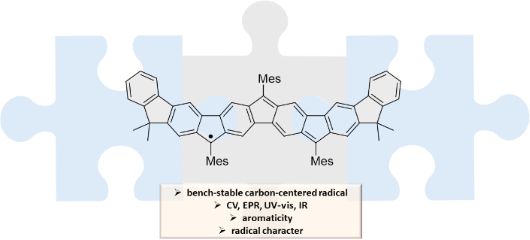
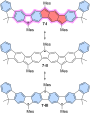
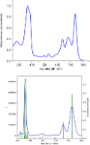
- larger, structurally related species with notable stability, but also provides a valuable basis for the development of more complex and intriguing molecular systems. CP-PAH radicals synthesized in our group. CW (continuous wave) X-band (9.4214 GHz) EPR spectrum of 7 in toluene (1 mM) at ambient






The surprising reaction of (chloro- and methanesulfonyloxy)(phenyl)methylphosphonates and –(phenyl)methylphosphine oxides with potassium diphenylphosphide followed by oxidation
Beilstein J. Org. Chem. 2026, 22, 1160–1167, doi:10.3762/bjoc.22.93
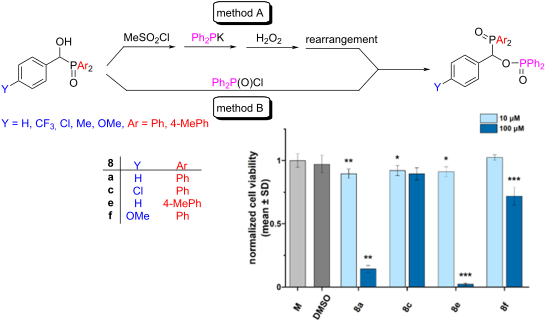
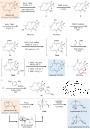
- methanesulfonyl chloride in the presence of triethylamine at 25 °C in toluene (Scheme 5). It was found that the attempted methanesulfonylation of the (hydroxy(4-methoxyphenyl)methyl)phosphine oxide 14f did not provide the expected product, but the corresponding (chloro(aryl)methyl)phosphine oxide 15f was formed


Construction of CF2 moieties in FDA-approved drugs (2016–2025): industrial routes, mechanisms, and scale-up considerations
Beilstein J. Org. Chem. 2026, 22, 1122–1150, doi:10.3762/bjoc.22.91
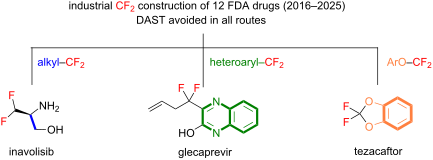
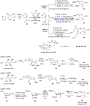
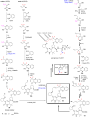
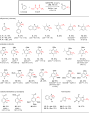
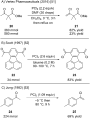
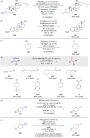
- toluene as solvent under reflux conditions afforded product 78 in 18% yield associated with significant decomposition to hydrogen fluoride (route b), reaction under neat conditions (route c) or using ethanol as solvent (route d) gave product 80 in 42% (solvent-free) or 91% yield (in ethanol), respectively






Synthesis and acaricidal activity against Varroa destructor of α- and γ-costic acid dimers
Beilstein J. Org. Chem. 2026, 22, 1088–1096, doi:10.3762/bjoc.22.87
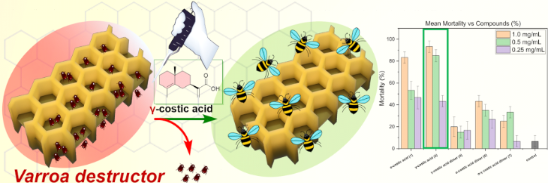
- acid (0.1 equiv) were dissolved in anhydrous toluene (2.0 mL/mmol), the reaction mixture was heated at 100 °C and stirred for 4 hours. The solvent was then removed under reduced pressure. The crude residue was purified by column chromatography (eluent: petroleum ether/EtOAc 8:2) to afford the γ-costic
- (right picture). Synthesis of costic acids derivatives. Reaction conditions: (a) ethylene glycol (0.5 equiv), pTsOH (0.1 equiv), toluene (2.0 mL/mmol), 100 °C, 4 h; (b) DMAP (0.1 equiv), DCC (1.4 equiv), CH2Cl2 (6.0 mL/mmol), ethylene glycol (1.0 equiv), 0 °C to rt, overnight; (c) DMAP (0.1 equiv), DCC


Recent advances in copper-catalyzed direct hydroamination of alkenes with (hetero)aromatic amines
Beilstein J. Org. Chem. 2026, 22, 925–947, doi:10.3762/bjoc.22.73
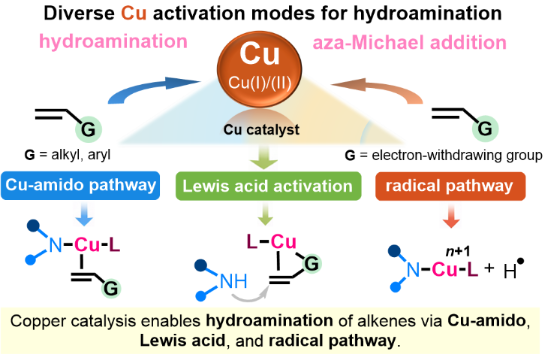
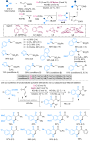
- toluene at 80 °C, enabling the direct addition of various nitrogen nucleophiles to nitrostyrene derivatives 37 with excellent anti-Markovnikov selectivity. Under the optimized conditions, various arylamines and N-heterocycles, including imidazoles, benzimidazoles, pyrazoles, and triazoles, underwent
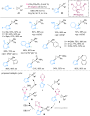
- azabenzonorbornadienes 39 with pyrazoles (Scheme 14) [54]. Using IPrCuCl (5 mol %) in combination with KOt-Bu in toluene, various pyrazole derivatives efficiently reacted with bicyclic alkenes 39 to afford the corresponding exoselective hydroamination products 40 in good to excellent yields. The reaction exhibited high
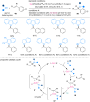
- and operationally simple conditions. Recently, Qiu et al. reported a Lewis acid-mediated hydroamination of styrenes with isatin derivatives catalyzed by Cu(OTf)2 under air atmosphere (Scheme 20) [65]. Under optimized conditions (5 mol % Cu(OTf)2 in toluene at 110 °C), various isatins 51 reacted







Chiral cyclopropenimine-catalyzed enantioselective Michael reactions of phenol and benzofuran-derived α,β-unsaturated pyrazolamides with benzophenone-imine of glycine esters
Beilstein J. Org. Chem. 2026, 22, 888–896, doi:10.3762/bjoc.22.69
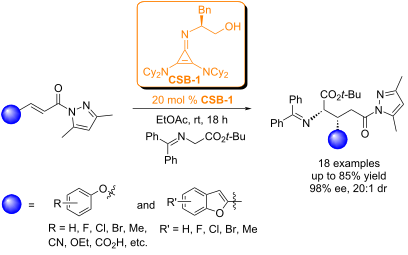
- of 6a dropped to 76% but with an excellent ee value (Table 1, entry 10 vs entry 1). The yields and enantioselectivities of 6a are both decreased in dichloromethane (DCM), toluene, and acetone (Table 1, entries 11–13). When THF was used as a solvent, the yield of 6a was slightly lower than in ethyl






Knoevenagel condensation of 4,5- and 1,8-diazafluorenes
Beilstein J. Org. Chem. 2026, 22, 803–812, doi:10.3762/bjoc.22.62
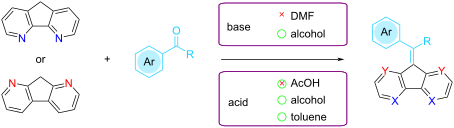
- ). Therefore, we changed the solvent in the reactions of 1,8-diazafluorene (2) to ethanol or toluene. As a result, condensation products of 2 with various donor- and acceptor-substituted benzaldehydes were obtained in moderate to good yields in both solvents (Table 1). Note, the yields were generally higher in
- % and 34% yields, respectively (Scheme 4). Ammonium acetate and acetic acid in toluene were chosen as conditions providing good solubility of reagents. To the best of our knowledge these reactions are the first examples of a titanium-free condensation of diazafluorenes with ketones. The obtained
- . LUMO energies were estimated using the onset red/ox potentials according to the equation: Elumo= −(Eredonset + 4.8) (eV) X-ray study. Neat compounds were crystallized by a slow vapor diffusion method from the CHCl3/hexane (4,5-DPDAF) and toluene/iPrOH (1,8-DPDAF) systems. The crystal growth time was




Preparation of 3-(alkylamino)imidazo[1,2-a]pyridine-2-carbaldehydes via Kornblum oxidation and unexpected ring-opening reactions of the corresponding alcohols under oxidative conditions
Beilstein J. Org. Chem. 2026, 22, 763–770, doi:10.3762/bjoc.22.58
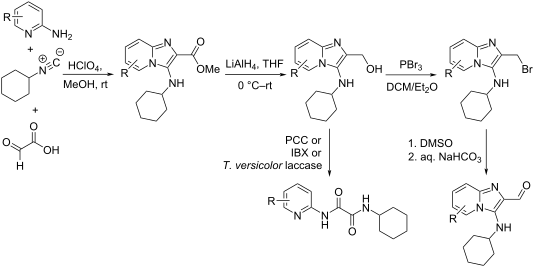
- . Compound 9f was also successfully converted into 13f under the conditions shown in Table 1. Nenajdenko et al. reported a few examples of the preparation of imidazo[1,2-a]pyridin-3-amine ethyl esters starting from ethyl glyoxylate in toluene and using ammonium chloride as a catalyst in yields of 30–35% [26


Synthesis of depressin, cryptomeridiol and 4-epi-cryptomeridiol enabled by a terpenoid chiral pool-producing platform
Beilstein J. Org. Chem. 2026, 22, 683–690, doi:10.3762/bjoc.22.53
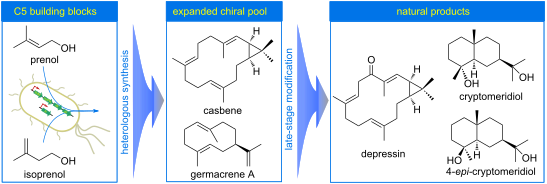
- ring skeletons with different stereochemical outcomes could be obtained due to the flexible conformation of this cyclodecadiene ring system [34][37][53][54]. To our delight, treatment of compound 5 with p-toluene sulfonic acid (PTSA) delivered the desired trans-6/6-fused ring system, via its favored UU


Photoorganocatalytic trifluoromethylation of (het)arenes in green conditions
Beilstein J. Org. Chem. 2026, 22, 662–671, doi:10.3762/bjoc.22.50
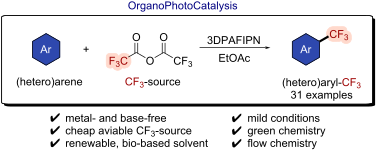
- ); unreactive substrates are shown in Supporting Information File 1, Schemes S4 and S5. Benzene, toluene, tert-butylbenzene, biphenyl, naphthalene, o-xylene, and durene afforded the corresponding products 2–8 in moderate yields. In contrast, mesitylene, a less electron-enriched substrate than durene, gave




Hydrogen production from formic acid catalyzed by NHC–Cu complexes
Beilstein J. Org. Chem. 2026, 22, 620–627, doi:10.3762/bjoc.22.48
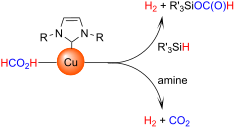
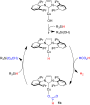
- (Scheme 1). To support these working hypotheses, the reaction of 1 equiv [Cu(OH)(IPr)] with 2 equiv of formic acid in a sealed tube was followed by 1H NMR spectroscopy in deuterated toluene (C7D8). After 16 h at 110 °C, the formation of 1b was observed while no excess of formic acid was detected
- produced, the pressure change was measured as a function of time (see Supporting Information File 1, Table S1). By heating formic acid in toluene in the presence of 1 and 10 mol % of 1a, no evolution of gas was observed neither at 25 nor at 110 °C (see Supporting Information File 1, Table S1, entries 1–4
- our delight, upon reacting in toluene equimolar amounts of FA and PhSiH3, efficiency increased (Figure 2). Indeed, by using 1a and its tert-butoxide congener 1c ([Cu] = 10 mol %) a violent evolution of gas was observed at room temperature, resulting into a considerable increase of pressure which



Computational prediction of C–H hydricities and their use in predicting the regioselectivity of electron-rich C–H functionalisation reactions
Beilstein J. Org. Chem. 2026, 22, 603–610, doi:10.3762/bjoc.22.46
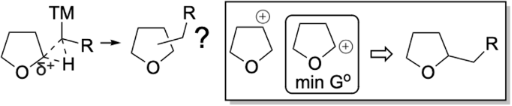
- means that an uncertainty of several kilocalories per mole is plausible for the less stable/transient subset. Consistent with this, Parker/Cheng highlight a higher uncertainty for the toluene/fluorene/9-methylanthracene-derived cations, and we observe that most of the large deviations occur in benzyl


![[Graphic 6]](/bjoc/content/inline/1860-5397-22-46-i8.svg?max-width=637&scale=1.18182)


Design and synthesis of an erdafitinib-based selective FGFR2 degrader
Beilstein J. Org. Chem. 2026, 22, 583–591, doi:10.3762/bjoc.22.44
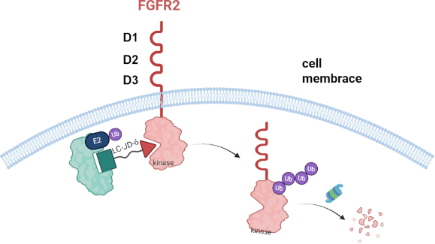
- . Synthesis of PROTACs towards FGFR2. Reagents and conditions: (a) K2CO3, Pd (dppf)Cl2, 1,4-dioxane/H2O 4:1, 100 °C, 5 h; (b) 3,5-dimethoxyaniline, Pd2(dba)3, BINAP, Cs2CO3, toluene, 100 °C, 12 h; (c) (2-bromoethoxy)-tert-butyldimethylsilane, NaH, DMF, rt, 12 h; (d) tetrabutylammonium fluoride, THF rt, 12 h



Continuous-flow carbonyl hydrogenation under subatmospheric to atmospheric hydrogen pressure enabled by robust heterogeneous Pt–Fe catalysts
Beilstein J. Org. Chem. 2026, 22, 575–582, doi:10.3762/bjoc.22.43
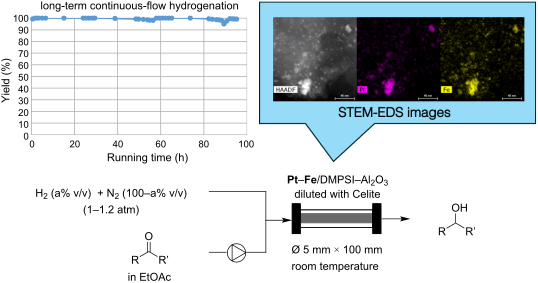
- best among the solvents tested (EtOAc, toluene, methylcyclohexane, tetrahydrofuran, and methanol) (see Supporting Information File 1, Figure S5). The hydroxy moiety has a stronger interaction with catalytically active sites at the surface of the heterogeneous catalyst, and smooth desorption of the


Melifoliox B, a novel phloroglucin derivative isolated from Melicope barbigera (Rutaceae) and synthesis of new oxidation products from melifoliones A and B
Beilstein J. Org. Chem. 2026, 22, 535–546, doi:10.3762/bjoc.22.39
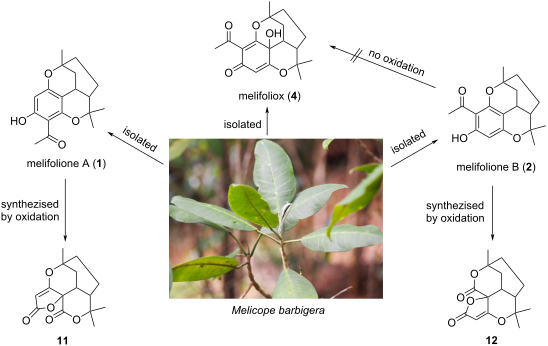
- -toluenesulfonic acid at 80 °C in toluene afforded benzoxocin (7) as the only product. On the other hand, melifolione A (1) was completely decomposed under these conditions. Irradiation of 5 in methanol with UV-light (300 nm) for 3 days at room temperature gave melifolione B (2) with traces of melifolione A (1
- dissolved in toluene (50 mL) and 4-toluenesulfonic acid (50 mg) was added. The mixture was heated under stirring on a water bath at 80 °C for 3 h. After cooling to room temperature, diethyl ether (100 mL) was added, and the organic phase was extracted with 0.1 N NaOH (3 × 30 mL). The alkaline aqueous layer
- /1 h/57%, d) p-toluenesulfonic acid/toluene/80 °C/1 h/68%. Reaction of melifolione A (1) with iodosobenzene diacetate. Hypothetical pathway for the oxidative ring contraction of melifolione A (1) with ferricyanide/hydrogen peroxide. Oxidative ring contraction of melifolione B (2). Alternative routes


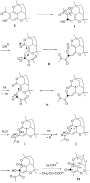

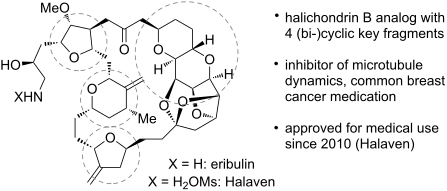
Modern synthetic pathways towards eribulin and its subunits
Beilstein J. Org. Chem. 2026, 22, 495–526, doi:10.3762/bjoc.22.37
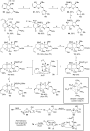
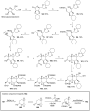
- , MeOH, rt; (b) i. NaH, BnBr, THF, rt; ii. iodobenzoic acid, MeCN, 80 °C; iii. PhOOSCH2PO(OEt)2, NaH, THF, 0 °C; (c) vinylmagnesium bromide, CuI, THF, −78 °C; (d) i. ethyl acrylate, Grubbs cat 2nd generation, toluene, 110 °C; ii. p-TsOH, H2O, THF, 60 °C; (e) NaH, THF, 0 °C; (f) i. LiAlH4, THF, 0 °C to rt
- ) i. AcOH, rt; ii. NaIO4, MeOH, 0 °C to rt; iii. NaBH4, MeOH, 0 °C to rt; iv. NaH, BnBr, 0 °C to rt; (c) i. O3, DCM, −78 °C; ii. SMe2; (d) (PhO)2POCH2COOMe, KHMDS, 18-crown-6, THF, −78 °C; (e) p-TsOH, toluene, H2O, 100 °C; (f) MOMCl, DIPEA, DCM, 0 °C to rt; (g) i. DIBAL-H, DCM, −78 °C; ii. Ac2O
- , pyridine, DMAP, DCM, rt; iii. allyl-TMS, BF3·Et2O, DCM, −78 °C; (h) 9-BBN, THF, H2O2, 0 °C to rt; (i) i. AD-mix β, MsNH2, t-BuOH, H2O, rt; ii. 2,2-dimethoxypropane, (±)-CSA, DCM, rt; (j) i. DMP, DCM, rt; ii. Ph3PCH2COOEt, toluene, rt; (k) p-TsOH, EtOH, reflux; (l) i. DBU, toluene, reflux; ii. TBAF, THF, rt





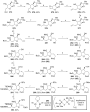


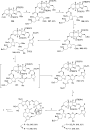

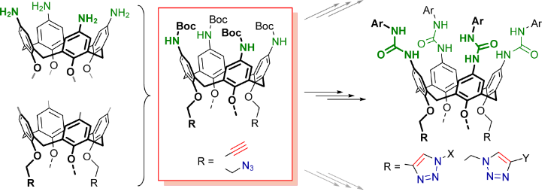
Cone p-aminocalix[4]arenes enriched with ‘clickable’ alkyne or azide functionalities
Beilstein J. Org. Chem. 2026, 22, 399–415, doi:10.3762/bjoc.22.28
- copper complex (although an extraction procedure for complex destruction using Na2S2O3 was applied), which was difficult to separate from the relatively polar free calixarene 37 using column chromatography. In line with this, when toluene-soluble CuI·P(OEt)3 was used as a catalyst (in this case heating
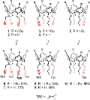
- presence of CuI using a mixture of toluene and triethylamine (4:1) as solvent. Under these conditions, the reaction proceeded smoothly at room temperature and the desired ditriazole 41 was obtained in high yield (Scheme 7). The tert-butoxycarbonyl groups in calix[4]arenes 37–41 were cleaved under standard
- . Synthesis of triazolated p-aminocalix[4]arenes 37–39 from the propargylated calixarene precursors 24–26. Conditions: i) benzyl azide, CuI, Et3N, toluene, rt. Synthesis of triazolated p-aminocalix[4]arenes 40 and 41 from the 2-azidoethylated calixarene precursors 35 and 36. Conditions: i) phenylacetylene


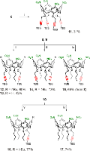
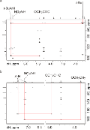


Synthesis of tricyclic fused pyrrolidine nitroxides from 2-alkynylpyrrolidine-1-oxyls
Beilstein J. Org. Chem. 2026, 22, 344–351, doi:10.3762/bjoc.22.22

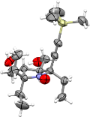
- benzoylation of hydroxymethyl groups under the conditions of Sonogashira cross-coupling, nitroxide 2a was treated with acetic anhydride in the presence of sodium acetate, yielding the diacyl derivative 5. Radicals 5 and 3a were heated with benzoyl chloride and triethylamine in toluene in the presence of a




Synthesis of diaryl phosphates using phytic acid as a phosphorus source
Beilstein J. Org. Chem. 2026, 22, 213–223, doi:10.3762/bjoc.22.15
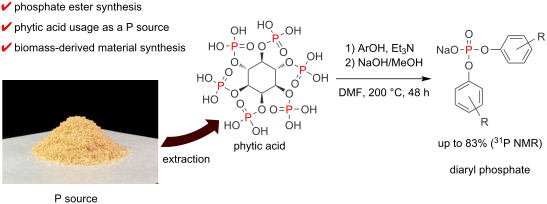
- alcohols 1a–l participating in the reaction. Phytic acid has six phosphoric acid moieties, therefore we treated it as if it contained six moles of phosphate per mole of phytic acid. All diaryl phosphates were isolated as sodium salts through precipitation in toluene by neutralization with a NaOH methanol




A new synthesis of Tyrian purple (6,6’-dibromoindigo) and its corresponding sulfonate salts
Beilstein J. Org. Chem. 2026, 22, 167–174, doi:10.3762/bjoc.22.10
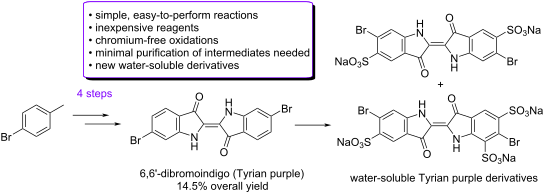
- mixture of hot toluene and hexanes. The efficacy of recrystallization was especially useful to our synthetic goal as it obviated the need to separate the mixture of regioisomers 3 and 7 from the nitration step, which were challenging to purify from each other. Product 6, which was isolated as an off-white
- recrystallization from toluene and hexanes. The two-step process of benzylic bromination and Kornblum oxidation of 3 to 4 was accomplished in 38% yield (37% if using the mixture of 3 and 7). This oxidation is not the highest-yielding method for this transformation, but it represents a concise, operationally simple


Circumventing Mukaiyama oxidation: selective S–O bond formation via sulfenamide–alcohol coupling
Beilstein J. Org. Chem. 2026, 22, 158–166, doi:10.3762/bjoc.22.9
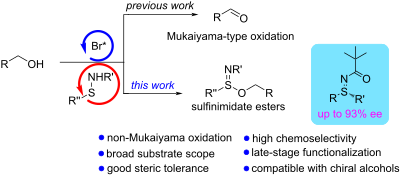
- explored the use of alternative solvents while reducing the amount of methanol to 10 or 20 equivalents. Among the solvents tested, including THF, toluene, MeCN, and DCM (Table 1, entries 11–15), DCM performed best, affording the product in up to 65% yield (Table 1, entry 14). In contrast, significantly
- lower yields were observed in THF and toluene (Table 1, entries 11 and 12), likely due to poor miscibility or reactivity under the reaction conditions. These findings provide a useful basis for further extending the method to structurally more complex or less soluble alcohol substrates. With the


Asymmetric Mannich reaction of aromatic imines with malonates in the presence of multifunctional catalysts
Beilstein J. Org. Chem. 2026, 22, 151–157, doi:10.3762/bjoc.22.8
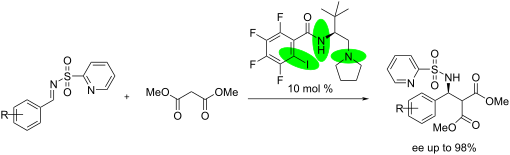
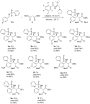
- compounds, and catalyst J as a trifluoroacetylated chiral tertiary amine, which lacks iodine. The reaction of imine 1 with dimethyl malonate was selected for the investigation as a model reaction. Based on our previous experience the catalyst screening was carried out in toluene in the presence of 10 mol
- , and malonate were carried out in the presence of 10 mol % of catalyst E in toluene at −20 °C (Figure 3). The experimental procedure was simple, enantiomerically enriched products 3a–i were isolated by direct precipitation from the crude reaction mixture in good to high yields by adding a mixture of
- method and applications of obtained products are under study. Experimental General procedure for the catalytic asymmetric Mannich reaction Catalyst E (2.7 mg, 0.0057 mmol, 0.01 equiv) was weighed into a reaction vessel, imine (0.057 mmol, 1.0 equiv) and toluene (285 µL) were added. The mixture was


Design and synthesis of an axially chiral platinum(II) complex and its CPL properties in PMMA matrix
Beilstein J. Org. Chem. 2026, 22, 143–150, doi:10.3762/bjoc.22.7
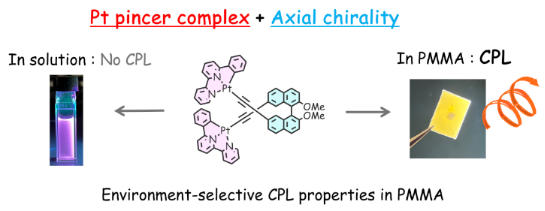
- reaction of S/R-1 with trimethtylsilylacetylene in toluene (Scheme 1). Subsequent deprotection of the trimethylsilyl (TMS) groups with tetrabutylammonium fluoride (TBAF) afforded the desired ligand S/R-3. The preparation of the target platinum(II) complex was performed by using a similar procedure of other
- (112 mg, 0.0962 mmol) and trimethylsilylacetylene (0.40 mL, 2.9 mmol) was added degassed solution of Et3N (2.6 mL, 19 mmol) and toluene (5.2 mL) by argon bubbling. The reaction mixture was refluxed at 90 °C for 21 hours. After cooling to room temperature, the reaction mixture was filtered through
- −1. The R-isomer was synthesized using a similar procedure to that of the S-isomer, except that compound R-1 (300 mg, 0.52 mmol), trimethylsilylacetylene (0.30 mL, 2.2 mmol), CuI (32 mg, 0.17 mmol), Pd(PPh3)4 (112 mg, 0.096 mmol), Et3N (2.3 mL) in toluene (4.5 mL) were used. The yield was 78


Synthesis and applications of alkenyl chlorides (vinyl chlorides): a review
Beilstein J. Org. Chem. 2026, 22, 1–63, doi:10.3762/bjoc.22.1
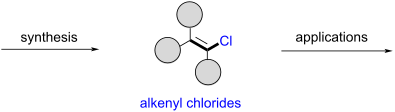
- vary widely across the literature, with solvents ranging from neat conditions to cyclohexane, hexanes, toluene, benzene, carbon tetrachloride, dichloromethane, and diethyl ether. Reaction temperatures span from −10 °C to 100 °C. The first detailed investigation of this transformation was reported by
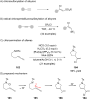
- compounds 15 and 18 without contamination with E- or Z-16 isomers (Scheme 4). Additionally, it was found that several aqueous work-up procedures induced ring opening of compounds 17 and 18. Ultimately, steam distillation directly from the reaction mixture afforded a toluene solution of compounds 15 and 18
- in a combined yield of 44% (Scheme 4). Additional optimization reactions showed that when the reaction was carried out at −10 °C even in the absence of Hünig’s base dichloride 15 could be obtained in 92% yield. Treatment of 15 with KOt-Bu in toluene gave the desired compound 19 in 43% yield. The























Total synthesis of asperdinones B, C, D, E and terezine D
Beilstein J. Org. Chem. 2025, 21, 2730–2738, doi:10.3762/bjoc.21.210
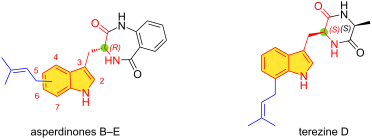
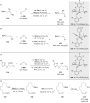
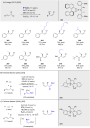
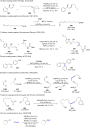
- relatively simple protocol (Pd(PPh3)4, toluene, NaOH, 90 °C, 12 h) and the reported high yield of 4-prenylindole, we consistently obtained inseparable mixtures of the desired prenylindole and the reverse indole products. Mixtures of prenylated compounds have been observed under the same conditions with 4





