Search results
Search for "Ugi" in Full Text gives 102 result(s) in Beilstein Journal of Organic Chemistry.
Synthesis of triazolo- and tetrazolo-fused 1,4-benzodiazepines via one-pot Ugi–azide and Cu-free click reactions
Beilstein J. Org. Chem. 2025, 21, 2202–2210, doi:10.3762/bjoc.21.167
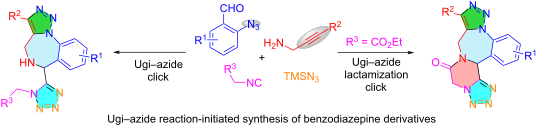
- /bjoc.21.167 Abstract A one-pot Ugi–azide reaction followed by intramolecular Cu-free azide–alkyne cycloaddition generates a polycyclic scaffold 7 bearing polycyclic triazole, tetrazole, and benzodiazepine rings. This method could be extended for obtaining a more complicated scaffold 8 containing a
- piperazinone ring. Keywords: benzodiazepine; click reaction; multicomponent reaction; one-pot; piperazinone; polycyclic; triazole; tetrazole; Ugi–azide reaction; Introduction Triazole, tetrazole, and benzodiazepine are privileged heterocyclic rings commonly found in drug molecules and functional materials [1
- methods for the synthesis of tetrazoles [25][26][27][28], the Ugi–azide reaction is a good approach for constructing 1,5-disubstituted-tetrazoles (1,5-DS-T) [29][30][31]. This scaffold can be subsequently linked to 1,2,3-triazole [32], 4H-chromen-4-one [33], pyrrolo[3,4-b]indolizine [34], and other


C2 to C6 biobased carbonyl platforms for fine chemistry
Beilstein J. Org. Chem. 2025, 21, 2103–2172, doi:10.3762/bjoc.21.165
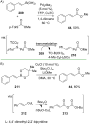
- oxygen in alcoholic medium has also been reported (Scheme 37) [121][122]. Riguet synthesized γ-lactams through a Ugi 4-center 3-component reaction (U-4C-3CR) protocol. HFO was used as the electrophile in the Friedel–Crafts (FC) alkylation reactions of indole catalyzed by diphenylprolinol silyl ether. The
- ). The obtained hydrocarbons exhibited higher density (0.78–0.88 g/cm3) and higher net heat of combustion (44.0–46.0 MJ/kg) than some commonly commercial fuels [194]. Multicomponent reactions involving the reactivity of furfural are also noteworthy. A Ugi four-component polymerization was developed to


Multicomponent reactions IV
Beilstein J. Org. Chem. 2025, 21, 2082–2084, doi:10.3762/bjoc.21.163
- issue (1 Letter, 22 Full Research Papers, and 7 Reviews) reflect the broad spectrum of MCR chemistry worldwide. Among the Full Research Papers, isocyanide-based multicomponent reactions still constitute the relative majority. Ugi and co-workers’ groundbreaking discovery of the four-component reaction
- between an aldehyde, an amine, a carboxylic acid, and an isonitrile in 1959 [8], which marked the beginning of modern MCR chemistry, continues to attract undiminished attention. It has since been applied in manifold ways, from breathtaking reaction sequences and post-Ugi transformations to the generation
- of countless molecules, spanning small compounds to microstructures. The amphiphilic reactivity of isonitriles appears virtually limitless, extending well beyond classical Ugi-type reactions into other MCR contexts. At the same time, MCRs not based on isonitriles are gaining increasing momentum, with
α-Ketoglutaric acid in Ugi reactions and Ugi/aza-Wittig tandem reactions
Beilstein J. Org. Chem. 2025, 21, 2021–2029, doi:10.3762/bjoc.21.157
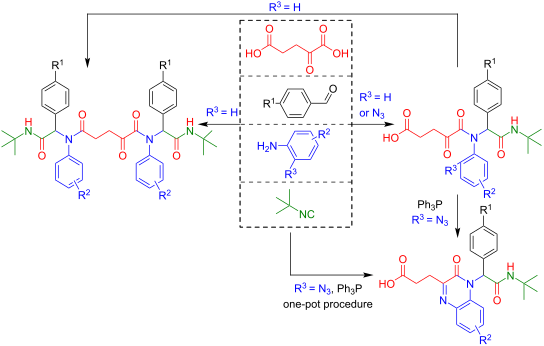
- library of bis- and tetraamides was synthesized by the Ugi reaction with α-ketoglutaric acid, tert-butyl isocyanide, aromatic aldehydes, and aromatic amines. When o-azidoanilines were used, azidated peptidomimetics were obtained, the post-cyclization of which by the aza-Wittig reaction yielded a series of
- substituted 3-(3-oxo-3,4-dihydroquinoxalin-2-yl)propanoic acids containing a pharmacophore quinoxalinone moiety. The tandem Ugi/aza-Wittig combination was also carried out in a one-pot procedure without isolation of the intermediate. Keywords: α-ketoglutaric acid; aza-Wittig reaction; multicomponent reaction
- ; quinoxalinone derivative; Ugi reaction; Introduction Multicomponent reactions are powerful tools in organic chemistry that enable the synthesis of structurally complex and multifunctional compounds from three or more starting materials in a single synthetic step. They are widely used in drug discovery because


Catalytic asymmetric reactions of isocyanides for constructing non-central chirality
Beilstein J. Org. Chem. 2025, 21, 1648–1660, doi:10.3762/bjoc.21.129

- become a hot topic in synthetic organic chemistry. Isocyanides (also termed isonitriles) are a class of highly versatile building blocks in organic synthesis, participating in a wide range of transformations including multicomponent reactions (e.g., the well-known Passerini and Ugi reactions) [13][14][15





A multicomponent reaction-initiated synthesis of imidazopyridine-fused isoquinolinones
Beilstein J. Org. Chem. 2025, 21, 1161–1169, doi:10.3762/bjoc.21.92
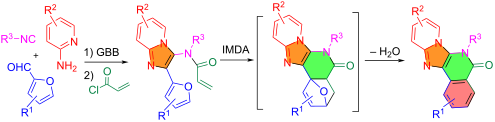
- modifications of MCRs could generate novel and complex molecular scaffolds [1][2][3][4][5][6][7][8]. Some MCR adducts generated from Ugi, Passerini, Gewald, Biginelli, and Groebke–Blackburn–Bienaymé (GBB) reactions have been modified to form chemically diverse heterocyclic scaffolds with potential biological




Recent advances in synthetic approaches for bioactive cinnamic acid derivatives
Beilstein J. Org. Chem. 2025, 21, 1031–1086, doi:10.3762/bjoc.21.85
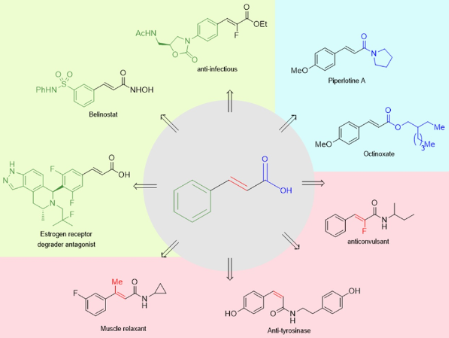
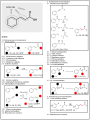
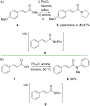
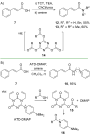
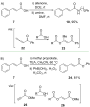
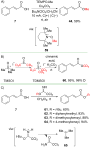
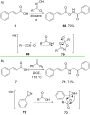
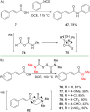
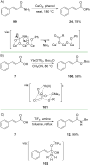
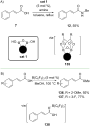
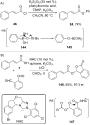
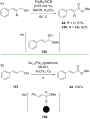
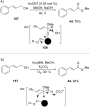
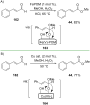
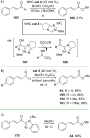
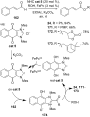
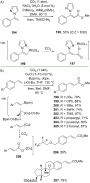
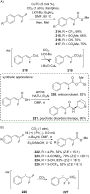
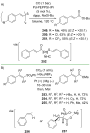
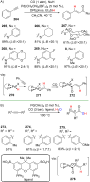
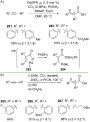
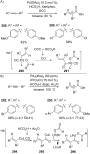
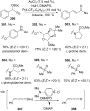
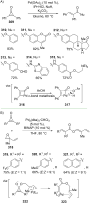
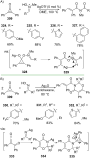
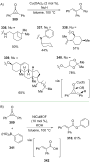
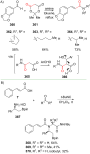
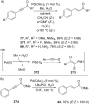
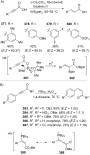
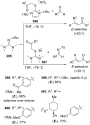
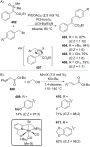
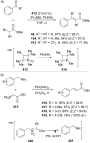
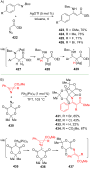
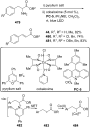
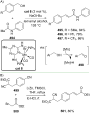
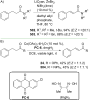
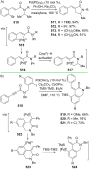
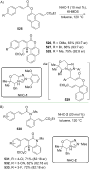
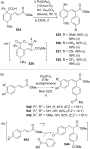
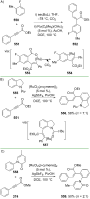
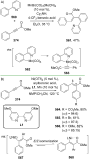
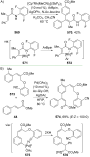
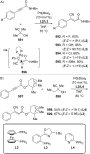
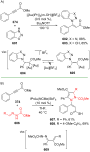
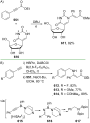
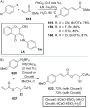
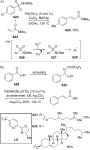
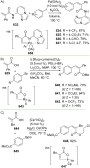
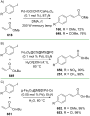
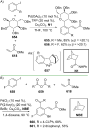
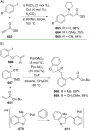
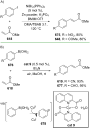
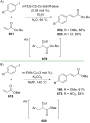
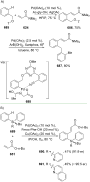
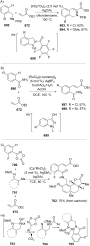
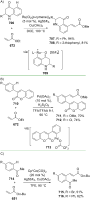
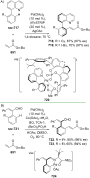
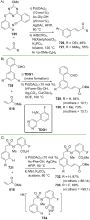
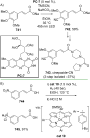
- . Similarly, Silvani and co-workers (2022) also reported a multicomponent Ugi-type reaction of cinnamic acid (7), aldehyde/ketone, (S)-β-phenyl β-aminoboronate 367, and tert-butyl isocyanide to give the corresponding pharmacophoric β-substituted β-amido boronates 368–370 in moderate yields (Scheme 80B) [136










































Silver(I) triflate-catalyzed post-Ugi synthesis of pyrazolodiazepines
Beilstein J. Org. Chem. 2025, 21, 915–925, doi:10.3762/bjoc.21.74
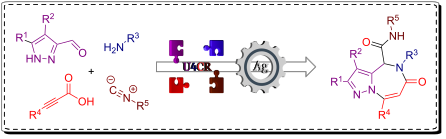
- ) triflate-catalyzed post-Ugi assembly of novel pyrazolo[1,5-a][1,4]diazepine scaffolds is reported offering high yields (up to 98%) under mild conditions. The synthetic sequence involves the Ugi four-component reaction (U4CR) of pyrazole-3-carbaldehydes, primary amines, 3-substituted propiolic acids, and
- ; pyrazolodiazepines; silver catalysis; Ugi reaction; Introduction Synthetic chemists are continuously involved in the development of methodologies for accessing new heterocyclic scaffolds that resemble naturally occurring products and biologically active molecules [1][2]. Nitrogen heterocycles draw particular
- [20][21][22][23]. For example, the Ugi four-component reaction (U4CR), involving a carbonyl compound, a primary amine, a carboxylic acid, and an isocyanide, provides a straightforward method for constructing dipeptide-like adducts [24][25][26][27]. These adducts can subsequently be rigidified into




Sequential two-step, one-pot microwave-assisted Urech synthesis of 5-monosubstituted hydantoins from L-amino acids in water
Beilstein J. Org. Chem. 2025, 21, 596–600, doi:10.3762/bjoc.21.46
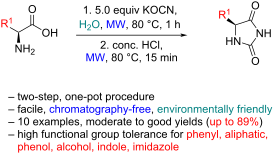
- copper(I)-catalyzed reactions (48–71%) [13] and the four-component Ugi reaction [14] yields 48–71% and 27–67%, respectively. In addition, pyroglutamates with isocyanates, which provide exceptionally high yields (97–99%) [15], and dipeptides have been utilized in triflate-activated Mumm’s rearrangement


Formaldehyde surrogates in multicomponent reactions
Beilstein J. Org. Chem. 2025, 21, 564–595, doi:10.3762/bjoc.21.45
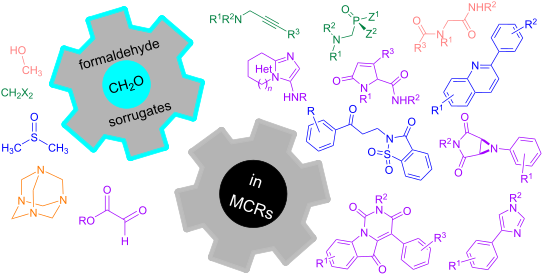
- used in MCRs is formaldehyde, which acts as a highly reactive electrophilic C1 building block in central MCRs reactions such as the Mannich, Biginelli, Ugi, and Passerini reactions (Scheme 2) [7]. In these reactions, formaldehyde undergoes formally the consecutive attack of two other reactants on the
- devoted to dimethyl sulfoxide, dihalomethanes, hexamethylene tetramine, and glyoxylates as C1-building blocks, substituting formaldehyde. Review Methanol as a source of formaldehyde There are several reports on the use of alcohols under oxidative conditions as aldehyde surrogates in Ugi and Passerini
- , several efforts have been made to improve the chemoselectivity of the oxidation step. Among the most relevant examples, o-iodoxybenzoic acid (IBX) has been used in Ugi and Passerini reactions to oxidize the suitable alcohol to the desired aldehyde [13]. Alternatively, catalytic amounts of a ternary system


New tandem Ugi/intramolecular Diels–Alder reaction based on vinylfuran and 1,3-butadienylfuran derivatives
Beilstein J. Org. Chem. 2025, 21, 444–450, doi:10.3762/bjoc.21.31
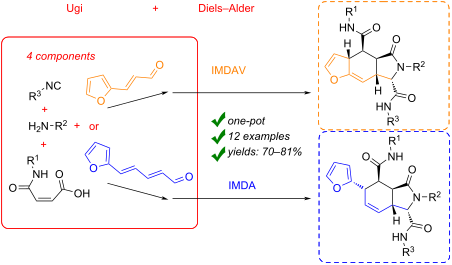
- Yuriy I. Horak Roman Z. Lytvyn Andrii R. Vakhula Yuriy V. Homza Nazariy T. Pokhodylo Mykola D. Obushak Department of Organic Chemistry, Ivan Franko National University of Lviv, 6 Kyryla i Mefodiya St., Lviv 79005, Ukraine 10.3762/bjoc.21.31 Abstract A new tandem sequence involving the Ugi
- reaction and Diels–Alder [4 + 2] cycloaddition based on vinylfuran and 1,3-butadienylfuran derivatives was designed and studied. It was found that in the case of 3-(furan-2-yl)acrylaldehyde, a one-pot Ugi reaction and intramolecular Diels–Alder vinylarene (IMDAV) reaction leads to the formation of the
- insufficiently studied furo[2,3-f]isoindole derivatives. Ugi adducts formed from (E)-3-(furan-2-yl)acrylaldehyde, maleic acid monoanilide, isonitrile, and an amine spontaneously underwent the IMDAV reaction with a high level of stereoselectivity, leading to single pairs of enantiomers of 4,4a,5,6,7,7a-hexahydro




Multicomponent reactions driving the discovery and optimization of agents targeting central nervous system pathologies
Beilstein J. Org. Chem. 2024, 20, 3151–3173, doi:10.3762/bjoc.20.261
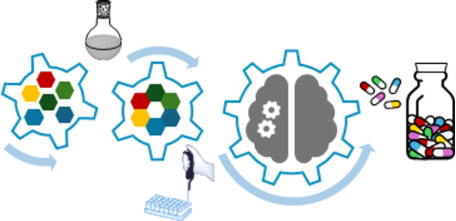
- to Lipinski's rule of five (Ro5) [5]. Classical examples of MCRs include Ugi [6], Passerini [7], Hantzsch [8], Bucherer-Bergs [9], Gewald [10], and Petasis reactions [11], among others (Figure 1). Additionally, recent advancements have been seen in the discovery of novel MCRs by combination with
- other approaches such as visible light, microwaves, heterogeneous catalysis, and ultrasound [12][13][14][15]. Due to its versatility, one of the most prevalent of these MCRs is the Ugi reaction [16]. This reaction generally combines an isocyanide with an acid, an amine, and an aldehyde or ketone to
- synthesizing diverse scaffolds [6]. Furthermore, the Ugi reaction exhibits versatility in forming both fused and unfused heterocyclic compounds, involving 4-, 5-, 6-, and 7-membered rings [17]. This capability is exploited by various approaches, including the Ugi–Deprotection–Cyclization strategy (UDC) and




Synthesis of the 1,5-disubstituted tetrazole-methanesulfonylindole hybrid system via high-order multicomponent reaction
Beilstein J. Org. Chem. 2024, 20, 3077–3084, doi:10.3762/bjoc.20.256
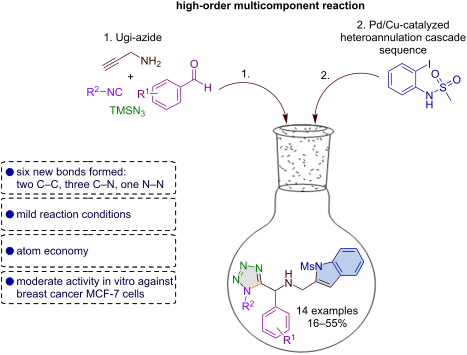
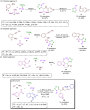
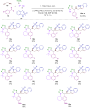
- , 98160, México 10.3762/bjoc.20.256 Abstract A series of 1,5-disubstituted tetrazole-indole hybrids were synthesized via a high-order multicomponent reaction consisting of an Ugi-azide/Pd/Cu-catalyzed hetero-annulation cascade sequence. This operationally simple one-pot protocol allowed high bond-forming
- ; isocyanides; MCF-7 cell line; methanesulfonylindoles; Ugi-azide reaction; Introduction Nitrogen-containing heterocyclic moieties, such as 1,5-disubstituted tetrazoles and indoles, are considered pharmacophoric fragments due to their pivotal interactions with several targets involved in many diseases. They
- affinity compared to their drug parents and by using powerful synthetic tools such as multicomponent reactions (MCRs) [11][12][13]. Among these, isocyanide-based multicomponent reactions (I-MCRs), such as the Ugi-azide reaction, have demonstrated the highest biological-synthetic relevance [1][14][15][16



Synthesis of pyrrole-fused dibenzoxazepine/dibenzothiazepine/triazolobenzodiazepine derivatives via isocyanide-based multicomponent reactions
Beilstein J. Org. Chem. 2024, 20, 2870–2882, doi:10.3762/bjoc.20.241
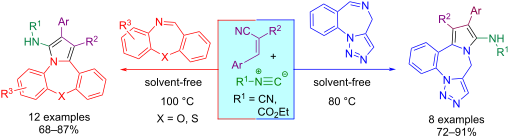
- pyrroles. In our recent studies, we prepared pyrrole-fused dibenzoxazepines via an Ugi reaction. Here, the reaction of benzoxazepine imine and acetylenedicarboxylate leads to the Huisgens 1,4-dipole zwitterion in situ, which is trapped by an isocyanide through the cyclization process (Scheme 1c) [44][45


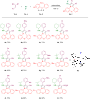
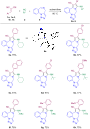

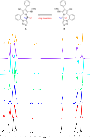


Synthesis of spiroindolenines through a one-pot multistep process mediated by visible light
Beilstein J. Org. Chem. 2024, 20, 2722–2731, doi:10.3762/bjoc.20.230
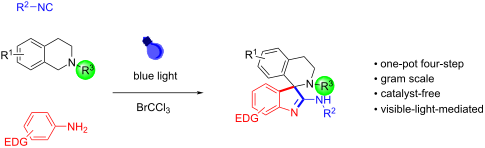
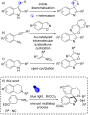
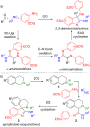
- reacts with an isocyanide and an electron-rich aniline in a three-component Ugi-type reaction to give an α-aminoamidine. This compound might undergo an additional visible light-mediated oxidation to furnish a second iminium intermediate, which acts as electrophile in an intramolecular electrophilic
- : isocyanide; multicomponent reactions; one-pot reaction; oxidation; spiroindolenine; Ugi reaction; visible light; Introduction Diversity-oriented synthesis (DOS) is a successful approach to biologically active scaffolds directed to create an enormous exploratory space in pharmaceutical hit discovery [1][2
- -pot multistep synthesis of unprecedent 2,3-diaminoindolenines using graphene oxide (GO) as heterogeneous catalyst [21]. The protocol involves the three-component Ugi (3C-Ugi) reaction between aldehydes, isocyanides and 2 equivalents of electron-rich anilines to give α-aminoamidines, which undergo a C




5th International Symposium on Synthesis and Catalysis (ISySyCat2023)
Beilstein J. Org. Chem. 2024, 20, 2704–2707, doi:10.3762/bjoc.20.227
- a new family of isatin-based α-acetamide carboxamide oxindole hybrids using the versatile Ugi four-component reaction [18]. Sixteen hybrids were prepared by reacting 5-amino-1-benzyl-3,3-dimethoxyindolin-2-one, benzyl isocyanide, carboxylic acids, and aldehyde/ketone derivatives, catalyzed by ZnF2

Deuterated reagents in multicomponent reactions to afford deuterium-labeled products
Beilstein J. Org. Chem. 2024, 20, 2270–2279, doi:10.3762/bjoc.20.195
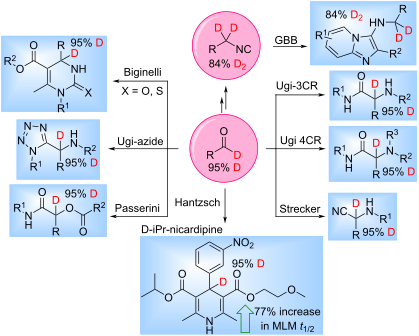
- scope of reactivity and determination of deuterium retention using a combination of deuterated aldehydes, [D1]-, and/or [D2]-isocyanides. We began with the venerable Ugi 4-component reaction (Ugi-4CR), first reported by Ivar Ugi in 1959 [28]. The Ugi-4CR utilizes an amine, carbonyl, carboxylic acid, and
- modification of 1d, representative of the large swath of chemical space accessible by Ugi-deprotect-cyclize (UDC) methodology, gave the dihydroquinoxaline 1g in good yield with high deuterium retention [29][30][31][32]. The catalytic three-component Ugi reaction was first reported by List in 2008 [33][34] and
- is comprised of reaction of an isonitrile, amine, and aldehyde/ketone, in the presence of phenylphosphinic acid (PPA), to give α-amino amides [35]. Examples of deuterated Ugi-3CR products are represented in Scheme 4. Like the Ugi 4-CR reaction, there was no deuterium scrambling in the Ugi 3-CR. Using


O,S,Se-containing Biginelli products based on cyclic β-ketosulfone and their postfunctionalization
Beilstein J. Org. Chem. 2024, 20, 2143–2151, doi:10.3762/bjoc.20.184
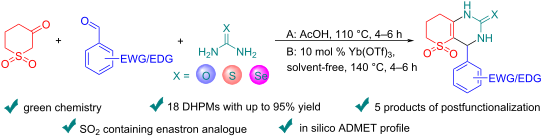
- -1,1-dioxide motif is presented in a number of biologically active compounds including important market drugs as antiglaucoma agent dorzolamide [21], diuretic/anticancer meticrane [22] and antiherpesvirus agent amenamevir (ASP-2151) [23] which was recently synthesized by Ugi-4CR [24] (Scheme 1C



Cage-like microstructures via sequential Ugi reactions in aqueous emulsions
Beilstein J. Org. Chem. 2024, 20, 2078–2083, doi:10.3762/bjoc.20.179
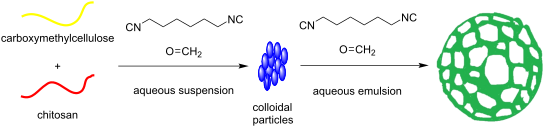
- Rita S. Alqubelat Yaroslava A. Menzorova Maxim A. Mironov Department of Technology for Organic Synthesis, Ural Federal University, Mira St. 19, Ekaterinburg, 620002, Russian Federation 10.3762/bjoc.20.179 Abstract Cage-like microstructures were obtained in two steps by sequential Ugi reactions
- . At the first stage, submicron colloidal particles based on carboxymethylcellulose and chitosan with a domain structure were obtained in an aqueous suspension. In the second stage, the Ugi reaction was carried out on the surface of the Pickering emulsions with toluene. Removal of toluene and
- redissolution in water resulted in colloidosomes with large holes on the surface. Varying the cross-link density during the Ugi reaction made it possible to obtain structures with different hole sizes. Keywords: carboxymethylcellulose; chitosan; colloidosomes; Pickering emulsions; Ugi reaction; Introduction


The Groebke–Blackburn–Bienaymé reaction in its maturity: innovation and improvements since its 21st birthday (2019–2023)
Beilstein J. Org. Chem. 2024, 20, 1839–1879, doi:10.3762/bjoc.20.162
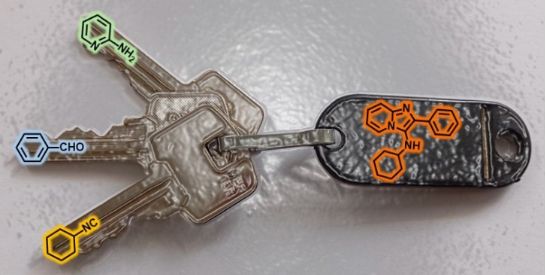
- reaction can be considered the third in importance after Ugi [3] and Passerini [4] ones, and, as the two venerable reactions, is an α-addition of an electrophile and a nucleophile to an isocyanide, followed by a suitable rearrangement, as depicted in Scheme 1. Compared with the Passerini and Ugi reactions
- Bienaymé. On the other hand, the GBB reaction, compared with the Ugi and Passerini reactions, has an undeniable advantage, namely, the possibility of obtaining cyclic, aromatic, and drug-like compounds, rather than linear structures. The immediate consequence of this fact is that there are numerous studies
- aliphatic aldehydes showed a higher variability (50–98%) and in some cases also the classic Ugi adducts were observed. Regarding the isocyanide, excellent yields were achieved for all tested reagents, such as aromatic, aliphatic, and sterically hindered ones. Problems were only observed using a morpholine






Ugi bisamides based on pyrrolyl-β-chlorovinylaldehyde and their unusual transformations
Beilstein J. Org. Chem. 2024, 20, 1773–1784, doi:10.3762/bjoc.20.156
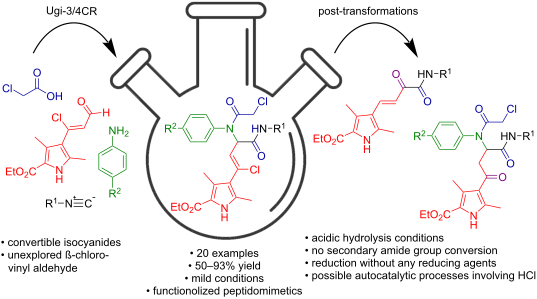
- University, Svobody sq., 4, 61022, Kharkiv, Ukraine 10.3762/bjoc.20.156 Abstract By one-pot four- and three-component Ugi reactions involving convertible isocyanides and unexplored pyrrole-containing β-chlorovinylaldehyde, a small library of 20 bisamides with unusual behavior in post-Ugi transformations was
- prepared and characterized. Surprisingly, a well-documented approach to obtain peptide-containing carboxylic acids through acid hydrolysis of the convertible isocyanide moiety in the Ugi bisamides proceeded in an unexpected manner in our case, leading to the formation of derivatives of amides of
- ; post-Ugi transformation; pyrrole derivative; Ugi reaction; Introduction One of the keys to the development of mankind is the constant search for new substances and advanced materials. Today, we have powerful tools at our disposal that allow us to create entire libraries of structurally complex organic




Harnessing unprotected deactivated amines and arylglyoxals in the Ugi reaction for the synthesis of fused complex nitrogen heterocycles
Beilstein J. Org. Chem. 2024, 20, 1758–1766, doi:10.3762/bjoc.20.154
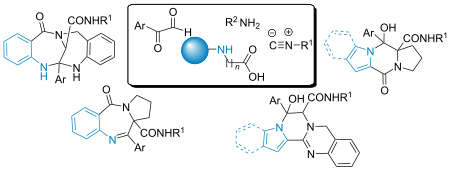
- drugs highlighting their importance in the discovery of novel bioactive compounds. However, their synthesis often faces challenges, including complex functionalization and lengthy reaction sequences. Multicomponent reactions, notably the Ugi reaction, have emerged as powerful tools to address these
- acid, indole-2-carboxylic acid, pyrrole-2-carboxylic acid or N-phenylglycine has allowed the use of these compounds in the Ugi reaction without triggering competitive reactions. The additional functional group present in the resulting Ugi adduct can be leveraged in different post-condensation
- strategies to easily generate multiple fused nitrogen heterocycles including benzodiazepinone and piperazinone cores. Keywords: arylglyoxals; deactivated amines; nitrogen heterocycles; Ugi reaction; Introduction Nitrogen heterocycles such as piperazines or diazepines represent important systems in the


Rapid construction of tricyclic tetrahydrocyclopenta[4,5]pyrrolo[2,3-b]pyridine via isocyanide-based multicomponent reaction
Beilstein J. Org. Chem. 2024, 20, 1436–1443, doi:10.3762/bjoc.20.126
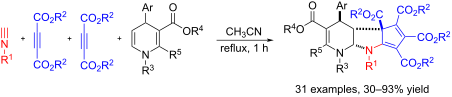
- been known as indispensable building blocks in modern organic chemistry. Many isocyanide-based carbon–carbon and carbon–heteroatom bond forming reactions have been developed in fascinating ways over the past decades [4][5][6]. The famous multicomponent reactions such as Passerini reaction, Ugi reaction


The Ugi4CR as effective tool to access promising anticancer isatin-based α-acetamide carboxamide oxindole hybrids
Beilstein J. Org. Chem. 2024, 20, 1213–1220, doi:10.3762/bjoc.20.104
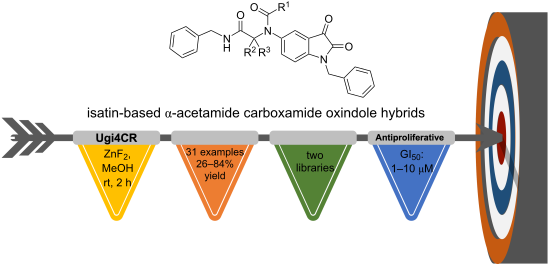
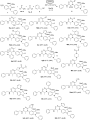
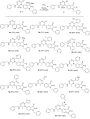
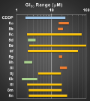
- , 38200, La Laguna, Spain 10.3762/bjoc.20.104 Abstract Considering early-stage drug discovery programs, the Ugi four-component reaction is a valuable, flexible, and pivotal tool, facilitating the creation of two new amide bonds in a one-pot fashion to effectively yield the desired α-aminoacylamides. Here
- with remarkable atom economy, cost and time-effective and mainly diminishing waste production is a conscientious boost for structural diversity and sustainability [1][2][3]. The well-known Passerini, Ugi, Mannich, Biginelli, Hantzsch and Strecker reactions are some examples of the classic MCRs
- , representing the easygoing generation of a collection of small-molecules essential for structure–activity relationships (SAR). The isocyanide-based Ugi reaction is one of the most resourceful tools and still broadly studied MCR, generating multifunctional libraries of α-aminoacylamide derivatives, or Ugi




Innovative synthesis of drug-like molecules using tetrazole as core building blocks
Beilstein J. Org. Chem. 2024, 20, 950–958, doi:10.3762/bjoc.20.85
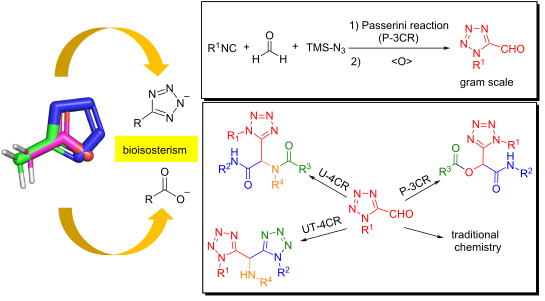
- . It aims to meet the growing demand for tetrazole-based compound libraries and novel scaffolds, which are challenging to synthesize through other methods. Keywords: building blocks; green chemistry; multicomponent reaction; Passerini tetrazole reaction; tetrazole; Ugi reaction; Introduction The
- the high synthetic value, significant efforts have been devoted to developing methods for the preparation of the tetrazole scaffolds, in particular recently through multicomponent reactions (MCRs) and mostly Ugi and Passerini reactions [7][8][9]. Traditionally, due to its charged nature the tetrazole
- the Passerini and Ugi reactions amenable to convenient, efficient, simple, and fast synthesis of diverse scaffolds library to afford variously functionalized tetrazole-based drug-like molecules. In order to achieve the synthesis of novel tetrazole building blocks and their use in organic synthesis we