Search results
Search for "alcohol" in Full Text gives 1192 result(s) in Beilstein Journal of Organic Chemistry. Showing first 200.
Construction of CF2 moieties in FDA-approved drugs (2016–2025): industrial routes, mechanisms, and scale-up considerations
Beilstein J. Org. Chem. 2026, 22, 1122–1150, doi:10.3762/bjoc.22.91
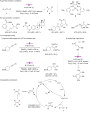
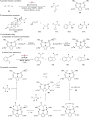
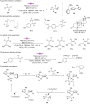
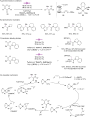
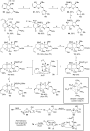
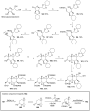
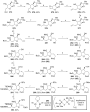
- yield), second Bz protection and recrystallization to remove chiral isomers (26% yield, 100% ee), and finally reduction of the ester carbonyl to the alcohol 49 using lithium tri-tert-butoxyaluminium hydride (LTBA) at 10 °C (quantitative yield). From 45 to 49, the five-step process gives an overall yield
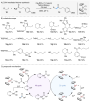
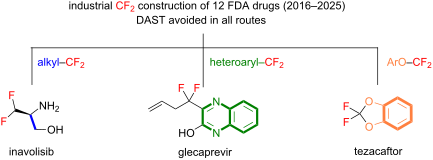
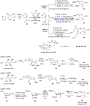
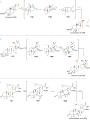
- reaction was conducted on a very small scale (5 × 10⁻⁵ mol). 1.1.6 Inavolisib (2024): As shown in Figure 7, the chiral β-amino alcohol 75 containing a difluoromethyl group is a key intermediate in the synthesis of inavolisib (12). Route a (reported in 2022) [41] starts from chiral aldehyde 45 and
- primary alcohol steps. Routes b–d (reported in 2022) [9] all employed building block 23 to introduce the CF2 group, with route d being the industrial route. Using 23 and tert-butylsulfinamide (77), the chiral nitrogen center was constructed under Ti(OEt)4 catalysis under different conditions: using






Synthesis and acaricidal activity against Varroa destructor of α- and γ-costic acid dimers
Beilstein J. Org. Chem. 2026, 22, 1088–1096, doi:10.3762/bjoc.22.87
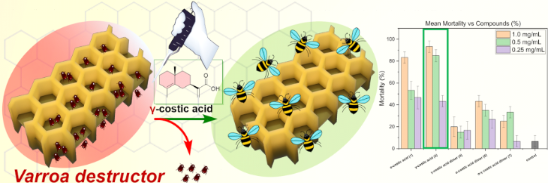
- activity from 80–90% to 20–40%. The same activity decrease was displayed by costol, i.e. the allylic alcohol derived by reduction of the carboxyl moiety of 2 [30], where both the carboxyl and the α,β-unsaturated carboxyl moieties are lacking. On the contrary, the endo or exocylic position of the double


Synthesis and optical resolution of 4,5-diaminohomoadamantane: a promising scaffold for chiral ligands and bioactive compounds
Beilstein J. Org. Chem. 2026, 22, 1013–1022, doi:10.3762/bjoc.22.80
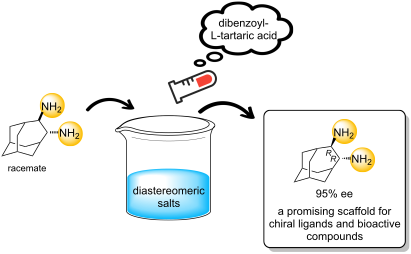
- for the synthesis of compound 2 from alcohol 1 using phosphoric acid, affording the target compound in high yield and purity. In the next step, chloronitrosation of alkene 2 led to α-chloroxime 3 in moderate yield. Substitution of chlorine in 3 with azido and benzylamino groups was then carried out to


Electrochemical reduction of unsaturated carbon–carbon bonds via 3d transition-metal catalysis
Beilstein J. Org. Chem. 2026, 22, 955–981, doi:10.3762/bjoc.22.75
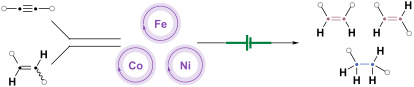
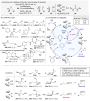
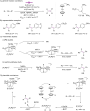
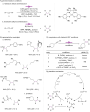
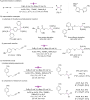
- as amino alcohol motifs, benzyl-protected acids, and thioethers without competitive reduction. As a further demonstration of the tunability of e-HAT, the challenging trans-selective alkyne semireduction was also realized under modified electrochemical conditions (Scheme 3B, ii). In contrast
- suppressing undesired side reactions, most notably hydrogen evolution reactions (HER) (Scheme 12A) [126]. This catalytic platform enabled selective semihydrogenation of both internal and terminal alkynes, including unactivated substrates, with broad tolerance toward heterocycles and alcohol functionalities








Synthesis of sterically shielded piperidine nitroxides via acid-catalyzed heterocyclization of β-aminoketone derivatives with ketones
Beilstein J. Org. Chem. 2026, 22, 948–954, doi:10.3762/bjoc.22.74
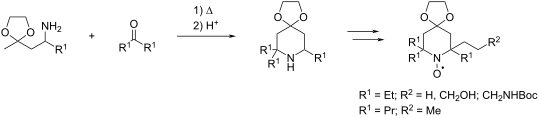
- use as catalysts for alcohol oxidation [8], electrode active materials in energy storage devices (batteries) [9], as well as antioxidants and superoxide dismutase (SOD) mimetics [10]. Their sterically shielded analogs, such as 2,2,6,6-tetraethylpiperidine-1-oxyl (TEEPO), were initially developed for
- , generated by deprotonation of acetylene, propargyl alcohol, or N-Boc-protected propargylamine with ethylmagnesium bromide, whereas nitrone 6b was treated with allylmagnesium bromide. Subsequent quenching of the reaction mixtures with water, followed by oxidation with MnO2, afforded the corresponding


Chiral cyclopropenimine-catalyzed enantioselective Michael reactions of phenol and benzofuran-derived α,β-unsaturated pyrazolamides with benzophenone-imine of glycine esters
Beilstein J. Org. Chem. 2026, 22, 888–896, doi:10.3762/bjoc.22.69
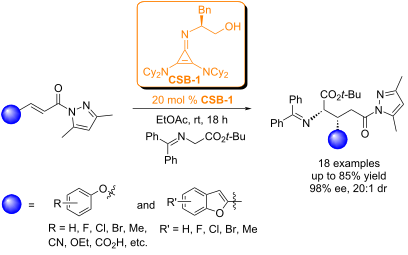
- only provided trace product 6a (Table 1, entry 2), although its structure is very similar to CSB-1. CSB-3 based on vicinal amino-alcohol backbone also afforded trace product. The other catalysts resulted in no reaction of 2a and 5a (Table 1, entries 3–9). These results show the unique catalytic and






Total synthesis of the capsular polysaccharide repeating unit towards the development of a glycoconjugate vaccine against Klebsiella pneumoniae ST512
Beilstein J. Org. Chem. 2026, 22, 821–827, doi:10.3762/bjoc.22.64
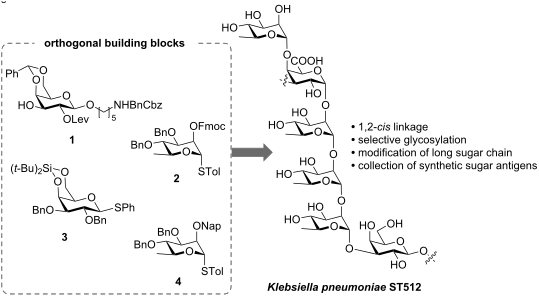
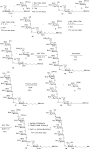
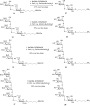
- ]. Subsequent removal of the 2-naphthylmethyl (Nap) group using 2,3-dichloro-5,6-dicyano-1,4-benzoquinone (DDQ) furnished the desired alcohol 1 in 74% yield. For the synthesis of ʟ-rhamnoside building blocks 2 and 4, the C2-hydroxy group of known thioglycoside 8 [32][33] was regioselectively protected with a
- deprotection was achieved by removing the Fmoc and Lev protecting groups with sodium methoxide, followed by 2,2,6,6-tetramethyl-1-piperidinyl-1-oxyl (TEMPO)/bis(acetoxy)iodobenzene (BAIB)-mediated oxidation of the C6-primary alcohol [35]. Final hydrogenolysis furnished the target hexasaccharide repeating unit


Design, synthesis, and biological evaluation of FXR/ASK1 dual-target modulators
Beilstein J. Org. Chem. 2026, 22, 771–781, doi:10.3762/bjoc.22.59
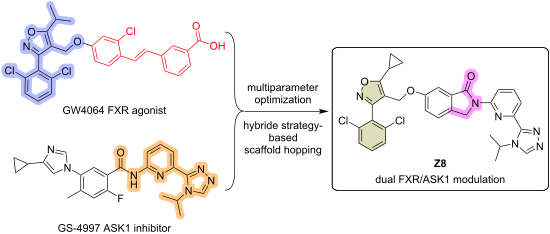
- II with NCS, followed by cyclization with methyl 3-cyclopropyl-3-oxopropionate, furnished isoxazole IV. Reduction of IV with lithium aluminum hydride gave alcohol V, which was then brominated with phosphorus tribromide to yield the desired isoxazole intermediate 2 in five steps (Scheme 4) [31]. The


Preparation of 3-(alkylamino)imidazo[1,2-a]pyridine-2-carbaldehydes via Kornblum oxidation and unexpected ring-opening reactions of the corresponding alcohols under oxidative conditions
Beilstein J. Org. Chem. 2026, 22, 763–770, doi:10.3762/bjoc.22.58
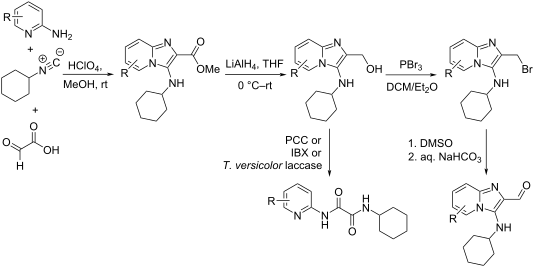
- ester being recovered. Thus, for the preparation of the aldehydes we opted for reduction of the esters 13a–d and 13f to their corresponding alcohol derivatives (17) followed by oxidation to the aldehyde. Esters 13a–c were readily converted into the corresponding alcohols 17a–c in excellent yields of 92
- . Unexpected aldehyde formation from tosylation reaction. Kornblum oxidation to give imidazo[1,2-a]pyridine-2-carbaldehydes 20. Yield over two steps from the alcohol is shown in parentheses. Compound 20d was used crude in the reductive amination reaction. Reductive amination reactions to give target molecules


Rongalite addition to dienones: diastereoselectivity in cyclic sulfone synthesis; stereochemical rationalization and prospects as a general conjugate nucleophile
Beilstein J. Org. Chem. 2026, 22, 742–752, doi:10.3762/bjoc.22.56

- . The major product was isolated and assigned as 5 (from axial attack of a small hydride reagent) [24]. From analysis of the NMR spectra of 5, it was clear that the molecule retained symmetry following reduction, reflected in the reduced number of signals in both 1H and 13C spectra compared to alcohol 4




Synthesis of heterocycles based on azomethine ylides from α-amino acids (or amines) and carbonyl compounds
Beilstein J. Org. Chem. 2026, 22, 705–741, doi:10.3762/bjoc.22.55
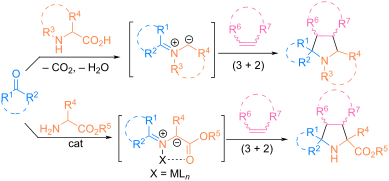
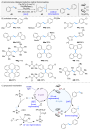
- yields, diastereo- and enantioselectivities of analogous (3 + 2) cycloaddition reactions were achieved using new chiral catalytic systems, in particular, Zn(II)-imidazolinyl-[2.2]paracyclophanol (UCDImphanol) ligand [40] and Zn(II)-ferrocenyl-substituted aziridino alcohol ligand [41]. Later in 2005, the
- using benzyl alcohols as aldehyde precursors to prepare fused heterocycles [84]. The authors note that the iridium-catalyzed oxidation of benzyl alcohol 108 to the corresponding aldehyde initially occurs. This is followed by condensation of the aldehyde with proline (103) and subsequent decarboxylation


Synthesis of depressin, cryptomeridiol and 4-epi-cryptomeridiol enabled by a terpenoid chiral pool-producing platform
Beilstein J. Org. Chem. 2026, 22, 683–690, doi:10.3762/bjoc.22.53
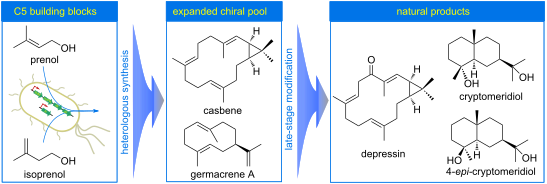
- reaction occurred (CuBr, RuCl3) or complex mixtures were obtained (CrO3, PDC, SeO2). We then transformed the allylic alcohol 8 into the less reactive enone derivative 9 using Dess–Martin periodinane (DMP) in 83% yield. The enone 9 could be condensed with 2,4-dinitrophenylhydrazine to give the hydrazone


Continuous-flow carbonyl hydrogenation under subatmospheric to atmospheric hydrogen pressure enabled by robust heterogeneous Pt–Fe catalysts
Beilstein J. Org. Chem. 2026, 22, 575–582, doi:10.3762/bjoc.22.43
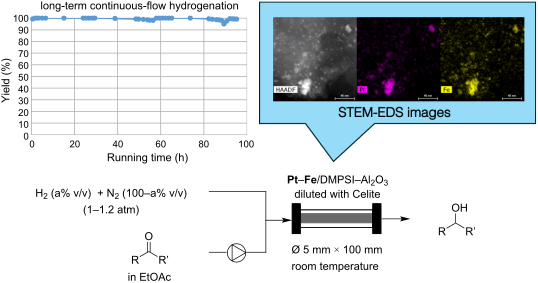
- alcohol product is key for a high catalytic turnover. The polar solvent, EtOAc, facilitates the desorption of the formed alcohol by stabilizing it in the solution phase, leading to the smooth product desorption and following substrate adsorption. Although methanol and THF are also polar solvents, they can
- ) was converted to the corresponding alcohol 2d in 89% yield under continuous-flow conditions at room temperature (Table 2, entry 3). The desired product 2d was obtained quantitatively at 50 °C (Table 2, entry 4). It is noteworthy that an analytically pure compound (confirmed by 1H and 13C NMR) was
- isolated by simple evaporation of the solvent (Table 2, entry 4). Tetralone (1e) was also hydrogenated smoothly to afford the corresponding alcohol 2e in 88% yield at room temperature (Table 2, entry 5). Ethyl benzoylacetate (1f) was converted to the corresponding alcohol 2f quantitatively while retaining


Modern synthetic pathways towards eribulin and its subunits
Beilstein J. Org. Chem. 2026, 22, 495–526, doi:10.3762/bjoc.22.37
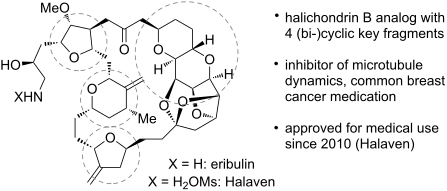
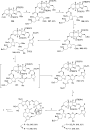
- metathesis with ethyl acrylate, acidic cleavage of the diol protecting group and addition of NaH induced the oxy-Michael reaction towards 18 in 4:1 dr. Reduction of the ester moiety, subsequent protection with TBDPSCl and methylation of the secondary alcohol furnished 19. After Bn-deprotection, iodination
- –Kishi (NHK) coupling and Pd-mediated cyclization. Fragment 31 was synthesized from known precursor 28 [74] in 9 steps via MMTr-protection, replacement of the Bn- with TBDMS-protecting groups, hydroxylation of sulfone 29 to alcohol 30, tosylation, bromide substitution, acidic MMTr-cleavage and DMP
- . Eventual change of the two PNB- with TBDMS-protecting groups yielded 45 in 58%. Notably, by this technique, the central pyran motif was assembled in one step and required only the stereoinformation of 42`s alcohol unit, while in former works two individual steps and the use of expensive metal catalysts








Recent advances in the stereoselective synthesis of distal biaxially chiral molecules
Beilstein J. Org. Chem. 2026, 22, 461–479, doi:10.3762/bjoc.22.34
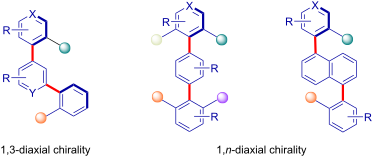
- -containing five-membered rings with iridium complexes and examined the influence of different alcohol protecting groups on the monoalkyne substrates. The reaction proceeded in generally high yields (>70%) with satisfactory enantioselectivity. Building on this work, Shibata and Tsuchikama developed a one-pot


Synthesis and stereochemical analysis of dynamic planar chiral oxa[7]orthocyclophene
Beilstein J. Org. Chem. 2026, 22, 436–442, doi:10.3762/bjoc.22.30

- of propargyl alcohol 3 and the alkyne moiety in 3 can be introduced by an alkynylation of the formyl group of aldehyde 4. Thus, we started this synthesis from O-protected 2-bromobenzyl alcohol derivative 5 for the introduction of the propanal moiety of 4 by a Heck reaction with allyl alcohol. The
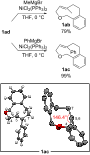
- synthetic route for the C6-iodo-substituted 1ad is shown in Scheme 2. The Heck reaction of O-TIPS-protected 5a with allyl alcohol in the presence of a palladium catalyst provided the aldehyde 4a in 78% yield [9]. The reaction of 4a with CBr4 and PPh3, followed by treatment with n-BuLi, afforded the terminal
- alkyne 6. Subsequent preparation of the lithium acetylide using n-BuLi, followed by treatment with formaldehyde, afforded propargyl alcohol 3a in 70% yield over three steps. The reaction of 3a with Red-Al generated a vinyl aluminum species, which was then treated with iodine to provide the iodinated Z






Dialkylaminoalkylation of β-ketosulfones via ring-opening of 3-sulfonylpyrrolidines
Beilstein J. Org. Chem. 2026, 22, 383–389, doi:10.3762/bjoc.22.26
- broad spectrum of pharmacological activities [1][2][3] and synthetic potential [4][5]. Also noteworthy are γ-aminosulfones, which form the backbone of important pharmaceuticals including the antiglaucoma drug dorzolamide [6], acamprosate for alcohol craving suppression [7], and bicalutamide, an
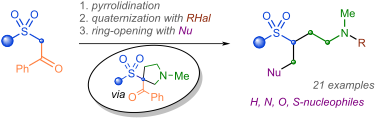
- domino-process consists in nucleophilic addition of the alcohol, mercaptan or water (in case the reaction was performed in CH3CN) at the benzoyl group (Scheme 3). The subsequent ring-opening of the pyrrolidine ring can proceed via two possible pathways. First path is the tandem Grob-type fragmentation
- similar process of the reductive elimination of chlorine or chlorosulfonyl groups at the β-position to sulfone [45]. We also examined the starting ammonium salt 3a in the reductive ring-cleavage. As the result, butanamine 5 was formed in 18% yield along with benzylic alcohol. An increase of the reaction




Recent advances in the cleavage of non-activated amides
Beilstein J. Org. Chem. 2026, 22, 352–369, doi:10.3762/bjoc.22.23
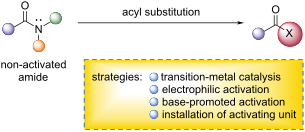
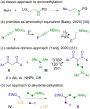
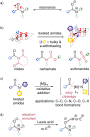
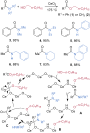
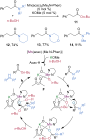
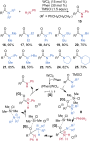
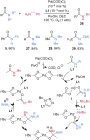
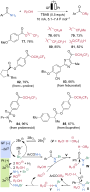
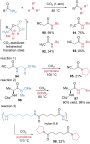
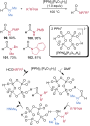
- introduced at the R1 position (37, 39% yield). The SO2F2-promoted esterification begins with the formation of fluorosulfate K through the reaction of the alcohol with SO2F2. This intermediate then undergoes an SN2 attack by the tautomeric form of amide, generating the iminium species L. In wet solvents (path
- bromine (Br2), which converts the amide into N-bromobenzamide. Meanwhile, at the cathode, the alcohol is partially deprotonated to form an alkoxide, which engages in a stabilizing hydrogen-bonding interaction to produce the acid–base pair V. Nucleophilic attack of V on N-bromobenzamide forms a tetrahedral
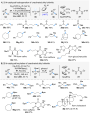
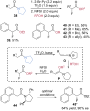
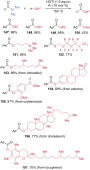
- bulky tertiary alcohol 1-adamantanol afforded the ester product 150 in moderate 43% yield. Notably, this esterification protocol is compatible with structurally complex nucleophiles, enabling late-stage modification of drug-derived amides and bioactive OH-containing molecules 153–157. Base-promoted










Synthesis of tricyclic fused pyrrolidine nitroxides from 2-alkynylpyrrolidine-1-oxyls
Beilstein J. Org. Chem. 2026, 22, 344–351, doi:10.3762/bjoc.22.22

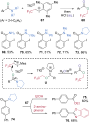
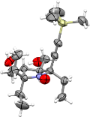
- group, respectively. The elemental analyses data and high-resolution mass spectra (HRMS) of 6a,b were in agreement with the assigned structure. Oxidation of propargyl alcohols is another way to α,β-acetylenic carbonyl compounds [31]. Mild oxidation of propargyl alcohol 2c with activated manganese




Ring contraction and ring expansion reactions in terpenoid biosynthesis and their application to total synthesis
Beilstein J. Org. Chem. 2026, 22, 289–343, doi:10.3762/bjoc.22.21
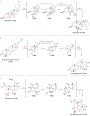
- alcohol 51b, carbocation 51c is generated and undergoes a 1,2-alkyl shift of the ketone moiety, forming a new bridged 7-membered ring (51d), and completing the skeletal adjustment. A final elimination to the exocyclic olefin delivers the complex, caged structure of anditomin (52). Apart from this D-ring
- shift and aqueous quench of the cation 97b, expanding the 5-membered ring into the allo-cedrane carbon framework, furnishes the proposed biogenetic precursor 97c. Following protonation of the bridgehead alcohol, a Wagner–Meerwein rearrangement, and a 1,2-hydride shift builds up the tricyclo[5.2.1.01,6
- reactive pathway consists of an alkene isomerisation from the propenyl-substituent at C-5, followed by protonation of the C-7 alcohol to give intermediate 116a. From here a transannular cyclopropanation affords the cation 116b, which upon nucleophilic attack of water provides 116c. Expulsion of acetone






A mild and atom-efficient four-component cascade strategy for the construction of biologically relevant 4-hydroxyquinolin-2(1H)-one derivatives
Beilstein J. Org. Chem. 2026, 22, 244–256, doi:10.3762/bjoc.22.18
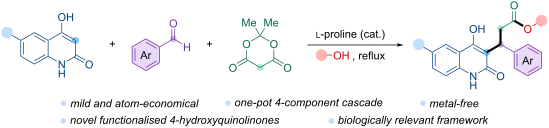
- presumably proceed through in situ formation of the Michael acceptor from the condensation of an aromatic aldehyde with Meldrum’s acid, followed by decarboxylation and lactonization to yield the pyranoquinolinedione products (Scheme 1). We hypothesized that employing an alcohol as solvent could induce
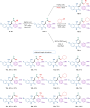
- nucleophilic attack by the alcohol on the carbonyl group of the Meldrum’s acid fragment, thereby favoring formation of an open-chain ester rather than a lactone upon decarboxylation. Following this rationale, the reaction of 4-hydroxyquinolin-2-ones 2a–c, 3,4-dimethoxybenzaldehyde, and Meldrum’s acid in
- involving 4-hydroxyquinolinones 2a–c, veratraldehyde, and Meldrum’s acid in alcohol (methanol or ethanol) with ʟ-proline catalysis. Importantly, by employing the alcohol simultaneously as both a reactant and the reaction medium and by fine-tuning the reaction conditions, this cascade can be deliberately


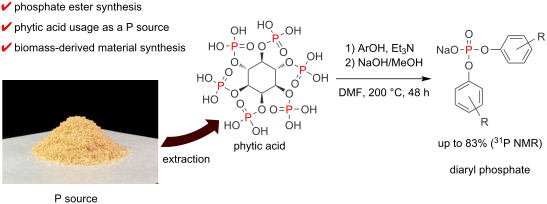
Synthesis of diaryl phosphates using phytic acid as a phosphorus source
Beilstein J. Org. Chem. 2026, 22, 213–223, doi:10.3762/bjoc.22.15
- the other mechanism is based on an E2 reaction, which involves the elimination of phosphoric acid accompanied by alkene formation. The phosphoric acid ester of a secondary alcohol releases phosphoric acid and alkenes through thermal degradation, which has been previously observed using isosorbide
- different mechanisms. In addition, the DPpyP 31P NMR peak increases and decreases in conjunction with the decrease of the MPP peak and increase of the DPP peak, suggesting that DPpyP acts as an intermediate in the DPP formation process. When alcohol 1c was used (Figure 3), the reaction stopped mainly at the




Circumventing Mukaiyama oxidation: selective S–O bond formation via sulfenamide–alcohol coupling
Beilstein J. Org. Chem. 2026, 22, 158–166, doi:10.3762/bjoc.22.9
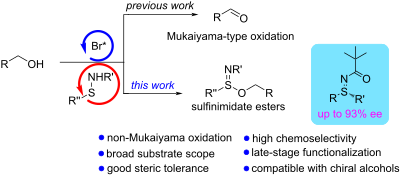
- previously disclosed a PIDA-mediated oxidative strategy for alcohol incorporation via activation of the S–NH bond (Scheme 1a) [14]. More recently, Wu and co-workers advanced the field by developing a dynamic kinetic resolution protocol for the enantioselective synthesis of sulfinimidate esters from racemic
- , we anticipated that an NBS/NaHCO3-based protocol would provide a more practical and chiral-alcohol-compatible alternative to our previous PIDA system. A conceptual comparison between our previous PIDA-mediated protocol and the present NBS/NaHCO3-mediated protocol is summarized in Scheme 1. However
- lower yields were observed in THF and toluene (Table 1, entries 11 and 12), likely due to poor miscibility or reactivity under the reaction conditions. These findings provide a useful basis for further extending the method to structurally more complex or less soluble alcohol substrates. With the


Total synthesis of natural products based on hydrogenation of aromatic rings
Beilstein J. Org. Chem. 2026, 22, 88–122, doi:10.3762/bjoc.22.4
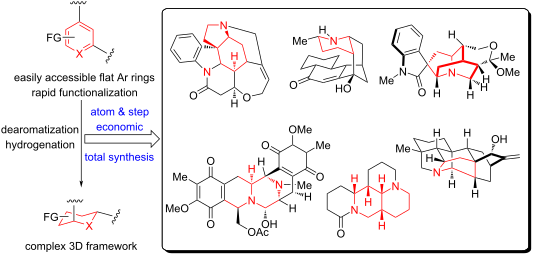
- benzylic alcohol with TFA/Et₃SiH afforded pyridine 95, which underwent a one-pot sequence of indole protection, methylation, and hydrogenation to furnish tetrahydropyridine 96. In contrast to Vollhardt’s synthesis, the unsaturation was misaligned with that of the natural product, most likely arising from
- steps. The authors then utilized their own palladium-catalyzed intramolecular α-acylation followed by protection of the carbonyl group to obtain the diketal 99. Birch reduction of 99 afforded the enone, which was then subjected to a Luche reduction to get the allylic alcohol 100. A Johnson–Claisen
- , constructing the [2.2.2]-bridged ring within the (+)-nominine followed by protection of the primary alcohol as mesylate. Using lithium bromide as the bromine source, an SN2 reaction was performed, and the allylic position was oxidized with tert-butyl peroxide and selenium dioxide to generate the enone 104











Advances in Zr-mediated radical transformations and applications to total synthesis
Beilstein J. Org. Chem. 2026, 22, 71–87, doi:10.3762/bjoc.22.3
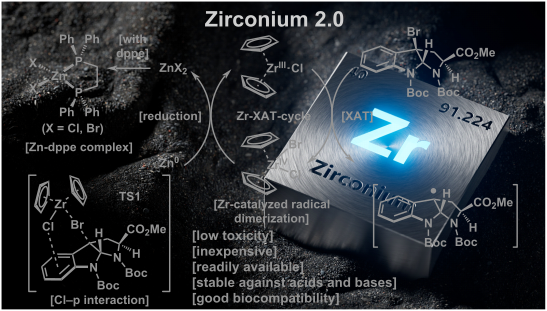
- hydrogen atom from 1,4-cyclohexadiene to furnish the alcohol product. The active species Cp2ZrIII(OTf) is then regenerated via single-electron transfer (SET) from the Ir photocatalyst. Notably, the addition of thiourea 26 significantly improved the regioselectivity in this reaction. According to NMR
- , affording the corresponding alcohol 28. In contrast, when substrates bearing a benzylic alcohol moiety at the α-position were subjected to the same conditions, the reaction proceeded through radical intermediate 31, which underwent a 1,5-hydrogen atom transfer (1,5-HAT) followed by intramolecular C–O bond
- formation to give the cyclic acetal 33. This transformation was applicable to a range of oxetanes 30a–c bearing benzylic alcohol derivatives, each affording the corresponding cyclic acetals in good yields. In 2023, Ota and Yamaguchi et al. reported the hydrogenation of alkyl chlorides via halogen atom