


Search results
Search for "axial chirality" in Full Text gives 45 result(s) in Beilstein Journal of Organic Chemistry.
Recent advances in the stereoselective synthesis of distal biaxially chiral molecules
Beilstein J. Org. Chem. 2026, 22, 461–479, doi:10.3762/bjoc.22.34
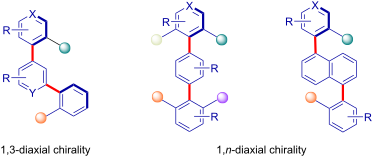
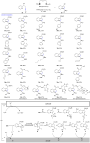
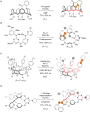
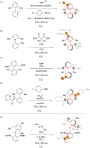
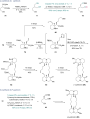
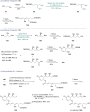
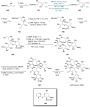
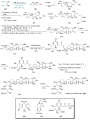
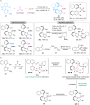
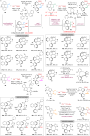
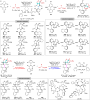
- one chiral axis followed by the second, and transformation from central chirality to axial chirality. We anticipate that this review will facilitate the development of novel synthetic strategies for remote biaxial chiral molecules, improve asymmetric synthesis efficiency, and expand their applications
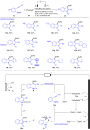
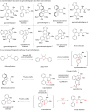
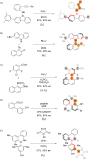
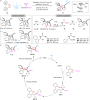
- , transition-metal-catalyzed approach for the synthesis of helically chiral polyaryl compounds with well-defined sequences of axial chirality. Using this method, they successfully obtained pentaaryl 6 (Scheme 1b) and nonaryl derivatives (not shown) bearing four and eight consecutive chiral axes, respectively
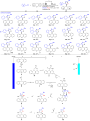
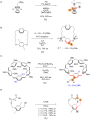
- ligands (Scheme 3) [44]. The resulting catalysts 18 demonstrated remarkable efficiency in the asymmetric transfer hydrogenation of quinoline derivatives. Along similar lines, Zhang and co-workers introduced an additional axial chirality element into a ligand framework, affording a pair of diastereomeric


Screwing the helical chirality through terminal peri-functionalization
Beilstein J. Org. Chem. 2026, 22, 205–212, doi:10.3762/bjoc.22.14
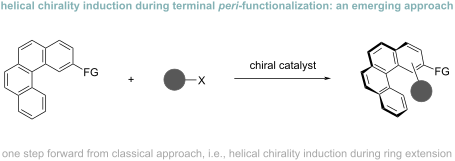
- frequently focused toward other types of chirality, like point chirality [3], axial chirality [4], and planar chirality [5][6][7], often overshadowing the potential of helical chirality. Point chirality has major applications in medicinal chemistry and several drug molecules contain point chirality centers
- in their core structure [8]. Point chirality is the simplest form of chirality, and it is relatively easy to control and characterize during the synthesis of organic molecules. Due to these facts point chirality holds a central position among the different types of chirality. Axial chirality is
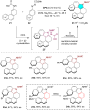
- outcome of the reaction. After rigorous testing, (S,S)-1,2-cyclohexanediamine-derived catalyst L1 was found to be the most effective organocatalyst to induce both the helical chirality and remote axial chirality during the functionalization of the [4]- and [5]helicenes 3a–k with good yield and excellent


Design and synthesis of an axially chiral platinum(II) complex and its CPL properties in PMMA matrix
Beilstein J. Org. Chem. 2026, 22, 143–150, doi:10.3762/bjoc.22.7
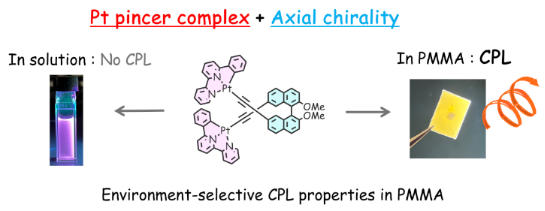
- increased to 4%. CD spectra showed distinct Cotton effects in the MLCT region, and CPL signals were observed only in the PMMA matrices, with a dissymmetry factor |glum| = 0.4 × 10⁻³. These results demonstrate that axial chirality of the binaphthyl moiety governs the three-dimensional chiral arrangement of
- two platinum(II) chromophore units, leading to the chiroptical properties in the MLCT region through exciton coupling under restricted molecular motion. Keywords: axial chirality; chiral chemistry; circularly polarized luminescence (CPL); phosphorescence; platinum(II) complex; Introduction
- -to-ligand charge transfer (MLCT). Furthermore, chiroptical measurements by circular dichroism (CD) and CPL spectroscopy indicated that the axial chirality of the binaphthyl moiety governs the relative orientation of the Pt(II)-based chromophore pair, generating MLCT-band CD and CPL signals through


Highly electrophilic, gem- and spiro-activated trichloromethylnitrocyclopropanes: synthesis and structure
Beilstein J. Org. Chem. 2026, 22, 123–130, doi:10.3762/bjoc.22.5
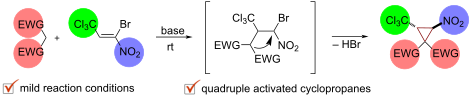
- and 9b (1.3:1 dr, according to the 1H NMR spectrum) due to the axial chirality of this molecule. The mixture was easily separated by silica gel column chromatography. Each of the isomers is characterized by the trans-configuration of the nitro- and trichloromethyl groups in the cyclopropane ring (3JH


Electrochemical cyclization of alkynes to construct five-membered nitrogen-heterocyclic rings
Beilstein J. Org. Chem. 2025, 21, 2173–2201, doi:10.3762/bjoc.21.166
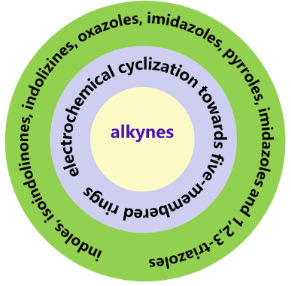
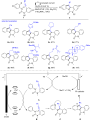
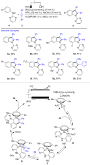
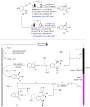
- alkynes bearing heteroatoms such as ynamides and thioalkynes would be enhanced in future research; (2) since axial chirality is critical in natural products and pharmaceuticals, it would be significant to apply the electrochemical annulation of alkynes in formation of organic rings with axial chirality








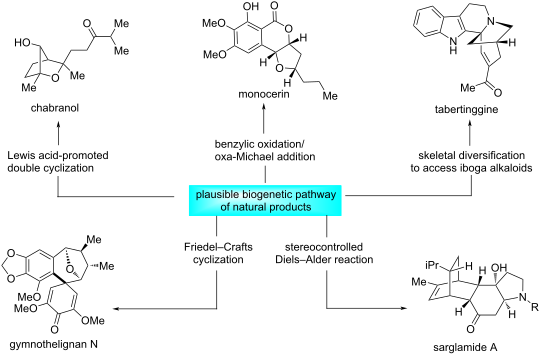
Bioinspired total syntheses of natural products: a personal adventure
Beilstein J. Org. Chem. 2025, 21, 2048–2061, doi:10.3762/bjoc.21.160
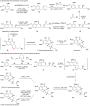
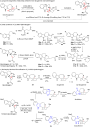
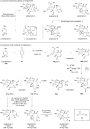
- obtained axial chirality is identical to the naturally occurring one. Almost at the same time, Soorukram and co-workers reported the same approach to access the dibenzocyclooctene member gymnothelignan V [41]. Next, we examined the bioinspired transformation of the linear skeleton to the spirocycle. By



Measuring the stereogenic remoteness in non-central chirality: a stereocontrol connectivity index for asymmetric reactions
Beilstein J. Org. Chem. 2025, 21, 1995–2006, doi:10.3762/bjoc.21.155
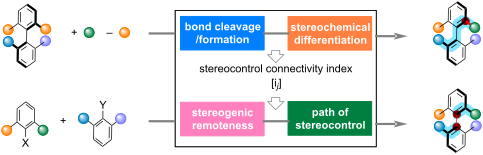
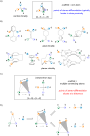
- , and the stereochemical-defining substituents. The indices can be generated based on analysis of the chemical structures of the starting materials and products, without mechanistic insights of the transformation. Representative examples of reactions that establish point chirality, axial chirality
- chiral molecules. Keywords: asymmetric reactions; axial chirality; catalysis; planar chirality; stereocontrol; Introduction Chirality is a ubiquitous and fundamental phenomenon in nature and thus holds an irreplaceable position in organic synthesis. At its most rudimental definition, chirality in a
- central atom (Scheme 1B). While chemists often classify chirality (stereogenicity) into distinct types according to the stereogenic elements, such as central (point) chirality, axial chirality, and planar chirality, these categories are inherently related. They can be viewed as arrangements of groups




Enantioselective desymmetrization strategy of prochiral 1,3-diols in natural product synthesis
Beilstein J. Org. Chem. 2025, 21, 1932–1963, doi:10.3762/bjoc.21.151

- 25 with vinyl butanoate and PPL delivered monoester 26 in 92% yield (99% ee). The axial chirality was transferred to the C7’ stereocenter through a Ag(I)-catalyzed cycloisomerization of the allenol, constructing the dihydrofuran ring. Lipase-catalyzed ester hydrolysis provided allylic alcohol 27












Chiral phosphoric acid-catalyzed asymmetric synthesis of helically chiral, planarly chiral and inherently chiral molecules
Beilstein J. Org. Chem. 2025, 21, 1864–1889, doi:10.3762/bjoc.21.145
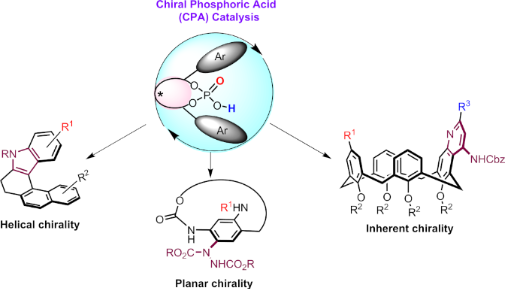
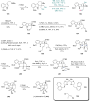
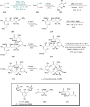
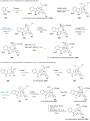
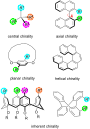
- .21.145 Abstract Chiral molecules, distinguished by nonsuperimposability with their mirror image, play crucial roles across diverse research fields. Molecular chirality is conventionally categorized into the following types: central chirality, axial chirality, planar chirality and helical chirality, along
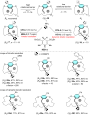
- pharmaceutical, agrochemical and asymmetric synthesis as well as materials science, to name a few examples. Molecular chirality is typically classified into four types of chiral elements: central (point) chirality, axial chirality, planar chirality and helical chirality (Figure 2). Moreover, unique forms of
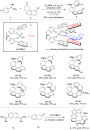
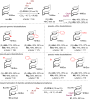
- high enantioselectivity (Scheme 16). Notably, with the use of acyclic azodicarboxylate as amination reagent, the products exhibited both inherent chirality and intriguing C–N axial chirality (see 57a). This method demonstrates excellent substrate compatibility, accommodating various calix[4]arenes with










Catalytic asymmetric reactions of isocyanides for constructing non-central chirality
Beilstein J. Org. Chem. 2025, 21, 1648–1660, doi:10.3762/bjoc.21.129

- . Additionally, we provide a perspective on the current limitations and future opportunities, aiming to inspire further advances in this area. Keywords: axial chirality; helical chirality; inherent chirality; isocyanide; planar chirality; Introduction Chirality represents a fundamental property of molecules
- ). However, the diastereoselectivity is modest (1.7:1), likely resulting from insufficient chiral induction during the indolinone-forming step. Moving forward, this strategy was applied in the construction of axial chirality by the same group. In 2021, they reported a Pd(OAc)2/L2-catalyzed imidoylative
- high enantioselectivities. Beyond planar and axial chirality, the same group developed a three-component coupling reaction of 2,2′-diisocyano-1,1′-biphenyls 16, aryl iodides, and carboxylates (Scheme 3a) [30]. Under chiral palladium catalysis, unique inherently chiral saddle-shaped bridged biaryls 17





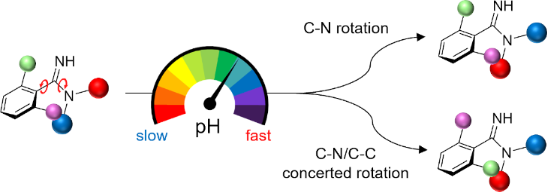
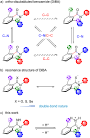
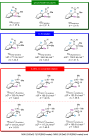
pH-Controlled isomerization kinetics of ortho-disubstituted benzamidines: E/Z isomerism and axial chirality
Beilstein J. Org. Chem. 2025, 21, 1568–1576, doi:10.3762/bjoc.21.120



Wittig reaction of cyclobisbiphenylenecarbonyl
Beilstein J. Org. Chem. 2025, 21, 1454–1461, doi:10.3762/bjoc.21.107
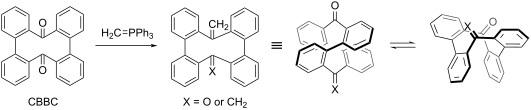
- (P,P)-1, whose configuration was previously confirmed [17]. The (P,P)-figure-eight conformation of CBBC 1 corresponds to the (Ra,Ra)-bathtub conformation, whose configuration is based on the axial chirality of the biaryl segment. Consequently, the 1st fractions of 3 and 5 were determined to be (Sa,Sa
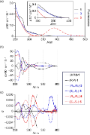
- the axial chirality of the biaryl segments, respectively. (a) UV–vis absorption (solid lines) and emission (dashed lines) spectra of 1 (black), 3 (blue), and 5 (red). (b) CD spectra of 1 (black), 3 (blue), and 5 (red). (c) CD g values of 1 (black), 3 (blue), and 5 (red). λ = wavelength; ε = extinction



Advances in nitrogen-containing helicenes: synthesis, chiroptical properties, and optoelectronic applications
Beilstein J. Org. Chem. 2025, 21, 1422–1453, doi:10.3762/bjoc.21.106
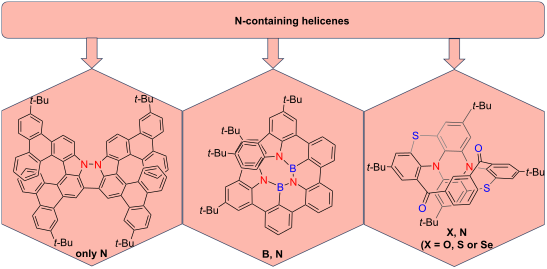
- carbonyl-nitrogen embedded hetero[7]helicenes 25a and 25b bearing axial chirality [39]. Compound 25a displays excellent optical characteristics with ΦF = 0.57, |gabs| = 1.7 × 10⁻², |glum| = 1.4 × 10⁻³, and a BCPL of 8.94 M−1 cm−1. Then, Chen’s group contributed triple aza[6]helicenes 26a and 26b with |glum

Pd-Catalyzed asymmetric allylic amination with isatin using a P,olefin-type chiral ligand with C–N bond axial chirality
Beilstein J. Org. Chem. 2025, 21, 1018–1023, doi:10.3762/bjoc.21.83
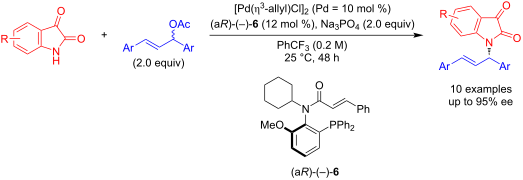
- the resulting product (S)-13a in the presence of FeCl3 as the catalyst, the corresponding malononitrile derivative (S)-16 was obtained without any loss in optical purity. Keywords: asymmetric allylic amination; axial chirality; isatin; palladium catalysis; P,olefin-type chiral ligand; Introduction
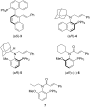
- ligands with axial chirality for Pd-catalyzed asymmetric allylic substitution reactions. For example, the Zhou group reported a P,olefin-type chiral ligand 3 with C–C bond axial chirality for this reaction (Figure 2) [27]. Additionally, we have recently reported chiral ligands with C–N bond axial
- detector and found that the C(aryl)–N(amide) bond axial chirality exists in amide compound 7. We attempted the optical resolution of racemic compound (±)-7 and obtained (+)-7 and (−)-7 using a semi-preparative chiral HPLC on 50 milligram scales. We also investigated the racemization process associated with




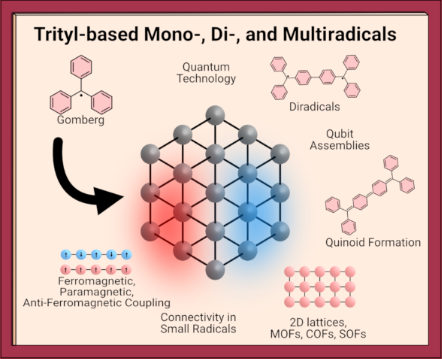
On the photoluminescence in triarylmethyl-centered mono-, di-, and multiradicals
Beilstein J. Org. Chem. 2025, 21, 964–998, doi:10.3762/bjoc.21.80
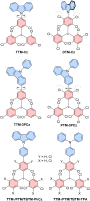
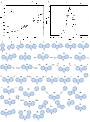
- the donor molecule might lead to reduced electron–electron repulsion in the extended systems improving the emission characteristics [66]. Circularly polarized photoluminescence The TTM-DNC and TTM-DPC with their helical donors are chiral and can be separated for the axial chirality of the helicene









Development and mechanistic studies of calcium–BINOL phosphate-catalyzed hydrocyanation of hydrazones
Beilstein J. Org. Chem. 2025, 21, 755–765, doi:10.3762/bjoc.21.59
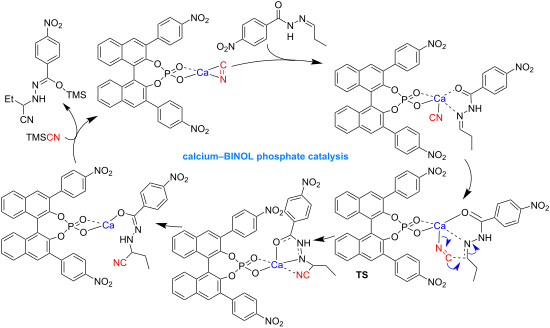
- complex as computed at B3LYP/6-31G* level of theory. Axial chirality configuration of the BINOL phosphate is as used in experiment (i.e., "R"). Bond lengths and distances are given in pm. For discussion see text. Species numbers represent all respective stereoisomeric forms. Reaction energy profile for


Recent advances in organocatalytic atroposelective reactions
Beilstein J. Org. Chem. 2025, 21, 55–121, doi:10.3762/bjoc.21.6
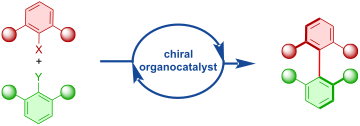
- Henrich Szabados Radovan Sebesta Department of Organic Chemistry, Faculty of Natural Science, Comenius University Bratislava, Mlynská dolina, Ilkovičova 6, 842 15 Bratislava, Slovakia 10.3762/bjoc.21.6 Abstract Axial chirality is present in a variety of naturally occurring compounds, and is
- acids feature as the most prolific catalytic structure. The last part of the article discusses hydrogen-bond-donating catalysts and other catalyst motifs such as phase-transfer catalysts. Keywords: asymmetric organocatalysis; atropoisomers; atroposelective synthesis; axial chirality; stereogenic axis
- -axial chirality conversion via catalyst-controlled oxidative aromatization [23]. In this way, the axially chiral starting material 12 comprising an additional stereogenic center was converted into oligonaphthylenes 13 with two, three or even four stereogenic axes. Based on the organocatalyst used, the











Copper-catalyzed yne-allylic substitutions: concept and recent developments
Beilstein J. Org. Chem. 2024, 20, 2739–2775, doi:10.3762/bjoc.20.232
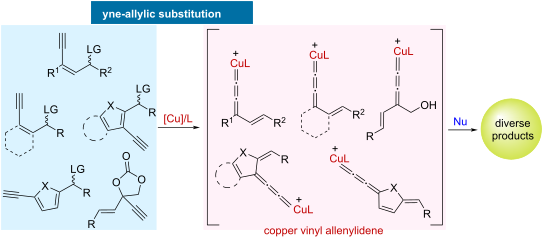
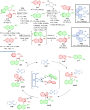
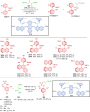
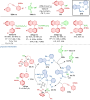
- , 50a–l) axial chirality in remarkable enantiopurities. Mechanistic studies and deuterium labeling experiments have revealed that the reaction proceeds in a stepwise manner without involving a 1,5-H migration process. Based on these findings, the authors have proposed a mechanism wherein the
- stereoselective aromatization serves as a pivotal step in the transfer of central chirality to axial chirality (Scheme 52). To harness the full potential of CO2 as a renewable and abundant carbon source, He et al. [82] proposed an innovative strategy that married asymmetric yne-allylic substitution with CO2
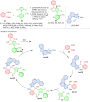
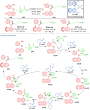
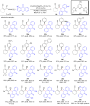
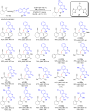
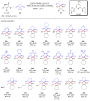
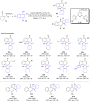
- arylpyrroles. Construction of chiral arylpyrroles with 1,2-di-axial chirality. Proposed mechanism. CO2 shuttling in yne-allylic substitution. CO2 fixing in yne-allylic substitution. Proposed mechanism. Funding This work was supported by the National Natural Science Foundation of China (Nos. 22071242 and













Perspectives on push–pull chromophores derived from click-type [2 + 2] cycloaddition–retroelectrocyclization reactions of electron-rich alkynes and electron-deficient alkenes
Beilstein J. Org. Chem. 2024, 20, 125–154, doi:10.3762/bjoc.20.13
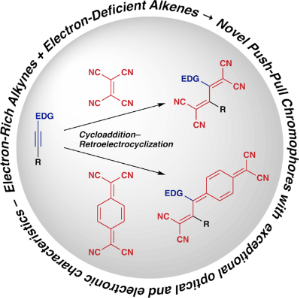
- may not be apparent at a glance. Nevertheless, comprehensive computational analyses employing the matrix method suggest that the intense long-wavelength CD signal observed for 56 is due to the coupling of individual helicene-to-TCBD electric-transition dipole moments. The emergence of axial chirality
- . The absolute configurations of the axially chiral TCBD and DCNQ derivatives were ascertained by a comparative analysis of the experimental CD spectra against the spectra derived from time-dependent density functional theory (TD-DFT) calculations. The axial chirality was stabilized by the steric
- congestion on the surface of fullerene, with its endurance contingent upon the bulkiness of the substituent incorporated onto the fullerene core. This observation was supported by the absence of axial chirality in molecules where an additional alkyne moiety is intercalated between the C60 core and TCBD or


Aromatic C–H bond functionalization through organocatalyzed asymmetric intermolecular aza-Friedel–Crafts reaction: a recent update
Beilstein J. Org. Chem. 2023, 19, 956–981, doi:10.3762/bjoc.19.72

- aryl moieties. For this purpose, sterically bulky substituents need to be present in the aryl ring attached to the C3 position of the starting indoles. The axial chirality was attributed to ester and phenolic OH groups at the ortho-positions of the aryl ring and an additional phenolic OH functionality
- electrophilic substitution also gave a quaternary aza-stereocenter in the pyrazolone moiety. Axial chirality associated with central chirality in the product structures was influenced by chiral phosphoric acid catalyst P23. To freeze the C–C bond rotation, the pyrazole moiety in 99 required sterically demanding
- . Functionalization of the carbocyclic ring of substituted indoles. Aza-Friedel–Crafts reaction between unprotected imines and aza-heterocycles. Anilines and α-naphthols as potential nucleophiles. Solvent-controlled regioselective aza-Friedel–Crafts reaction. Generating central and axial chirality via aza-Friedel




A new oxidatively stable ligand for the chiral functionalization of amino acids in Ni(II)–Schiff base complexes
Beilstein J. Org. Chem. 2023, 19, 566–574, doi:10.3762/bjoc.19.41
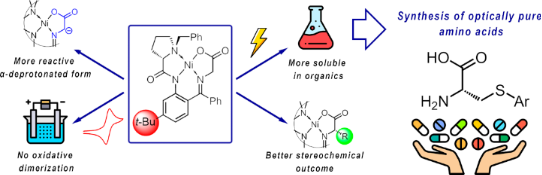
- ]. Functionalization of the phenyl ring in the benzophenone gives rise to an additional axial chirality (L3), thus improving stereoselectivity observed at the removed stereocenter [24][25]. Replacing N-benzylproline for 2,7-dihydro-1H-azepine (L5) allowed obtaining a new tridentate ligand with chemically stable axial
- chirality which exhibits no racemization under action of strong bases [29]. The chiral N–H-containing rimantadine-based ligand (L6) is highly lipophilic and it was successfully used for the kinetic resolution of unprotected racemic amino acids [30]. The examples mentioned above show that the metal–Schiff



BINOL as a chiral element in mechanically interlocked molecules
Beilstein J. Org. Chem. 2022, 18, 508–523, doi:10.3762/bjoc.18.53
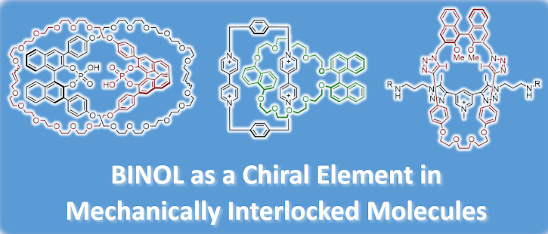
- stereoselective chemosensing. Given the growing importance of mechanically interlocked molecules and the key advantages of the privileged chiral BINOL backbone, we believe that this research area will continue to grow and deliver many useful applications in the future. Keywords: axial chirality; BINOL; catenanes
- chemosensing or in asymmetric catalysis. The selection of suitable stereogenic elements is of great importance [26][27][28]. The most straightforward way to create a chiral rotaxane or catenane is the introduction of classical chiral elements, such molecular parts with axial chirality, point chirality, or
- rotaxanes, the helicity is predetermined by the planar chirality (based on the underlying macrocycle–macrocycle interactions), so that only two diastereoisomers remain for a given BINOL configuration (e.g., (R)-(Rp) and (R)-(Sp) in case of (R)-BINOL). In contrast to the axial chirality of the BINOL unit




Recent advances in the asymmetric phosphoric acid-catalyzed synthesis of axially chiral compounds
Beilstein J. Org. Chem. 2021, 17, 2729–2764, doi:10.3762/bjoc.17.185
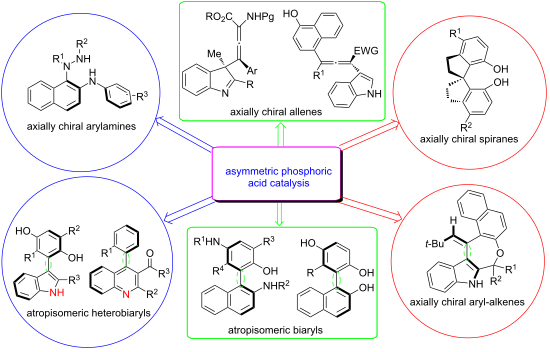
- of a wide range of axially chiral biaryls, heterobiaryls, vinylarenes, N-arylamines, spiranes, and allenes with high efficiency and excellent stereoselectivity. Keywords: allenes; atropisomerism; axial chirality; chiral phosphoric acid; heterobiaryls; spiranes; Introduction Axial chirality is one
- construction of axial chirality [7][8][9][10][11][12][13][14]. Axially chiral biaryl and heterobiaryl units are widely used as basic building blocks for chiral ligands [14], chiral catalysts [14][15][16][17] (Figure 1), various natural products, drugs and bioactive molecules [18][19], pharmaceutical agents [20
- -catalyzed enantioselective transformations [9][14][22][23]. Axial chirality is also found in chiral stationary phases for enantioselective separation, dopants in liquid-crystalline materials, chiroptical molecular switches, microporous soluble polymers, and interlocked nanotubes (Figure 3) [24]. In addition












Synthesis, crystal structures and properties of carbazole-based [6]helicenes fused with an azine ring
Beilstein J. Org. Chem. 2021, 17, 11–21, doi:10.3762/bjoc.17.2
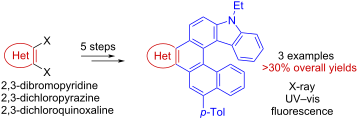
- repulsion of the terminal aromatic nuclei. The steric strain releases by adopting either the P- or M-helix configuration. The helically extended π-conjugated system, axial chirality and associated with these structural peculiarities unique optical and electronic properties of helicenes have attracted



A cyclopeptide and three oligomycin-class polyketides produced by an underexplored actinomycete of the genus Pseudosporangium
Beilstein J. Org. Chem. 2020, 16, 1100–1110, doi:10.3762/bjoc.16.97
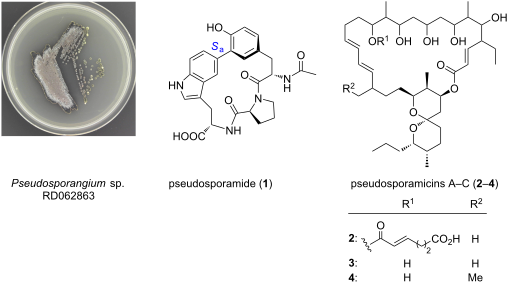
- -acetyl-ʟ-Tyr-ʟ-Pro-ʟ-Trp, was determined by a combination of spectroscopic analyses, chemical derivatization, ECD calculation, and DFT-based theoretical chemical shift calculation, revealing the presence of an (Sa)-axial chirality around the biaryl bond. Compounds 2–4 lacked hydroxylation on the side
- comparison of experimental and simulated ECD spectra [26][27]. Quite interestingly, the DFT calculation suggested that 1a and 1b would possess the opposite axial chirality around the biaryl bond between C-6 and C-7'': Ra for 1a and Sa for 1b as dominant atropisomers (Figure 4). This conformational difference
- pseudosporamicins A–C (2–4). COSY, key HMBC and ROESY correlations of pseudosporamide (1). 1H NMR ΔδS−R values for PGME amides 5a and 5b obtained from compound 1. The opposite axial chirality around the biaryl C-6–C-7'' bond influenced by the C-2 configuration in compound 1. 3D structures 1a-1 and 1b-1 are the most





