Search results
Search for "catalysis" in Full Text gives 1304 result(s) in Beilstein Journal of Organic Chemistry. Showing first 200.
Construction of CF2 moieties in FDA-approved drugs (2016–2025): industrial routes, mechanisms, and scale-up considerations
Beilstein J. Org. Chem. 2026, 22, 1122–1150, doi:10.3762/bjoc.22.91
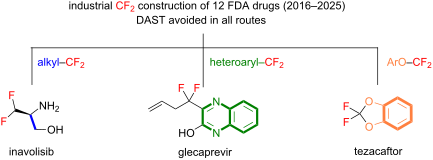
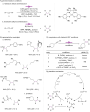
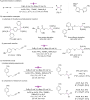
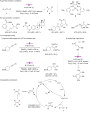
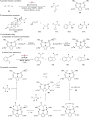
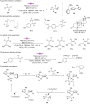
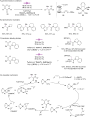
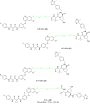
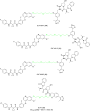
- antimony catalysis at room temperature and 0.4 MPa, giving a yield of 97.2% and a purity of 99.6% [33]. Using 69 as the starting material, there are four routes for the synthesis of 11: either 69 can be used directly, or first converted to the corresponding bromide or chloride, followed by radical addition
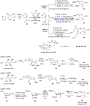
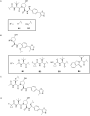
- primary alcohol steps. Routes b–d (reported in 2022) [9] all employed building block 23 to introduce the CF2 group, with route d being the industrial route. Using 23 and tert-butylsulfinamide (77), the chiral nitrogen center was constructed under Ti(OEt)4 catalysis under different conditions: using
- . In route b, 78 underwent chiral cyano addition to the imine under 0.1 equiv of Y(OTf)3 catalysis, with stereoselectivity highly dependent on the Lewis acid catalyst, followed by hydrolysis and reduction to give the chiral amino alcohol (containing 11% enantiomer). In route c, intermediate 80 – upon






Controlled supramolecular assemblies of luminescent tridentate cyclometalated alkynylgold(III) amphiphiles in aqueous media
Beilstein J. Org. Chem. 2026, 22, 1097–1106, doi:10.3762/bjoc.22.88
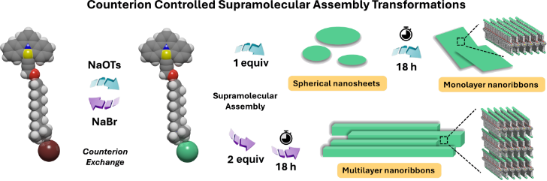
- (III) complexes have found wide applications for catalysis [41][42][43][44], optoelectronic materials [45][46], and bioconjugation methodologies [47][48][49], considering their unique luminescence properties and excellent aqueous stability. Amphiphilic gold(III) complexes were firstly reported by Che


Synthesis and acaricidal activity against Varroa destructor of α- and γ-costic acid dimers
Beilstein J. Org. Chem. 2026, 22, 1088–1096, doi:10.3762/bjoc.22.87
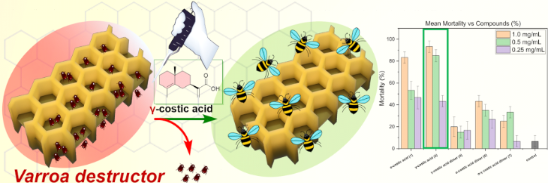
- of 1 into γ-costic acid (3) which was isolated together with its dimeric ester 4. On the contrary, Steglich esterification, achieved under basic catalysis by treating α-costic acid (1) with 1.0 equiv of ethylene glycol in the presence of dicyclohexylcarbodiimide (DCC) and a catalytic amount of N,N


Synthesis and optical resolution of 4,5-diaminohomoadamantane: a promising scaffold for chiral ligands and bioactive compounds
Beilstein J. Org. Chem. 2026, 22, 1013–1022, doi:10.3762/bjoc.22.80
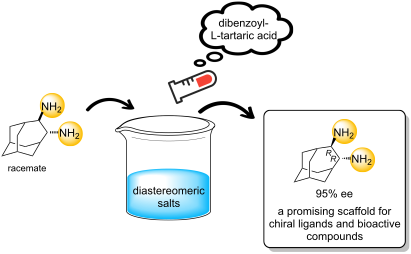
- in clinical practice [64][65][66], as well as auxiliaries and ligands in important asymmetric transformations [67][68][69][70]. Bi- and polycyclic vicinal diamines can also be considered as potential ligands for asymmetric catalysis [71][72][73][74], but little attention has been paid to methods for
- and O have been prepared recently (Figure 2) [69][83][84]. Results and Discussion Synthetic approaches to cage vicinal diamines are actively studied, as their rigid cage framework makes them promising ligands for asymmetric catalysis. In continuation of the theme of our studies [75][77][81], we
- of azidoxime 4. Synthesis of N-substituted aziridines 10–12. Aziridine 11 ring-opening reaction with NaN3. Aziridine 12 ring-opening and reduction. Resolution of racemic diamine 8a′. Synthesis of ligands 18 and 19′. Enantiodivergent Henry reaction when using ligands 8a′ and 18. Catalysis of the


Z-Selective semihydrogenation of alkynes via Ni/Lewis acid synergistic catalyzed system using DMF as hydrogen source and solvent
Beilstein J. Org. Chem. 2026, 22, 1004–1012, doi:10.3762/bjoc.22.79
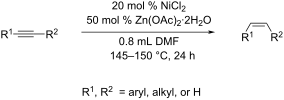
- available catalysts, and demonstrates broad applicability across a wide range of substrates. Keywords: alkynes; DMF; Ni/Lewis acid catalysis; Z-selective semihydrogenation; Introduction Z-Olefins represent important structural units in natural products, pharmaceuticals, and functional materials, making
- the stereoselective semihydrogenation of alkynes a fundamental transformation in synthesis [1][2][3][4][5]. Among available methods, transition-metal catalysis has played a dominant role. The classical Lindlar catalyst remains the most widely applied heterogeneous system [6], yet it suffers from
- this field. Synergistic catalysis, which combines two distinct catalytic components, has become a valuable approach for overcoming the limitations of single-catalyst systems [34][35][36]. Lewis acids are well known for their ability to activate polar functional groups and stabilize reactive



Rh(III)-catalyzed chelation-assisted C–H activation/annulation of 2-arylimidazolines with cyclic diazo-1,3-dicarbonyl compounds: a novel approach to tetracyclic annulated derivatives of 2,3-dihydroimidazo[2,1-a]isoquinoline
Beilstein J. Org. Chem. 2026, 22, 997–1003, doi:10.3762/bjoc.22.78
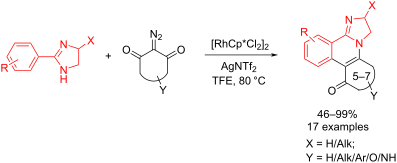
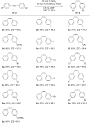
- )-catalysis for the first time. The developed general and efficient approach based on CH-activation allowed the efficient preparation of five novel types of tetraheterocyclic systems derived from 2,3-dihydroimidazo[2,1-a]isoquinolines fused with an additional five-, six- or seven-membered carbocycle or N-/O
- -heterocycle. Keywords: annulation; 2-arylimidazolines; catalysis; С–H activation; diazodiketones; 2,3-dihydroimidazo[2,1-a]isoquinolines; dimedone; tetraheterocycles; Introduction The advancement of organic synthesis techniques, especially methods for creating nitrogen-containing heterocycles, is essential
- (Figure 1a) [12][14][15], while analogs with an additional aryl group at position 6 were obtained only once as part of investigation of annulation of arylamidines with internal alkynes under ruthenium catalysis (Figure 1b) [16]. Regarding this, we were interested in developing a general approach to


Novel macrocycles: from synthesis to supramolecular function
Beilstein J. Org. Chem. 2026, 22, 982–985, doi:10.3762/bjoc.22.76
- characterized by deep, biomimetic cavities capable of efficient guest encapsulation. Macrocycles have evolved well beyond academic model studies and are now involved in a broad range of applications spanning environmental remediation [17], biomedicine [18][19], sensing [20][21][22], catalysis [23][24][25], and
Electrochemical reduction of unsaturated carbon–carbon bonds via 3d transition-metal catalysis
Beilstein J. Org. Chem. 2026, 22, 955–981, doi:10.3762/bjoc.22.75
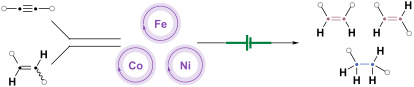
- provide effective approaches for promoting selective alkene hydrogenation. Electrochemical and 3d transition-metal catalysis Owing to the straightforwardness of the reductive chemical transformation, a plethora of synthetic approaches has been utilized, with recent efforts increasingly converging on 3d
- transition-metal catalysis [13][14][15][16][17][18] that enables cost-effective hydrogenation reactivity and electroorganic synthetic strategies [19][20][21][22][23][24][25][26][27][28][29][30][31][32][33][34][35][36][37] that employ externally applied potentials to achieve bond reduction with operational
- sustainability. First of all, the recent emergence of homogeneous 3d transition-metal catalysis has reshaped reductive methodologies, as these earth-abundant metals offer accessible redox manifolds and characteristic SET behavior that directly address the economic and environmental constraints of noble-metal








Synthesis of sterically shielded piperidine nitroxides via acid-catalyzed heterocyclization of β-aminoketone derivatives with ketones
Beilstein J. Org. Chem. 2026, 22, 948–954, doi:10.3762/bjoc.22.74
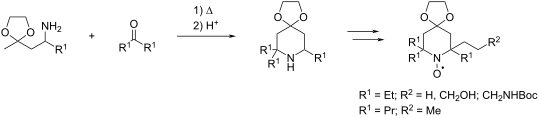
- in materials science and structural biology. The new heterocyclization strategy implies the construction of a 2,2,6-trisubstituted piperidine scaffold from β-aminoketone acetals and dialkyl ketones under acid catalysis. The resulting amines were oxidized to the corresponding ketonitrones and


Recent advances in copper-catalyzed direct hydroamination of alkenes with (hetero)aromatic amines
Beilstein J. Org. Chem. 2026, 22, 925–947, doi:10.3762/bjoc.22.73
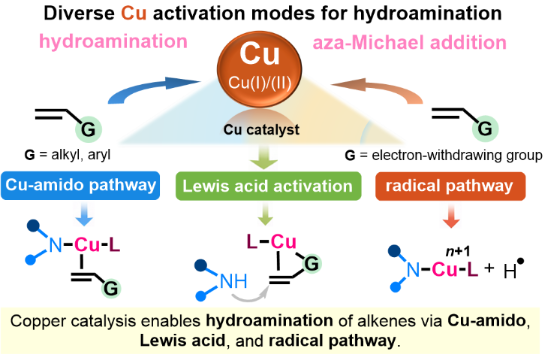
- coordination behavior of these substrates render such transformations inherently challenging. Recently, copper catalysis has emerged as a versatile and practical platform for addressing these limitations. Owing to its redox flexibility and ligand tunability, copper facilitates multiple activation modes
- , and functional group tolerance. This review summarizes recent advances in the copper-catalyzed hydroamination of alkenes with (hetero)aromatic N–H nucleophiles, emphasizing the mechanistic paradigms and the factors governing selectivity. Keywords: aromatic amines; aza-Michael addition; Cu catalysis
- the direct hydroamination of alkenes using aromatic amines and aza-heterocyclic N–H nucleophiles under copper catalysis. The primary focus is on the mechanistic paradigms, Cu–amido pathways, Lewis acid activation, and carbon-radical manifolds, and on how these distinct activation modes translate into







Cascade transformation of 2-(diazoacetyl)-2H-azirines to 2-aroyl-3-hydroxy-1H-pyrroles via condensation with aromatic aldehydes
Beilstein J. Org. Chem. 2026, 22, 897–904, doi:10.3762/bjoc.22.70
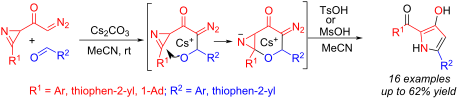
- mixture was observed in the presence of AcOH, TfOH, TFAA, and BF3⋅Et2O. This is clearly due to the complex mechanism of formation of pyrrole 5a. The role of acid catalysis follows from the plausible mechanism of transformation of the bicyclic intermediate (1RR,3SR,6RR)-Phe-4 to pyrrole 5 shown in Scheme 4


Diastereodivergent electrophilic trapping of α-boryl lithium derivatives
Beilstein J. Org. Chem. 2026, 22, 882–887, doi:10.3762/bjoc.22.68
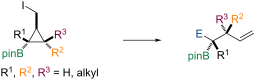
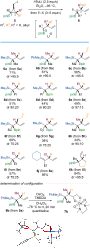
- Tereza Pavlickova Noam Orbach Ilan Marek Schulich Faculty of Chemistry and the Resnick Sustainability Center for Catalysis, Technion – Israel Institute of Technology, Haifa, 3200009, Israel 10.3762/bjoc.22.68 Abstract α-Boryl carbanions are valuable organoboron intermediates, but controlling




Site-specific labelling of native peptides and proteins: chemical and enzymatic strategies
Beilstein J. Org. Chem. 2026, 22, 857–881, doi:10.3762/bjoc.22.67
- , Gothenburg, 43183, Sweden Interdisciplinary Research Center, Division of Interdisciplinary Science, Institute for Radiation Sciences, The University of Osaka, 1-2 Machikaneyama-cho, Toyonaka 560-0043, Osaka, Japan School of Chemistry and Cardiff Catalysis Institute, Cardiff University Main Building, Park Pl
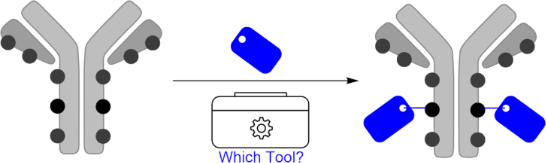
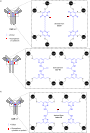
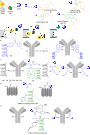
- highlight opportunities for innovation in next-generation native-sequence protein modification technologies. Keywords: affinity-guided chemistry; disulfide-rebridging; enzyme catalysis; glycan modifications; native-sequence; protein labelling; small-molecule modifications; terminal; Introduction Protein
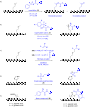
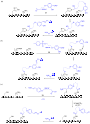
- has led to the development of labelling techniques, wherein the C-terminal carboxylate can be functionalized via visible-light photoredox decarboxylative catalysis (Scheme 2d) [23]. Similarly, decarboxylative alkylation has been applied to complex proteomes to enable proteome-wide C-terminal profiling









The trans-influence in gold chemistry from a catalytic perspective
Beilstein J. Org. Chem. 2026, 22, 838–856, doi:10.3762/bjoc.22.66
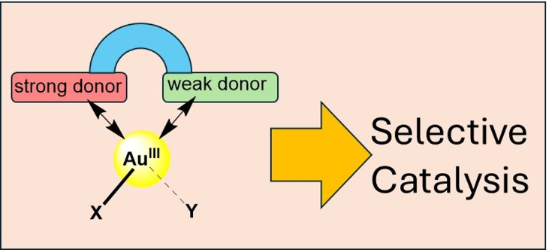
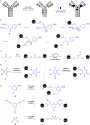
- Manfred Bochmann School of Chemistry, University of East Anglia, Norwich Research Park, NR4 7TJ, Norwich, United Kingdom 10.3762/bjoc.22.66 Abstract Gold catalysis has developed into an increasingly important method in organic synthesis. Especially the potential of gold(I,III) redox systems and
- recent mechanistic insights. Keywords: catalysis; gold; ligands; reaction mechanism; trans-influence; Introduction Gold catalysts have emerged as catalysts of choice in a multitude of organic transformations, not least due to their high functional group tolerance. Their applications have been widely
- and 3. This correlation proved to be of predictive value in the optimisation of product selectivity with as yet untested ligands [26]. Using kinetic competition experiments is a particularly sensitive method for assessing ligand effects in catalysis, since they are able to quantitatively reflect even


Knoevenagel condensation of 4,5- and 1,8-diazafluorenes
Beilstein J. Org. Chem. 2026, 22, 803–812, doi:10.3762/bjoc.22.62
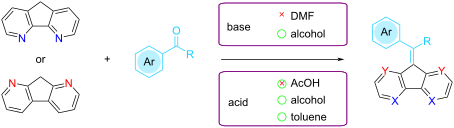
- malononitrile or acetonitrile derivatives [14][19][20]. However, the use of diazafluorenes as the methylene component in condensation reactions remains underexplored. These reactions can be carried out under basic [13][21], acidic [3][5] or Lewis acid catalysis [15][22], but the corresponding literature
- examples are scarce, especially for 1,8-diazafluorene. We have previously reported the condensation of 4,5-diazafluorene (1) with aromatic aldehydes and dialdehydes under ammonium acetate catalysis in acetic acid giving the corresponding products in good yields [5][23]. Remarkably, the only condensation of


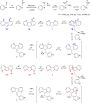


Rongalite addition to dienones: diastereoselectivity in cyclic sulfone synthesis; stereochemical rationalization and prospects as a general conjugate nucleophile
Beilstein J. Org. Chem. 2026, 22, 742–752, doi:10.3762/bjoc.22.56

- appears that there is scope for further development of Rongalite as a nucleophile in double intermolecular conjugate additions, but full realization of this goal is likely to require the intervention of catalysis. Suitable modes of activation might include well-chosen Lewis acids [46], hydrogen-bond
- donors [47] or, given the high solubility of Rongalite in water, phase-transfer catalysis [48]. Our earlier results indicate that tolerance of steric effects is greater in reactions with doubly electrophilic substrates that render the second conjugate addition intramolecular, justifying our choice of
- heterocycles and also those looking to use Rongalite as a source of nucleophilic sulfur in other transformations. We are currently examining extensions of this method and other sulfinate reaction development and catalysis. Rongalite as an equivalent of the unstable hyposulfite ion. Sulfone diastereomers 1a and


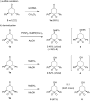


Synthesis of heterocycles based on azomethine ylides from α-amino acids (or amines) and carbonyl compounds
Beilstein J. Org. Chem. 2026, 22, 705–741, doi:10.3762/bjoc.22.55
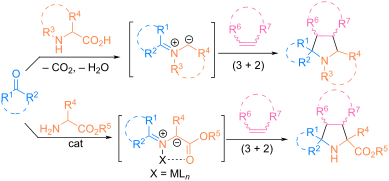
- compounds; catalysis; (3 + 2) cycloaddition; decarboxylation; dipolarophiles; iminoesters; polycyclic compounds; spirocyclic compounds; stereoselectivity; Introduction The 1,3-dipolar cycloaddition is one of the most popular pericyclic reactions in organic synthesis, in which a dipole molecule interacts
- enones, which trigger a 1,3-dipolar cycloaddition via copper–ruthenium catalysis [54] (Scheme 15). Further reductive hydrogenation of ketopyrrolidines proceeds to form hydroxypyrrolidines 31 in high yields and excellent diastereo-/enantioselectivity. The reaction can be used with aldimine esters with


Synthesis of depressin, cryptomeridiol and 4-epi-cryptomeridiol enabled by a terpenoid chiral pool-producing platform
Beilstein J. Org. Chem. 2026, 22, 683–690, doi:10.3762/bjoc.22.53
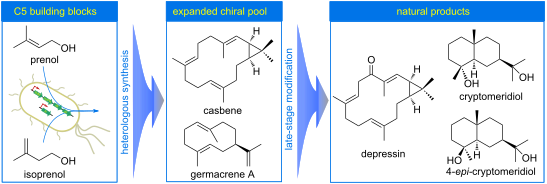
- available by taking advantage of Nature’s logic for terpene synthesis, either via in vitro enzymatic catalysis [12], or via heterologous production. The toolbox of the terpenoid ‘chiral pool’ has been further expanded by integrating enzymatic catalysis, hence providing us with more flexibility to design the


Harnessing light energy with molecules
Beilstein J. Org. Chem. 2026, 22, 680–682, doi:10.3762/bjoc.22.52
- storage, catalysis, or controlled drug delivery. In the article by Venkataramani, Gopakumar, and co-workers [13], it is shown how a fluorinated tripodal N-functionalized arylazo-3,5-dimethylpyrazole derivative, self-assembled on a graphite surface, can be switched between eight states in a tunneling
- singlet-state photoredox catalyst in the sulfonylation/arylation of styrenes and as a triplet sensitizer in energy transfer catalysis. In addition to the photoredox contribution mentioned above, this thematic issue contains two publications on photochemical reactions beyond photoisomerizations. In the
Advantages of PROTACs in achieving selective degradation of homologous protein families
Beilstein J. Org. Chem. 2026, 22, 628–661, doi:10.3762/bjoc.22.49
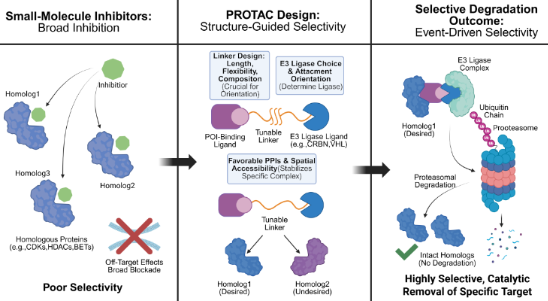
- proteins under the catalysis of a series of enzymes [112]. The ubiquitinated protein can be recognized explicitly by the proteasome to achieve degradation. The whole process requires the participation of three enzymes: ubiquitin-activating enzyme (E1), ubiquitin-conjugating enzymes (E2), and ubiquitin









Hydrogen production from formic acid catalyzed by NHC–Cu complexes
Beilstein J. Org. Chem. 2026, 22, 620–627, doi:10.3762/bjoc.22.48
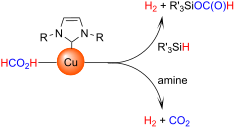
- equimolar mixture of H2 and CO2. The efficiency of the catalysis showed to be strongly dependent on the nature of the amine. Keywords: copper N-heterocyclic carbene; formic acid dehydrogenation; hydrogen storage; metal hydride; silanes; Introduction The discovery and utilization of alternative and


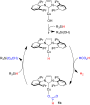

Regioselective approach to 5-arylsulfonylisoxazoles and their antimicrobial activity
Beilstein J. Org. Chem. 2026, 22, 592–602, doi:10.3762/bjoc.22.45
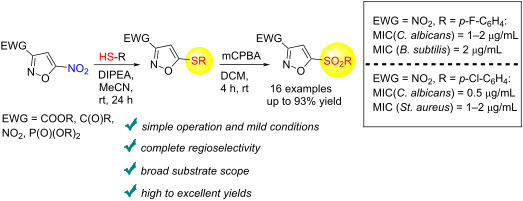
- nitrile oxides in cycloaddition reactions, complete control of regioselectivity without metal catalysis is not always achievable. Another problem with this method is the tendency of nitrile oxides to form dimers (furoxanes), which entails a decrease in the yield of isoxazoles. Due to dimerization, nitrile


Continuous-flow carbonyl hydrogenation under subatmospheric to atmospheric hydrogen pressure enabled by robust heterogeneous Pt–Fe catalysts
Beilstein J. Org. Chem. 2026, 22, 575–582, doi:10.3762/bjoc.22.43
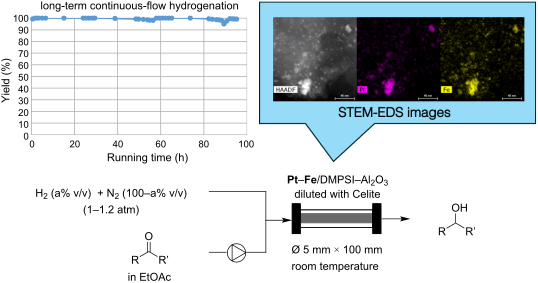
- as functional materials and pharmaceuticals [1][2][3][4]. While stoichiometric reagents and catalytic methods are widely developed for this transformation, one of the most ideal methods is heterogeneous catalysis using molecular hydrogen as a reductant, which realizes 100% atom economy [5][6][7][8][9
- : Additional experimental details, materials, and methods including photographs of reactor systems, STEM-EDS images and XPS spectra of heterogeneous catalysts, and copies of 1H and 13C NMR spectra for isolated compounds. Acknowledgements H. M. also thanks the Joint Usage/Research Center for Catalysis


Melifoliox B, a novel phloroglucin derivative isolated from Melicope barbigera (Rutaceae) and synthesis of new oxidation products from melifoliones A and B
Beilstein J. Org. Chem. 2026, 22, 535–546, doi:10.3762/bjoc.22.39
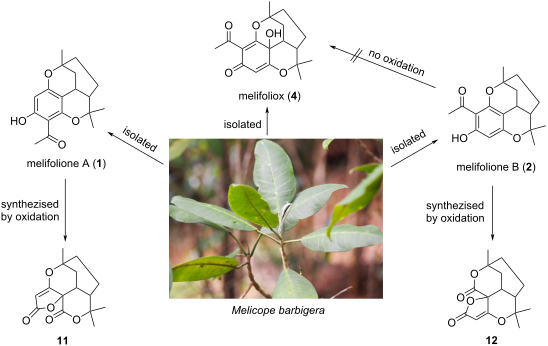
- melifoliones should be synthesized first, to get enough quantity for oxidation to the corresponding quinols in a second experiment. Using the method of Wang and Lee [5], 1 could be prepared regio-specifically in good yield by heating phloroacetophenone and citral in DMF under catalysis of ethylenediammonium



Modern synthetic pathways towards eribulin and its subunits
Beilstein J. Org. Chem. 2026, 22, 495–526, doi:10.3762/bjoc.22.37
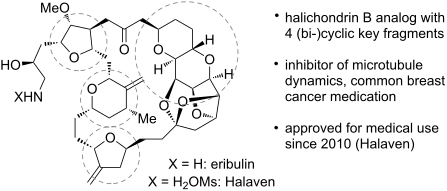
- aldehyde 104, which contains the necessary functional group pattern to be used as a building block for the assembly of 1. By the design of this novel synthetic pathway, Lee and co-workers showed that the commonly used NHK reaction involving dual chromium/nickel catalysis can be circumvented [86]. Here