Search results
Search for "conformer" in Full Text gives 201 result(s) in Beilstein Journal of Organic Chemistry. Showing first 200.
Synthesis and optical resolution of 4,5-diaminohomoadamantane: a promising scaffold for chiral ligands and bioactive compounds
Beilstein J. Org. Chem. 2026, 22, 1013–1022, doi:10.3762/bjoc.22.80
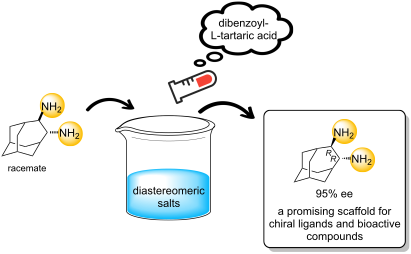
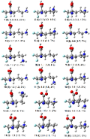
- them the dihedral angle for C4–C5–N–H was scanned in 15 degrees increments, starting from 171.48 degree. The results of scans are represented in Figure 3. All in all, 18 conformations, that have energies within 10 kJ/mol from the most stable conformer, were chosen for further computation. The geometry


Cascade transformation of 2-(diazoacetyl)-2H-azirines to 2-aroyl-3-hydroxy-1H-pyrroles via condensation with aromatic aldehydes
Beilstein J. Org. Chem. 2026, 22, 897–904, doi:10.3762/bjoc.22.70
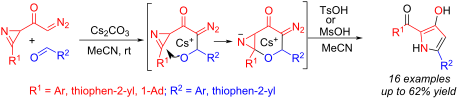
- ring. The intermediate (RR,RR)-B immediately yields a more stable conformer with the Ph group from benzaldehyde in the equatorial position (1RR,3RR,6RR)-Phe-C, but the equilibrium as a whole is shifted towards the most stable isomer (1RR,3SR,6RR)-Phe-C isomer. According to the calculation, the


Diastereodivergent electrophilic trapping of α-boryl lithium derivatives
Beilstein J. Org. Chem. 2026, 22, 882–887, doi:10.3762/bjoc.22.68
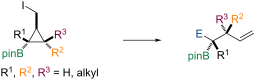
- . This conformational constraint rigidifies the system through formation of a pseudo-ring, leading to potential gauche interactions between R1 and R3 in conformer B (Scheme 5). In conformer C, however, substituents R1 and R3 are further apart, which expose a free diastereotopic face above the plane of
- the molecule and allows the electrophile to react anti to the pseudo-chelated metallacyle. When R2 = alkyl and R3 = H, the corresponding enantiomeric conformer leads to the same diastereomer, as expected from the enantiomeric relationship (see 6d from 5c and 5d, Scheme 3). Conclusion In conclusion




Rongalite addition to dienones: diastereoselectivity in cyclic sulfone synthesis; stereochemical rationalization and prospects as a general conjugate nucleophile
Beilstein J. Org. Chem. 2026, 22, 742–752, doi:10.3762/bjoc.22.56

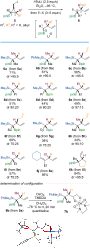
- calculated transition state structure TS-12a shows a flattened half-chair conformer, which has the aryl rings in pseudo-equatorial positions. TS-12b adopts a different shape, closer to a flattened chair which again allows both aryl groups to be equatorial. There has been much debate in the literature




Computational prediction of C–H hydricities and their use in predicting the regioselectivity of electron-rich C–H functionalisation reactions
Beilstein J. Org. Chem. 2026, 22, 603–610, doi:10.3762/bjoc.22.46
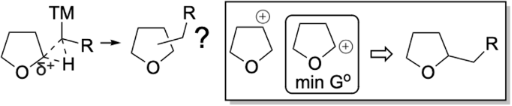
- out at each unique site by converting a SMILES string into a RDKit molecule object, producing a list of SMILES for each C–H bond. We generate min(1 + 3nrot, 20) conformers for each SMILES using RDKit (v.2023.09.3) [12], where (nrot) represents the number of rotatable bonds. Each conformer undergoes
- Butina clustering using pairwise heavy-atom root mean square deviation (RMSD) with a threshold of 0.5 Å [12][15]. To identify the lowest-energy conformer, we subsequently re-optimise the remaining conformers in DMSO with the semiemprical quantum chemistry method GFN2-xTB[16] and apply the ALPB implicit
- random conformer, we produce 20 random conformers from a SMILES string and optimise the structure with molecular mechanics force fields (MMFF) [33] using RDKit [12]. The CM5 atomic charges of the lowest-energy conformer are then used to generate atomic descriptors based on sorting the CM5 charges for a


![[Graphic 6]](/bjoc/content/inline/1860-5397-22-46-i8.svg?max-width=637&scale=1.18182)


Conformational analysis of difluoromethylornithine: factors influencing its gas-phase and bioactive conformations
Beilstein J. Org. Chem. 2026, 22, 237–243, doi:10.3762/bjoc.22.17
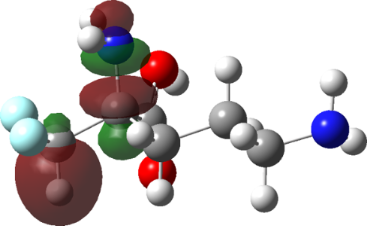
- conformer 4 being the most stable (14%). Consequently, the gauche effect persists in solution (Figure S1, Supporting Information File 1). To clarify the origin of this behavior, natural bond orbital (NBO) analyses were carried out to separate steric and electron-delocalization effects. The principal low
- hyperconjugation, but the former experiences weaker steric repulsion. Conversely, conformer 18 is both the least stabilized by hyperconjugation and one of the most sterically hindered. The gas-phase preferences can be contrasted with the bioconformation of (S)-DFMO. Although PDB entry 9FOS is reported as ornithine
- minimize gauche interactions between the polar C–F bonds. The relative energies among the type-I conformers, however, are further modulated by steric effects. Notably, the type-II conformer (5) ranks among the most stable structures owing to its minimal steric repulsion. In a biological environment, this




Reactivity umpolung of the cycloheptatriene core in hexa(methoxycarbonyl)cycloheptatriene
Beilstein J. Org. Chem. 2026, 22, 64–70, doi:10.3762/bjoc.22.2
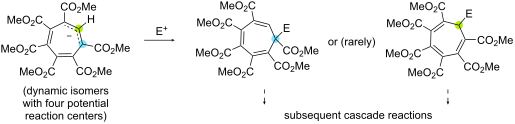
- reactions mainly involve the initial electrophilic attack onto the α-position relative to the hydrogen atom. The selectivity is either due to the high stability of the α-nucleophilic conformer or due to the promotion by the adjacent ester group. Cascade reactions upon the target connection, if installed
- anionic system (shown as tautomer in Figure 2) with a diene fragment (shown as double bonds) twisted over it. In hexa(methoxycarbonyl)cycloheptatrienyl anion 2 the prevalent allylic conformer is the one with the hydrogen atom in the middle of the allyl-anionic fragment (the i-position) to afford the
- the set of conformations of anion 2 and found that conformer 2', with an allyl-anionic fragment shifted to form a nucleophilic CH fragment (Figure 3), is only 9.6 kcal/mol less stable than the main conformer 2 (the energy values of other conformers are given in Supporting Information File 1). Note


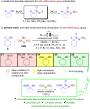
Sustainable electrochemical synthesis of aliphatic nitro-NNO-azoxy compounds employing ammonium dinitramide and their in vitro evaluation as potential nitric oxide donors and fungicides
Beilstein J. Org. Chem. 2025, 21, 2739–2754, doi:10.3762/bjoc.21.211
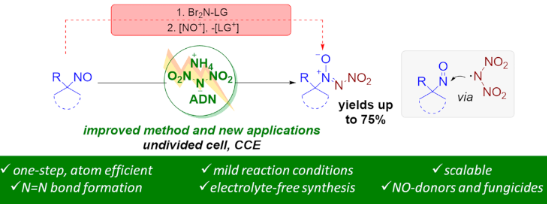
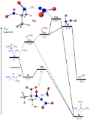
- length constraints were used for the generation of conformer ensembles of transition states in order to avoid optimization to starting reagent(s) or product(s). On the next step, most stable conformers were identified by re-optimization of generated conformers and vibrational analysis on ωB97X-3c [94





The intramolecular stabilizing effects of O-benzoyl substituents as a driving force of the acid-promoted pyranoside-into-furanoside rearrangement
Beilstein J. Org. Chem. 2025, 21, 2456–2464, doi:10.3762/bjoc.21.187
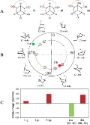
- ° correspondingly, after which the starting structures were fully optimized. Quite expectedly for galactose, the gt conformer was found to have the lowest energy. Supporting Information File 1, Table S1 contains the energies obtained for the three conformers and Figure 4C provides graphical representation of the
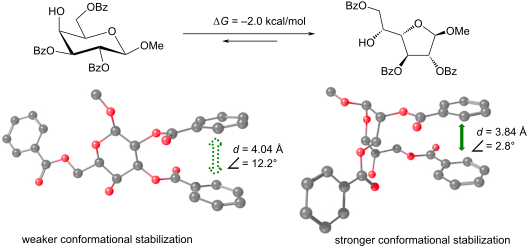
- -Sundralingam parameters for C1-endo and C1-exo conformations of compound 2 are given in Table 1. The resulting most stable C1-endo conformer of furanoside 2 is in agreement with the 1H,1H coupling constants that were observed for it previously [26]: 3J1,2 < 1 Hz, 3J2,3 = 1.6 Hz and 3J3,4 = 5.0 Hz. The
- corresponding torsional angles in the found conformer are measured to be approximately 90°, −101° and 129°. A possible reason for this result was determined upon the examination of the obtained structures (graphical representation is given in Figure 5A). It is clearly seen that both the pyranoside and the




Rotaxanes with integrated photoswitches: design principles, functional behavior, and emerging applications
Beilstein J. Org. Chem. 2025, 21, 2345–2366, doi:10.3762/bjoc.21.179
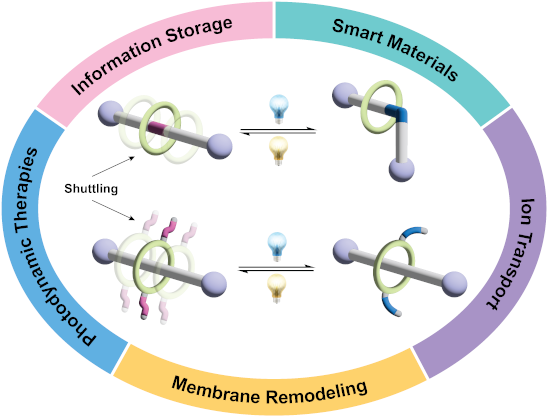
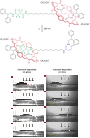
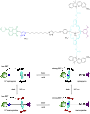
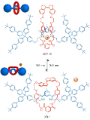
- of the DB24C8 macrocycles can control the photocyclization of the dithienylethene. For instance, when the DB24C8 is positioned at the N-methyltriazolium (MTA) site, the photocyclization rate is enhanced because the macrocycle locks the antiparallel conformer of the dithienylethene. In contrast, the





Recent advances in Norrish–Yang cyclization and dicarbonyl photoredox reactions for natural product synthesis
Beilstein J. Org. Chem. 2025, 21, 2315–2333, doi:10.3762/bjoc.21.177
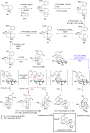
- less favorable pathway compared to the previously employed 1,5-HAT. Initial feasibility studies revealed that the non-brominated substrate exhibited poor reactivity in the photochemical 1,6-HAT reaction (Scheme 14), as its unreactive conformer J dominated the equilibrium. In contrast, the brominated
- analogue achieved high efficiency: the bulky bromine atom sterically biased the population toward the reactive conformer I, where the benzylic C–H bond is optimally positioned for 1,6-HAT. Therefore, (S)-113 was selected as the precursor for the key photoredox reaction (Scheme 15). To prepare this, a







A m-quaterphenyl probe for absolute configurational assignments of primary and secondary amines
Beilstein J. Org. Chem. 2025, 21, 2211–2219, doi:10.3762/bjoc.21.168
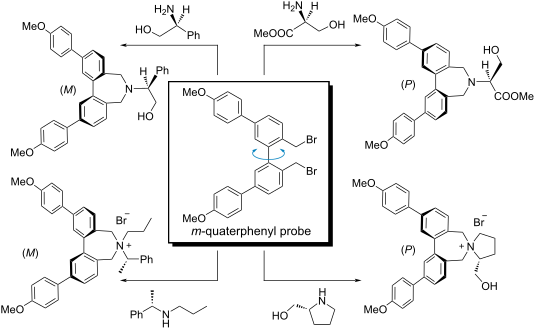
- derivatives [41] the preferred conformation of (S)-2a can be proposed (Figure 2). In the case of the P conformer, a Newman projection along the C–N bond reveals that the bulkier substituent, the hydroxymethyl group (denoted as L), is close to a seven-membered ring, and is destabilized by steric repulsion with
- the methylene protons. In contrast, in the M conformer, the medium-sized methyl group (denoted as M) is located near the seven-membered ring, reducing the steric repulsion involving the hydroxymethyl group with the methylene protons. Moreover, considering that the phenyl ring and the ester carbonyl
- clarity. The relationship between the ACD values and excess of P conformer. Excess of P conformer (%) = ([P] − [M])/([P] + [M]) × 100, where [P] and [M] are the amounts of P and M conformers calculated by B3LYP/6-31G*, respectively. Coupling reaction of 1 and chiral primary and secondary amines. The


Photoswitches beyond azobenzene: a beginner’s guide
Beilstein J. Org. Chem. 2025, 21, 1808–1853, doi:10.3762/bjoc.21.143
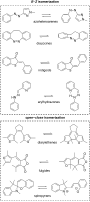
- [49]. The metastable E-diazocine exists in two conformers that can interconvert and have different absorption spectra (Scheme 10): twist (generally more stable) and chair (less stable). The spectrum of the chair conformer overlaps with the Z-isomer. Thus, to obtain better PSSs, the right conditions
- should be chosen to favour the twist conformer [50]. Each form exists in two enantiomers. The E-enantiomers cannot interconvert directly without first converting to the other conformer [51]. Regarding the substitutions on the aromatic rings, it has been reported that electron-donating groups tend to red
- soluble in water. For C- and S-diazocine, the absorption band separation of the two isomers is lower in polar solvents, resulting in worse PSS. In particular, for the S-diazocine it was found that the E-chair conformer was bathochromically shifted with increasing polarity of the solvent until completely






Thermodynamics and polarity-driven properties of fluorinated cyclopropanes
Beilstein J. Org. Chem. 2025, 21, 1742–1747, doi:10.3762/bjoc.21.137
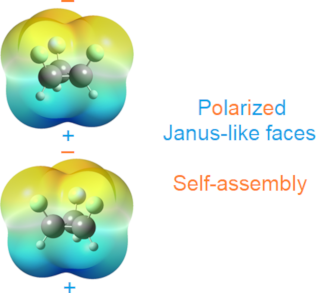
- electron delocalization effects. Among the difluorocyclopropanes, the stability order is 1.1 > 1.2-t. > 1.2-c., highlighting the destabilizing influence of 1,2-syn-diaxial repulsion in the 1.2-c. isomer. A similar interaction is observed in cis-1,3-difluorocyclobutane, where the diaxial conformer is


Structural analysis of stereoselective galactose pyruvylation toward the synthesis of bacterial capsular polysaccharides
Beilstein J. Org. Chem. 2025, 21, 1671–1677, doi:10.3762/bjoc.21.131

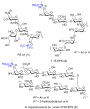
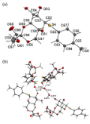
- , and the immunological properties may base on R/S-configuration. However, precisely controlling the formation of R- and S-isomers and identifying the correct conformer can be challenging due to the structural similarities between these two isomers. Researchers have recently developed strategies to


Wittig reaction of cyclobisbiphenylenecarbonyl
Beilstein J. Org. Chem. 2025, 21, 1454–1461, doi:10.3762/bjoc.21.107
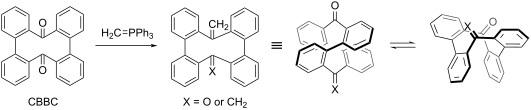
- temperature. These are attributable to the mixture of conformers with the figure-eight conformation as minor and the bathtub conformation as major conformer with a ratio of ca. 1:7. The obtained temperature-dependent 1H NMR data were subjected to the van't Hoff plot, affording an enthalpy ΔH and an entropy ΔS
- conformation (Sa,Sa)-A is feasible with a small activation barrier of 9.9 kcal mol−1. The figure-eight conformer (M,M)-B untwists to adopt an achiral conformation C with the exo-alkene units rotated inwards in opposite directions. These conformational changes are almost identical to those of CBBC 1. However



Tautomerism and switching in 7-hydroxy-8-(azophenyl)quinoline and similar compounds
Beilstein J. Org. Chem. 2025, 21, 1404–1421, doi:10.3762/bjoc.21.105
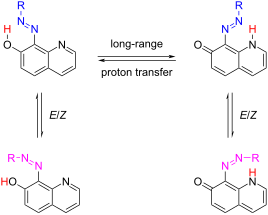
- K does not change it much (Table 1, the italicized values). The calculated energy barrier of process from 1KE to 1KK in acetonitrile (37 kcal/mol in Table 1) is relatively high and this process should be slow in the NMR time scale. The conclusion from these calculations is that the major conformer
- is a result of fast exchange between 1E and 1KE and the minor conformer can be attributed to 1KK. The measured carbon spectrum of 1 in CD3CN at 243 K (Figure S8 in Supporting Information File 1) supports this assignment as well. The HSQC spectrum (Figure S9 in Supporting Information File 1) helps in




Enhancing chemical synthesis planning: automated quantum mechanics-based regioselectivity prediction for C–H activation with directing groups
Beilstein J. Org. Chem. 2025, 21, 1171–1182, doi:10.3762/bjoc.21.94
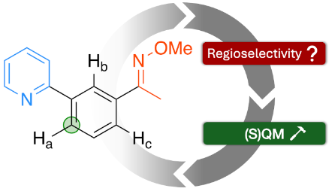
- , and the conformer corresponding to the centroid of each cluster is retained. The remaining conformers of each complex are optimized using GFN1-xTB in the implicit solvent model ALPB with parameters for CH2Cl2[21][22]. After each optimization, the geometry of the complex is analysed to determine
- within a plane. Once all calculations for all conformers of all complexes are completed, the complex with the overall lowest-energy conformer is selected, and its corresponding reaction site is considered the most likely to react. All complexes that have conformers within a defined energy threshold of
- the overall lowest-energy conformer are considered to correspond to potential reaction sites; for this study, we choose a threshold of 1 kcal·mol−1. When several complexes with conformers within the energy threshold are found and the corresponding reaction site differs between the complexes, we allow


A versatile route towards 6-arylpipecolic acids
Beilstein J. Org. Chem. 2025, 21, 1104–1115, doi:10.3762/bjoc.21.88
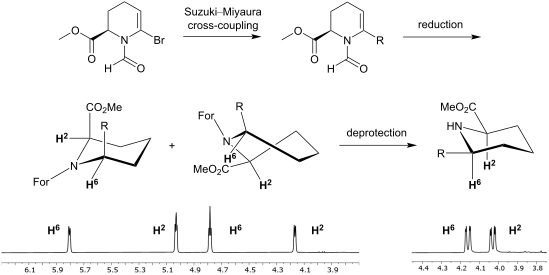
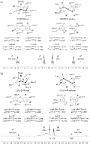
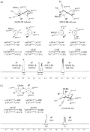
- evident by an antiperiplanar coupling of the axially positioned H6 with 3J(H6,H5,pro-S) = 11.7 Hz and a gauche coupling with 3J(H6,H5,pro-R) = 3.3 Hz. The major diastereomer, assigned as (2R,6S)-9 was found as a mixture of conformers in solution (Figure 2a). Like for (2R,6R)-9, one conformer of (2R,6S)-9
- (2R,6S)-11, with only one set of 1H NMR signals, and, hence, one conformer. In addition, for the unprotected (2R,6S)-11 the coupling constants 3J(H6,H5,pro-R) = 12.8 Hz for proton H6 and 3J(H2,H3,pro-R) = 12.9 Hz for proton H2 indicate diaxial couplings, which in return confirms a flip to the more
- ). Analysing the 1H NMR spectra of reduction product (2R,6S)-13 reveals a very similar pattern to the previously discussed Suzuki–Miyaura product (2R,6S)-9 with one significant distinction. The signals of both protons H2 and H6 of the first conformer (2R,6S)-13I in comparison to the second one (2R,6S)-13II are





Supramolecular assembly of hypervalent iodine macrocycles and alkali metals
Beilstein J. Org. Chem. 2025, 21, 1095–1103, doi:10.3762/bjoc.21.87
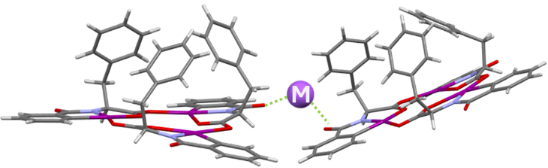
- previously isolated in crystalline form in two different molecular conformations [18]. In conformer I (Figure 2, bottom), all three benzyl groups are oriented towards the interior of the macrocycle. In contrast, conformer II (Figure 2, top) features two benzyl groups projecting inward and one benzyl group
- and I. Without any metal coordination, DFT suggests conformer I is more stable than conformer II by ≈60 kJ/mol. However, upon complexation with Li+, both complexes 2 and 3 are remarkably similar in energy with the difference of less than 1 kJ/mol. This very small energy difference should be too small
- . Alternative view of the crystal structure of the HIM 1 and LiBArF20 complex. BArF20 anion is omitted for clarity. Nitrogen, oxygen, iodine, and lithium atoms are denoted by light blue, red, purple, and lavender color, respectively. Conformer II displays two benzyl groups projected in and one benzyl group



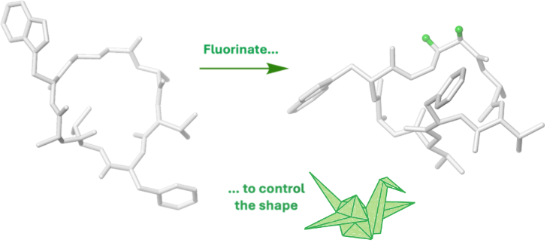
Origami with small molecules: exploiting the C–F bond as a conformational tool
Beilstein J. Org. Chem. 2025, 21, 680–716, doi:10.3762/bjoc.21.54
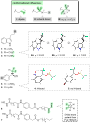
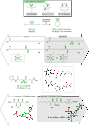
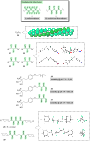
- rotamers have different energies. When the C–F bonds are aligned gauche, the vacant σ* orbital of each C–F bond is able to mix with the filled σ orbital of an adjacent C–H bond, and this hyperconjugative interaction stabilises the gauche conformer (III, Figure 2). The anti conformer does not benefit from
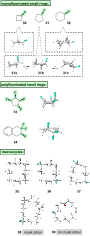
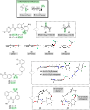
- ) bond, such that the endo orientation of the C–F bond (as depicted in I, Figure 6) is lower in energy than the exo conformer (not shown). This is an example of the anomeric effect [77]. The anomeric effect can be visualised perhaps most clearly when the ether moiety is embedded within a small ring [78
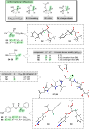
- hyperconjugative interactions can take place (i.e., σC–H → σ*C–F and σC–H → σ*C–O, with the former likely to be stronger). This is only a subtle effect, with the gauche conformer just ≈0.3 kcal·mol−1 lower in energy than the anti conformer (not shown) [86], but it can nevertheless have a significant impact upon



Deep-blue emitting 9,10-bis(perfluorobenzyl)anthracene
Beilstein J. Org. Chem. 2025, 21, 515–525, doi:10.3762/bjoc.21.39
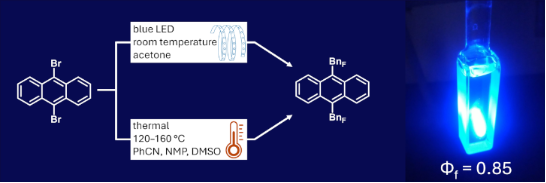
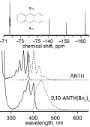
- . Interestingly, only one conformer is observed, with both perfluorobenzyl groups pointing in the same direction (instead of the opposite directions) on the ANTH core, in contrast with the earlier reported by us presence of two different conformers of perfuorobenzylated corannulene in the single crystal, which





Beyond symmetric self-assembly and effective molarity: unlocking functional enzyme mimics with robust organic cages
Beilstein J. Org. Chem. 2025, 21, 421–443, doi:10.3762/bjoc.21.30
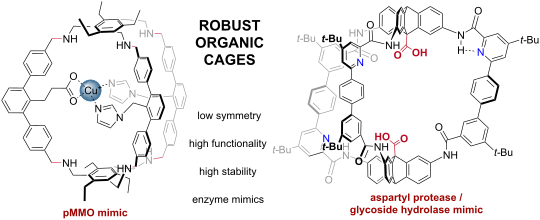
- strong reinforcement of the geometrically preferred C5 conformer by coinciding pyridyl groups with “out” carbonyls. The result is a lowering of symmetry from D3h to CS. While observations of symmetry-lowering are commonplace in controlled environments [47][264][293][335][366][367][368][369], we believe
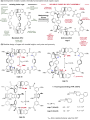
- positions of the two active carboxylic acid groups in cages such as 1, there are several levels of tuning possible in terms of the rigidity. Hexapyridine cage 2 is calculated (and observed) to exist exclusively (>99.9%) in the C13 conformer (Figure 8B and Figure 9A) [41]. Since the amide groups rarely
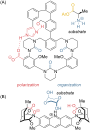
- conformers C5, C9, C10, C12, and C13. (B) Organocatalysis performed by cage 2 (which exists exclusively in the C13 conformer) is a clear example of polarization and organization. The data for cage 1 suggest cavity height (balanced flexibility) is important for the catalytic rate. Supporting Information




Antibiofilm and cytotoxic metabolites from the entomopathogenic fungus Samsoniella aurantia
Beilstein J. Org. Chem. 2025, 21, 327–339, doi:10.3762/bjoc.21.23
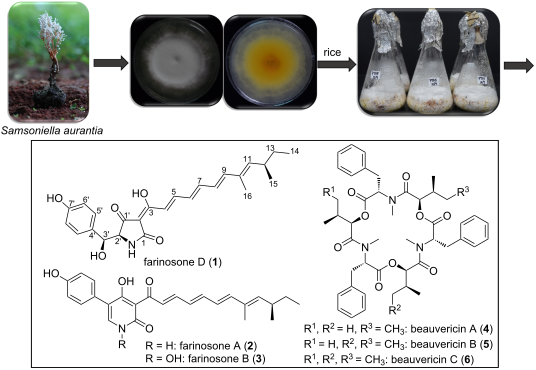
- on forces and step size. The IEFPCM solvent model [33] was used to simulate the solvent effects of methanol and frequency calculations were used to determine the conformers as minima. Conformers 4.5 kcal/mol above the lowest energy conformer and double conformers were discarded. Time-dependent DFT


Quantifying the ability of the CF2H group as a hydrogen bond donor
Beilstein J. Org. Chem. 2025, 21, 189–199, doi:10.3762/bjoc.21.11
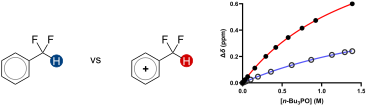
- HB complex. Values for ΔGcalc were then calculated as the weighted average of the free energy of each HB complex as in which PMe3PO···HB,a and PMe3PO···HB,b are the percent populations of the HB complex of Me3PO with the donor conformer a and b, respectively; PMe3PO | HB,a and PMe3PO | HB,b are the
- percent populations of Me3PO and the corresponding HB donor conformer as two non-interacting molecules (see Supporting Information File 1 for details). We found a strong linear correlation between ΔGexp and ΔGcalc obtained at the PCM(MeCN)-M06-2X/6-31+G(d,p) level of theory (Figure 5 and Figure 6A). These