Search results
Search for "heating" in Full Text gives 1088 result(s) in Beilstein Journal of Organic Chemistry. Showing first 200.
Z-Selective semihydrogenation of alkynes via Ni/Lewis acid synergistic catalyzed system using DMF as hydrogen source and solvent
Beilstein J. Org. Chem. 2026, 22, 1004–1012, doi:10.3762/bjoc.22.79
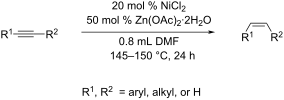
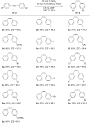
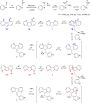
- complete consumption of the starting material, heating was discontinued. After cooling to room temperature, the volatiles were removed under reduced pressure. The resulting crude residue was purified by flash column chromatography on silica gel (eluent: petroleum ether) to afford pure (Z)-stilbene (2a) as



Synthesis of sterically shielded piperidine nitroxides via acid-catalyzed heterocyclization of β-aminoketone derivatives with ketones
Beilstein J. Org. Chem. 2026, 22, 948–954, doi:10.3762/bjoc.22.74
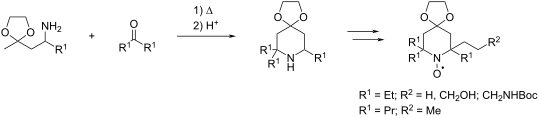
- evolution, methanesulfonic acid (2.0 equiv) was added dropwise to the refluxing mixture, and heating was continued for an additional hour. The reaction was quenched with aqueous sodium carbonate, and the resulting piperidines 5a,b were purified by vacuum distillation. The target 2,2,6-triethyl- and 2,2,6


The trans-influence in gold chemistry from a catalytic perspective
Beilstein J. Org. Chem. 2026, 22, 838–856, doi:10.3762/bjoc.22.66
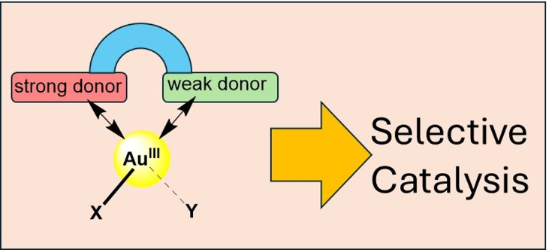
- reported NHC-decorated diphosphene complex (NHC)P(R)–P(R)AuH similarly forms the Z-vinyl product with DMAD (R = 2,6-Mes2C6H3) [64]. Consistent with this, while (C^N^C)AuH inserts neither O2 nor DMAD (nor indeed ethylene, CO2 or benzaldehyde) [31][49], heating (C^C^N)Au–O2CH with RC≡CR (R = t-BuOOC–) gives


Knoevenagel condensation of 4,5- and 1,8-diazafluorenes
Beilstein J. Org. Chem. 2026, 22, 803–812, doi:10.3762/bjoc.22.62
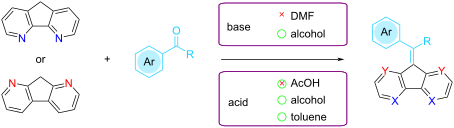
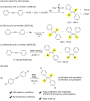
- products in acidic media subjecting the condensation products 3b and 4b to heating in glacial acetic acid at 50 °C for 6 hours revealing that compound 3b was stable whereas compound 4b decomposed into the starting reagents (see the TLC data in Supporting Information File 1, Figure S3). Apparently, after




Synthetic study of vic-bromination of diarylacetylenes, easy purification and separation
Beilstein J. Org. Chem. 2026, 22, 795–802, doi:10.3762/bjoc.22.61
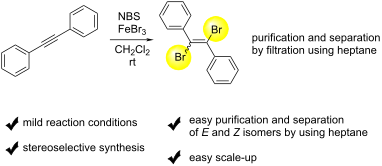
- heated by a heating gun. After cooled to room temperature, the flask was filled with N2. FeBr3 (154.2 mg, 0.52 mmol) and NBS (N-bromosuccinimide, 196.0 mg, 1.10 mmol) were added to the glass flask. Then, CH2Cl2 (dry, 2.0 mL) and 1,2-diphenylacetylene (1a, 89.4 mg, 0.502 mmol) were added and the mixture



Halogenated azobenzene acrylates: from efficient solution photoswitching to stable solid-state photochromic materials
Beilstein J. Org. Chem. 2026, 22, 782–794, doi:10.3762/bjoc.22.60
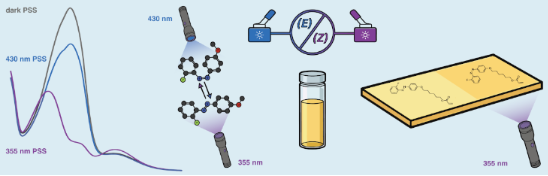
- reflected in the observable glass transitions at around −50 °C. Above the melting points, all molecules were identified as low-volatile liquids that decomposed exothermically upon continued heating. The non-volatile melts of the subseries 1a–c persist unchanged until 164–175 °C, where TGA revealed beginning


Preparation of 3-(alkylamino)imidazo[1,2-a]pyridine-2-carbaldehydes via Kornblum oxidation and unexpected ring-opening reactions of the corresponding alcohols under oxidative conditions
Beilstein J. Org. Chem. 2026, 22, 763–770, doi:10.3762/bjoc.22.58
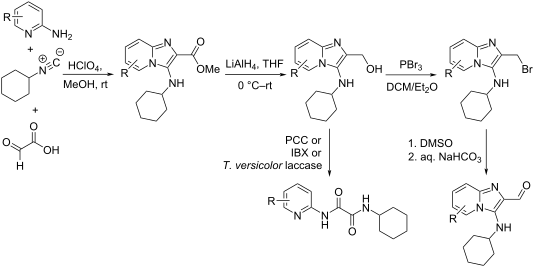
- oxidation conditions, reaction in the presence of DMSO and NaHCO3 under conventional or microwave heating to ≈100 °C, were applied to the bromides derived from these alcohols by treatment with PBr3, resulting in the desired aldehydes which successfully underwent reductive amination reactions with 2
- achieved using PBr3 and the bromides were further reacted in situ, due to their highly hygroscopic nature, into the corresponding aldehydes 20a–d using Kornblum conditions (Scheme 7). The reaction could be carried out under conventional heating or using microwave irradiation. The aldehydes 20a–d were


Synthesis of heterocycles based on azomethine ylides from α-amino acids (or amines) and carbonyl compounds
Beilstein J. Org. Chem. 2026, 22, 705–741, doi:10.3762/bjoc.22.55
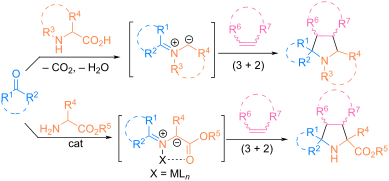
- heating were used. Notably, this process can proceed solvent-free at 140 °C, which is suitable for less reactive substrates. Various exo-cyclic alkenes obtained from cyclic (hetero)aliphatic ketones such as cyclobutanone, azetidinone, thienone, as well as endo-(hetero)cyclic alkenes containing oxygen


Hydrogen production from formic acid catalyzed by NHC–Cu complexes
Beilstein J. Org. Chem. 2026, 22, 620–627, doi:10.3762/bjoc.22.48
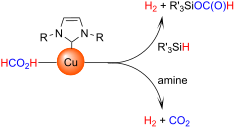
- produced, the pressure change was measured as a function of time (see Supporting Information File 1, Table S1). By heating formic acid in toluene in the presence of 1 and 10 mol % of 1a, no evolution of gas was observed neither at 25 nor at 110 °C (see Supporting Information File 1, Table S1, entries 1–4



Continuous-flow carbonyl hydrogenation under subatmospheric to atmospheric hydrogen pressure enabled by robust heterogeneous Pt–Fe catalysts
Beilstein J. Org. Chem. 2026, 22, 575–582, doi:10.3762/bjoc.22.43
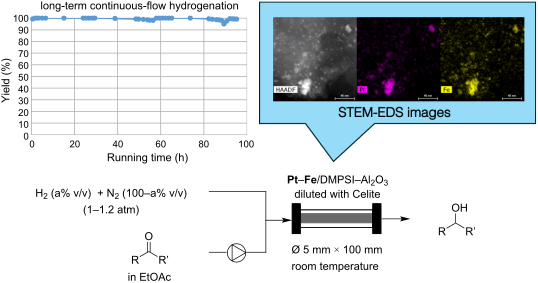
- easily oxidize to Fe(II) during the filtration and heating processes, resulting in the formation of a bimetallic structure comprising Pt(0) and Fe(II). Pt‒Au, Pt‒Co, and Pt‒Ni bimetallic catalysts immobilized on DMPSi‒Al2O3 were also prepared by the same procedure. Comparison of the catalysts in the
- . Finally, the catalytic activity was revived again, and quantitative conversion was observed over 90 h of total running. Water as contaminant in EtOAc or organic compounds strongly adsorbed on the catalyst’s surface may have led to its deactivation; however, they could be removed by simple heating. We


Melifoliox B, a novel phloroglucin derivative isolated from Melicope barbigera (Rutaceae) and synthesis of new oxidation products from melifoliones A and B
Beilstein J. Org. Chem. 2026, 22, 535–546, doi:10.3762/bjoc.22.39
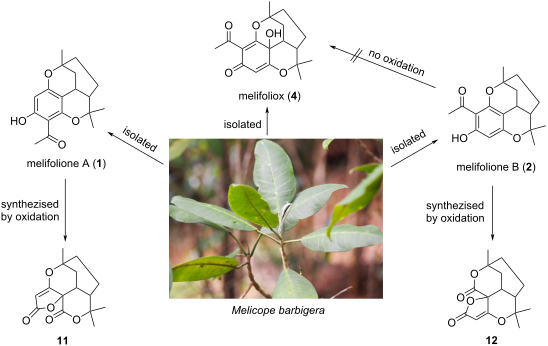
- synthesis of 4 and its possible isomer 3, the required compounds 1 and 2 were synthesized as a mixture of the isomers starting from chromene 5, briefly heated in a closed microwave apparatus with catalytic amounts of acetic acid. Forced heating of 5 in acetic acid or use of stronger acids lead to the
- melifoliones should be synthesized first, to get enough quantity for oxidation to the corresponding quinols in a second experiment. Using the method of Wang and Lee [5], 1 could be prepared regio-specifically in good yield by heating phloroacetophenone and citral in DMF under catalysis of ethylenediammonium
- -position in regard to the OH-group at C-10b (Table 2). Synthesis of melifoliones Melifolione A (1) was prepared according to the method of Wang and Lee [5] by heating phloroacetophenone and citral with ethylene-diammonium diacetate (EDDA) in DMF. However, reaction of the educts in pyridine at 60 °C led to



Structural reassignment of compound 968, an allosteric glutaminase inhibitor
Beilstein J. Org. Chem. 2026, 22, 455–460, doi:10.3762/bjoc.22.33
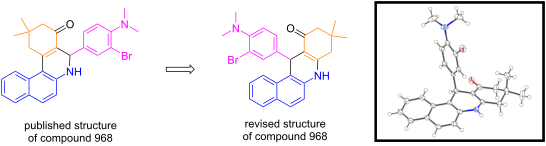
- structure of compound 968 is a benzo[c]phenanthridine 1 or benzo[c]acridine 2 we synthesized it by the reported cyclocondensation reaction, which consists of heating an equimolar mixture of 3-bromo-4-dimethylaminobenzaldehyde, 2-naphthylamine, and dimedone to reflux in 1-butanol. We also purchased compound


Cone p-aminocalix[4]arenes enriched with ‘clickable’ alkyne or azide functionalities
Beilstein J. Org. Chem. 2026, 22, 399–415, doi:10.3762/bjoc.22.28
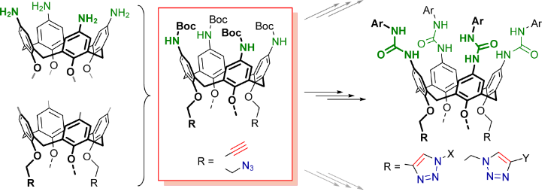
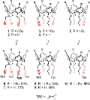
- homogeneous reduction using tin(II) chloride in ethanol was used after fine-tuning of the published reaction conditions [9]: the reduction was conducted by gentle heating of a mixture of calixarene 11, SnCl2·2H2O, aqueous HCl and ethanol at 70 °C (instead of prolonged boiling of the reaction mixture) in a
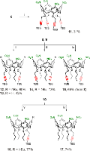
- desilylated product in the case of calixarene 22) remained in the reaction mixtures even after their stirring at room temperature for 72 h. In the case of calixarene 22, heating of the mixture at 50 °C for 48 h was enough to complete the process and p-aminocalix[4]arene 25 having two propargyl groups at the
- narrow rim was obtained in 97% yield. Still, the deprotection of calixarene 23 to the desired propargyl ether 26 was far from complete even under heating, which significantly reduced the yield of this compound (Scheme 4). The difference in the efficiency of catalytic removal of the TBS groups observed




Design, synthesis and biological evaluation of 2,5-diaryloxazolo[4,5-d]pyrimidin-7-ylamines as selective cytotoxic agents against HeLa cells
Beilstein J. Org. Chem. 2026, 22, 390–398, doi:10.3762/bjoc.22.27

- -glucamine). Compounds II were obtained by the sequence of reactions starting from available 2-aryl-4-dichloromethylene-1,3-oxazol-5(4H)-ones I [18]. Thus, treatment of compounds I with arylamidine hydrochlorides in the presence of triethylamine, followed by heating with pyridine, afforded the


Dialkylaminoalkylation of β-ketosulfones via ring-opening of 3-sulfonylpyrrolidines
Beilstein J. Org. Chem. 2026, 22, 383–389, doi:10.3762/bjoc.22.26
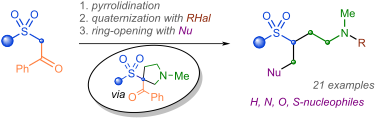
- and heteromethylation of active methylene β-ketosulfones, promoted by a leaving benzoyl group, is proposed. The primary domino reaction of sarcosine, paraformaldehyde, and β-ketosulfones affords 3-sulfonyl-3-benzoylpyrrolidines in good to high yields. Further treatment with alkyl halides and heating
- cesium carbonate at 25 °C for 96 h provided higher yield (Table 1, entry 2, 70%). However, heating this mixture at 65 °C for 24 h in a sealed vial gave pure desired 4-methoxy-N,N-dimethyl-3-(phenylsulfonyl)butan-1-amine (4a) in 90% yield and 83% overall yield starting from ketosulfone 1a (Table 1, entry
- 4). In attempt to minimize the size of the leaving group we applied a ethoxycarbоnyl moiety instead of the benzoyl group. Thus, heating the dimethylammonium salt of pyrrolidine 2f with an excess of KOH in MeOH for 46 h provided the same product 4a in 89% yield (Table 1, entry 5). While it is




Synthesis of tricyclic fused pyrrolidine nitroxides from 2-alkynylpyrrolidine-1-oxyls
Beilstein J. Org. Chem. 2026, 22, 344–351, doi:10.3762/bjoc.22.22

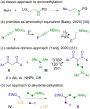
- propargylamines via A3-coupling reaction [21]. In analogy to a literature procedure [22], heating of radical 2a in a mixture of dimethylamine, formalin, and tetrahydrofuran in the presence of copper(II) acetate afforded the corresponding dimethylamino derivative 2f. To confirm the structure of the novel
- literature data on reactivity of 5-azidopentyne derivatives in intramolecular Huisgen cycloaddition reactions are contradictory. Some authors successfully obtained 5-azidopentyne derivatives upon nucleophilic substitution at 80 °C in DMF, and additional heating at 170 °C was necessary for cyclization to
- previously described for radicals 2a and 2b, but these cyclizations required heating in the presence of a base [16]. To obtain pyrazole derivatives, alkynones 6a,b were treated with hydrazine (Scheme 5). Formation of the pyrazole ring in the reaction of 6b was accompanied by partial hydrazinolysis of the


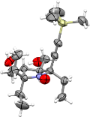


Ring contraction and ring expansion reactions in terpenoid biosynthesis and their application to total synthesis
Beilstein J. Org. Chem. 2026, 22, 289–343, doi:10.3762/bjoc.22.21


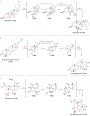
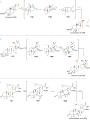


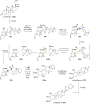


Spirobarbiturates with a pyrrolizidine moiety: synthesis, structure and biological evaluation
Beilstein J. Org. Chem. 2026, 22, 274–288, doi:10.3762/bjoc.22.20
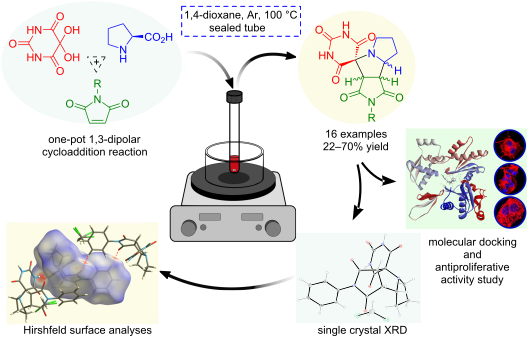
- -carboxylic acid, thiazolidinecarboxylic acid, and pipecolic acid, in combination with alloxan (1) and maleimides 3, did not lead to the formation of the corresponding cycloadducts. In this work, we also used other dipolarophiles. Under the standard reaction conditions (1,4-dioxane, heating with alloxan and ʟ




Arene activation via π-bond localization: concepts and opportunities
Beilstein J. Org. Chem. 2026, 22, 257–273, doi:10.3762/bjoc.22.19
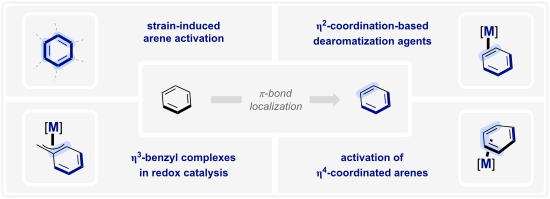
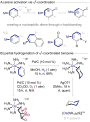
- the conjugate addition product [50]. The initial addition occurs on the side of the phenol ring opposite (exo) the coordinated metal fragment. Subsequent exposure to a moderate base induces rearomatization. Upon heating, the raspberry ketone 7 is released in high yield (Scheme 1B). The second class of




A mild and atom-efficient four-component cascade strategy for the construction of biologically relevant 4-hydroxyquinolin-2(1H)-one derivatives
Beilstein J. Org. Chem. 2026, 22, 244–256, doi:10.3762/bjoc.22.18
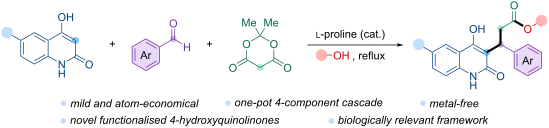
- reactions catalyzed by diverse agents (Scheme 1). For instance, in 2013, Shi et al. described a three-component reaction involving 4-hydroxyquinolin-2(1H)-one, an aromatic aldehyde, and Meldrum’s acid, catalyzed by ʟ-proline under heating [37]. In the same year, Kurosh Rad-Moghadam and co-workers developed
- a related protocol operating at room temperature using the ionic liquid [Bmim]HSO4 as a catalyst, expanding the scope to include aliphatic aldehydes [38]. Later, in 2017, Esmayeel Abbaspour-Gilandeh et al. reported a modified variant of this transformation under solvent-free heating, catalyzed by
- reaction conditions, the lactone forms predominantly (Scheme 1B). However, the lactone appears capable of slow transesterification in the presence of excess alcohol, converting it into the open-chain ester upon prolonged heating. The lower stability of the cyclic product, compared to the open-chain ester


Configuration–packing synergy enabling integrated crystalline-state RTP and amorphous-state TADF
Beilstein J. Org. Chem. 2026, 22, 224–236, doi:10.3762/bjoc.22.16
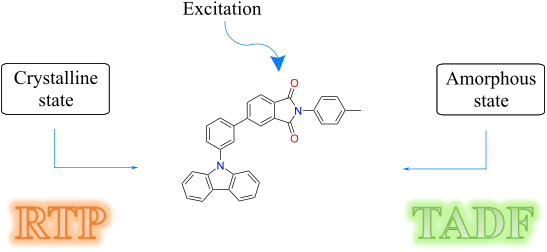
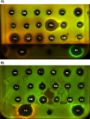
- phosphorescence emission at room temperature. To further explore this hypothesis, the powder was subjected to heating to its melting point followed by rapid quenching with liquid nitrogen. The resulting solid, after this treatment, was found to show no RTP when examined at room temperature, as demonstrated in


A new synthesis of Tyrian purple (6,6’-dibromoindigo) and its corresponding sulfonate salts
Beilstein J. Org. Chem. 2026, 22, 167–174, doi:10.3762/bjoc.22.10
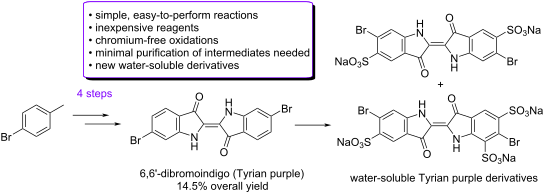
- ][8][9]. Analogous to the sulfonation of indigo to synthesize the water-soluble dye indigo carmine, compound 1 was sulfonated to increase its water solubility. Thus, the desired 6,6’-dibromo-5,5’-indigodisulfonic acid disodium salt (9) was obtained by heating 1 in a 2:1 mixture of oleum (20% free SO3
- ) and concentrated sulfuric acid (Scheme 7A). The trisulfonated 6,6’-dibromo-5,5’,7-indigotrisulfonic acid trisodium salt (10) was produced by heating 1 in oleum (20% free SO3), as shown in Scheme 7B. Although monosulfonation of indigo was reported by Sullivan and co-workers, an analogous reaction was


Design and synthesis of an axially chiral platinum(II) complex and its CPL properties in PMMA matrix
Beilstein J. Org. Chem. 2026, 22, 143–150, doi:10.3762/bjoc.22.7
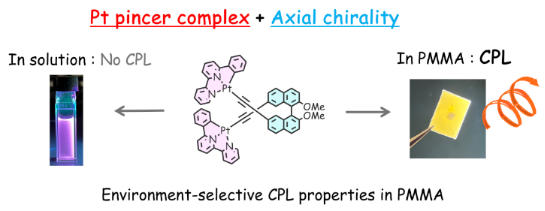
- ethynyl-linked coordination sites. Therefore, we prepared a PMMA polymer matrix containing 1 wt % of S/R-Pt to investigate the emission behavior under conditions where molecular motion was suppressed. The PMMA matrix was obtained by dissolving S/R-Pt and PMMA in chloroform under heating at 40 °C, casting


Advances in Zr-mediated radical transformations and applications to total synthesis
Beilstein J. Org. Chem. 2026, 22, 71–87, doi:10.3762/bjoc.22.3
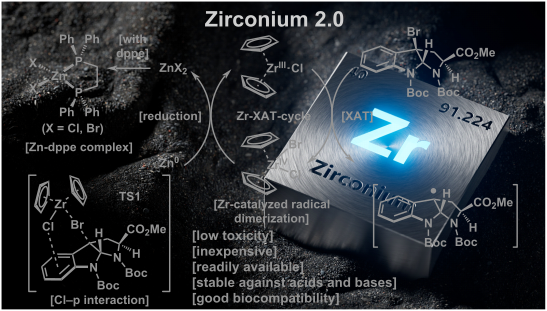
- corresponding vic-bis(dithiane) derivatives 16a–d. In 2018, Milsmann et al. reported the dimerization of benzyl bromide using a zirconium complex as a photosensitizer (Scheme 4) [14]. Heating a zirconium precursor with the pincer-type ligand 17, which can be synthesized in three steps from commercially
- . Heating these precursors under flash vacuum pyrolysis conditions at 230 °C led to the removal of the Boc group and intramolecular dehydration–condensation, thereby constructing the diketopiperazine core and enabling the total syntheses of ditryptophenaline (70), dibrevianamide F (71), and tetratryptomycin







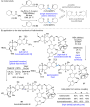
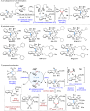

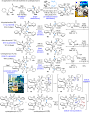
Synthesis and applications of alkenyl chlorides (vinyl chlorides): a review
Beilstein J. Org. Chem. 2026, 22, 1–63, doi:10.3762/bjoc.22.1
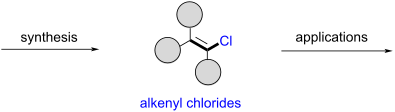
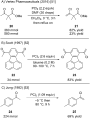
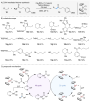
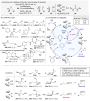
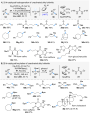
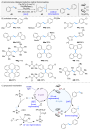
- high-yielding synthesis of 23 by heating diketone 22 with PCl5 for several hours in toluene (Scheme 6B) [52]. Similarly, Jung obtained 25 in 69% yield after heating neat ketone and PCl5 (Scheme 6C) [53]. The high yield of 25 is somewhat surprising, considering the limited stability thereof. In our