Search results
Search for "multicomponent reactions" in Full Text gives 186 result(s) in Beilstein Journal of Organic Chemistry.
One-pot four-component sequential synthesis of S-alkyl dithiocarbamates using lipase as a biocatalyst
Beilstein J. Org. Chem. 2026, 22, 1048–1056, doi:10.3762/bjoc.22.83
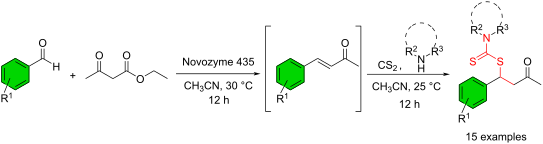
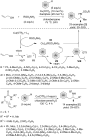
- the development of efficient and diverse synthetic methodologies for S-alkyl dithiocarbamates remains crucial. The synthesis of S-alkyl dithiocarbamates is primarily achieved through multicomponent reactions [17][18] that involve primary or secondary amines, carbon disulfide (CS2), and electrophilic


A mild and atom-efficient four-component cascade strategy for the construction of biologically relevant 4-hydroxyquinolin-2(1H)-one derivatives
Beilstein J. Org. Chem. 2026, 22, 244–256, doi:10.3762/bjoc.22.18
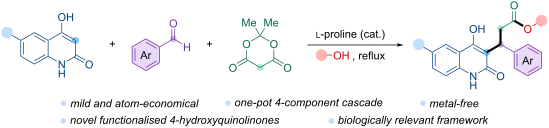
- ; Introduction Contemporary organic chemistry focuses on the development of universal, efficient, and environmentally benign synthetic methods that address the challenges of constructing complex molecular architectures [1][2][3]. Among these, multicomponent reactions (MCRs) have emerged as powerful tools
- in the reaction mixture [44][45]. Previous studies have reported the synthesis of compounds structurally related to our targets – 4-aryl-4,6-dihydro-2H-pyrano[3,2-c]quinoline-2,5(3H)-diones – via multicomponent reactions catalyzed by various agents (Scheme 1) [37][38][39]. These one-pot reactions
- -hydroxy-2-oxo-1,2-dihydroquinolin-3-yl)-3-phenylpropanoic acid have not, to the best of our knowledge, been previously described. Structurally related compounds, such as 4-aryl-4,6-dihydro-2H-pyrano[3,2-c]quinoline-2,5(3H)-diones, have been reported only in a few cases, typically via multicomponent


C2 to C6 biobased carbonyl platforms for fine chemistry
Beilstein J. Org. Chem. 2025, 21, 2103–2172, doi:10.3762/bjoc.21.165
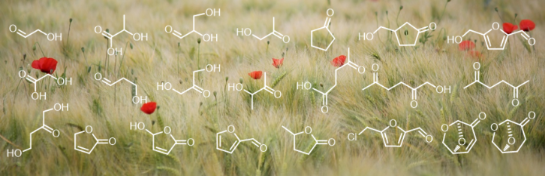
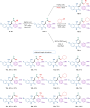
- at illustrating how the chemistry of biobased carbonyl platform molecules with backbones from C2 to C6 offers opportunities to reach all kinds of chemical architectures, sometimes even complex ones benefiting from the ability of the carbonyl group to be involved in multicomponent reactions. Keywords
- ). The obtained hydrocarbons exhibited higher density (0.78–0.88 g/cm3) and higher net heat of combustion (44.0–46.0 MJ/kg) than some commonly commercial fuels [194]. Multicomponent reactions involving the reactivity of furfural are also noteworthy. A Ugi four-component polymerization was developed to


Multicomponent reactions IV
Beilstein J. Org. Chem. 2025, 21, 2082–2084, doi:10.3762/bjoc.21.163
- National Academy of Sciences of Ukraine, Nauky Av. 60, 61072 Kharkiv, Ukraine, Faculty of Chemistry, V. N. Karazin Kharkiv National University, Svobody Sq. 4, 61077 Kharkiv, Ukraine 10.3762/bjoc.21.163 Keywords: multicomponent reactions; The synthesis of complex molecules is a cornerstone of modern
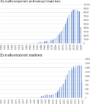
- optimization of promising lead structures has therefore inspired the development of powerful synthetic strategies. A glance at Web of Science reveals that one-pot methods and multicomponent reactions (MCRs) [1] have attracted steadily increasing attention within the scientific community over the past 25 years
- , even allow changes in conditions from one step to the next. In essence, MCRs embody a reactivity-driven concept [4] within the broader family of one-pot methodologies. This thematic issue on multicomponent reactions continues the previously published editions from 2011 [5], 2014 [6], and 2019 [7] and
Switchable pathways of multicomponent heterocyclizations of 5-amino-1,2,4-triazoles with salicylaldehydes and pyruvic acid
Beilstein J. Org. Chem. 2025, 21, 2030–2035, doi:10.3762/bjoc.21.158
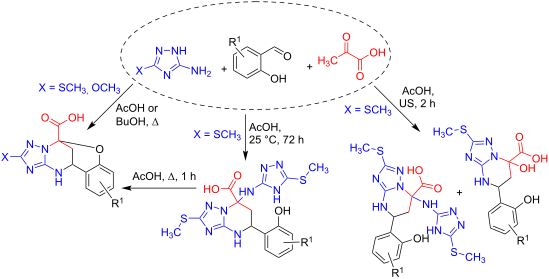
- , 61072, Kharkiv, Ukraine Enamine Ltd., Winston Churchill Street 78, Kyiv 02094, Ukraine Faculty of Chemistry, V. N. Karazin Kharkiv National University, Svobody sq., 4, 61022, Kharkiv, Ukraine 10.3762/bjoc.21.158 Abstract Switchable multicomponent reactions involving 3-substituted-5-amino-1,2,4
- multicomponent reaction of the same starting materials led to the formation of only tetrahydrotriazolopyrimidine derivatives. Keywords: 5-amino-1,2,4-triazole; heterocyclization; multicomponent reaction; salicylaldehyde; ultrasonication; Introduction Multicomponent reactions (MCRs) are a powerful tool for the
- affect their chemical behaviour, with pyruvic acid, and salicylaldehydes remain undescribed. The present paper is intended to fill this gap and complete the description of this type of switchable multicomponent reactions. Results and Discussion Therefore, the MCRs between some 3-substituted 5-amino-1,2,4


α-Ketoglutaric acid in Ugi reactions and Ugi/aza-Wittig tandem reactions
Beilstein J. Org. Chem. 2025, 21, 2021–2029, doi:10.3762/bjoc.21.157
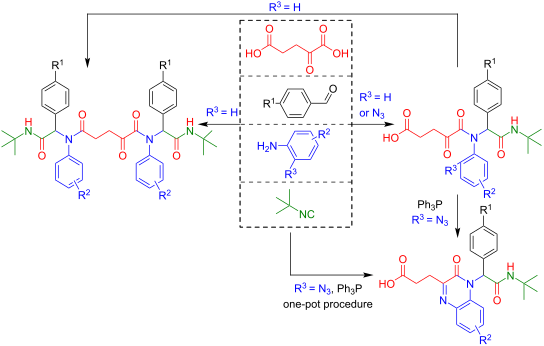
- ; quinoxalinone derivative; Ugi reaction; Introduction Multicomponent reactions are powerful tools in organic chemistry that enable the synthesis of structurally complex and multifunctional compounds from three or more starting materials in a single synthetic step. They are widely used in drug discovery because
- ]. Therefore, these molecules can be considered as potential antidiabetic agents. α-Ketoglutaric acid (KGA) is an attractive precursor for medically oriented syntheses using multicomponent reactions due to its chemical structure as a dibasic keto acid and its role as an important component of numerous
- biochemical processes [47]. However, there are only a few studies in the literature on multicomponent reactions based on KGA. In 1992, Gein et al. [48] reported a multicomponent reaction involving KGA, aromatic aldehydes, and aromatic amines. This led to the formation of pyrrolone derivatives I, which showed


Fe-catalyzed efficient synthesis of 2,4- and 4-substituted quinolines via C(sp2)–C(sp2) bond scission of styrenes
Beilstein J. Org. Chem. 2025, 21, 1799–1807, doi:10.3762/bjoc.21.142
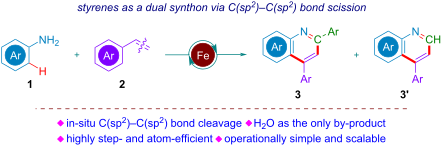
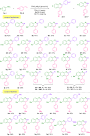
- strategies have been explored in recent decades for the synthesis of structurally diverse quinolines. Among them, transition-metal-catalyzed multicomponent reactions (MCRs) have emerged as particularly effective for constructing complex quinoline-based heterocycles [26][27][28]. Catalytic pathways such as




Catalytic asymmetric reactions of isocyanides for constructing non-central chirality
Beilstein J. Org. Chem. 2025, 21, 1648–1660, doi:10.3762/bjoc.21.129

- become a hot topic in synthetic organic chemistry. Isocyanides (also termed isonitriles) are a class of highly versatile building blocks in organic synthesis, participating in a wide range of transformations including multicomponent reactions (e.g., the well-known Passerini and Ugi reactions) [13][14][15
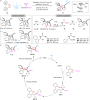
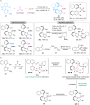
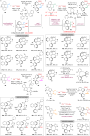
- substrates under the standard conditions (Scheme 4b). On one hand, such findings demonstrated that the second cyclization determines enantioselectivity; on the other hand, it provided a practical way to the preparation of unsymmetrical pyrido[6]helicenes 26. Isocyanide-based multicomponent reactions Except
- for Pd-catalyzed isocyanide insertion reactions, organocatalytic isocyanide-based multicomponent reactions have been explored for the synthesis of axially chiral compounds. In 2024, Yang and co-workers reported a catalytic asymmetric version of the Groebke–Blackburn–Bienaymé reaction [32][33][34





Photoredox-catalyzed arylation of isonitriles by diaryliodonium salts towards benzamides
Beilstein J. Org. Chem. 2025, 21, 1480–1488, doi:10.3762/bjoc.21.110
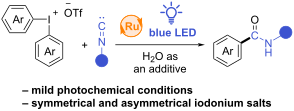
- benzamides from isonitriles as well as in multicomponent reactions with isonitriles in general. Only a few examples of photochemical cascade arylation–cyclizations of isonitriles with diaryliodonium salts have been published [31][32][33]. To bridge this gap, we propose a photoredox-mediated strategy for the


A multicomponent reaction-initiated synthesis of imidazopyridine-fused isoquinolinones
Beilstein J. Org. Chem. 2025, 21, 1161–1169, doi:10.3762/bjoc.21.92
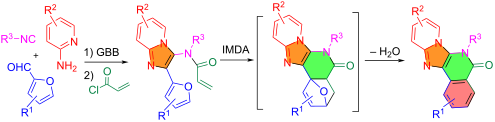
- –Bienaymé (GBB); imidazopyridine; intramolecular Diels–Alder (IMDA); isoquinolinone; multicomponent reaction (MCR); re-aromatization; Introduction Multicomponent reactions (MCRs) have intrinsic green chemistry advantages of synthetic efficiency and operational simplicity. Performing post-condensational




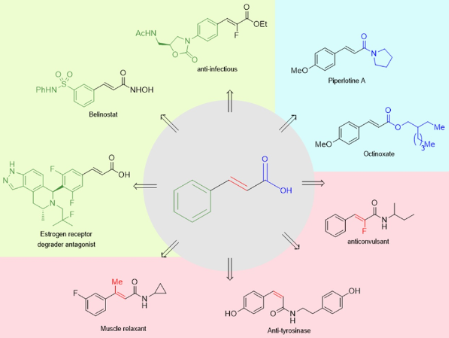
Recent advances in synthetic approaches for bioactive cinnamic acid derivatives
Beilstein J. Org. Chem. 2025, 21, 1031–1086, doi:10.3762/bjoc.21.85
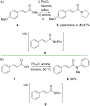
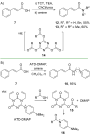
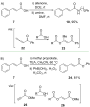
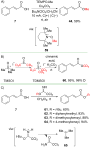
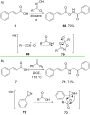
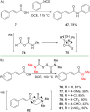
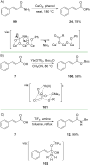
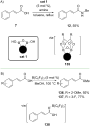
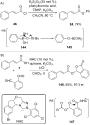
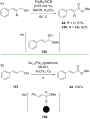
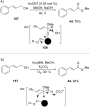
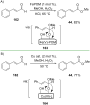
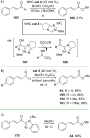
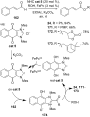
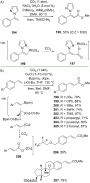
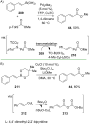
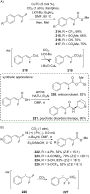
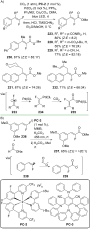
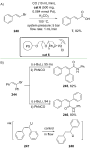
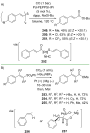
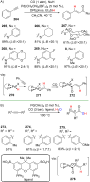
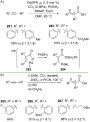
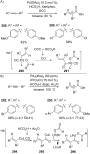
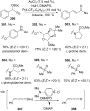
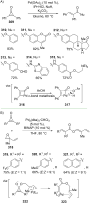
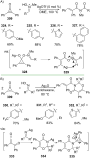
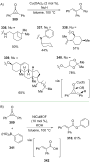
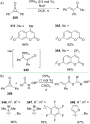
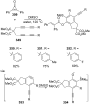
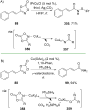
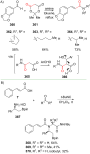
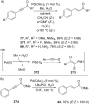
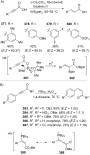
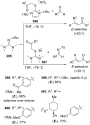
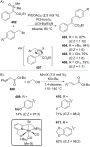
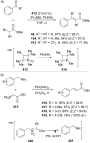
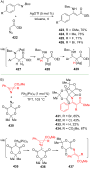
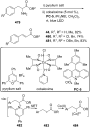
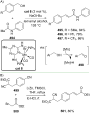
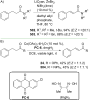
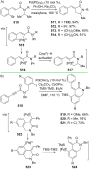
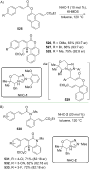
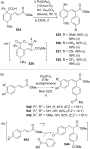
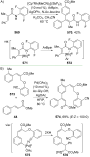
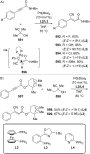
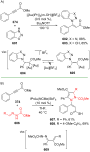
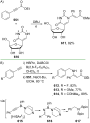
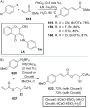
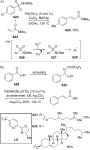
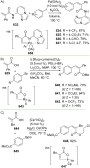
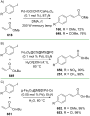
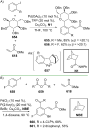
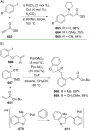
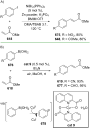
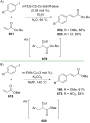
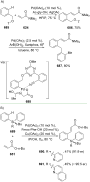
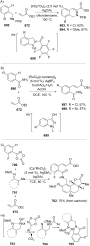
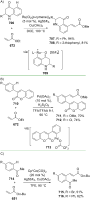
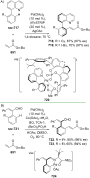
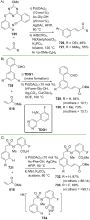
- affording cinnamamide (99) in excellent yield. The reaction proceeds via the decarboxylated amide–copper complex 359 (Scheme 79B) [134] and could be scaled-up to a gram scale reaction. Cinnamic acid derivatives could also be accessed via multicomponent reactions. For example, Jana and Ghosh (2019) utilized










































Pd-Catalyzed asymmetric allylic amination with isatin using a P,olefin-type chiral ligand with C–N bond axial chirality
Beilstein J. Org. Chem. 2025, 21, 1018–1023, doi:10.3762/bjoc.21.83
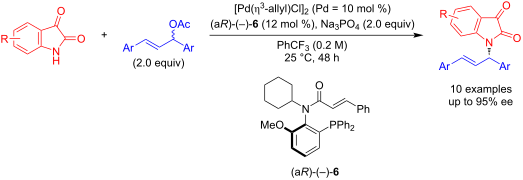
- Isatin is a well-known natural indole derivative. Due to the broad biological activities of its derivatives, extensive research has been conducted on their synthesis. Furthermore, the isatin framework is a versatile starting material for various transformations, including multicomponent reactions and the


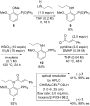


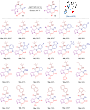
Silver(I) triflate-catalyzed post-Ugi synthesis of pyrazolodiazepines
Beilstein J. Org. Chem. 2025, 21, 915–925, doi:10.3762/bjoc.21.74
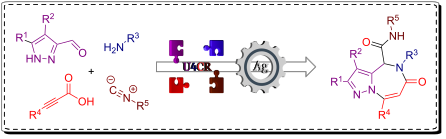
- procedures and harsh reaction conditions, resulting in limited substituent and scaffold diversity [18][19]. In this regard, multicomponent reactions (MCRs) have gained increasing attention for their operational simplicity, efficiency, robustness, atom economy, and potential for diversity-oriented synthesis




Formaldehyde surrogates in multicomponent reactions
Beilstein J. Org. Chem. 2025, 21, 564–595, doi:10.3762/bjoc.21.45
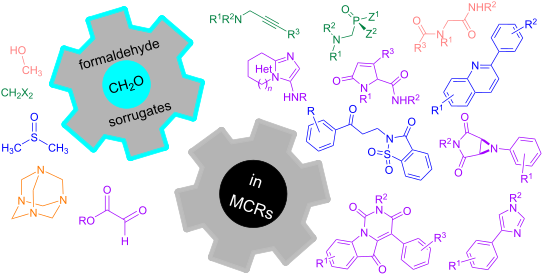
- /bjoc.21.45 Abstract Formaldehyde emerges as a cornerstone in multicomponent reactions, mainly prized for its robust reactivity. Yet, alongside these beneficial traits, this highly reactive C1-building block raises concerns, primarily regarding its toxicity. One notable issue is the challenge of
- controlling the formation of undesired byproducts during its reactions. This review explores alternative C1-building blocks that serve as surrogates for formaldehyde, aiming to mitigate some of the challenges associated with its use in multicomponent reactions. By identifying these alternatives, toxicity
- concerns and improved reaction control can be addressed, paving the way for more efficient and sustainable synthetic methodologies. Keywords: cascade reactions; formaldehyde surrogates; green chemistry; heterocycles; multicomponent reactions; Introduction Organic chemistry is a mature discipline that has


New tandem Ugi/intramolecular Diels–Alder reaction based on vinylfuran and 1,3-butadienylfuran derivatives
Beilstein J. Org. Chem. 2025, 21, 444–450, doi:10.3762/bjoc.21.31
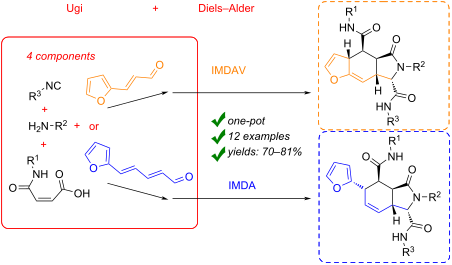
- environmentally friendly synthetic strategies, especially one-pot multicomponent and tandem reactions, are key to modern organic and medicinal chemistry [1][2][3][4][5][6][7] and have proven to be successful in generating diverse heterocyclic scaffolds, as highlighted in a recent book [8]. Multicomponent
- reactions, for instance, have contributed to high-throughput screening for drug discovery, facilitating the identification of new therapeutic compounds. [9][10]. A notable example is ivosidenib, approved in 2018, which was synthesized using the Ugi reaction to target mutated IDH1 in acute myeloid leukemia




Three-component reactions of conjugated dienes, CH acids and formaldehyde under diffusion mixing conditions
Beilstein J. Org. Chem. 2025, 21, 262–269, doi:10.3762/bjoc.21.18
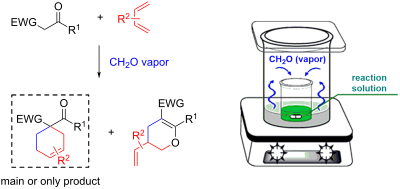
- main reaction products. Keywords: aldol condensation; [4 + 2]-cycloaddition; diffusion mixing; formaldehyde; Knoevenagel condensation; three-component reactions; Introduction Formaldehyde is a reactive electrophilic reagent widely used as a C1 building block in multicomponent reactions [1][2][3]. Its
- reactions that proceed through the formation of formaldehyde condensation products (Scheme 1). Previously, we have proposed a convenient diffusion mixing technique for multicomponent reactions based on the absorption of volatile reagent vapors by a mixture containing the remaining reaction components. This
- [4][5][6] and polymerization processes of unstable methylidene adducts [7][8][9], instead of the desired formation of a monocrotonic product. Therefore, heating [6][10][11][12][13][14] or Lewis acid activation [15][16][17][18] have often been used in the literature for successful multicomponent


Cu(OTf)2-catalyzed multicomponent reactions
Beilstein J. Org. Chem. 2025, 21, 122–145, doi:10.3762/bjoc.21.7

- Venezian 21, 20133, Milano, Italy 10.3762/bjoc.21.7 Abstract This review reports the achievements in copper(II) triflate-catalyzed processes concerning the multicomponent reactions, applied to the synthesis of acyclic and cyclic compounds. In particular, for the heteropolycyclic systems mechanistic
- ; heteropolycycles; multicomponent reactions; one-pot reaction; Introduction Copper has gained a relevant role in organic synthesis as an alternative to precious metals due to its low toxicity, ease of handling, high catalytic activity, and cost-effectiveness [1][2]. In recent years, Cu(OTf)2 has significantly
- toxicity [3][4][5][6][7]. Multicomponent reactions are one of the most effective methods to assemble multiple reagents, thus facilitating access to the target molecules more quickly, due to atom/step economy, short reaction times, and eco-friendly benefits. Combining multicomponent reactions with








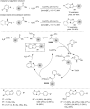


Multicomponent reactions driving the discovery and optimization of agents targeting central nervous system pathologies
Beilstein J. Org. Chem. 2024, 20, 3151–3173, doi:10.3762/bjoc.20.261
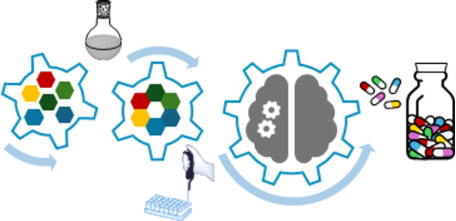
- . Diagonal 643, E-08028 Barcelona, Spain 10.3762/bjoc.20.261 Abstract The ongoing quest to discover effective treatments for diseases remains a significant challenge for the scientific community. Multicomponent reactions (MCRs) have emerged as powerful tools in accelerating drug discovery, enabling the
- to the authors whose important contributions may not be included. By concentrating on these pivotal studies, we strive to offer a clear and concise perspective on current research trends and breakthroughs in this field. Keywords: Alzheimer; depression; epilepsy; multicomponent reactions; Parkinson
- ; schizophrenia; Introduction Multicomponent reactions Due to efforts to develop new drug arsenals faster to overcome the difficulties of medicinal chemistry (multistage and highly wasteful processes), multicomponent reactions (MCRs) have emerged as a plausible solution. MCRs are convergent reactions in which




Synthesis of the 1,5-disubstituted tetrazole-methanesulfonylindole hybrid system via high-order multicomponent reaction
Beilstein J. Org. Chem. 2024, 20, 3077–3084, doi:10.3762/bjoc.20.256
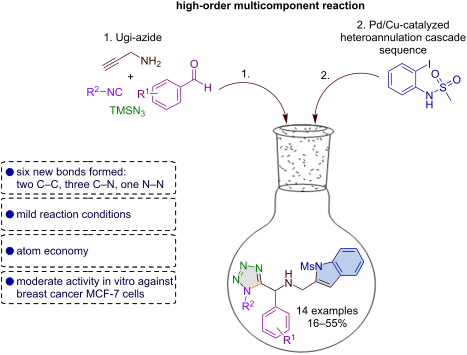
- affinity compared to their drug parents and by using powerful synthetic tools such as multicomponent reactions (MCRs) [11][12][13]. Among these, isocyanide-based multicomponent reactions (I-MCRs), such as the Ugi-azide reaction, have demonstrated the highest biological-synthetic relevance [1][14][15][16
- ]. In this regard, a relatively unexplored field within MCRs comprises high-order multicomponent reactions, which involve reacting at least five or even more components in a single operational step. These reactions are highly convergent, efficient, and have superior atom economy, producing high
- previously described strategies involved the use of higher-order multicomponent reactions (HO-MCRs). As part of our ongoing research program towards the synthesis of novel hybrid compounds based on the 1,5-disubstituted tetrazole moiety [23][24][25][26][27], we developed a synthetic strategy for the



Synthesis of pyrrole-fused dibenzoxazepine/dibenzothiazepine/triazolobenzodiazepine derivatives via isocyanide-based multicomponent reactions
Beilstein J. Org. Chem. 2024, 20, 2870–2882, doi:10.3762/bjoc.20.241
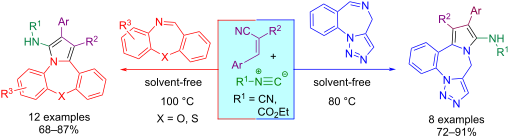
- great attention in biomedical applications, clinical diagnostics, and conjugate materials. Keywords: cyclic imines; dibenzothiazepine; dibenzoxazepine; isocyanides; multicomponent reactions; pyrrole; triazolobenzodiazepine; Introduction Pyrroles and their derivatives are important N-heterocyclic
- /benzoxazepine/benzothiazepine is very important. Due to the wide applications of pyrrole-fused heterocycles, very diverse approaches have been developed for their synthesis [28][29][30][31][32]. In recent years, multicomponent reactions (MCRs) have emerged as one of the most efficient and powerful methods to
- achieve this goal [7][33]. Among them, isocyanide-based multicomponent reactions (I-MCRs) are one of the well-known strategies in this field due to their operational simplicity, one-pot, convergent properties and atom economy, high efficiency, and high levels of chemical selectivity [34][35][36]. In





Multicomponent synthesis of α-branched amines using organozinc reagents generated from alkyl bromides
Beilstein J. Org. Chem. 2024, 20, 2834–2839, doi:10.3762/bjoc.20.239
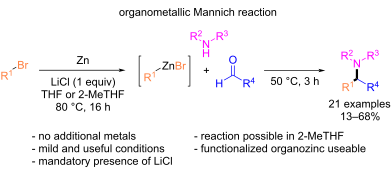
- bromides in order to explore their consecutive use in multicomponent Mannich reactions (Table 1). While our experience in the development of multicomponent reactions involving organozinc compounds prompted us to initially consider acetonitrile as probably the most adapted solvent for the whole process [26


Synthesis of spiroindolenines through a one-pot multistep process mediated by visible light
Beilstein J. Org. Chem. 2024, 20, 2722–2731, doi:10.3762/bjoc.20.230
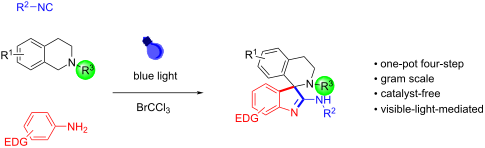
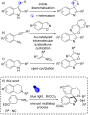
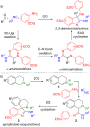
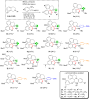
- : isocyanide; multicomponent reactions; one-pot reaction; oxidation; spiroindolenine; Ugi reaction; visible light; Introduction Diversity-oriented synthesis (DOS) is a successful approach to biologically active scaffolds directed to create an enormous exploratory space in pharmaceutical hit discovery [1][2
- spiro-heterocyclic indolenines from readily available starting materials under mild conditions and in a diversity-oriented fashion remains desirable. In this contest, oxidative isocyanide-based multicomponent reactions (oxidative IMCRs) can be considered as a convenient tool [15]. Actually, the use of




Deuterated reagents in multicomponent reactions to afford deuterium-labeled products
Beilstein J. Org. Chem. 2024, 20, 2270–2279, doi:10.3762/bjoc.20.195
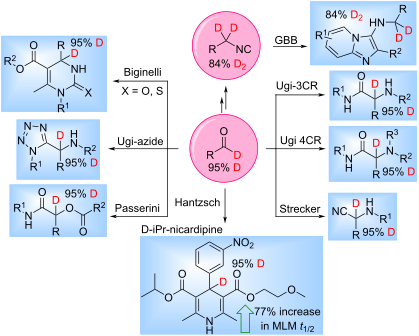
- [D2]-isonitriles across 8 multicomponent reactions (MCRs) to give diverse arrays of deuterated products. A highlight is the synthesis of several FDA-approved calcium channel blockers, selectively deuterated at a t1/2 limiting metabolic soft-spot via use of [D1]-aldehydes. Surrogate pharmacokinetic
- significantly enhanced metabolic stability, a key parameter for property-based design efforts. Keywords: deuterated aldehydes; deuterated formamides; deuterated isocyanides; DHPs; kinetic isotope effect; Leuckart–Wallach; microsomal stability; multicomponent reactions; Introduction Multicomponent reactions


O,S,Se-containing Biginelli products based on cyclic β-ketosulfone and their postfunctionalization
Beilstein J. Org. Chem. 2024, 20, 2143–2151, doi:10.3762/bjoc.20.184
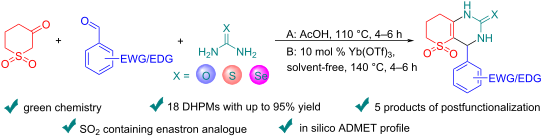
- gossypii, Tripomastigote Chagas, Tcruzi amastigota, Tcruzi epimastigota, Leishmania amazonensis, and Dengue larvicida. Keywords: dihydropyrimidinone/thione/selenone; green chemistry; in silico biological profile; multicomponent reaction (MCR); thiopyrandioxide; Introduction Multicomponent reactions (MCRs



Multicomponent syntheses of pyrazoles via (3 + 2)-cyclocondensation and (3 + 2)-cycloaddition key steps
Beilstein J. Org. Chem. 2024, 20, 2024–2077, doi:10.3762/bjoc.20.178
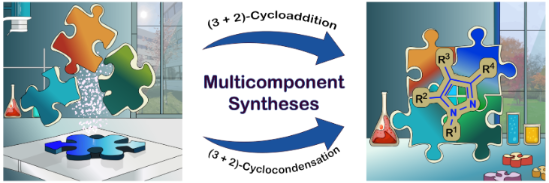
- numerous other applications. The search for new and efficient syntheses of these heterocycles is therefore highly relevant. The modular concept of multicomponent reactions (MCR) has paved a broad alley to heteroaromatics. The advantages over traditional methods are the broader scope and increased
- the ecological and economic requirements. This “ideal” synthesis would commence with simple starting materials, progress through safe, catalytic, and quantitative conversions, and culminate in streamlined processes, all conducted within a single reaction vessel. Multicomponent reactions (MCR) closely
- 47, can be accessed from polyfunctional hydrazine derivatives via multicomponent reactions. For the preparation of pyrazoles 47, 4-amino-5-hydrazinyl-4H-1,2,4-triazole-3-thiol (44), phenylacyl bromides 45, and benzoylacetonitriles 46 were chosen as starting materials (Scheme 13) [67]. Thereby